
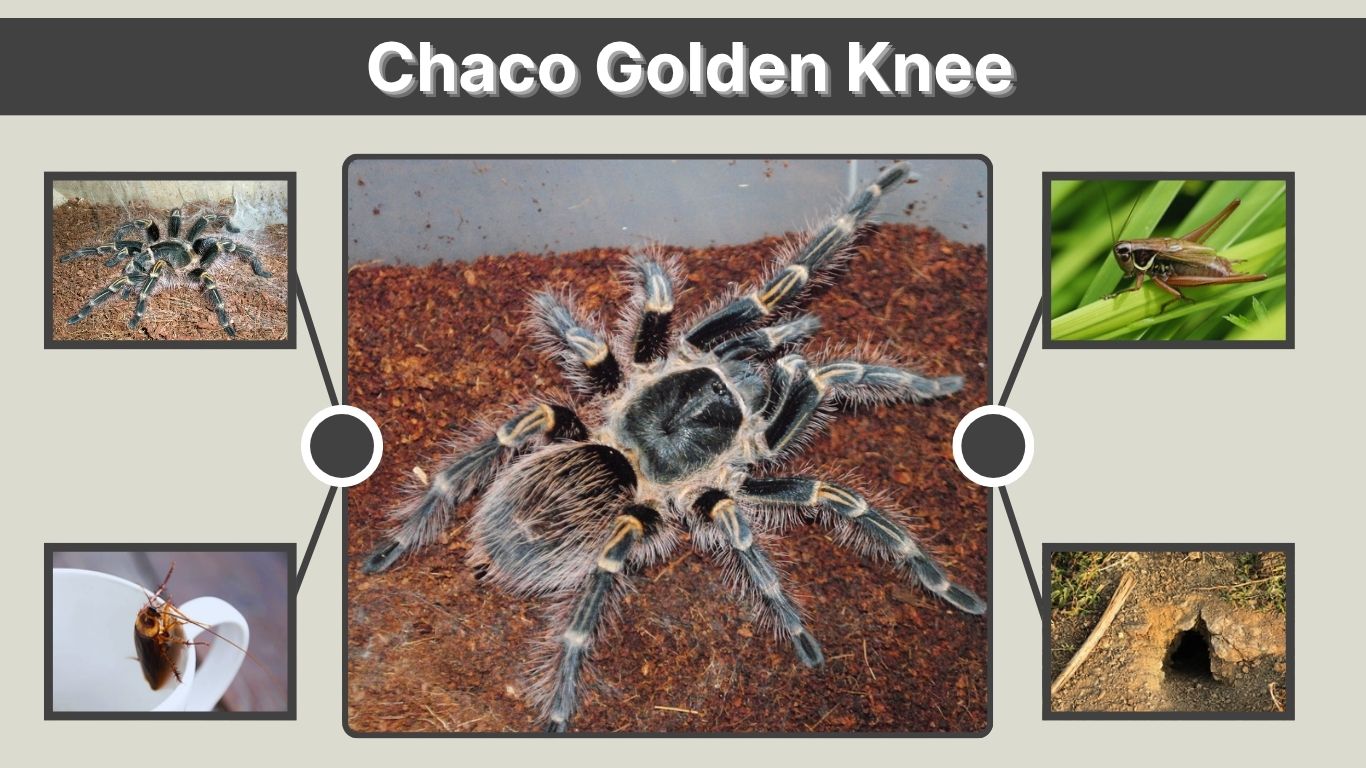
The Chaco Golden Knee tarantula is one of the most popular and beginner-friendly tarantulas in the world. Known for its calm temperament and striking golden bands on its legs, it is highly valued by hobbyists. Native to South America, this species adapts well to captivity and is relatively easy to care for. Its slow movement and manageable behavior make it less intimidating than many other spiders. In this guide, you will learn about its size, habitat, diet, and essential care requirements.
What Is the Chaco Golden Knee?
The Chaco Golden Knee tarantula, scientifically known as Grammostola pulchripes, is a terrestrial New World tarantula species. It is commonly found in regions of Paraguay, Argentina, and Bolivia, where it lives in dry grasslands and scrub areas.
This tarantula is named after the golden-yellow bands on its knees, which stand out against its dark body. It is often recommended for beginners because of its docile nature and relatively low care demands.
Chaco Golden Knee Size and Physical Appearance
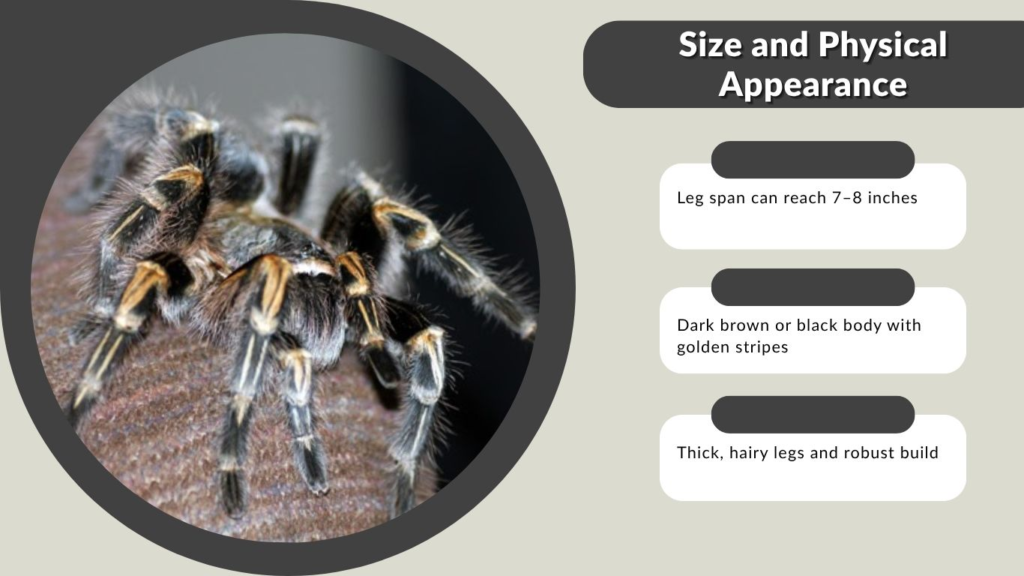
The Chaco Golden Knee is a medium-to-large tarantula that grows slowly but reaches an impressive size over time.
- Leg span can reach 7–8 inches (18–20 cm)
- Dark brown or black body with golden stripes
- Thick, hairy legs and robust build
Although it grows slower than many other tarantulas, its final size and appearance make it one of the most attractive species. Juveniles may appear less colorful, but their golden markings become more prominent as they mature.
Chaco Golden Knee Natural Habitat and Behavior
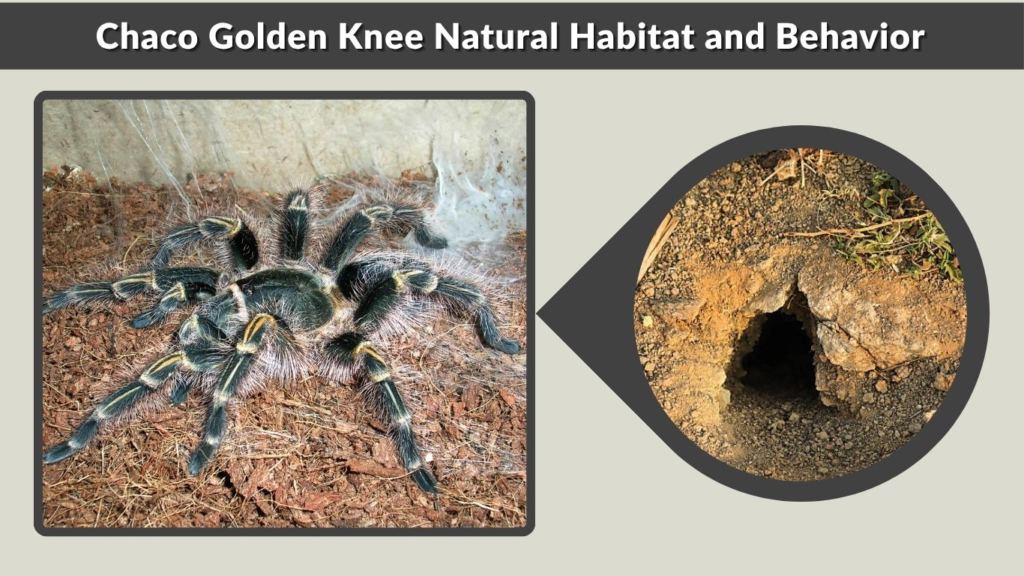
In the wild, the Chaco Golden Knee lives in dry environments where it spends much of its time on the ground. It is a terrestrial species, meaning it does not climb like arboreal tarantulas.
It often creates shallow burrows or uses natural hiding spots to stay safe from predators and harsh conditions. This behavior helps it regulate its environment and maintain stability. In captivity, providing a similar setup encourages natural behavior and reduces stress.
Chaco Golden Knee Diet and Feeding Behavior
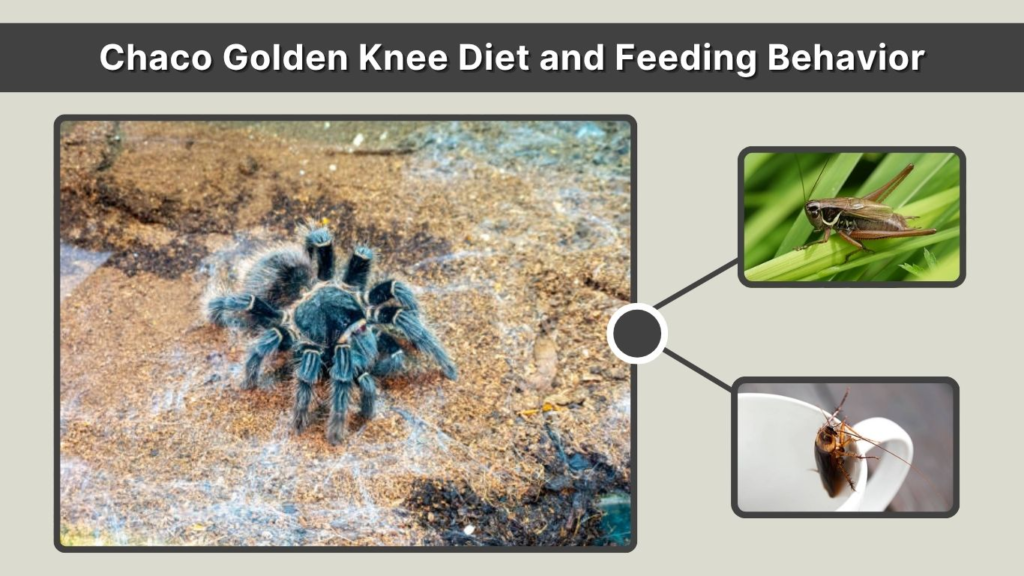
The Chaco Golden Knee is an opportunistic feeder that consumes a variety of prey. Its diet is simple and easy to manage in captivity.
- Feeds on insects like crickets and roaches
- Occasionally eats larger prey such as worms
- Requires feeding once or twice per week
This tarantula relies on an ambush hunting strategy. It waits patiently for prey to come within reach before striking quickly. Its feeding response is usually strong, making it easy to maintain a regular feeding routine.
Temperament and Handling
The Chaco Golden Knee is widely known for its calm and gentle nature. This makes it one of the best tarantulas for beginners.
- Generally docile and slow-moving
- Rarely aggressive toward humans
- May flick urticating hairs when threatened
Although it is considered safe to handle compared to other species, handling should still be done with care. Stress or sudden movement can cause defensive behavior, so minimal handling is recommended.
Chaco Golden Knee Bite, Venom and Safety
Bite Effects
The bite of a Chaco Golden Knee tarantula is not considered dangerous to humans. Its venom is mild and typically causes only minor symptoms such as localized pain and slight swelling. These effects are usually temporary and do not require medical treatment.
Defensive Behavior
Like most New World tarantulas, this species relies more on its urticating hairs than its bite for defense. When threatened, it may flick these tiny hairs into the air. These hairs can irritate the skin or eyes, so it is best to avoid close contact during defensive displays.
Overall, the Chaco Golden Knee is a safe and manageable species when treated with respect and proper care.
Chaco Golden Knee Lifespan and Growth Rate
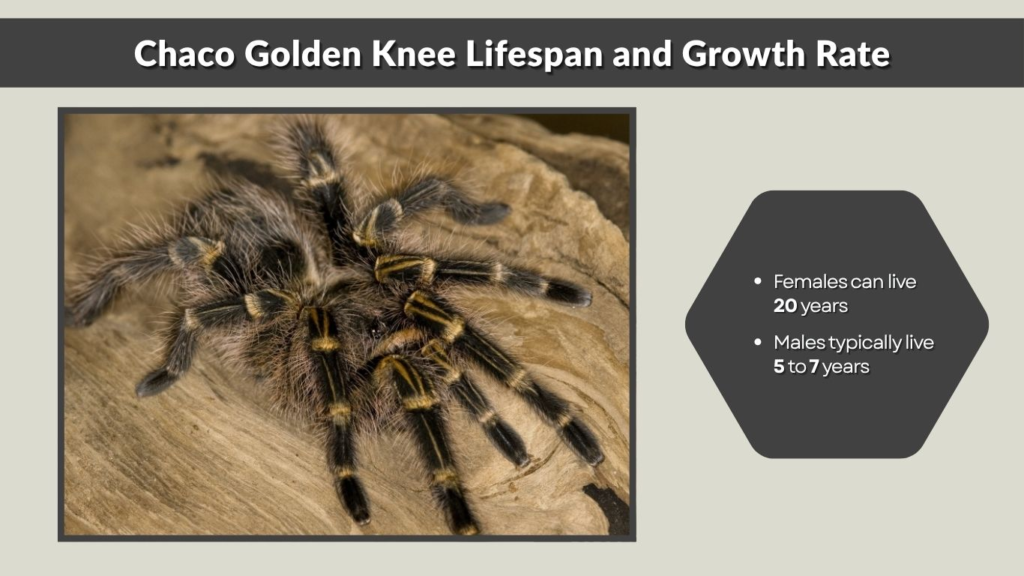
The Chaco Golden Knee tarantula is known for its long lifespan, especially in females. It grows slowly compared to many other tarantulas, but this slow development contributes to its longevity and stable temperament.
- Females can live 20 years or more
- Males typically live 5 to 7 years
- Growth is gradual through multiple molting stages
Molting Process
Molting is essential for growth and health. During this process, the tarantula sheds its old exoskeleton and forms a new one.
Before molting, it may stop eating and become less active. Afterward, it remains soft and vulnerable for a short period. Proper humidity and minimal disturbance are important during this time.
Chaco Golden Knee Care Guide
Caring for a Chaco Golden Knee tarantula is relatively simple, which is why it is ideal for beginners. However, a proper setup is still necessary to ensure long-term health.
Enclosure Setup
- Use a well-ventilated terrarium with enough floor space
- Provide deep substrate for burrowing
- Include a hide for security
Substrate and Environment
- Coconut fiber or soil mix works well
- Avoid chemical-treated or fertilized soil
- Maintain low to moderate humidity
Temperature and Conditions
Stable environmental conditions are important for this species. It thrives in moderate temperatures and does not require excessive humidity. Keeping the enclosure clean and consistent helps prevent stress and health issues.
Chaco Golden Knee Feeding and Maintenance
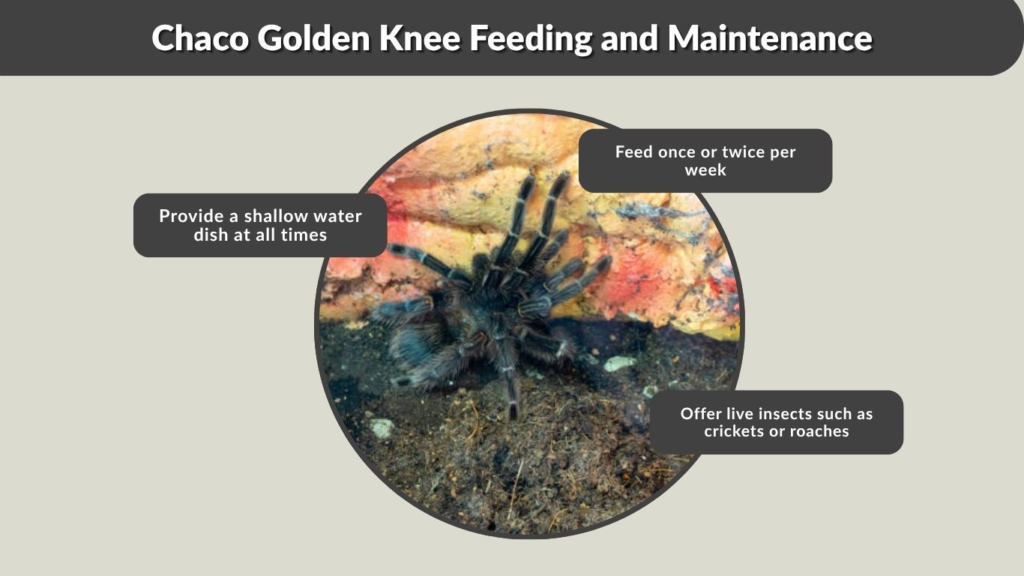
A regular feeding and maintenance routine keeps the tarantula healthy and active. This species is easy to feed and does not require complex care.
Feeding Routine
- Feed once or twice per week
- Offer live insects such as crickets or roaches
- Remove uneaten prey promptly
Cleaning and Water
- Provide a shallow water dish at all times
- Spot-clean waste regularly
- Avoid over-cleaning to reduce stress
Male vs Female Differences
The differences between male and female Chaco Golden Knee tarantulas are important for owners to understand. Females tend to grow larger and live much longer, making them more desirable for long-term keeping.
Males mature faster and often develop slimmer bodies and longer legs. After reaching maturity, their lifespan becomes significantly shorter. Identifying gender may require observing molts or physical characteristics, especially in younger spiders.
Pros and Cons as a Pet
Owning a Chaco Golden Knee tarantula has both advantages and drawbacks. Understanding these helps you decide if it is the right pet.
Advantages
- Very calm and beginner-friendly
- Long lifespan, especially females
- Easy care requirements
Disadvantages
- Slow growth rate
- Limited activity compared to other species
- Can flick irritating hairs
FAQs
How big does a Chaco Golden Knee get?
A fully grown Chaco Golden Knee tarantula can reach a leg span of about 7 to 8 inches. Its size, combined with its golden leg markings, makes it one of the most attractive and noticeable tarantulas.
Is the Chaco Golden Knee dangerous?
No, it is not dangerous to humans. Its venom is mild and usually causes only minor discomfort. It is known for its calm nature and is considered one of the safest tarantulas to keep.
How long does a Chaco Golden Knee live?
Females can live over 20 years with proper care, while males typically live between 5 and 7 years. This long lifespan makes females a popular choice among tarantula keepers.
Do Chaco Golden Knees burrow?
Yes, they may burrow, especially when young. As they grow older, they often prefer to stay on the surface but still use hides or shallow burrows for comfort and security.
Is the Chaco Golden Knee good for beginners?
Yes, it is one of the best tarantulas for beginners. Its calm temperament, easy care requirements, and low aggression make it an excellent choice for those new to keeping tarantulas.
