
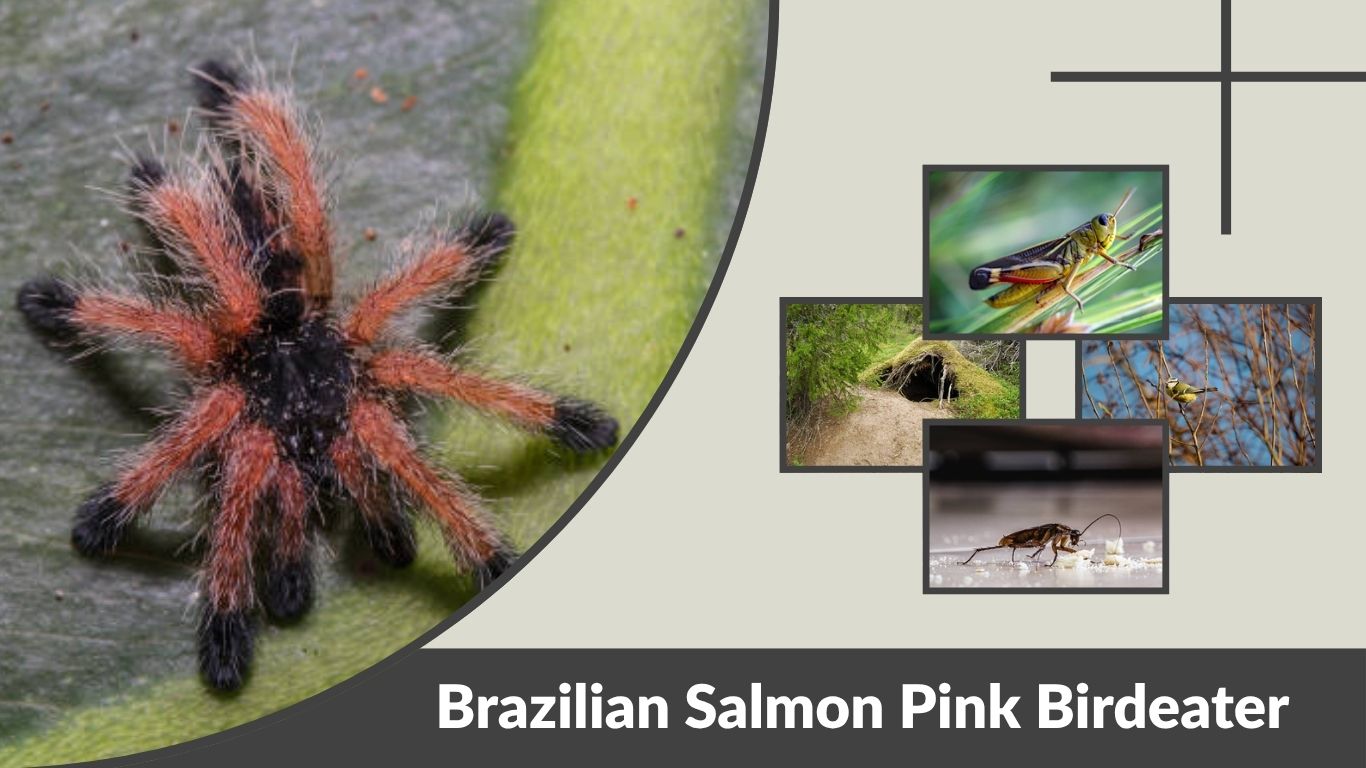
The Brazilian Salmon Pink Birdeater is one of the most popular and impressive tarantulas in the world. Known for its large size, fast growth, and striking salmon-colored hairs, it attracts both beginners and experienced keepers. Despite its intimidating appearance, it is generally manageable with proper care. Native to Brazil, this species adapts well to captivity when its environment is correctly maintained. In this guide, you will learn about its size, habitat, behavior, and essential care requirements.
What Is the Brazilian Salmon Pink Birdeater?
The Brazilian Salmon Pink Birdeater, scientifically known as Lasiodora parahybana, is a large New World tarantula species native to northeastern Brazil. It is well known for its rapid growth and impressive leg span, making it a favorite among tarantula enthusiasts.
Unlike the Goliath birdeater, which is heavier, this species grows faster and is more commonly available in the pet trade. Its name comes from the distinctive pinkish hairs covering its body, which become more visible as it matures.
Brazilian Salmon Pink Birdeater Size and Physical Appearance
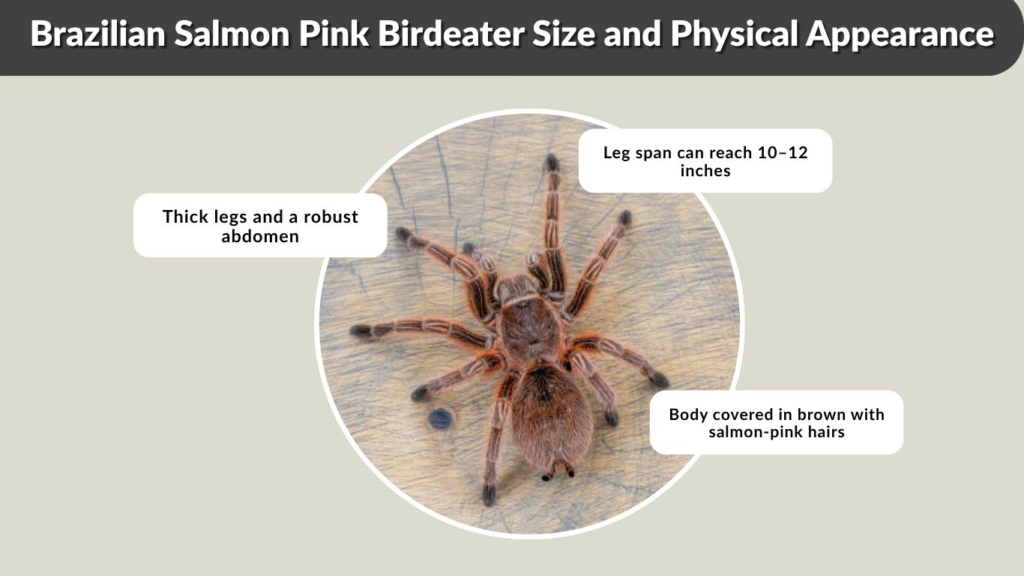
The size of this tarantula is one of its most attractive features. It can grow quickly and reach a large size within a few years.
- Leg span can reach 10–12 inches (25–30 cm)
- Body covered in brown with salmon-pink hairs
- Thick legs and a robust abdomen
This spider undergoes several molts as it grows, gradually increasing in size. Younger spiders, known as slings, start small but grow rapidly compared to many other tarantula species.
Brazilian Salmon Pink Birdeater Natural Habitat and Environment
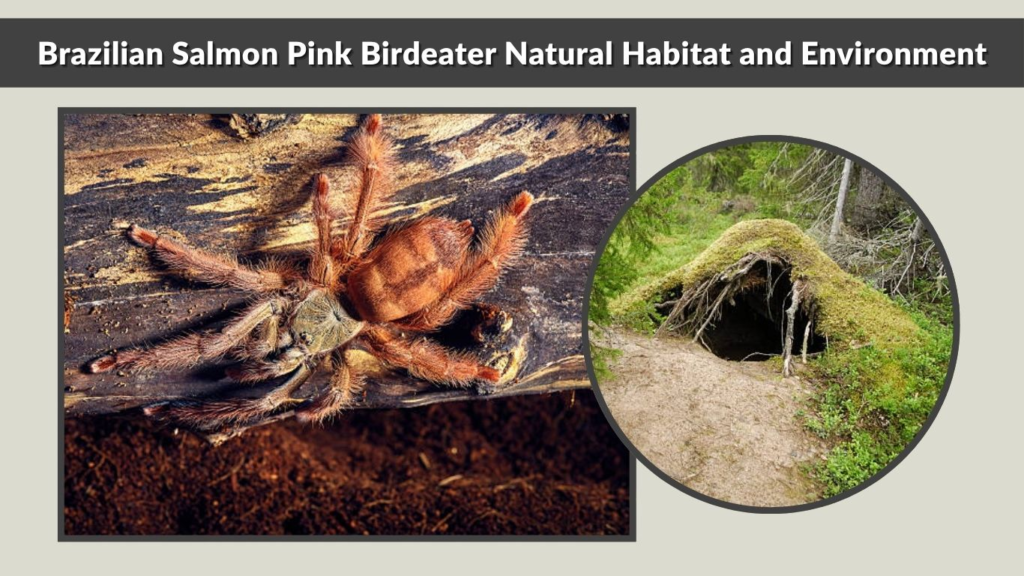
The Brazilian Salmon Pink Birdeater originates from warm regions of Brazil, where it lives on the ground and often burrows to create shelter.
It prefers environments with moderate humidity and stable temperatures. In the wild, it hides during the day and becomes active at night, using its surroundings to regulate body conditions. This natural behavior should be considered when recreating its habitat in captivity.
Brazilian Salmon Pink Birdeater Diet and Feeding Behavior
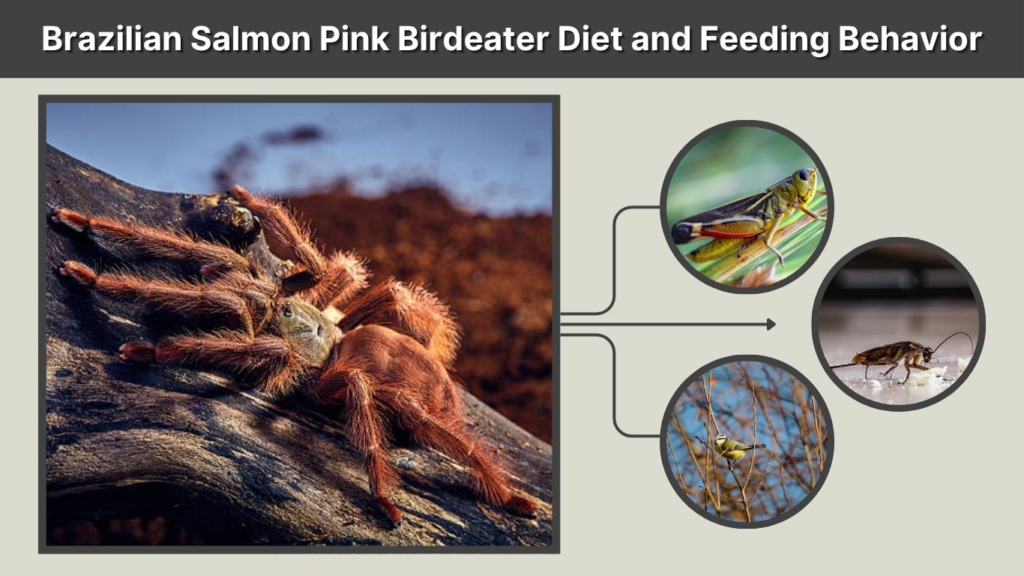
This tarantula is an opportunistic feeder that consumes a variety of prey. Its strong appetite contributes to its fast growth rate.
- Eats insects such as crickets and roaches
- Occasionally consumes small vertebrates
- Requires regular feeding for healthy development
It uses an ambush hunting style, waiting for prey to come within reach before striking quickly. Its fangs inject venom to immobilize prey, allowing it to feed efficiently.
Temperament and Behavior
The Brazilian Salmon Pink Birdeater is generally calm but can become defensive when disturbed. It is not aggressive by nature but should still be handled with caution.
- May flick urticating hairs when threatened
- Can move quickly despite its size
- Prefers to stay hidden rather than confront
These behaviors are natural defense mechanisms. Instead of biting, it usually relies on its hairs to deter threats, which can cause irritation if they come into contact with skin.
Brazilian Salmon Pink Birdeater Bite, Venom and Safety
Although this tarantula has large fangs, its venom is considered mild and not dangerous to humans. A bite can cause discomfort, but serious effects are rare.
Bite Effects
A bite from this species may result in localized pain, swelling, and mild irritation. The symptoms are usually temporary and similar to a bee sting. Medical attention is rarely needed unless an allergic reaction occurs.
Defensive Mechanisms
The spider’s primary defense is not its bite but its urticating hairs. These tiny hairs can be flicked into the air and may cause itching or irritation if they contact the skin or eyes. This makes handling unnecessary and often discouraged.
Overall, the Brazilian Salmon Pink Birdeater is more defensive than dangerous, and with proper care and respect, it poses very little risk.
Brazilian Salmon Pink Birdeater Lifespan and Growth Cycle
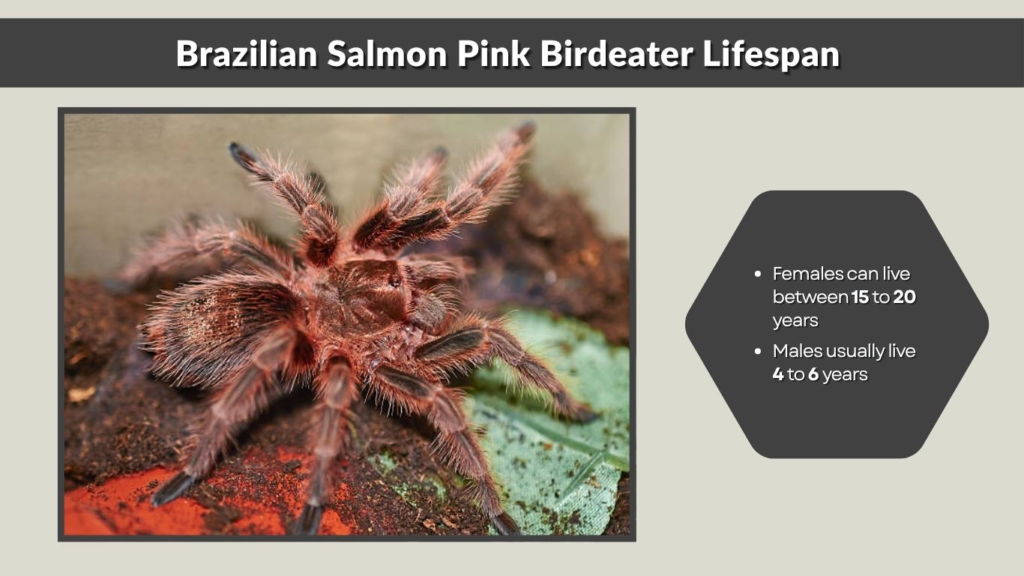
The Brazilian Salmon Pink Birdeater is known for its relatively long lifespan, especially in females. With proper care, it can live for many years and grow into a large, impressive specimen.
- Females can live between 15 to 20 years
- Males usually live 4 to 6 years
- Rapid growth compared to many other tarantulas
Molting Process
Molting is essential for growth and occurs multiple times throughout the spider’s life. During this phase, the tarantula sheds its old exoskeleton and forms a new one.
Before molting, the spider may stop eating and become less active. After the molt, it is very fragile and should not be disturbed. Proper humidity and a stress-free environment are important during this stage.
Brazilian Salmon Pink Birdeater Care Guide
This species is popular in captivity because it is hardy and adapts well when basic care needs are met. However, its size and defensive nature still require attention and preparation.
Enclosure Setup
- Use a spacious terrarium to accommodate growth
- Provide deep substrate for burrowing
- Include hiding spots for security
Substrate and Soil
- Coconut fiber or peat-based substrate works best
- Organic garden soil can be used if chemical-free
- Avoid fertilizers or pesticides in any soil
Temperature and Humidity
Maintaining stable environmental conditions is essential for the spider’s health. A warm temperature with moderate humidity helps replicate its natural habitat and supports proper molting and activity.
Brazilian Salmon Pink Birdeater Feeding and Maintenance
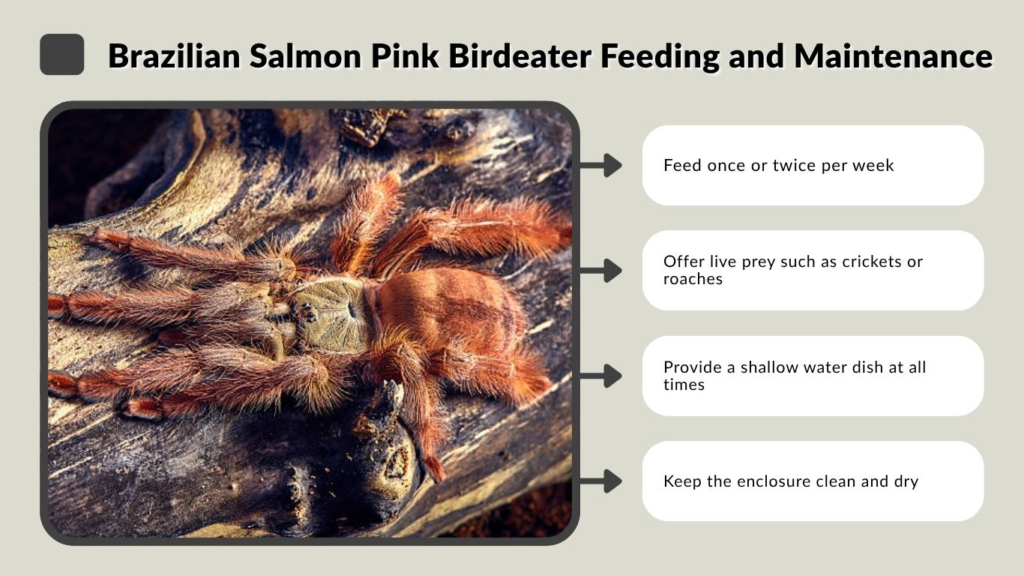
Feeding and general care are simple but must be consistent. A balanced routine ensures proper growth and long-term health.
Feeding Routine
- Feed once or twice per week
- Offer live prey such as crickets or roaches
- Remove uneaten food to prevent stress
Water and Cleaning
- Provide a shallow water dish at all times
- Keep the enclosure clean and dry
- Spot-clean waste regularly
Reproduction and Mating Behavior
The reproduction process of the Brazilian Salmon Pink Birdeater is fascinating and involves specific behaviors between males and females. Mature males search for females and perform vibration signals to communicate readiness for mating.
After successful mating, the female produces an egg sac containing hundreds of spiderlings. These spiderlings, known as slings, grow quickly and require careful conditions to survive. The early stages of life are critical, as they are more sensitive to environmental changes.
Pros and Cons as a Pet
Owning this tarantula can be rewarding, but it also comes with responsibilities. Understanding both advantages and challenges helps determine if it is the right choice.
Advantages
- Fast-growing and impressive size
- Hardy and adaptable species
- Widely available in the pet trade
Disadvantages
- Can be defensive and flick hairs
- Not suitable for frequent handling
- Requires a large enclosure
FAQs
How big does a Brazilian salmon pink birdeater get?
A fully grown Brazilian Salmon Pink Birdeater can reach a leg span of 10 to 12 inches. Its large size and thick body make it one of the most impressive tarantulas commonly kept in captivity.
Is the Brazilian salmon pink birdeater dangerous?
It is not considered dangerous to humans. Its venom is mild, but it can flick irritating hairs as a defense. These hairs can cause itching and discomfort if they come into contact with skin or eyes.
What does a Brazilian salmon pink birdeater eat?
It mainly eats insects such as crickets and roaches. Occasionally, it may consume small vertebrates. In captivity, a diet of live feeder insects is enough to keep it healthy.
Can I use garden soil in the enclosure?
Yes, but only if the soil is organic and free from chemicals, pesticides, or fertilizers. Unsafe soil can harm the spider and disrupt its environment.
How long does the Brazilian salmon pink birdeater live?
Females can live up to 15–20 years with proper care, while males usually have a shorter lifespan of around 4–6 years.
