
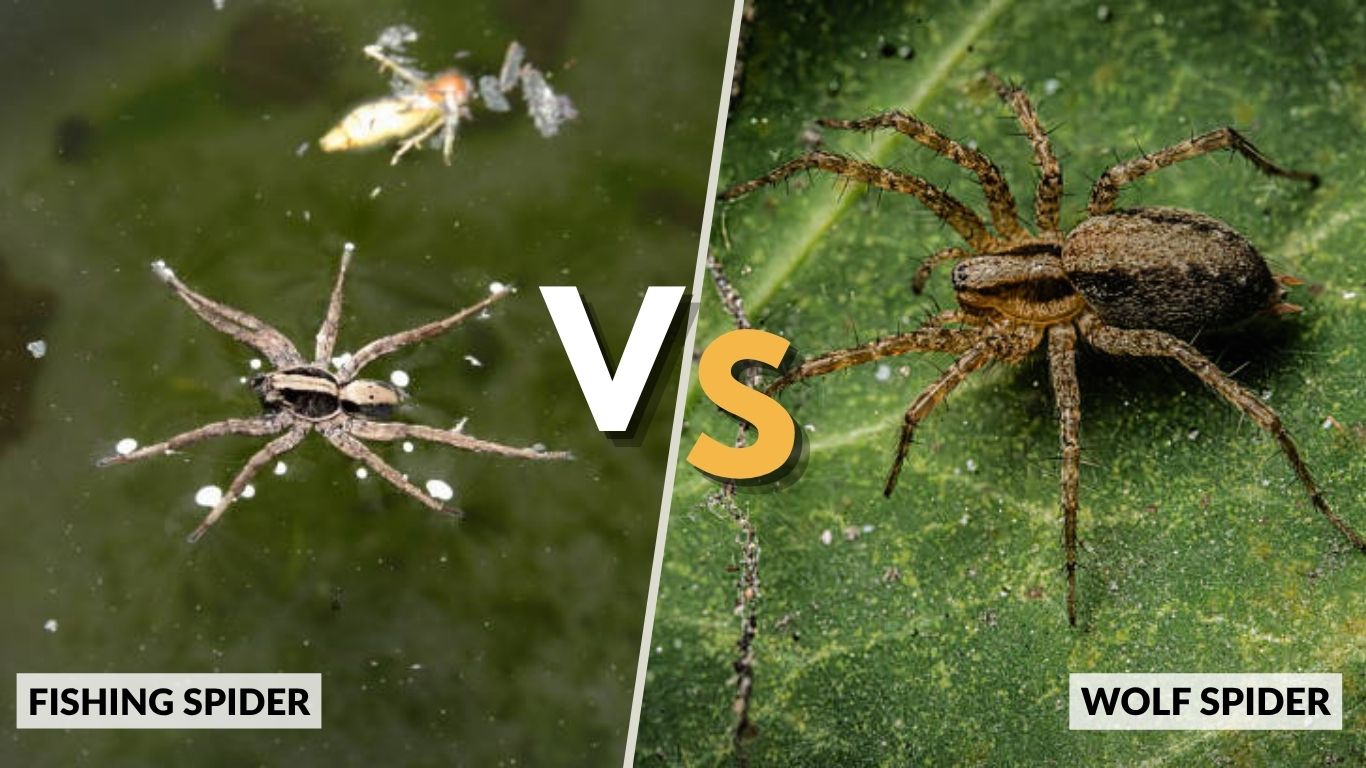
Fishing spiders and wolf spiders are often confused because they are both large, fast-moving, and do not rely on webs to hunt. At first glance, they may look similar, especially to someone unfamiliar with spider species. However, they differ in habitat, behavior, appearance, and hunting style. Understanding these differences makes it easier to identify them and know what to expect if you encounter one.
Fishing Spider vs Wolf Spider: Quick Comparison
| Feature | Fishing Spider | Wolf Spider |
| Family | Pisauridae | Lycosidae |
| Size | Larger (up to 3 inches leg span) | Medium to large |
| Habitat | Near water | Dry land, grass, soil |
| Hunting Style | Hunts on water and land | Hunts on ground |
| Web Use | No hunting web | No hunting web |
| Speed | Fast | Very fast |
| Bite | Mild, rare | Mild, rare |
| Appearance | Long legs, banded patterns | Hairy, robust body |
What Is a Fishing Spider?
Fishing spiders are large, semi-aquatic spiders known for their ability to move across water surfaces. They are typically found near lakes, ponds, rivers, and other freshwater environments.
Key Characteristics:
- Long legs with a relatively slim body
- Often seen near water edges, rocks, or docks
- Can walk on water using surface tension
- Hunts both land and aquatic prey
Unlike most spiders, fishing spiders can detect vibrations on the water’s surface, allowing them to locate prey such as insects, tadpoles, and even small fish. This unique ability sets them apart from many other spider species.
What Is a Wolf Spider?
Wolf spiders are ground-dwelling hunters known for their speed and strong vision. They do not build webs to catch prey but instead actively chase and capture it.
Key Characteristics:
- Hairy, thick-bodied appearance
- Usually brown or gray for camouflage
- Lives on the ground or in burrows
- Excellent eyesight compared to many spiders
Wolf spiders are commonly found in gardens, grasslands, forests, and even inside homes. Their ability to move quickly and hunt efficiently makes them one of the most recognizable ground spiders.
Habitat Differences
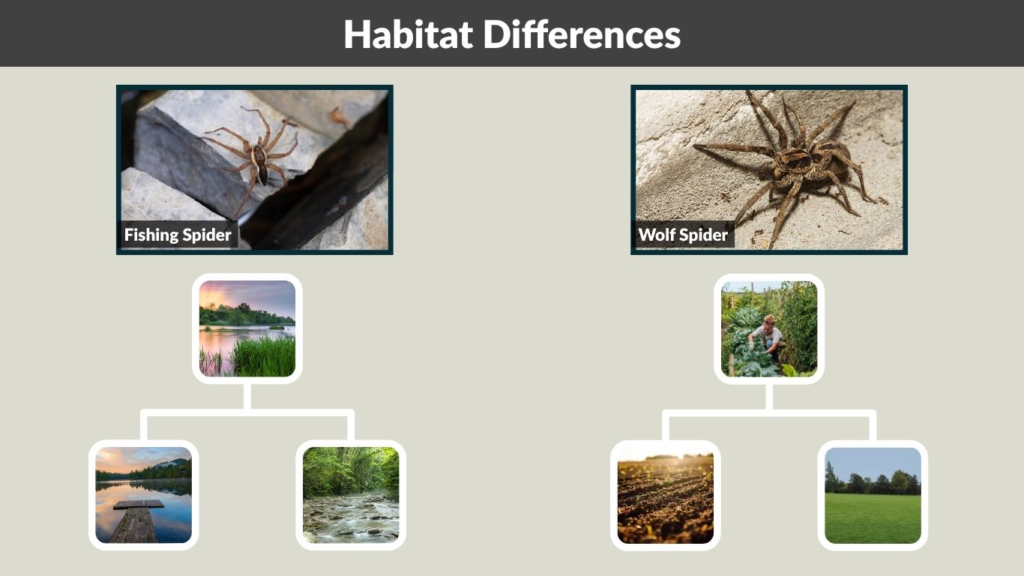
One of the biggest differences between fishing spiders and wolf spiders is where they live.
Fishing Spider:
- Found near water sources such as ponds, lakes, and streams
- Often rests on rocks, vegetation, or structures close to water
- Prefers moist environments
Wolf Spider:
- Found in dry environments like grass, soil, and gardens
- Lives in burrows or hides under debris
- Can adapt to many environments, including indoors
If you see a large spider near water, it is more likely a fishing spider. If it is running across the ground or grass, it is probably a wolf spider.
Hunting Style and Behavior
Both spiders are active hunters, but they use very different techniques.
Fishing Spider:
- Hunts on both land and water
- Detects vibrations on water surfaces
- Can catch aquatic prey like small fish and insects
- Often waits and ambushes prey
Fishing spiders rely on patience and environmental awareness. Their ability to sense movement on water gives them an advantage when hunting near aquatic environments.
Wolf Spider:
- Hunts on the ground
- Chases prey using speed
- Relies on strong eyesight
- Does not wait in one place for long
Wolf spiders are more aggressive hunters compared to fishing spiders. They actively pursue prey rather than waiting for it to come close.
Appearance Differences
Although they may seem similar at first, their physical appearance has clear differences.
Fishing Spider:
- Longer legs relative to body size
- Often has banded or striped leg patterns
- Slimmer and flatter body shape
- Less hairy appearance
Wolf Spider:
- Thick, robust body
- Noticeably hairy
- Shorter legs compared to fishing spiders
- Earth-toned colors for camouflage
These differences become easier to notice once you know what to look for.
Size Comparison
Fishing spiders are generally larger in terms of leg span, sometimes reaching up to 3 inches or more. Their long legs make them appear even bigger than they are.
Wolf spiders, on the other hand, are bulky and solid but usually have a smaller leg span. They may look heavier, but not as wide as fishing spiders when measured from leg to leg.
Speed and Movement Differences
Fishing Spider
Fishing spiders move quickly across both land and water. Their ability to glide over water surfaces makes them unique. They rely more on controlled, steady movement rather than rapid bursts of speed.
Wolf Spider
Wolf spiders are extremely fast runners on land. They rely on speed to chase and catch prey. Their quick, sudden movements often make them appear more aggressive, even though they are simply hunting or escaping danger.
Do Fishing Spiders and Wolf Spiders Bite?
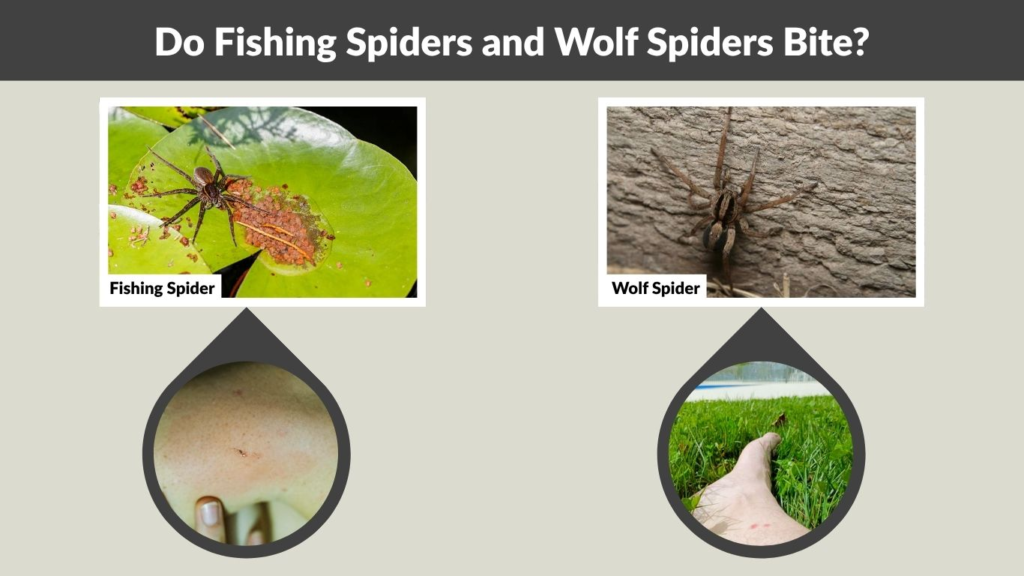
Fishing Spider
Fishing spiders can bite if they feel threatened, but this is rare. They usually try to escape rather than attack. Their bite is mild and does not pose any serious risk to humans.
Wolf Spider
Wolf spiders may bite in self-defense if handled or provoked. Their bite can cause mild pain, redness, or irritation, but it is not dangerous. Most encounters do not result in bites.
Venom and Danger Level
Key Points:
- Both spiders have venom, but it is not harmful to humans
- Bites are rare and usually happen only in self-defense
- Symptoms are mild, such as slight pain or irritation
Overall, neither fishing spiders nor wolf spiders are considered dangerous.
Diet Differences
Fishing Spider
Fishing spiders have a more varied diet due to their environment. They eat:
- Aquatic insects
- Small fish and tadpoles
- Land insects near water
Wolf Spider
Wolf spiders focus on ground-based prey. They eat:
- Ants, beetles, and crickets
- Small insects found in grass or soil
- Occasionally other small spiders
Their diets reflect where they live and how they hunt.
Which Spider Is More Aggressive?
Behavior Comparison:
- Fishing spiders avoid confrontation and prefer to stay still or escape
- Wolf spiders appear more active because they chase prey
- Neither spider is naturally aggressive toward humans
Wolf spiders may seem more aggressive due to their fast movement, but both species are generally harmless.
Which One Is More Likely to Enter Homes?
Fishing Spider
Fishing spiders rarely enter homes unless they are near water sources. Indoor encounters are uncommon.
Wolf Spider
Wolf spiders are more likely to enter homes, especially while searching for prey or shelter. They are often seen on floors, walls, or in basements.
How to Tell the Difference Quickly
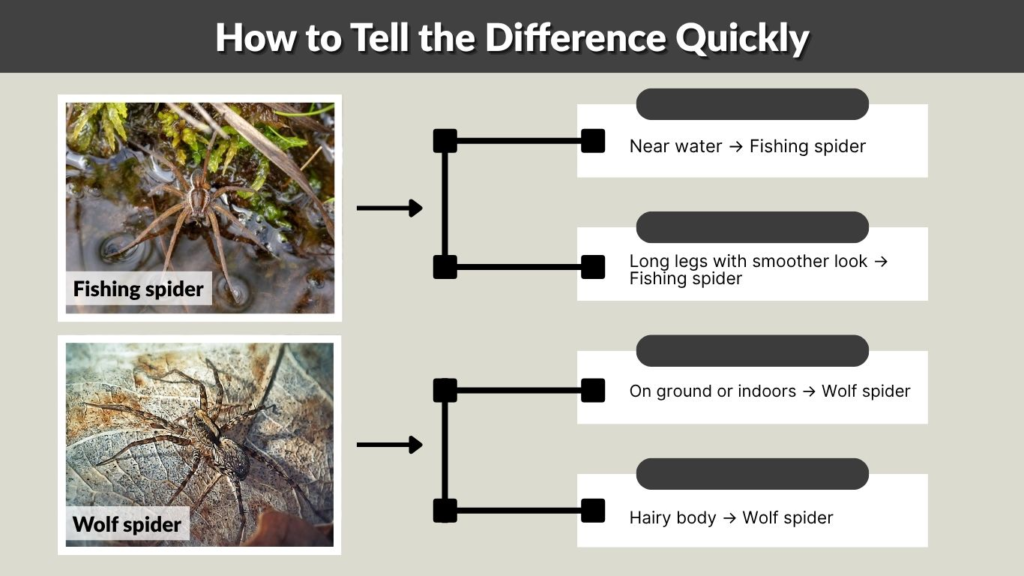
Simple Identification Tips:
- Near water → Fishing spider
- On ground or indoors → Wolf spider
- Hairy body → Wolf spider
- Long legs with smoother look → Fishing spider
These quick checks can help you identify the spider within seconds.
Are Fishing Spiders and Wolf Spiders the Same?
Final Answer
Fishing spiders and wolf spiders are not the same. They belong to different families and have clear differences in habitat, behavior, and hunting style. While they may look similar at first, their environment and movement patterns make identification easier.
FAQ
Are fishing spiders dangerous?
Fishing spiders are not dangerous to humans. Although they can bite if threatened, this is very rare. Their venom is mild and does not cause serious harm. Most people will never experience a bite, as these spiders prefer to avoid contact and escape when disturbed.
Are wolf spiders dangerous?
Wolf spiders are also not dangerous. They may bite in self-defense, but the effects are usually mild, including slight pain or redness. They are not aggressive toward humans and generally try to run away rather than confront threats.
Can fishing spiders walk on water?
Yes, fishing spiders can walk on water using surface tension. This ability allows them to hunt aquatic prey by detecting vibrations on the water’s surface. It is one of their most unique traits and a key difference from many other spider species.
Which is bigger, fishing spider or wolf spider?
Fishing spiders are generally larger in terms of leg span, often appearing wider due to their long legs. Wolf spiders are more compact and bulky but usually smaller in overall spread. This makes fishing spiders look bigger at first glance.
Which spider is more common?
Wolf spiders are more common and widely found in various environments, including homes, gardens, and forests. Fishing spiders are less commonly seen because they prefer areas close to water, which limits where they are typically found.
