
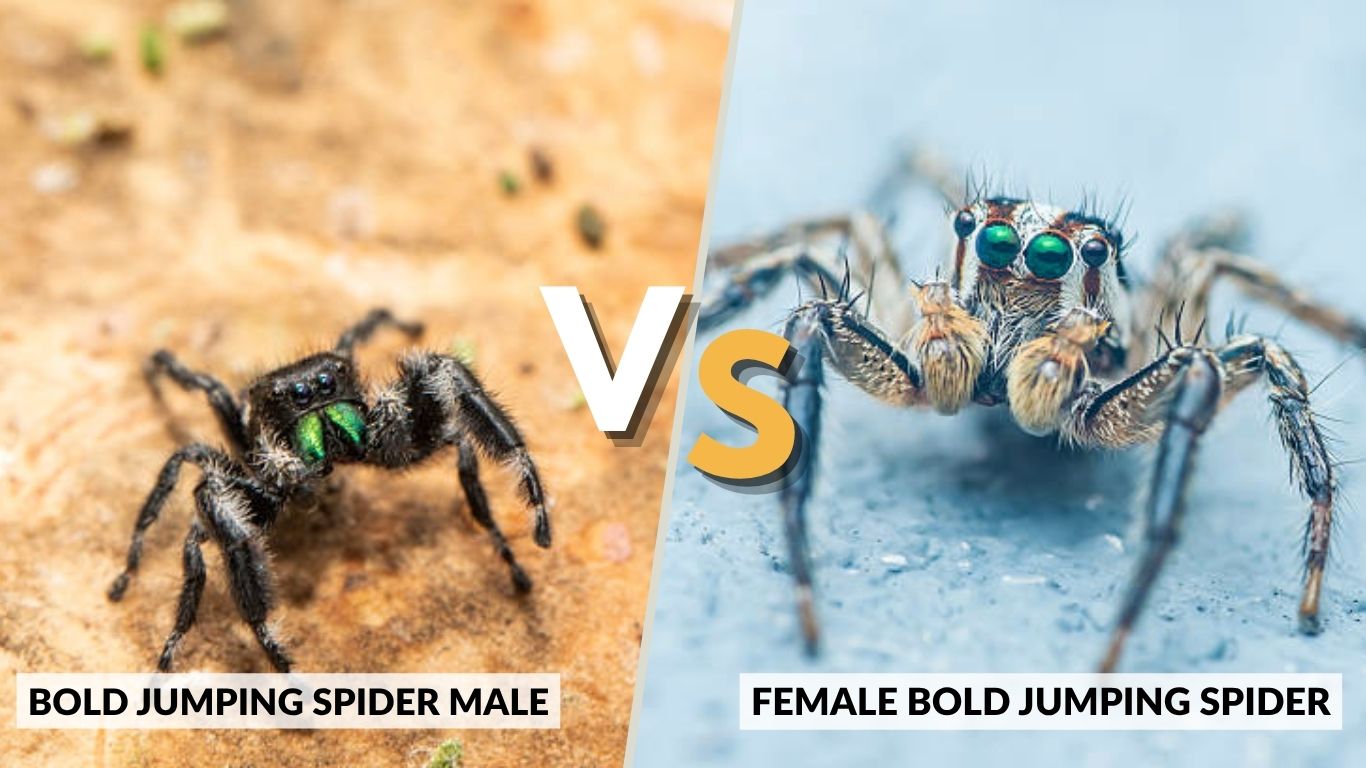
The bold jumping spider (Phidippus audax) is one of the most recognizable jumping spiders, known for its fuzzy body, bright markings, and curious behavior. Many people are interested in the differences between male and female bold jumping spiders, especially when trying to identify them.
If you’re searching for bold jumping spider male vs female or male vs female bold jumping spider, this guide will help you understand how to tell them apart based on size, color, and behavior.
What Is a Bold Jumping Spider
The bold jumping spider is a species of jumping spider commonly found in North America. It is known for its excellent vision and ability to jump long distances relative to its size.
These spiders are usually black with white or orange spots on their abdomen and have metallic-colored fangs that can appear green or blue. They are active hunters and rely on sight rather than webs to catch prey.
Bold jumping spiders are harmless to humans and are often considered beneficial because they help control insect populations.
Bold Jumping Spider Male vs Female (Quick Comparison Table)
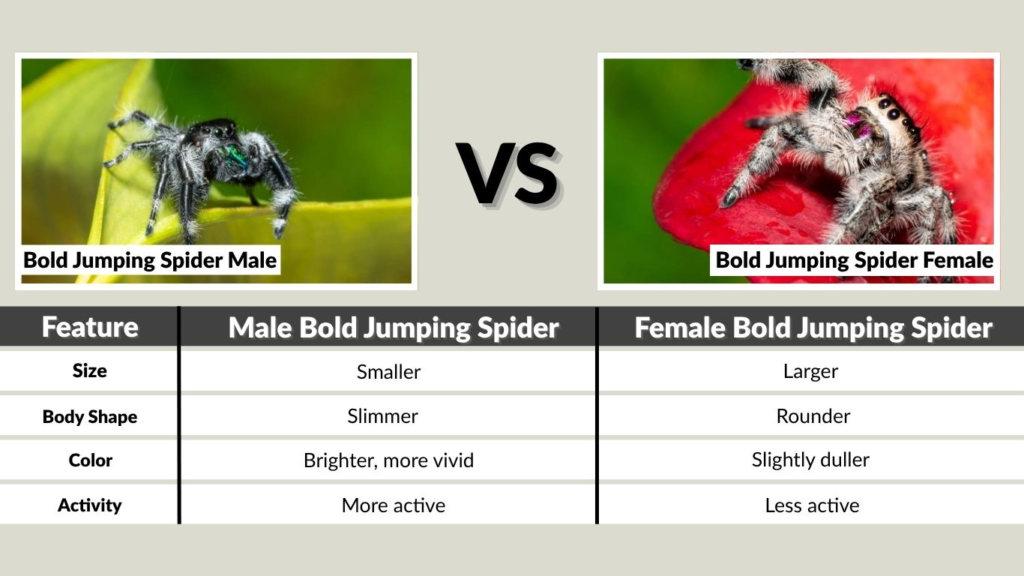
| Feature | Male Bold Jumping Spider | Female Bold Jumping Spider |
| Size | Smaller | Larger |
| Body Shape | Slimmer | Rounder |
| Color | Brighter, more vivid | Slightly duller |
| Activity | More active | Less active |
| Lifespan | Shorter | Longer |
Key Differences Between Male and Female Bold Jumping Spiders
Size Difference
One of the easiest ways to tell the difference between a male and female bold jumping spider is size.
Female bold jumping spiders are generally larger and have a more rounded body. Males are smaller and slimmer, which makes them appear more agile.
This size difference becomes more noticeable in adult spiders and is one of the most reliable identification features.
Color and Appearance
Male bold jumping spiders usually have more vibrant and noticeable colors. Their markings can appear brighter, and their metallic fangs (chelicerae) often show stronger green or blue tones.
Females, on the other hand, may look slightly duller and have a thicker body. Their overall appearance is less flashy compared to males, but they are still easy to recognize.
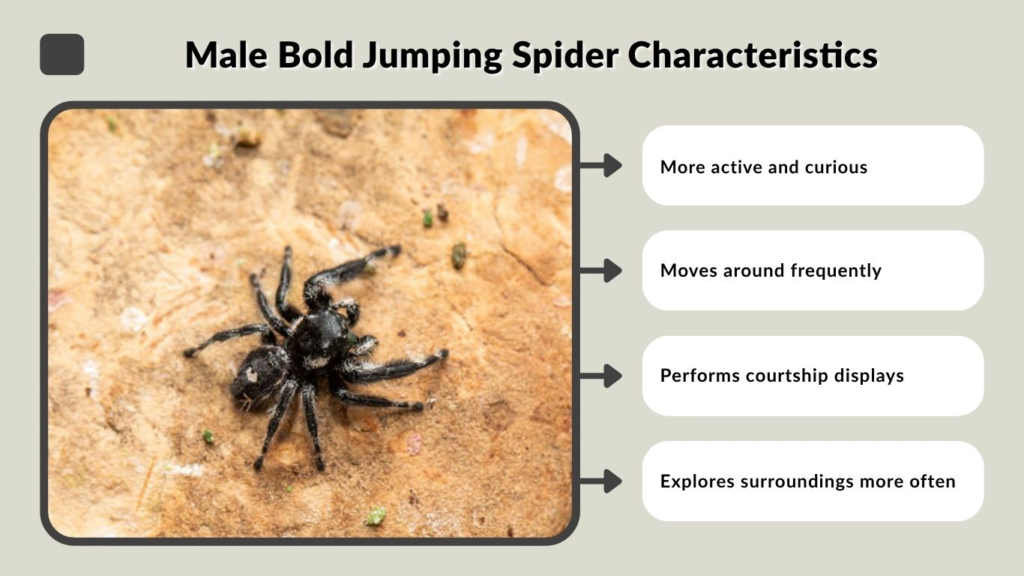
Male Bold Jumping Spider Characteristics
Appearance
Male bold jumping spiders are smaller and more slender than females. Their body is often darker with bright white spots on the abdomen.
Their metallic mouthparts are usually very noticeable and can appear green or blue, which is a key feature in identifying males.
Behavior
- More active and curious
- Moves around frequently
- Performs courtship displays
- Explores surroundings more often
Males are known for their energetic behavior, especially during mating periods when they search for females.
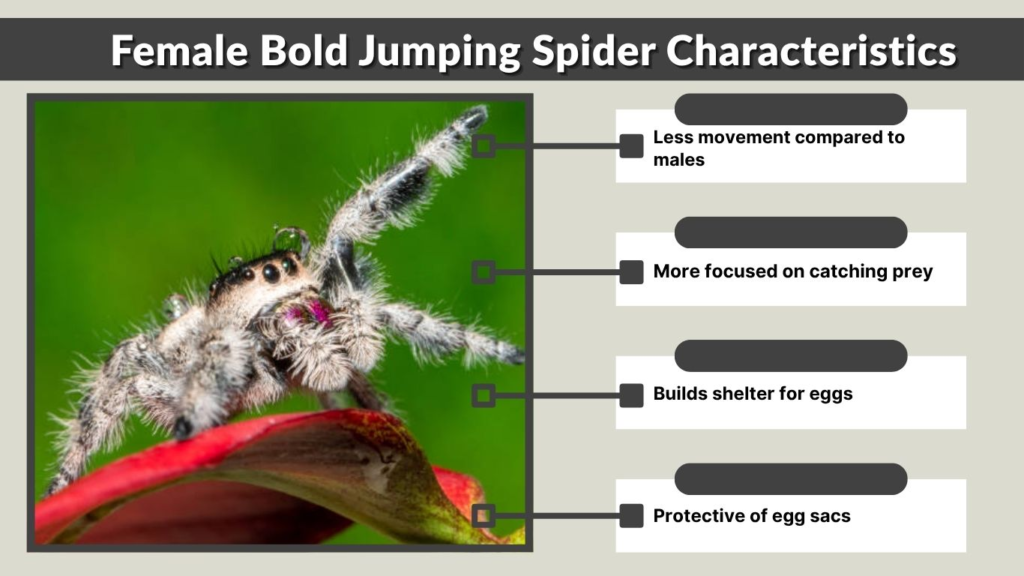
Female Bold Jumping Spider Characteristics
Appearance
Female bold jumping spiders are larger and have a thicker, more rounded abdomen. Their markings are similar to males but may appear less vivid.
They often look bulkier due to their body shape, especially when carrying eggs.
Behavior
Female bold jumping spiders are generally less active than males. They tend to stay in one area and focus on hunting and survival.
- Less movement compared to males
- More focused on catching prey
- Builds shelter for eggs
- Protective of egg sacs
Their behavior is more practical and less exploratory than males.
Behavior Differences (Male vs Female)
Movement and Activity
Male bold jumping spiders are much more active and mobile. They move frequently, exploring their surroundings and searching for mates.
Females are more stationary and tend to stay in a specific area, especially when preparing to lay eggs.
Hunting Style
Both male and female bold jumping spiders are skilled hunters that rely on vision. However, females may hunt more efficiently due to their larger size and strength.
Males may hunt less frequently during mating periods, as their focus shifts toward finding a mate.
Reproduction and Mating Behavior
Male Role
Male bold jumping spiders play an active role in courtship. They perform a unique mating dance to attract females, using leg movements and body vibrations.
This display helps signal that they are not prey. Males must approach carefully, as females may attack if they feel threatened.
Female Role
Female bold jumping spiders choose whether to accept a mate. After mating, they lay eggs and create a protective silk sac.
They guard the egg sac closely until the spiderlings hatch, showing strong protective behavior during this stage.
Lifespan Differences
There is a noticeable difference in lifespan between male and female bold jumping spiders.
Males typically have shorter lifespans because they spend more energy searching for mates and are more exposed to predators.
Females usually live longer, especially because they remain in safer areas and focus on reproduction and survival.
Habitat & Where They Are Found
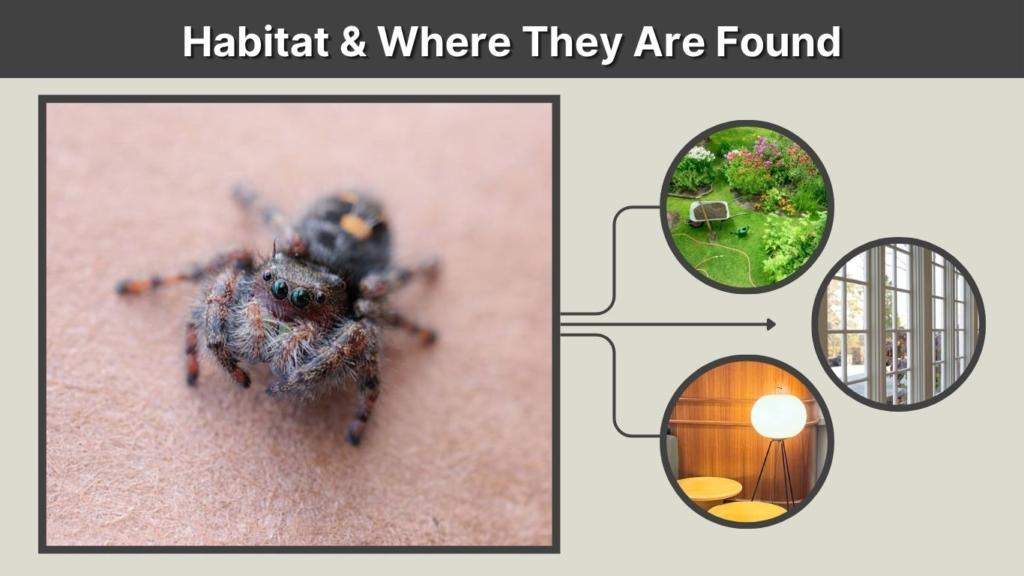
Both male and female bold jumping spiders share similar habitats. They are commonly found in:
- Gardens and outdoor plants
- Walls, fences, and windows
- Inside homes near light sources
They prefer areas with plenty of insects, which provide a steady food source. Their excellent vision helps them thrive in both indoor and outdoor environments.
How to Identify Male vs Female Quickly
Simple Identification Tips
- Larger size → Female
- Smaller and slimmer → Male
- Brighter colors → Male
- Rounder abdomen → Female
- More active movement → Male
These quick checks can help you identify the spider in seconds without needing close inspection.
Bold Jumping Spider Male vs Female (Visual Differences)
When looking at pictures, the differences become clearer. Males often appear slimmer with more vibrant markings, while females look bulkier with a rounded abdomen.
The metallic green or blue fangs are usually more noticeable in males, making them easier to distinguish in close-up images.
These visual clues are especially helpful when comparing bold jumping spider male vs female pictures.
Are Male or Female Bold Jumping Spiders Dangerous
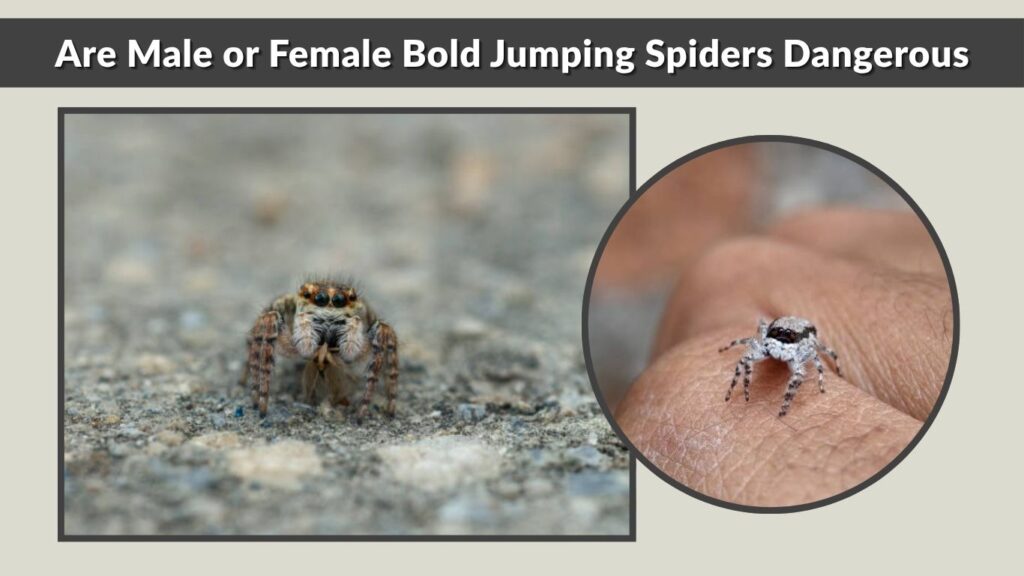
Neither male nor female bold jumping spiders are dangerous to humans. They are non-aggressive and prefer to avoid contact.
Bites are extremely rare and usually occur only if the spider is handled. Even then, the bite is mild and not medically significant.
Both genders are considered harmless and beneficial for controlling insect populations.
Common Myths
Myth: Male Spiders Are More Dangerous
Many people assume male spiders are more dangerous because they are more active. In reality, both male and female bold jumping spiders are harmless and pose no threat to humans.
Myth: Bigger Means More Dangerous
Female bold jumping spiders are larger, but size does not mean they are more dangerous. They are just as harmless as males and focus more on survival and reproduction.
FAQs
What is the difference between male and female bold jumping spiders
Male bold jumping spiders are smaller, more colorful, and more active, while females are larger, rounder, and less active. These differences make it easier to identify them based on size, color, and behavior.
Are male or female bold jumping spiders bigger
Female bold jumping spiders are bigger than males. They have a thicker body and a more rounded abdomen, especially when carrying eggs.
How can you tell if a bold jumping spider is male or female
You can identify them by size, color, and behavior. Males are smaller and more active, while females are larger and more stationary.
Are bold jumping spiders dangerous
No, bold jumping spiders are not dangerous. They are harmless to humans and rarely bite. Even if they do, the bite is mild and not medically significant.
Do male and female bold jumping spiders behave differently
Yes, males are more active and perform courtship dances, while females are more focused on hunting and protecting their eggs.
