
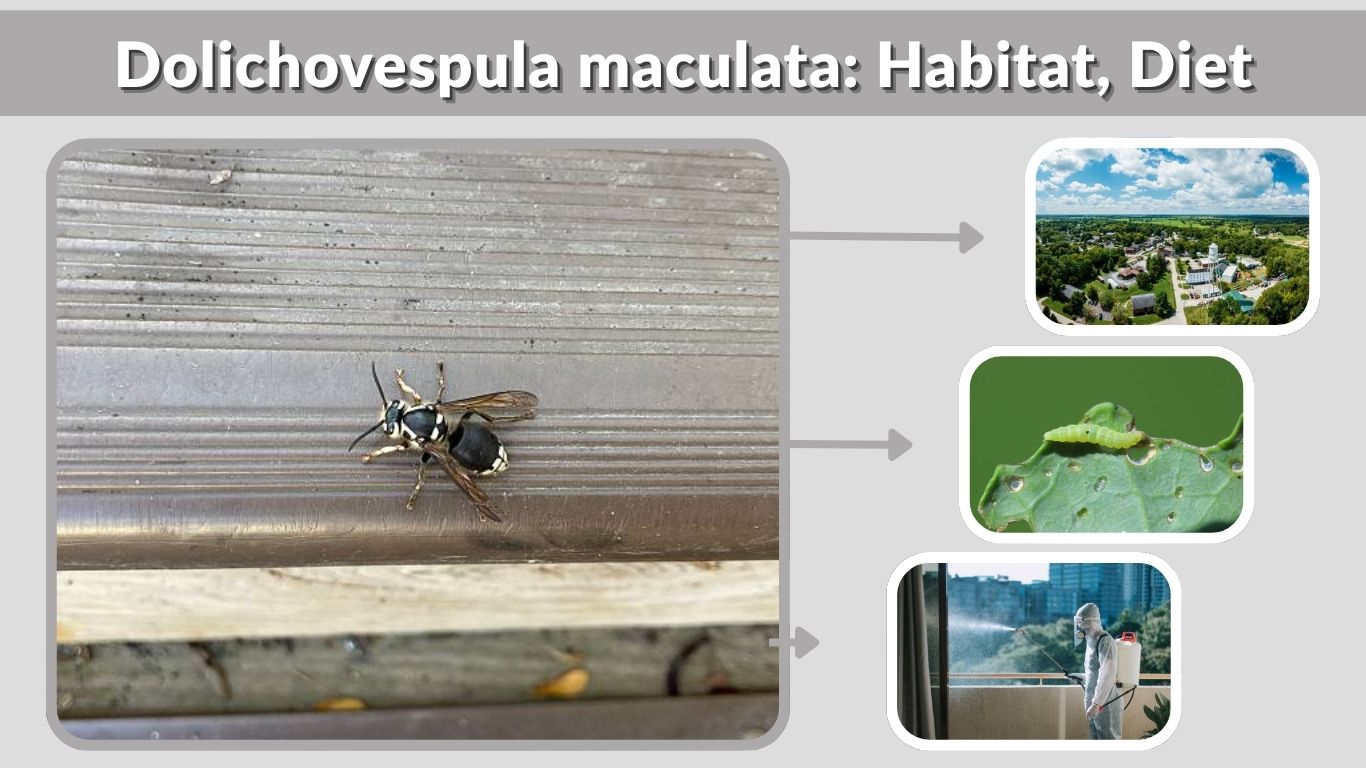
Dolichovespula maculata, commonly known as the bald-faced hornet, is one of the most recognizable aerial wasps in North America. Despite its name, it is not a true hornet but a type of yellowjacket. Its bold black-and-white coloration, large paper nests, and highly defensive behavior make it both fascinating and intimidating to humans.
This species plays an important ecological role as a predator of many pest insects, helping maintain balance in natural and garden ecosystems. However, due to its aggressive nest defense and painful stings, it is often misunderstood and feared. In this article, we’ll explore its classification, physical traits, habitat, and behavior in detail.
Taxonomy and Scientific Classification
Dolichovespula maculata belongs to a well-known group of social wasps that are widely distributed and ecologically significant.
- Kingdom: Animalia
- Phylum: Arthropoda
- Class: Insecta
- Order: Hymenoptera
- Family: Vespidae
- Genus: Dolichovespula
- Species: Dolichovespula maculata
Is It Really a Hornet?
Although commonly referred to as a hornet, this species is technically a type of yellowjacket. True hornets belong to the genus Vespa, whereas Dolichovespula maculata falls under a different genus.
The confusion arises mainly due to its large size, aerial nest-building habits, and aggressive defensive behavior—traits commonly associated with hornets. However, scientifically speaking, calling it a “bald-faced hornet” is more of a traditional name than an accurate classification.
Dolichovespula maculata Physical Characteristics and Identification
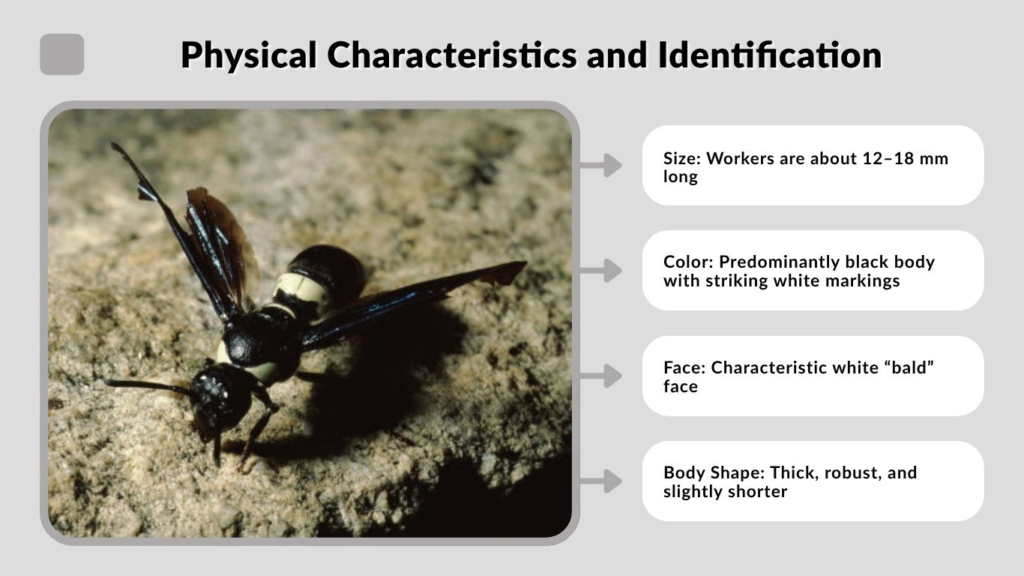
The bald-faced hornet is easily identifiable due to its distinctive appearance. Its contrasting black and white coloration sets it apart from most other wasps, which typically feature yellow markings.
- Size: Workers are about 12–18 mm long, while queens can be slightly larger
- Color: Predominantly black body with striking white markings
- Face: Characteristic white “bald” face
- Body Shape: Thick, robust, and slightly shorter than some paper wasps
Key Identification Features
Several features make this species easy to recognize:
- Bright white markings on the face and abdomen
- A stocky and compact body structure
- Smooth stinger that allows repeated stinging
- Rapid and direct flight pattern
Differences Between Castes
Like other social wasps, Dolichovespula maculata has a caste system:
- Queen: Largest in size; responsible for laying eggs and starting the colony
- Workers: Smaller females that handle nest building, defense, and food collection
- Males (Drones): Slightly different in appearance; their primary role is reproduction
Understanding these differences helps in identifying the structure and activity of a colony.
Dolichovespula maculata Habitat and Geographic Distribution
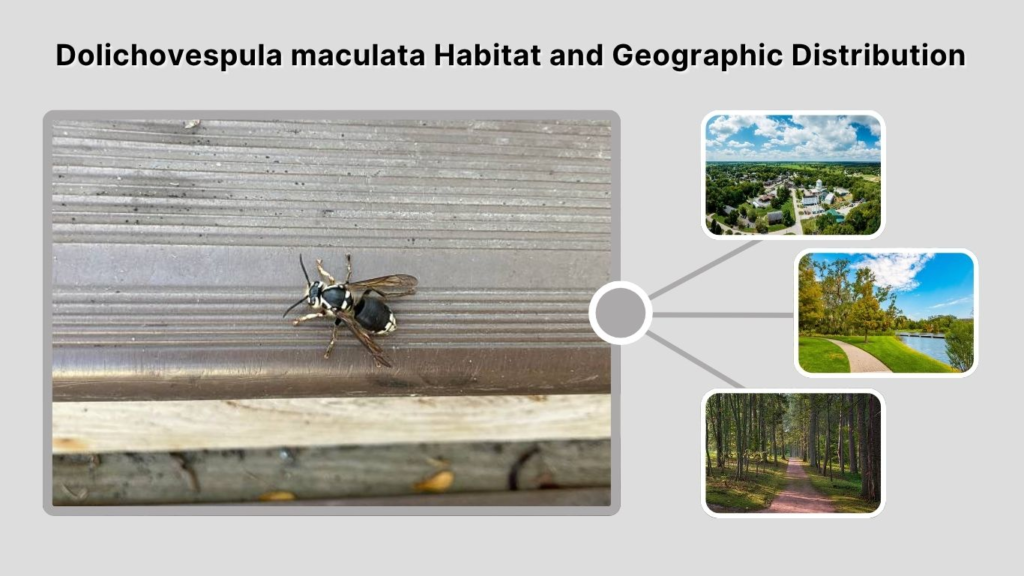
Dolichovespula maculata is native to North America and is widely distributed across the United States and Canada. It thrives in a variety of environments, from dense forests to suburban neighborhoods.
- Found in both rural and urban areas
- Prefers temperate climates
- Common in gardens, parks, and wooded regions
These wasps are highly adaptable and can establish colonies wherever suitable nesting sites and food sources are available.
Common Nesting Locations
One of the defining characteristics of this species is its aerial nesting behavior. Unlike ground-nesting yellowjackets, bald-faced hornets typically build their nests above ground.
Common nesting spots include:
- Tree branches and shrubs
- Building eaves and roof overhangs
- Utility poles and fences
- Dense vegetation or hidden elevated areas
Their preference for elevated and sheltered locations helps protect the colony from predators and environmental disturbances.
Nest Structure and Colony Behavior
The nest of Dolichovespula maculata is one of its most remarkable features. These nests are large, enclosed, and made from a paper-like material created by chewing wood fibers mixed with saliva.
- Typically gray and layered in appearance
- Football-shaped and fully enclosed
- Can grow up to the size of a basketball
Colony Size and Organization
A mature colony can contain several hundred individuals. Each member plays a specific role that contributes to the survival and efficiency of the colony.
- Queen: Central reproductive figure
- Workers: Maintain nest, gather food, defend colony
- Males: Appear later in the season for mating
This organized social structure allows the colony to function efficiently and respond quickly to threats.
Seasonal Nest Cycle
The lifecycle of the nest follows a predictable seasonal pattern:
- Spring: A fertilized queen emerges from hibernation and begins building a small nest
- Early Summer: First generation of workers emerges and takes over colony duties
- Late Summer: Colony reaches peak size and activity
- Fall: Reproductive individuals are produced, and the colony begins to decline
By winter, most of the colony dies off, leaving only fertilized queens to survive and start new colonies the following year.
Dolichovespula maculata Diet and Feeding Habits
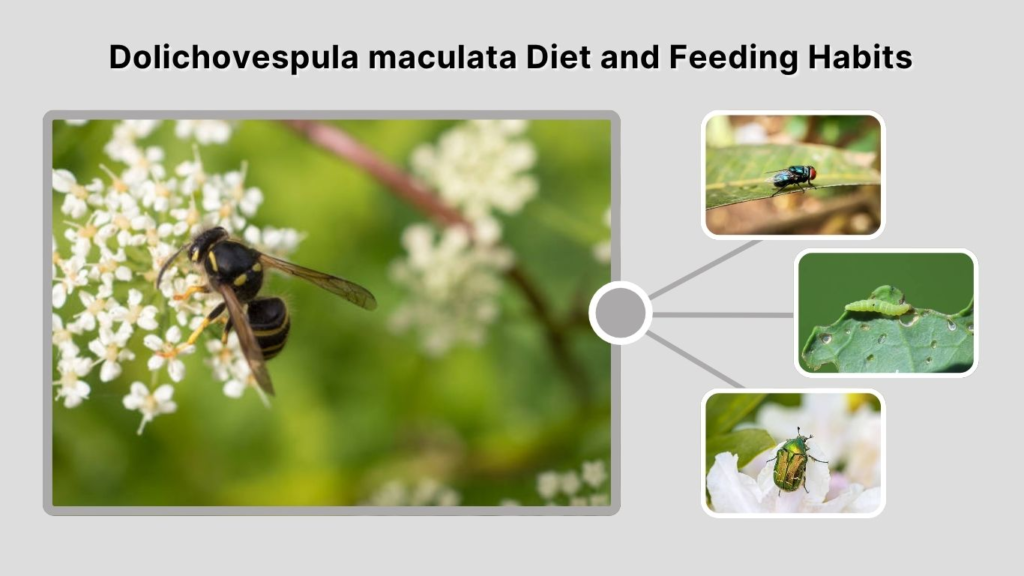
Dolichovespula maculata is both a predator and a scavenger, making it an important part of the ecosystem. Its diet varies depending on availability and the needs of the colony.
- Feeds on live insects such as flies, caterpillars, and beetles
- Consumes nectar and sugary substances for energy
- Workers chew prey into a paste to feed larvae
Role as Natural Pest Controllers
One of the most beneficial aspects of this species is its role in controlling pest populations.
- Reduces numbers of harmful insects
- Helps protect crops and garden plants
- Contributes to ecological balance
Despite their intimidating presence, bald-faced hornets provide significant environmental benefits through their predatory behavior.
Behavior and Aggression
Dolichovespula maculata is widely known for its defensive and sometimes aggressive behavior, especially when its nest is disturbed. While it does not actively seek out humans to attack, it reacts quickly to perceived threats near its colony.
- Highly protective of nest area
- Quick response to vibrations or movement
- Can pursue threats over short distances
Why Are They Aggressive?
Their aggression is primarily driven by colony defense. Since the nest contains larvae and the queen, protecting it is critical for survival.
- Sensitive to noise, movement, and proximity
- Release alarm pheromones when threatened
- Other workers join in defense once alerted
This coordinated response makes them more intimidating than many other wasps.
Sting Characteristics
The sting of a bald-faced hornet is painful and can occur multiple times because their stinger is smooth (unlike bees).
- Sharp, burning pain
- Swelling and redness
- Multiple stings possible
For most people, the effects are temporary. However, individuals with allergies may experience severe reactions requiring immediate medical attention.
Life Cycle of Dolichovespula maculata
The life cycle of this species follows a complete metamorphosis, consisting of four stages: egg, larva, pupa, and adult.
- Eggs are laid in individual cells
- Larvae are fed by worker wasps
- Pupation occurs within capped cells
Role of the Queen
The queen plays a crucial role in colony formation and growth.
- Emerges in spring after winter dormancy
- Builds the initial nest alone
- Lays eggs and regulates colony development
Once workers emerge, the queen focuses solely on reproduction.
End of Colony Cycle
As temperatures drop in late fall, the colony begins to decline.
- Workers and males die off
- Only fertilized queens survive
- Queens find sheltered places to overwinter
The cycle then repeats the following spring with new colonies.
Ecological Importance
Despite their aggressive reputation, bald-faced hornets are beneficial insects that contribute to environmental balance.
- Control populations of harmful insects
- Serve as part of the food chain
- Support biodiversity
Are They Beneficial or Harmful?
They can be both, depending on the context.
- Beneficial: Reduce pests and support ecosystems
- Harmful: Pose risks when nesting near human activity
Understanding this balance helps reduce unnecessary fear and encourages coexistence when possible.
Human Interaction and Safety Tips
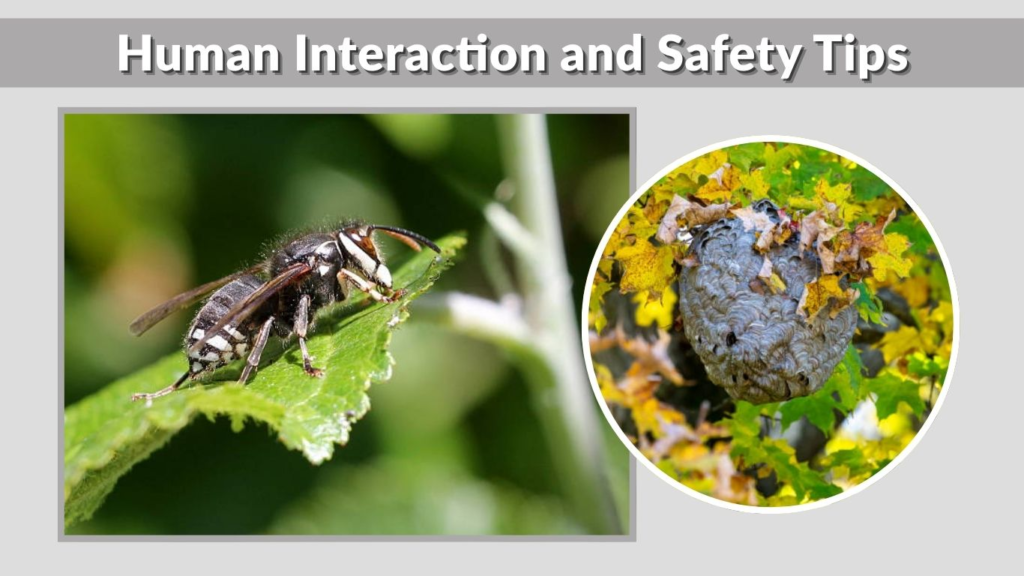
Encounters with Dolichovespula maculata are common, especially in suburban and garden environments. Knowing how to behave around them can prevent dangerous situations.
- Stay calm and avoid sudden movements
- Do not approach or disturb nests
- Be cautious when working outdoors
What to Do If You Encounter a Nest
If you discover a nest nearby:
- Keep a safe distance
- Avoid loud noises or vibrations near it
- Do not attempt to poke or remove it casually
Observation from a distance is usually safe, but close interaction should be avoided.
First Aid for Stings
If stung, quick and simple actions can reduce discomfort:
- Wash the area with soap and water
- Apply a cold compress to reduce swelling
- Use antihistamines or pain relievers if needed
Seek medical help immediately if symptoms such as difficulty breathing or severe swelling occur.
Nest Removal and Control Methods
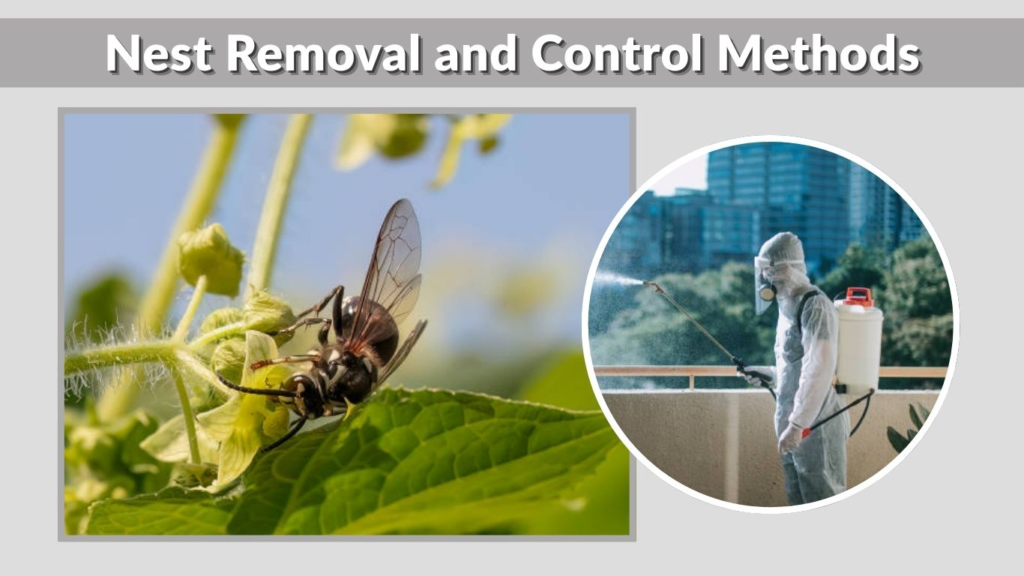
In some cases, nest removal becomes necessary, especially when it poses a direct risk to people.
- Removal is best done at night when activity is low
- Protective gear is essential
- Risk of multiple stings is high
Professional vs DIY Removal
Choosing the right approach is important:
- Professional removal: Safer and more effective
- DIY removal: Risky and not recommended for large nests
Experts have the proper tools and experience to handle the situation safely.
Prevention Tips
Preventing nests is often easier than removing them.
- Seal cracks and openings in buildings
- Remove food sources and sugary residues
- Regularly inspect outdoor structures
These steps can reduce the likelihood of nest establishment.
Interesting Facts About Bald-Faced Hornets
Bald-faced hornets are more fascinating than many people realize.
- They are not true hornets despite their name
- Their nests can house hundreds of individuals
- They can recognize threats and respond collectively
- Their paper nests are made from chewed wood fibers
These unique traits make them one of the most intriguing social wasps.
FAQs
Are bald-faced hornets dangerous to humans?
They are generally not aggressive unless their nest is threatened. However, they can sting multiple times and their stings are painful. For most people, the effects are mild, but allergic individuals may experience serious reactions that require immediate medical care.
How big can their nests get?
Their nests can grow quite large, often reaching the size of a football or even larger. At peak season, a single nest may contain hundreds of hornets, making it highly active and well-defended.
Do they reuse their nests every year?
No, bald-faced hornets do not reuse old nests. Each spring, a new queen builds a completely new nest, while the previous year’s nest remains abandoned and inactive.
Can they be beneficial despite being aggressive?
Yes, they are highly beneficial as natural pest controllers. They prey on many harmful insects, helping protect plants and maintain ecological balance, even though their defensive nature can pose risks near human activity.
