
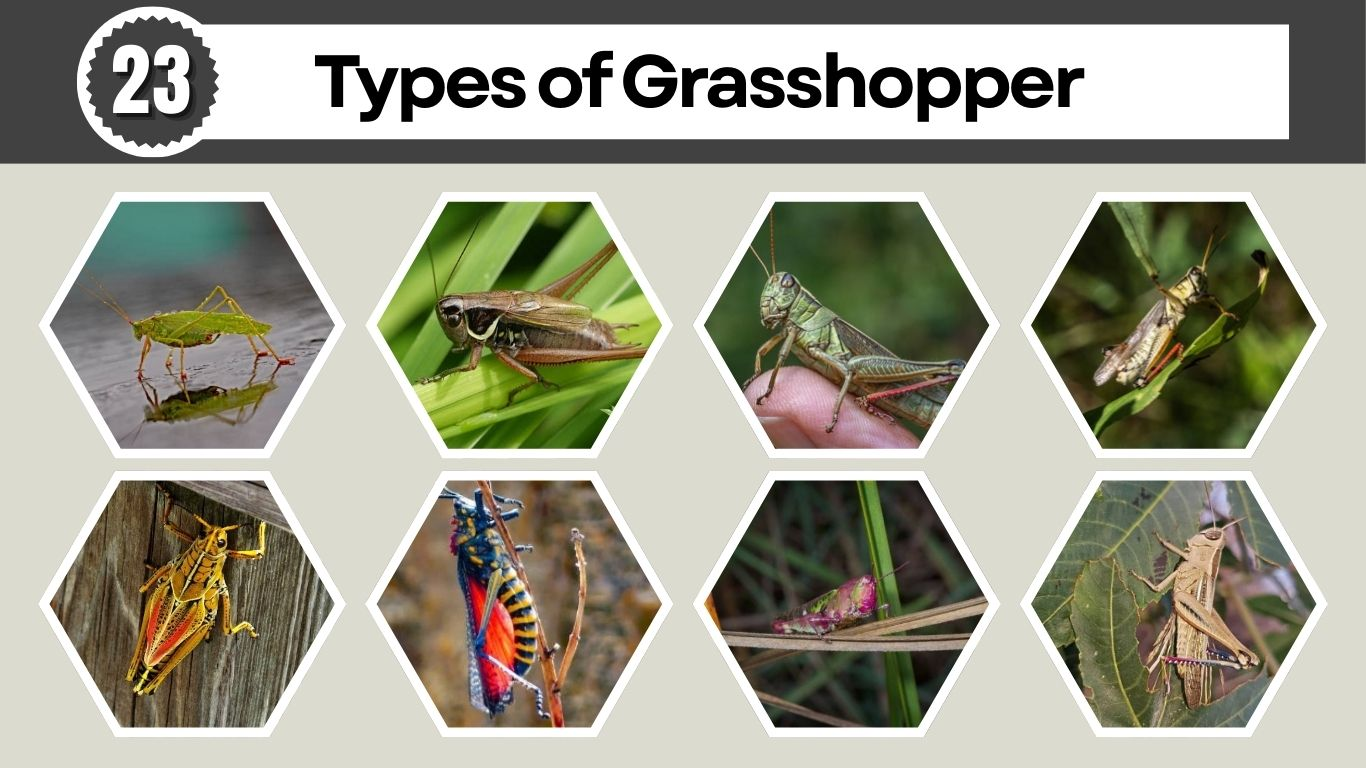
Grasshoppers are fascinating insects found in grasslands, fields, deserts, forests edges, and even home gardens around the world. Known for their powerful hind legs and impressive jumping ability, they play an important role in natural ecosystems as plant eaters and as food for many birds, reptiles, and mammals. With thousands of species worldwide, grasshoppers vary widely in size, color, behavior, and habitat. Some are harmless meadow dwellers, while others can become serious agricultural pests.
1. American Bird Grasshopper (Schistocerca americana)
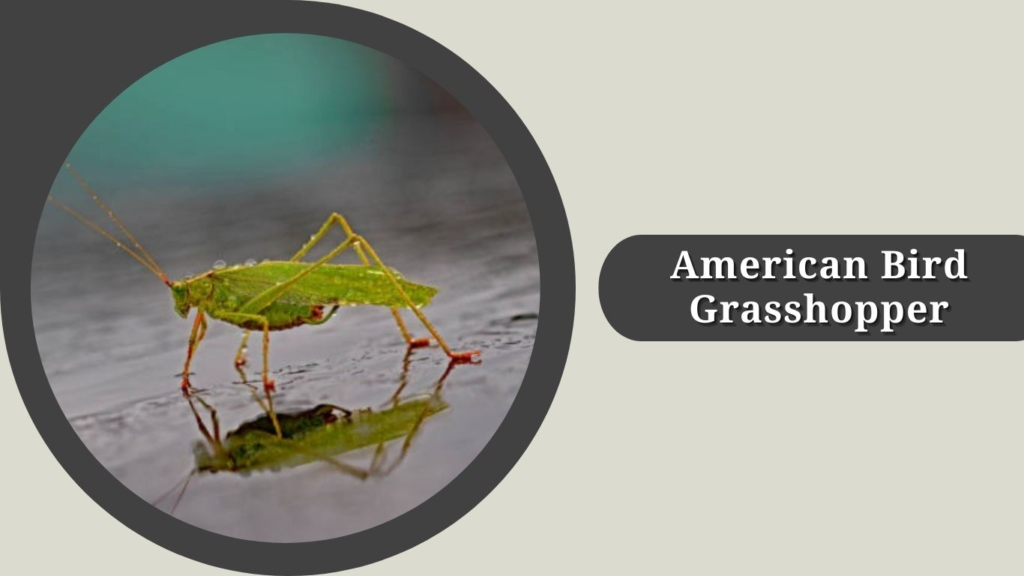
The American bird grasshopper is one of the largest and most noticeable grasshopper species in North America. It is known for its strong flying ability, long wings, and habit of flushing suddenly when disturbed. This species is often seen in fields, gardens, forest edges, and agricultural areas, where it feeds on a wide variety of plants.
Identification
- Large body size, usually 45–70 mm long
- Greenish-brown to yellow-brown body color
- Long, narrow forewings extending beyond the abdomen
- Pale yellow stripe along the sides of the body
- Reddish or pinkish hind wings visible in flight
- Long hind legs adapted for powerful jumping
Habitat
The American bird grasshopper lives in warm, open environments such as grasslands, crop fields, roadsides, forest edges, gardens, and suburban areas. It prefers places with tall vegetation and shrubs, where it can both feed and hide. This species is widely distributed across the southern United States, Mexico, Central America, and parts of the Caribbean.
Behaviors
This grasshopper is an excellent flier and often takes long, strong flights when disturbed, which is why it is called a “bird grasshopper.” It is mostly active during the day and spends much of its time feeding, basking in the sun, and moving between plants. Adults are usually solitary but may gather in large numbers when food is abundant.
Diet and Lifecycle
The American bird grasshopper is herbivorous and feeds on many types of plants, including grasses, crops, weeds, shrubs, and garden plants. Its life cycle includes egg, nymph, and adult stages. Females lay eggs in soil. Nymphs hatch and molt several times before becoming winged adults, completing development over a few months.
2. Differential Grasshopper (Melanoplus differentialis)
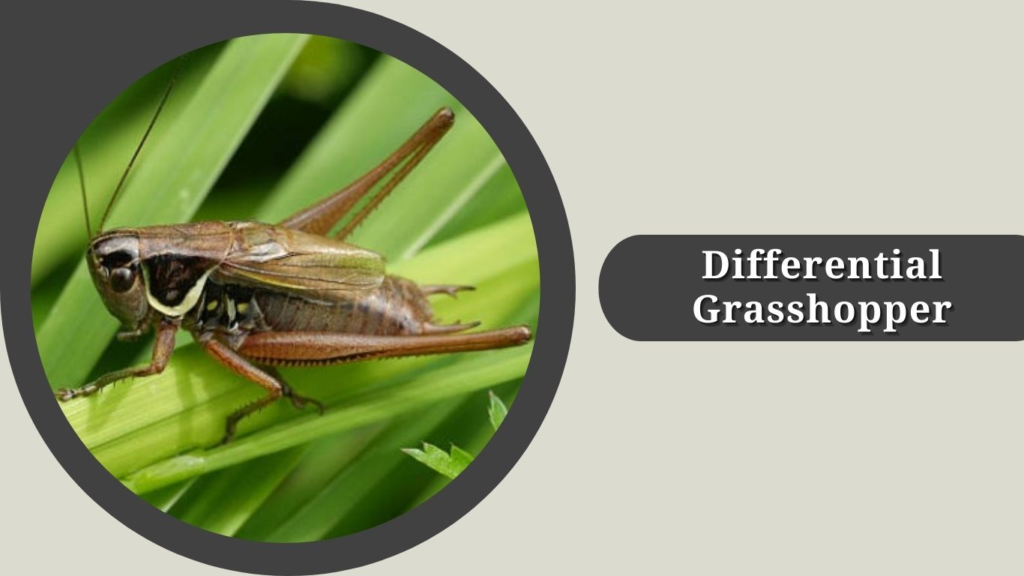
The differential grasshopper is a large, common grasshopper widely found in North America. It is especially well known as an agricultural pest because it feeds on many crops and garden plants. This species is easy to recognize by its strong body, long wings, and the bold black markings on its hind legs.
Identification
- Large, heavy-bodied grasshopper, about 35–55 mm long
- Yellowish-brown to olive-brown overall color
- Distinct black, herringbone-shaped markings on the hind femur
- Long forewings that usually extend past the abdomen
- Pale yellow underside and face
- Powerful hind legs built for jumping
Habitat
Differential grasshoppers live in fields, meadows, grasslands, roadsides, farmlands, and gardens. They prefer moist areas with tall grasses, weeds, and broad-leaf plants. This species is widely distributed across the United States, southern Canada, and northern Mexico, especially in agricultural regions.
Behaviors
This grasshopper is mostly active during the day and spends long periods feeding and resting on vegetation. When disturbed, it usually jumps first and then flies short distances. It is generally solitary, but populations can increase rapidly, leading to noticeable local outbreaks.
Diet and Lifecycle
The differential grasshopper feeds on a wide range of plants, including grasses, alfalfa, corn, beans, vegetables, and weeds. Its life cycle includes egg, nymph, and adult stages. Eggs are laid in soil, nymphs emerge in warm months, and after several molts, they develop into winged adults.
3. Two-Striped Grasshopper (Melanoplus bivittatus)
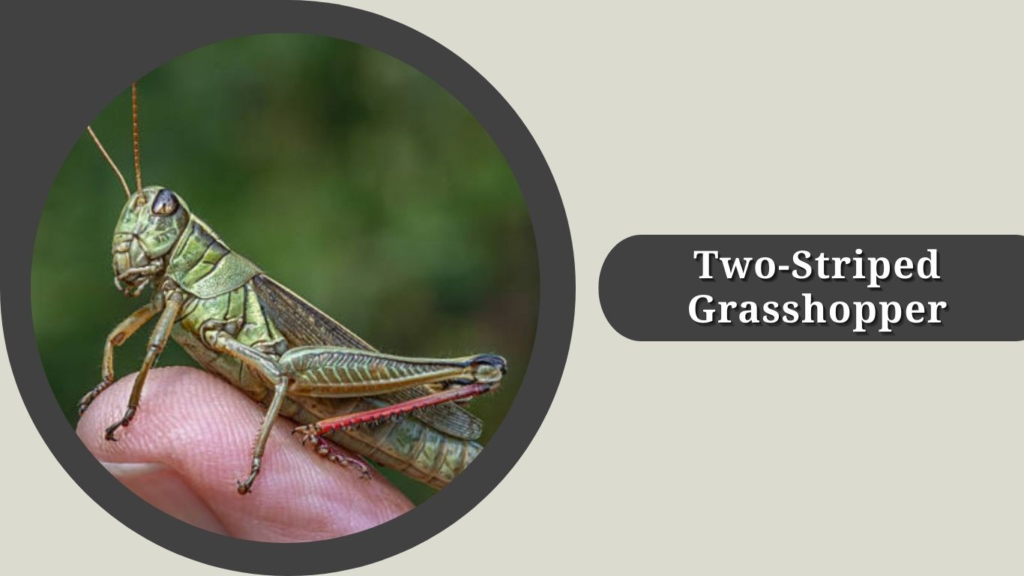
The two-striped grasshopper is a large, easily recognized species named for the pair of pale stripes that run from its eyes along the length of its body. It is one of the most common grasshoppers in North America and is often seen in fields, gardens, and roadsides, where it feeds on a wide variety of plants.
Identification
- Large grasshopper, about 40–55 mm long
- Two distinct yellow or pale stripes from head to wings
- Brown, olive, or green body coloration
- Long forewings that extend beyond the abdomen
- Strong, thick hind legs adapted for jumping
- Yellowish underside
Habitat
Two-striped grasshoppers live in grasslands, meadows, crop fields, roadsides, and gardens. They prefer open, sunny areas with abundant grasses and broad-leaf plants. This species is widely distributed across the United States, southern Canada, and parts of northern Mexico.
Behaviors
This species is active during the day and often seen resting or feeding on tall plants. When disturbed, it jumps powerfully and flies short distances. It is usually solitary, but in favorable conditions, large populations can develop and cause noticeable damage to vegetation.
Diet and Lifecycle
The two-striped grasshopper feeds on grasses, crops, weeds, and many garden plants. Its life cycle includes egg, nymph, and adult stages. Eggs are laid in soil in late summer, hatch in spring, and nymphs pass through several molts before becoming winged adults.
4. Migratory Grasshopper (Melanoplus sanguinipes)
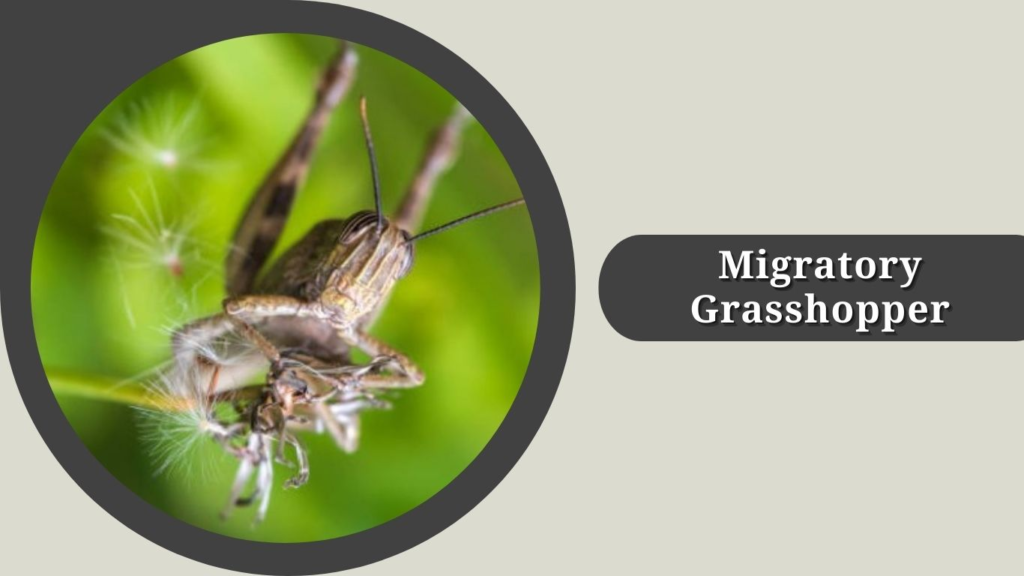
The migratory grasshopper is one of the most widespread grasshopper species in North America and is well known for its strong jumping and flying ability. It often appears in large numbers and is considered an important agricultural pest because it feeds on many types of crops and wild plants.
Identification
- Medium to large size, about 25–40 mm long
- Light brown, tan, or olive body with darker markings
- Pale stripe running behind the eye
- Long, clear wings extending past the abdomen
- Hind legs with reddish or yellowish tones
- Slender but powerful body shape
Habitat
Migratory grasshoppers live in grasslands, prairies, crop fields, roadsides, and open woodland edges. They prefer dry, sunny areas with grasses and weeds. This species is widely distributed across most of North America, from Canada to Mexico.
Behaviors
This grasshopper is very active during the day and quickly jumps and flies when disturbed. It is capable of long-distance movement, which is why it is called “migratory.” Individuals are usually solitary, but under favorable conditions, populations can build up and spread over wide areas.
Diet and Lifecycle
The migratory grasshopper feeds on grasses, grains, vegetables, and many wild plants. Its life cycle includes egg, nymph, and adult stages. Eggs are laid in the soil, hatch in spring or early summer, and nymphs mature through several molts into winged adults.
5. Red-Legged Grasshopper (Melanoplus femurrubrum)
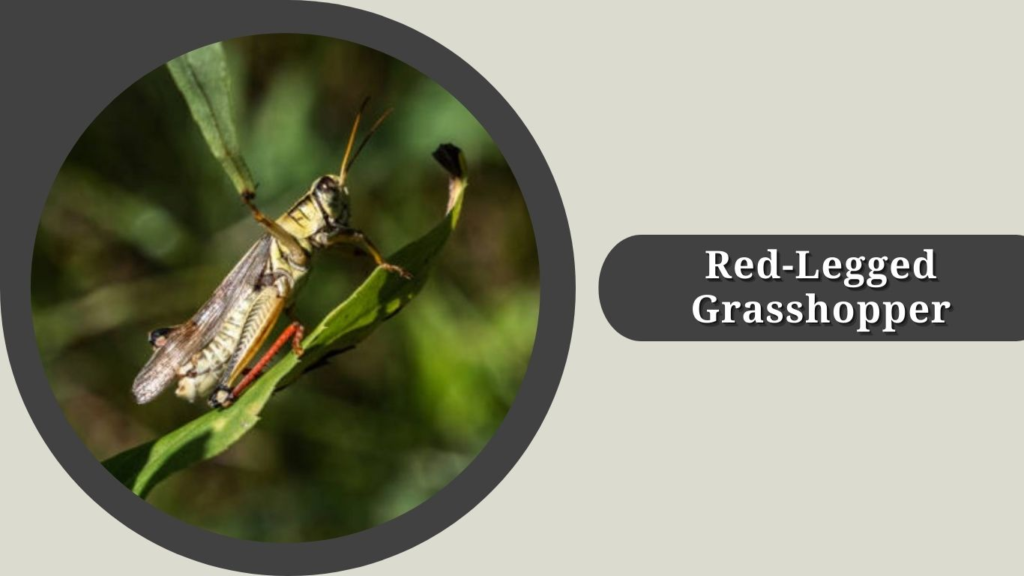
The red-legged grasshopper is a common and widely distributed species found across much of North America. It gets its name from the reddish color on its hind legs. This grasshopper is often seen in meadows, fields, and gardens, where it feeds on grasses and many low-growing plants.
Identification
- Medium-sized grasshopper, about 20–35 mm long
- Brown, tan, or greenish body color
- Reddish inner surfaces of the hind legs
- Long wings that usually reach or slightly pass the abdomen
- Pale stripe behind each eye
- Slender but sturdy body form
Habitat
Red-legged grasshoppers live in grasslands, pastures, roadsides, gardens, and agricultural fields. They prefer open, sunny places with mixed grasses and weeds. This species ranges widely across the United States, southern Canada, and parts of Mexico.
Behaviors
This species is active during daylight hours and is often seen jumping short distances through low vegetation. When disturbed, it may fly briefly before settling again. It is generally solitary, but high numbers can appear in warm seasons when food is plentiful.
Diet and Lifecycle
The red-legged grasshopper feeds on grasses, clover, alfalfa, crops, and many broad-leaf plants. Its life cycle includes egg, nymph, and adult stages. Females lay eggs in soil, nymphs hatch in spring, and after several molts, they develop into adults by mid to late summer.
6. Lubber Grasshopper (Romalea microptera)
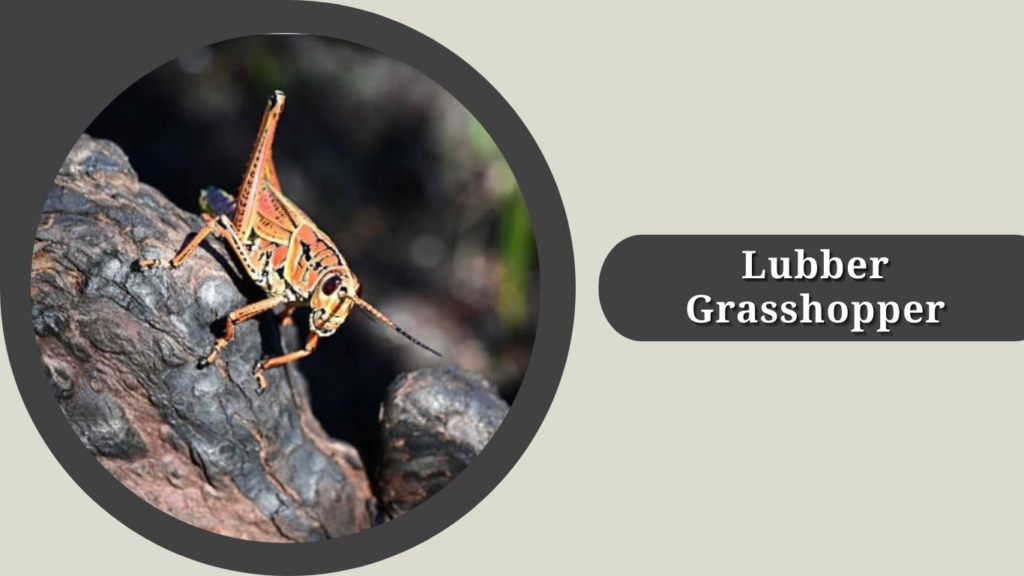
The lubber grasshopper is a very large, heavy-bodied species famous for its bright warning colors and slow movement. Unlike many grasshoppers, it rarely flies well, but it is highly visible due to its size and bold patterns. It is commonly found in the southeastern United States.
Identification
- Very large body, often 50–75 mm long
- Thick, heavy appearance with short wings
- Black body with yellow, orange, or red markings
- Bright red or orange accents on the head and legs
- Slow-moving compared to most grasshoppers
- Often produces a hissing sound when disturbed
Habitat
Lubber grasshoppers live in open woodlands, gardens, fields, roadsides, and wetland edges. They prefer warm, humid environments with plenty of broad-leaf plants. This species is most common in the southeastern United States, especially Florida and surrounding regions.
Behaviors
This grasshopper is active during the day and often seen walking rather than jumping. When threatened, it may spread its wings, hiss, or secrete foul-smelling fluids as a defense. Because of its chemical defenses, it is avoided by many predators.
Diet and Lifecycle
The lubber grasshopper feeds on many ornamental plants, weeds, shrubs, and some crops. Its life cycle includes egg, nymph, and adult stages. Eggs are laid in soil, nymphs hatch in spring, and the insects grow through several molts before reaching adulthood.
7. Eastern Lubber Grasshopper (Romalea guttata)
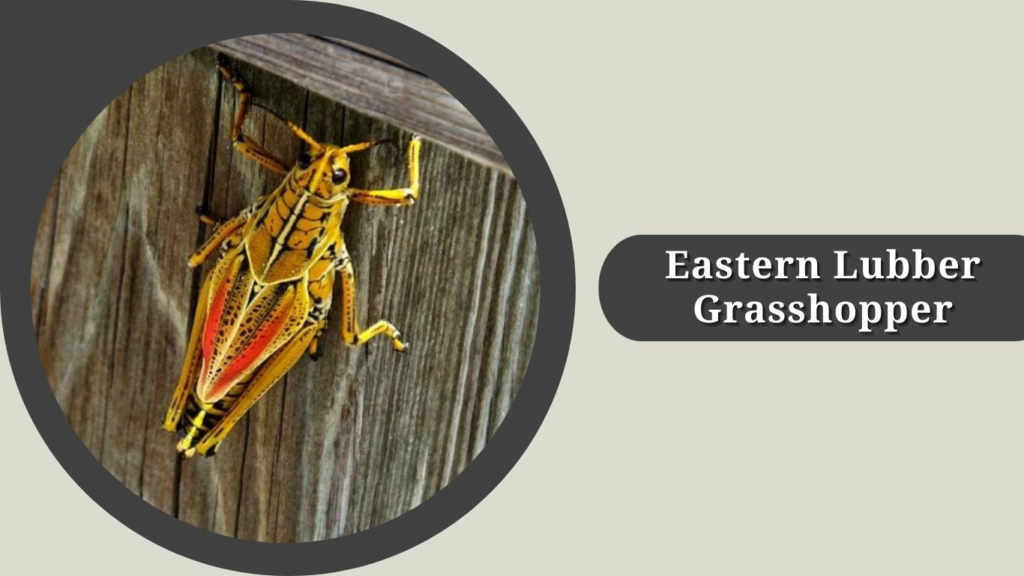
The eastern lubber grasshopper is a striking, oversized grasshopper best known for its bold colors and thick body. It is closely related to the common lubber grasshopper and is often seen walking slowly through vegetation rather than flying. Its bright patterns warn predators that it is toxic or foul-tasting.
Identification
- Very large, heavy-bodied grasshopper, 50–70 mm long
- Black body with yellow, orange, or reddish spots and lines
- Short, underdeveloped wings that do not support long flight
- Thick legs and broad thorax
- Brightly colored head and abdomen markings
- Slow, deliberate movement
Habitat
Eastern lubber grasshoppers inhabit open woodlands, gardens, marsh edges, fields, and roadsides. They prefer warm, humid environments with dense vegetation. This species is most common in the southeastern United States, especially Florida, Georgia, and nearby states.
Behaviors
This species is active during the day and often seen crawling on plants or across the ground. Instead of flying away, it relies on warning colors and chemical defenses. When threatened, it may hiss, regurgitate, or secrete irritating fluids to deter predators.
Diet and Lifecycle
The eastern lubber grasshopper feeds on a wide range of plants, including lilies, shrubs, weeds, and crops. Its life cycle includes egg, nymph, and adult stages. Eggs are laid in soil, nymphs emerge in spring, and several molts occur before adults appear in summer.
8. Rainbow Grasshopper (Dactylotum bicolor)
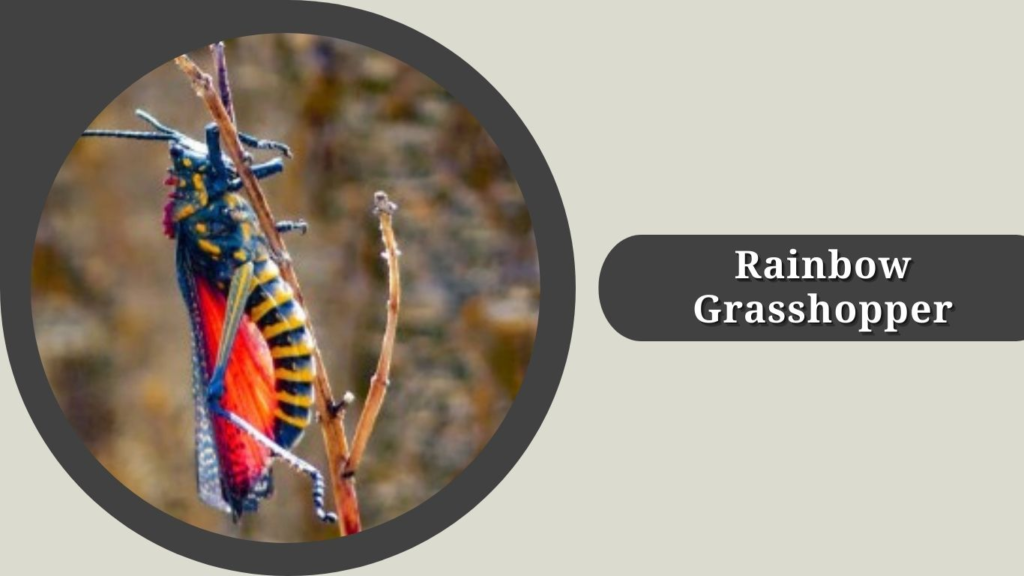
The rainbow grasshopper is one of the most colorful grasshopper species in North America. Its bright mix of red, blue, yellow, green, and black makes it easy to recognize. Instead of blending in, it uses warning colors to signal that it is toxic or unpleasant to predators.
Identification
- Medium-sized grasshopper, about 25–35 mm long
- Brightly colored body with red, yellow, blue, and green patterns
- Black background coloration with vivid markings
- Short to medium-length wings
- Thick hind legs with contrasting colors
- Very distinctive, almost “painted” appearance
Habitat
Rainbow grasshoppers live in dry grasslands, prairies, desert edges, and open scrub areas. They prefer hot, sunny habitats with low vegetation. This species is commonly found in the central and southwestern United States and parts of northern Mexico.
Behaviors
This grasshopper is active during the day and often walks slowly among low plants. Instead of escaping quickly, it relies on its bright colors and chemical defenses. It may jump short distances but usually does not fly far.
Diet and Lifecycle
The rainbow grasshopper mainly feeds on toxic plants such as ragweed and other weeds, which help make it poisonous to predators. Its life cycle includes egg, nymph, and adult stages. Eggs are laid in soil, nymphs hatch in warm months, and several molts lead to adulthood.
9. Meadow Grasshopper (Chorthippus parallelus)
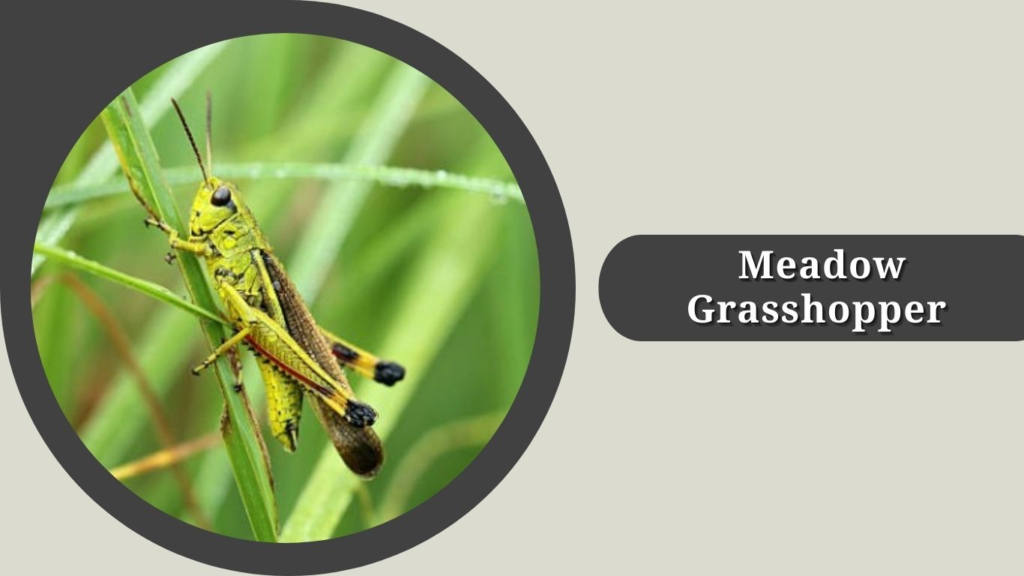
The meadow grasshopper is a small, slender species commonly found in grassy areas and open meadows. It is well known in Europe and parts of Asia for its jumping ability and soft buzzing sounds. This grasshopper blends easily into grasses, making it difficult to spot unless it moves.
Identification
- Small body size, usually 12–22 mm long
- Green, brown, or yellowish coloration
- Slender body with short to medium-length wings
- Straight, narrow head shape
- Strong hind legs adapted for jumping
- Often produces a faint buzzing sound in flight
Habitat
Meadow grasshoppers inhabit meadows, pastures, grasslands, roadsides, and open fields. They prefer moist, grassy environments with short to medium-height vegetation. This species is widespread across Europe and parts of temperate Asia.
Behaviors
This species is active during the day and frequently jumps through grass when disturbed. It flies only short distances and quickly drops back into vegetation. Males often produce soft stridulation sounds to attract females.
Diet and Lifecycle
The meadow grasshopper feeds mainly on grasses and other low plants. Its life cycle includes egg, nymph, and adult stages. Eggs are laid in the soil or plant stems, nymphs hatch in spring, and after several molts, they mature into adults.
10. Carolina Grasshopper (Dissosteira carolina)
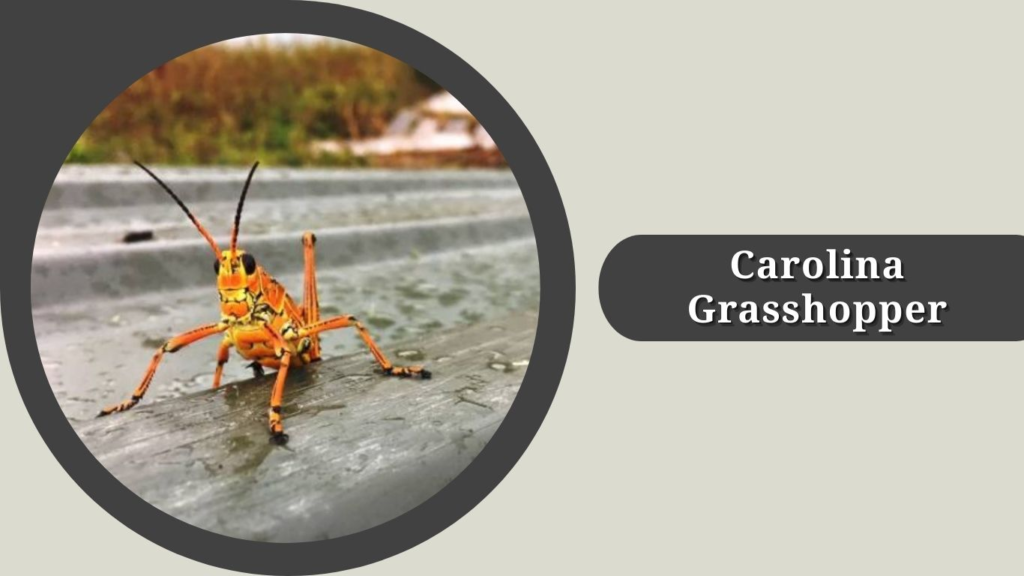
The Carolina grasshopper is a large, well-known species famous for its sudden flight and loud wing crackle. When it takes off, it reveals dark hind wings bordered with pale edges, making it easy to identify. It is commonly seen along roadsides and in dry, open areas.
Identification
- Large grasshopper, about 35–50 mm long
- Gray, brown, or mottled body that blends with soil
- Long forewings with spotted patterns
- Black hind wings with pale or yellowish margins
- Strong, spiny hind legs
- Makes a crackling sound when flying
Habitat
Carolina grasshoppers live in dry grasslands, roadsides, open fields, prairies, and sandy or rocky areas. They prefer bare ground with sparse vegetation. This species is widely distributed across the United States, southern Canada, and northern Mexico.
Behaviors
This grasshopper is active during the day and often flushes suddenly when approached, flying a short distance before landing. It relies on camouflage when resting and dramatic wing displays when flying. Individuals are usually solitary.
Diet and Lifecycle
The Carolina grasshopper feeds on grasses and low plants. Its life cycle includes egg, nymph, and adult stages. Eggs are laid in soil, nymphs hatch in late spring or early summer, and after several molts, they become adults by mid to late summer.
11. Green-Striped Grasshopper (Chortophaga viridifasciata)
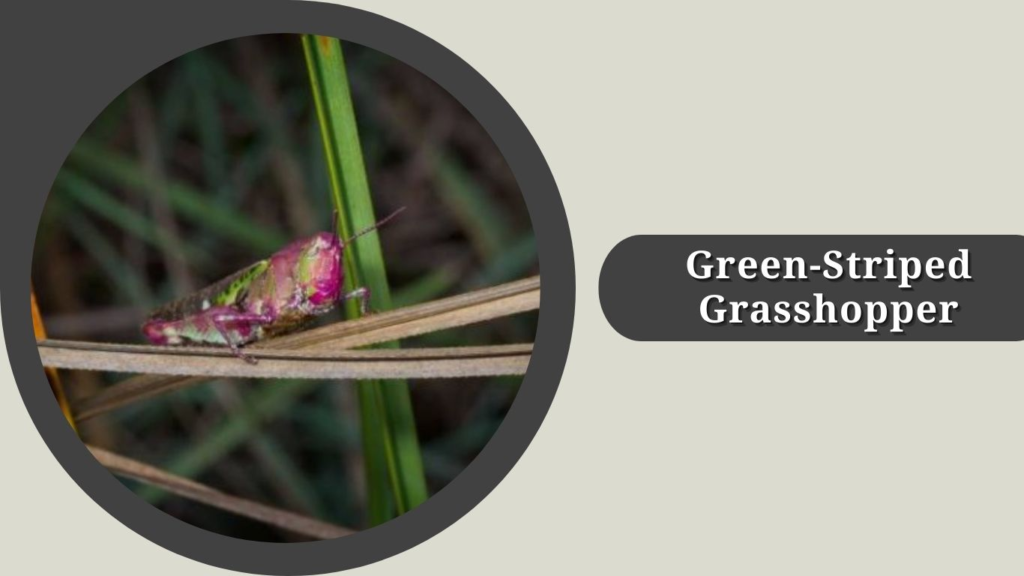
The green-striped grasshopper is a medium-sized species recognized by the bright green or yellow stripe running along its body. It is one of the earliest grasshoppers to appear in spring and is often seen basking on the ground or low plants in open areas.
Identification
- Medium-sized grasshopper, about 20–30 mm long
- Distinct green or yellow stripe along the back
- Body color ranges from green to brown or black
- Short to medium-length wings
- Strong hind legs for jumping
- Compact, slightly flattened body shape
Habitat
Green-striped grasshoppers inhabit fields, meadows, open woodlands, roadsides, and disturbed areas. They prefer sunny locations with short grasses and weeds. This species is widely distributed across North America.
Behaviors
This grasshopper is active during the day and often appears very early in the season. It commonly basks in sunlight on bare ground and jumps quickly when disturbed. Adults are strong jumpers but usually fly only short distances.
Diet and Lifecycle
The green-striped grasshopper feeds on grasses, weeds, and low-growing plants. Its life cycle includes egg, nymph, and adult stages. Eggs overwinter in soil, nymphs hatch in early spring, and adults appear by late spring or early summer.
12. Obscure Bird Grasshopper (Schistocerca obscura)
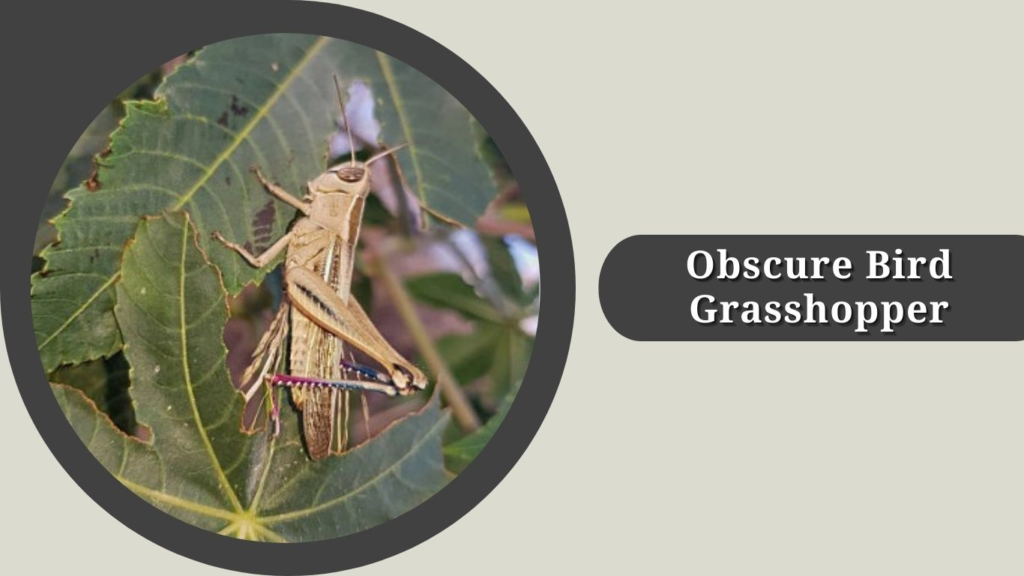
The obscure bird grasshopper is a large, strong-flying species closely related to other “bird grasshoppers.” It is known for its long wings, powerful flight, and habit of flushing suddenly from vegetation. Because of its size and movement, it often startles people when it takes off.
Identification
- Large grasshopper, about 45–65 mm long
- Brown, gray, or olive body coloration
- Long, narrow wings extending well beyond the abdomen
- Pale stripe or lighter area along the sides
- Slender but powerful body form
- Strong hind legs adapted for jumping and flight
Habitat
Obscure bird grasshoppers live in grasslands, open woodlands, forest edges, fields, and shrublands. They prefer warm, open areas with tall vegetation. This species is mainly found in the southern United States, Mexico, Central America, and the Caribbean.
Behaviors
This species is active during the day and is an excellent flier. When disturbed, it often launches into long, fast flights rather than making short hops. Adults are usually solitary but may gather in higher numbers where food is abundant.
Diet and Lifecycle
The obscure bird grasshopper feeds on grasses, leaves, shrubs, and a variety of wild and cultivated plants. Its life cycle includes egg, nymph, and adult stages. Eggs are laid in soil, nymphs hatch during warm seasons, and after several molts, they mature into winged adults.
13. Pallid-Winged Grasshopper (Trimerotropis pallidipennis)
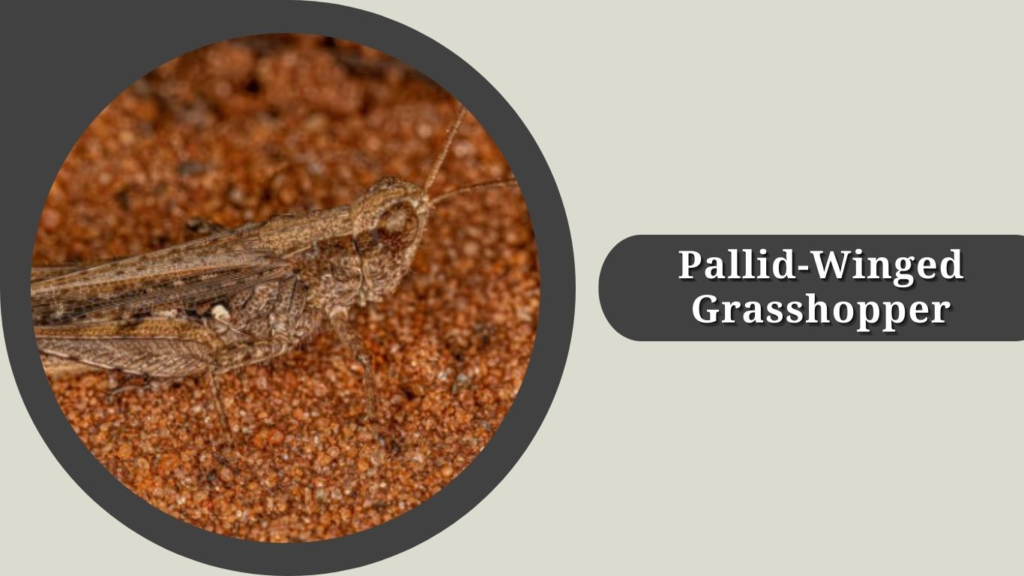
The pallid-winged grasshopper is a medium to large species known for its pale hind wings and its preference for dry, open landscapes. When it flies, its light-colored wings are briefly visible before it lands and blends back into the ground.
Identification
- Medium to large size, about 25–40 mm long
- Gray, tan, or brown mottled body
- Pale or milky-colored hind wings
- Spotted or banded forewings
- Strong hind legs with dark markings
- Excellent ground camouflage
Habitat
Pallid-winged grasshoppers inhabit deserts, semi-arid grasslands, prairies, sandy fields, and open scrublands. They prefer dry environments with sparse vegetation and bare ground. This species is found across western North America and parts of Central and South America.
Behaviors
This grasshopper is active during the day and relies heavily on camouflage. When approached, it suddenly flies a short distance and then drops to the ground, becoming difficult to see. Individuals are generally solitary.
Diet and Lifecycle
The pallid-winged grasshopper feeds on grasses and low desert plants. Its life cycle includes egg, nymph, and adult stages. Eggs are laid in soil, nymphs hatch in warm months, and several molts occur before adults appear.
14. Clear-Winged Grasshopper (Camnula pellucida)
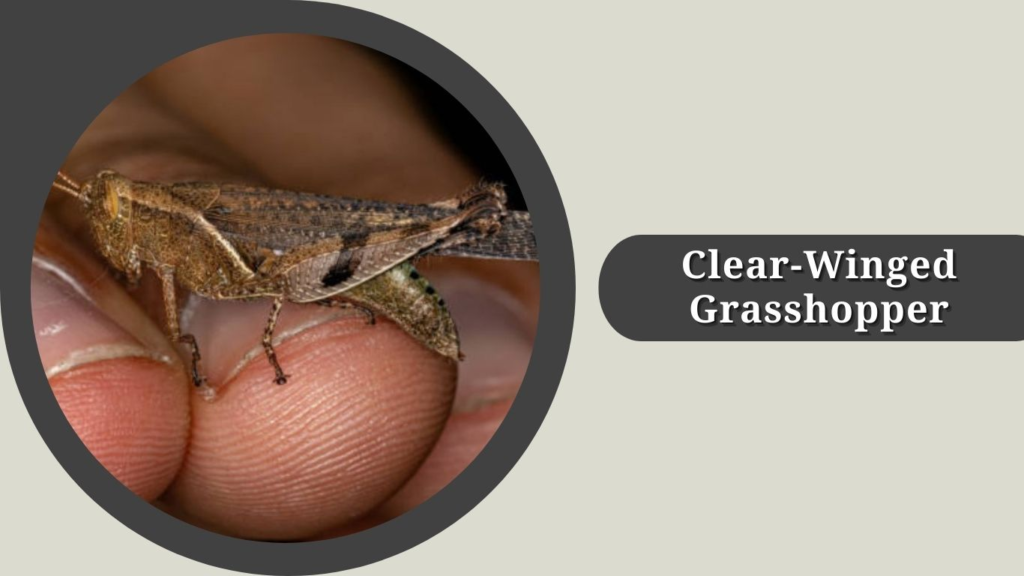
The clear-winged grasshopper is a well-known North American species, especially in northern grasslands. It is named for its transparent hind wings and is considered an important agricultural pest in some regions because it feeds heavily on grasses and grain crops.
Identification
- Medium-sized grasshopper, about 20–30 mm long
- Brown, gray, or yellowish body coloration
- Clear, transparent hind wings
- Narrow forewings with fine speckling
- Slender body and long hind legs
- Pale stripe sometimes visible along the back
Habitat
Clear-winged grasshoppers live in prairies, rangelands, pastures, crop fields, and open grassy areas. They prefer dry to moderately moist grasslands. This species is widely distributed across Canada, the northern United States, and parts of the western U.S.
Behaviors
This grasshopper is active during the day and often flushes suddenly when approached, flying low over the ground before landing. It can appear in large numbers and move actively between feeding sites.
Diet and Lifecycle
The clear-winged grasshopper feeds mainly on grasses, wheat, barley, and other cereal crops. Its life cycle includes egg, nymph, and adult stages. Eggs overwinter in soil, nymphs hatch in spring, and adults develop by summer after several molts.
15. Desert Locust (Schistocerca gregaria)
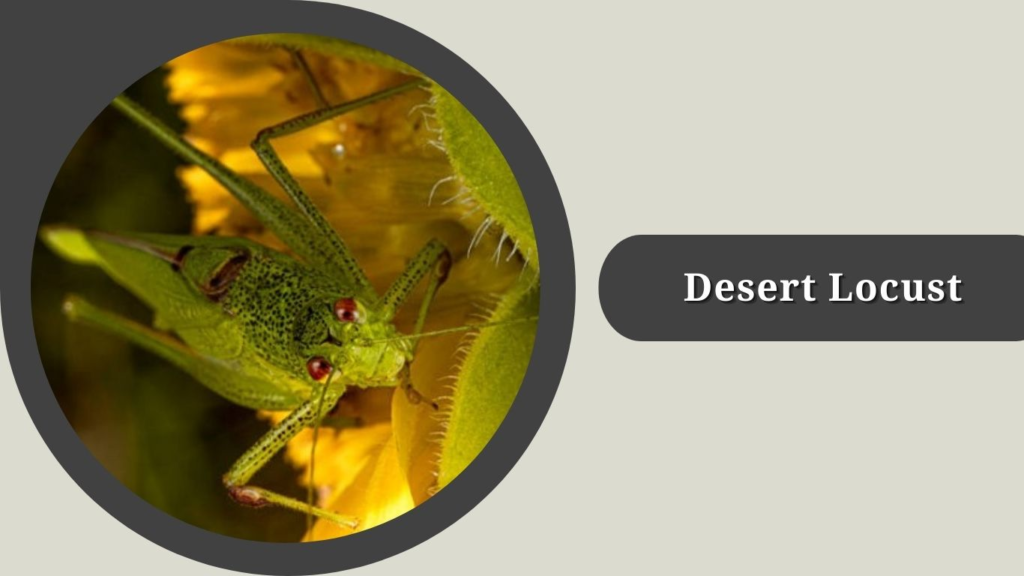
The desert locust is one of the most famous grasshopper species in the world because of its ability to form massive swarms. Under the right conditions, solitary individuals can change behavior and color, becoming gregarious and migrating in huge numbers that devastate crops and natural vegetation.
Identification
- Medium to large body size, about 35–50 mm long
- Yellowish-brown to green body, changing with age and phase
- Long, clear wings adapted for long-distance flight
- Strong hind legs for jumping and takeoff
- Large eyes and broad head
- Slender but powerful body build
Habitat
Desert locusts inhabit arid and semi-arid regions, including deserts, scrublands, and dry grasslands. They are mainly found across Africa, the Middle East, and parts of South Asia. They breed in areas that receive seasonal rainfall.
Behaviors
This species can switch between solitary and swarm phases. In swarms, billions of individuals may travel long distances each day in search of food. They are active during daylight and rest at night in dense groups.
Diet and Lifecycle
The desert locust feeds on nearly all types of green vegetation, including crops, grasses, shrubs, and trees. Its life cycle includes egg, nymph (hopper), and adult stages. Rapid breeding occurs after rains, leading to population explosions and swarm formation.
16. Egyptian Grasshopper (Anacridium aegyptium)
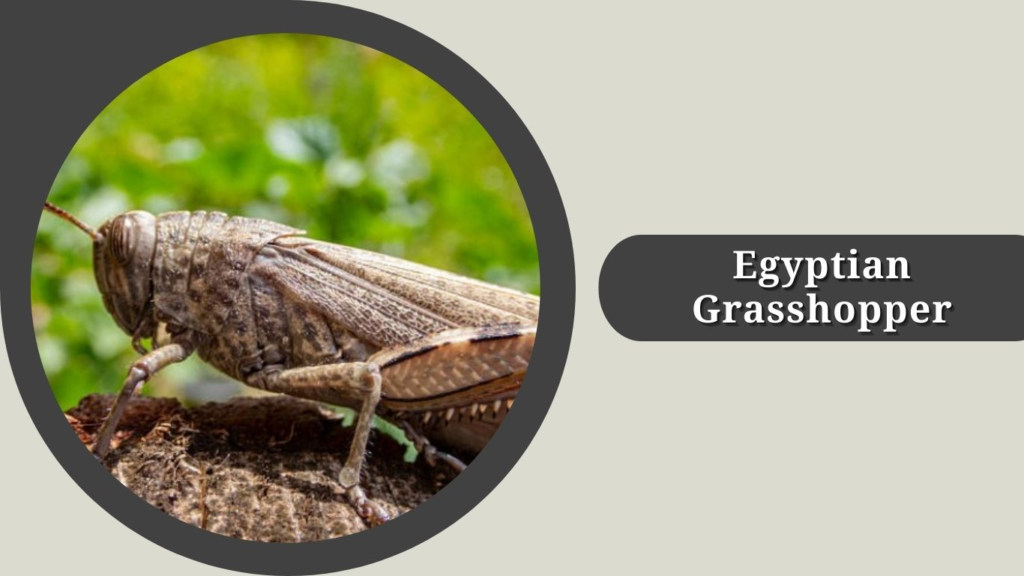
The Egyptian grasshopper is a very large, long-winged species easily recognized by its elongated head and bold body markings. It is one of the largest grasshoppers found in the Mediterranean region and is often seen perched on shrubs, trees, and walls.
Identification
- Very large grasshopper, about 40–70 mm long
- Grayish-brown body with dark spots and patterns
- Long, narrow wings extending beyond the abdomen
- Distinct long, slanted face and pointed head
- Strong hind legs with dark banding
- Prominent, patterned pronotum
Habitat
Egyptian grasshoppers inhabit dry grasslands, rocky hillsides, scrublands, gardens, and open woodlands. They prefer warm, dry climates and are common around the Mediterranean, North Africa, and parts of the Middle East.
Behaviors
This species is active during the day and often seen resting openly on vegetation or man-made structures. When disturbed, it jumps strongly and flies a short to moderate distance before settling again.
Diet and Lifecycle
The Egyptian grasshopper feeds on leaves of shrubs, crops, grasses, and ornamental plants. Its life cycle includes egg, nymph, and adult stages. Eggs are laid in soil, nymphs hatch in spring, and adults appear in summer after several molts.
17. Spur-Throated Grasshopper (Subfamily Melanoplinae)
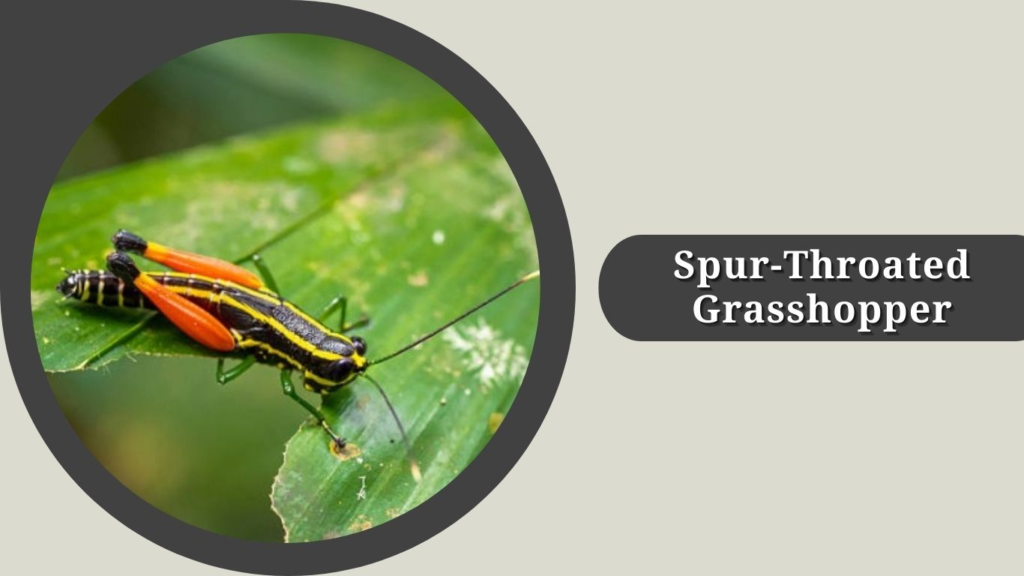
The spur-throated grasshoppers are a large group of species named for the small spine, or “spur,” located between their front legs. Many well-known North American grasshoppers belong to this group, and several species are important agricultural pests.
Identification
- Small to medium body size, depending on species
- Distinct spur between the front legs on the underside
- Brown, green, or gray coloration
- Short to medium-length wings
- Strong hind legs for jumping
- Compact, typical grasshopper body shape
Habitat
Spur-throated grasshoppers live in grasslands, meadows, prairies, fields, and open woodland edges. They are especially common in North America but also occur worldwide in a wide range of habitats.
Behaviors
These grasshoppers are active during the day and usually jump when disturbed, followed by short flights. Many species are ground-dwellers and rely on camouflage. Population sizes can increase rapidly in favorable conditions.
Diet and Lifecycle
Spur-throated grasshoppers feed on grasses, weeds, and many broad-leaf plants. Their life cycle includes egg, nymph, and adult stages. Eggs are laid in soil, nymphs hatch in spring or summer, and adults develop after several molts.
18. Slant-Faced Grasshopper (Subfamily Gomphocerinae)
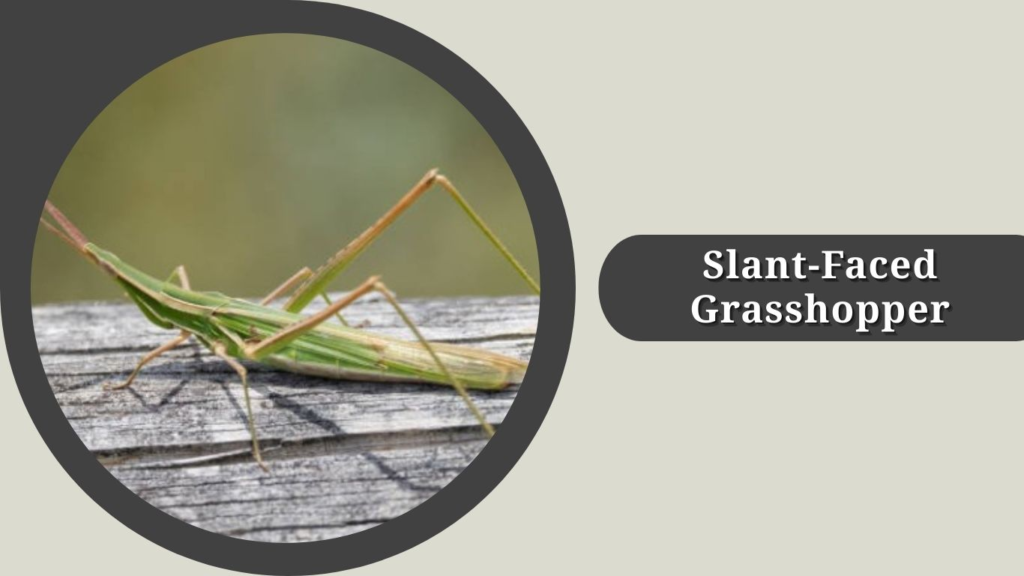
The slant-faced grasshoppers are named for their distinctly angled faces, which slope backward instead of being vertical. They are generally slender grasshoppers that live among grasses and are often difficult to spot because they blend well into their surroundings.
Identification
- Small to medium-sized body
- Noticeably slanted face and pointed head
- Slender, elongated body shape
- Green, brown, or straw-colored appearance
- Long hind legs adapted for jumping
- Narrow wings held tightly over the body
Habitat
Slant-faced grasshoppers are commonly found in grasslands, prairies, meadows, pastures, and savannas. They prefer areas dominated by grasses. This group is widely distributed across North America, Europe, Asia, and other regions.
Behaviors
These grasshoppers are active during the day and often remain motionless among grass stems. When disturbed, they jump suddenly and fly short distances before dropping back into vegetation. Many species produce soft buzzing sounds.
Diet and Lifecycle
Slant-faced grasshoppers feed mainly on grasses and sedges. Their life cycle includes egg, nymph, and adult stages. Eggs are laid in soil or plant material, nymphs hatch in spring, and adults appear after several molts.
19. Short-Horned Grasshopper (Family Acrididae)
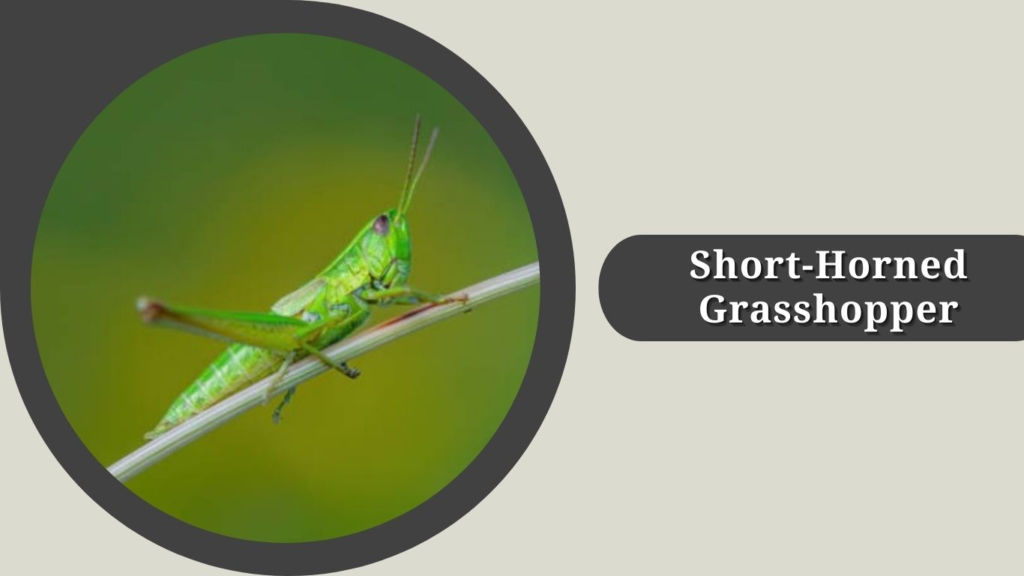
Short-horned grasshoppers are the most common and widespread group of grasshoppers in the world. They are named for their relatively short antennae compared to long-horned grasshoppers. Most typical field and crop grasshoppers belong to this family.
Identification
- Short, thick antennae (shorter than the body)
- Medium to large body size
- Strong hind legs built for jumping
- Brown, green, or gray body coloration
- Well-developed wings in most species
- Broad head and sturdy body structure
Habitat
Short-horned grasshoppers live in grasslands, meadows, deserts, farmlands, forests edges, and open fields. They are found on every continent except Antarctica and can survive in a wide range of climates.
Behaviors
These grasshoppers are active during the day and rely on jumping and short flights to escape predators. Many species use camouflage, while others display bright wing colors in flight. Some species can form large populations or swarms.
Diet and Lifecycle
Short-horned grasshoppers feed mostly on grasses and other plants, though some eat shrubs and crops. Their life cycle includes egg, nymph, and adult stages. Eggs are laid in soil, nymphs hatch seasonally, and adults develop after multiple molts.
20. Long-Winged Grasshopper (Locusta migratoria)
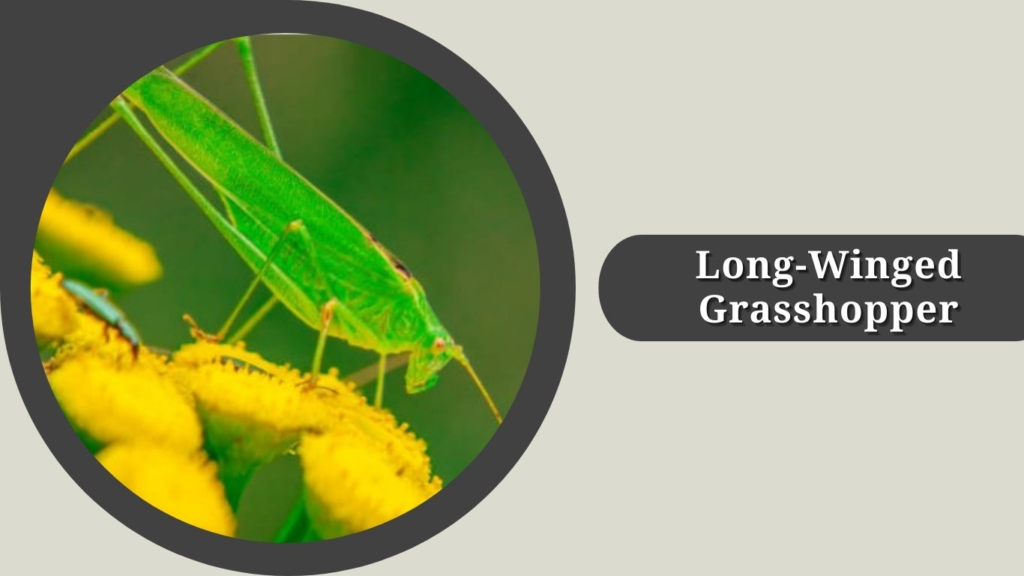
The long-winged grasshopper, also known as the migratory locust, is a powerful flier capable of traveling long distances. It is one of the most widespread grasshopper species in the world and is famous for forming large swarms that can severely damage crops.
Identification
- Medium to large body size, about 35–55 mm long
- Long, narrow wings extending well beyond the abdomen
- Brown, green, or yellowish body coloration
- Slender but muscular body
- Strong hind legs for jumping and takeoff
- Large eyes and long thorax
Habitat
Long-winged grasshoppers inhabit grasslands, floodplains, agricultural fields, and open plains. They prefer warm regions and are found across Africa, Europe, Asia, and Australia, often near areas with seasonal rainfall.
Behaviors
This species can shift from a solitary form to a swarming form under crowded conditions. In swarms, millions of individuals migrate together over great distances. They are active during daylight and roost in vegetation at night.
Diet and Lifecycle
The long-winged grasshopper feeds on grasses, crops, reeds, and many other green plants. Its life cycle includes egg, nymph, and adult stages. After rains, rapid breeding can lead to population explosions and mass migrations.
21. Banded Grasshopper (Trimerotropis spp.)
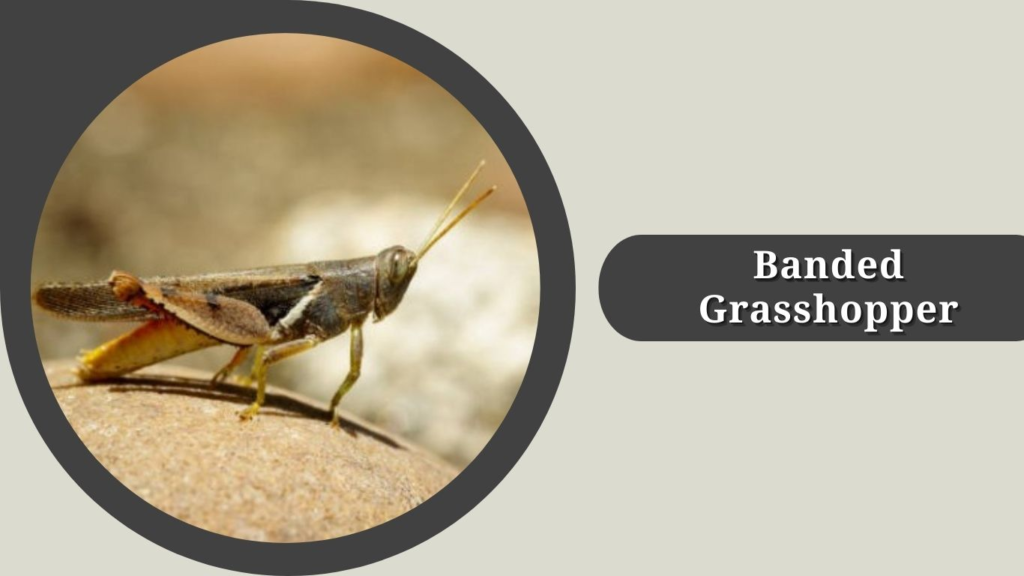
Banded grasshoppers are a group of medium-sized grasshoppers best known for the dark bands on their hind wings, which become visible when they fly. They often make a sudden fluttering flight and then disappear against the ground, using camouflage to avoid predators.
Identification
- Medium body size, about 20–35 mm long
- Mottled gray, brown, or tan body coloration
- Dark band across the hind wings
- Spotted or patterned forewings
- Strong hind legs with banding
- Excellent ground camouflage
Habitat
Banded grasshoppers live in dry grasslands, deserts, sandy plains, prairies, and rocky open areas. They prefer habitats with bare ground and sparse vegetation. Many species occur across North America.
Behaviors
These grasshoppers are active during the day and rely heavily on camouflage. When approached, they make short, noisy flights before dropping suddenly to the ground and remaining still.
Diet and Lifecycle
Banded grasshoppers feed on grasses and low desert or prairie plants. Their life cycle includes egg, nymph, and adult stages. Eggs are laid in soil, nymphs hatch in warm seasons, and several molts occur before adulthood.
22. Giant Grasshopper (Valanga irregularis)
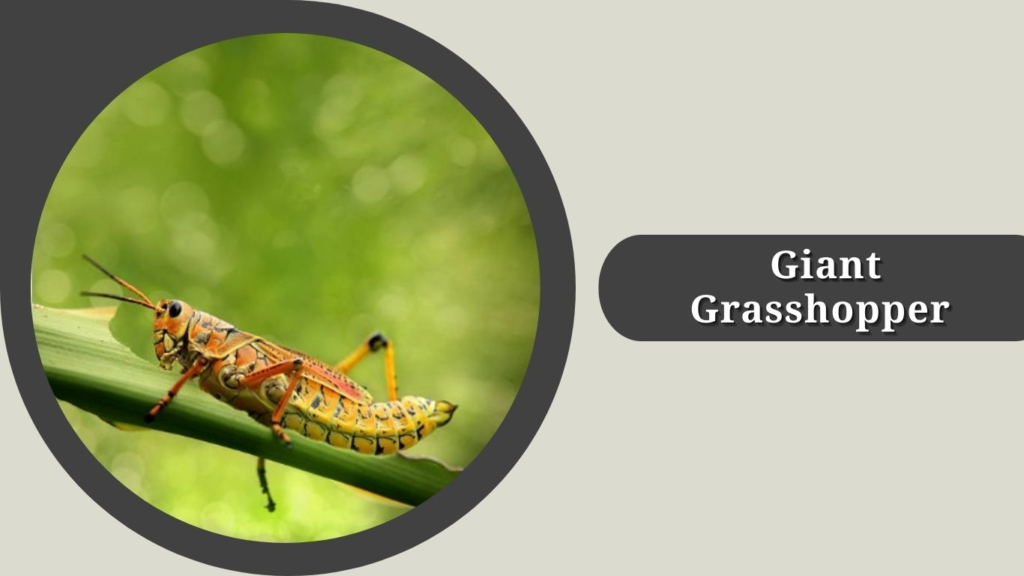
The giant grasshopper is one of the largest grasshopper species in the world. Because of its size and strong feeding habits, it is sometimes considered an agricultural pest. Its powerful jump and heavy flight make it very noticeable in tropical regions.
Identification
- Very large body size, often 60–90 mm long
- Thick, heavy-bodied appearance
- Brown, gray, or olive coloration with patterns
- Long, strong wings
- Powerful hind legs for jumping
- Broad head and large eyes
Habitat
Giant grasshoppers inhabit tropical forests, forest edges, plantations, gardens, and open woodlands. They are common in Southeast Asia, Australia, and Pacific islands, where vegetation is abundant.
Behaviors
This species is active during the day and often seen resting on tree trunks or large plants. When disturbed, it jumps powerfully and flies short distances before landing heavily on vegetation.
Diet and Lifecycle
The giant grasshopper feeds on leaves of trees, shrubs, crops, and ornamental plants. Its life cycle includes egg, nymph, and adult stages. Eggs are laid in soil, nymphs hatch in warm seasons, and develop through several molts before becoming adults.
23. Brown-Spotted Grasshopper (Hesperotettix viridis)
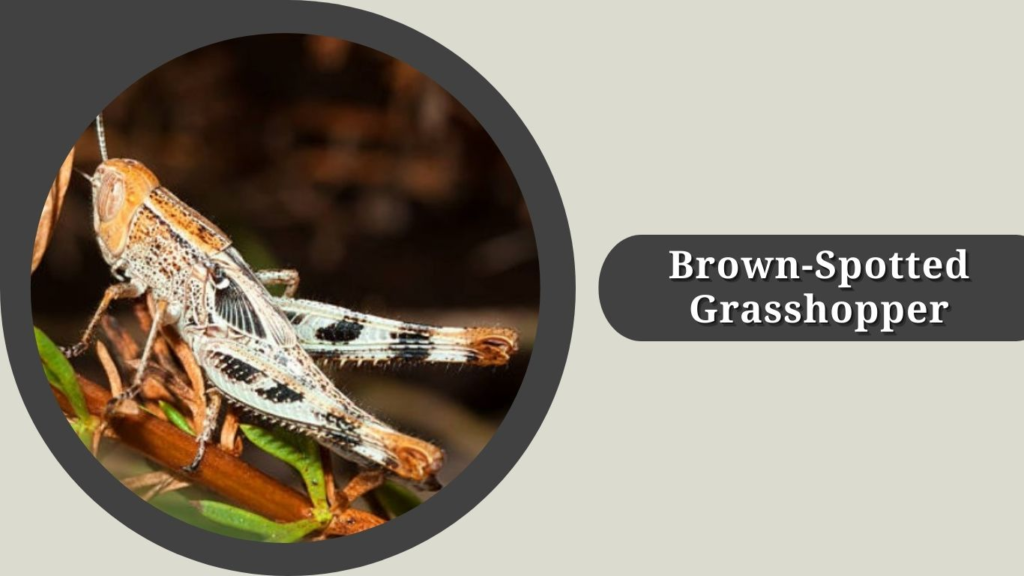
The brown-spotted grasshopper is a medium-sized species known for its green body marked with dark or brown spots. It blends well into leafy vegetation and is often overlooked unless it moves. This grasshopper is commonly found in weedy fields and open habitats.
Identification
- Medium-sized grasshopper, about 20–30 mm long
- Bright green body with brown or dark spotting
- Short to medium-length wings
- Smooth, rounded body shape
- Strong hind legs for jumping
- Camouflaging coloration that blends with plants
Habitat
Brown-spotted grasshoppers live in fields, meadows, open woodlands, and weedy areas. They prefer places with broad-leaf plants rather than tall grasses. This species is mainly found in North America.
Behaviors
This grasshopper is active during the day and usually stays among leaves and stems. When disturbed, it jumps quickly and may fly a short distance before hiding again in vegetation.
Diet and Lifecycle
The brown-spotted grasshopper feeds mainly on forbs and low shrubs rather than grasses. Its life cycle includes egg, nymph, and adult stages. Eggs are laid in soil, nymphs hatch in spring, and after several molts, adults appear in summer.
FAQs
What is the difference between a grasshopper and a locust?
Grasshoppers and locusts belong to the same family, but locusts are grasshoppers that can change behavior and form massive swarms. Under crowded conditions, some grasshopper species shift into a migratory phase, becoming locusts capable of traveling long distances and causing large-scale crop damage.
Where are grasshoppers commonly found?
Grasshoppers are found on every continent except Antarctica. They commonly live in grasslands, meadows, farmlands, deserts, forest edges, and gardens. Most species prefer warm, open areas with plenty of vegetation, especially grasses and low-growing plants.
What do grasshoppers usually eat?
Grasshoppers are primarily herbivores. Most species feed on grasses, leaves, weeds, and crops. Some prefer broad-leaf plants, while others specialize in grasses. A few species feed on toxic plants, which can make them unpleasant or dangerous for predators to eat.
How long is a grasshopper’s life cycle?
A grasshopper’s life cycle includes three main stages: egg, nymph, and adult. Eggs are laid in soil, nymphs hatch and molt several times, and adults develop wings. Depending on the species and climate, the full cycle usually takes a few months.
Are grasshoppers harmful to humans?
Grasshoppers are generally harmless to humans. They do not bite aggressively and rarely cause injury. However, large populations can damage crops, gardens, and natural vegetation. Some species may become serious agricultural pests when their numbers increase rapidly.
