
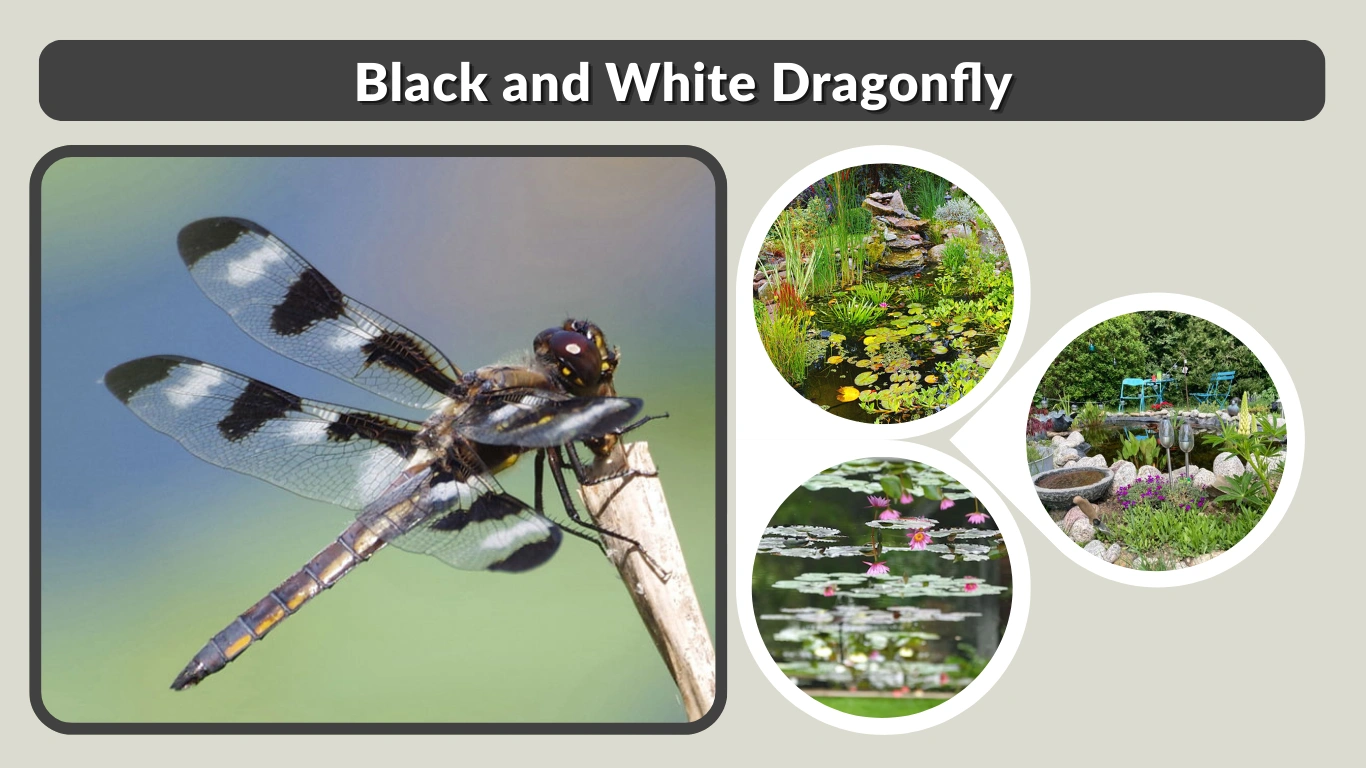
Black and white dragonflies capture attention because of their striking contrast, unusual wing markings, and symbolic appeal. People often search for them to identify real species, understand spiritual meanings, or find ideas for tattoos, drawings, and clipart. While some dragonflies truly display black-and-white patterns, others only appear this way under certain light conditions. This guide explores what a black and white dragonfly is, how to recognize one, which species show these colors, and why they are so visually and symbolically powerful.
What Is a Black and White Dragonfly?
A black and white dragonfly is not a single species but a general term used for dragonflies that show strong black, white, or pale markings on their bodies or wings. These patterns may appear as stripes along the abdomen, spots on the wings, or pale patches on the thorax.
True white pigment is rare in insects. In many dragonflies, “white” areas are actually light-reflecting structures that scatter sunlight, making the surface appear pale or silvery. When combined with dark wing veins or black body segments, this creates the black-and-white effect people notice in photos and real-life sightings.
Lighting conditions play a major role. A dragonfly with blue, gray, or transparent wings may look black and white in shade, early morning light, or high-contrast photography. This is why many “black and white dragonfly” images online show different-looking insects that belong to multiple species.
Black and White Dragonfly Species in Nature
Several real dragonfly species naturally show black-and-white or high-contrast patterns. These usually appear as banded wings, striped bodies, or spotted thoraxes. Skimmers, clubtails, and cruisers include many species with dark wings marked by pale patches or light bodies crossed by black rings.
In some species, males develop pale or whitish coatings as they mature, which contrast strongly with black wing veins or dark tails. Others have permanent black-and-white wing bands used for display and territorial signaling.
These dragonflies are found worldwide, from North America and Europe to Asia and Africa. They are especially common around sunny ponds and slow rivers where strong light enhances their contrasting colors. Seasonal changes can also affect appearance, with older individuals often looking paler or more “white” than newly emerged adults.
Identification Guide: How to Recognize One
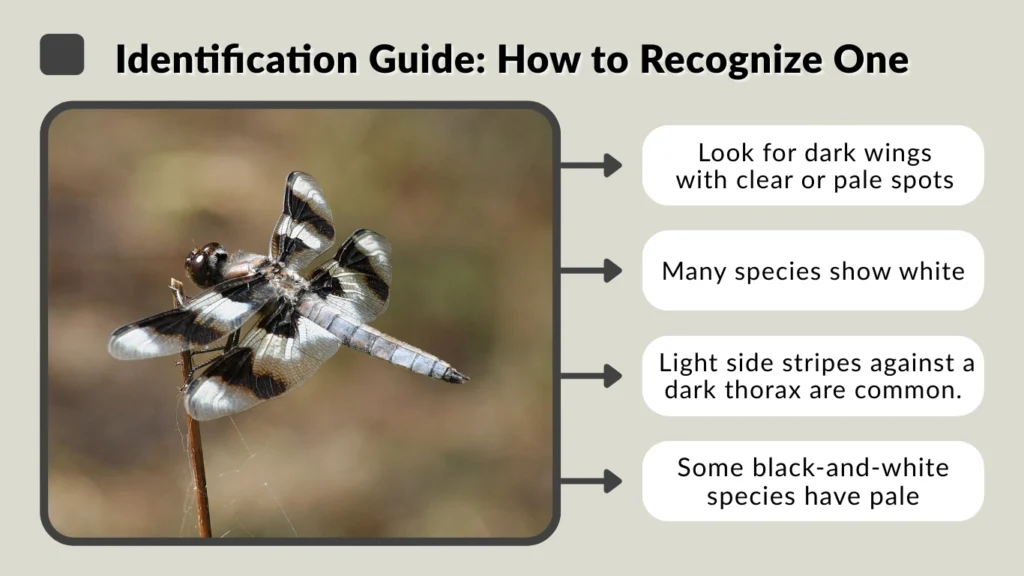
A short overview: Black and white dragonflies are identified more by pattern and contrast than by pure color.
- Wing patterns:
Look for dark wings with clear or pale spots, or transparent wings crossed by bold black veins. - Body striping:
Many species show white or pale rings along a black abdomen. - Thorax markings:
Light side stripes against a dark thorax are common. - Eye contrast:
Some black-and-white species have pale or grayish eyes that stand out from dark bodies. - Size and silhouette:
Skimmers and clubtails often appear thick-bodied and medium to large. - Perching behavior:
Many high-contrast species rest openly on rocks, twigs, or bare stems, making their patterns more visible.
Black and White Wing Patterns Explained
Spotted and Banded Wings
Wing spots and bands form when pigment is deposited during development. These dark patches can help in species recognition, mate attraction, and territorial displays. In some dragonflies, males flash their wing bands during flight to warn rivals or attract females.
Banded wings may also confuse predators. The rapid movement of contrasting patches can make it difficult for birds to track the dragonfly’s exact position.
Striped Bodies and High-Contrast Markings
Black-and-white body striping usually appears on the thorax and abdomen. These stripes can break up the insect’s outline, helping with camouflage when perched among reeds and reflections.
High contrast may also function as a signal to other dragonflies, helping individuals recognize members of their own species in crowded wetland habitats.
Habitat and Natural Behavior
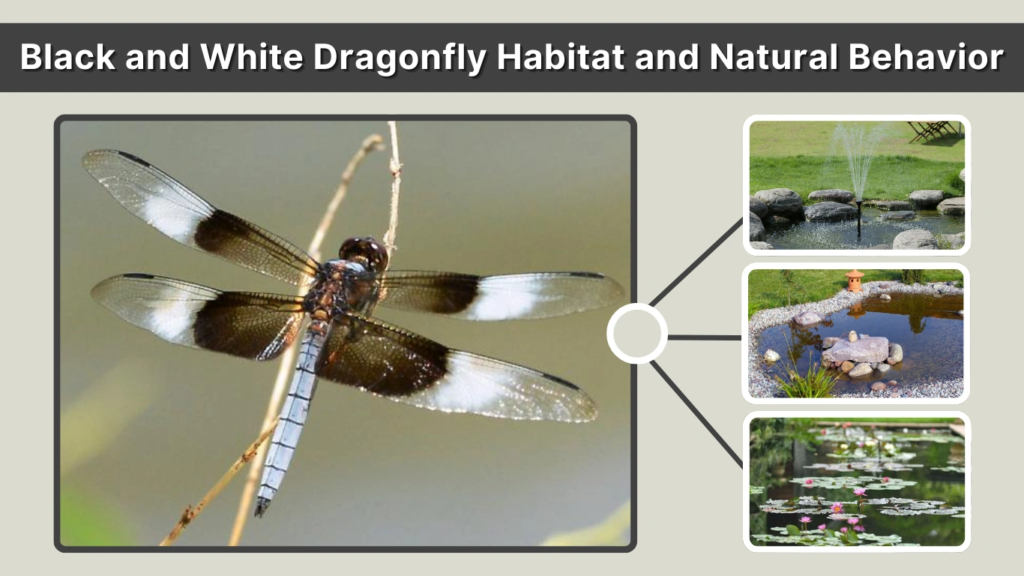
Black and white dragonflies are most often found near freshwater habitats such as ponds, lakes, canals, and slow-moving rivers. Open, sunny areas tend to produce stronger color contrast, making these patterns more noticeable.
They are active daytime hunters, feeding on mosquitoes, flies, and other small insects. Many high-contrast species are territorial and can be seen repeatedly returning to the same perch. From there, they launch short flights to catch prey or chase intruders.
Seasonal timing affects appearance and behavior. Newly emerged dragonflies often look softer in color, while mature adults develop darker wings or paler coatings that enhance black-and-white effects.
Spiritual Meaning of a Black and White Dragonfly
A short overview: The black and white dragonfly is often linked to symbolism of contrast, balance, and transformation.
- Balance and duality:
Black and white together represent harmony between opposing forces. - Light and shadow:
It symbolizes clarity emerging from confusion. - Transformation:
Dragonflies already represent change; black and white adds depth to this meaning. - Emotional awareness:
Seeing one is often interpreted as a sign of reflection and inner growth. - Protection and guidance:
Some believe it appears during important life transitions.
Cultural and Personal Symbolism
Cultural Interpretations
Across many cultures, dragonflies symbolize transformation, adaptability, and awareness. When their colors appear black and white, this symbolism is often deepened to represent contrast and balance. In modern spiritual beliefs, a black and white dragonfly may be seen as a reminder that light and darkness coexist, and that growth often happens between these two forces.
In artistic and symbolic traditions, black is associated with mystery, protection, and the unseen, while white represents purity, clarity, and renewal. Together, these colors in a dragonfly form are often interpreted as a message of harmony, encouraging individuals to accept both strength and vulnerability in their personal journeys.
Personal and Dream Meanings
Seeing a black and white dragonfly in dreams or meaningful moments is often linked to personal change. Many interpret it as a sign to pause and reflect, especially during emotional transitions. It may symbolize a need to balance logic and intuition, or to recognize both challenges and opportunities in life.
Because dragonflies shift between water and air, their appearance can also suggest emotional healing and mental clarity. The black-and-white contrast reinforces themes of decision-making, awareness, and inner alignment.
Black and White Dragonfly in Art and Design
Black and white dragonflies are extremely popular in art because their shapes translate beautifully into outlines, silhouettes, and minimalist designs. The delicate wings, segmented body, and symmetrical form create visually striking images even without color.
Artists often use black and white dragonflies in sketches, ink drawings, mandalas, and decorative prints. The lack of color focuses attention on structure, motion, and detail. This style is common in educational diagrams, wall art, and logo design, where clarity and elegance are valued.
Digital creators also favor black-and-white dragonfly images for printable art, craft projects, and tattoo stencils. The high contrast makes them adaptable to many backgrounds, from light paper to dark fabric.
Black and White Dragonfly Tattoos
A short overview: Black and white dragonfly tattoos combine natural beauty with deep symbolism.
- Tattoo symbolism:
Often represents change, resilience, freedom, and inner balance. - Popular design types:
Fine-line outlines, shaded realism, tribal forms, and geometric styles. - Dragonfly and flower tattoos:
Common combinations include lotus, cherry blossom, and rose, symbolizing renewal and beauty. - Placement ideas:
Wrist, shoulder, ankle, spine, behind the ear, or along the ribcage. - Spiritual vs decorative tattoos:
Some designs focus on personal meaning, while others highlight elegance and visual flow.
Black and white tattoos are especially popular because they age well and highlight form rather than color.
Drawings, Clipart, and Illustrations
Black and White Dragonfly Drawings
Drawings range from highly realistic sketches showing wing veins and segmented bodies to simple cartoon-style designs. Educational illustrations often use black and white formats to clearly display anatomy, making them useful for books, classrooms, and nature guides.
Many artists prefer black ink dragonfly drawings because they allow for precise detail while maintaining a soft, natural look.
Clipart, Vectors, and Printable Images
Black and white dragonfly clipart is widely used in crafts, branding, and digital design. Vector images allow resizing without loss of detail, making them ideal for logos, stickers, stencils, and printable decorations.
These designs are also popular in DIY projects, scrapbooking, and temporary tattoo templates, where clear outlines are essential.
Photography and Visual Appearance
Lighting strongly affects how dragonflies appear in photos. Bright sunlight can make transparent wings look white, while shadows deepen body tones into black. This contrast often creates the illusion of a black and white dragonfly even in species that are actually blue, green, or gray.
Background also matters. A bright sky or reflective water surface enhances light areas, while dark foliage intensifies black markings. Fast shutter speeds may freeze wing patterns, while slow motion can blur them into pale arcs.
Understanding these effects helps explain why many dragonfly images online are labeled black and white even when the insect has subtle hidden colors.
Ecological Importance of Patterned Dragonflies
Black and white dragonflies are not only visually striking; they are important ecological players. Like all dragonflies, they are major predators of mosquitoes, flies, and agricultural pests, helping regulate insect populations naturally.
Their aquatic larvae are sensitive to pollution, making dragonflies valuable indicators of freshwater ecosystem health. A strong dragonfly population often reflects clean water and balanced habitats.
They also serve as prey for birds, fish, and amphibians, forming a vital link in wetland food webs. Their diversity of patterns adds to the richness and stability of freshwater biodiversity.
FAQs
What does a black and white dragonfly symbolize?
A black and white dragonfly is often seen as a symbol of balance, transformation, and clarity. The contrast of colors represents the harmony between light and darkness, logic and emotion. Many people interpret its appearance as a reminder to reflect, adapt, and find stability during periods of personal change.
Are there real black and white dragonfly species?
Yes, several real dragonfly species naturally display black-and-white or high-contrast markings. These include species with banded wings, striped abdomens, or pale thoraxes with dark patterns. However, lighting conditions can also make many colored dragonflies appear black and white.
Why do dragonflies appear black and white in photos?
Dragonflies often look black and white in photos because of strong lighting, shadows, and reflective wing surfaces. Transparent wings can appear white against bright skies, while bodies may darken in shade. High contrast photography enhances this effect, creating a black-and-white appearance.
What does a black and white dragonfly tattoo mean?
A black and white dragonfly tattoo commonly represents change, resilience, and inner balance. It may symbolize overcoming challenges, emotional growth, or spiritual awareness. Some people choose the design for its elegance, while others select it for its deeper meaning.
Are black and white dragonflies rare?
True black-and-white patterned dragonflies are less common than brightly colored species, but they are not extremely rare. Many species show pale and dark markings, and environmental lighting often enhances this contrast. Their visibility makes them seem rarer than they actually are.
