

Dragonflies are colorful, fast-flying insects often seen near ponds, rivers, and gardens. Because they hunt other insects using powerful jaws, many people wonder: can dragonflies bite, can a dragonfly bite humans, and can dragonflies sting? Some searches even ask whether a dragonfly bite can kill you. These questions usually come from fear, myths, or surprise encounters. In this article, you’ll learn whether dragonflies can really bite, what a bite feels like, how dangerous it is, and what the science actually says.
Can Dragonflies Bite at All?
Do Dragonflies Have Mouthparts That Can Bite?
Yes, dragonflies can bite. They do not have teeth like mammals, but they have strong chewing mouthparts called mandibles. Dragonflies use these mandibles to catch, crush, and eat other insects such as mosquitoes, flies, and moths. These jaws are designed for gripping prey in midair, not for attacking humans. However, if a dragonfly feels trapped or threatened, it can use these same mouthparts to pinch skin.
Dragonfly bites are usually defensive, not aggressive. They are not interested in humans as food. Most bites happen when someone tries to hold a dragonfly, remove it from clothing, or accidentally traps it against the skin.
Can Dragonflies Sting Like Bees or Wasps?
No, dragonflies cannot sting. They do not have a stinger, and they do not produce venom. Unlike bees, wasps, or hornets, dragonflies have no venom sac and no injection mechanism. Any pain felt from a dragonfly is from a mechanical bite, not a sting.
Many people confuse dragonfly bites with stings because of the sudden pinch sensation. This confusion leads to common myths such as “dragonflies sting” or “dragonflies are poisonous,” both of which are false.
Can Dragonflies Bite Humans?

Can a Dragonfly Bite You on Purpose?
Dragonflies do not attack people on purpose. They are not aggressive toward humans and will usually fly away if approached. A dragonfly may bite only if it feels physically threatened, such as when it is grabbed, stuck in hair or clothing, or held tightly in someone’s hand.
In rare cases, a dragonfly may mistake shiny objects, sweat droplets, or moving skin for prey, but even then, biting is uncommon. Most people who spend time around dragonflies are never bitten.
Does a Dragonfly Bite Hurt?
A dragonfly bite usually feels like a small pinch or quick nip. The pain is mild and brief for most people. Large dragonflies can pinch a little harder than smaller species, but even then, the discomfort is minor compared to the bite of a horsefly, ant, or mosquito.
In most cases, the sensation fades within minutes. There is no venom, so there is no spreading pain, numbness, or chemical reaction like you would get from a sting.
What Body Parts Are Most Often Bitten?
When dragonfly bites do happen, they most often affect fingers, hands, arms, or the face. These areas are exposed and most likely to come into contact with a trapped insect. Bites almost never occur through clothing, and dragonflies do not chase or target specific body parts.
What Does a Dragonfly Bite Look Like?

A dragonfly bite is usually very mild and may look similar to a tiny scratch or pinprick. Common signs include:
- A small red dot or spot
- Very mild swelling
- Light itching or slight burning
- Temporary tenderness
- Rarely, a tiny amount of bleeding
For most people, the mark disappears within a few hours. It does not blister, spread, or become intensely painful. Serious reactions are extremely rare.
Can Big Dragonflies Bite Harder Than Small Ones?
Large dragonfly species, such as emperor dragonflies and giant darners, do have stronger mandibles than smaller species. Because of this, a big dragonfly can pinch slightly harder if it bites. However, “harder” does not mean dangerous. Even the largest dragonflies are still medically harmless.
A large dragonfly bite may feel sharper than a small one, but it still does not break the skin deeply, inject venom, or cause lasting injury. At worst, it may leave a small red mark that fades quickly. Size does not change the overall risk level.
Can Dragonflies Bite or Sting Animals?
Can Dragonflies Bite Dogs or Cats?
Dragonflies may come into contact with pets, especially dogs or cats that try to snap at flying insects. In these cases, a dragonfly might defensively bite the lips, tongue, or nose. These bites are not dangerous to pets and do not contain venom.
The bigger concern for pets is swallowing insects, which can cause brief irritation or choking, but not poisoning. A dragonfly bite itself does not harm dogs or cats.
Can Dragonflies Bite Birds or Fish?
Adult dragonflies do not attack large animals, but they may interact with small birds like hummingbirds in rare territorial or feeding encounters. Dragonfly larvae, however, can bite small fish or tadpoles in ponds as part of their natural predatory behavior. These bites are part of the aquatic food chain, not an aggressive threat.
Can Dragonfly Larvae Bite?
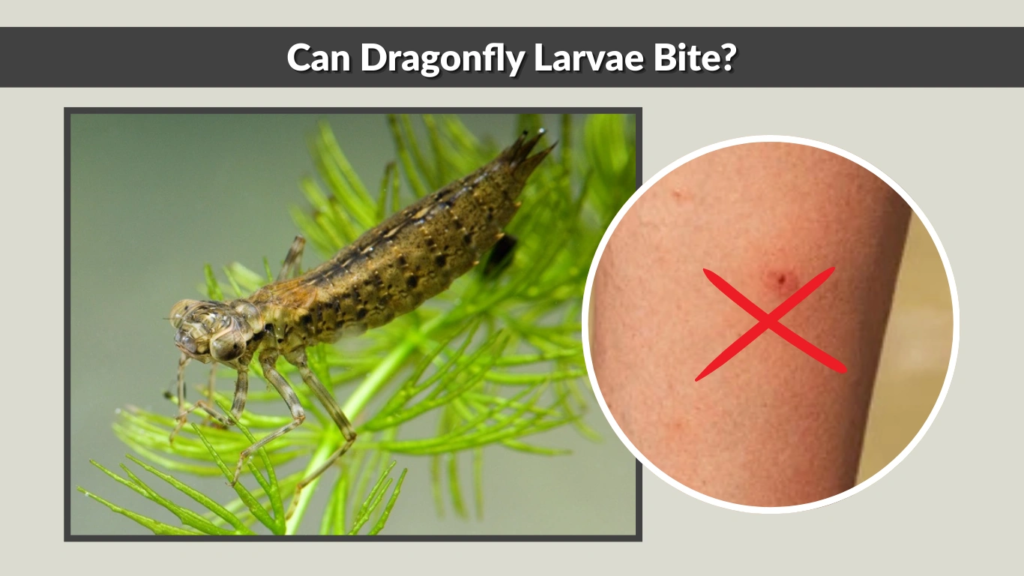
What Are Dragonfly Larvae (Nymphs)?
Dragonfly larvae, also called nymphs, live underwater in ponds, lakes, and slow streams. They are active predators and use a special extendable jaw to catch prey such as mosquito larvae, small fish, and tadpoles. These jaws are much more powerful than those of adult dragonflies.
They are well camouflaged, often hiding in mud or vegetation, which brings them into occasional contact with people.
Can Dragonfly Larvae Bite Humans in Water?
Yes, dragonfly larvae can bite if handled or trapped against the skin. Swimmers, aquarium keepers, and people cleaning ponds may rarely experience a larval bite. These bites can feel sharper than adult dragonfly bites, similar to a small pinch underwater.
However, they are still not dangerous. They do not inject venom, and they do not cause serious wounds. Most larval bites result in brief discomfort and nothing more.
Are Dragonfly Bites Dangerous?
Dragonfly bites are not dangerous. Dragonflies are not venomous, do not carry poison, and are not known to transmit diseases to humans. Their bite is purely mechanical, meaning it is only a small pinch from their mandibles. There is no toxin involved, and there are no documented cases of dragonfly bites causing serious medical harm.
In very rare situations, a bite could become slightly irritated if bacteria enter the skin, especially if the area is scratched repeatedly. However, this risk is no greater than that of a tiny scratch from a plant or fingernail. Simple hygiene is usually all that is needed.
Medical attention would only be necessary if a person already has a severe insect allergy, if the skin becomes increasingly red or swollen over several days, or if signs of infection appear. These situations are extremely uncommon with dragonfly bites.
Can a Dragonfly Bite Kill You?
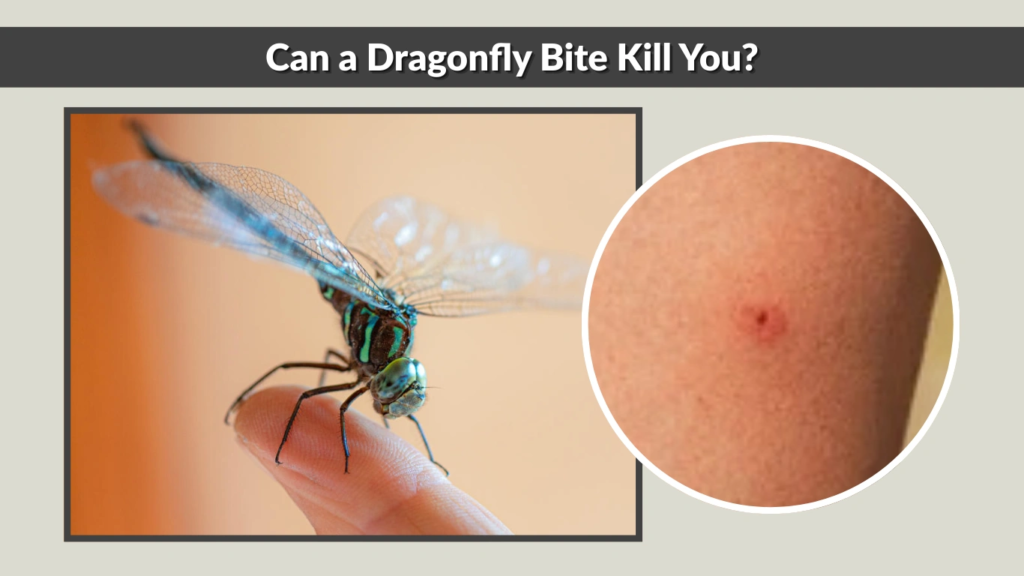
No. A dragonfly bite cannot kill you. There are no verified medical reports of deaths caused by dragonfly bites. Dragonflies do not produce venom, and their jaws are not capable of causing serious wounds.
Online searches asking “can dragonfly bites kill you” or “can you die from a dragonfly bite” usually come from fear-based myths or confusion with stinging insects. In reality, a dragonfly bite is one of the least harmful insect bites possible.
Even in the most extreme scenario, the only realistic risk would be a secondary skin infection, which is easily prevented with basic cleaning. A healthy person is in no danger from a dragonfly bite.
Why Do Dragonflies Bite?
Dragonflies bite only in self-defense. They are not aggressive insects and do not hunt humans or animals larger than their natural prey.
Common reasons a dragonfly might bite include:
- Being grabbed or squeezed
- Being trapped in clothing, hair, or nets
- Being handled by children
- Being pinned against skin
- Feeling threatened while resting
Dragonflies are visual hunters that react quickly to movement. When they cannot escape, biting becomes a last-resort defense. In natural conditions, they prefer to fly away rather than confront anything.
What to Do If a Dragonfly Bites You
A dragonfly bite requires only basic care. In most cases, no treatment is even necessary.
Recommended steps include:
- Wash the area with clean water and mild soap
- Pat dry with a clean towel
- Apply a cold compress if there is mild swelling
- Use a small amount of antiseptic if skin is broken
- Avoid scratching the area
The bite should stop feeling noticeable within minutes to a few hours. If redness spreads, warmth increases, or swelling continues for more than two days, it is wise to clean the area again and monitor it, although complications are rare.
How to Prevent Dragonfly Bites
Dragonfly bites are already uncommon, but they are easy to avoid.
Safe Behavior Around Dragonflies
- Do not grab dragonflies with bare hands
- Avoid trapping them against your skin
- Let resting dragonflies fly away on their own
- Use gentle movements near ponds and wetlands
- Teach children not to catch dragonflies
What to Do If a Dragonfly Lands on You
If a dragonfly lands on your arm or shoulder, stay calm and still. It will usually fly away within seconds. Blowing gently or slowly moving away is better than swatting, which may trap the insect and provoke a defensive bite.
Dragonfly Bite Myths vs Facts
Many fears about dragonflies come from old folklore and internet misinformation.
- Myth: Dragonflies sting
Fact: Dragonflies have no stingers and cannot sting. - Myth: Dragonfly bites are poisonous
Fact: Dragonflies are not venomous. - Myth: Dragonflies attack people
Fact: They avoid humans and bite only when trapped. - Myth: Big dragonflies are dangerous
Fact: Even the largest dragonflies are harmless. - Myth: Dragonfly bites can kill
Fact: There are no fatal dragonfly bites.
FAQs
Can dragonflies bite humans seriously?
Dragonflies can bite humans, but not seriously. Their bites are mild, defensive pinches that usually cause only brief discomfort. They do not inject venom, do not spread disease, and do not cause lasting injury. Most people who are bitten notice only a small red mark that fades quickly.
Do dragonflies sting or inject venom?
No. Dragonflies do not sting and do not inject venom. They lack stingers and venom glands entirely. Any pain from a dragonfly comes only from their mandibles pinching the skin. This makes dragonflies far less harmful than bees, wasps, or many biting flies.
Can dragonfly larvae bite swimmers?
Yes, dragonfly larvae can bite if they are handled or pressed against the skin underwater. These bites can feel sharper than adult bites but are still not dangerous. They do not inject toxins, and the discomfort usually fades quickly without treatment.
Can a dragonfly bite cause infection?
A dragonfly bite rarely causes infection. The risk is no greater than that of a tiny scratch. Washing the area with soap and water is usually enough. Infection is only possible if bacteria enter broken skin and the area is not kept clean.
Should I worry if my dog eats a dragonfly?
No. Dragonflies are not poisonous to dogs. If a dog catches or eats a dragonfly, the worst result is usually mild mouth irritation or brief coughing. A dragonfly bite itself is harmless to pets. Ongoing symptoms would more likely come from choking or allergies, not the insect.
