
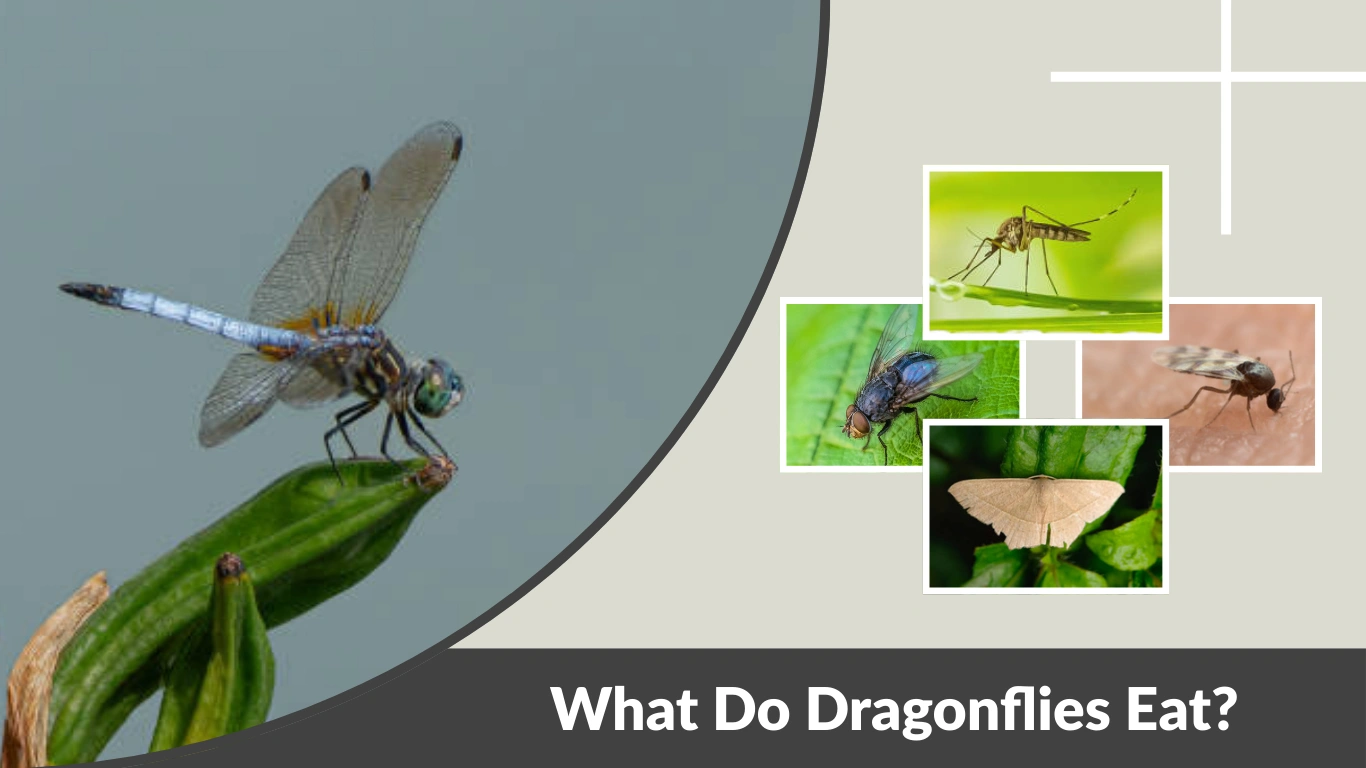
Dragonflies are powerful flying insects best known for their speed, sharp eyesight, and mosquito-hunting ability. Many people wonder what dragonflies eat, whether they drink water, and what dragonfly larvae eat underwater. The truth is that dragonflies are strict carnivores throughout their entire lives. From ponds and lakes to gardens and forests, they survive by hunting other small animals. Understanding their diet helps explain why dragonflies are so important for natural insect control and healthy ecosystems.
Understanding What Dragonflies Eat
Dragonflies are not plant-eaters or nectar feeders. They are active predators that rely completely on other animals for survival. Both adult dragonflies and their immature forms, called larvae or nymphs, feed on living prey. Their bodies are designed for hunting, with large compound eyes, strong jaws, and excellent flight control.
Diet plays a major role in how dragonflies grow, reproduce, and survive. High-protein food fuels their fast wing movement, sharp reflexes, and long patrol flights. Without a steady supply of insects, dragonflies cannot maintain the energy needed to hunt, mate, and defend territory.
Another important point is that dragonfly diets change dramatically during their life cycle. Adult dragonflies hunt in the air, while dragonfly nymphs hunt underwater. This split lifestyle allows them to control insect populations in both aquatic and terrestrial environments.
What Do Adult Dragonflies Eat?
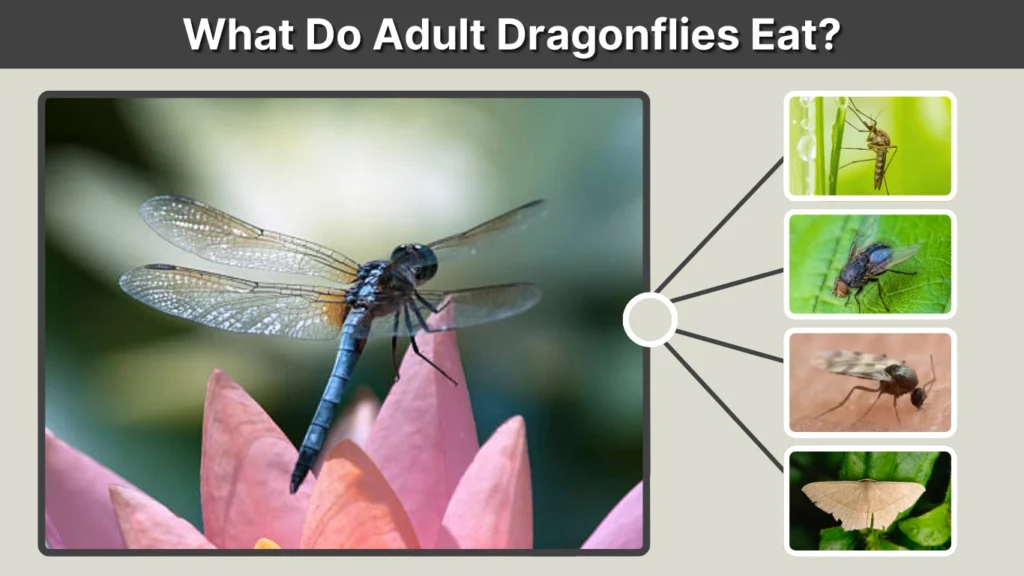
Adult dragonflies are aerial hunters. They spend much of the day flying over water, grasslands, and gardens, scanning the air for moving prey. Their eyesight is among the best in the insect world, allowing them to track and intercept insects with remarkable accuracy.
Common Foods of Adult Dragonflies
Adult dragonflies eat a wide range of flying insects, including:
- Mosquitoes
- Flies and gnats
- Midges
- Moths
- Butterflies
- Wasps and bees (occasionally)
- Small dragonflies and damselflies
Mosquitoes make up a large part of the diet for many species, especially those living near wetlands. Because dragonflies eat such a high number of pest insects, they are often considered one of nature’s most effective forms of insect control.
How Adult Dragonflies Catch Their Prey
Dragonflies usually hunt while flying. They patrol open spaces, riversides, and ponds, catching insects mid-air with their legs. Their legs form a basket-like shape that traps prey during flight. Once caught, the insect is often eaten immediately while the dragonfly continues flying.
Unlike many insects that rely heavily on smell, dragonflies hunt mainly by sight. Their large eyes allow them to judge speed, distance, and direction with extreme precision. This visual advantage lets them capture fast-moving prey such as mosquitoes, flies, and even other dragonflies.
What Do Dragonfly Larvae Eat?
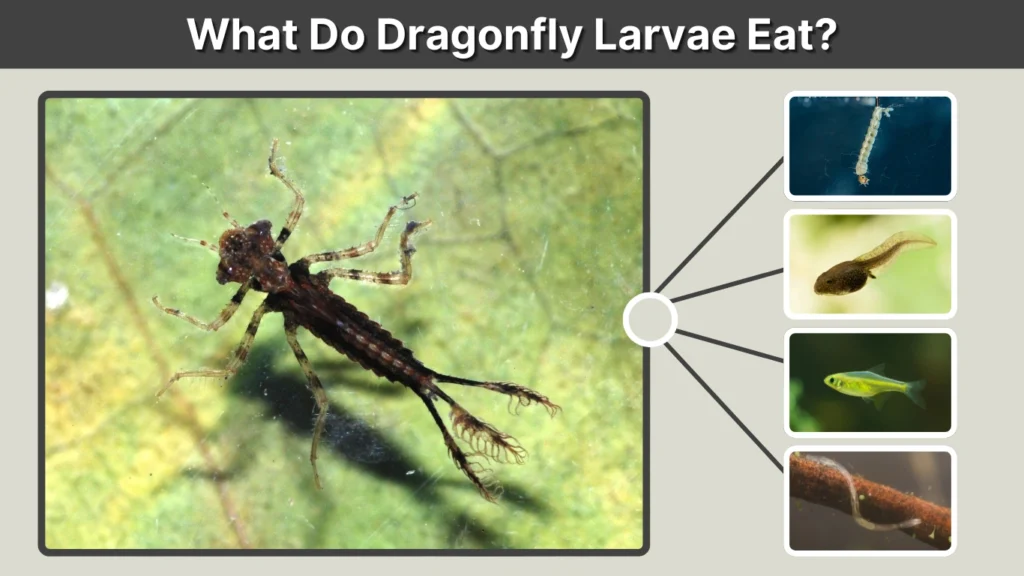
Before becoming flying adults, dragonflies spend most of their lives underwater as larvae, also called nymphs. This stage can last from several months to several years, depending on the species. During this time, dragonfly nymphs are aggressive aquatic predators.
Dragonfly Nymph Diet in Water
Dragonfly larvae feed on many types of small aquatic animals, including:
- Mosquito larvae
- Tadpoles
- Small fish
- Aquatic worms
- Water fleas
- Other insect larvae
- Tiny crustaceans
Because they live in ponds, lakes, rivers, and marshes, dragonfly nymphs play a major role in controlling aquatic insect populations. Mosquito larvae are among their most common and important food sources.
How Dragonfly Nymphs Hunt Underwater
Dragonfly nymphs do not chase prey the way adults do. Instead, they are ambush hunters. They hide among plants, rocks, or mud and remain almost motionless. When prey comes close, they shoot out a special extendable lower jaw called a labium, which grabs the victim in a fraction of a second.
This unique feeding tool allows dragonfly larvae to catch fast-moving prey such as small fish and tadpoles. After capturing food, the nymph pulls it back toward its mouth and begins feeding. This powerful hunting system makes dragonfly larvae some of the top predators in freshwater habitats.
Do Dragonflies Eat Mosquitoes?
Yes, dragonflies are well known for eating mosquitoes, and they do so in both life stages. Adult dragonflies catch flying adult mosquitoes, while dragonfly larvae feed heavily on mosquito larvae in water. This double impact makes dragonflies extremely valuable for reducing mosquito populations.
Adult dragonflies can eat dozens to hundreds of mosquitoes per day, depending on species and availability. They often hunt around stagnant water, where mosquitoes breed, giving them constant access to prey. Their ability to catch insects mid-air makes them especially efficient mosquito predators.
Dragonfly larvae are just as important. By feeding on mosquito larvae before they can mature, they help limit mosquito numbers at the source. Because of this, healthy dragonfly populations are often linked to lower mosquito activity in natural environments.
What Insects Do Dragonflies Eat Most?
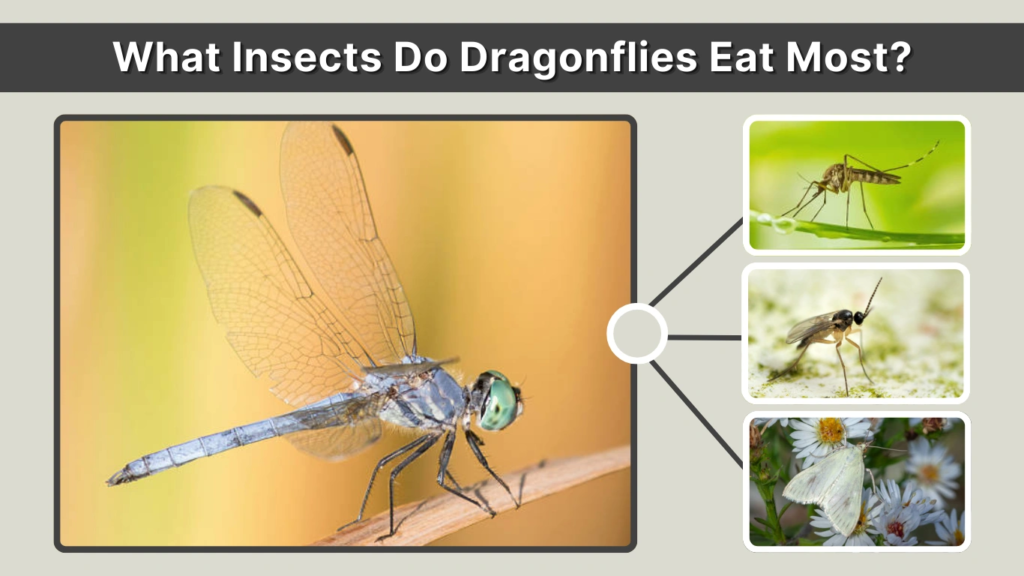
Dragonflies are opportunistic hunters, meaning they eat whatever suitable prey is most available in their environment. Their diet depends on location, season, and the size of the dragonfly. In wetlands and near ponds, mosquitoes and midges dominate their meals, while in gardens and fields they may catch flies, moths, and small butterflies.
Flying Insects
Most adult dragonflies prefer soft-bodied flying insects. These include mosquitoes, flies, gnats, leafhoppers, small moths, and winged ants. Dragonflies often patrol the same flight paths, returning repeatedly to areas where insects are most active. This consistent hunting behavior increases their success rate and helps keep insect populations balanced.
Aquatic Insects
Although adults hunt in the air, their connection to water remains strong. Areas near ponds, lakes, and slow streams are filled with emerging aquatic insects such as midges and mayflies. Dragonflies frequently feed on these newly emerged insects, which are slower and easier to catch than stronger fliers.
Do Dragonflies Eat Other Dragonflies?
Yes, dragonflies are known to be cannibalistic. Larger dragonflies sometimes eat smaller dragonflies and damselflies, especially when insect prey is scarce. Nymphs may also eat smaller nymphs in crowded water bodies. This behavior helps stronger individuals survive but also limits overpopulation.
Do Dragonflies Eat Plants, Fruit, or Flowers?
Dragonflies do not eat plants, leaves, fruit, or nectar. They are strict carnivores and lack the mouthparts and digestive systems needed to process plant material. Every stage of a dragonfly’s life depends on animal prey.
Many people think dragonflies feed on flowers because they are often seen resting on plants. In reality, dragonflies use flowers and stems as hunting platforms. Flowers attract flies, bees, and mosquitoes, which in turn attract dragonflies looking for an easy meal.
Dragonflies may also land on vegetation to rest, warm themselves in the sun, or escape strong winds. Their presence on plants is about hunting and energy conservation, not feeding on plant material.
What Do Big vs Small Dragonflies Eat?
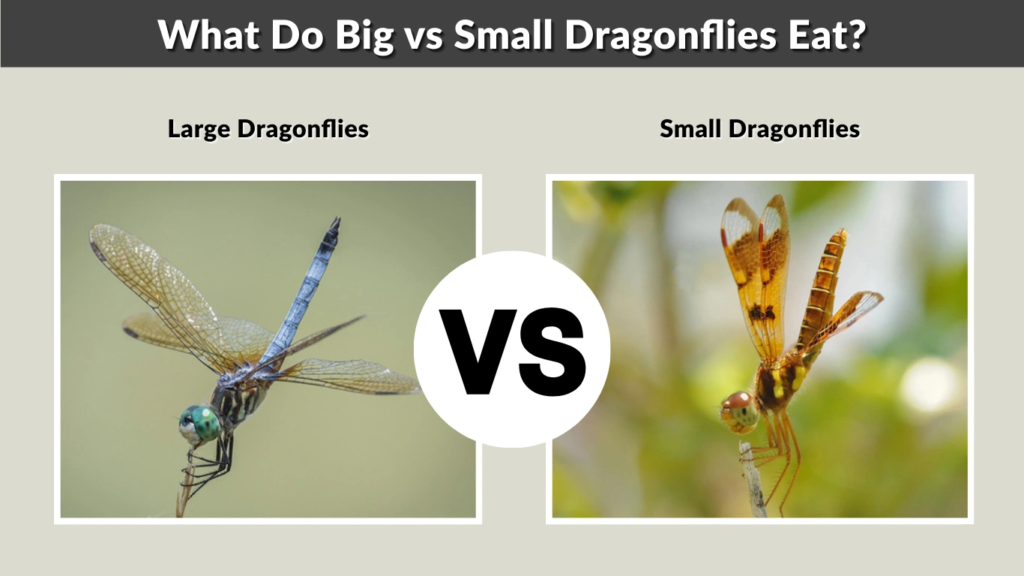
The size of a dragonfly strongly influences what it can catch and eat. While all dragonflies are predators, larger species are capable of overpowering bigger and stronger prey.
What Do Large Dragonflies Eat?
Large dragonflies, such as emperor dragonflies and green darners, can eat bigger insects like wasps, bees, butterflies, and even smaller dragonflies. Some large species are also able to capture small fish and tadpoles while skimming over water. Their strong wings and jaws allow them to handle prey that smaller dragonflies cannot.
What Do Small Dragonflies Eat?
Smaller dragonflies usually focus on tiny, lightweight insects. Mosquitoes, gnats, midges, and small flies make up most of their diet. These insects are easier to catch and swallow in mid-air and provide enough energy to sustain their rapid flight.
What Do Emperor and Green Darner Dragonflies Eat?
Emperor dragonflies and green darners are among the most aggressive hunters. They eat almost any insect they can overpower, including mosquitoes, flies, moths, butterflies, and other dragonflies. Their adaptability allows them to thrive in many different environments.
What Do Dragonflies Eat at Night?
Dragonflies are primarily daytime hunters. They rely heavily on vision, which works best in sunlight. During the night, most dragonflies stop hunting and settle on vegetation to rest. This resting behavior is called roosting.
Some large dragonfly species may occasionally feed at dusk when light levels are still high enough to detect prey. However, true nighttime feeding is rare. At night, dragonflies are more focused on conserving energy and avoiding predators such as bats and nocturnal birds.
Because they do not feed much at night, dragonflies depend on heavy daytime hunting to meet their energy needs. This is why they are often seen actively flying and feeding during warm, sunny hours.
What Do Dragonflies Eat in Captivity?
Keeping dragonflies in captivity is difficult because they require live, moving prey. They rarely accept dead insects and may refuse to eat if conditions are not suitable.
Foods Given to Dragonflies in Captivity
In research and controlled environments, dragonflies and their larvae are usually fed:
- Fruit flies
- House flies
- Mosquitoes
- Bloodworms
- Brine shrimp
- Daphnia
- Small feeder insects
Dragonfly nymphs are often easier to feed than adults because they readily consume aquatic organisms.
Can Dragonflies Survive Long in Captivity?
Adult dragonflies often struggle in captivity due to stress, limited space, and difficulty hunting. Nymphs, however, can sometimes be raised successfully in aquariums with clean water and steady food. Even so, dragonflies generally thrive best in natural environments.
What Eats Dragonflies in Nature?
Despite being strong predators, dragonflies are also prey for many animals. Birds such as swallows and kingfishers commonly hunt adult dragonflies. Frogs, fish, and turtles feed on both adults and larvae.
Spiders often trap dragonflies in webs near water, while lizards and larger insects may ambush resting individuals. Dragonfly nymphs face threats from fish, larger aquatic insects, and water beetles.
To survive, dragonflies rely on speed, agility, camouflage, and sharp vision. These adaptations help them avoid predators and maintain their role as top insect hunters.
FAQs
What do dragonflies eat in order to survive?
Dragonflies survive by eating other animals. Adults feed on flying insects such as mosquitoes, flies, and moths, while larvae eat aquatic organisms like mosquito larvae, tadpoles, and small fish. This high-protein diet fuels their flight, growth, and reproduction.
What bugs do dragonflies eat the most?
Mosquitoes, flies, gnats, and midges are the most commonly eaten insects. These bugs are abundant near water and are easy for dragonflies to catch in mid-air. Many species can eat dozens or even hundreds of small insects in a single day.
Do dragonflies drink water?
Dragonflies do not drink water in the usual way. They get most of their moisture from the insects they eat and from their environment. Living near water helps them maintain proper hydration without actively drinking.
Do dragonflies eat plants or nectar?
No, dragonflies do not eat plants, nectar, or fruit. They are strict carnivores throughout their lives. When dragonflies land on flowers, they are usually hunting insects or resting, not feeding on the plant.
What do dragonfly nymphs eat in ponds?
Dragonfly nymphs eat mosquito larvae, aquatic worms, tadpoles, small fish, and other insect larvae. They are powerful underwater predators that use a fast extendable jaw to capture prey.
