
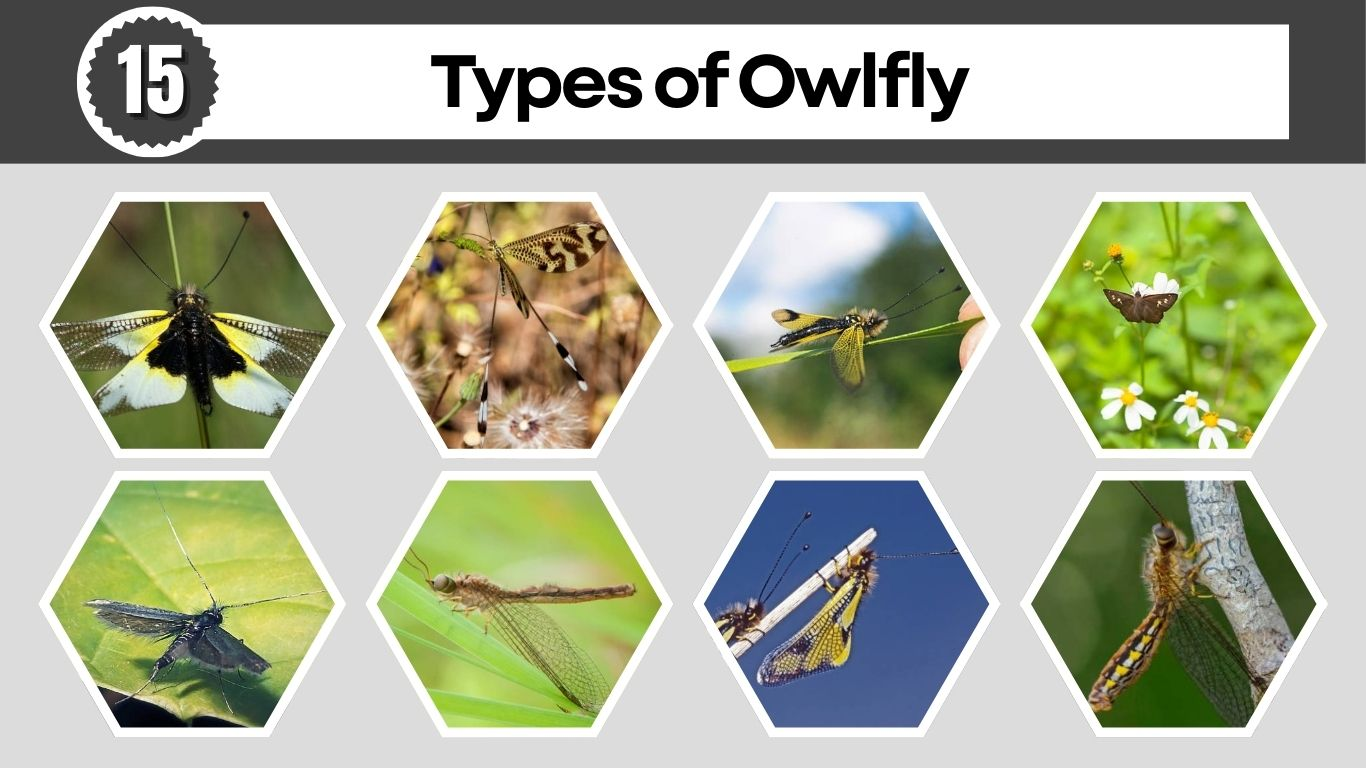
Owlflies are striking, dragonfly-like insects known for their huge bulging eyes, long clubbed antennae, and powerful flight. They belong to the family Ascalaphidae and are close relatives of lacewings and antlions. Found mainly in warm, sunny regions around the world, owlflies are active predators that hunt flying insects in open habitats such as grasslands, scrublands, and forest edges. Their unusual appearance and skilled hunting behavior make them one of the most fascinating members of the lacewing group.
1. Ascalaphus macaronius (Mediterranean Owlfly)
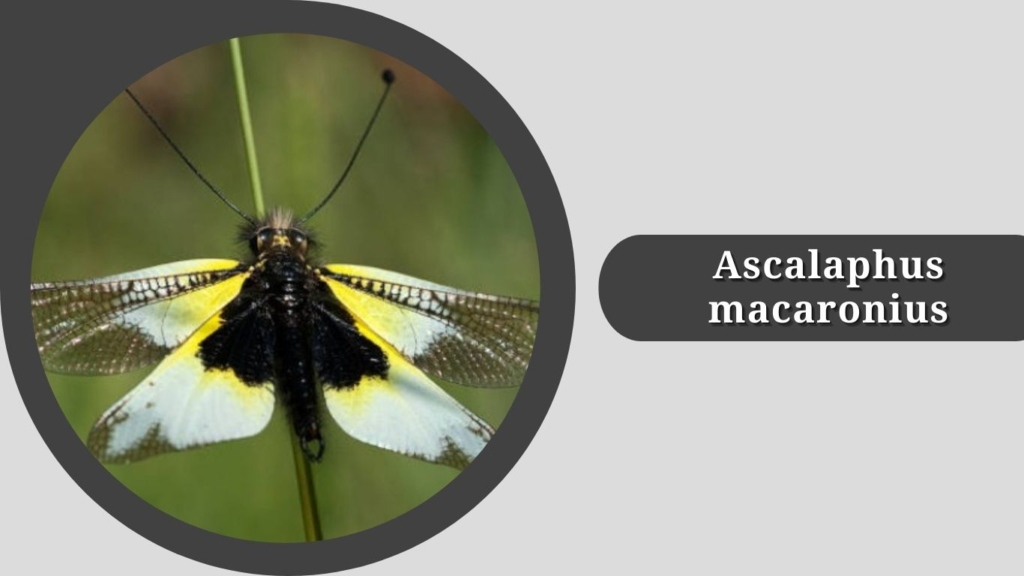
Ascalaphus macaronius is a striking owlfly species native to southern Europe, North Africa, and parts of the Middle East. It is known for its long, clubbed antennae, large bulging eyes, and beautifully patterned wings. Like other owlflies, it is a powerful aerial predator that hunts flying insects in open, sunny habitats.
Identification
- Medium to large owlfly with a long, slender body
- Very large, bulging compound eyes
- Long antennae ending in distinct clubs
- Two pairs of narrow, transparent wings with dark markings
- Wings held outstretched or slightly roof-like at rest
- Larvae robust, flattened, with strong curved jaws
Habitat
Ascalaphus macaronius lives in warm, open landscapes such as dry grasslands, rocky slopes, scrublands, and forest edges. It prefers sunny areas where flying insects are abundant. Adults are often seen perched on tall grasses, shrubs, or rocks. Larvae live on the ground, hiding under stones, leaf litter, or loose soil.
Behaviors
Adults are mainly active during the day and at dusk, flying strongly and patrolling open spaces in search of prey. They often perch head-down on stems or twigs between flights. Larvae are ambush predators that remain hidden and strike quickly at passing insects, similar to antlion larvae but without building pits.
Diet and Lifecycle
Larvae feed on ants and other small ground-dwelling insects. Adults prey on flying insects such as flies, moths, beetles, and other lacewings. Females lay eggs on plant stems or other elevated objects. The lifecycle includes egg, larva, pupa, and adult stages, with larvae often taking a long time to develop before pupating in soil.
2. Libelloides coccajus (Scarce Mediterranean Owlfly)
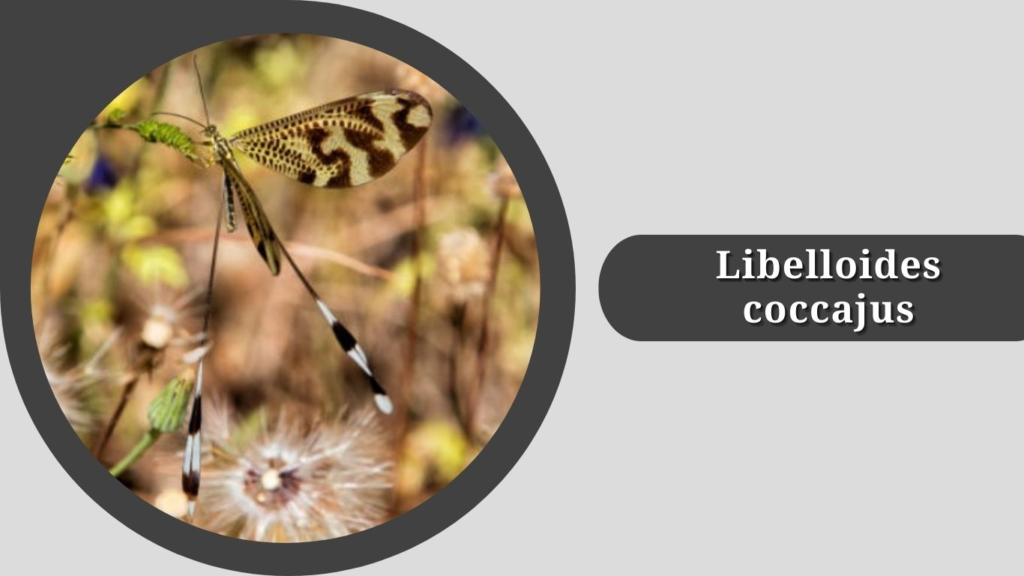
Libelloides coccajus is one of the most colorful and eye-catching owlflies found in Europe. It is easily recognized by its boldly patterned black-and-yellow wings and dragonfly-like flight. This species is active during sunny days and is commonly observed hovering over dry grasslands and flower-rich meadows.
Identification
- Medium-sized owlfly with striking black, yellow, and transparent wings
- Very large, bulging compound eyes
- Long antennae with distinct clubs at the tips
- Slender, elongated body
- Wings often held open while resting
- Larvae flattened, robust, with strong curved jaws
Habitat
Libelloides coccajus inhabits dry meadows, grasslands, rocky slopes, and open scrubland. It prefers warm, sunny areas rich in flowering plants where flying insects are abundant. Adults are often seen perched on tall grasses or hovering over open ground. Larvae live on the soil surface or under stones and leaf litter.
Behaviors
Adults are mainly diurnal, actively flying in bright sunlight and hunting insects on the wing. They frequently perch head-down and launch sudden flights to catch prey. Larvae are ground-dwelling ambush predators that hide and strike quickly at passing insects.
Diet and Lifecycle
Larvae feed on ants and other small ground insects. Adults prey on flies, bees, butterflies, and other flying insects. Females lay eggs on plant stems. After several larval molts, pupation occurs in soil. Adults emerge, reproduce, and usually live only through one active season.
3. Libelloides longicornis (Long-Horned Owlfly)
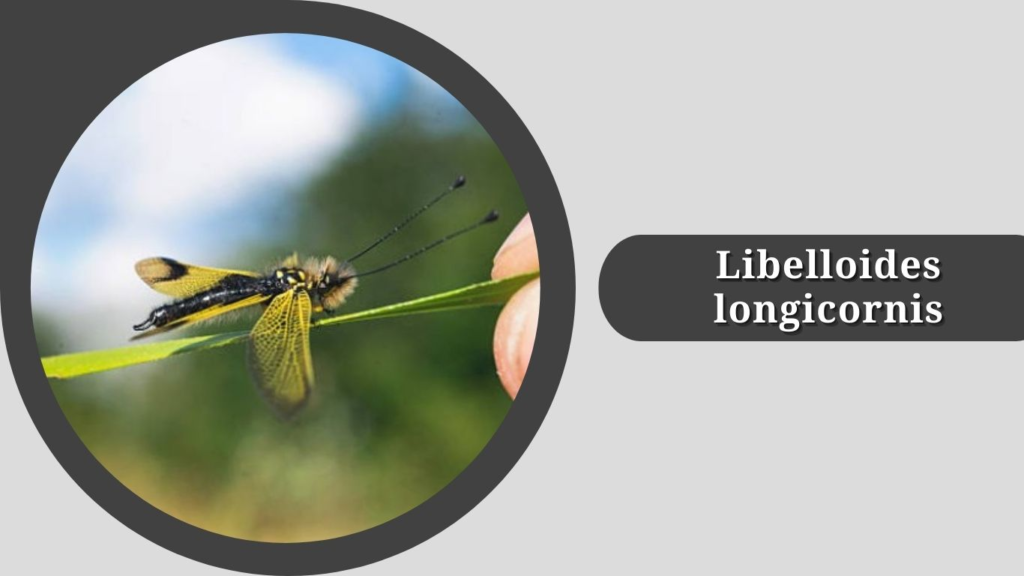
Libelloides longicornis is a distinctive owlfly species named for its especially long antennae. It is native to parts of southern and eastern Europe and western Asia, where it inhabits warm, open habitats. With its bright wing patterns and agile flight, it is one of the more easily recognized owlflies.
Identification
- Medium-sized owlfly with patterned black and yellow wings
- Very long, clubbed antennae
- Large bulging compound eyes
- Slender, elongated body
- Wings narrow and often held outspread
- Larvae flattened, robust, with strong curved jaws
Habitat
Libelloides longicornis is found in dry grasslands, steppes, rocky hillsides, and open woodland edges. It favors sunny areas with sparse vegetation and plenty of flying insects. Adults often perch on tall grasses, shrubs, or rocks. Larvae live on or just beneath the soil surface, hiding under debris and stones.
Behaviors
Adults are mainly active during the day, flying strongly and hunting insects in open air. They frequently rest head-down on stems and quickly launch to catch prey. Larvae are ambush predators that remain motionless until insects pass nearby.
Diet and Lifecycle
Larvae feed on ants and other small insects on the ground. Adults prey on a wide range of flying insects. Eggs are laid on plant stems. The lifecycle includes egg, larva, pupa, and adult stages, with pupation occurring in the soil.
4. Libelloides lacteus (White Owlfly)
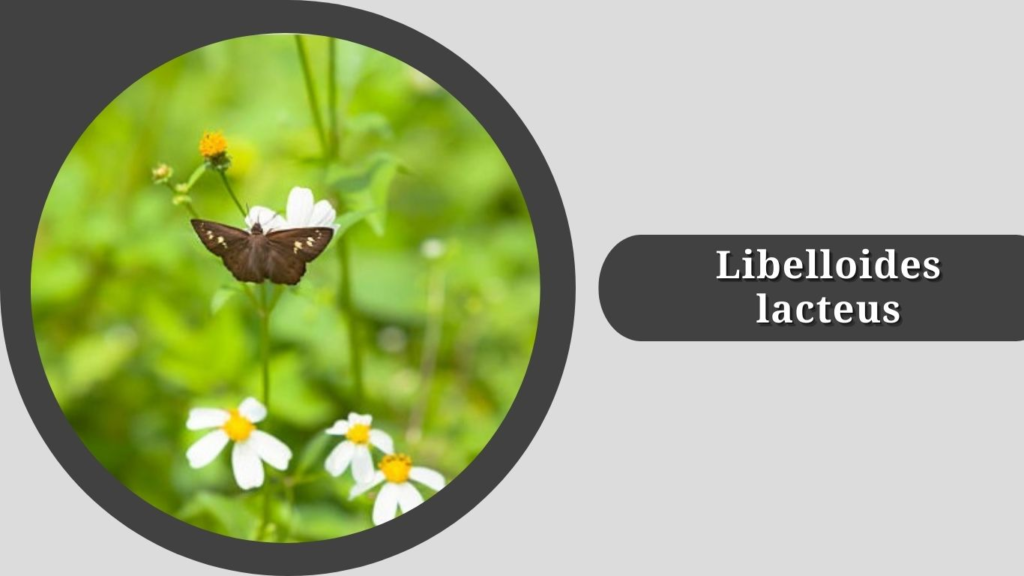
Libelloides lacteus is a beautiful owlfly species recognized by the pale, milky-white areas on its wings, which give it a lighter appearance than many other Libelloides species. It is native to parts of southern Europe and western Asia, where it inhabits warm, open landscapes rich in insect life.
Identification
- Medium-sized owlfly with pale, whitish and dark patterned wings
- Very large bulging compound eyes
- Long antennae with distinct clubs
- Slender, elongated body
- Wings narrow and often held outspread when resting
- Larvae flattened, robust, with strong curved jaws
Habitat
Libelloides lacteus lives in dry grasslands, open meadows, rocky slopes, and scrublands. It prefers sunny environments where flowering plants and flying insects are abundant. Adults are often seen hovering over open areas or perched on tall grasses. Larvae live on the ground under stones, soil clumps, and leaf litter.
Behaviors
Adults are mainly diurnal and fly actively in bright sunlight, patrolling territories and hunting prey. They often rest head-down on plant stems. Larvae are ground-dwelling ambush predators, hiding and striking quickly at passing insects.
Diet and Lifecycle
Larvae feed on ants and small ground insects. Adults prey on flies, bees, butterflies, and other flying insects. Females lay eggs on vegetation. Pupation occurs in soil. Adults emerge seasonally, reproduce, and usually live only a short adult lifespan.
5. Bubopsis andromache (Mediterranean Black Owlfly)
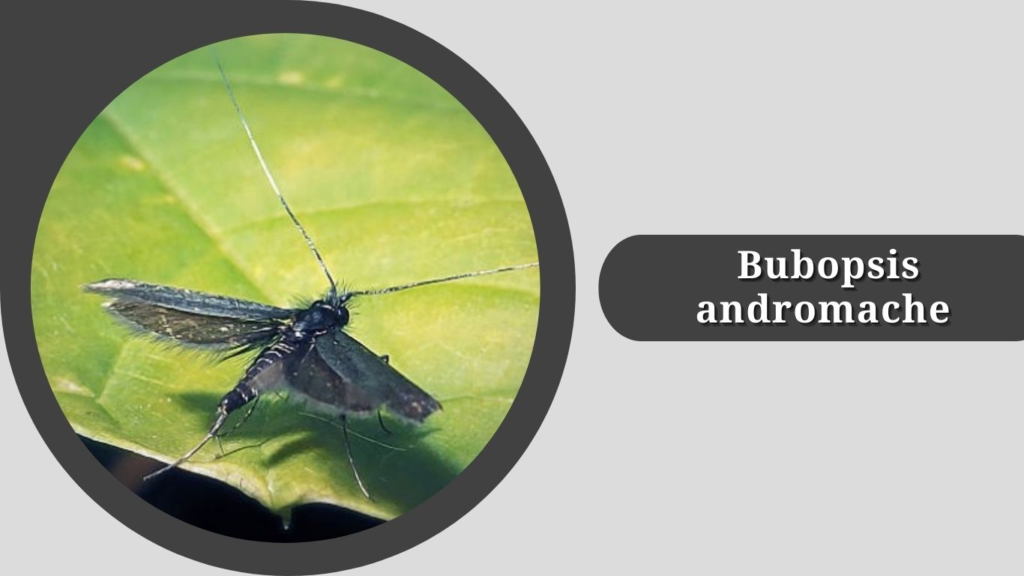
Bubopsis andromache is a striking owlfly species found mainly in the Mediterranean region. It is easily recognized by its dark wings with contrasting pale markings and its strong, agile flight. Like other owlflies, it is a daytime hunter that plays an important role in controlling flying insect populations.
Identification
- Medium to large owlfly with mostly dark wings and pale bands
- Very large, bulging compound eyes
- Long antennae with clubbed tips
- Slender, elongated body
- Wings often held open or slightly angled at rest
- Larvae robust, flattened, with strong curved jaws
Habitat
Bubopsis andromache inhabits dry grasslands, rocky slopes, scrublands, and open forest edges. It prefers warm, sunny areas where insects are abundant. Adults are often seen flying over open ground or perched on tall grasses and shrubs. Larvae live on the ground beneath stones, loose soil, and leaf litter.
Behaviors
Adults are active during the day, flying powerfully and capturing insects in midair. They often perch head-down between hunting flights. Larvae are ambush predators, lying in wait on the ground and seizing passing insects with quick strikes.
Diet and Lifecycle
Larvae feed mainly on ants and other small ground-dwelling insects. Adults prey on flies, bees, wasps, butterflies, and other flying insects. Females lay eggs on plant stems. After a prolonged larval stage, pupation occurs in the soil, followed by adult emergence and reproduction.
6. Bubopsis hamata (Hooked Owlfly)
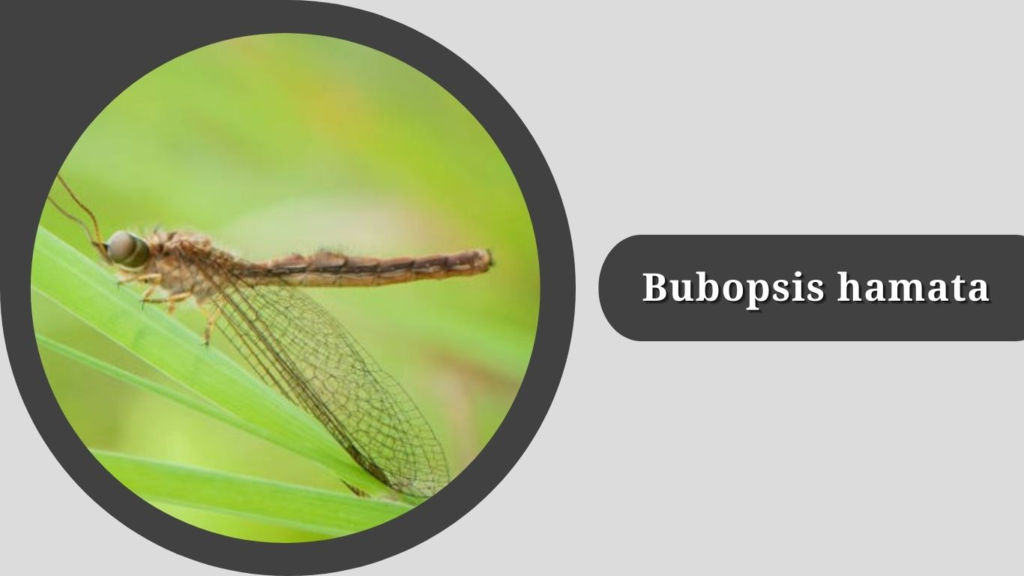
Bubopsis hamata is a Mediterranean owlfly species closely related to Bubopsis andromache. It is known for its dark, boldly patterned wings and agile daytime flight. This owlfly is a typical member of dry, open landscapes, where it hunts flying insects under bright sunlight.
Identification
- Medium-sized owlfly with dark wings and lighter patches
- Very large, bulging compound eyes
- Long antennae with clear clubbed tips
- Slender, elongated body
- Wings narrow, strongly veined, often held open
- Larvae flattened, robust, with powerful curved jaws
Habitat
Bubopsis hamata is found in dry grasslands, rocky slopes, scrublands, and open woodland edges. It prefers warm, sunny habitats with low vegetation and abundant flying insects. Adults often perch on tall grasses, shrubs, and rocks. Larvae live on the ground, hidden under stones, soil, and leaf litter.
Behaviors
Adults are mainly diurnal and actively patrol open areas, capturing insects in flight. They frequently rest head-down on stems between hunting flights. Larvae are ground-dwelling ambush predators that remain motionless until prey passes close enough to strike.
Diet and Lifecycle
Larvae feed on ants and other small ground insects. Adults prey on flies, bees, butterflies, and other flying insects. Females lay eggs on plant stems or dry vegetation. Pupation takes place in soil. Adults emerge seasonally, mate, and usually live only a short adult life.
7. Deleproctophylla australis (Australian Owlfly)
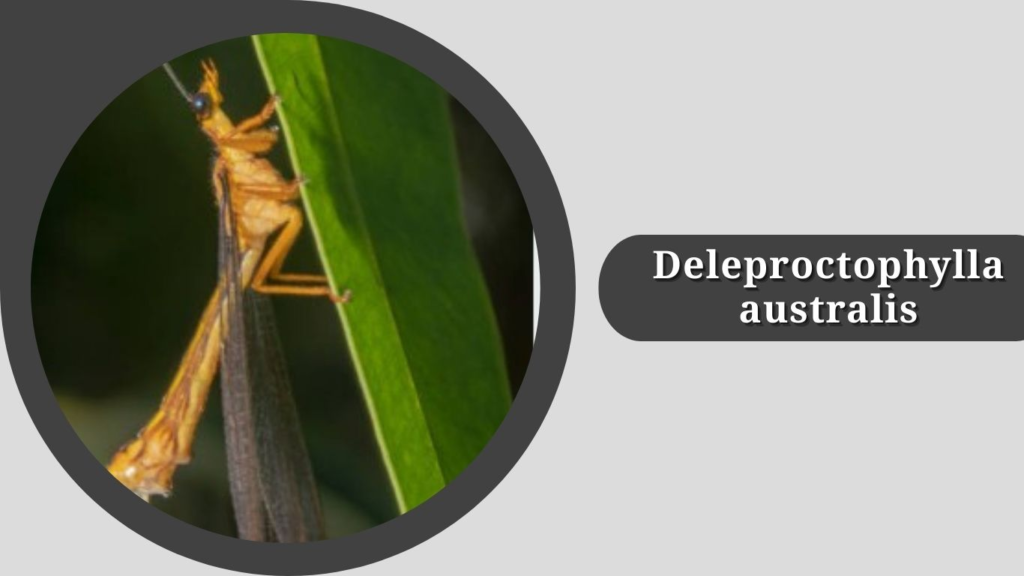
Deleproctophylla australis is an owlfly species native to Australia, where it inhabits warm, open habitats. Like other owlflies, it combines the appearance of a dragonfly with the ancestry of lacewings. It is an agile aerial predator and is most often seen flying in sunny conditions.
Identification
- Medium to large owlfly with long, narrow wings
- Wings mostly transparent with darker markings
- Very large, bulging compound eyes
- Long antennae ending in distinct clubs
- Slender, elongated body
- Larvae flattened, robust, with strong curved jaws
Habitat
Deleproctophylla australis is found in grasslands, open woodlands, scrublands, and forest edges across parts of Australia. It prefers sunny, open areas where flying insects are abundant. Adults often perch on tall grasses, shrubs, or low branches. Larvae live on the ground under stones, bark, and leaf litter.
Behaviors
Adults are mainly active during the day and are strong, fast fliers. They patrol open spaces, frequently hovering before darting off to capture prey. Larvae are ambush predators, remaining hidden and striking quickly at insects moving across the ground.
Diet and Lifecycle
Larvae feed on ants and other small ground insects. Adults prey on flies, moths, butterflies, and other flying insects. Females lay eggs on vegetation. The lifecycle includes egg, larva, pupa, and adult stages, with pupation occurring in soil and development often taking many months.
8. Haploglenius luteus (Yellow Owlfly)
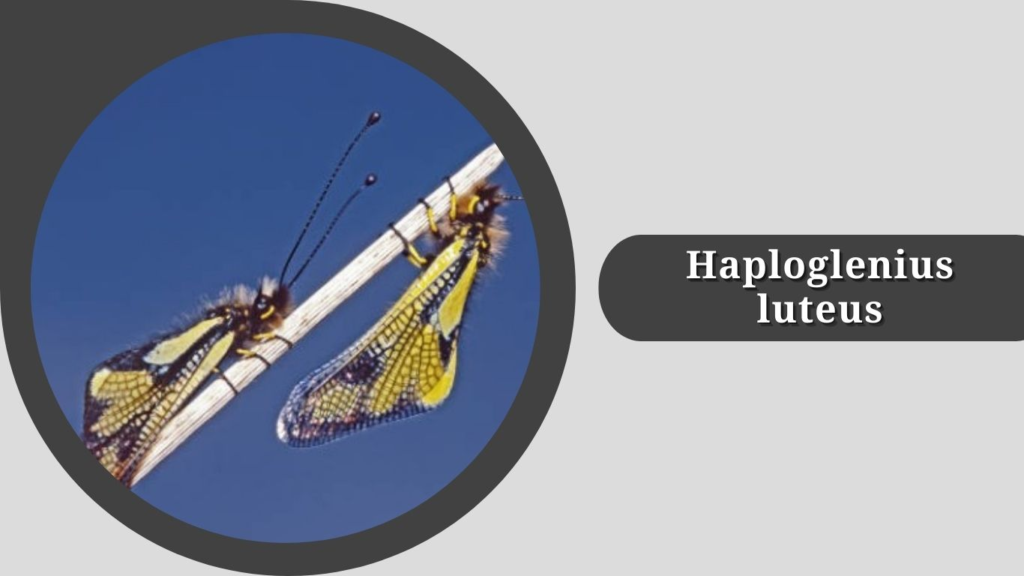
Haploglenius luteus is a North American owlfly species known for its lighter yellow-brown body tones and graceful, dragonfly-like flight. It is most often seen in warm, open habitats where it hunts flying insects during daylight and twilight hours. Like other owlflies, it is an agile aerial predator and an important part of local insect food webs.
Identification
- Medium to large owlfly with yellowish-brown to golden body
- Very large, bulging compound eyes
- Long antennae ending in distinct clubs
- Two pairs of long, narrow, transparent wings
- Wings lightly tinted with fine net-like veins
- Larvae flattened, robust, with strong curved jaws
Habitat
Haploglenius luteus inhabits grasslands, open woodlands, forest edges, and scrubby fields. It prefers sunny areas with tall grasses and scattered shrubs where flying insects are plentiful. Adults often perch on stems or branches. Larvae live on the ground, hiding beneath leaf litter, loose soil, and small stones.
Behaviors
Adults are mainly diurnal and crepuscular, actively flying and patrolling open spaces for prey. They frequently perch head-down between hunting flights. Larvae are ambush predators, remaining motionless on the ground until insects pass close enough to strike.
Diet and Lifecycle
Larvae feed on ants and other small ground-dwelling insects. Adults prey on flies, moths, butterflies, and other flying insects. Females lay eggs on plant stems or dry vegetation. Pupation occurs in the soil. The lifecycle follows egg, larva, pupa, and adult stages, with larvae often developing over a long period.
9. Ululodes macleayanus (Macleay’s Owlfly)
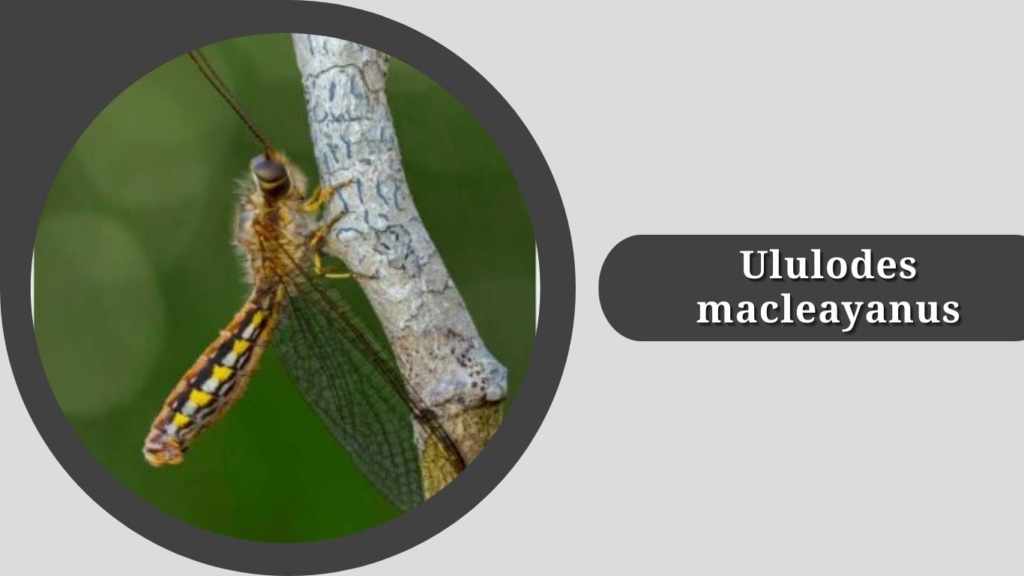
Ululodes macleayanus is a large and impressive owlfly species native mainly to Australia and nearby regions. It is recognized by its long, narrow wings and strong, gliding flight. Like other owlflies, it combines excellent eyesight with powerful aerial hunting skills, making it an effective predator of flying insects.
Identification
- Large owlfly with long, narrow, transparent wings
- Wings lightly tinted with brown or gray
- Very large, bulging compound eyes
- Long antennae with distinct clubs at the tips
- Slender, elongated body
- Larvae flattened, robust, with strong curved jaws
Habitat
Ululodes macleayanus inhabits open woodlands, grasslands, forest edges, and scrublands. It prefers sunny areas where insects are abundant. Adults often perch on tall grasses, tree branches, or shrubs. Larvae live on the ground, hiding under stones, bark, and leaf litter.
Behaviors
Adults are active during the day and at dusk, patrolling open spaces and catching insects in flight. They often rest head-down between hunting flights. Larvae are ground-dwelling ambush predators that wait motionless and strike quickly at passing insects.
Diet and Lifecycle
Larvae feed on ants and other small ground insects. Adults prey on flies, bees, butterflies, and other flying insects. Females lay eggs on vegetation. Pupation occurs in soil. The lifecycle includes egg, larva, pupa, and adult stages, with larvae often taking many months to develop.
10. Ululodes quadripunctatus (Four-Spotted Owlfly)
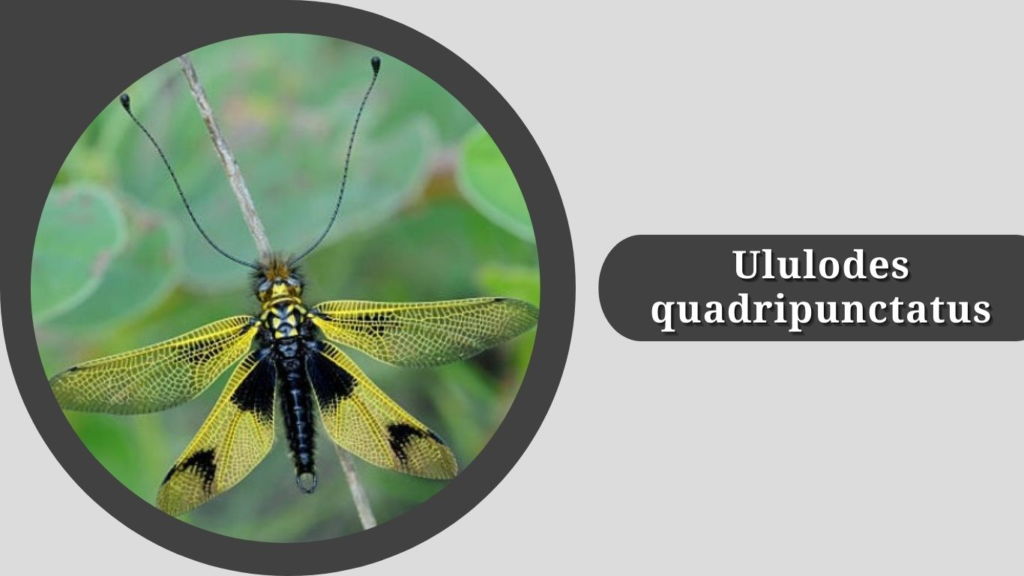
Ululodes quadripunctatus is a North and Central American owlfly species named for the four dark spots often visible on its wings. It is a strong flier and a daytime predator, commonly seen gliding over open habitats. Like other owlflies, it combines excellent vision with fast, agile flight to hunt insects.
Identification
- Medium to large owlfly with long, narrow wings
- Wings transparent with distinct dark spots
- Very large, bulging compound eyes
- Long antennae with clear clubbed tips
- Slender, elongated body
- Larvae flattened, robust, with powerful curved jaws
Habitat
Ululodes quadripunctatus inhabits grasslands, open woodlands, forest edges, and scrubby fields. It prefers warm, sunny environments with abundant flying insects. Adults often perch on tall grasses, shrubs, or low branches. Larvae live on the ground under stones, loose soil, and leaf litter.
Behaviors
Adults are mainly diurnal and frequently seen flying in bright sunlight. They patrol open spaces and capture prey in midair, often returning to the same perch. Larvae are ambush predators that remain hidden on the ground and strike quickly when insects pass close.
Diet and Lifecycle
Larvae feed on ants and other small ground insects. Adults prey on flies, bees, moths, butterflies, and other flying insects. Females lay eggs on plant stems or dry vegetation. Pupation takes place in soil. The lifecycle follows egg, larva, pupa, and adult stages.
11. Ululodes mexicana (Mexican Owlfly)

Ululodes mexicana is a striking owlfly species found mainly in Mexico and parts of Central America. It is a strong, agile flier with excellent eyesight, well adapted for hunting insects in open, sunny habitats. Like other owlflies, it blends dragonfly-like flight with the predatory traits of lacewings.
Identification
- Medium to large owlfly with long, narrow, transparent wings
- Wings lightly tinted, sometimes with faint dark markings
- Very large, bulging compound eyes
- Long antennae ending in clear clubs
- Slender, elongated body
- Larvae flattened, robust, with strong curved jaws
Habitat
Ululodes mexicana inhabits grasslands, open forests, scrublands, and forest edges. It prefers warm, sunny environments where flying insects are abundant. Adults often perch on tall grasses, shrubs, or low branches. Larvae live on the ground, hiding under stones, leaf litter, and loose soil.
Behaviors
Adults are mainly diurnal and crepuscular, patrolling open spaces and capturing insects in flight. They often return to the same perch between hunting flights. Larvae are ambush predators that remain motionless on the ground and strike quickly at passing insects.
Diet and Lifecycle
Larvae feed on ants and other small ground-dwelling insects. Adults prey on flies, bees, moths, butterflies, and other flying insects. Females lay eggs on vegetation. Pupation occurs in soil. The lifecycle includes egg, larva, pupa, and adult stages, with larval development often taking many months.
12. Protidricerus elwesii (Elwes’ Owlfly)
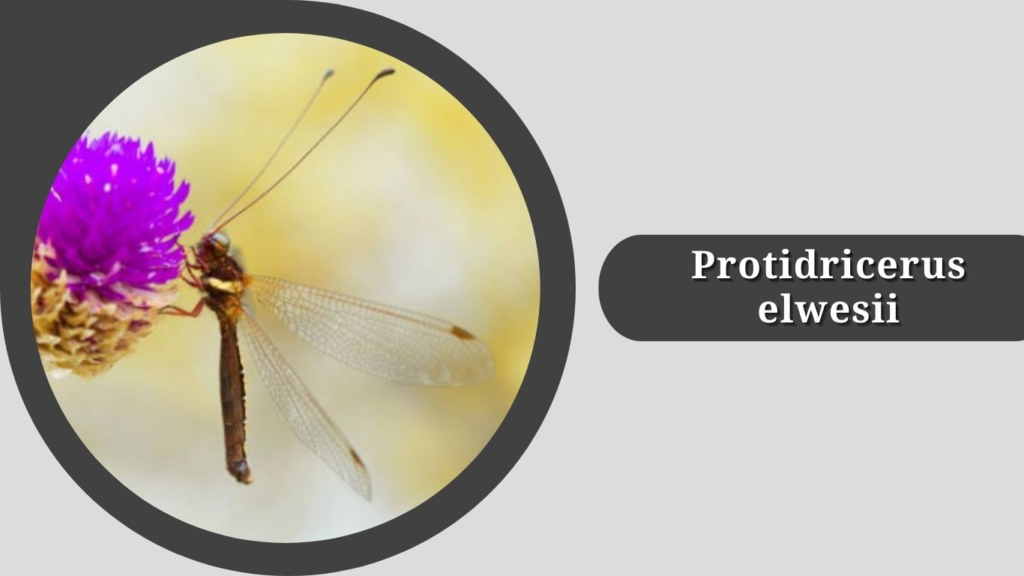
Protidricerus elwesii is an Asian owlfly species found mainly in parts of South and Southeast Asia. It is less commonly seen than many European owlflies but shares the same impressive features—large eyes, clubbed antennae, and strong predatory flight. This species is typically associated with warm, open habitats.
Identification
- Medium to large owlfly with long, narrow wings
- Wings transparent with faint dark patterns
- Very large, bulging compound eyes
- Long antennae with clear clubbed tips
- Slender, elongated body
- Larvae flattened, robust, with strong curved jaws
Habitat
Protidricerus elwesii inhabits open forests, grasslands, scrublands, and forest edges. It prefers warm, sunny areas where flying insects are abundant. Adults are often seen perched on tall plants or flying over open ground. Larvae live on the soil surface, hiding under stones, loose soil, and leaf litter.
Behaviors
Adults are mainly diurnal, flying actively in sunlight and capturing insects in midair. They often perch head-down between flights. Larvae are ambush predators, remaining hidden on the ground and striking quickly at passing insects.
Diet and Lifecycle
Larvae feed on ants and other small ground insects. Adults prey on flies, moths, butterflies, and other flying insects. Females lay eggs on vegetation. Pupation occurs in soil. The lifecycle includes egg, larva, pupa, and adult stages.
13. Pseudoptynx canifrons (Gray-Faced Owlfly)
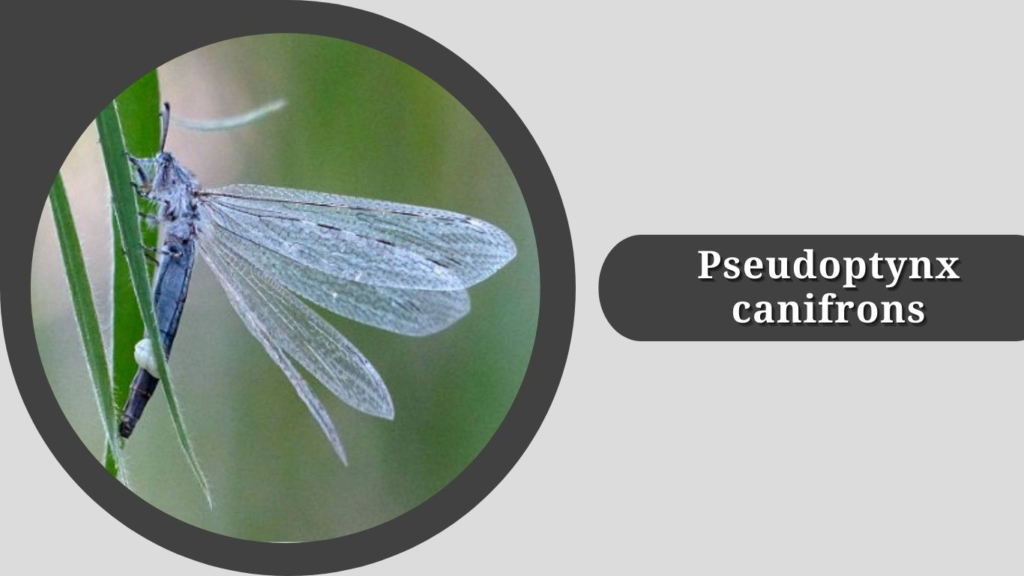
Pseudoptynx canifrons is a tropical owlfly species known for its distinctive facial coloration and strong flight. It occurs mainly in parts of Africa and Asia, where it inhabits open, sunny environments. Like other owlflies, it is an agile predator that hunts insects on the wing.
Identification
- Medium to large owlfly with narrow, transparent wings
- Face often grayish or pale compared to the body
- Very large, bulging compound eyes
- Long antennae with distinct clubs
- Slender, elongated body
- Larvae flattened, robust, with strong curved jaws
Habitat
Pseudoptynx canifrons lives in grasslands, savannas, open woodlands, and forest edges. Adults often perch on shrubs or tall grasses. Larvae inhabit the ground layer, hiding under stones, bark, and leaf litter.
Behaviors
Adults are mainly active during the day and at dusk, flying strongly and capturing insects in midair. They often return to favored perches. Larvae are ground-dwelling ambush predators that strike rapidly when prey passes nearby.
Diet and Lifecycle
Larvae feed on ants and other small ground insects. Adults prey on flies, bees, moths, and other flying insects. Eggs are laid on plant stems. Pupation occurs in soil. The lifecycle follows egg, larva, pupa, and adult stages.
14. Maezous umbrosus (Shadow Owlfly)
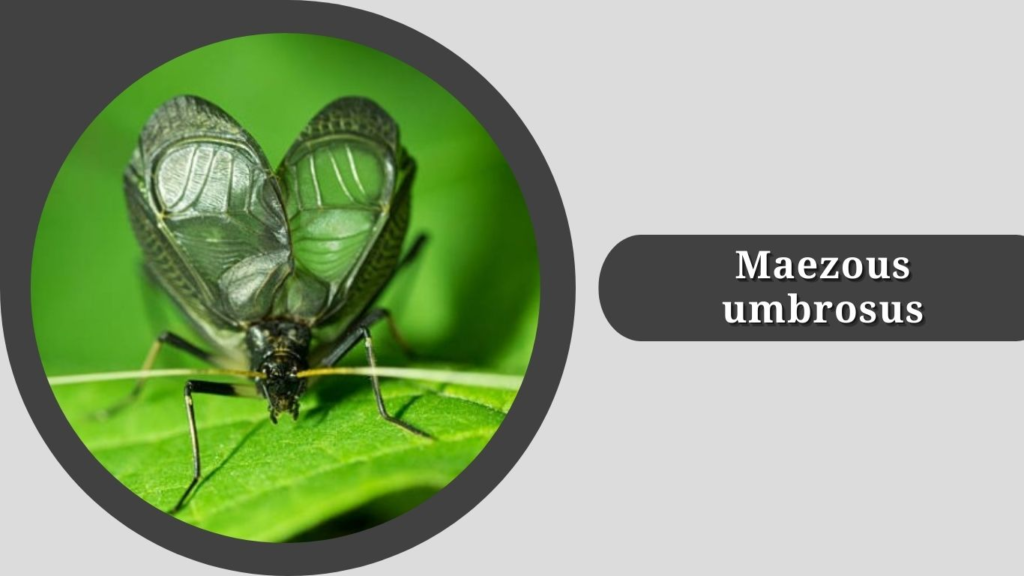
Maezous umbrosus is an Asian owlfly species associated with warm, humid regions. It is typically found near forest edges and open woodland where sunlight and insect prey are plentiful. Although not widely known, it fits the classic owlfly profile of strong flight and keen vision.
Identification
- Medium to large owlfly with long, narrow wings
- Wings transparent with darker shading
- Very large compound eyes
- Long antennae with clubbed tips
- Slender body with muted brown coloration
- Larvae flattened, robust, with strong curved jaws
Habitat
Maezous umbrosus inhabits open forests, woodland edges, and grassy clearings. Adults perch on vegetation and fly through sunny gaps. Larvae live on the ground, concealed beneath stones, soil, and leaf litter.
Behaviors
Adults are mainly diurnal, flying actively in warm daylight hours. They hunt insects in midair and rest between flights on stems or branches. Larvae are ambush predators, remaining still until prey approaches.
Diet and Lifecycle
Larvae feed on ants and other small ground insects. Adults prey on flies, moths, butterflies, and similar insects. Females lay eggs on vegetation. Pupation occurs in soil. The lifecycle includes egg, larva, pupa, and adult.
15. Ogcogaster segmentator (Segmented Owlfly)
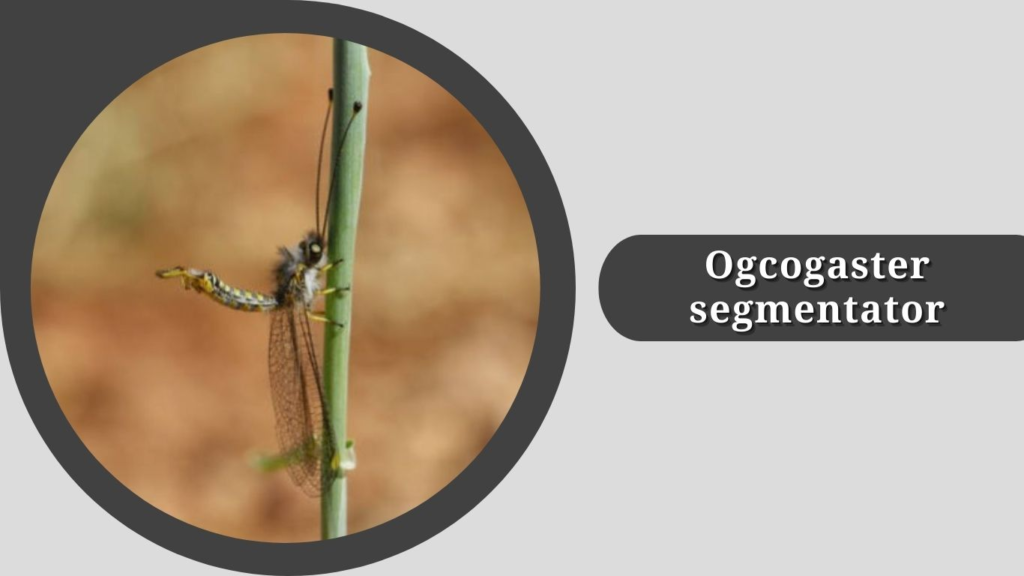
Ogcogaster segmentator is an African owlfly species recognized for its slender form and patterned wings. It inhabits warm open environments where it hunts insects in strong, graceful flight. Like all owlflies, it is an important aerial predator in its ecosystem.
Identification
- Medium to large owlfly with long, narrow wings
- Wings transparent with darker bands or markings
- Very large bulging compound eyes
- Long antennae ending in distinct clubs
- Slender, elongated body
- Larvae flattened, robust, with strong curved jaws
Habitat
Ogcogaster segmentator lives in savannas, grasslands, open woodlands, and forest edges. Adults are often seen perched on tall grasses or flying over open ground. Larvae inhabit the soil surface, hiding under stones, debris, and leaf litter.
Behaviors
Adults are mainly diurnal, flying actively and capturing insects in midair. They frequently return to the same perch. Larvae are ambush predators that remain motionless on the ground until prey passes close.
Diet and Lifecycle
Larvae feed on ants and other small ground insects. Adults prey on flies, bees, butterflies, and other flying insects. Eggs are laid on vegetation. Pupation occurs in soil. The lifecycle follows egg, larva, pupa, and adult stages.
FAQs
What is an owlfly?
An owlfly is an insect belonging to the family Ascalaphidae, closely related to lacewings and antlions. Owlflies are known for their large bulging eyes, long clubbed antennae, and dragonfly-like flight. They are active predators of flying insects.
Where are owlflies found?
Owlflies are found in warm and temperate regions around the world, including Europe, Africa, Asia, Australia, and the Americas. They mainly live in open habitats such as grasslands, savannas, scrublands, and forest edges where sunlight and flying insects are abundant.
Are owlflies dangerous to humans?
Owlflies are not dangerous to humans. They do not sting and rarely bite, and they are not aggressive. Their large eyes and long antennae may look intimidating, but they are harmless and beneficial insects.
What do owlflies eat?
Owlfly larvae feed on ants and other small ground-dwelling insects. Adult owlflies hunt flying insects such as flies, moths, butterflies, bees, and beetles. Because of this, owlflies help control insect populations in natural ecosystems.
How long do owlflies live?
Owlfly larvae usually live much longer than adults, often developing over many months or even years. The adult stage is relatively short, typically lasting a few weeks to a couple of months, during which they focus on feeding and reproduction.
