
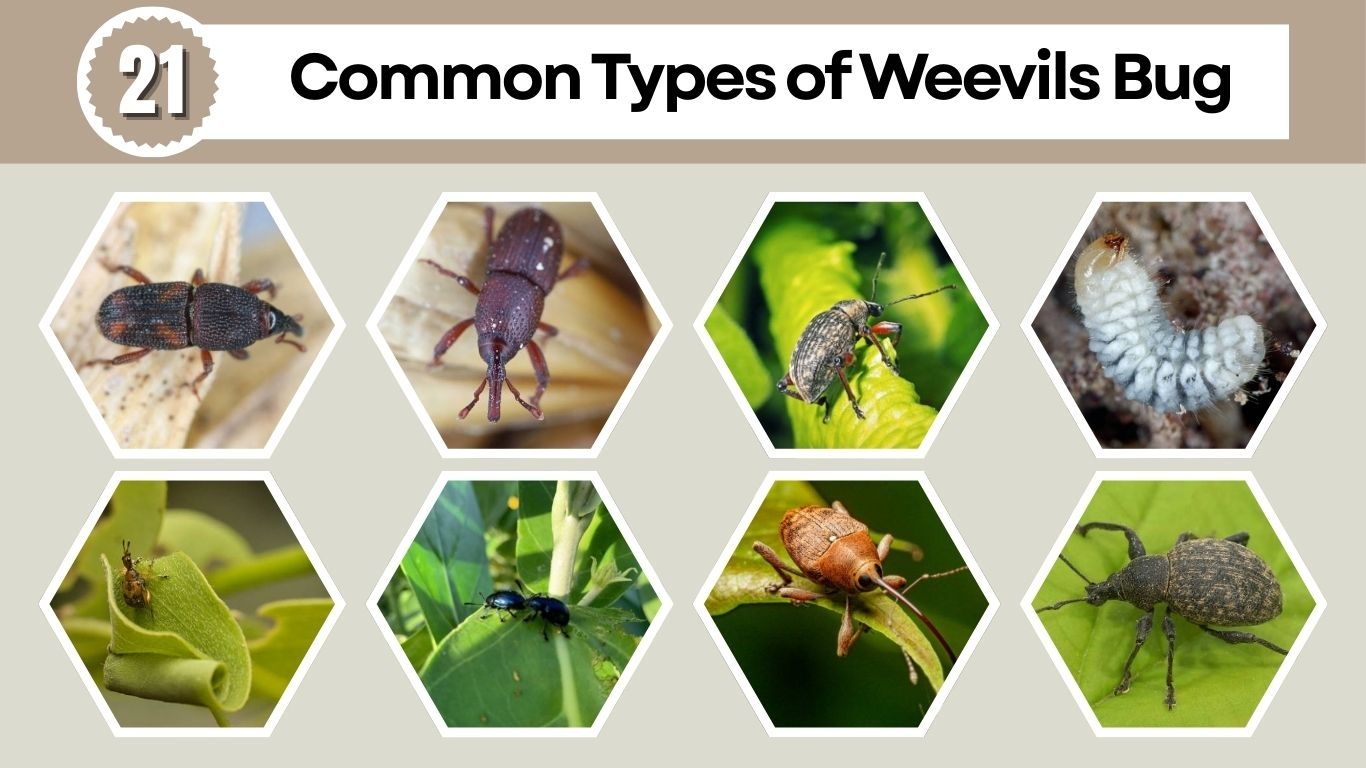
Weevils are a large group of beetles known for their distinctive long snouts and their strong association with crops, stored grains, and plants. Found worldwide, different weevil species attack seeds, roots, stems, fruits, and stored food products, making many of them economically important pests. This article presents 21 common types of weevils, focusing on well-known species that affect agriculture, forestry, gardens, and food storage systems.
1. Rice Weevil (Sitophilus oryzae)

The rice weevil is one of the most destructive stored-grain pests worldwide. It commonly infests rice, wheat, maize, and other cereals, causing serious losses in homes, warehouses, and grain storage facilities. Unlike many pantry pests, rice weevils can infest whole, unbroken grains, making them particularly difficult to control once established.
Identification
- Small beetle, usually 2–4 mm long
- Reddish-brown to dark brown body color
- Distinct long snout (rostrum) typical of weevils
- Four pale yellow or reddish spots on the wing covers
- Capable of flight, unlike some other grain weevils
Habitat
Rice weevils are most commonly found in stored grains, flour, rice bags, and cereal products. They thrive in warm, humid environments and are frequently seen in granaries, food warehouses, kitchens, and markets. Infestations often begin when contaminated grains are brought into storage from farms or suppliers.
Behavior and Life Cycle
The female rice weevil drills a tiny hole into a grain kernel and lays a single egg inside. The larva develops completely within the grain, feeding from the inside until it emerges as an adult. This hidden development allows infestations to spread unnoticed. Under favorable conditions, the life cycle can be completed in about one month, leading to rapid population growth.
Damage and Economic Impact
Rice weevils cause damage by hollowing out grains, reducing both weight and nutritional value. Infested grains often become powdery and unsuitable for consumption. In large-scale storage systems, rice weevils can result in significant economic losses if not managed through proper sanitation, temperature control, and pest management practices.
2. Granary Weevil (Sitophilus granarius)

The granary weevil is a serious pest of stored grains and has been associated with human food supplies for thousands of years. It is especially common in wheat, barley, oats, and rye stored in silos, warehouses, and household containers. Unlike some related species, the granary weevil does not fly, but it spreads easily through the movement of infested grain products.
Identification
- Small beetle, about 2–5 mm long
- Dark brown to nearly black body
- Elongated snout typical of true weevils
- Smooth wing covers without colored spots
- Wing covers fused together; cannot fly
Habitat
Granary weevils live almost exclusively in stored grain environments. They are commonly found in granaries, mills, food storage rooms, and sealed grain containers. Because they cannot fly, infestations usually begin when already-infested grain is introduced into a storage area.
Behavior and Life Cycle
Females bore into individual grains and lay eggs inside. The larvae develop entirely within the grain kernel, feeding and growing in concealment. After pupation, adults emerge by chewing their way out. Several generations can occur each year in warm storage conditions, allowing infestations to build quickly.
Damage and Economic Impact
Granary weevils cause direct damage by consuming grain from the inside, leaving hollow shells. This reduces grain weight, quality, and market value. Heavy infestations can contaminate food supplies and lead to significant losses in commercial grain storage operations.
3. Maize Weevil (Sitophilus zeamais)

The maize weevil closely resembles the rice weevil but is particularly associated with corn and maize crops. It is a major pest in both field-harvested and stored maize, especially in tropical and subtropical regions. Due to its strong flying ability, it spreads rapidly between storage facilities and fields.
Identification
- Small beetle, usually 2.5–4 mm long
- Dark brown body with four lighter spots on wing covers
- Long, curved snout
- Fully developed wings; capable of flight
- Similar in appearance to rice weevil but generally larger
Habitat
Maize weevils infest stored corn, rice, wheat, and sorghum. They are commonly found in farm storage bins, warehouses, markets, and household grain supplies. In some regions, they also attack maize while it is still in the field before harvest.
Behavior and Life Cycle
Females deposit eggs inside grain kernels, sealing the opening with a gelatinous plug. Larvae feed internally and remain hidden until adulthood. Warm temperatures accelerate development, allowing multiple generations per year and rapid population expansion in storage areas.
Damage and Economic Impact
Maize weevils cause severe losses by destroying grain structure and reducing nutritional quality. Infested maize often crumbles into dust and becomes unsuitable for food or seed use, leading to major economic impacts for farmers and grain traders.
4. Boll Weevil (Anthonomus grandis)
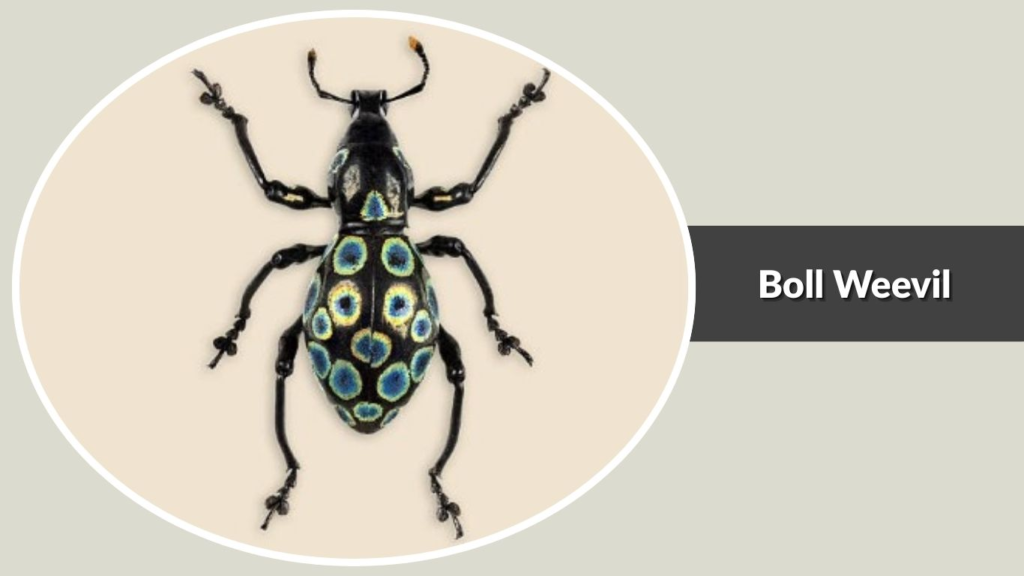
The boll weevil is one of the most historically significant agricultural pests, especially known for its devastating impact on cotton crops. Native to Central America, it spread rapidly across cotton-growing regions and caused major economic losses before large-scale management programs were introduced. Even today, it remains an important pest in some areas.
Identification
- Small beetle, about 4–6 mm long
- Grayish-brown body with fine scales
- Prominent curved snout extending from the head
- Compact, oval-shaped body
- Chewing mouthparts at the tip of the snout
Habitat
Boll weevils are closely associated with cotton fields and surrounding vegetation. Adults overwinter in plant debris, forest edges, or crop residues near fields. During the growing season, they move into cotton plants where buds and bolls are available for feeding and reproduction.
Behavior and Life Cycle
Female boll weevils lay eggs inside cotton flower buds or bolls. The larvae develop internally, feeding on plant tissue and remaining hidden until adulthood. The full life cycle can take as little as three weeks under warm conditions, allowing several generations during a single cotton season.
Damage and Economic Impact
Damage occurs when adults puncture buds and bolls for feeding and egg-laying, causing them to drop prematurely. Larval feeding inside bolls destroys developing cotton fibers. Historically, boll weevil infestations reshaped cotton farming practices and led to major investments in pest control and eradication programs.
5. Black Vine Weevil (Otiorhynchus sulcatus)
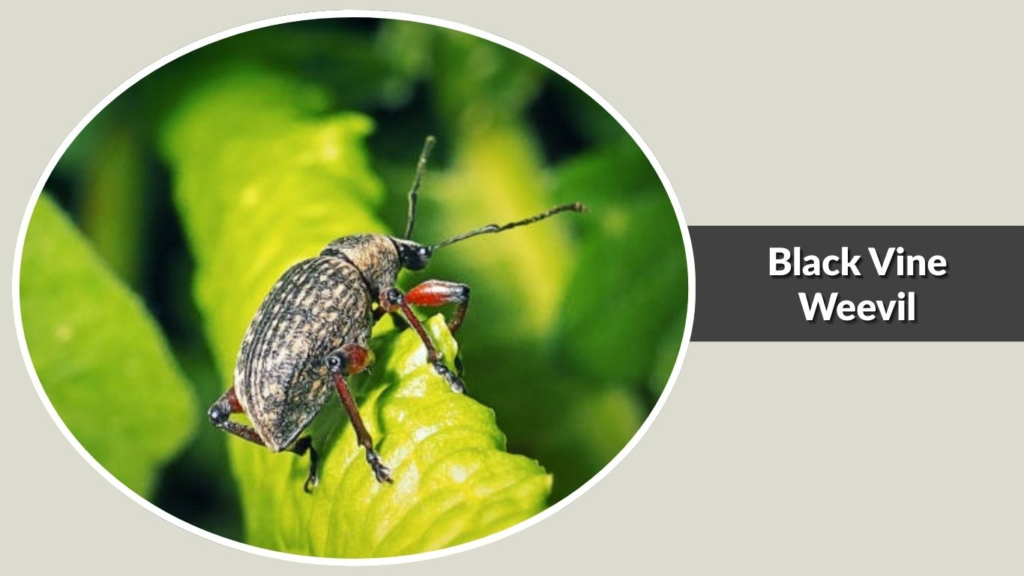
The black vine weevil is a common pest of ornamental plants, fruit crops, and garden vegetation. It is especially troublesome in nurseries and landscaped areas, where larvae damage roots and adults feed on leaves. This species is widely distributed in temperate regions.
Identification
- Medium-sized beetle, about 8–12 mm long
- Matte black body with rough, ridged wing covers
- Short, broad snout
- Fused wing covers; cannot fly
- Adults often active at night
Habitat
Black vine weevils inhabit gardens, greenhouses, nurseries, and agricultural fields. They are frequently found around strawberries, grapes, rhododendrons, and yew plants. Larvae live in the soil near plant roots, while adults shelter in leaf litter and soil during the day.
Behavior and Life Cycle
Adults feed at night, creating characteristic notched edges on leaves. Females reproduce without mating and lay eggs in soil near host plants. Larvae feed on roots throughout winter, pupate in the soil, and emerge as adults in late spring or summer.
Damage and Economic Impact
Larval root feeding weakens or kills plants, making this stage the most destructive. Adult feeding is mainly cosmetic but signals infestation. In nurseries and ornamental plant industries, black vine weevils can cause serious financial losses if populations are not controlled.
6. Strawberry Root Weevil (Otiorhynchus ovatus)
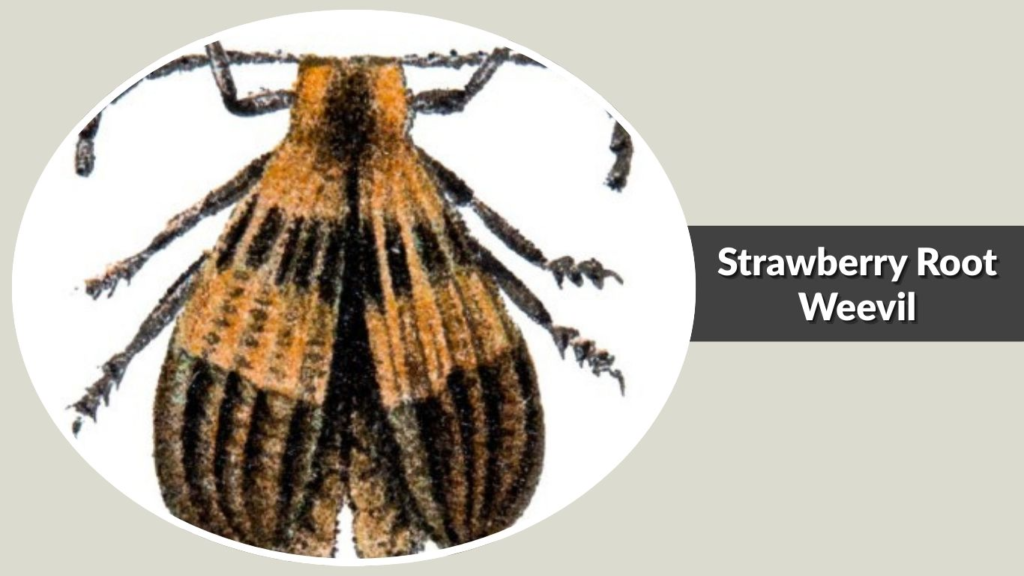
The strawberry root weevil is a common pest of strawberries and many ornamental plants. Although adults cause visible leaf damage, the larvae are far more destructive because they feed on plant roots. This species is widespread in temperate regions and is especially problematic in gardens, nurseries, and small farms.
Identification
- Small to medium beetle, about 5–7 mm long
- Brown to dark gray body with a rough texture
- Short, broad snout
- Wing covers fused together; cannot fly
- Adults leave notched, uneven edges on leaves
Habitat
Strawberry root weevils are found in strawberry fields, home gardens, nurseries, and landscaped areas. They prefer moist soil where larvae can easily feed on roots. Adults hide in soil, mulch, or plant debris during the day and become active at night.
Behavior and Life Cycle
Females reproduce without mating and lay eggs in the soil near host plants. The larvae hatch and feed on roots throughout fall and winter. Pupation occurs in the soil during spring, and adults emerge in late spring or early summer. There is usually one generation per year.
Damage and Economic Impact
Larval feeding damages roots, reducing water and nutrient uptake and sometimes killing young plants. Adult feeding causes leaf notching, which reduces plant vigor and appearance. In strawberry production and nurseries, infestations can lower yields and increase plant replacement costs.
7. Pea Weevil (Bruchus pisorum)
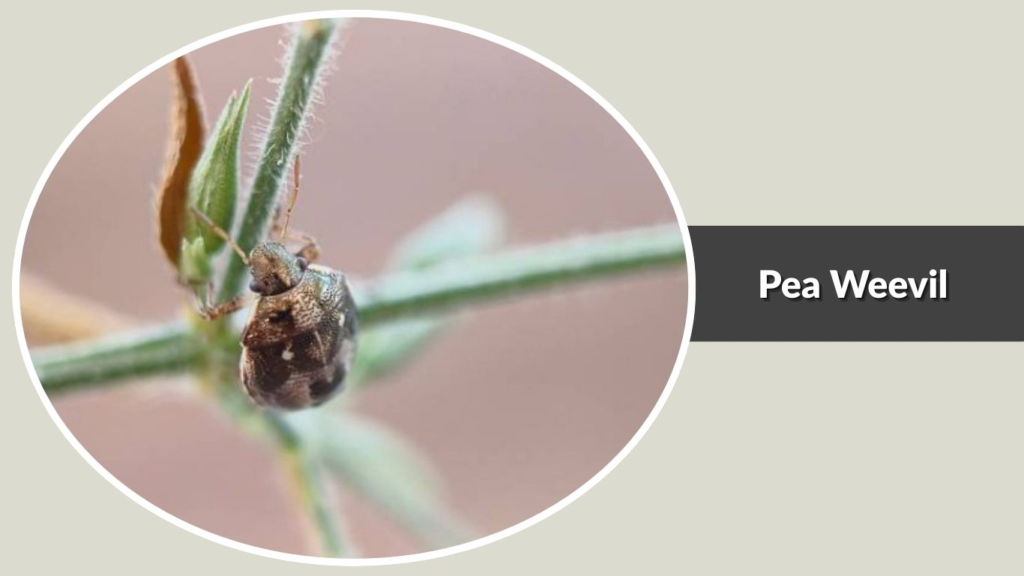
The pea weevil is a serious pest of peas, particularly affecting dried peas used for food and seed. Unlike many other weevils, most of its damage occurs during the larval stage inside developing seeds. It is commonly found wherever peas are cultivated or stored.
Identification
- Small beetle, about 4–5 mm long
- Gray-brown body with lighter markings
- Short snout compared to true grain weevils
- Oval-shaped body
- Adults often found on pea plants during flowering
Habitat
Pea weevils inhabit pea fields during the growing season and move into stored peas after harvest. They are commonly found in farms, storage facilities, and households where dried peas are kept.
Behavior and Life Cycle
Adults lay eggs on pea pods in the field. After hatching, larvae bore directly into developing peas and feed internally. Pupation occurs inside the seed, and adults emerge by chewing a circular exit hole. Typically, one generation develops per year.
Damage and Economic Impact
Larval feeding reduces seed quality, weight, and germination ability. Infested peas may be unsuitable for planting or consumption. In commercial pea production, pea weevils can cause significant economic losses if not managed properly.
8. Bean Weevil (Acanthoscelides obtectus)
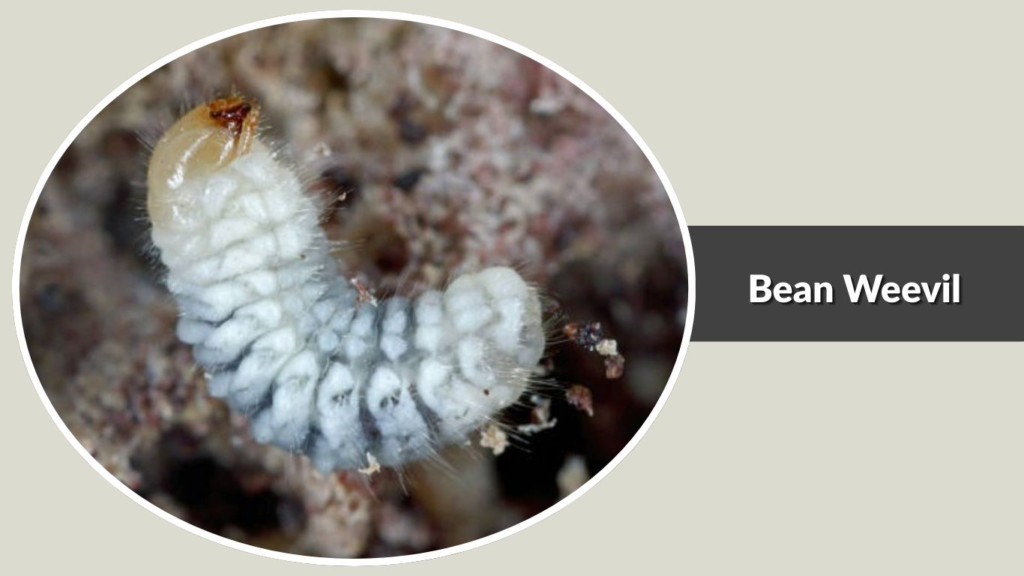
The bean weevil is a major pest of stored beans and other legumes. It commonly attacks dry beans after harvest, making it a serious problem in storage facilities and households. Unlike field pests, infestations often continue and worsen during storage, especially in warm conditions.
Identification
- Small beetle, about 3–5 mm long
- Oval-shaped body with brown to gray coloration
- Short snout compared to true grain weevils
- Wing covers do not fully cover the abdomen
- Active and capable of flight
Habitat
Bean weevils are found in bean fields during harvest periods and later in storage areas such as warehouses, granaries, and kitchens. They infest stored dry beans, lentils, and other pulses kept in bags, jars, or bulk containers.
Behavior and Life Cycle
Females lay eggs on the surface of dried beans or inside storage containers. After hatching, larvae bore directly into the beans and feed internally. Development continues inside the seed until adults emerge. Multiple generations can occur in a single year, especially in warm storage environments.
Damage and Economic Impact
Bean weevils cause direct damage by hollowing out beans, reducing weight, quality, and nutritional value. Infested beans may have visible exit holes and powdery residue. Heavy infestations make beans unsuitable for consumption or planting, leading to economic losses for farmers, traders, and households.
9. Cowpea Weevil (Callosobruchus maculatus)
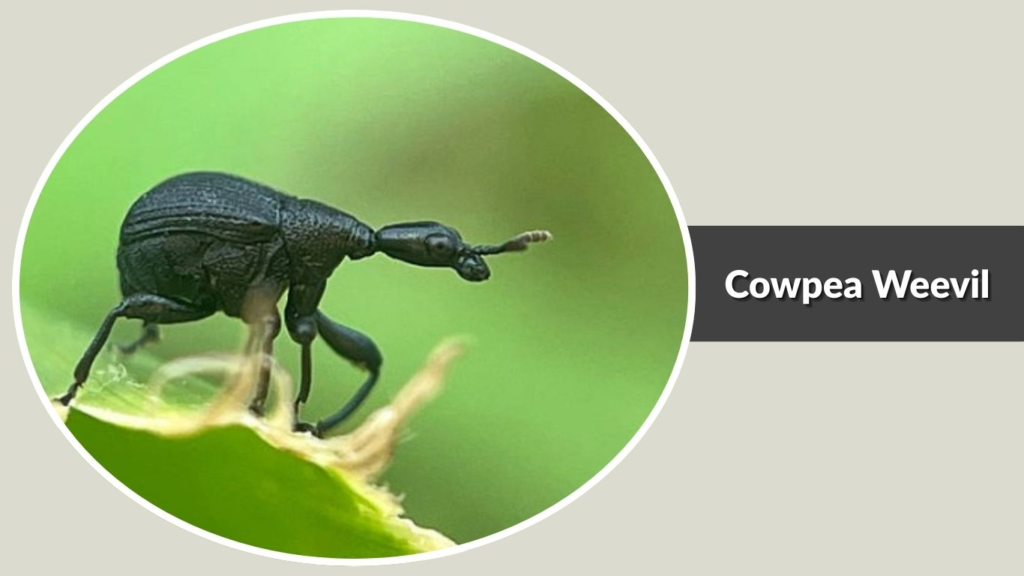
The cowpea weevil is one of the most destructive pests of cowpeas and other legumes in tropical and subtropical regions. It is especially damaging in stored grains and is a major concern for food security in many developing countries.
Identification
- Small beetle, about 2.5–4 mm long
- Light brown to gray body with dark markings
- Rounded body shape
- Short snout
- Distinct black spots on the wing covers
Habitat
Cowpea weevils infest cowpeas, chickpeas, mung beans, and other legumes. They are commonly found in farm storage facilities, local markets, and household food stores. Infestations often begin in the field and continue in storage.
Behavior and Life Cycle
Females attach eggs to the surface of legume seeds. Larvae hatch and burrow into the seed, where they complete development. Pupation occurs inside the seed, and adults emerge through round exit holes. The life cycle is short, allowing rapid population buildup.
Damage and Economic Impact
Larval feeding severely reduces seed weight, quality, and germination ability. Infested legumes may become powdery and unfit for consumption. In regions dependent on cowpeas as a staple food, cowpea weevils can cause serious post-harvest losses and economic hardship.
10. Alfalfa Weevil (Hypera postica)
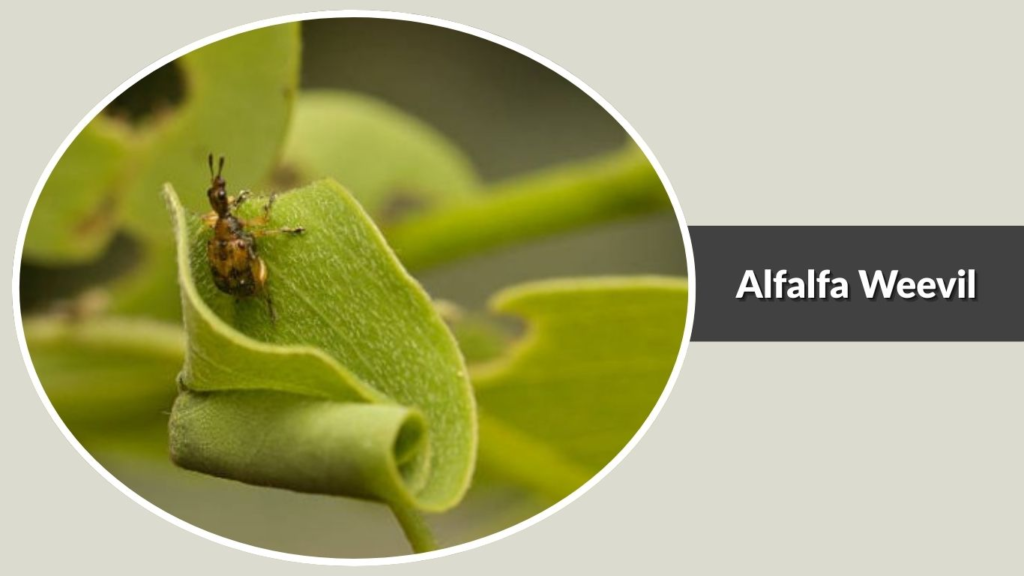
The alfalfa weevil is a major agricultural pest that primarily attacks alfalfa crops. It is especially damaging in regions where alfalfa is grown for hay and forage. Both larvae and adults feed on plant tissue, but larval feeding causes the most serious losses.
Identification
- Small beetle, about 4–6 mm long
- Brown body with a darker stripe down the back
- Short, thick snout
- Oval-shaped body
- Larvae are green with a black head
Habitat
Alfalfa weevils are commonly found in alfalfa fields, hay meadows, and forage crop areas. Adults overwinter in plant debris, field edges, or nearby vegetation and return to alfalfa fields in early spring.
Behavior and Life Cycle
Females lay eggs inside alfalfa stems. Larvae feed on leaves and buds, skeletonizing foliage. After several molts, larvae pupate in loosely woven cocoons attached to plants or debris. Multiple generations may occur each year depending on climate.
Damage and Economic Impact
Larval feeding reduces leaf area, lowers forage quality, and decreases hay yield. Severe infestations can delay plant regrowth and weaken stands. The alfalfa weevil is considered one of the most economically important pests of alfalfa worldwide.
11. Bluegrass Billbug (Sphenophorus parvulus)
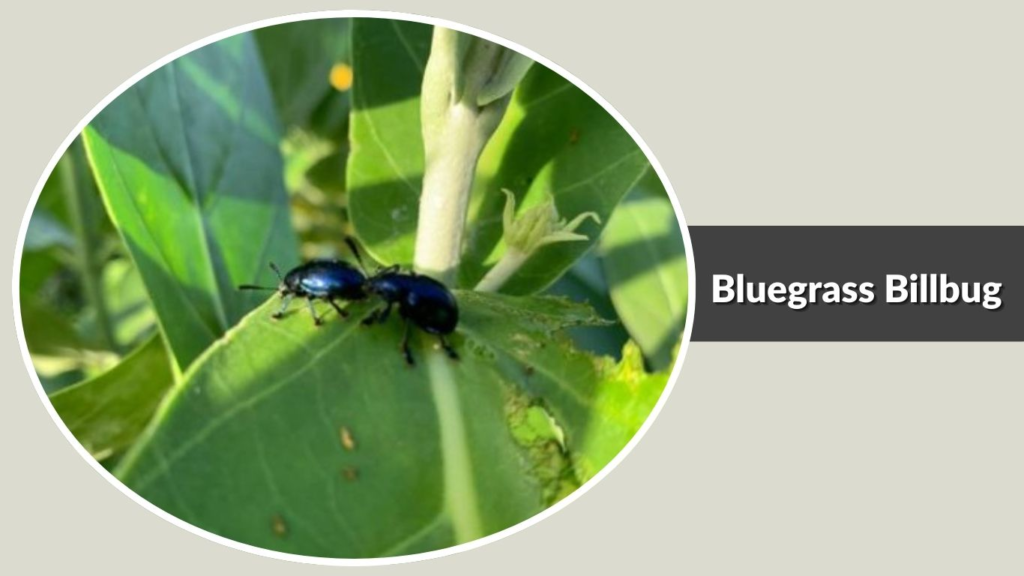
The bluegrass billbug is a serious pest of turfgrass, particularly Kentucky bluegrass. It is a common problem in lawns, parks, golf courses, and sports fields, where damage is often mistaken for drought or disease stress.
Identification
- Medium-sized beetle, about 6–10 mm long
- Dark gray to black body
- Long, curved snout
- Hard, cylindrical body shape
- Larvae are legless and creamy white
Habitat
Bluegrass billbugs inhabit turfgrass environments, including lawns, athletic fields, and landscaped areas. Adults overwinter in soil, thatch, or nearby debris and become active in spring when grasses begin to grow.
Behavior and Life Cycle
Females lay eggs inside grass stems or at the base of plants. Larvae tunnel through stems and roots, disrupting water and nutrient flow. Pupation occurs in the soil, and adults emerge in early summer. Usually one generation develops per year.
Damage and Economic Impact
Larval feeding causes grass stems to break easily and turf to thin or die in patches. Damaged areas often pull up easily from the soil. On managed turf, bluegrass billbugs can lead to high maintenance and repair costs.
12. Plum Curculio (Conotrachelus nenuphar)
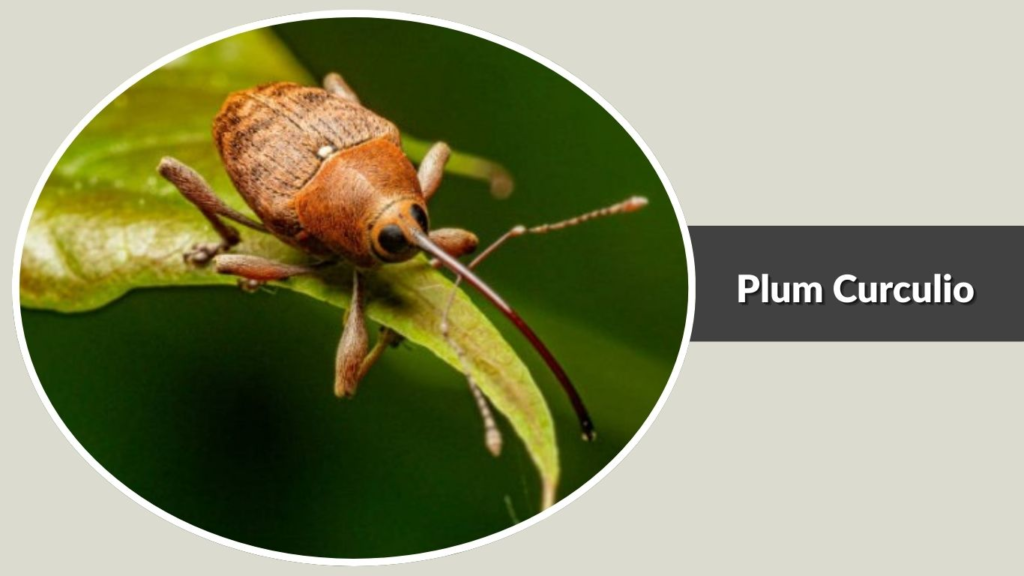
The plum curculio is a destructive weevil that attacks many stone fruits and pome fruits. It is especially harmful to plums, apples, peaches, and cherries. This species is well known for the distinctive crescent-shaped scars it leaves on developing fruit.
Identification
- Small beetle, about 4–6 mm long
- Mottled brown and gray body coloration
- Short, curved snout
- Rough, warty texture on wing covers
- Adults often play dead when disturbed
Habitat
Plum curculios are commonly found in orchards, gardens, and wooded areas near fruit trees. Adults overwinter in leaf litter, soil, or bark crevices and move into orchards in spring as fruit begins to develop.
Behavior and Life Cycle
Females cut a crescent-shaped slit in young fruit and lay an egg beneath the skin. Larvae tunnel into the fruit and feed internally until the fruit drops. Pupation occurs in the soil, and adults emerge later in the season. One or two generations may occur per year.
Damage and Economic Impact
Egg-laying scars deform fruit and reduce market value. Larval feeding causes premature fruit drop and internal decay. Without control, plum curculio infestations can lead to significant yield losses in commercial orchards.
13. Apple Curculio (Anthonomus quadrigibbus)
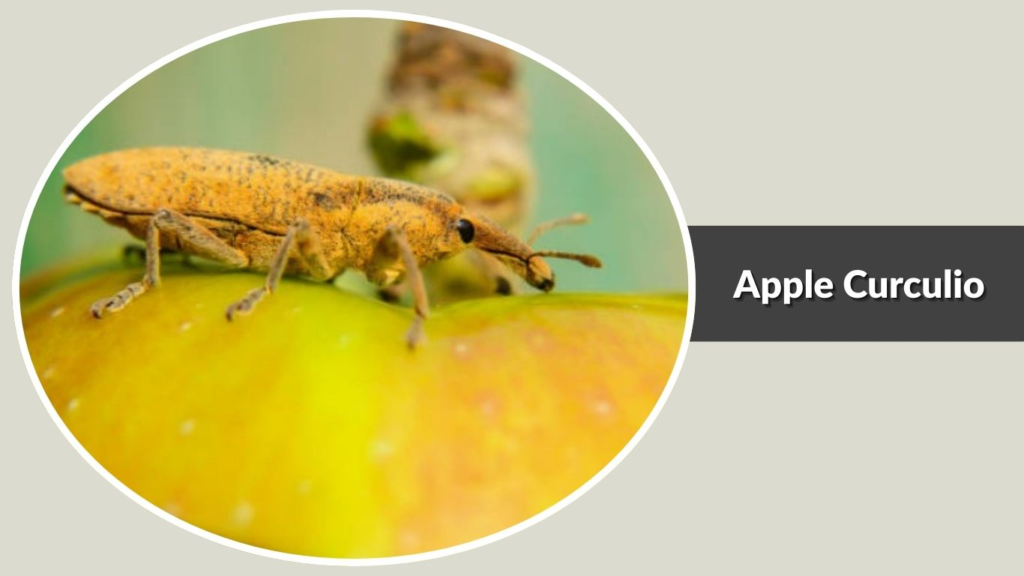
The apple curculio is a less well-known but still important pest of apple trees and related fruit species. It mainly attacks young fruit and developing buds, reducing both yield and fruit quality.
Identification
- Small beetle, about 3–5 mm long
- Reddish-brown to dark brown body
- Slender, curved snout
- Compact oval body shape
- Fine surface texture on wing covers
Habitat
Apple curculios are found in apple orchards, home gardens, and nearby woodland edges. They overwinter in leaf litter, soil, and bark crevices and become active in spring when apple trees begin flowering.
Behavior and Life Cycle
Females lay eggs inside young apples. The larvae feed internally on fruit tissue and seeds. Infested fruit often drop early from the tree. Pupation takes place in the soil, and new adults emerge later in the growing season.
Damage and Economic Impact
Infested apples may show internal feeding damage and drop prematurely. Even light infestations can reduce marketable yield. In unmanaged orchards, apple curculios can contribute to long-term fruit production losses.
14. Sweet Potato Weevil (Cylas formicarius)
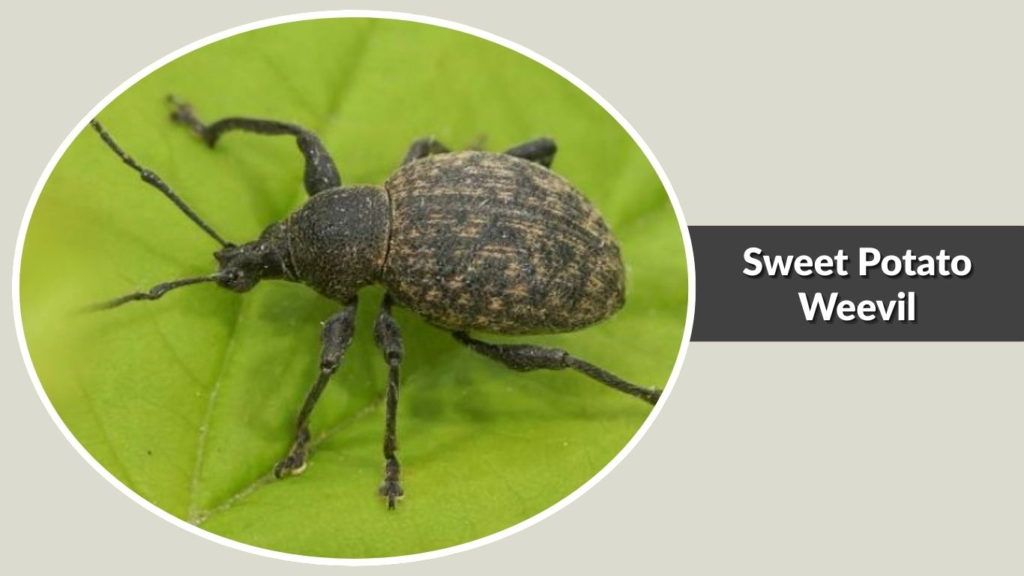
The sweet potato weevil is one of the most destructive pests of sweet potatoes worldwide. It is especially damaging in tropical and subtropical regions, where it attacks both field-grown and stored tubers. Infestations are difficult to detect early because much of the damage occurs inside the plant.
Identification
- Slender beetle, about 5–7 mm long
- Metallic blue-black body with reddish-brown legs
- Long, narrow snout
- Ant-like appearance
- Adults are active and fast-moving
Habitat
Sweet potato weevils inhabit sweet potato fields, storage areas, and surrounding vegetation. Adults hide in soil cracks, plant debris, and storage containers. They are most active in warm climates and dry conditions that allow easy access to tubers.
Behavior and Life Cycle
Females lay eggs in vines, stems, or tubers. Larvae tunnel through plant tissue and tubers, feeding internally. Pupation occurs inside the plant. Several overlapping generations can develop each year in favorable conditions.
Damage and Economic Impact
Larval tunneling causes internal decay and triggers the production of bitter compounds, making tubers unfit for consumption. Even minor infestations can result in complete crop loss, posing serious economic and food-security risks.
15. Banana Weevil (Cosmopolites sordidus)
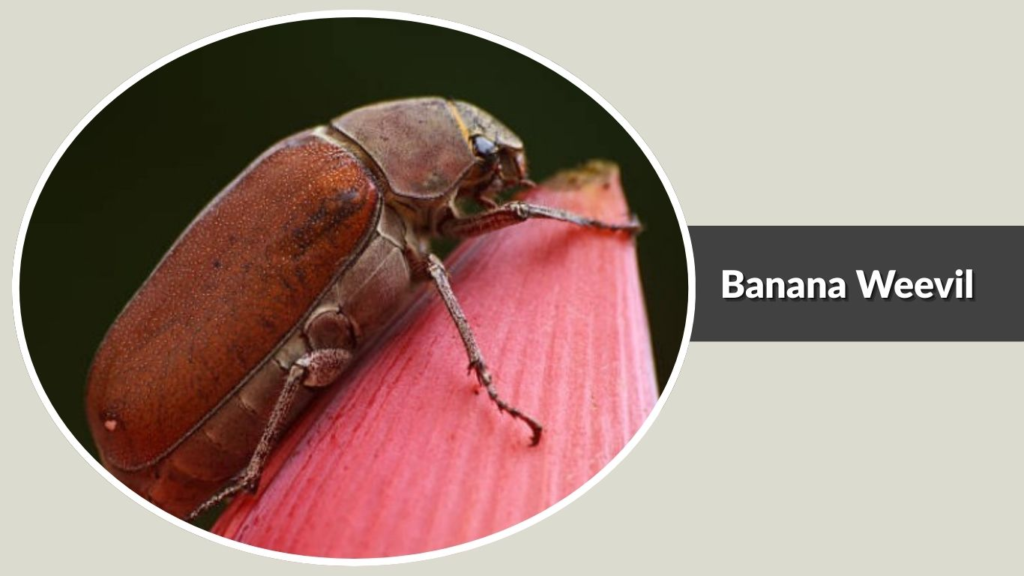
The banana weevil is a major pest of banana and plantain crops. It primarily attacks the base of banana plants, weakening them and reducing yield. This pest is widespread in banana-growing regions and is particularly problematic in smallholder farms.
Identification
- Large weevil, about 10–15 mm long
- Dark brown to black body
- Long, strong snout
- Hard, shiny exoskeleton
- Slow-moving adults
Habitat
Banana weevils are found in banana plantations, home gardens, and storage areas where planting material is kept. They hide in soil, plant debris, and the base of banana stems, especially in moist environments.
Behavior and Life Cycle
Females lay eggs at the base of banana plants. Larvae tunnel into the corm and lower stem, feeding on internal tissues. Pupation occurs within the plant. Development is slow, and populations build up gradually over time.
Damage and Economic Impact
Larval feeding weakens plant structure, causing reduced nutrient uptake and increased susceptibility to wind damage. Infested plants produce smaller bunches, leading to long-term yield reduction and economic losses for banana growers.
16. Palm Weevil (Rhynchophorus ferrugineus)
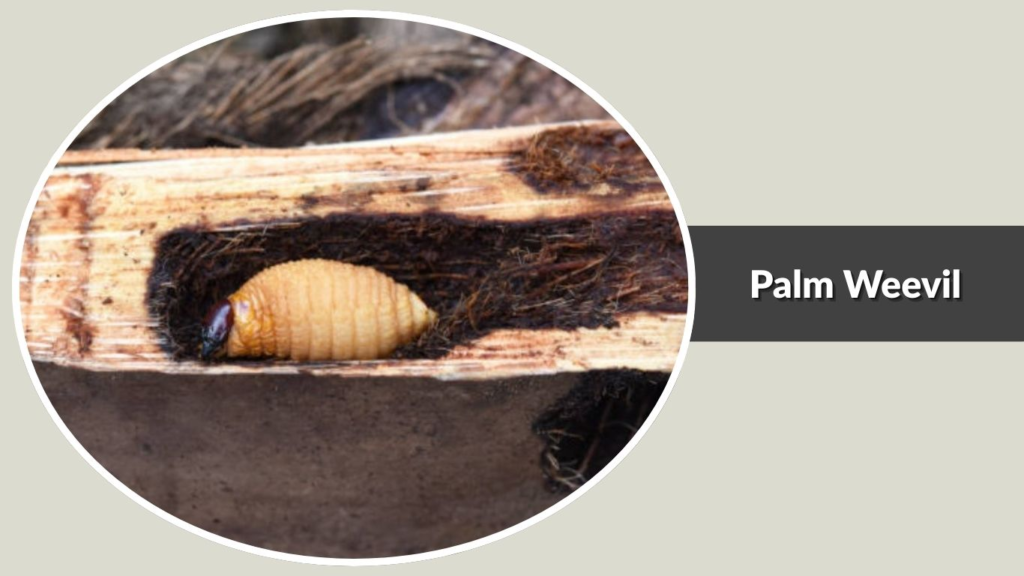
The palm weevil, often called the red palm weevil, is a highly destructive pest of palm trees. It is considered one of the most serious threats to date palms, coconut palms, and ornamental palms in many regions. Damage is often severe before visible symptoms appear.
Identification
- Large weevil, about 20–35 mm long
- Reddish-brown body, sometimes with dark markings
- Long, curved snout
- Strong legs with spines
- Adults produce audible sounds when disturbed
Habitat
Palm weevils live in palm plantations, gardens, and landscaped areas where palm trees grow. They prefer warm climates and are commonly found in tropical and subtropical regions. Adults are attracted to damaged or stressed palm trees.
Behavior and Life Cycle
Females lay eggs in wounds, cracks, or soft tissues of palm trunks. Larvae tunnel deeply inside the trunk, feeding on internal tissues. Pupation occurs within fibrous cocoons made from palm material. Several generations may occur each year under favorable conditions.
Damage and Economic Impact
Larval tunneling weakens palm trunks and disrupts water transport, often leading to tree collapse and death. Infestations can wipe out entire plantations if unmanaged. The palm weevil causes major economic losses in date and coconut production and threatens ornamental palms in urban landscapes.
17. Pine Weevil (Hylobius abietis)
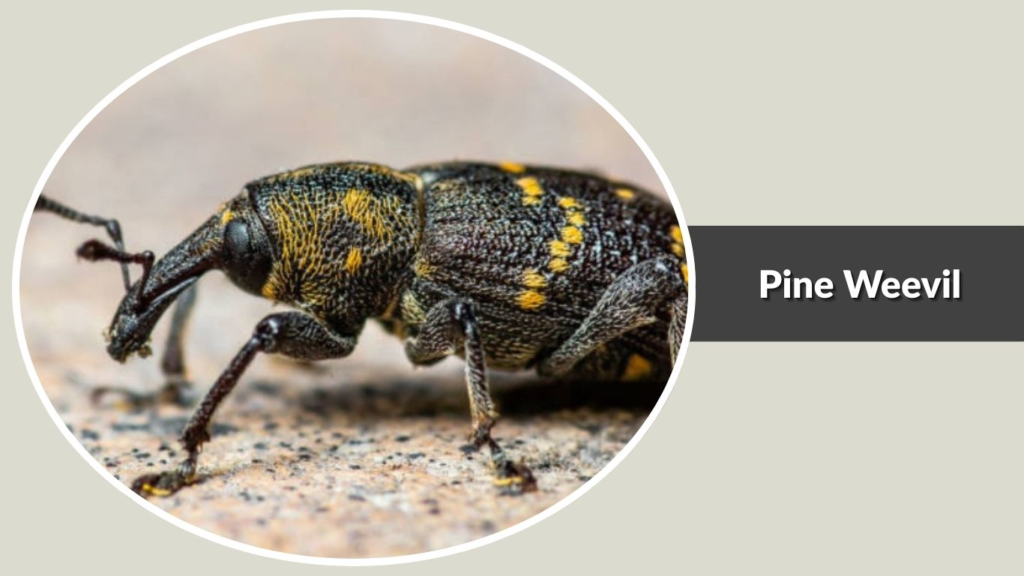
The pine weevil is a serious pest of coniferous trees, particularly young pine and spruce seedlings. It is most damaging in reforestation areas, where it can severely affect tree establishment and forest regeneration.
Identification
- Large weevil, about 8–14 mm long
- Dark brown to black body with yellowish patches
- Long, robust snout
- Strong mandibles
- Adults are slow-moving but long-lived
Habitat
Pine weevils are commonly found in forests, tree plantations, and logging sites. They are especially abundant in recently cleared areas where tree stumps and roots provide ideal breeding sites.
Behavior and Life Cycle
Adults feed on bark of young seedlings, often girdling them. Eggs are laid in soil near tree stumps, and larvae develop by feeding on roots and stump tissues. Development is slow and may take more than one year to complete.
Damage and Economic Impact
Adult feeding can kill young trees by removing bark around the stem base. In forestry operations, pine weevils are a major cause of seedling mortality, leading to increased replanting costs and delayed forest regeneration.
18. Cabbage Seed Weevil (Ceutorhynchus obstrictus)
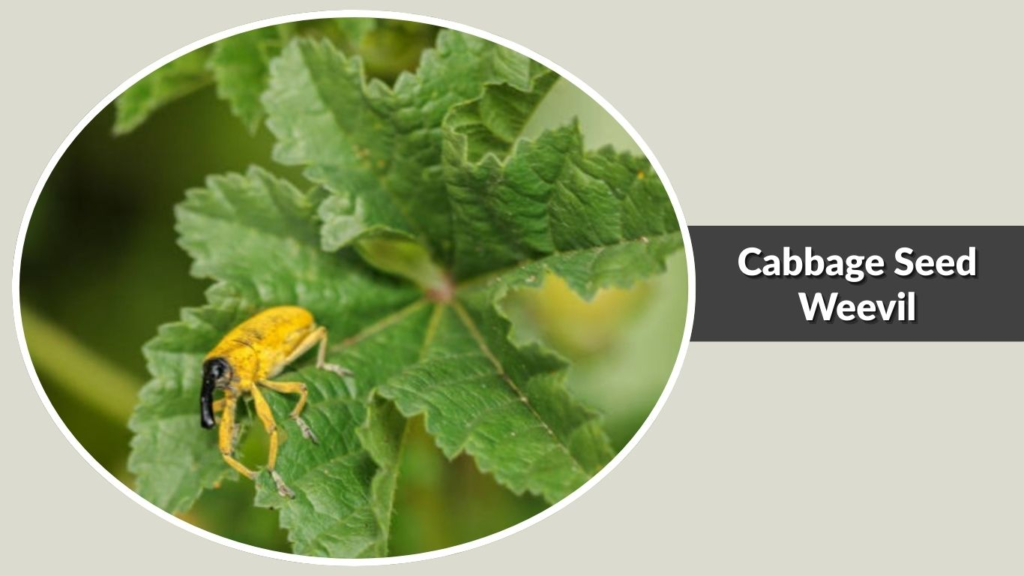
The cabbage seed weevil is an important pest of oilseed and crucifer crops, particularly canola and rapeseed. It attacks developing seed pods, reducing both yield and seed quality. This species is a major concern in commercial oilseed production.
Identification
- Small beetle, about 3–4 mm long
- Grayish-black body with fine hairs
- Short, curved snout
- Oval-shaped body
- Legs often reddish-brown
Habitat
Cabbage seed weevils are found in agricultural fields growing canola, mustard, and other crucifer crops. Adults overwinter in field margins, hedgerows, and crop debris and move into fields during flowering.
Behavior and Life Cycle
Females lay eggs inside young seed pods. Larvae feed on developing seeds, remaining hidden until maturity. After completing development, larvae exit the pods and pupate in the soil. Typically, one generation occurs each year.
Damage and Economic Impact
Larval feeding reduces seed number and weight, lowering oil content and crop value. Damage also creates entry points for plant diseases. Heavy infestations can significantly reduce yields in oilseed crops.
19. Mustard Seed Weevil (Ceutorhynchus assimilis)
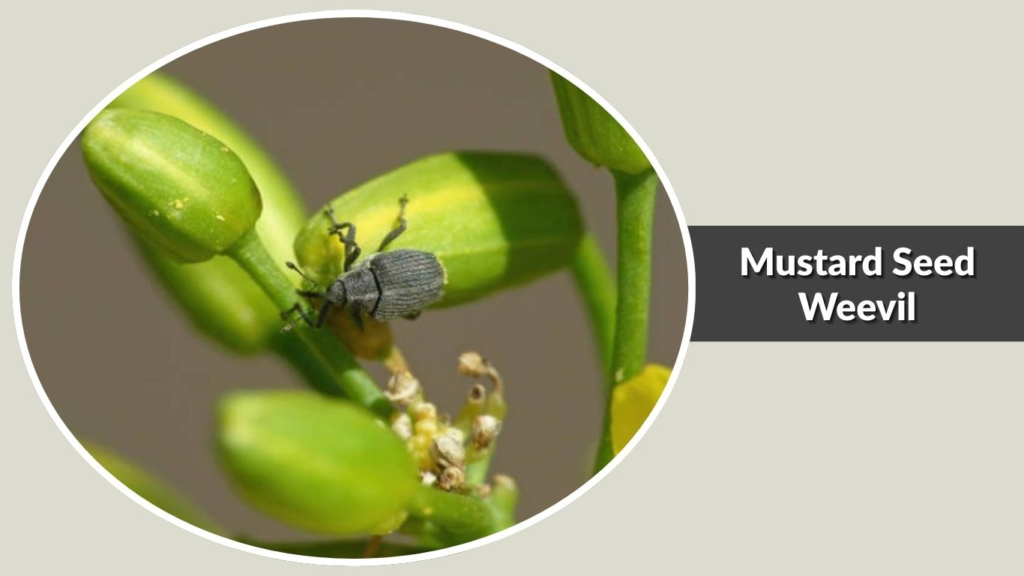
The mustard seed weevil closely resembles the cabbage seed weevil and targets mustard and related crucifer plants. It is particularly problematic in seed-producing crops where even minor infestations can affect market quality.
Identification
- Small beetle, about 3–4 mm long
- Dark gray to black body
- Short, slightly curved snout
- Compact, oval body shape
- Fine surface hairs visible under magnification
Habitat
Mustard seed weevils inhabit mustard fields, rapeseed crops, and wild crucifer plants. Adults overwinter in soil and plant debris near cultivated fields and emerge during the growing season.
Behavior and Life Cycle
Females lay eggs in developing seed pods. Larvae feed internally on seeds until fully grown, then drop to the soil to pupate. Adults emerge later in the season, and the cycle repeats annually.
Damage and Economic Impact
Infested seed pods produce fewer viable seeds and reduced oil quality. In commercial mustard and oilseed production, mustard seed weevils can lead to lower yields, reduced seed purity, and economic losses for growers.
20. Pepper Weevil (Anthonomus eugenii)
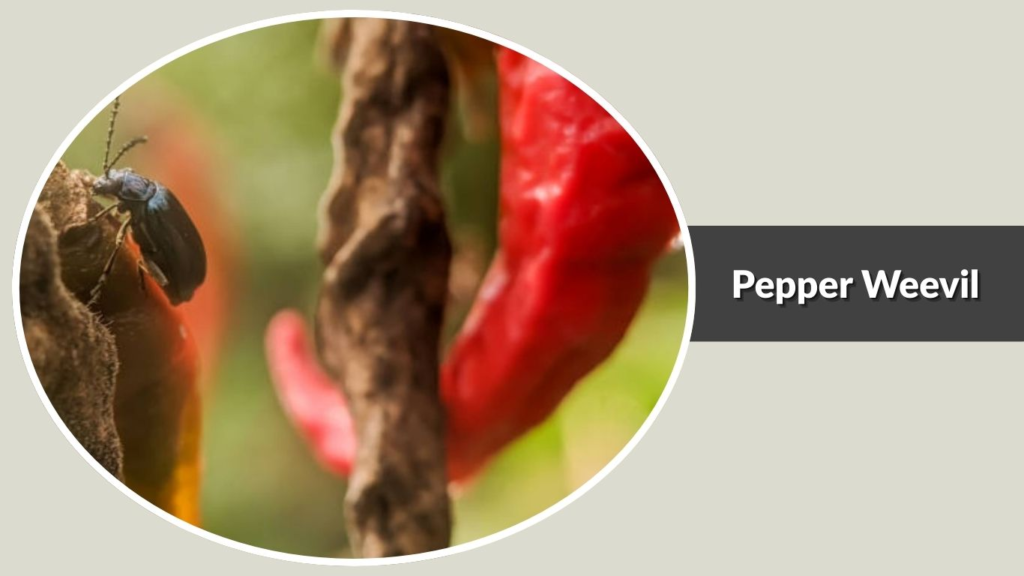
The pepper weevil is a serious pest of pepper plants, including bell peppers, chili peppers, and related crops. It attacks buds, flowers, and developing fruits, often causing damage before growers notice its presence. This pest is especially problematic in warm climates and greenhouse production systems.
Identification
- Small beetle, about 2–3.5 mm long
- Dark brown to black body
- Long, slender curved snout
- Compact oval shape
- Adults often found inside flower buds
Habitat
Pepper weevils are commonly found in pepper fields, greenhouses, and home gardens. They prefer warm environments and often survive year-round in regions without cold winters. Adults hide in plant debris and crop residues when not actively feeding.
Behavior and Life Cycle
Females lay eggs inside pepper buds or young fruits. Larvae develop internally, feeding on plant tissue and seeds. Pupation occurs inside the fruit, and adults emerge through small exit holes. Several generations can develop in one growing season.
Damage and Economic Impact
Infested buds and fruits often drop prematurely. Internal feeding makes peppers unmarketable and reduces yield. Even low population levels can cause significant economic losses in commercial pepper production.
21. Rice Water Weevil (Lissorhoptrus oryzophilus)
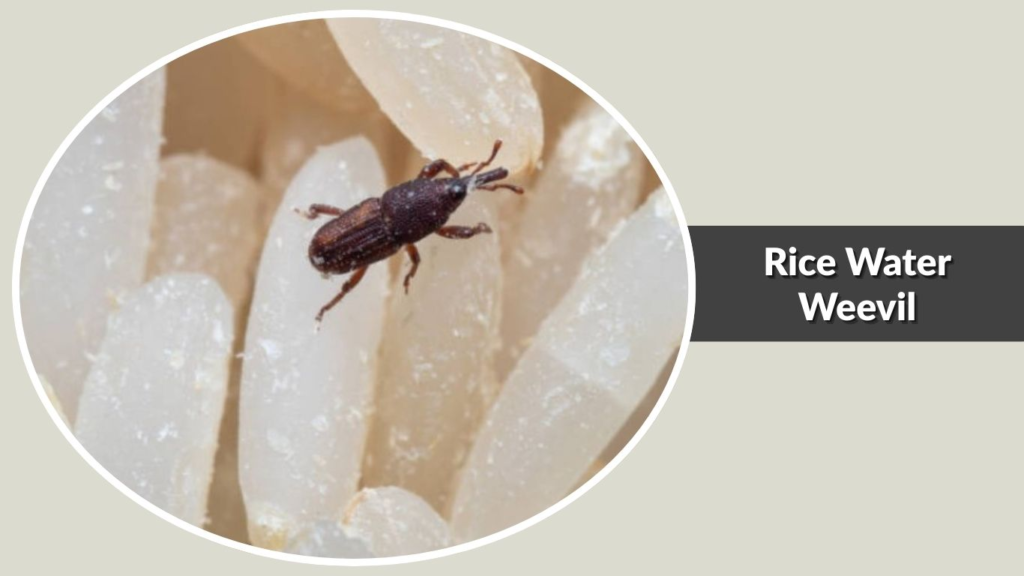
The rice water weevil is one of the most damaging pests of rice crops worldwide. Unlike stored-grain weevils, this species attacks rice plants in flooded fields, with larvae feeding on roots and adults feeding on leaves.
Identification
- Small beetle, about 3–4 mm long
- Gray to brown body with fine scales
- Short, slightly curved snout
- Narrow, elongated body shape
- Adults often seen on rice leaves
Habitat
Rice water weevils inhabit flooded rice paddies and surrounding wetland areas. Adults overwinter in grassy areas and field margins, moving into rice fields when plants begin to grow.
Behavior and Life Cycle
Adults feed on rice leaves, leaving narrow scars. Females lay eggs in leaf sheaths near the waterline. Larvae move into the soil and feed on rice roots, while pupation occurs underwater in mud cells. One or more generations may occur per year.
Damage and Economic Impact
Larval root feeding reduces nutrient uptake and weakens plants, leading to stunted growth and yield loss. In heavily infested fields, rice water weevils can significantly reduce rice production and crop profitability.
