
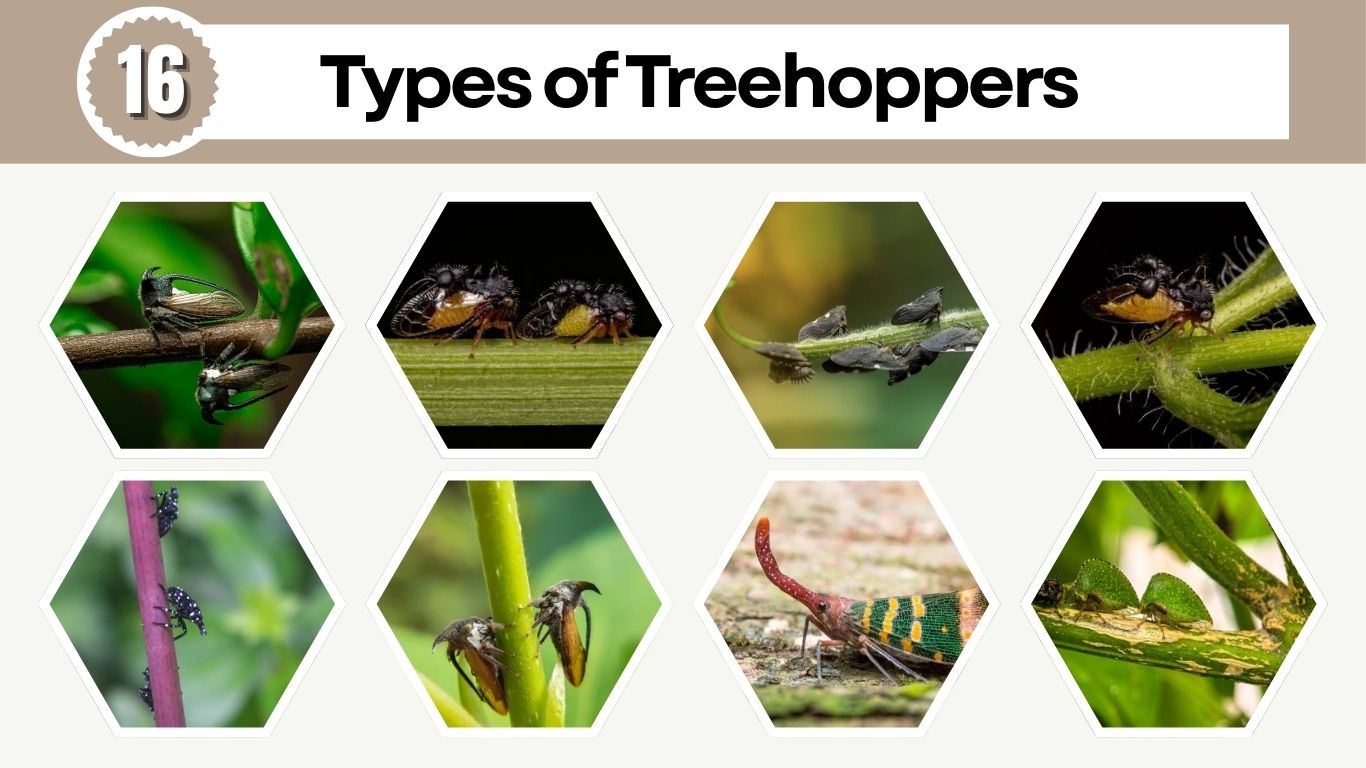
Treehoppers are fascinating insects known for their unique appearance and behavior. With their distinctive body shapes, including spiny protrusions and vibrant colors, they can be found in a variety of habitats, from forests to gardens. Although small, these insects play a significant role in ecosystems by feeding on plant sap and influencing the growth of their host plants. Explore more about these remarkable creatures and their fascinating life cycle.
1. Alchisme lanipes
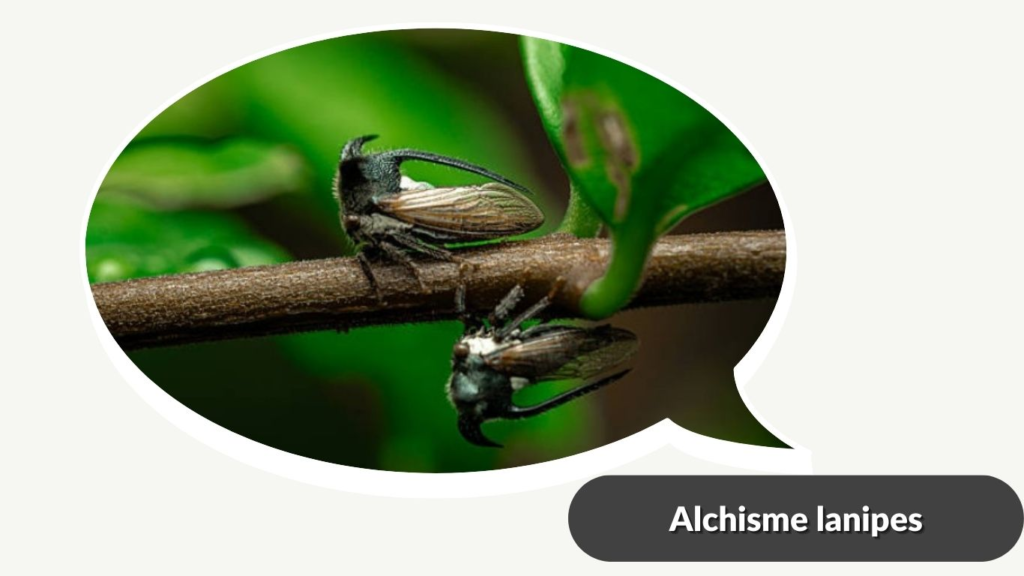
Alchisme lanipes is a species of treehopper commonly found on various plant species, characterized by its unique appearance and behaviors. With its prominent horns and distinctive body shape, this treehopper stands out in its natural environment. Below is a detailed look at the identification, habitat, behaviors, and lifecycle of this intriguing insect.
Identification
- Body Color: Greenish or yellowish with brown markings
- Size: Typically ranges from 10-12 mm in length
- Shape: Oval-shaped body with two horn-like extensions protruding from the thorax
- Wings: Clear with a faint pattern, typically held flat over the body when at rest
- Distinctive Features: The horns are the most prominent feature, giving it a spiky appearance
Habitat
Alchisme lanipes is primarily found in wooded areas and on plants like shrubs and trees, particularly in regions with a moderate climate. These insects are often spotted on the undersides of leaves, where they feed and hide from predators.
Behavior
These treehoppers are typically solitary but may form small groups on suitable plants. They feed by piercing plant tissues with their needle-like mouthparts and extracting sap. The feeding process can sometimes lead to stunted plant growth and the excretion of honeydew, attracting ants.
Lifecycle
Alchisme lanipes undergoes a simple life cycle that includes the egg, nymph, and adult stages. The eggs are laid in plant tissue, and the nymphs hatch, resembling smaller versions of the adult with fewer pronounced features. As they mature, they molt several times before developing their full adult form with distinctive horns and wings.
2. Aconophora compressa
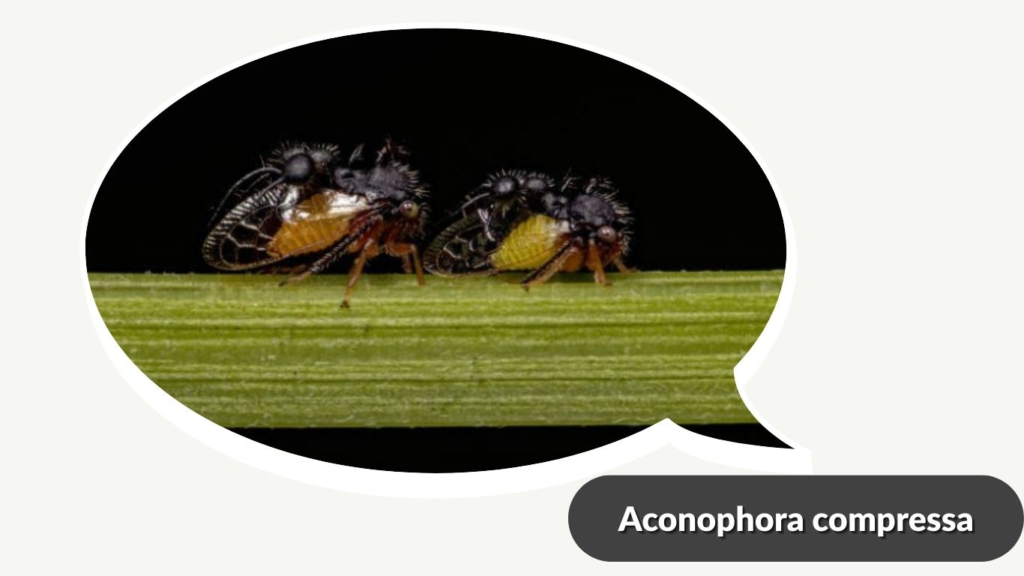
Aconophora compressa is a fascinating treehopper species known for its wide distribution across various regions. This treehopper has unique physical traits and behaviors that make it stand out in its ecological niche. Below is a breakdown of the identification, habitat, behaviors, and lifecycle of Aconophora compressa.
Identification
- Body Color: Greenish to yellowish, with brown or dark markings along the body
- Size: Around 7-9 mm in length
- Shape: Flattened, broad body with noticeable protrusions on the thorax
- Wings: Clear, sometimes with a light brown tint, held flat over the body
- Distinctive Features: The flattened shape and prominent spines along the thorax make this treehopper easily identifiable
Habitat
Aconophora compressa is typically found in tropical and subtropical regions, often on trees and shrubs. This treehopper species thrives in environments with ample plant life, especially in forests, where they can find both shelter and food. They are particularly drawn to species of the plant family Rutaceae.
Behavior
Aconophora compressa feeds on plant sap using its specialized mouthparts to pierce through plant tissues. These insects are known for their ability to camouflage well with their surroundings, often blending into the plants they inhabit. Like other treehoppers, they may excrete honeydew, which attracts ants.
Lifecycle
The lifecycle of Aconophora compressa begins with the female laying eggs in plant tissues. Once hatched, the nymphs resemble the adults but are smaller and lack the characteristic spines. As they mature, the nymphs molt and develop the full adult form. The lifespan of this species can vary based on environmental conditions but generally lasts for several weeks.
3. Aconophora nigra
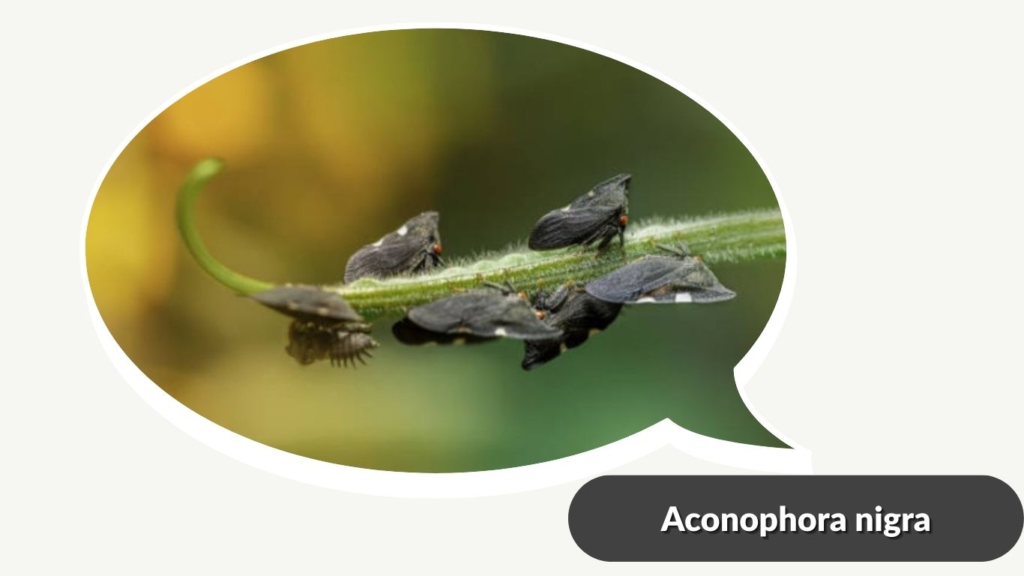
Aconophora nigra is a distinctive species of treehopper that stands out due to its dark coloration and striking physical characteristics. Known for its adaptive behavior and preference for certain plants, Aconophora nigra is an interesting species to study in the treehopper family. Below is a detailed look at its identification, habitat, behaviors, and lifecycle.
Identification
- Body Color: Dark brown to black with lighter brown markings on the body
- Size: Typically ranges from 8-10 mm in length
- Shape: Oval-shaped with a smooth, slightly flattened appearance
- Wings: Transparent with subtle dark markings, held close to the body
- Distinctive Features: The dark coloration, combined with its smooth body and subtle protrusions on the thorax, makes this treehopper easily distinguishable from other species
Habitat
Aconophora nigra is commonly found in areas with dense vegetation, such as forests and woodlands. They tend to inhabit plants with sturdy stems and leaves, particularly those that provide adequate shelter from predators. Their preference for shaded areas makes them well-suited for environments with limited direct sunlight.
Behavior
This species of treehopper is primarily solitary but can sometimes be found in small groups, especially when feeding. They feed on plant sap, often concentrating on the vascular tissues of leaves and stems. Like many treehoppers, Aconophora nigra can secrete honeydew, which can attract ants or fungi, impacting the surrounding ecosystem.
Lifecycle
The lifecycle of Aconophora nigra follows a typical treehopper pattern, with eggs laid in plant tissue. After hatching, the nymphs undergo several molts before reaching adulthood. The adults are fully formed with the characteristic dark coloration and thoracic protrusions. The entire lifecycle, from egg to adult, is relatively short, typically completing in a few weeks depending on environmental conditions.
4. Ceresa bubalus
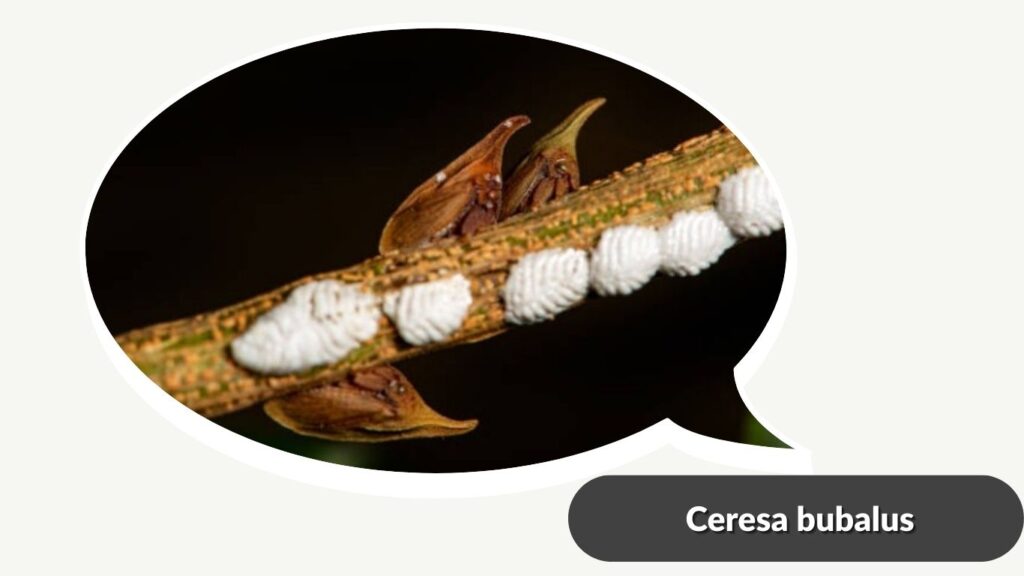
Ceresa bubalus is a striking treehopper species recognized for its impressive horn-like extensions and unique appearance. This species thrives in specific environments and exhibits behaviors that help it survive and reproduce. Below is an in-depth look at its identification, habitat, behaviors, and lifecycle.
Identification
- Body Color: Green or yellow with black markings along the thorax and legs
- Size: Ranges from 9-11 mm in length
- Shape: The body is flattened and oval, with long, prominent horns extending backward
- Wings: Transparent with subtle dark veins, held flat when at rest
- Distinctive Features: The large, backward-curving horns are the most prominent feature, making Ceresa bubalus easily identifiable
Habitat
Ceresa bubalus is found in areas with dense foliage, often in woodlands, forests, and gardens. These treehoppers prefer plants that offer shelter and a steady source of sap, such as members of the rose family. Their presence is often concentrated in areas where these host plants are abundant, allowing them to feed and reproduce effectively.
Behavior
Ceresa bubalus is known for its solitary behavior, although it can sometimes be found in small groups, especially when feeding. Like many treehoppers, it feeds on plant sap, using its piercing mouthparts to access the vascular tissue of its host plant. The feeding process can lead to the secretion of honeydew, which in turn attracts ants or other organisms that feed on the sugary substance.
Lifecycle
The lifecycle of Ceresa bubalus involves several stages: egg, nymph, and adult. Eggs are laid in plant tissue, where they hatch into nymphs that resemble miniature adults but lack the developed horns. As they grow, they molt several times, eventually reaching adulthood. The complete lifecycle of this species typically lasts several weeks, and reproduction occurs quickly in warm, favorable conditions.
5. Entylia carinata
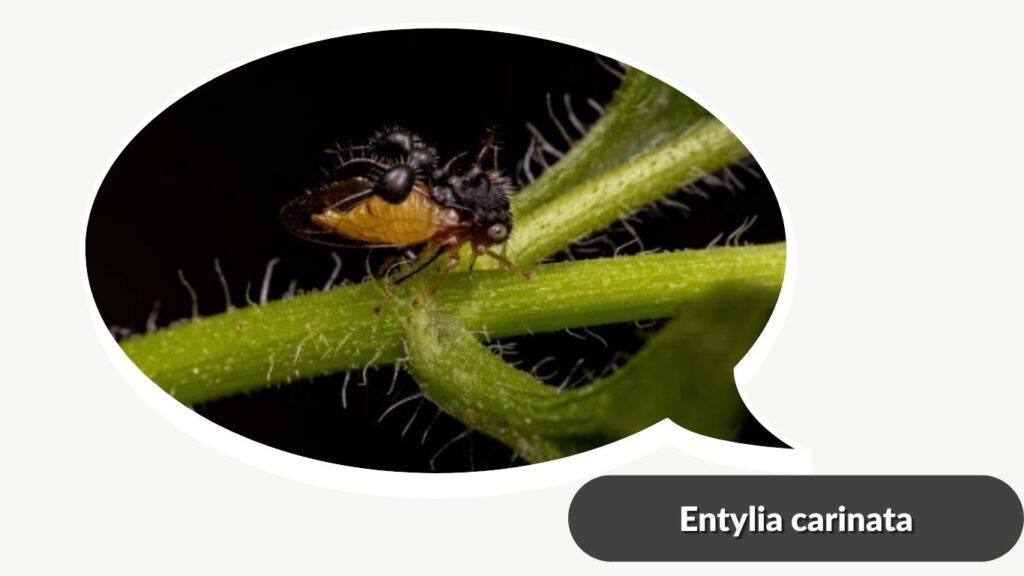
Entylia carinata is a fascinating treehopper species, well-known for its distinctive features and ability to thrive in various environments. This species is often found in regions with abundant plant life, where it can feed and complete its lifecycle. Below is an overview of its identification, habitat, behaviors, and lifecycle.
Identification
- Body Color: Pale green to yellow, sometimes with darker markings along the thorax
- Size: Ranges from 6-8 mm in length
- Shape: Oval body with a distinctive keel-like ridge running along the thorax
- Wings: Transparent, often with a faint veined pattern, held flat when at rest
- Distinctive Features: The prominent keel along the thorax is a key identifying feature, giving it a unique silhouette compared to other treehoppers
Habitat
Entylia carinata is commonly found in grassy areas, shrubs, and trees, particularly in regions with temperate climates. These treehoppers prefer environments where host plants like grasses and woody shrubs are abundant, providing both food and shelter. They are often seen on the undersides of leaves, where they remain well-camouflaged.
Behavior
Entylia carinata feeds on plant sap by piercing the tissue of its host plant using its specialized mouthparts. This species is mostly solitary, though they may form small clusters when feeding. The feeding habits of Entylia carinata can result in the secretion of honeydew, attracting ants and other organisms. They are also known to be quite agile, using their jumping abilities to evade predators.
Lifecycle
The lifecycle of Entylia carinata begins when the female lays her eggs on the surface of a plant. Upon hatching, the nymphs resemble miniature adults but lack the distinct keel. Over time, they molt and grow, developing into full-sized adults with characteristic thoracic ridges. The lifecycle is relatively short, completing within a few weeks under optimal conditions.
6. Diestostemma viridis
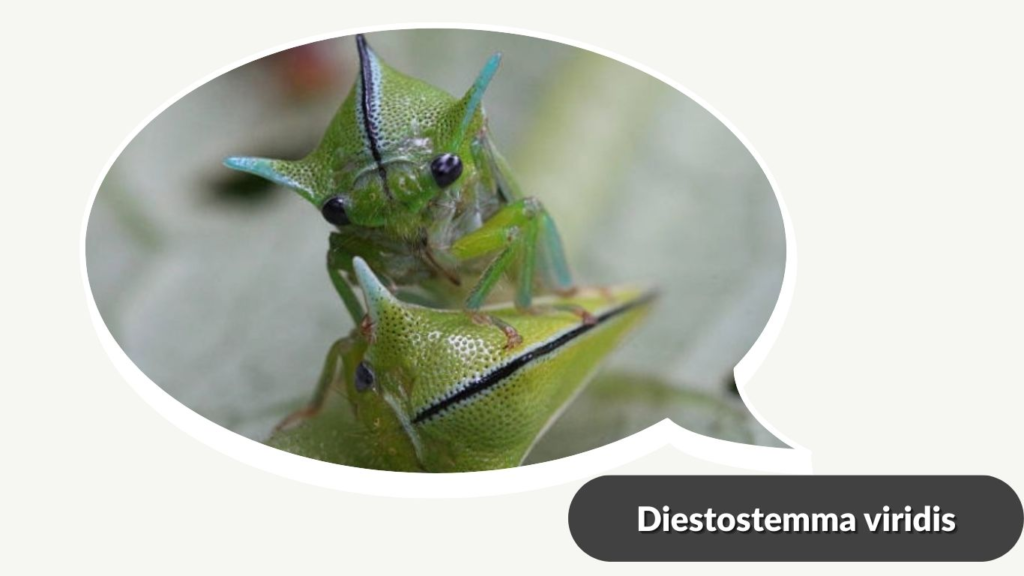
Diestostemma viridis is a unique treehopper species characterized by its vibrant green color and distinctive body structure. This species is found in a variety of habitats, and its behavior and lifecycle are similar to other treehoppers but with some notable differences. Below is an overview of its identification, habitat, behaviors, and lifecycle.
Identification
- Body Color: Bright green with lighter green markings, giving it a well-camouflaged appearance
- Size: Generally ranges from 7-9 mm in length
- Shape: Oval and somewhat flattened body with subtle spines along the thorax
- Wings: Transparent, slightly veined, and held flat when resting
- Distinctive Features: The vibrant green color, combined with the smooth thoracic ridges, makes this species easily identifiable in its environment
Habitat
Diestostemma viridis is commonly found in wooded areas, gardens, and areas with dense plant life. It prefers environments with plenty of vegetation where it can find host plants such as shrubs and small trees. These treehoppers are often found on the undersides of leaves, where they can feed and remain hidden from predators.
Behavior
This species is mostly solitary, although it can occasionally be found in small groups when feeding. Diestostemma viridis feeds on plant sap using its piercing mouthparts, which it uses to access the vascular tissue of the plant. This feeding process often results in the secretion of honeydew, which attracts ants or other honeydew-feeding insects.
Lifecycle
The lifecycle of Diestostemma viridis begins with the female laying eggs in plant tissue. After hatching, the nymphs resemble the adults but are smaller and lack the fully developed thoracic ridges. As the nymphs grow, they molt several times until they reach their adult form. The lifecycle is relatively short, and under ideal conditions, the species can complete its life cycle within a few weeks.
7. Aconophora circellaris
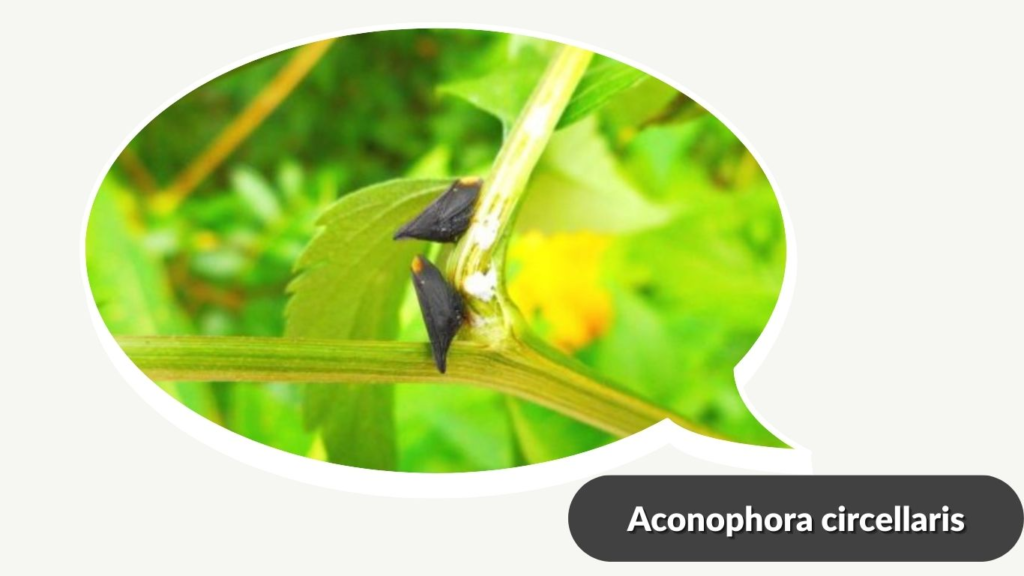
Aconophora circellaris is an intriguing species of treehopper known for its distinct physical traits and its preference for certain host plants. This treehopper species is widely distributed and plays a role in the ecosystem, feeding on plant sap and influencing the growth of its host plants. Below is a detailed examination of its identification, habitat, behaviors, and lifecycle.
Identification
- Body Color: Pale green or yellow, with darker markings along the thorax and abdomen
- Size: Typically ranges from 7-9 mm in length
- Shape: Oval body with rounded edges and a smooth surface
- Wings: Clear with faint dark veins, held flat against the body
- Distinctive Features: Aconophora circellaris has a distinctive rounded appearance, with its smooth body and lack of prominent horns, making it easier to identify compared to other spiny species.
Habitat
Aconophora circellaris is found in a variety of habitats, including forests, gardens, and orchards. This species prefers areas with abundant vegetation, particularly those with a variety of shrubs and small trees. They are often found on the undersides of leaves, where they can feed while remaining hidden from predators.
Behavior
This treehopper species is known to be relatively solitary but may occasionally form small groups when feeding. Like many treehoppers, Aconophora circellaris feeds on the sap of plants using its piercing mouthparts. The feeding process often leads to the production of honeydew, which can attract ants or fungi to the area.
Lifecycle
The lifecycle of Aconophora circellaris begins with the female laying eggs on plant tissue. The eggs hatch into nymphs that resemble smaller versions of the adult but lack the full features. The nymphs undergo several molts as they grow, eventually becoming full-grown adults. The lifecycle is relatively short, typically completing within a few weeks depending on environmental conditions.
8. Brachycera conica
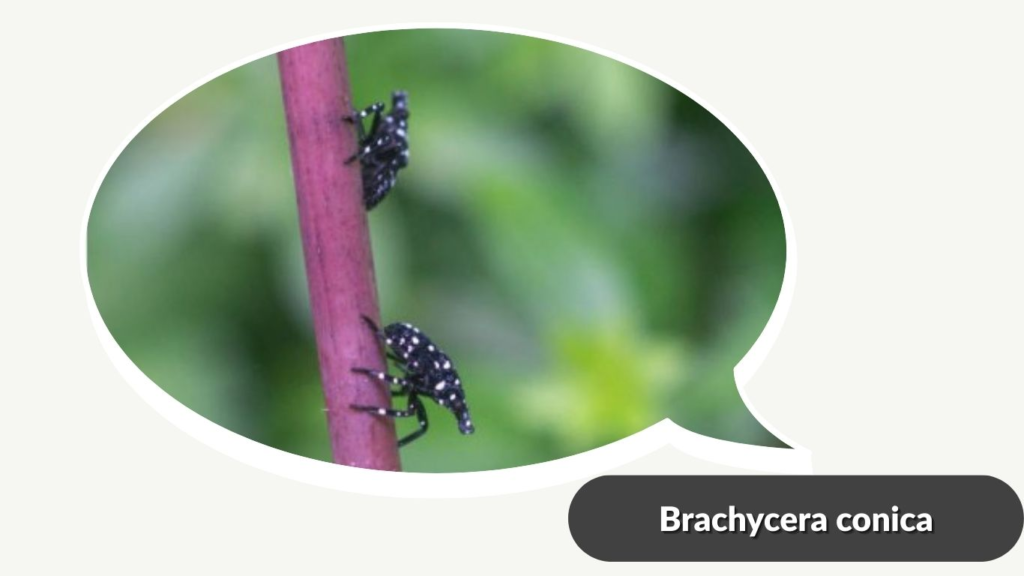
Brachycera conica is a fascinating species of treehopper recognized for its conical body shape and distinct coloring. This species thrives in various environments, feeding on plant sap and engaging in behaviors that help it maintain its place in the ecosystem. Below is a look at its identification, habitat, behaviors, and lifecycle.
Identification
- Body Color: Yellowish to light green, often with darker markings around the thorax
- Size: Typically measures 6-8 mm in length
- Shape: Conical body shape with a noticeable taper towards the rear
- Wings: Transparent with a slight veining pattern, held flat over the body
- Distinctive Features: The most prominent feature of Brachycera conica is its conical shape, which helps it blend in with plant structures, offering some camouflage from predators.
Habitat
Brachycera conica is commonly found in woodlands, gardens, and areas with dense shrubbery. This species prefers environments with a variety of host plants, including trees and shrubs, which provide both shelter and food. It is often found on the undersides of leaves where it remains relatively well-hidden.
Behavior
This treehopper species feeds on the sap of plants, using its piercing mouthparts to extract nutrients from the vascular tissue. While primarily solitary, Brachycera conica may form small groups when feeding. Its feeding behavior often results in the secretion of honeydew, which may attract ants and other organisms that feed on the sugary substance.
Lifecycle
The lifecycle of Brachycera conica begins with the female laying eggs in plant tissues. The nymphs that hatch resemble smaller versions of the adults, lacking the conical body shape and other features. Over several molts, the nymphs grow and develop into adults. The lifecycle of Brachycera conica is relatively short, typically lasting a few weeks from egg to adult under favorable environmental conditions.
9. Glyptotibicen quinquefasciatus
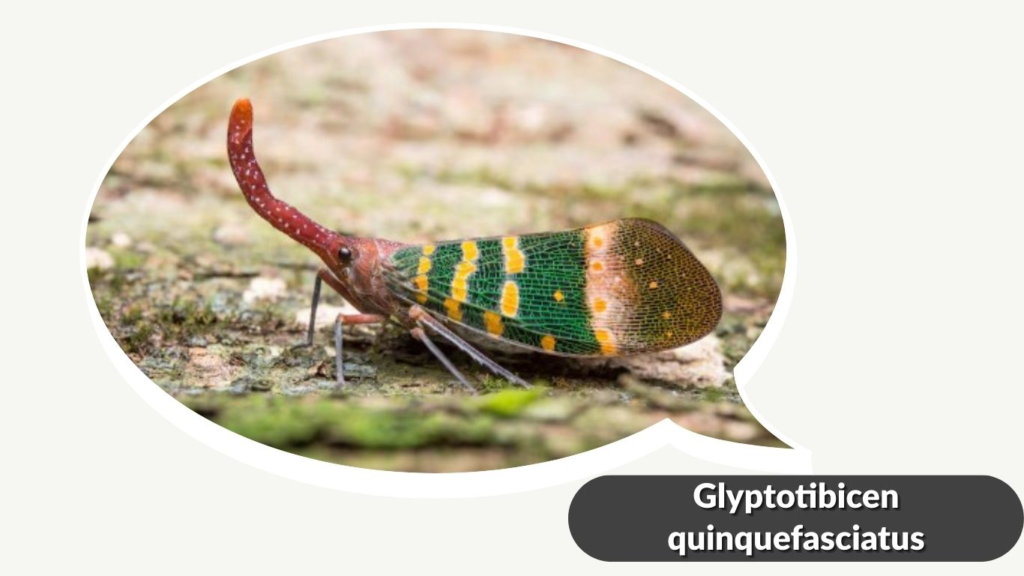
Glyptotibicen quinquefasciatus is a distinctive treehopper species recognized for its unique body shape and behavior. This species, like others in the treehopper family, feeds on plant sap and plays a role in shaping the ecosystems it inhabits. Below is a breakdown of its identification, habitat, behaviors, and lifecycle.
Identification
- Body Color: Typically green with dark brown or black markings along the body
- Size: Ranges from 10-12 mm in length
- Shape: Oval, slightly flattened body with prominent spines on the thorax
- Wings: Transparent with subtle veining, held flat when not in motion
- Distinctive Features: The prominent spines on the thorax and the overall body shape make Glyptotibicen quinquefasciatus easy to identify among treehoppers.
Habitat
Glyptotibicen quinquefasciatus is primarily found in woodlands, forests, and areas with abundant trees and shrubs. This species prefers habitats where host plants like oaks and other deciduous trees are present, providing both food and shelter. It is often found on the undersides of leaves, where it can remain hidden while feeding.
Behavior
This treehopper species feeds on plant sap using its piercing mouthparts. Glyptotibicen quinquefasciatus is typically solitary but may occasionally be found in small groups when feeding on suitable plants. As with many treehoppers, the feeding process results in the secretion of honeydew, which may attract ants or fungi to the area.
Lifecycle
The lifecycle of Glyptotibicen quinquefasciatus begins with the female laying eggs in plant tissues. After hatching, the nymphs are similar to adults but smaller and lacking fully developed spines. As the nymphs mature, they molt and grow into adults. The species completes its lifecycle within a few weeks to a couple of months, depending on environmental conditions.
10. Aconophora unicolor
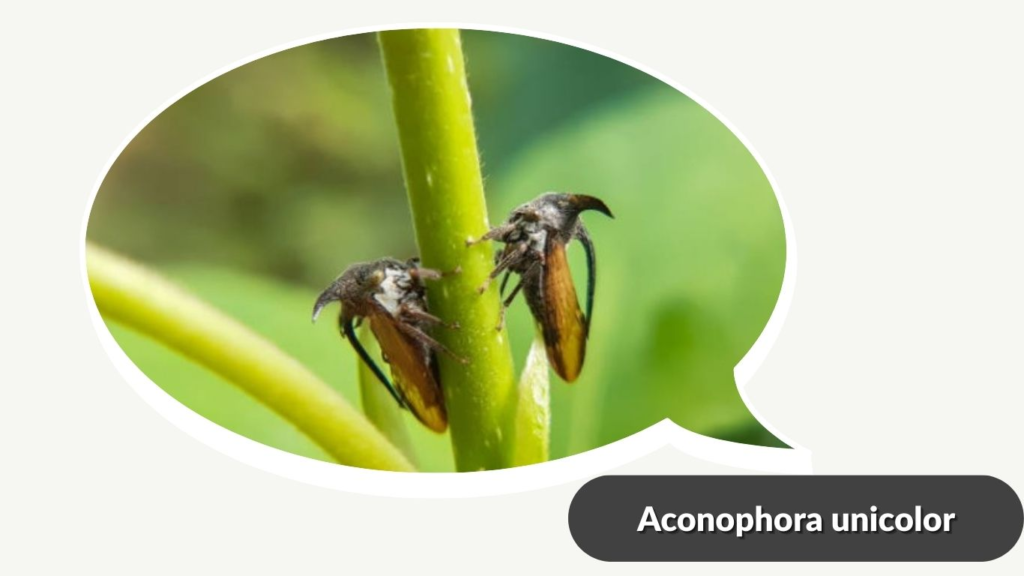
Aconophora unicolor is a notable species of treehopper recognized for its simple yet effective camouflage and feeding behavior. This treehopper is widely distributed and plays a role in the plant ecosystems where it resides. Below is a detailed exploration of its identification, habitat, behaviors, and lifecycle.
Identification
- Body Color: Typically uniform green or yellowish-green, blending well with plant leaves
- Size: Usually 7-9 mm in length
- Shape: Oval and slightly flattened body with smooth contours
- Wings: Clear, sometimes with a slight brownish tinge, and held flat when at rest
- Distinctive Features: The uniform coloration of Aconophora unicolor makes it one of the better-camouflaged treehoppers, allowing it to blend seamlessly with its environment.
Habitat
Aconophora unicolor is found in a range of environments, including woodlands, forests, and gardens, where it can find ample host plants. This species particularly thrives in areas with abundant shrubs and small trees. It is often seen on the undersides of leaves, where it can hide from predators while feeding.
Behavior
Aconophora unicolor feeds on plant sap, using its piercing mouthparts to access the vascular tissues of plants. This treehopper species is generally solitary, although it may occasionally be found in small groups when feeding on larger plants. As with other treehoppers, it excretes honeydew during feeding, which can attract ants and other insects that feed on the sugary substance.
Lifecycle
The life cycle of Aconophora unicolor begins with the female laying eggs on the surface of a plant. The eggs hatch into nymphs, which resemble miniature adults but are smaller and lack the full adult features. As the nymphs grow, they molt and eventually develop into fully formed adults. The life cycle of this species is relatively short, typically completing in a few weeks under favorable environmental conditions.
11. Cicadellidae
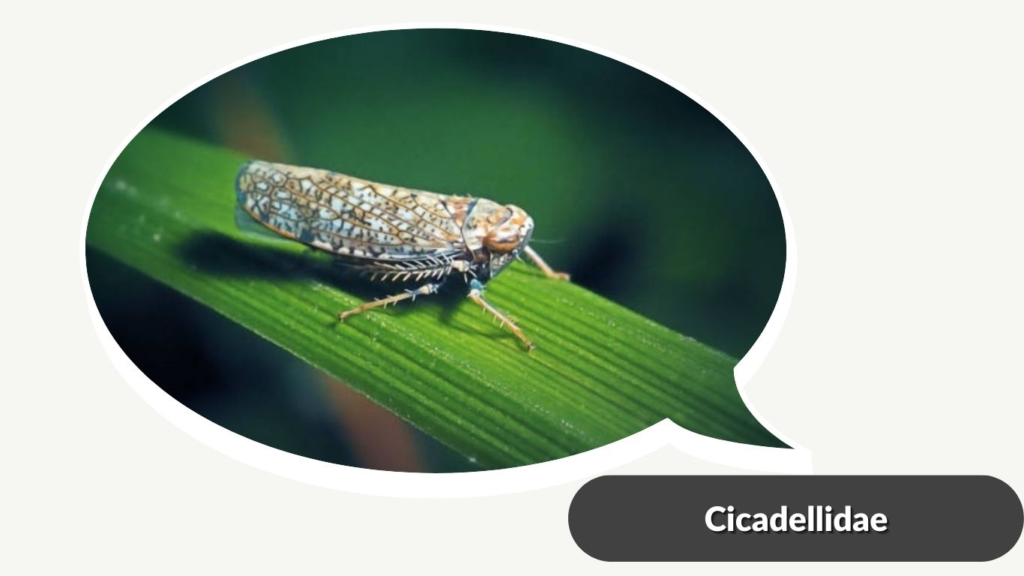
Cicadellidae is a broad family of treehoppers that encompasses various species with diverse characteristics. While this family includes numerous treehoppers, each with unique traits, they all share common features such as feeding behavior and the ability to cause plant damage. Below is a general overview of Cicadellidae treehoppers, covering their identification, habitat, behaviors, and lifecycle.
Identification
- Body Color: Varies from green to brown or yellow, often with markings that match their environment
- Size: Typically ranges from 6-12 mm in length, depending on the species
- Shape: The body shape is generally oval or elongated, with some species displaying more pronounced spines or ridges
- Wings: Transparent with veining, typically held flat when at rest
- Distinctive Features: Features can vary widely within the Cicadellidae family, but most species share similar body structures, such as strong hind legs for jumping.
Habitat
Cicadellidae treehoppers are found in a wide range of habitats, including woodlands, grasslands, gardens, and agricultural areas. They tend to prefer areas with abundant vegetation, where they can find a variety of host plants. These treehoppers are often found on the undersides of leaves, where they can feed while being shielded from predators.
Behavior
Members of the Cicadellidae family are known for their ability to jump, using their strong hind legs to evade predators. These treehoppers feed on plant sap, using their needle-like mouthparts to pierce plant tissue. Many Cicadellidae species are solitary, but some may aggregate when feeding on abundant host plants. Like other treehoppers, they excrete honeydew, which can attract ants and other organisms.
Lifecycle
The lifecycle of Cicadellidae treehoppers begins when the female lays eggs in plant tissues. The nymphs that hatch resemble smaller versions of the adults but lack the full features, such as wings or spines. Over time, the nymphs molt several times before becoming adults. The lifecycle varies depending on the species and environmental conditions but typically lasts a few weeks to a few months.
12. Cylindrocoris tigris
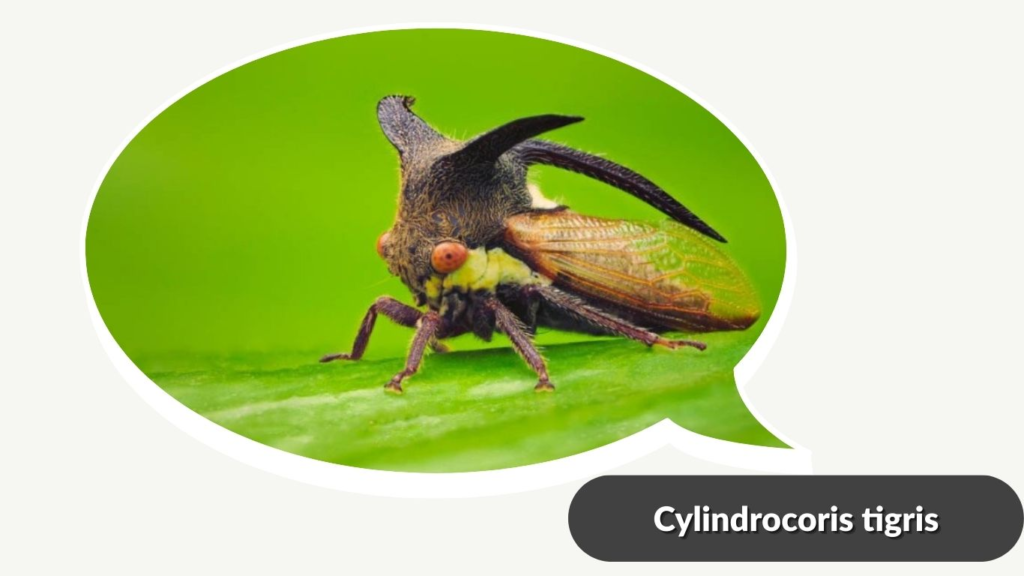
Cylindrocoris tigris is a striking treehopper species distinguished by its unique body shape and coloration. Found in diverse environments, this species exhibits behaviors that help it adapt to its habitat and feed effectively. Below is an overview of its identification, habitat, behaviors, and lifecycle.
Identification
- Body Color: Typically a combination of yellow and black, giving it a tiger-like appearance
- Size: Generally measures between 7-10 mm in length
- Shape: Cylindrical body with a rounded thorax and a slightly flattened appearance
- Wings: Transparent with dark veins, held flat when resting
- Distinctive Features: The bold, contrasting black and yellow markings on its body are the most distinguishing feature of Cylindrocoris tigris.
Habitat
Cylindrocoris tigris is commonly found in forests, gardens, and areas with abundant plant life. This treehopper species prefers environments where host plants, such as woody shrubs and small trees, are present. It often resides on the undersides of leaves, where it can feed and remain hidden from predators.
Behavior
Cylindrocoris tigris feeds on plant sap, using its piercing mouthparts to access the vascular tissue of its host plant. This treehopper is solitary and often remains well-camouflaged due to its distinctive coloration. Like other treehoppers, it excretes honeydew during feeding, which can attract ants or other insects that feed on the sugary substance.
Lifecycle
The lifecycle of Cylindrocoris tigris begins when the female lays eggs in plant tissues. The nymphs hatch and resemble the adults but are smaller and lack the distinct body markings. As they mature, they undergo several molts, gradually developing the adult coloration and features. The lifecycle typically lasts a few weeks, and under favorable conditions, reproduction occurs quickly.
13. Antilochus trachys
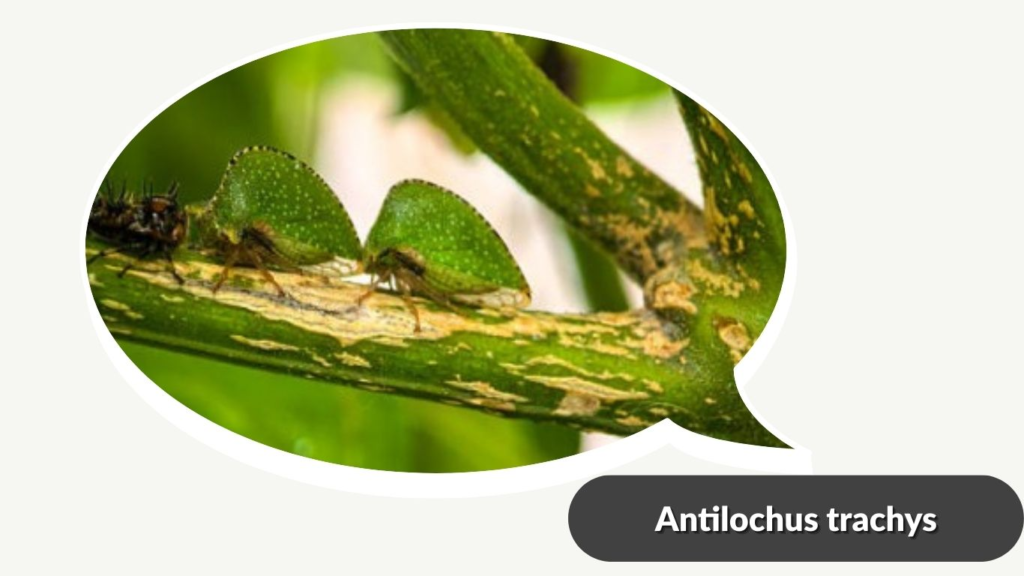
Antilochus trachys is a fascinating treehopper species characterized by its unique appearance and specialized feeding behaviors. This species thrives in particular habitats, where it has adapted to feed on specific plants. Below is a closer look at its identification, habitat, behaviors, and lifecycle.
Identification
- Body Color: Ranges from light green to yellow with darker markings on the thorax and abdomen
- Size: Generally about 8-10 mm in length
- Shape: Oval and flattened body with slight ridges along the thorax
- Wings: Transparent with faint veining, typically held flat when at rest
- Distinctive Features: The slightly flattened, ridged thorax and smooth body make Antilochus trachys stand out compared to other treehoppers.
Habitat
Antilochus trachys is commonly found in tropical and subtropical regions, particularly in areas with dense vegetation such as woodlands and gardens. These treehoppers thrive on a variety of shrubs and small trees, where they can find suitable host plants to feed on. They are often seen on the undersides of leaves, where they can feed in relative safety.
Behavior
Antilochus trachys primarily feeds on plant sap by piercing the vascular tissue with its specialized mouthparts. This treehopper is generally solitary but may gather in small groups during feeding. As with other treehoppers, it excretes honeydew, which attracts ants and other insects that feed on this sugary substance.
Lifecycle
The lifecycle of Antilochus trachys starts when the female lays eggs on plant tissue. The eggs hatch into nymphs, which resemble miniature versions of the adult treehopper but lack developed features such as wings or horns. As the nymphs grow, they undergo several molts before reaching their adult form. The lifecycle of Antilochus trachys typically lasts several weeks, depending on environmental conditions.
14. Eusthenocoris hanseni
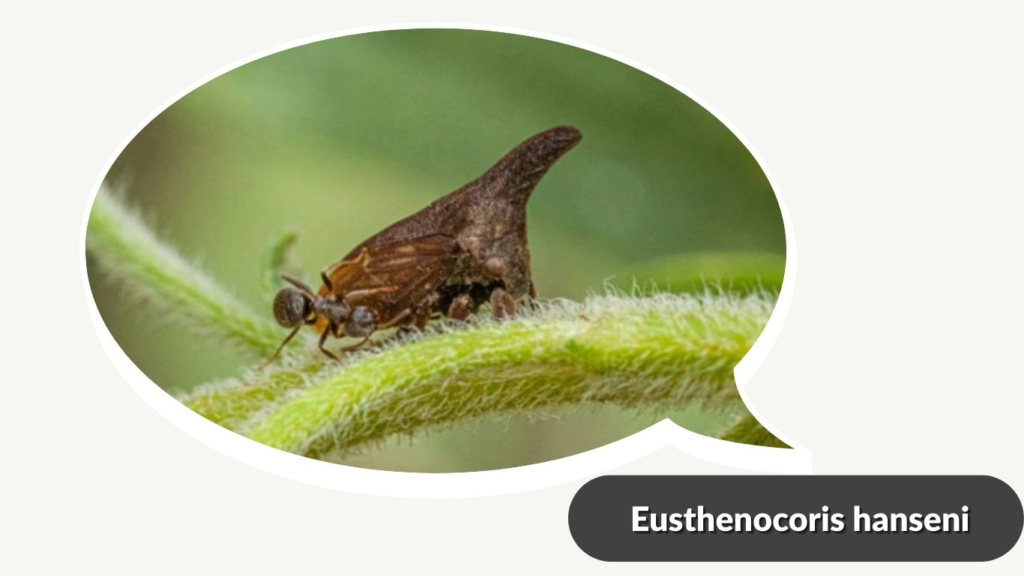
Eusthenocoris hanseni is a distinctive treehopper species found in a variety of habitats. Known for its unique features and feeding habits, this treehopper plays a role in the plant communities it inhabits. Below is an overview of its identification, habitat, behaviors, and lifecycle.
Identification
- Body Color: Pale green to light brown with dark brown or black markings along the thorax
- Size: Usually ranges from 6-8 mm in length
- Shape: Oval body with smooth contours and a slightly flattened appearance
- Wings: Transparent, with faint veining patterns, held flat when at rest
- Distinctive Features: Eusthenocoris hanseni’s smooth body and dark markings along the thorax make it easily distinguishable from other treehopper species.
Habitat
Eusthenocoris hanseni is commonly found in temperate forests, woodlands, and gardens where host plants like shrubs and small trees are abundant. These treehoppers thrive in environments with a variety of plant species, often appearing on the undersides of leaves where they can feed and remain concealed from predators.
Behavior
This species feeds on plant sap, using its piercing mouthparts to access the vascular tissue of host plants. Eusthenocoris hanseni is typically solitary but may occasionally form small groups when feeding on abundant host plants. As with other treehoppers, the feeding process results in the excretion of honeydew, which can attract ants and other organisms that feed on it.
Lifecycle
The lifecycle of Eusthenocoris hanseni begins with the female laying eggs in plant tissue. Once hatched, the nymphs resemble smaller versions of the adults but lack fully developed features. As the nymphs grow, they molt several times and gradually develop into adults. The entire lifecycle of this treehopper species typically spans several weeks, and reproduction occurs quickly under favorable conditions.
15. Centrotus cornutus
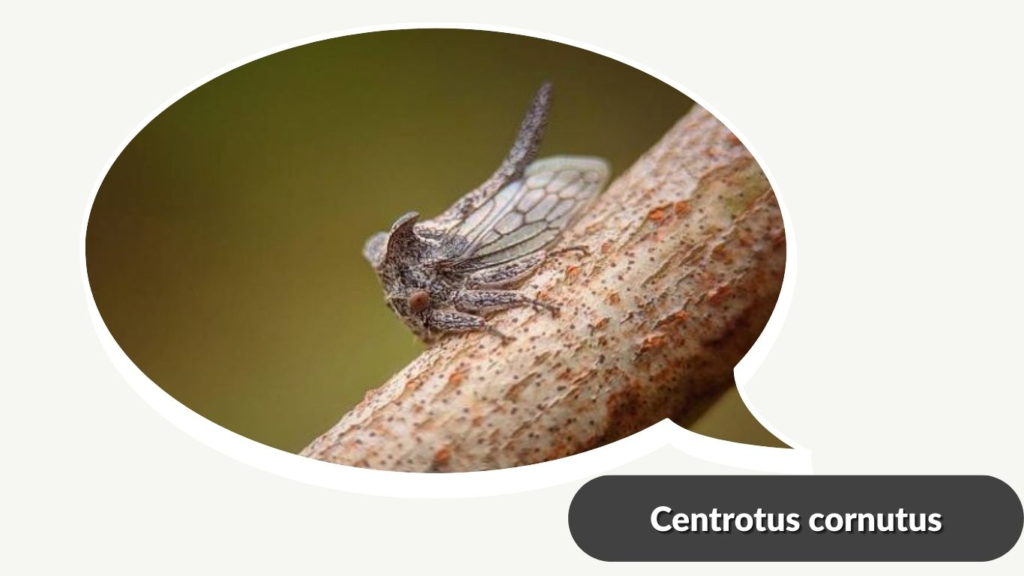
Centrotus cornutus is a remarkable treehopper species known for its distinctive horn-like protrusions and fascinating behaviors. This species is often found in habitats where it can feed on a variety of plants, making it an interesting subject for entomological studies. Below is a detailed overview of its identification, habitat, behaviors, and lifecycle.
Identification
- Body Color: Typically green or light brown with darker markings, especially around the thorax
- Size: Usually about 8-10 mm in length
- Shape: Oval-shaped body with pronounced horns or spines on the thorax
- Wings: Transparent with faint dark veins, held flat when resting
- Distinctive Features: The most distinctive feature of Centrotus cornutus is the large horn-like protrusions on its thorax, making it easily identifiable among treehoppers.
Habitat
Centrotus cornutus is typically found in wooded areas, gardens, and agricultural landscapes, where it can find a variety of host plants. These treehoppers thrive in environments with dense foliage, often appearing on the undersides of leaves, where they can remain concealed from predators while feeding.
Behavior
Centrotus cornutus feeds on plant sap by piercing plant tissues with its specialized mouthparts. It is a solitary species but may occasionally be found in small groups when feeding on abundant host plants. As with other treehoppers, it excretes honeydew, which can attract ants and other organisms that feed on the sugary substance.
Lifecycle
The lifecycle of Centrotus cornutus begins with the female laying eggs in plant tissue. The nymphs that hatch are smaller versions of the adults but lack the prominent horns. As the nymphs grow, they molt several times, developing into full-grown adults with characteristic thoracic protrusions. The lifecycle typically lasts several weeks, with adults emerging quickly once the nymphs mature.
16. Enchenopa binotata
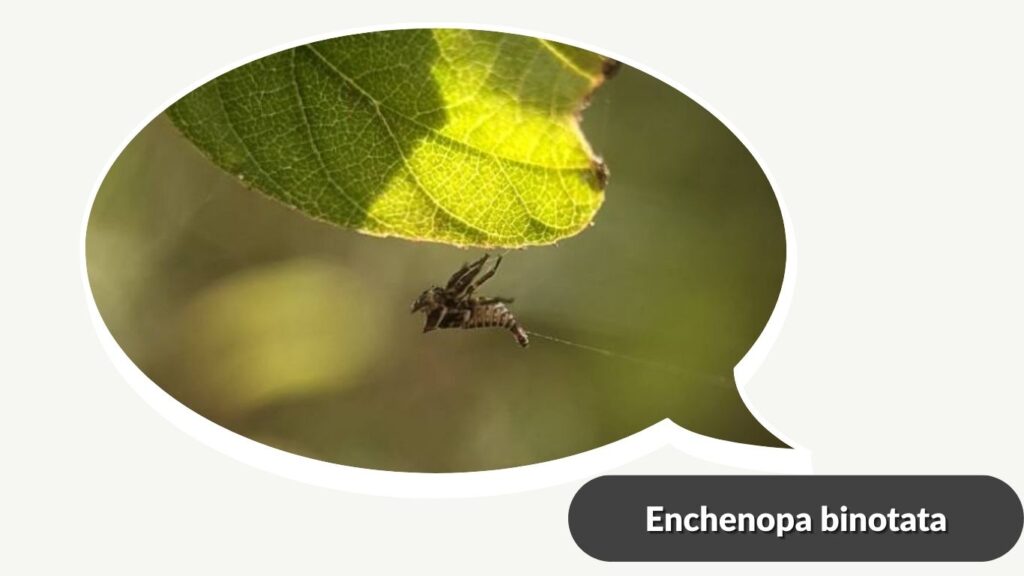
Enchenopa binotata is a distinctive species of treehopper recognized for its unique features and ability to thrive in a variety of habitats. This species is particularly known for its bright colors and its impact on the plants it inhabits. Below is an in-depth look at its identification, habitat, behaviors, and lifecycle.
Identification
- Body Color: Bright green with yellow and black markings, giving it a highly visible appearance
- Size: Typically ranges from 7-9 mm in length
- Shape: Oval body with a slight flattening at the sides, giving it a smooth, elongated shape
- Wings: Transparent, with dark veining, and usually held flat when at rest
- Distinctive Features: The bright colors and unique markings, especially the dark spots on the thorax, make Enchenopa binotata easily identifiable among other treehoppers.
Habitat
Enchenopa binotata is found in a variety of environments, including forests, woodlands, and gardens. This treehopper species is typically seen on shrubs and small trees, where it can find abundant sap sources. Like many treehoppers, Enchenopa binotata prefers areas with dense vegetation that offer shelter and food.
Behavior
Enchenopa binotata feeds on plant sap using its piercing mouthparts. The feeding process can cause plant damage, as the treehopper accesses the plant’s vascular tissue. This species is solitary but may gather in small groups when feeding on suitable plants. Like other treehoppers, it excretes honeydew, which can attract ants and other insects.
Lifecycle
The lifecycle of Enchenopa binotata begins when the female lays eggs in plant tissues. The nymphs that hatch resemble miniature versions of the adults but are smaller and lack the fully developed features, such as wings and prominent markings. As they grow, the nymphs molt several times, eventually developing into full adults. The lifecycle typically lasts several weeks, with the species completing its growth quickly under favorable environmental conditions.
FAQs
1. What do treehoppers feed on?
Treehoppers primarily feed on plant sap. They use their specialized mouthparts to pierce plant tissues and extract the sap from vascular tissues, which provides them with the necessary nutrients.
2. How do treehoppers protect themselves from predators?
Treehoppers use various defense mechanisms, including camouflage and their unique body shapes. Many species, such as those with spines or horns, also rely on physical adaptations to deter predators. Their ability to remain hidden on the undersides of leaves also helps reduce the risk of predation.
3. Are treehoppers harmful to plants?
Yes, treehoppers can damage plants. Their feeding behavior, where they pierce the vascular tissue to extract sap, can stunt plant growth, cause wilting, and make the plant more vulnerable to diseases. Additionally, their excretion of honeydew can promote the growth of mold on plants.
4. How long does the lifecycle of a treehopper last?
The lifecycle of a treehopper typically lasts several weeks, from egg to adult, depending on the species and environmental conditions. Nymphs undergo several molts before reaching adulthood.
5. Where can treehoppers be found?
Treehoppers are found in a wide range of habitats, including forests, gardens, woodlands, and agricultural areas. They typically inhabit plants such as shrubs, small trees, and herbaceous plants, where they can feed and remain hidden from predators.
