
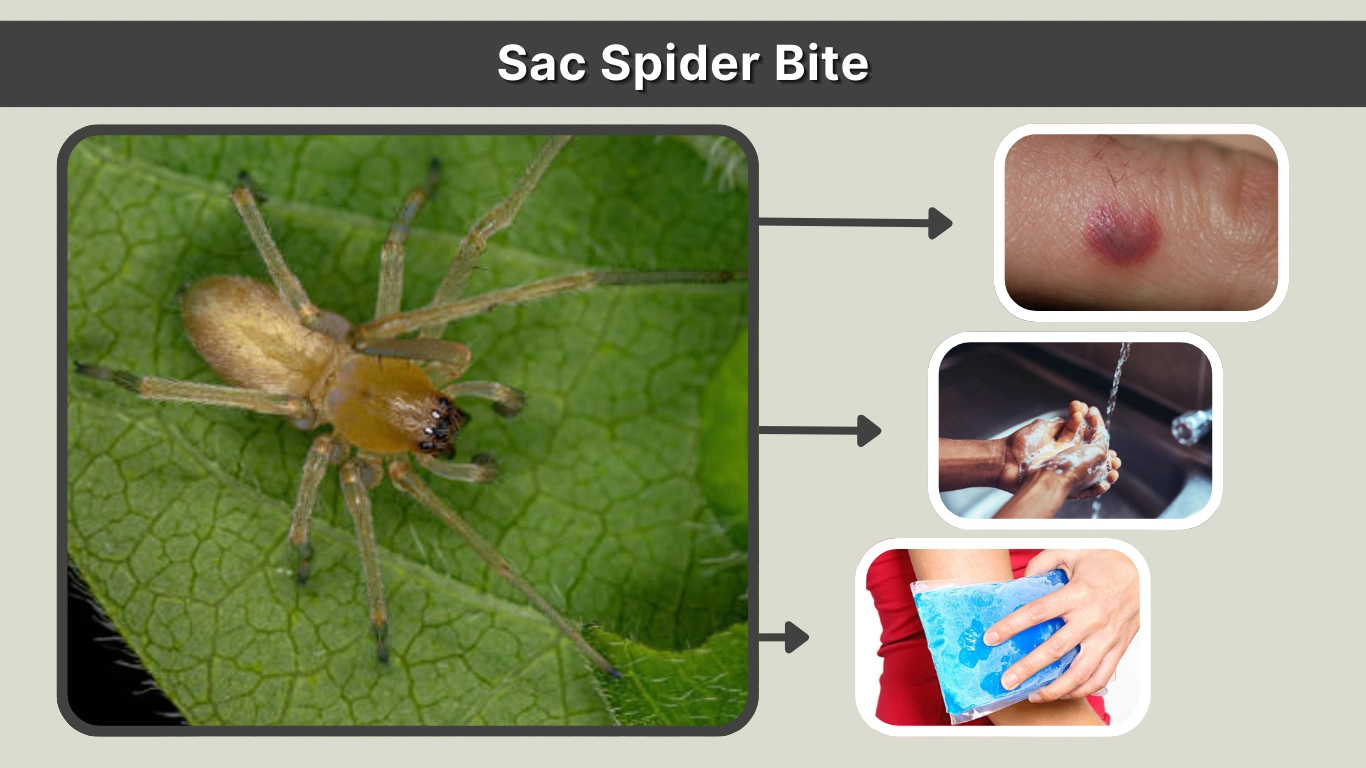
A sac spider bite is a relatively uncommon cause of skin irritation that often raises concern because it occurs indoors and can cause noticeable discomfort. Sac spiders, especially yellow sac spiders, are frequently blamed for unexplained bites, although confirmed cases are less common than many people believe. Most sac spider bites are mild and heal without complications. Understanding what a sac spider bite looks like, how symptoms develop, and what level of care is usually needed can help reduce unnecessary anxiety.
Sac Spider Species Known to Bite Humans
Common Sac Spider Types
Sac spider bites are most often associated with yellow sac spiders, which belong to a group of small, pale-colored spiders commonly found in homes. These spiders are not aggressive by nature and do not hunt humans. Bites usually occur only when the spider feels trapped or threatened, such as inside clothing or bedding.
Why Sac Spiders Enter Homes
Sac spiders are active hunters and do not rely on webs to catch prey. They often enter homes in search of insects, shelter, or warmth. Their tendency to roam at night increases the chance of accidental contact with people, which is why bites most commonly occur while sleeping or dressing.
What Causes a Sac Spider Bite
Sac spider bites are defensive rather than aggressive. A bite typically occurs when the spider is pressed against the skin and cannot escape. This can happen when a spider becomes trapped in clothing, shoes, bedding, or towels.
Many suspected sac spider bites are actually caused by other insects or skin conditions. Because spider bites can resemble allergic reactions, bacterial infections, or minor injuries, misidentification is common. Confirmed sac spider bites usually involve direct observation of the spider at the time of the bite.
Sac Spider Bite Appearance and Early Signs
A sac spider bite often causes a sharp, burning sensation at the moment of the bite. This initial discomfort may be followed by localized redness and mild swelling. In some cases, the bite site becomes tender to the touch within a few hours.
The bite mark itself is usually small and may appear as a red spot or slightly raised area. Unlike bites from medically significant spiders, sac spider bites rarely cause extensive tissue damage. Symptoms typically remain confined to the immediate area around the bite.
Common Sac Spider Bite Symptoms

Typical symptoms associated with a sac spider bite include:
- Mild to moderate localized pain
- Redness around the bite area
- Slight swelling
- Itching or tenderness
- A small blister in some cases
Systemic symptoms are rare and usually mild if they occur at all.
Sac Spider Bite Severity and Risk Level
Most sac spider bites are considered low-risk. The venom is not known to cause serious systemic effects in healthy individuals. Symptoms usually peak within the first 24 hours and gradually improve over several days.
Children, older adults, and individuals with sensitive skin may experience stronger local reactions, but serious complications are uncommon. Reports of severe tissue damage are rare and often linked to secondary infection rather than venom effects.
How Sac Spider Bites Affect the Skin
A sac spider bite triggers a localized inflammatory response in the skin. This reaction causes redness, warmth, and mild swelling as the body responds to the venom. In most cases, the skin heals naturally without scarring.
The healing process may involve temporary discoloration or mild peeling as the inflammation resolves. Sac spider bites are not typically associated with progressive tissue breakdown, which helps distinguish them from bites caused by more dangerous spider species.
How to Treat a Sac Spider Bite at Home
Immediate First Aid Steps
The first step in treating a suspected sac spider bite is gently cleaning the area with soap and water. Applying a cool compress can help reduce pain and swelling. Avoid scratching the bite, as this increases the risk of infection.
When Home Care Is Enough
Home care is usually sufficient if symptoms remain mild and localized. Most bites improve within a few days with basic care and observation, without the need for medical treatment.
Medical Treatment for Sac Spider Bites
Medical treatment is rarely required for a sac spider bite, but it may be necessary if symptoms worsen or signs of infection appear. Doctors typically evaluate the bite to rule out bacterial infections, allergic reactions, or bites from medically significant spiders.
Treatment may include topical antibiotics if the skin is broken, antihistamines to reduce itching, or mild pain relievers for discomfort. Oral antibiotics are only prescribed if a secondary infection develops. In most cases, reassurance and monitoring are sufficient.
How Long a Sac Spider Bite Takes to Heal
Most sac spider bites heal within 3 to 7 days. Redness and tenderness usually improve within the first few days, while mild itching may persist slightly longer. Complete healing often occurs without scarring.
Healing time can vary depending on skin sensitivity, bite location, and whether the area is scratched. Keeping the bite clean and avoiding irritation helps speed recovery. If symptoms persist beyond two weeks, medical evaluation is recommended.
How to Prevent Sac Spider Bites
Preventing sac spider bites focuses on reducing accidental contact and limiting indoor spider habitats:
- Shake out clothing, shoes, and bedding before use
- Reduce insects that attract spiders indoors
- Seal cracks and gaps around windows and doors
- Remove spiders using a container rather than bare hands
Simple household habits significantly lower bite risk.
Sac Spider Bite vs Other Spider Bites
Sac spider bites are often confused with bites from more dangerous spiders, but there are key differences:
- Sac spider vs brown recluse: Sac spider bites do not cause progressive tissue necrosis
- Sac spider vs black widow: Sac spider bites lack severe muscle pain or systemic symptoms
- Misdiagnosis: Many skin lesions blamed on spiders are bacterial infections or allergic reactions
- Key difference: Sac spider bites remain localized and mild
Accurate identification helps avoid unnecessary alarm.
FAQs
Are sac spider bites dangerous?
Sac spider bites are not considered dangerous for most people. They typically cause mild, localized symptoms such as redness and discomfort. Serious complications are rare and usually related to secondary infection rather than venom effects.
What does a sac spider bite look like?
A sac spider bite usually appears as a small red spot or raised area. Mild swelling, tenderness, or itching may occur. In some cases, a small blister forms, but extensive skin damage is uncommon.
Can a sac spider bite cause skin necrosis?
Sac spider bites are not known to cause necrosis. Reports of tissue damage are usually due to infection or misidentified bites. This is an important distinction from brown recluse spider bites.
How do you know if a bite is from a sac spider?
Confirmed sac spider bites typically involve seeing the spider at the time of the bite. Without direct observation, it is difficult to be certain, as many insect bites and skin conditions look similar.
When should you see a doctor for a sac spider bite?
You should see a doctor if pain worsens, redness spreads, pus develops, fever occurs, or symptoms do not improve within one to two weeks. These signs may indicate infection or another underlying condition.
