
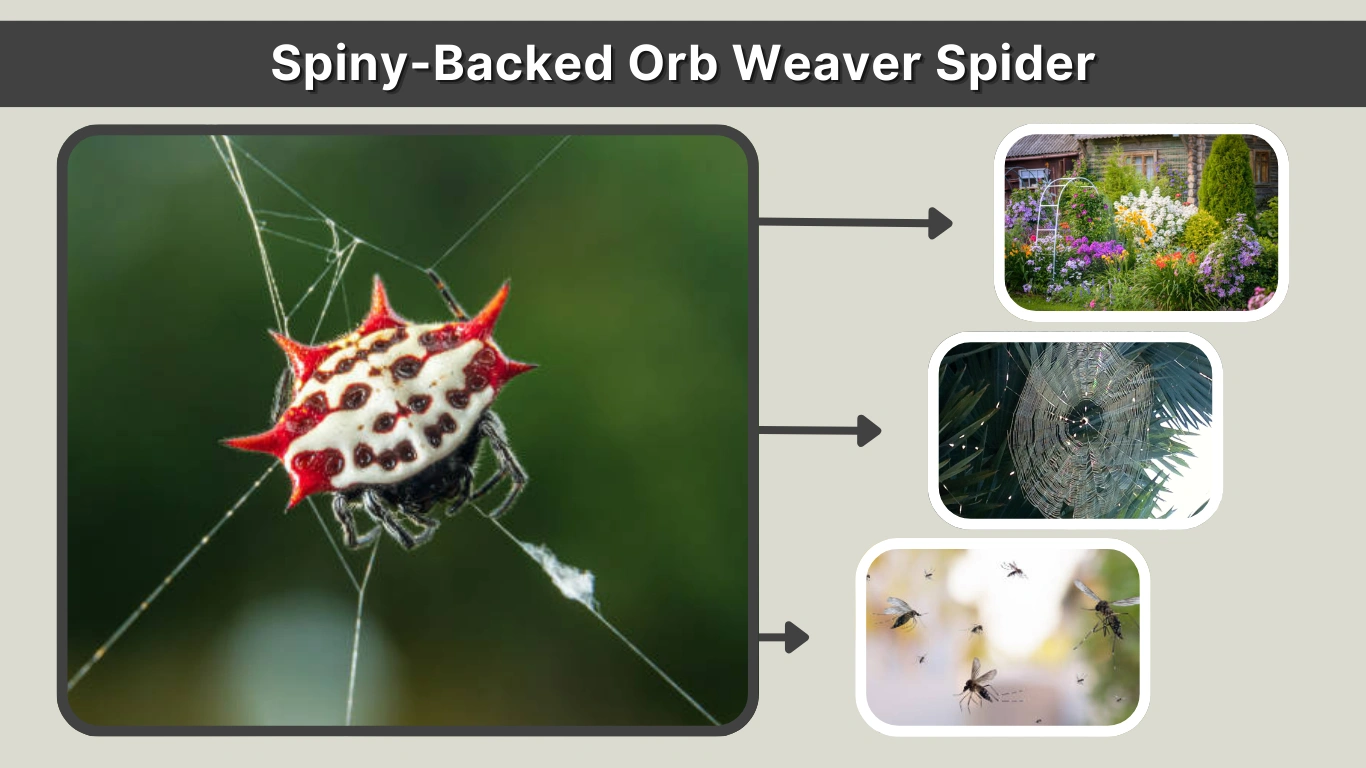
The spiny-backed orb weaver spider is one of the most visually striking spiders found in gardens and wooded areas. Unlike typical orb weavers, this spider has a hard, flat body with sharp spines that give it a crab-like appearance. Often noticed resting at the center of a small orb web, it attracts attention because of its bright colors rather than its size. Despite its intimidating look, the spiny-backed orb weaver is harmless and plays a useful role in controlling flying insects.
What Makes the Spiny-Backed Orb Weaver Unique
The most distinctive feature of the spiny-backed orb weaver spider is its unusual body shape. Instead of a rounded abdomen, it has a wide, flattened body that looks almost armored. This shape sets it apart immediately from other orb-weaver spiders.
Another defining trait is the presence of sharp, rigid spines projecting from the abdomen. These spines act as a defensive feature, making the spider difficult for predators to swallow or handle. Combined with its bright coloration, the spines give the spider a warning-like appearance.
Unlike many orb weavers that rely on size and strong webs, this species relies more on visual defense. Its bold look helps deter predators, allowing it to remain exposed at the center of its web during daylight hours.
Scientific Identity of the Spiny-Backed Orb Weaver
Classification and Family Placement
The spiny-backed orb weaver spider belongs to the orb-weaver group, spiders known for building circular webs to capture prey. While it shares web-building behavior with other orb weavers, its physical appearance is quite different, reflecting a specialized evolutionary path within the group.
Meaning Behind the Name
The name “spiny-backed orb weaver” comes from the hardened spines on the upper surface of the abdomen. These spines are not flexible hairs but solid extensions of the body, giving the spider its unmistakable silhouette and making identification straightforward.
Spiny-Backed Orb Weaver Spider Size and Shape
This spider is relatively small compared to many other orb weavers. Adult females typically measure about 5 to 10 millimeters in body length, while males are even smaller and often go unnoticed. Despite their small size, females appear larger due to the wide, flattened abdomen.
The body is broad and compact, with legs that are short compared to those of long-legged orb weavers. This compact structure supports a lifestyle that involves minimal movement and long periods of resting in the web.
Sexual dimorphism is noticeable. Females are brightly colored and heavily spined, while males are much smaller, duller in color, and usually remain near the edges of the web or nearby vegetation.
Color Patterns and Spine Structure
Coloration in the spiny-backed orb weaver spider is bold and highly variable. Common color combinations include white with black spines, red and black, yellow and black, or orange tones. The underside is typically darker and less colorful than the top.
The spines are usually black and contrast sharply with the lighter body colors. Most individuals have six prominent spines arranged around the edge of the abdomen, though their exact shape and length can vary slightly.
These colors are not used for camouflage. Instead, they serve as a visual warning to predators, signaling that the spider may be difficult or unpleasant to eat.
How to Recognize a Spiny-Backed Orb Weaver
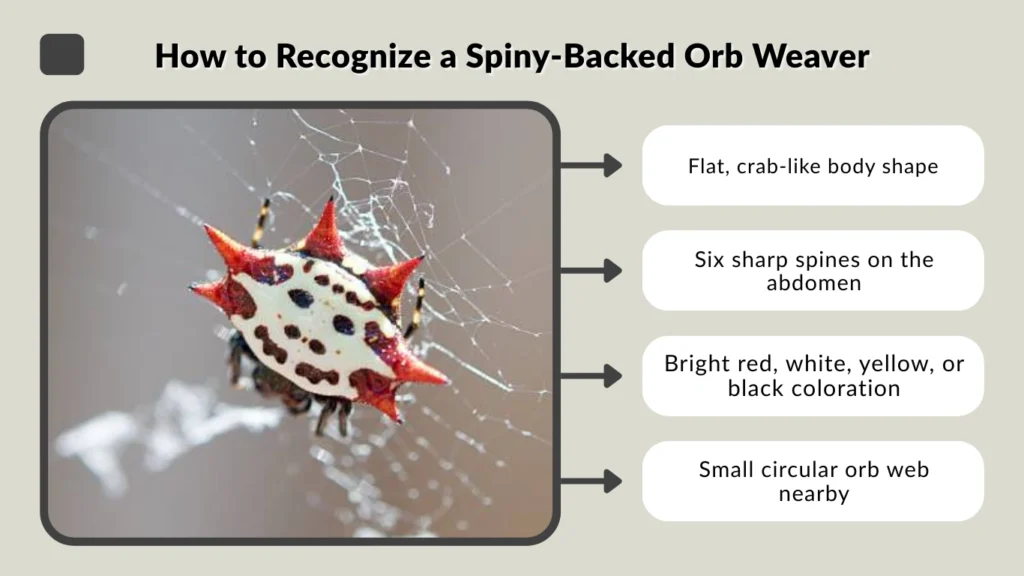
You can identify a spiny-backed orb weaver spider by the following features:
- Flat, crab-like body shape
- Six sharp spines on the abdomen
- Bright red, white, yellow, or black coloration
- Small circular orb web nearby
- Female much larger and more colorful than male
Where the Spiny-Backed Orb Weaver Lives
Preferred Habitats
Spiny-backed orb weaver spiders are commonly found in gardens, shrubs, forest edges, and areas with dense vegetation. They prefer locations where small flying insects are abundant and where their small webs can be anchored between leaves or branches.
These spiders are often seen in sunny or partially shaded areas, where their bright colors are easily noticeable. They adapt well to human-modified environments as long as suitable vegetation is present.
Geographic Distribution
The spiny-backed orb weaver is most commonly found in the southern United States, particularly in warm, humid regions. Its range also extends into Central America and parts of South America, where tropical conditions support year-round activity.
Web Design of the Spiny-Backed Orb Weaver
The web built by the spiny-backed orb weaver spider is smaller and more delicate than those of larger orb weavers. It is usually positioned low in shrubs or between leaves, making it easy to overlook unless the spider itself is visible.
The web follows the classic orb pattern, with radial threads and a spiral capture line. The spider typically rests at the center, facing downward, waiting for small flying insects to become trapped. Webs are maintained regularly to remain effective, especially during peak feeding periods.
Daily Behavior of the Spiny-Backed Orb Weaver
Web-Building Timing
Spiny-backed orb weaver spiders usually build or repair their webs during the late evening or early morning. This timing helps reduce disturbance while the web is under construction and ensures it is ready during peak insect activity. Because their webs are small, repairs are often quick and require less silk than those of larger orb weavers.
Feeding and Stillness
Once the web is complete, the spider spends long periods resting at the center. When an insect becomes trapped, the spider reacts quickly, wrapping the prey in silk before feeding. Outside of feeding times, spiny-backed orb weavers remain largely motionless, relying on their web to do most of the work.
What the Spiny-Backed Orb Weaver Eats
The spiny-backed orb weaver spider feeds primarily on small flying insects, including:
- Flies
- Mosquitoes
- Small moths
- Tiny gnats and similar insects
This diet allows the spider to thrive in gardens and wooded areas where small insects are abundant.
Reproduction and Seasonal Life Cycle
Mating typically occurs during warm months when insect activity is high. Males cautiously approach females, often waiting at the edge of the web to avoid being mistaken for prey. After mating, the female produces egg sacs that are attached to nearby vegetation or hidden among leaves.
Each egg sac contains many eggs. Spiderlings hatch after several weeks and disperse once conditions are suitable. In cooler regions, adults usually die as temperatures drop, completing a seasonal life cycle.
Predators and Defensive Strategies
Despite their armored appearance, spiny-backed orb weaver spiders face several natural threats:
- Birds that remove spiders from webs
- Lizards in warm climates
- Parasitic wasps that target egg sacs
- Environmental damage such as heavy rain
Their sharp spines and hard body help deter many predators by making the spider difficult to handle or swallow.
Spiny-Backed Orb Weaver Spider Around Humans
Spiny-backed orb weaver spiders are completely harmless to humans. They are not aggressive and rarely bite, even when disturbed. Their venom is not considered medically significant, and bites are extremely uncommon.
These spiders are beneficial because they help control populations of small flying insects. Although their appearance may be surprising, they pose no threat and can safely be left undisturbed in gardens and outdoor spaces.
FAQs
Is the spiny-backed orb weaver spider dangerous to humans?
No, the spiny-backed orb weaver spider is not dangerous. It is non-aggressive and rarely bites. If a bite were to occur, it would cause only mild irritation and would not require medical treatment.
Why does the spiny-backed orb weaver have spines?
The spines act as a defense mechanism. They make the spider harder for predators to grab or swallow and serve as a visual warning, signaling that the spider may be difficult to eat.
How big is a spiny-backed orb weaver spider?
Adult females typically measure about 5 to 10 millimeters in body length. Males are smaller and less noticeable. Despite their small size, females appear larger due to their wide, flattened abdomen.
Where are spiny-backed orb weavers most commonly found?
They are most commonly found in the southern United States, Central America, and other warm regions. Gardens, shrubs, forest edges, and areas with dense vegetation are typical habitats.
Does the spiny-backed orb weaver rebuild its web often?
Spiny-backed orb weavers regularly repair their webs and may rebuild them if damaged. Web maintenance usually takes place during evening or early morning hours to keep the web effective.
