
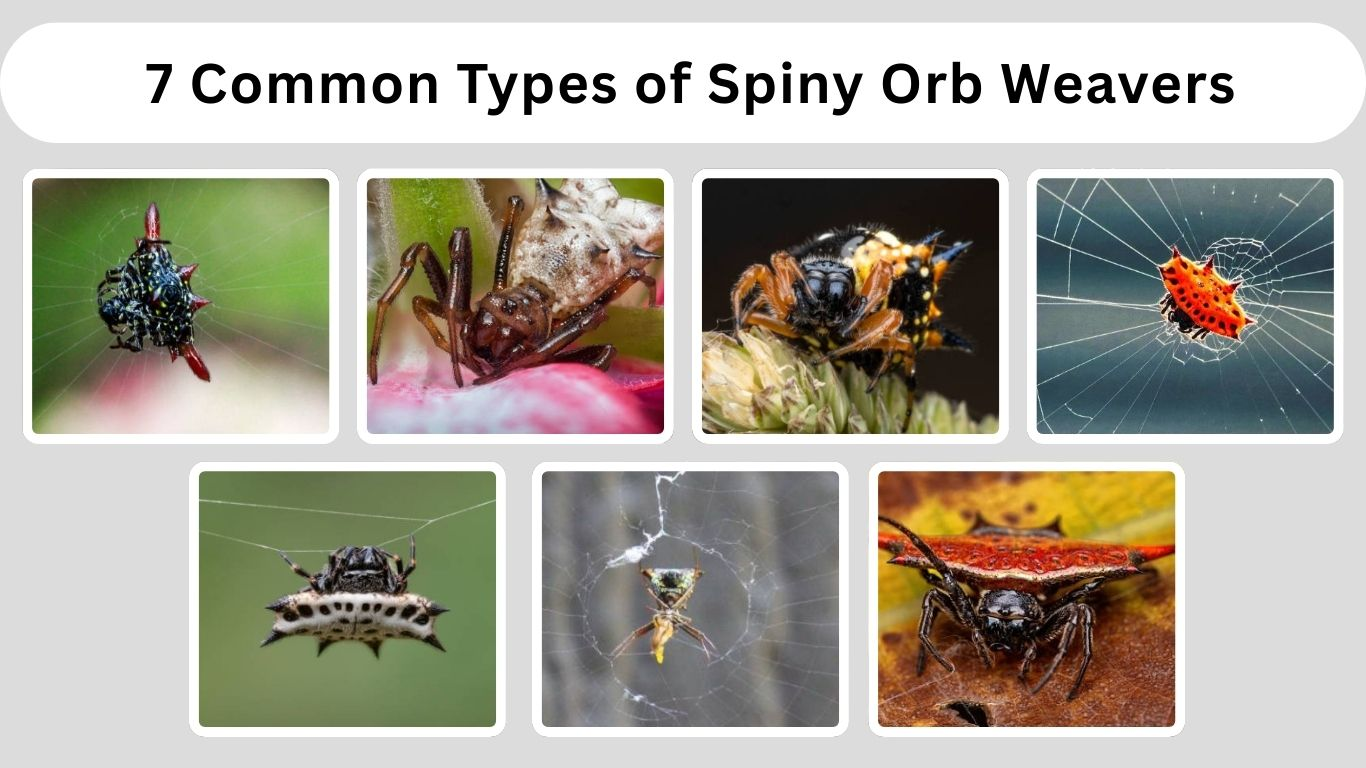
Spiny orb weavers are some of the most visually striking spiders, known for their hard, flattened bodies and sharp, horn-like spines. Despite their fierce and armored appearance, these spiders are harmless to humans and play an important role in controlling flying insect populations. Most spiny orb weavers build classic circular webs and are commonly found in gardens, forests, and warm outdoor spaces. Below are seven common types of spiny orb weavers, each with unique shapes, colors, and habitat preferences.
1. Spiny-Backed Orb-Weaver
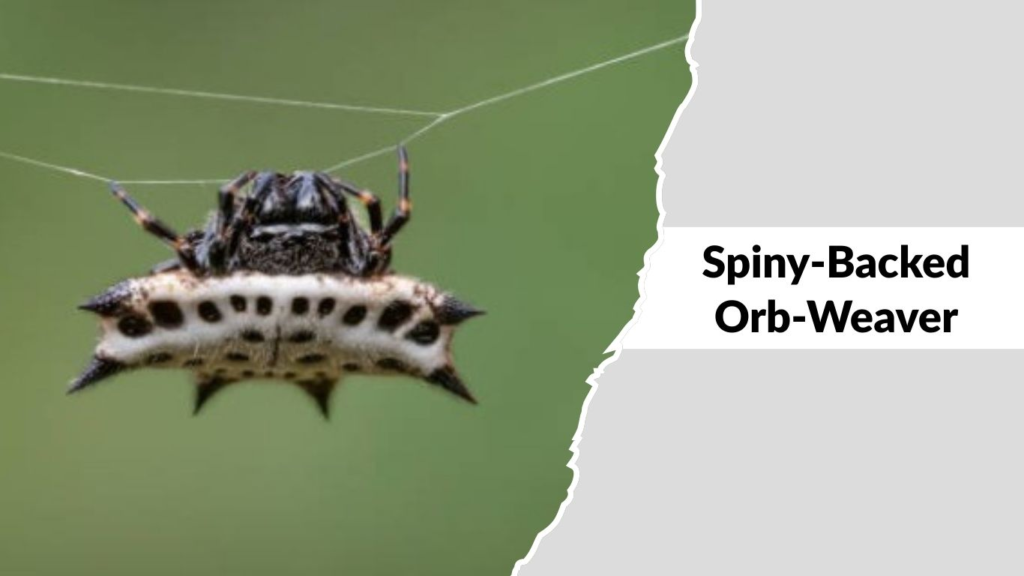
The spiny-backed orb-weaver is one of the most recognizable spiders in the world due to its hard, crab-like body and bold spines. Often spotted resting in the center of its web, this spider is harmless to humans and valued for controlling flying insects in gardens and natural spaces.
Identification
- Flat, wide abdomen with six stiff spines
- Bright colors such as white, yellow, red, or orange
- Glossy, hard-looking body surface
- Small size, usually 5–9 mm long
Habitat & Range
Spiny-backed orb-weavers are commonly found in warm regions, especially in southern North America, Central America, and parts of South America. They prefer open, sunny areas such as gardens, forest edges, shrubs, and around buildings. Their orb webs are often built between trees or bushes at eye level.
Behavior
This spider is a classic web builder, spinning a neat circular orb web to catch flying insects like flies, mosquitoes, and moths. It typically sits motionless in the center of the web during the day. Despite its intimidating appearance, it is non-aggressive and rarely moves unless disturbed.
Medical Significance
The spiny-backed orb-weaver poses no medical threat to humans. Bites are extremely rare and would cause little to no reaction. Its striking appearance often causes alarm, but it is completely harmless and beneficial to have nearby.
2. Arrow-Shaped Micrathena
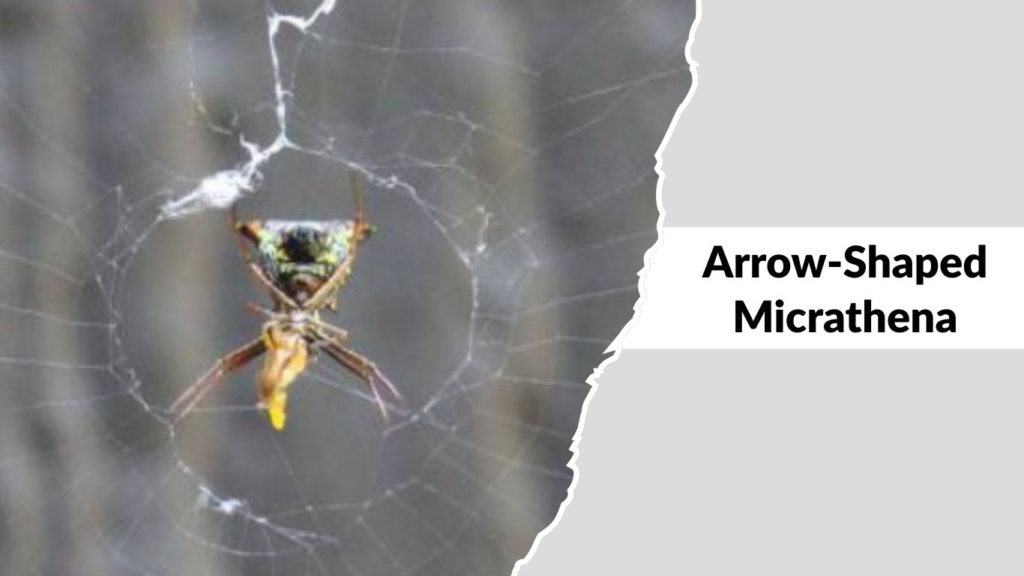
The arrow-shaped micrathena is a striking spiny orb-weaver known for its dramatic shape and contrasting colors. With its elongated spines and bold patterning, it is easy to recognize in wooded areas. Despite its fierce appearance, this spider is shy, harmless, and an effective insect hunter.
Identification
- Distinct arrow- or shield-shaped abdomen
- Two long, pointed spines extending sideways
- Black body with bright yellow or white markings
- Small size, typically 6–10 mm long
Habitat & Range
Arrow-shaped micrathenas are commonly found in eastern and central North America. They prefer forests, wooded trails, and dense shrubs, where they build orb webs between trees or tall vegetation. Their webs are often placed in shaded areas along paths or clearings.
Behavior
This species is a classic orb-weaver, constructing a circular web to capture flying insects. It usually hangs head-down in the center of the web during the day. Arrow-shaped micrathenas are not aggressive and will drop from the web or hide if disturbed rather than defend themselves.
Medical Significance
The arrow-shaped micrathena is not medically significant. Bites are extremely rare and would be mild at most. Although its spiny shape may look intimidating, it poses no danger to humans and plays a beneficial role by reducing insect populations.
3. White Spiny Orb-Weaver
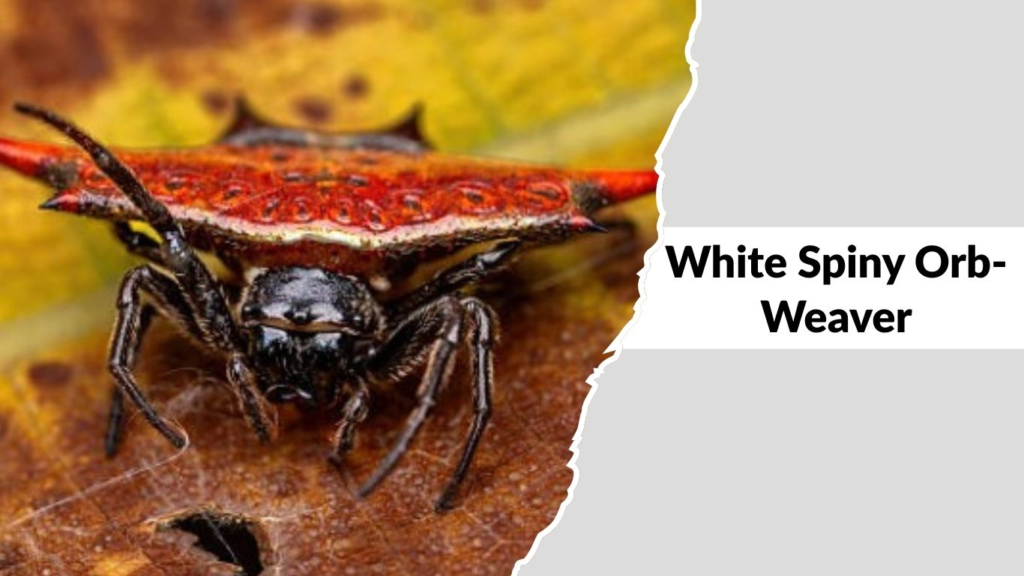
The white spiny orb-weaver is a visually striking spider best known for its bright white body and sharp black spines. Its bold contrast makes it easy to spot in sunny gardens and open landscapes. Like other orb-weavers, it is harmless and beneficial to the environment.
Identification
- Bright white, flattened abdomen
- Six prominent black spines
- Small black spots on the abdomen
- Body length usually 5–8 mm
Habitat & Range
White spiny orb-weavers are commonly found in warm and tropical regions, including parts of the southern United States, the Caribbean, and Central America. They favor open habitats such as gardens, hedges, forest edges, and shrubs, where they build webs between branches or stems.
Behavior
This spider spins a classic circular orb web and typically rests at the center during daylight hours. It feeds on flying insects such as flies and mosquitoes caught in its sticky web. The white spiny orb-weaver is calm and non-aggressive, often remaining motionless unless the web is disturbed.
Medical Significance
The white spiny orb-weaver is not dangerous to humans. Bites are extremely unlikely and medically insignificant. Despite its spiny, armored appearance, it is completely harmless and valued for natural pest control.
4. Red Spiny Orb-Weaver
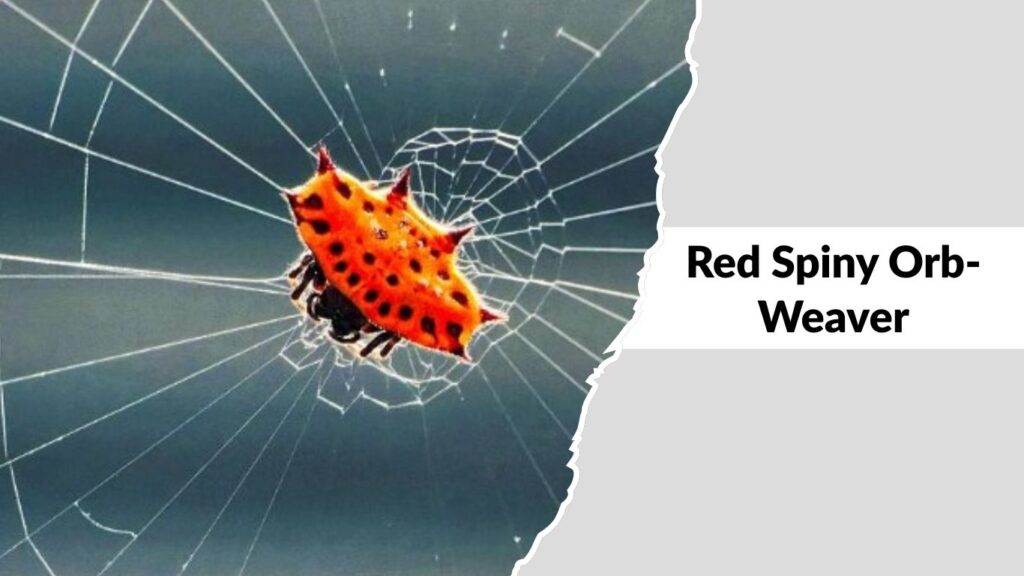
The red spiny orb-weaver is a colorful variation of spiny orb-weaving spiders, admired for its vivid red markings and bold silhouette. Its striking appearance makes it a favorite among nature observers, especially in gardens and tropical landscapes.
Identification
- Bright red or reddish-orange abdomen
- Six stiff, pointed spines
- Dark spots or markings on the body
- Body length typically 5–9 mm
Habitat & Range
Red spiny orb-weavers are found mainly in warm and tropical regions, including the southern United States, Central America, and the Caribbean. They prefer sunny, open spaces such as gardens, shrubs, forest edges, and hedgerows. Their orb webs are usually built between branches or stems at low to mid height.
Behavior
This species constructs a classic orb-shaped web to capture flying insects like flies and small moths. It often sits in the center of the web during the day, remaining still for long periods. When disturbed, it may retreat to nearby foliage or drop from the web on a silk line.
Medical Significance
The red spiny orb-weaver poses no medical risk to humans. Bites are extremely rare and harmless. Although its bright color and spines may look threatening, it is non-aggressive and beneficial for controlling insect populations.
5. Six-Spined Orb-Weaver
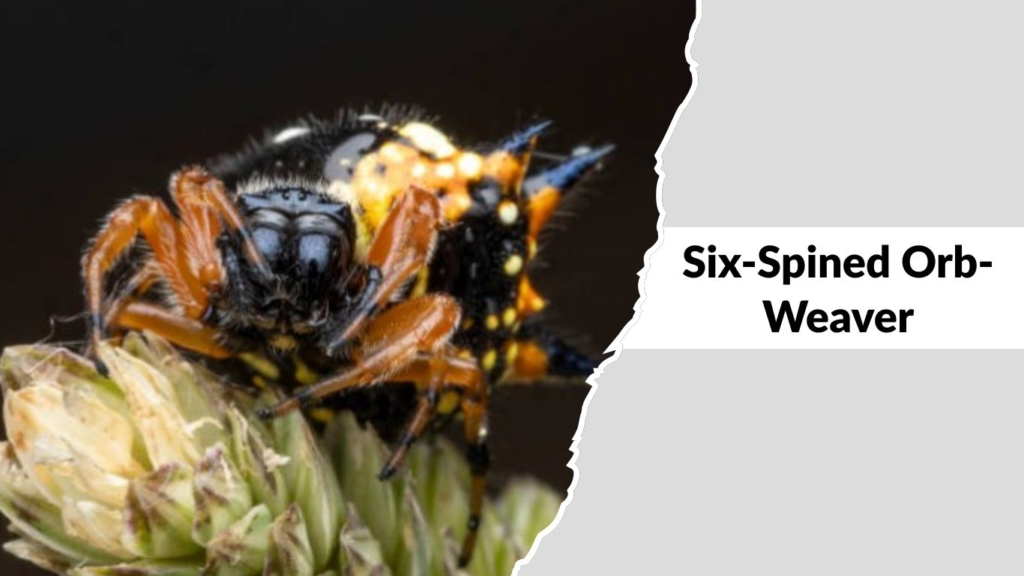
The six-spined orb-weaver is named for the six sharp spines that extend from its flattened, armored-looking abdomen. Its unusual shape and bold coloration make it easy to recognize, and it is often spotted resting quietly in the center of its web.
Identification
- Flat, wide abdomen with six prominent spines
- Colors range from white to yellow with black markings
- Hard, glossy body appearance
- Body length usually 5–10 mm
Habitat & Range
Six-spined orb-weavers are found in warm and subtropical regions, including the southern United States, Central America, and parts of the Caribbean. They inhabit gardens, shrubs, forest edges, and open woodland, where they build orb webs between plants or low tree branches.
Behavior
This spider spins a neat, circular orb web and waits for flying insects to become trapped. It typically remains motionless at the center of the web during the day. The six-spined orb-weaver is calm and non-aggressive, relying on its web rather than movement for hunting.
Medical Significance
The six-spined orb-weaver is completely harmless to humans. Bites are extremely rare and medically insignificant. Despite its spiny and armored appearance, it poses no threat and is beneficial as a natural insect controller.
6. Spined Micrathena
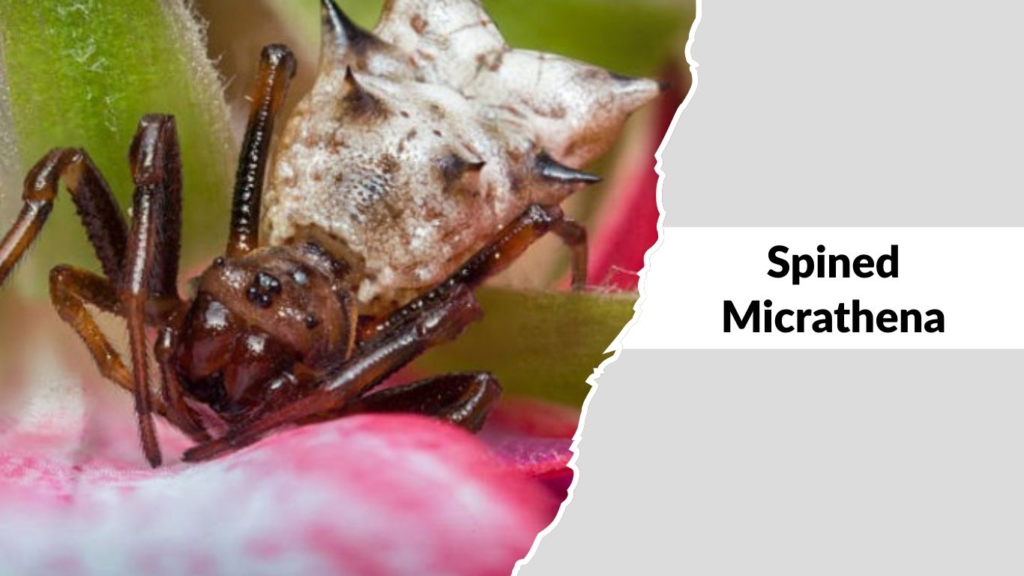
The spined micrathena is a dramatic-looking orb-weaver recognized for its long, curved spines and bold color contrast. It is commonly encountered in wooded habitats, where its web often spans forest paths, making it noticeable to hikers and nature lovers.
Identification
- Black abdomen with bright yellow or white markings
- Long, curved lateral spines
- Small, compact body shape
- Body length typically 6–10 mm
Habitat & Range
Spined micrathenas are widely distributed across eastern and central North America. They favor forests, woodland edges, and shaded trails, where they build orb webs between trees and tall vegetation. Their webs are often positioned at head height in shaded areas.
Behavior
This species is a classic orb-weaver that builds a large circular web to trap flying insects. It usually rests in the center of the web during daylight hours. When disturbed, it may shake the web vigorously or drop on a silk thread to escape rather than attack.
Medical Significance
The spined micrathena is not dangerous to humans. Bites are extremely rare and harmless. Despite its fierce, spiky appearance, it is a shy, non-aggressive spider that plays a useful role in controlling insect populations.
7. Caribbean Spiny Orb-Weaver
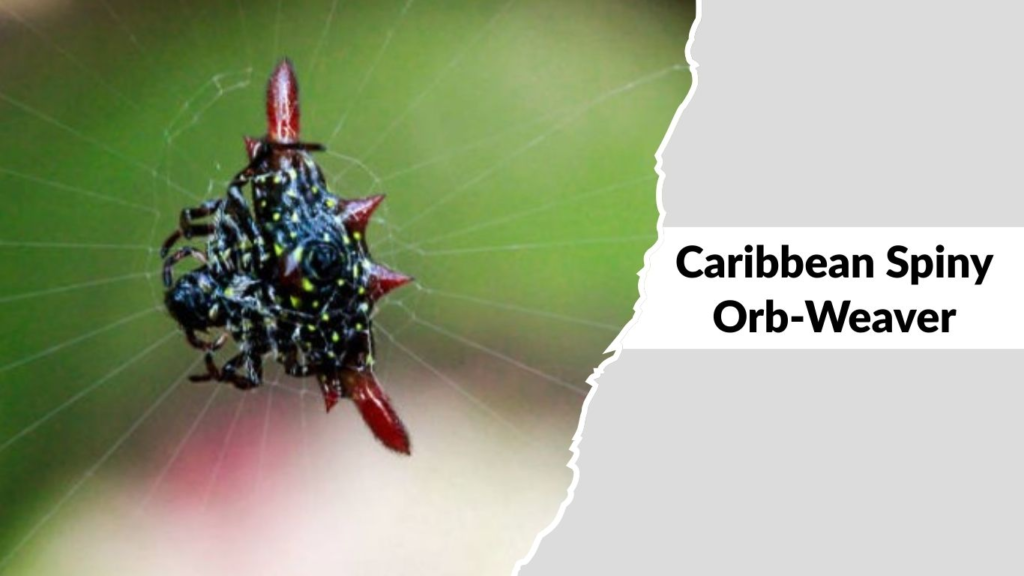
The Caribbean spiny orb-weaver is a colorful and eye-catching spider commonly found in tropical environments. Its bright coloration and sharp spines give it a striking, almost decorative appearance, making it one of the most visually appealing orb-weavers in its range.
Identification
- Brightly colored abdomen, often red, white, or yellow
- Six sharp, well-defined spines
- Flattened, hard-looking body
- Body length usually 5–9 mm
Habitat & Range
This species is native to the Caribbean and nearby coastal regions, including southern Florida and parts of Central America. It thrives in warm, humid habitats such as gardens, forest edges, shrubs, and coastal vegetation. Its orb webs are typically built between low branches or plants in sunny areas.
Behavior
The Caribbean spiny orb-weaver builds a classic circular orb web and waits patiently for flying insects to become trapped. It often rests at the center of the web during the day, remaining still for long periods. When threatened, it prefers to retreat or drop from the web rather than defend itself.
Medical Significance
The Caribbean spiny orb-weaver poses no medical risk to humans. Bites are extremely rare and harmless. Despite its spiny, intimidating appearance, it is non-aggressive and beneficial for natural pest control.
