
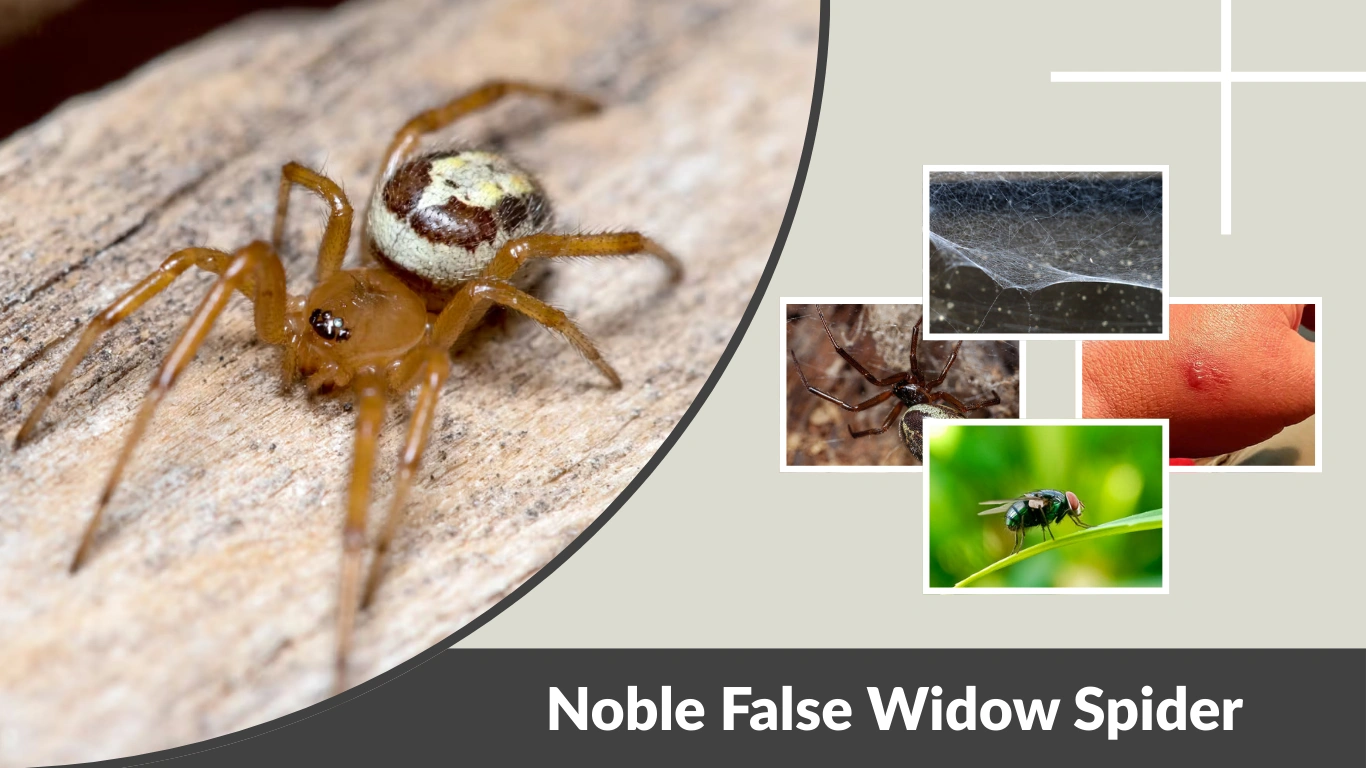
The noble false widow spider (Steatoda nobilis) is one of the most misunderstood spiders found around homes, especially in the UK and parts of Europe and North America. Its dark color and rounded body often cause it to be confused with black widows, leading to fear about bites and venom. While media reports sometimes exaggerate its danger, the reality is far less alarming. Understanding how to identify a noble false widow spider, where it lives, and how its bite affects humans helps separate fact from myth.
What Is a Noble False Widow Spider?
The noble false widow spider is a species of cobweb spider belonging to the Steatoda genus. It is called a “false widow” because its body shape resembles that of true widow spiders, even though it lacks their highly potent venom. The term “noble” refers to its glossy appearance and distinctive markings.
Unlike black widows, noble false widows are not considered medically dangerous. However, their expanding range and tendency to live close to humans have made them a frequent topic of concern.
Noble False Widow Spider Identification
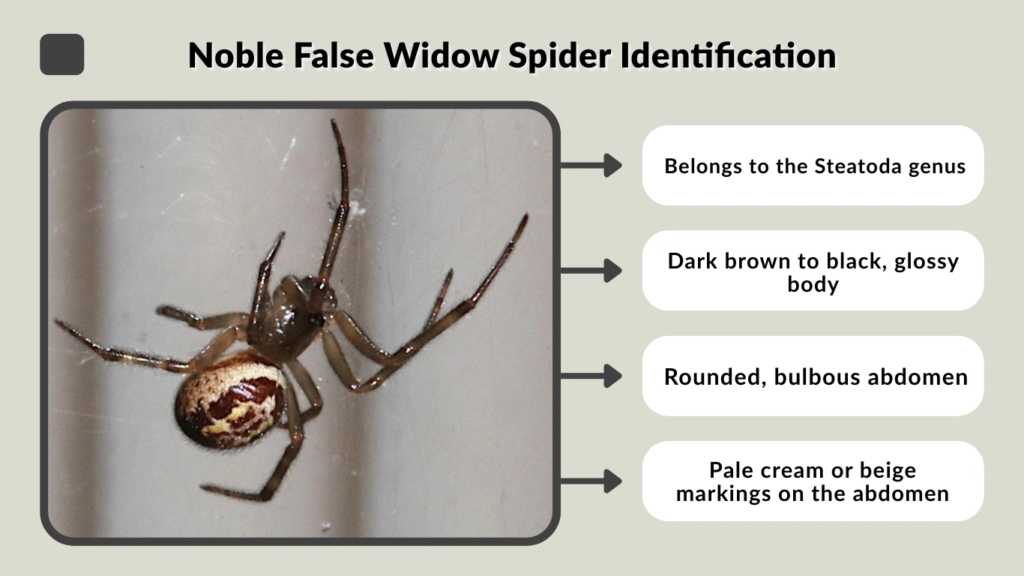
Correct identification is key to avoiding unnecessary fear. The noble false widow has several distinguishing features that set it apart from true widow spiders and other common house spiders.
- Belongs to the Steatoda genus
- Dark brown to black, glossy body
- Rounded, bulbous abdomen
- Pale cream or beige markings on the abdomen
- Long, slender legs
- No red hourglass marking
- Commonly found indoors
Because of these traits, it is often mistaken for a black widow or brown widow spider.
Noble False Widow Skull Marking
One of the most recognizable features of the noble false widow spider is the skull-like marking on its abdomen. This pale pattern can resemble a skull or mask, though its shape varies between individuals. In some spiders, the marking is bold and clear, while in others it may be faint or partially broken. Despite variation, this marking is a strong identification clue.
Noble False Widow Spider Size
The noble false widow is medium-sized compared to other house spiders. Females are noticeably larger than males, which is common among spiders.
| Feature | Noble False Widow |
| Female body length | 9–14 mm |
| Male body length | 7–10 mm |
| Leg span | Up to 40 mm |
| Body shape | Rounded abdomen |
Their size often adds to their intimidating appearance, especially indoors.
Male vs Female Noble False Widow Spider
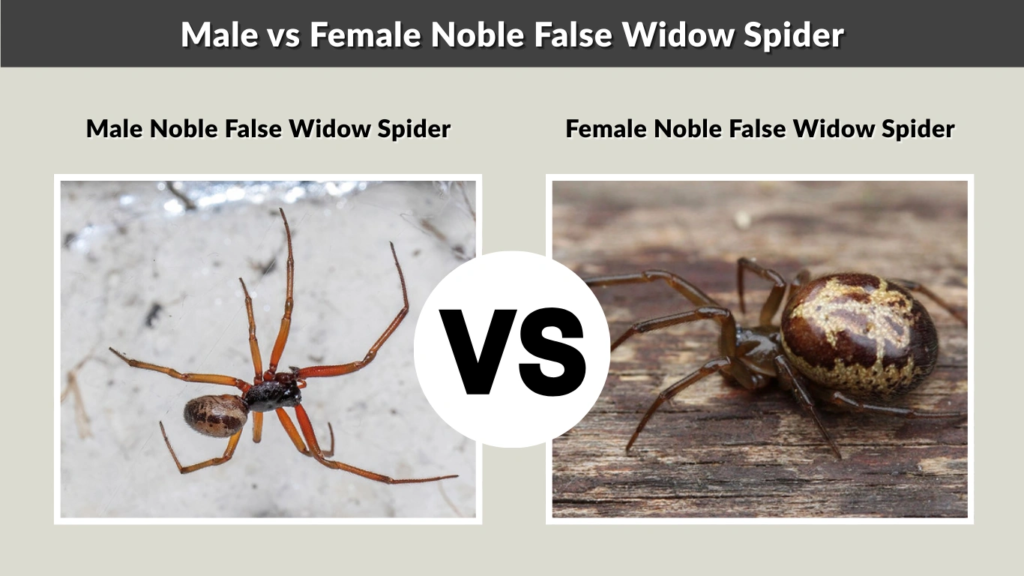
Male and female noble false widow spiders differ in size and behavior, although both are harmless in most situations.
| Feature | Male | Female |
| Size | Smaller | Larger |
| Abdomen | Narrower | Bulbous |
| Behavior | More mobile | More defensive |
| Bite risk | Very low | Slightly higher |
Females are more commonly involved in bite reports simply because they spend more time guarding webs.
Noble False Widow Habitat and Location
The noble false widow spider is highly adaptable and thrives in environments close to humans. It prefers warm, sheltered locations where prey is plentiful.
Indoors, it is commonly found in corners, behind furniture, inside sheds, and near windows or vents. Outdoors, it may live in walls, fences, and garden structures.
Where Are Noble False Widows Found?
The range of the noble false widow has expanded significantly in recent decades.
- United Kingdom (England, Scotland, Wales)
- Ireland
- Western and Southern Europe
- California, including San Diego
- Urban homes, garages, and outbuildings
Its ability to survive indoors has helped it spread beyond its original range.
Noble False Widow Spider Web
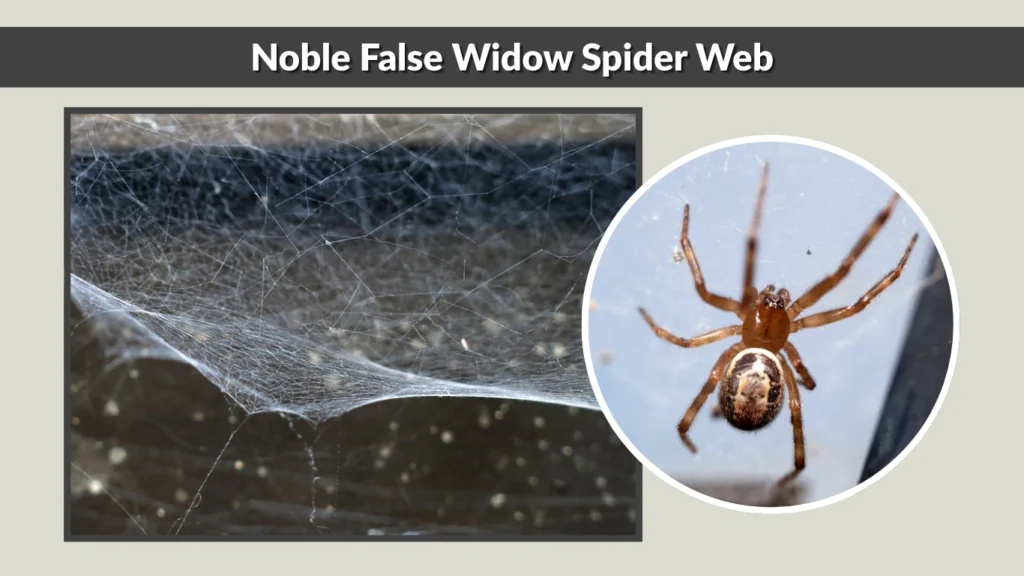
Noble false widows build irregular, tangled cobwebs similar to other Steatoda species. These webs are not symmetrical and often look messy.
- Usually built indoors
- Found in corners and hidden spaces
- Used to trap insects rather than hunt actively
Seeing a web does not indicate aggression, as these spiders rarely leave their webs unless disturbed.
Are Noble False Widow Spiders Dangerous?
Despite their reputation, noble false widow spiders are not considered dangerous to humans. They are shy, non-aggressive, and only bite defensively when trapped or pressed against skin. Most encounters end with the spider retreating rather than attacking.
Are Noble False Widows Venomous or Poisonous?
Noble false widow spiders are venomous, not poisonous. This means they inject venom through a bite rather than being harmful if touched or eaten.
Their venom is relatively mild and far weaker than that of true widow spiders. For most people, it does not cause serious medical issues.
Noble False Widow Spider Bite

Bites from noble false widow spiders are uncommon and usually occur when the spider is accidentally trapped, such as in clothing or bedding. The spider does not seek to bite humans and uses venom primarily to subdue prey.
Noble False Widow Bite Symptoms
When a bite does occur, symptoms are typically mild and localized.
- Short-lasting pain or discomfort
- Redness and swelling
- Itching or burning sensation
- Rare blistering in sensitive individuals
Symptoms usually improve within a few days without treatment.
Can a Noble False Widow Kill You?
There is no confirmed evidence that a noble false widow spider has ever caused a human death. While the species is venomous, its venom is not strong enough to be fatal. Reports suggesting serious danger are usually based on misidentification, allergic reactions, or secondary infections rather than the venom itself.
In extremely rare cases, a bite may cause prolonged discomfort, particularly in individuals with sensitive immune systems. However, these cases are exceptions, and the noble false widow is not considered deadly by medical authorities.
Noble False Widow Lifespan
The lifespan of a noble false widow spider varies depending on sex and environment. Females generally live longer than males, especially when conditions are favorable.
- Females may live up to 3 years
- Males usually live 1–2 years
- Indoor spiders often survive longer than outdoor ones
Stable temperatures and regular food sources inside homes contribute to their longevity.
Noble False Widow Egg Sac
Female noble false widow spiders produce egg sacs that are typically pale or cream-colored and spherical in shape. These egg sacs are usually hidden within the web for protection.
A single egg sac can contain dozens of spiderlings. After hatching, young spiders disperse quickly to avoid cannibalism and competition for food.
What Does a Noble False Widow Eat?
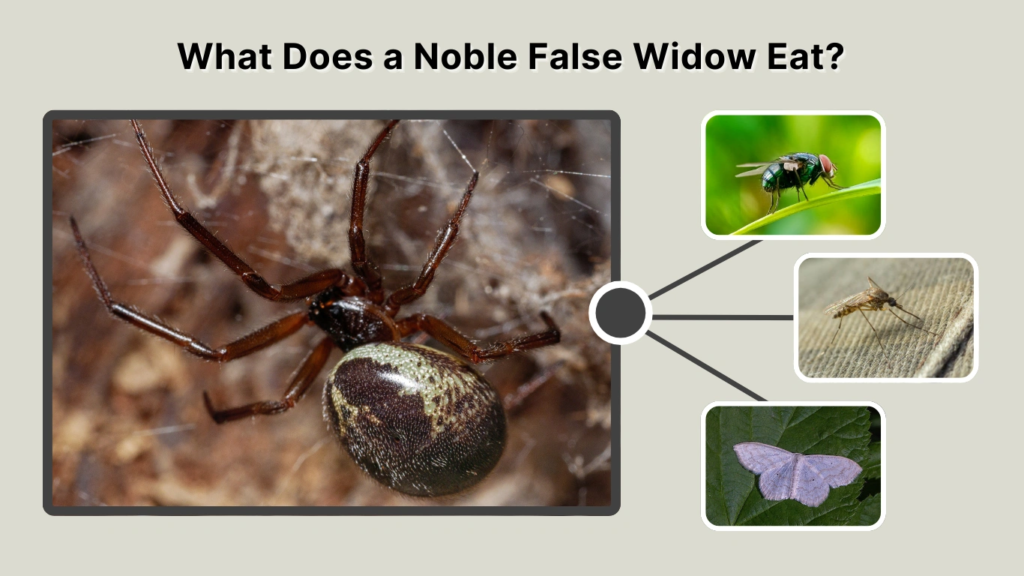
Noble false widow spiders are opportunistic predators and play a useful role in controlling household pests.
- Flies
- Mosquitoes
- Moths
- Beetles
- Other spiders
They rely on their sticky webs to trap prey rather than actively hunting.
Noble False Widow Predators
Despite their intimidating appearance, noble false widows have natural predators.
- Birds
- Larger spiders
- Parasitic wasps
- Lizards in warmer regions
Predation helps keep their populations in balance.
Noble False Widow vs Black Widow
The noble false widow is often confused with true black widows, but the differences are significant.
| Feature | Noble False Widow | Black Widow |
| Genus | Steatoda | Latrodectus |
| Hourglass marking | No | Yes |
| Venom strength | Mild–moderate | Strong |
| Medical risk | Low | High |
| Aggression | Shy | Defensive |
Understanding these differences helps reduce unnecessary fear.
Noble False Widow vs Brown Widow
Brown widows are another species often confused with noble false widows.
- Brown widows have an orange hourglass marking
- Noble false widows lack any hourglass
- Brown widows prefer outdoor habitats
- Noble false widows commonly live indoors
Both species are less dangerous than black widows.
Difference Between False Widow and Noble False Widow
The term “false widow” refers to several species within the Steatoda genus. The noble false widow (Steatoda nobilis) is just one specific species within this group.
Other false widows may look similar but differ in size, markings, and habitat preferences.
How to Get Rid of Noble False Widow Spiders
If noble false widow spiders become unwanted indoors, removal does not require extreme measures.
- Reduce clutter and hiding spots
- Seal cracks and entry points
- Remove webs regularly
- Use humane relocation methods
- Avoid unnecessary pesticide use
Most infestations are small and manageable.
Should I Kill a Noble False Widow?
Killing a noble false widow spider is usually unnecessary. These spiders are not aggressive and help control pests. Relocation is a better option unless the spider poses a specific risk, such as in homes with severe arachnophobia or allergies.
FAQs
Is the noble false widow dangerous?
No. The noble false widow is not considered dangerous, and bites are rare and mild.
Are noble false widows venomous?
Yes, they are venomous, but their venom is far weaker than that of true widow spiders.
How big is a noble false widow spider?
Females can reach up to 14 mm in body length, while males are smaller.
Do noble false widows bite humans?
They can bite defensively if trapped, but bites are uncommon.
Where does the noble false widow live?
They are commonly found in the UK, Ireland, Europe, and parts of California.
Conclusion
The noble false widow spider is often feared due to misinformation and its resemblance to more dangerous species. In reality, it poses little risk to humans and plays a useful role in controlling pests. Proper identification and understanding help reduce fear and unnecessary extermination.
