
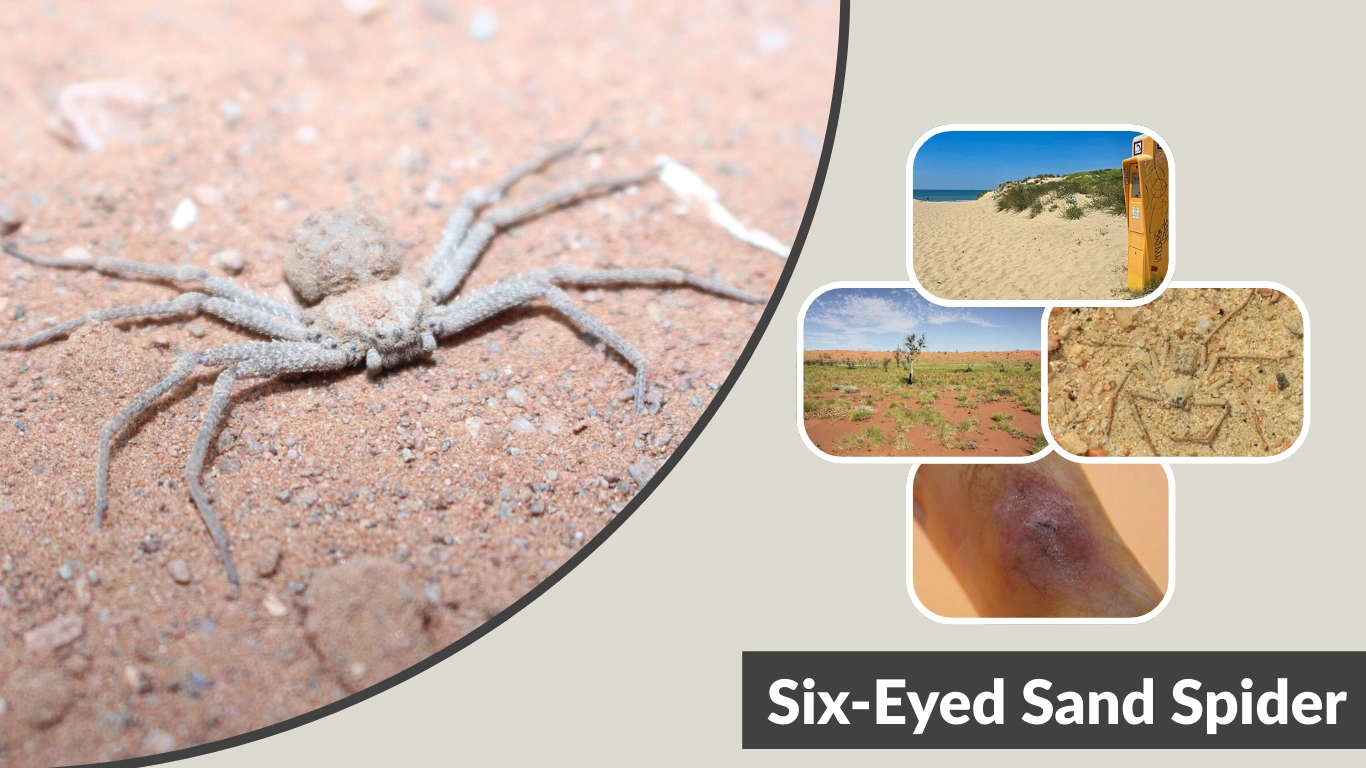
The six-eyed sand spider (Sicarius species), sometimes called the African sand spider, is widely considered one of the most venomous spiders in the world. Its reputation has been amplified by documentaries, viral posts, and dramatic claims about its bite. Found mainly in desert regions, this spider is rarely seen because of its exceptional camouflage and reclusive behavior. Despite its powerful venom, human encounters are extremely uncommon. Understanding its identification, size, habitat, and real danger level helps separate fact from exaggeration.
Identification of the Six-Eyed Sand Spider
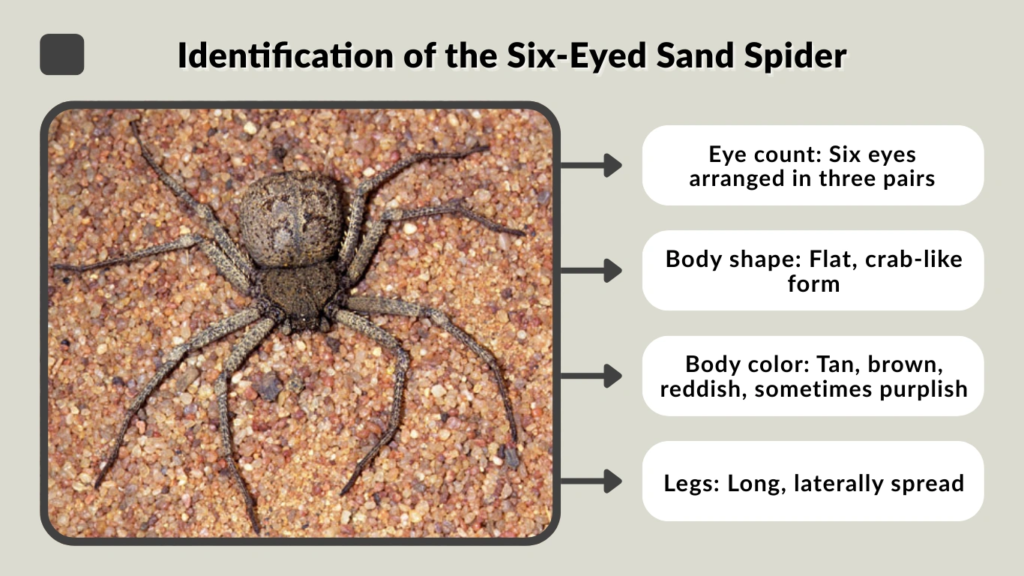
- Scientific genus: Sicarius
- Common names: Six-eyed sand spider, African sand spider
- Eye count: Six eyes arranged in three pairs
- Body shape: Flat, crab-like form
- Body color: Tan, brown, reddish, sometimes purplish
- Legs: Long, laterally spread
- Camouflage ability: Buries itself completely under sand
- Web use: Does not build webs
The six-eyed sand spider has a low, flattened body that allows it to blend seamlessly with desert sand. Its legs spread outward rather than downward, giving it a crab-like appearance. This body structure helps it remain hidden and ambush prey.
Common Names and Search Confusion
The six-eyed sand spider is searched under many names, including six eyed sand spider, 6 eyed sand spider, and six eye sand spider. Misspellings and variations are common due to its popularity in viral content.
What the Six-Eyed Sand Spider Is NOT
Many searches confuse this spider with fictional or unrelated terms such as the Sandman from Spider-Man, sand scorpion spiders, or even mechanical and product-related items. These are not real spiders and have no biological connection to the Sicarius species.
Size and Physical Characteristics
Six-eyed sand spiders are medium-sized spiders, though they often appear much larger in photographs. The average body length ranges from about 8 to 15 millimeters, depending on the species and sex. When the legs are fully extended, the spider can appear significantly larger than its body size suggests.
Females are generally larger and heavier than males, while males tend to have slightly longer legs relative to their bodies. Because of their flat shape and wide leg spread, the spider may look “giant” when photographed on sand or held close to a camera lens. In reality, it is not among the largest spiders in the world.
Habitat and Geographic Range
Natural Habitat
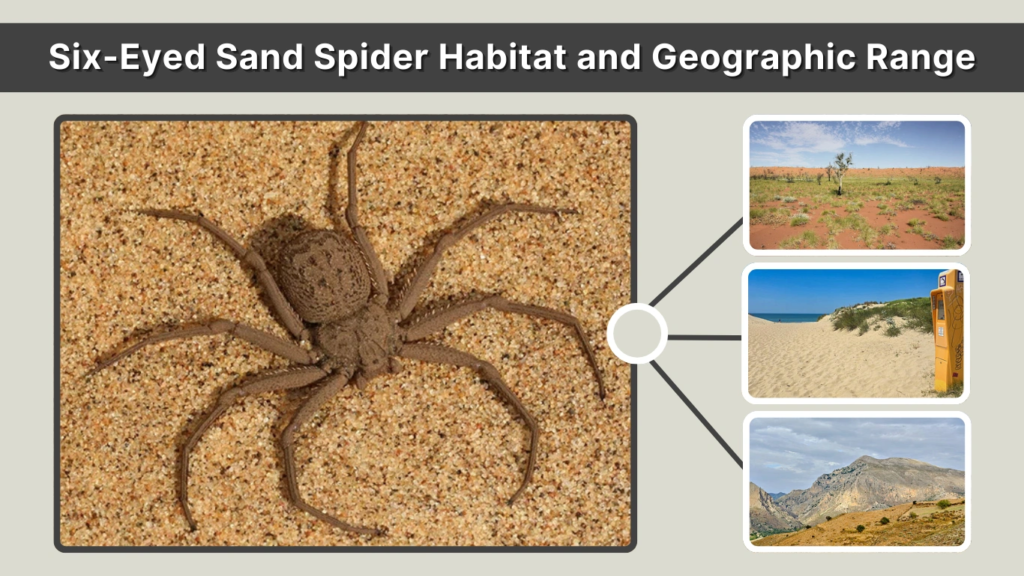
The six-eyed sand spider lives in extremely dry environments. It prefers:
- Sandy deserts
- Dune systems
- Arid scrublands
Unlike many spiders, it does not rely on webs for hunting or shelter. Instead, it depends on camouflage and patience.
Geographic Distribution
The six-eyed sand spider is native primarily to southern Africa, especially regions such as Namibia and parts of South Africa. Closely related Sicarius species also exist in South America, where they inhabit similar desert environments.
Sand Spider in Iraq or Afghanistan?
Claims about sand spiders living in Iraq or Afghanistan are largely unverified. Viral images and stories often misidentify other desert arthropods or unrelated spiders. There is no reliable scientific evidence confirming the presence of six-eyed sand spiders in the Middle East.
Behavior and Camouflage
Six-eyed sand spiders are nocturnal ambush predators. During the day, they bury themselves completely under sand, leaving no visible trace. This behavior protects them from predators and extreme desert temperatures.
At night, the spider waits motionless beneath the surface until prey passes nearby. It does not chase prey or actively roam, which is one reason human encounters are extremely rare. When disturbed, the spider prefers to remain still or retreat rather than attack.
Diet and Hunting Method
The diet of the six-eyed sand spider consists mainly of insects and other small arthropods. Once prey comes within reach, the spider strikes quickly and injects venom to immobilize it. The venom begins breaking down tissues, allowing the spider to feed efficiently.
This ambush hunting method reduces energy use and suits the harsh desert environment where food can be scarce.
Six-Eyed Sand Spider Bite
Do Six-Eyed Sand Spiders Bite Humans?
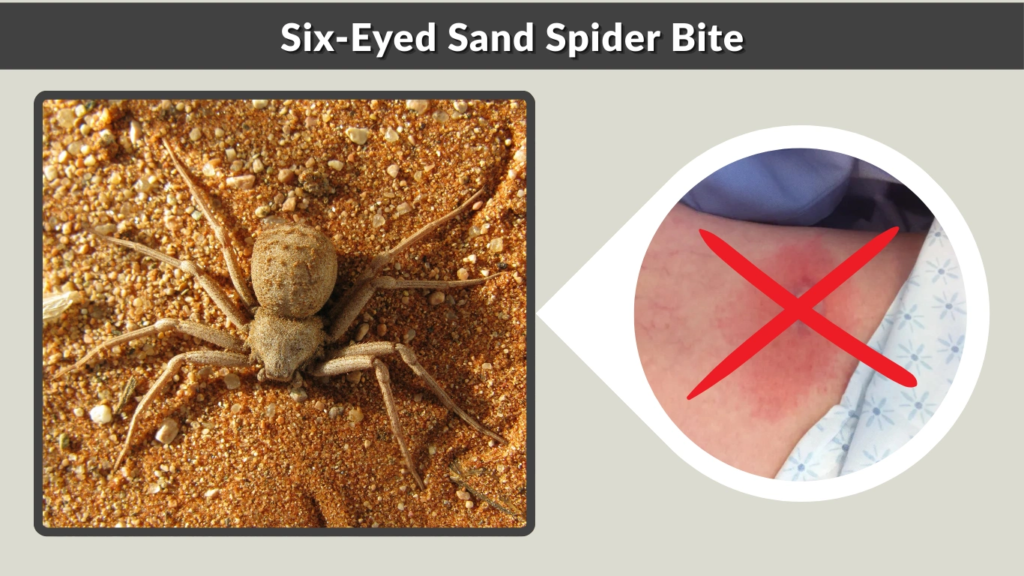
Bites from six-eyed sand spiders are extremely rare. These spiders are not aggressive and will only bite if directly handled or severely threatened. Because they spend most of their lives buried in sand, opportunities for human contact are minimal.
Six-Eyed Sand Spider Bite Symptoms
When bites do occur, they are considered medically serious. Reported and studied effects include:
- Severe tissue damage
- Necrosis at the bite site
- Potential internal bleeding
- Symptoms that may develop slowly over time
Because confirmed human bite cases are very limited, much of the information comes from laboratory studies rather than real-world incidents.
Sand Spider Bite Pictures and Misidentification
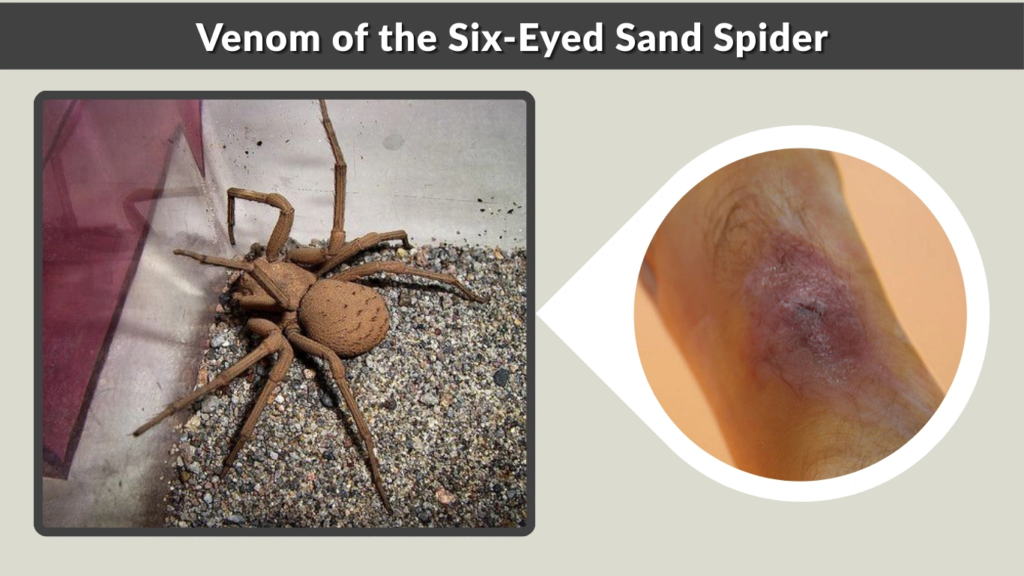
Authentic images of confirmed six-eyed sand spider bites are extremely rare. Most photos circulating online are either speculative or completely unrelated skin injuries. Because symptoms can develop slowly and resemble infections or other arthropod bites, accurate identification without laboratory confirmation is difficult. This lack of documented cases has contributed to myths and exaggerated claims about the spider’s danger.
Venom of the Six-Eyed Sand Spider
Six-Eyed Sand Spider Venom Explained
The venom of the six-eyed sand spider is considered one of the most potent among spiders. It contains powerful cytotoxic and hemolytic compounds. Cytotoxins damage tissue at the bite site, while hemolytic components destroy red blood cells and disrupt normal blood function.
Laboratory studies on animals have shown that the venom can cause severe tissue breakdown and internal bleeding. However, these studies often involve direct venom injection under controlled conditions, which does not always reflect real-world bite scenarios.
Can a Six-Eyed Sand Spider Kill You?
There are no confirmed human deaths caused by a six-eyed sand spider bite. While the venom is theoretically capable of causing severe complications, the rarity of bites and the small amount of venom delivered reduce the overall risk. Prompt medical treatment would be critical in any suspected bite case, even though actual encounters are exceptionally uncommon.
Is the Six-Eyed Sand Spider Dangerous?
The six-eyed sand spider is extremely venomous but not especially dangerous in practical terms. Danger depends on both venom potency and the likelihood of exposure. This spider is reclusive, non-aggressive, and lives in remote desert environments where human contact is rare.
Compared to more commonly encountered spiders, such as brown recluses or widows, the six-eyed sand spider poses a much lower real-world risk despite its powerful venom. Fear surrounding this species is often driven by its reputation rather than actual bite statistics.
Comparison With Similar Spiders
Six-Eyed Sand Spider vs Brown Recluse
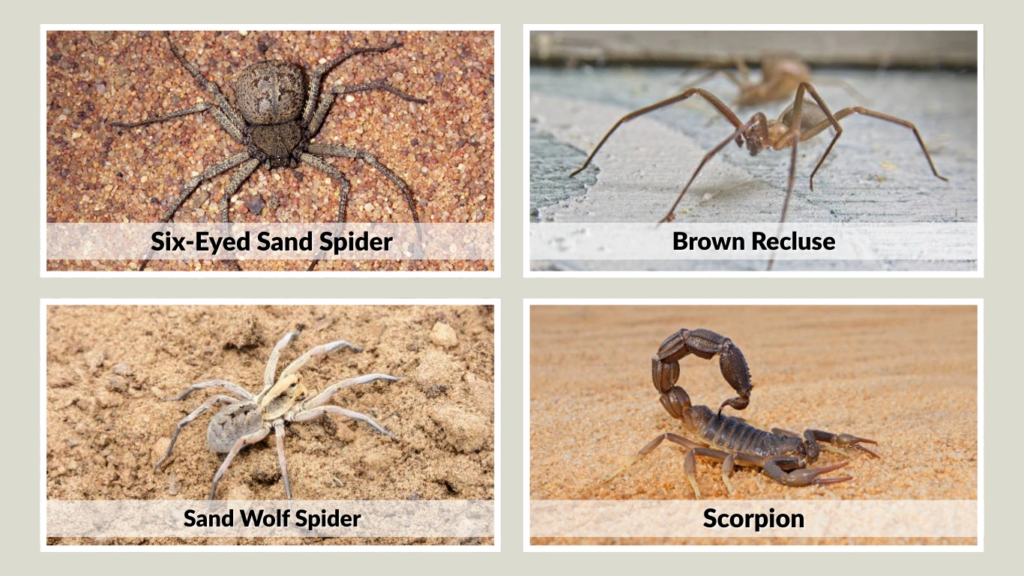
The brown recluse is far more likely to bite humans due to its proximity to homes. While both spiders possess necrotic venom, the six-eyed sand spider’s venom is stronger in laboratory tests. However, recluse bites are far more common and therefore pose a greater public health concern.
Six-Eyed Sand Spider vs Sand Wolf Spider
Sand wolf spiders are fast-moving hunters commonly found in sandy environments. Unlike the six-eyed sand spider, they are not medically dangerous and rely on speed rather than venom potency. Sand wolf spiders are also much more likely to be encountered by humans.
Six-Eyed Sand Spider vs Scorpion
Although both are venomous desert arthropods, scorpions are responsible for far more human envenomations worldwide. Scorpions actively roam and sting defensively, while the six-eyed sand spider remains hidden and passive.
Six-Eyed Sand Spider in the United States
Claims of six-eyed sand spiders living in the United States are not supported by scientific evidence. Reports from places such as Michigan or Florida are almost always misidentifications of harmless native spiders. The six-eyed sand spider’s survival depends on extreme desert conditions not found in North America.
Lifespan and Natural Predators
Lifespan
Six-eyed sand spiders are believed to have relatively long lifespans for spiders, potentially living several years. Their slow metabolism and ambush hunting strategy allow them to survive in harsh desert environments with limited food.
Natural Predators
Despite their camouflage, these spiders are preyed upon by birds, reptiles, and small mammals. Environmental factors such as extreme heat and lack of prey also limit survival.
Can You Keep a Six-Eyed Sand Spider as a Pet?
Keeping a six-eyed sand spider as a pet is strongly discouraged. These spiders are dangerous, difficult to care for, and often protected by wildlife regulations. Any listings claiming to sell them are either illegal, misleading, or involve misidentified species. Ethical and safety concerns far outweigh any novelty value.
Interesting Facts About the Six-Eyed Sand Spider
- One of the most venomous spiders known to science
- Rarely seen due to exceptional camouflage
- Does not build webs
- Often exaggerated in media and viral content
FAQs
Is the six-eyed sand spider the most dangerous spider?
It is among the most venomous spiders, but not the most dangerous in real-world terms due to its rarity and reclusive nature.
Can a six-eyed sand spider kill a human?
There are no confirmed human deaths. While the venom is powerful, bites are extremely rare.
Where do six-eyed sand spiders live?
They are primarily found in deserts of southern Africa, with related species in South America.
Are six-eyed sand spiders found in Iraq or Afghanistan?
No verified evidence supports their presence in the Middle East. Most reports are misidentifications.
How can you identify a six-eyed sand spider?
Look for a flat, crab-like body, six eyes in pairs, sand camouflage, and absence of webs.
Conclusion
The six-eyed sand spider is a fascinating yet misunderstood species. While its venom is among the most potent in the spider world, its reclusive behavior and remote habitat make human encounters exceptionally rare. By separating scientific facts from viral myths, it becomes clear that respect—not fear—is the most appropriate response to this remarkable desert spider.
