
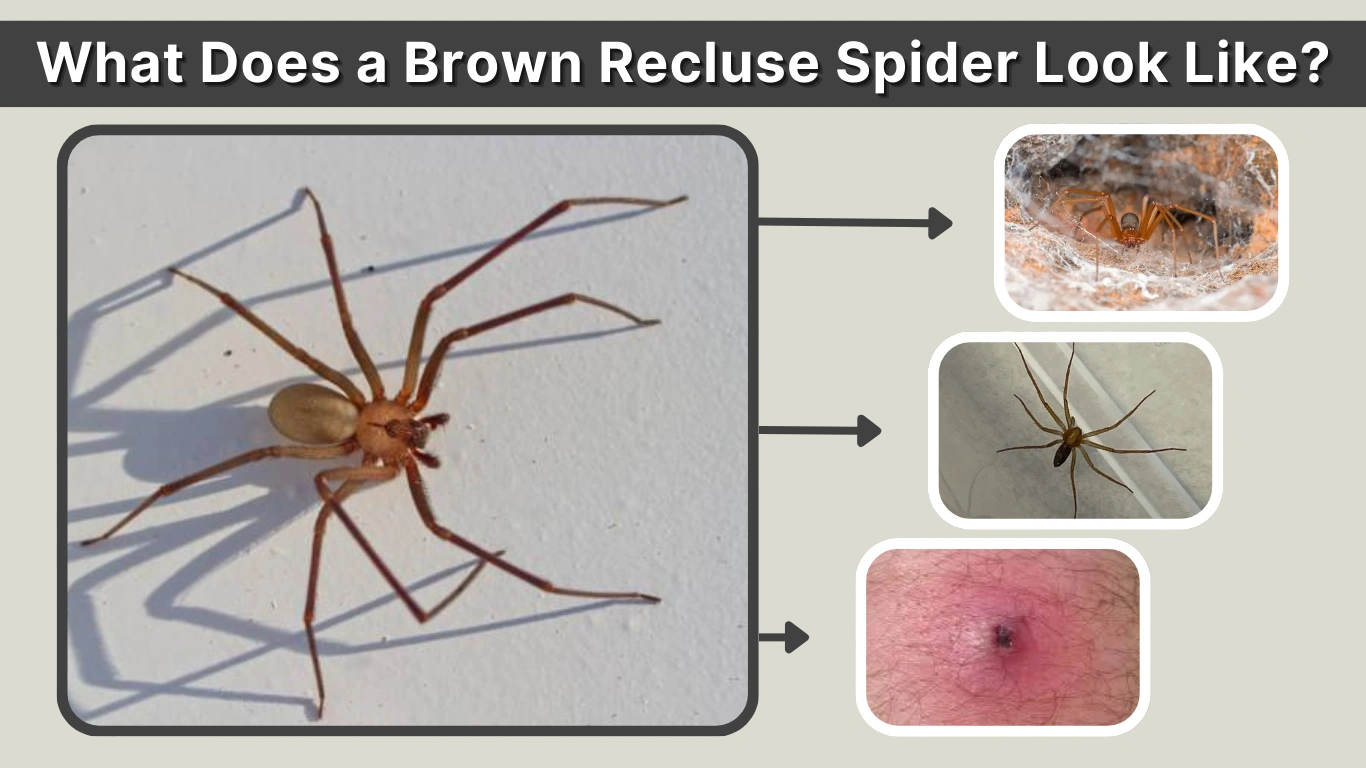
Brown recluse spiders are among the most searched and misunderstood spiders in North America. Many people look them up after finding a suspicious spider indoors or waking up with an unexplained bite. Because several harmless spiders look similar, brown recluse spiders are often misidentified. Understanding what a brown recluse spider actually looks like—along with its web, eggs, and early bite symptoms—helps prevent unnecessary fear and medical confusion. Accurate identification is essential, especially since true brown recluse spiders are limited to specific regions.
Identification: What a Brown Recluse Spider Looks Like
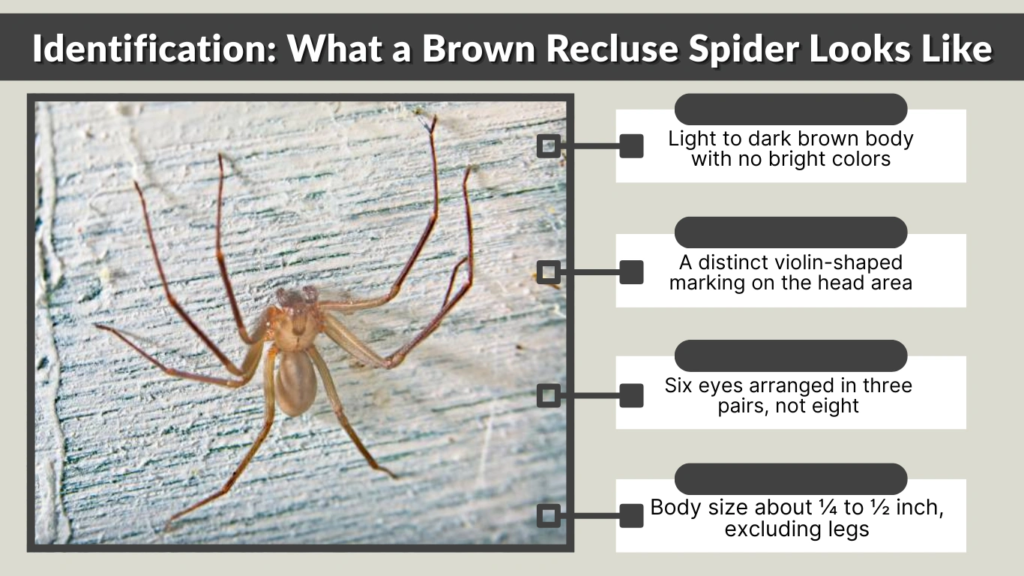
- Light to dark brown body with no bright colors
- A distinct violin-shaped marking on the head area
- Six eyes arranged in three pairs, not eight
- Long, thin legs without stripes or bands
- Body size about ¼ to ½ inch, excluding legs
One of the most reliable identifiers is the eye pattern. Most spiders have eight eyes, but brown recluse spiders have only six, arranged in three pairs.
What Does a Brown Recluse Spider Look Like Up Close
When viewed up close, a brown recluse spider has a smooth, almost velvety body without thick hair. The violin-shaped marking—often called a “fiddle”—points toward the abdomen and is darker than the rest of the body. The legs are slender and evenly colored, lacking the banding seen in many other spider species.
Up-close identification is where most mistakes happen. Many brown house spiders appear similar in color but have eight eyes, patterned legs, or hairy bodies. Without magnification, people often assume any brown spider is a brown recluse, which is rarely the case.
Male vs Female Brown Recluse Spider Appearance
Male and female brown recluse spiders look very similar, making them difficult to tell apart without experience. Females are usually slightly larger and have a rounder abdomen, especially during reproductive periods. Males tend to have slimmer bodies and slightly longer legs in proportion to their size.
These differences are subtle and not reliable for casual identification. Both sexes share the same violin marking, eye arrangement, and overall coloration.
What Does a Baby or Young Brown Recluse Spider Look Like
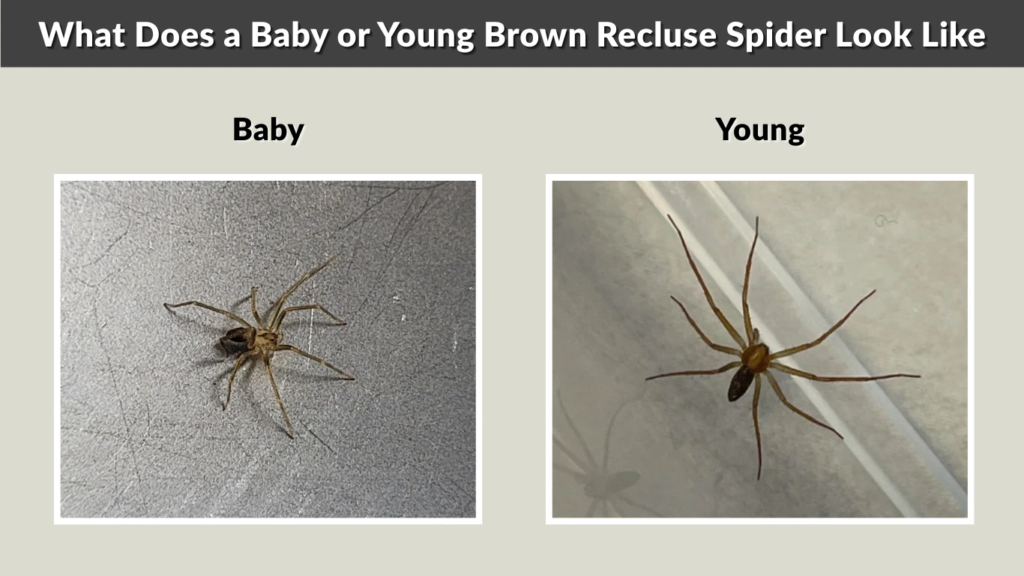
Juvenile brown recluse spiders are much smaller and lighter in color than adults. Their violin marking may be faint or not fully developed, which makes identification even more challenging. Baby brown recluses still have six eyes, but this feature is nearly impossible to observe without magnification.
Because of their size and pale appearance, young brown recluse spiders are commonly mistaken for harmless house spiders or cellar spiders. This leads to many false reports, especially in areas where brown recluses are not native.
What Does a Pregnant Brown Recluse Spider Look Like
A pregnant brown recluse spider has a noticeably enlarged abdomen, giving it a fuller and rounder appearance. During this stage, the spider may move more slowly and spend more time hidden in undisturbed areas. Sightings sometimes increase indoors because females seek secure places to lay egg sacs.
Despite the larger abdomen, the spider’s legs, eye pattern, and violin marking remain unchanged.
What Does a Dead Brown Recluse Spider Look Like
After death, a brown recluse spider’s legs often curl inward toward the body. The color may darken slightly, and the body can shrink as it dries out. These changes make accurate identification more difficult, especially when key features like eye arrangement are no longer easy to examine.
Dead spiders are frequently misidentified because posture and coloration can change significantly after death.
What Does a Brown Recluse Spider Web Look Like

Brown recluse spiders do not build classic webs to catch prey. Their webs are irregular, messy, and cotton-like in appearance. These webs are typically used as resting areas rather than hunting tools.
You may find brown recluse webs in:
- Corners of closets
- Basements and attics
- Storage boxes
- Behind furniture
Unlike orb-weaver webs, brown recluse webs have no symmetrical pattern and often go unnoticed.
What Does a Brown Recluse Spider Nest Look Like
Brown recluse spiders do not build true nests. Instead, they hide in sheltered locations such as cardboard boxes, shoes, folded clothing, wall voids, and woodpiles. These hiding spots protect them from disturbance and predators.
What people often call a “nest” is usually just a quiet resting area near a web or egg sac.
What Does a Brown Recluse Spider Egg Sac Look Like
Brown recluse egg sacs are small, round to slightly oval, and off-white or pale tan in color. Each egg sac can contain 40 to 50 eggs and is typically hidden in dark, undisturbed areas close to where the female spider rests.
Egg sacs are rarely seen unless storage areas are disturbed, which is why infestations often go unnoticed.
Geographic Range and Appearance Variations
What Does a Brown Recluse Spider Look Like in California
Brown recluse spiders are not native to California, and confirmed populations are extremely rare. Most spiders identified as brown recluses in California turn out to be harmless species such as cellar spiders, desert recluses, or wolf spiders. Even when a spider looks similar in color, true brown recluses are primarily found in the central and southern United States.
Because of this, bite cases reported in California are often misdiagnosed skin infections rather than spider bites.
What Does a Brown Recluse Spider Bite Look Like (Overview)
Brown recluse spider bites vary widely in appearance and severity. In many cases, the bite is mild or goes unnoticed. Only a small percentage develop serious symptoms. The bite typically changes over time, which is why early identification can be misleading.
What Does a Brown Recluse Spider Bite Look Like Initially
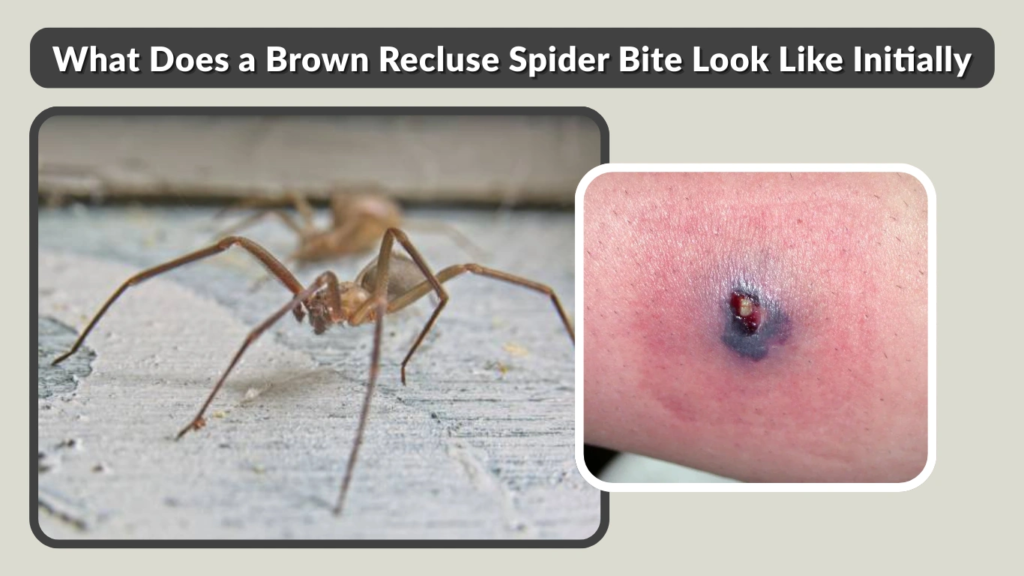
In the first few hours, a brown recluse spider bite may appear minor or show no symptoms at all. Early signs often include:
- Mild redness
- Slight swelling
- A small puncture mark
- Minimal pain or burning sensation
Many people do not realize they have been bitten at this stage.
What Does a Fresh Brown Recluse Spider Bite Look Like
Within several hours, the bite area may begin to change. A fresh bite often shows a pale or whitish center surrounded by redness. The skin may feel warm, tender, or itchy. Pain can slowly increase but is usually still manageable.
At this stage, the bite can resemble an insect sting or allergic reaction, leading to frequent misidentification.
What Does a Brown Recluse Spider Bite Look Like After 24–72 Hours
As the bite progresses, more distinct symptoms may appear:
- A “bullseye” or red, white, and blue pattern
- Blister formation
- Increasing pain and inflammation
- Darkening skin at the center
In moderate cases, the blister may break open, forming a slow-healing wound.
What Does a Systemic Brown Recluse Spider Bite Look Like
Systemic reactions are rare but serious. Symptoms may include:
- Fever and chills
- Nausea or vomiting
- Fatigue and muscle pain
- Widespread rash
In severe cases, tissue damage (necrosis) can occur, requiring medical treatment. Children, elderly individuals, and those with weakened immune systems are at higher risk.
Brown Recluse Bite vs Other Spider Bites
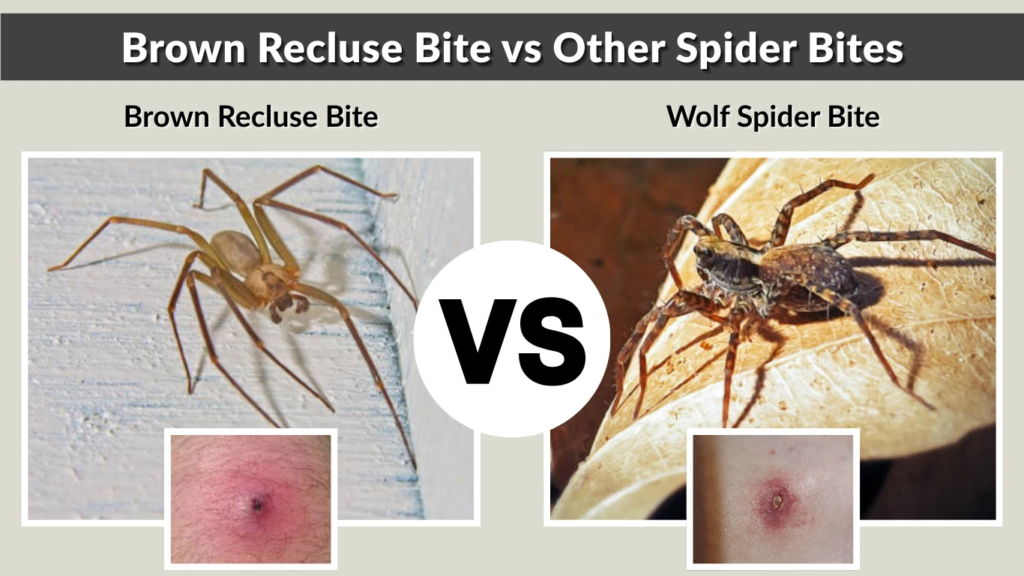
| Feature | Brown Recluse Bite | Wolf Spider Bite |
| Initial pain | Mild or none | Immediate pain |
| Skin damage | Possible necrosis | Rare |
| Blistering | Common in severe cases | Uncommon |
| Systemic symptoms | Possible | Rare |
Many spider bites blamed on brown recluses are actually caused by bacteria, mites, or other insects.
Wolf Spider vs Brown Recluse: Key Visual Differences
Wolf spiders are often mistaken for brown recluses, but they are very different. Wolf spiders are larger, hairier, and have eight eyes arranged in three rows. Their legs are thicker and often banded, and their eyes reflect light at night.
Brown recluse spiders, by contrast, have smooth bodies, thin legs, six eyes, and a uniform brown color. Wolf spiders are also active hunters, while brown recluses are shy and avoid humans.
Common Myths About Brown Recluse Spiders
One common myth is that all brown spiders are brown recluses. In reality, hundreds of brown spider species exist, and very few are medically significant. Another myth is that every necrotic wound is caused by a brown recluse bite. Many skin infections, including MRSA, are incorrectly blamed on spiders.
Brown recluses are also not aggressive and usually bite only when trapped against skin.
When to Seek Medical Attention
You should seek medical care if a suspected bite:
- Becomes increasingly painful
- Develops an open wound
- Shows signs of infection
- Causes fever or systemic symptoms
Early evaluation helps rule out other conditions and ensures proper treatment.
FAQs
How can I tell if a spider is really a brown recluse?
Look for six eyes, a violin-shaped marking, smooth legs, and confirm that you are within the spider’s native range. Most sightings outside this range are misidentifications.
Are brown recluse spiders dangerous to humans?
Most bites are mild, but some can cause serious skin damage. Severe reactions are uncommon and rarely life-threatening.
Do brown recluse spiders live in beds or clothing?
They prefer dark, undisturbed areas but may hide in clothing, shoes, or bedding left unused for long periods.
How long does a brown recluse spider bite take to heal?
Mild bites may heal in a few days, while severe bites can take weeks or months depending on tissue damage.
Can a brown recluse spider bite be misdiagnosed?
Yes. Many bites are actually skin infections, allergic reactions, or insect stings rather than spider bites.
