
Brown recluse spider bites are widely discussed—and often misunderstood. While these spiders are small and shy, their bites can sometimes cause significant local tissue damage and, in rare cases, systemic illness. Understanding the true range of symptoms, how they evolve over time, and which signs warrant urgent medical care is essential for accurate recognition and appropriate response.
This article focuses exclusively on symptoms associated with brown recluse spider bites, from early skin changes to uncommon but serious whole-body reactions.
Overview of Brown Recluse Bites
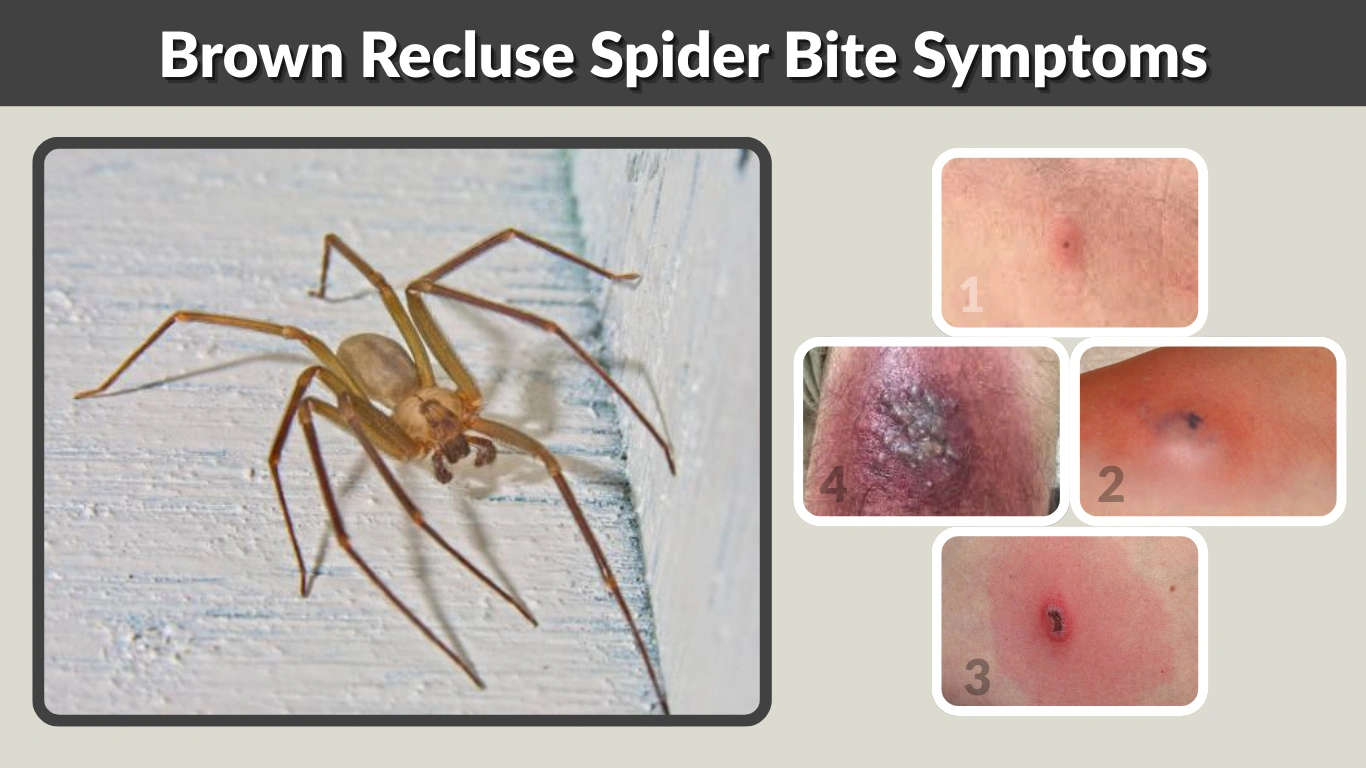
Brown recluse spiders typically bite only when trapped against the skin, such as in clothing, bedding, or shoes. Many bites initially feel mild or go unnoticed. Symptoms often develop gradually, sometimes worsening over hours or days.
Importantly, not all bites cause severe reactions. Many heal with minimal intervention, while others progress to necrotic (tissue-damaging) lesions.
Early Symptoms (First 2–8 Hours)
Mild or Absent Initial Sensation
- Often painless at first
- Some people notice a slight pinch or stinging feeling
- Bite may go unnoticed entirely
Local Skin Reactions
Within several hours, the bite site may show:
- Redness (erythema)
- Mild swelling
- Warmth around the area
- Itching or tingling
These early symptoms are nonspecific and resemble many other insect bites, which is why brown recluse bites are frequently misdiagnosed.
Progressive Local Symptoms (6–72 Hours)
As venom effects intensify, symptoms may become more distinct.
Increasing Pain
- Pain often increases gradually rather than suddenly
- Can range from dull aching to sharp or burning sensations
- Pain may spread beyond the original bite site
Characteristic Skin Changes
A hallmark pattern may develop:
- Central pale or bluish area (due to reduced blood flow)
- Surrounded by redness
- Sometimes described as a “red, white, and blue” appearance
Blister Formation
- A small blister may appear at the center
- Blister may rupture, leaving an open sore
Necrotic Skin Symptoms (Days 3–10)
In some cases, venom causes destruction of skin and underlying tissue.
Tissue Breakdown
- Development of a dark, scab-like area (eschar)
- Surrounding skin may appear bruised or purplish
- Ulcer may deepen over time
Open Ulceration
- Wound may expand to several centimeters
- Edges often irregular
- Healing can take weeks to months
Local Infection Signs
Although the venom itself is sterile, secondary infection may cause:
- Increased redness spreading outward
- Pus or drainage
- Foul odor
- Fever localized to wound area
Systemic (Whole-Body) Symptoms
Systemic symptoms are uncommon but more likely in children, older adults, and individuals with underlying health conditions.
Flu-Like Symptoms
- Fever and chills
- Fatigue or weakness
- Headache
- Muscle aches
Gastrointestinal Symptoms
- Nausea
- Vomiting
- Abdominal pain
Blood and Immune Reactions (Rare)
In very rare cases, venom can trigger:
- Breakdown of red blood cells (hemolysis)
- Anemia
- Dark or reddish urine
- Yellowing of skin or eyes (jaundice)
These symptoms typically appear 2–7 days after the bite and require immediate medical evaluation.
Severe and Rare Complications
Although extremely uncommon, serious complications may occur.
Systemic Loxoscelism
A rare syndrome involving widespread venom effects:
- High fever
- Severe malaise
- Rash across the body
- Joint pain
- Organ involvement (especially kidneys)
Kidney Injury
- Reduced urine output
- Swelling in legs or face
- Elevated blood markers on testing
Such complications are medical emergencies.
Symptoms in Children vs. Adults
Children often experience more intense systemic symptoms relative to body size:
- Faster onset of fever
- Greater risk of hemolysis
- Increased fatigue and irritability
Adults are more likely to experience localized necrotic wounds, especially on fatty areas such as thighs or buttocks.
What Brown Recluse Bites Do Not Usually Cause
Understanding what is unlikely can help avoid misdiagnosis:
- Immediate severe pain (more typical of bee or wasp stings)
- Rapid swelling of lips or throat (suggests allergic reaction)
- Spreading rash within minutes (suggests allergic or infectious cause)
Many conditions—including infections, allergic reactions, and other spider bites—are commonly mistaken for brown recluse bites.
Timeline Summary of Symptoms
0–8 hours
- Mild or no pain
- Redness, slight swelling
6–72 hours
- Increasing pain
- Color changes
- Blistering
3–10 days
- Possible necrosis
- Ulcer formation
- Risk of secondary infection
Days to weeks
- Gradual healing
- Possible scarring
When Symptoms Require Immediate Medical Care
Seek urgent evaluation if any of the following occur:
- Rapidly expanding ulcer or blackened tissue
- Fever, chills, or vomiting
- Severe pain not improving
- Dark urine or yellowing of skin
- Bite in a child with worsening symptoms
- Signs of infection (pus, spreading redness)
Long-Term Effects and Healing
Most brown recluse bites heal fully, but some leave:
- Permanent scarring
- Skin discoloration
- Sensitivity at the site
Healing time varies widely—from a few weeks to several months—depending on severity and individual health.
Final Thoughts
Brown recluse spider bite symptoms range from mild skin irritation to rare systemic illness. The key characteristics are delayed onset, progressive skin changes, and, in some cases, tissue necrosis. While alarming photos often circulate online, severe outcomes are uncommon. Accurate recognition of symptoms and timely medical evaluation—especially for worsening or systemic signs—are the most important steps in ensuring safe recovery.
