
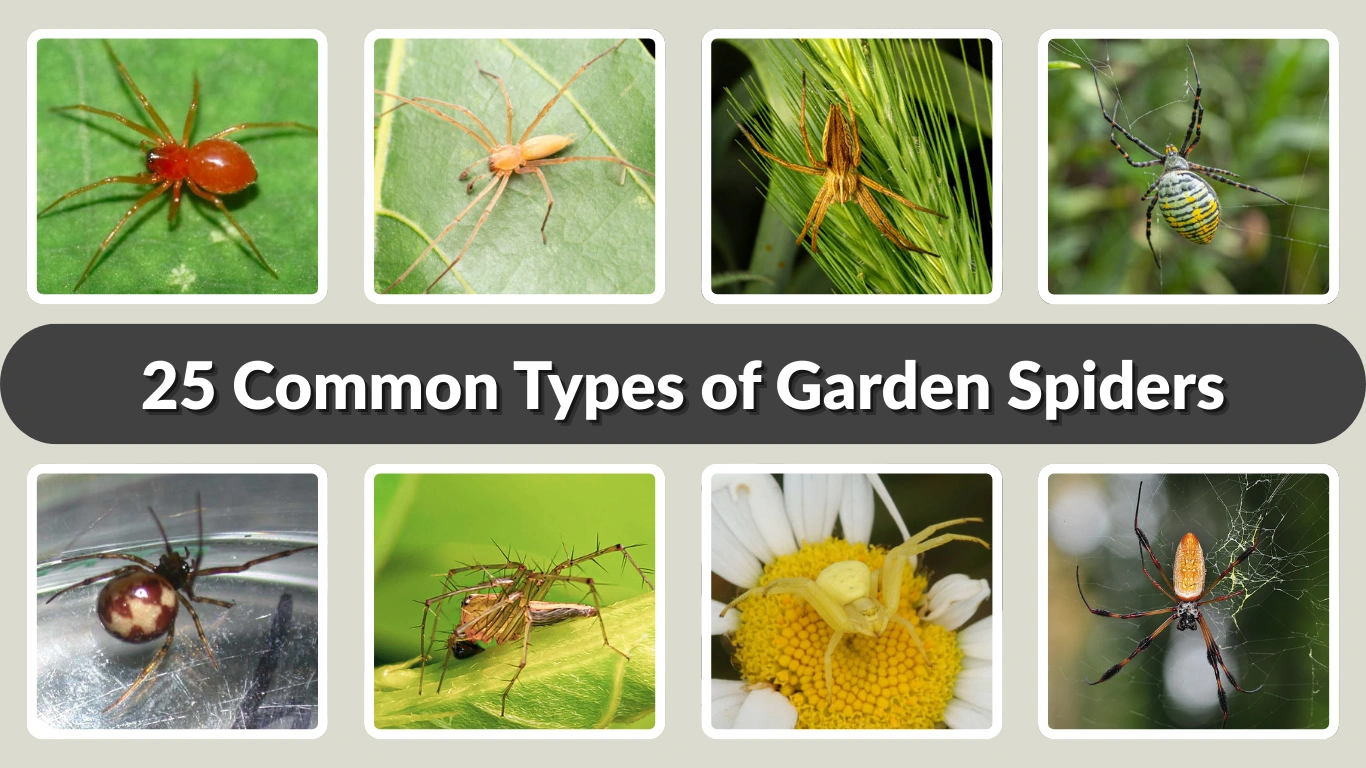
Garden spiders are a fascinating and diverse group of arachnids commonly found in backyards, gardens, farms, and green spaces. They come in many shapes, sizes, and colors, with behaviors ranging from intricate web-building to active hunting. Despite their often misunderstood reputation, most garden spiders are harmless to humans and highly beneficial to the ecosystem. By feeding on insects like flies, mosquitoes, aphids, and beetles, they help control pests naturally. This guide explores 25 common types of garden spiders, highlighting their key characteristics and behaviors to help you better understand and appreciate them.
1. Common Garden Spider
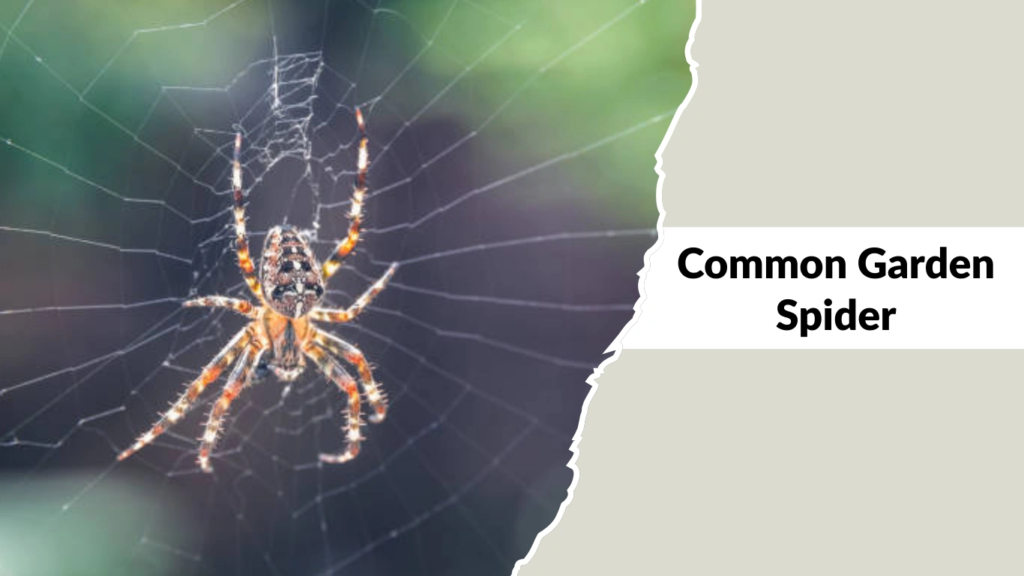
The common garden spider is one of the most familiar spiders found in gardens and yards. Known for its striking web and calm behavior, it plays an important role in controlling insect populations and is generally harmless to humans.
Identification
- Medium to large-sized spider
- Rounded abdomen with white or pale markings
- Colors range from brown and gray to orange
- Long, banded legs with fine hairs
Habitat
Common garden spiders are typically found outdoors in gardens, shrubs, tall grasses, fences, and around buildings. They prefer open spaces where they can anchor large webs between plants or structures. These spiders are most active during late summer and early autumn.
Diet
Their diet mainly consists of flying insects such as flies, mosquitoes, moths, beetles, and wasps. By trapping these pests in their webs, garden spiders help maintain a natural balance in garden ecosystems.
Web and Nesting Behavior
This spider is best known for its large, circular orb-shaped web, often featuring a distinct zigzag pattern in the center. The web is usually rebuilt daily and is used to capture prey efficiently. Garden spiders do not build nests; instead, females lay eggs in silk sacs that are attached to plants or hidden in protected areas to overwinter.
2. Yellow Garden Spider
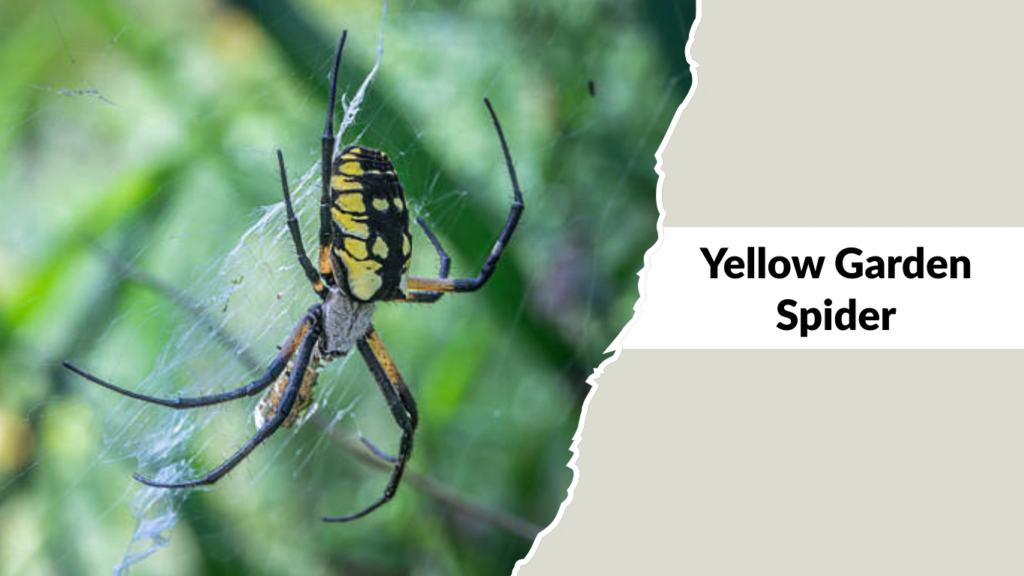
The yellow garden spider is a striking and easily recognizable garden species, admired for its bold coloration and impressive web. Despite its intimidating appearance, it is non-aggressive and beneficial for pest control.
Identification
- Large spider with a black-and-yellow patterned abdomen
- Females are significantly larger than males
- Long legs, often held in pairs
- Silvery hairs on the cephalothorax
Habitat
Yellow garden spiders are commonly found in gardens, fields, farms, and along fences or tall vegetation. They favor sunny, open areas where flying insects are abundant. These spiders usually appear in mid to late summer and remain until the first frost.
Diet
They primarily feed on flying insects such as grasshoppers, flies, bees, moths, and wasps. Once prey is caught in the web, the spider quickly immobilizes it with silk and venom before feeding.
Web and Nesting Behavior
This species builds a large, circular orb web with a distinctive zigzag silk pattern known as a stabilimentum in the center. The web is typically positioned vertically between plants. Females produce one or more egg sacs in late summer or fall, attaching them to nearby vegetation. The eggs overwinter, hatching the following spring.
3. Barn Spider
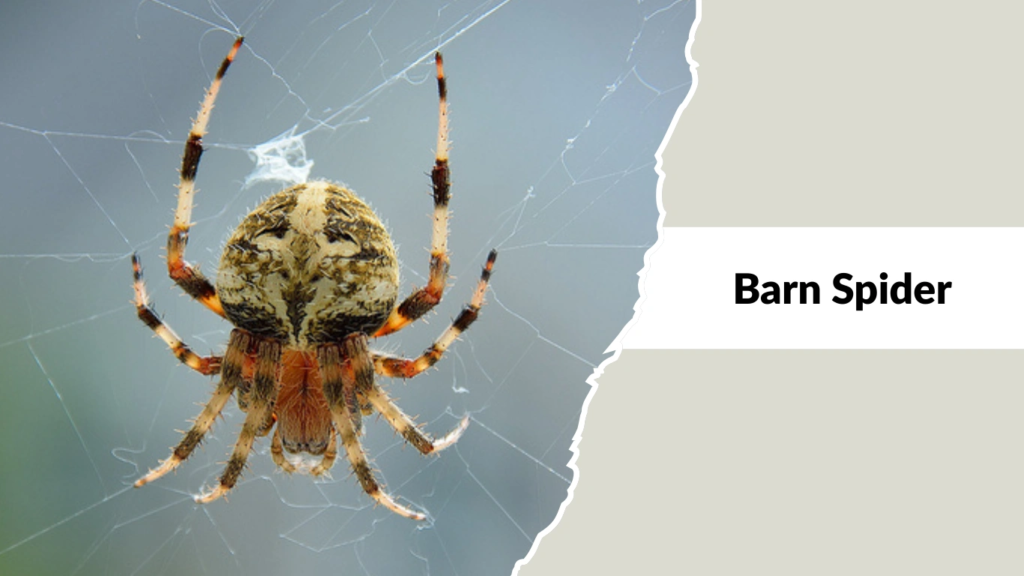
The barn spider is a common outdoor spider often seen around rural buildings, gardens, and fences. It is known for its large web and nighttime activity, helping reduce insect populations naturally.
Identification
- Medium to large-sized spider
- Brown, tan, or gray body with mottled markings
- Rounded abdomen with subtle patterning
- Long, sturdy legs with fine hairs
Habitat
Barn spiders are frequently found around barns, sheds, gardens, woodpiles, and exterior walls of buildings. They prefer quiet, undisturbed areas where they can stretch large webs. During the day, they usually hide in nearby crevices or vegetation and become active at night.
Diet
Their diet includes flies, mosquitoes, moths, beetles, and other night-flying insects. By feeding on common pests, barn spiders contribute to a healthier garden and farm environment.
Web and Nesting Behavior
Barn spiders construct large, circular orb webs, usually rebuilt each evening. The web is often positioned across open spaces to catch flying insects efficiently. Unlike some spiders, they typically remove and recycle the web each morning. Females produce egg sacs in protected areas such as cracks in wood or under eaves, where the eggs remain until hatching in the next season.
4. Orb-Weaver Spider
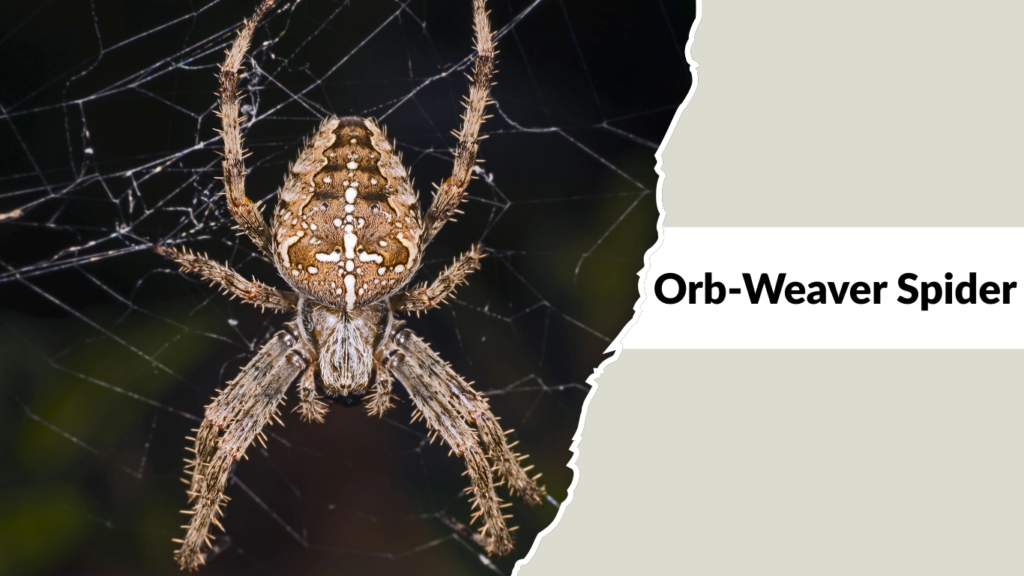
Orb-weaver spiders are a large and diverse group commonly seen in gardens, parks, and wooded areas. They are best known for spinning the classic spiral-shaped webs often associated with spiders in nature.
Identification
- Medium to large-sized spider
- Rounded or oval abdomen
- Body colors vary widely (brown, yellow, orange, gray, or black)
- Legs are long and often banded or spiny
Habitat
Orb-weaver spiders thrive in gardens, forests, meadows, and around homes. They prefer areas with good airflow and plenty of flying insects. These spiders are usually found suspended in their webs between plants, trees, fences, or outdoor structures, especially from late summer to early fall.
Diet
Their diet consists mainly of flying insects such as flies, mosquitoes, moths, beetles, and wasps. Once prey becomes trapped in the sticky web, the spider quickly wraps it in silk and injects venom to immobilize it before feeding.
Web and Nesting Behavior
Orb-weavers build large, circular webs with a precise radial and spiral design. Most species rebuild their webs daily, typically in the evening or early morning. The web serves both as a hunting tool and a sensory system to detect vibrations from trapped prey. Females lay eggs in silk sacs that are hidden on leaves, bark, or man-made structures, providing protection until the spiderlings emerge.
5. Cross Orb-Weaver
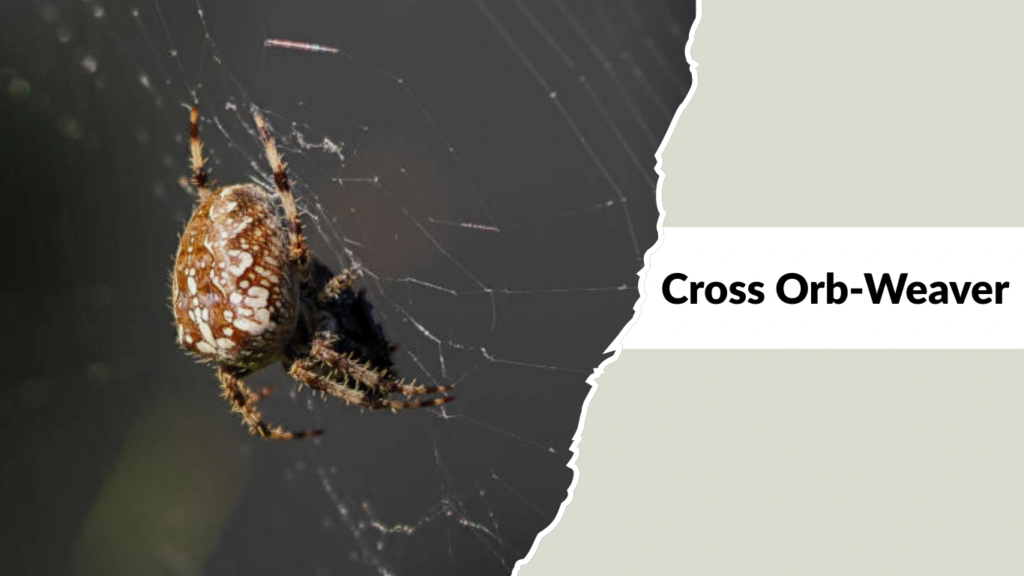
The cross orb-weaver is a well-known garden spider named for the distinctive cross-shaped marking on its back. It is commonly seen in late summer and is valued for its role in controlling garden pests.
Identification
- Medium to large-sized spider
- Pale cross-shaped marking on the abdomen
- Body color ranges from yellowish-brown to gray
- Thick, slightly hairy legs with banding
Habitat
Cross orb-weavers are widely found in gardens, hedges, woodlands, parks, and around buildings. They prefer moist environments with shrubs or tall plants that provide good web anchor points. During the day, the spider often hides near the edge of its web or in nearby foliage.
Diet
This spider feeds mainly on flying insects such as flies, mosquitoes, moths, aphids, and wasps. Prey is caught in the sticky web, then quickly wrapped in silk before feeding begins. Their feeding habits make them highly beneficial to gardeners.
Web and Nesting Behavior
The cross orb-weaver builds a classic circular orb web, usually positioned vertically between plants or structures. Webs are often rebuilt daily, especially after damage. The spider typically sits head-down in the center of the web, waiting for vibrations that signal trapped prey. Females produce egg sacs in autumn, hiding them under bark, leaves, or crevices, where the eggs overwinter and hatch in spring.
6. Golden Silk Orb-Weaver
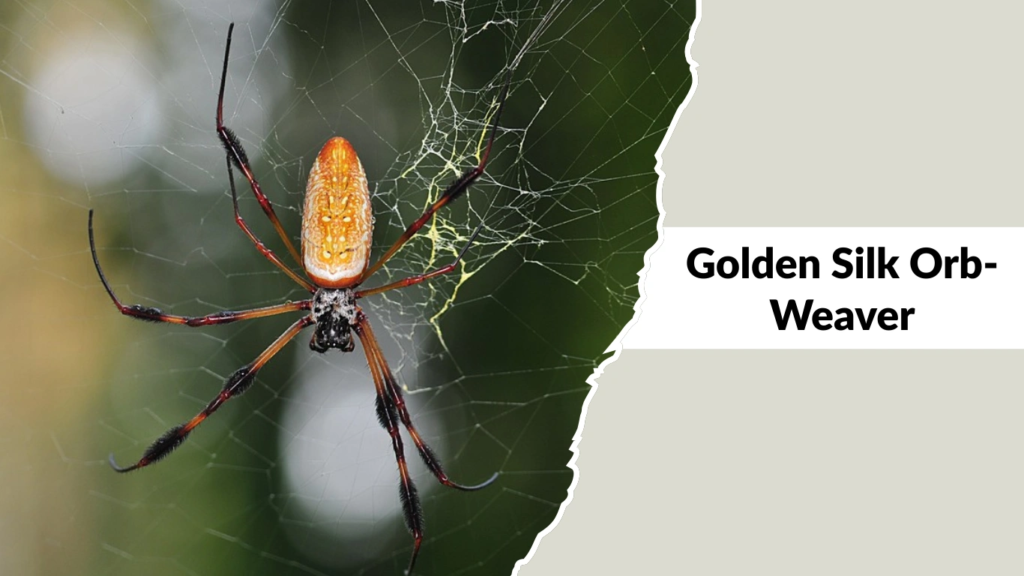
The golden silk orb-weaver is a large and visually impressive spider, famous for its strong, golden-colored silk. It is commonly found in warm regions and is known for building massive webs that can last for extended periods.
Identification
- Very large spider, females much larger than males
- Elongated abdomen with yellow, orange, and brown patterns
- Long legs with noticeable tufts of hair
- Shiny, often metallic-looking body
Habitat
Golden silk orb-weavers are typically found in gardens, forests, trails, and around buildings, especially in warm and humid climates. They prefer open areas near trees or shrubs where they can anchor their large webs across wide spaces. These spiders are often seen from late summer through fall.
Diet
Their diet includes a wide variety of insects such as flies, mosquitoes, beetles, moths, butterflies, and occasionally small flying wasps. Due to their strong silk, they are capable of capturing relatively large prey compared to many other garden spiders.
Web and Nesting Behavior
This species constructs an enormous orb-shaped web made of golden-hued silk, which is exceptionally strong and slightly sticky. Unlike many orb-weavers, the web may remain intact for several days instead of being rebuilt daily. The spider usually rests at the center of the web or off to one side. Females lay egg sacs in sheltered locations such as tree bark or dense vegetation, where the eggs develop safely until hatching.
7. Wolf Spider
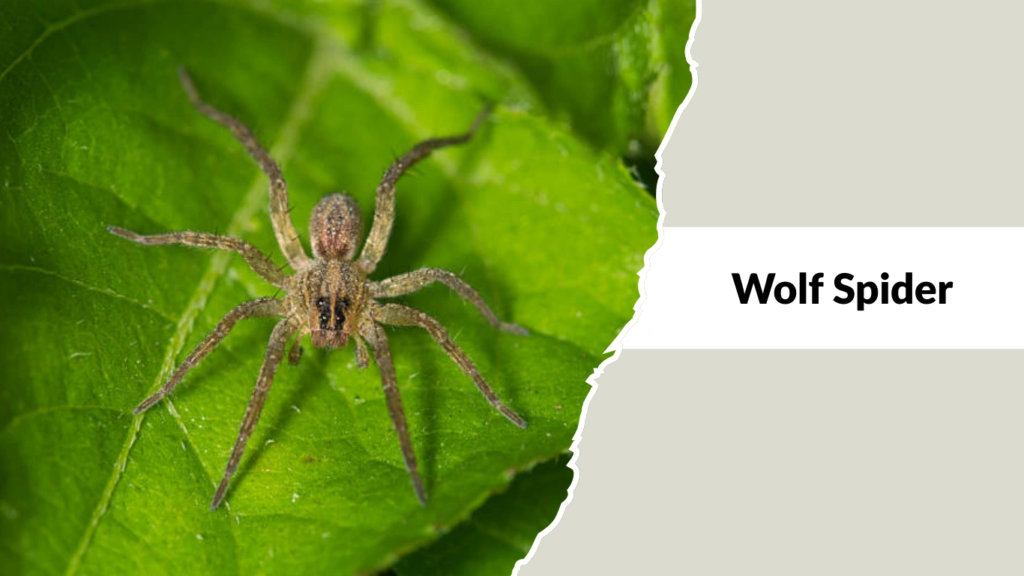
Wolf spiders are fast-moving, ground-dwelling spiders commonly encountered in gardens and lawns. Unlike many garden spiders, they do not rely on webs to catch prey and are known for their active hunting behavior.
Identification
- Medium to large-sized spider
- Brown, gray, or tan body with dark stripes or markings
- Robust, hairy body and long legs
- Prominent eyes, with two large central eyes
Habitat
Wolf spiders are found in gardens, grassy areas, leaf litter, soil, and under rocks or logs. They prefer ground-level habitats and are often seen running across open spaces, especially at night. Some species dig burrows, while others shelter under debris during the day.
Diet
Their diet consists of insects and other small arthropods, including beetles, ants, grasshoppers, crickets, and flies. Wolf spiders actively hunt their prey, relying on speed, good eyesight, and stealth rather than webs.
Web and Nesting Behavior
Wolf spiders do not build capture webs. Instead, they use silk to line burrows, create shelter, or produce egg sacs. A notable behavior of female wolf spiders is carrying their egg sac attached to their spinnerets. After hatching, the spiderlings ride on the mother’s back for a short time, which is a unique trait among spiders.
8. Jumping Spider
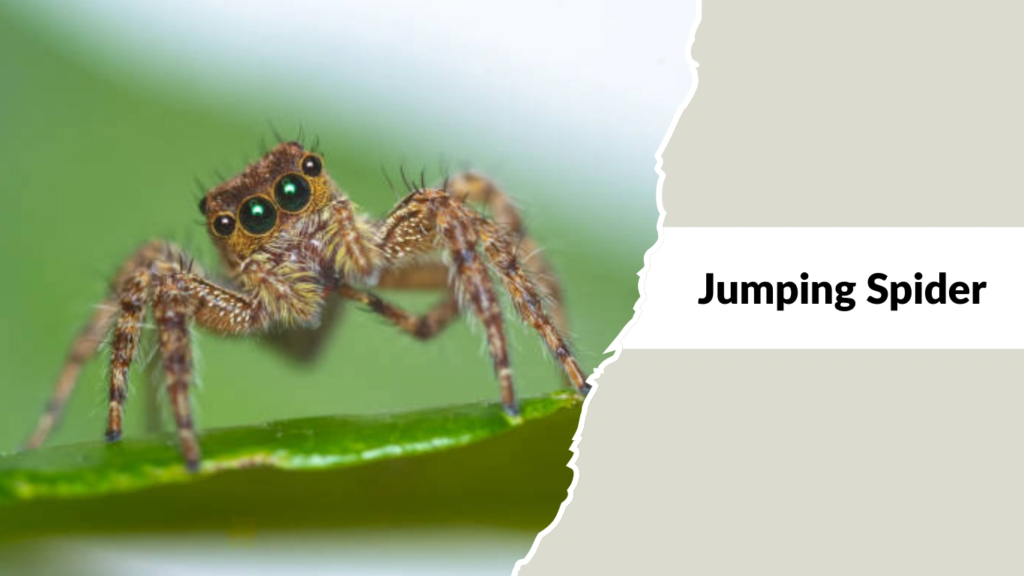
Jumping spiders are small, alert, and highly intelligent-looking spiders commonly seen in gardens. They are known for their quick movements, excellent vision, and curious behavior toward humans.
Identification
- Small to medium-sized spider
- Compact, stocky body with short legs
- Often brightly colored or patterned
- Large forward-facing eyes
Habitat
Jumping spiders are found on garden plants, fences, walls, tree trunks, and around windows. They prefer sunny areas where they can actively hunt during the day. Unlike many spiders, they are rarely hidden and are often seen exploring surfaces.
Diet
Their diet includes flies, mosquitoes, ants, aphids, small beetles, and other spiders. Jumping spiders stalk their prey carefully and then leap onto it with precision, using silk as a safety line.
Web and Nesting Behavior
Jumping spiders do not build webs to catch prey. Instead, they use silk to create small resting shelters under leaves, bark, or crevices. Silk is also used as a dragline during jumps and to protect egg sacs. Females guard their eggs until they hatch, providing extra protection during early development.
9. Crab Spider
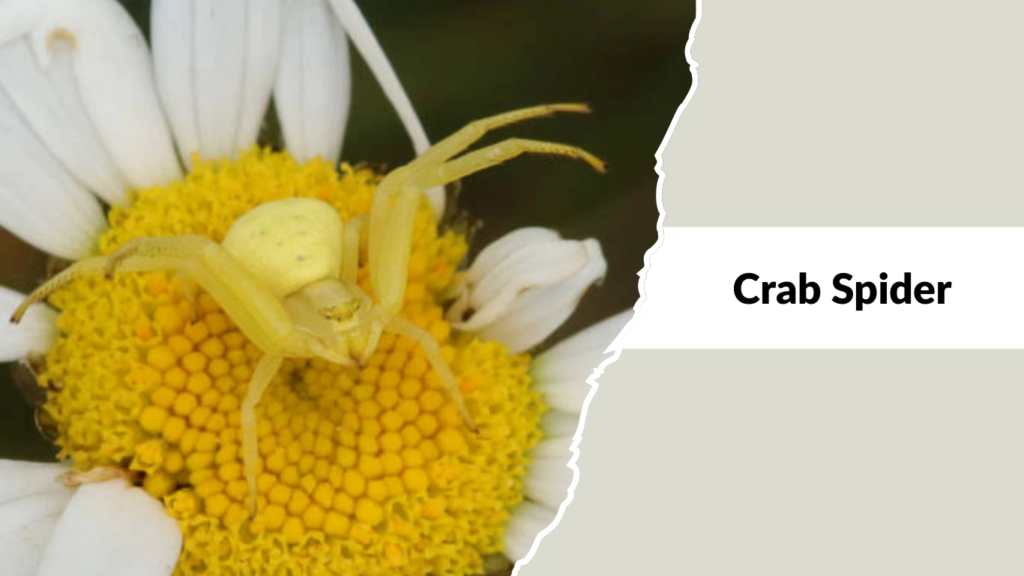
Crab spiders are named for their crab-like appearance and sideways movement. Commonly found on flowers, they are ambush predators that blend into their surroundings to catch unsuspecting prey.
Identification
- Small to medium-sized spider
- Wide, flattened body
- Front two pairs of legs longer and held sideways
- Colors often white, yellow, green, or brown
Habitat
Crab spiders are typically found on flowers, leaves, shrubs, and garden plants. They favor areas with abundant flowering plants, where pollinating insects are common. Some species can change color over time to better match their environment.
Diet
Their diet mainly consists of bees, butterflies, flies, wasps, and other pollinators that land on flowers. Crab spiders do not chase prey; instead, they wait motionless and grab insects with their strong front legs.
Web and Nesting Behavior
Crab spiders do not spin capture webs. Silk is used only for safety lines, shelter, and egg sacs. Females attach their egg sacs to leaves or plant stems and often guard them until hatching. Their web use is minimal compared to many other garden spiders, as their hunting strategy relies on camouflage and patience.
10. Lynx Spider
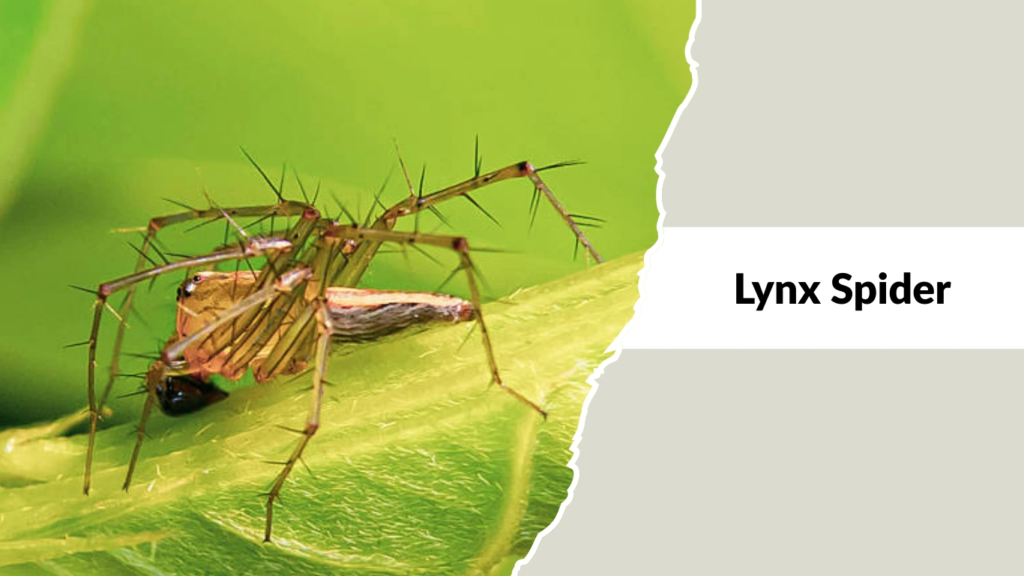
Lynx spiders are agile, long-legged spiders often seen actively moving on garden plants. They are effective natural predators and are known for their excellent eyesight and quick reflexes.
Identification
- Medium-sized spider
- Slender body with long, spiny legs
- Usually green, brown, or yellow with markings
- Tapered abdomen and sharp vision
Habitat
Lynx spiders are commonly found on shrubs, grasses, flowering plants, and low trees in gardens and open fields. They prefer sunny areas with dense vegetation where insects are plentiful. These spiders rarely hide and are often visible during the daytime.
Diet
Their diet includes flies, moths, butterflies, grasshoppers, bees, and other small insects. Lynx spiders hunt without webs, relying on speed and sudden leaps to capture prey. They are especially helpful in gardens for controlling pest populations.
Web and Nesting Behavior
Lynx spiders do not build webs for catching prey. Instead, they use silk to create egg sacs and temporary resting spots. Females attach egg sacs to plant stems or leaves and aggressively guard them until the spiderlings hatch. During this time, the female may stop hunting and focus entirely on protecting her eggs, showing strong parental behavior uncommon among many spider species.
11. Funnel Weaver Spider
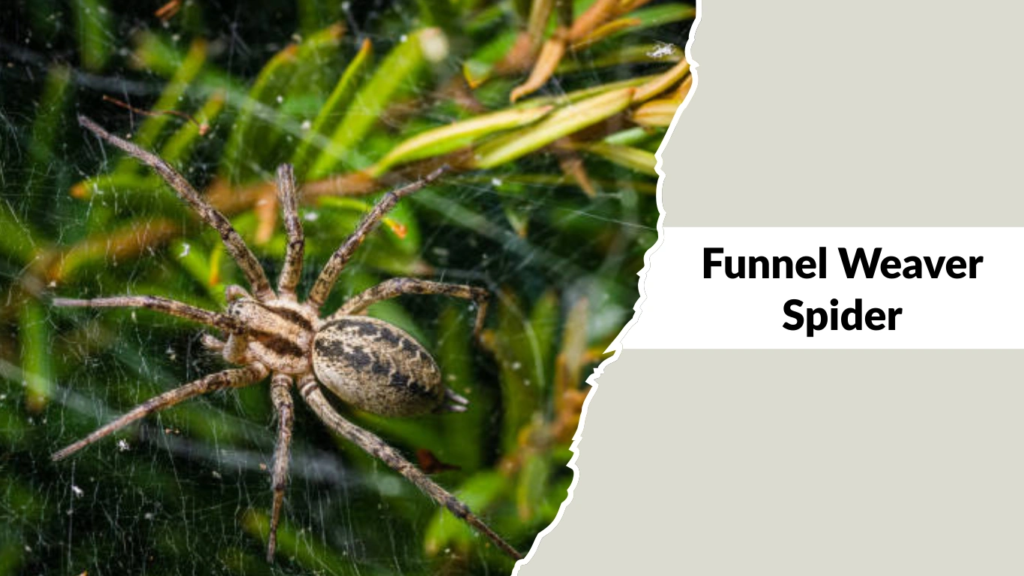
Funnel weaver spiders are common garden and yard spiders best known for their distinctive funnel-shaped webs. They are shy, fast-moving spiders that retreat quickly when disturbed.
Identification
- Medium-sized spider
- Brown or gray body with darker stripes
- Long legs adapted for quick movement
- Narrow, elongated abdomen
Habitat
Funnel weaver spiders are typically found in lawns, gardens, hedges, tall grass, and ground cover. Their webs are often seen in corners, between plants, or near foundations. They prefer areas with minimal disturbance and good insect traffic.
Diet
Their diet consists of small insects such as flies, ants, beetles, grasshoppers, and mosquitoes. When prey lands on the web, the spider rushes out from the funnel to capture it and drags it back into the retreat.
Web and Nesting Behavior
This spider builds a flat sheet web that narrows into a funnel-shaped retreat where it hides. The web is non-sticky and relies on speed rather than adhesion to trap prey. Funnel weavers do not leave their webs often, using them both as hunting platforms and protective shelters. Egg sacs are typically hidden deep within the funnel or nearby vegetation for safety.
12. Grass Spider
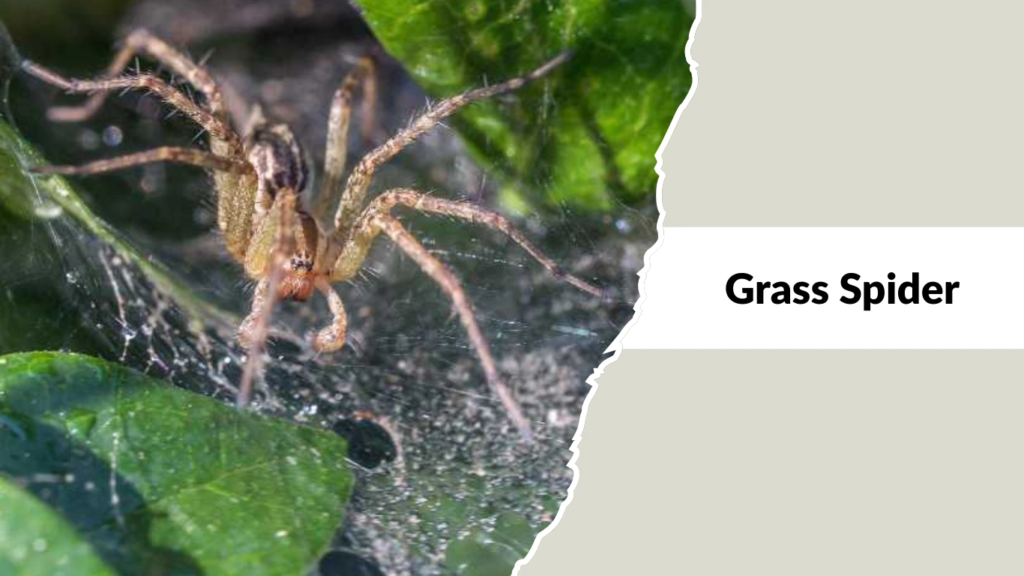
Grass spiders are fast-running spiders commonly found in lawns and gardens. They are often mistaken for wolf spiders but can be identified by their funnel-shaped webs and long spinnerets.
Identification
- Medium-sized spider
- Brown or gray body with dark longitudinal stripes
- Long legs and clearly visible spinnerets
- Slender, elongated abdomen
Habitat
Grass spiders live in grassy areas, gardens, shrubs, and along fences or building edges. Their funnel-shaped webs are usually built low to the ground in tall grass or dense plants. They are most active during late summer and early fall.
Diet
Their diet includes flies, mosquitoes, beetles, ants, and other small insects that wander onto the web. Once prey is detected, the spider rapidly emerges from the funnel to seize it before retreating.
Web and Nesting Behavior
Grass spiders construct sheet webs with a distinct funnel leading to a hiding place. The web itself is not sticky; instead, insects become tangled as they run across it. The spider waits inside the funnel for vibrations signaling prey. Egg sacs are placed in protected areas near the web, allowing spiderlings to hatch safely.
13. Cellar Spider
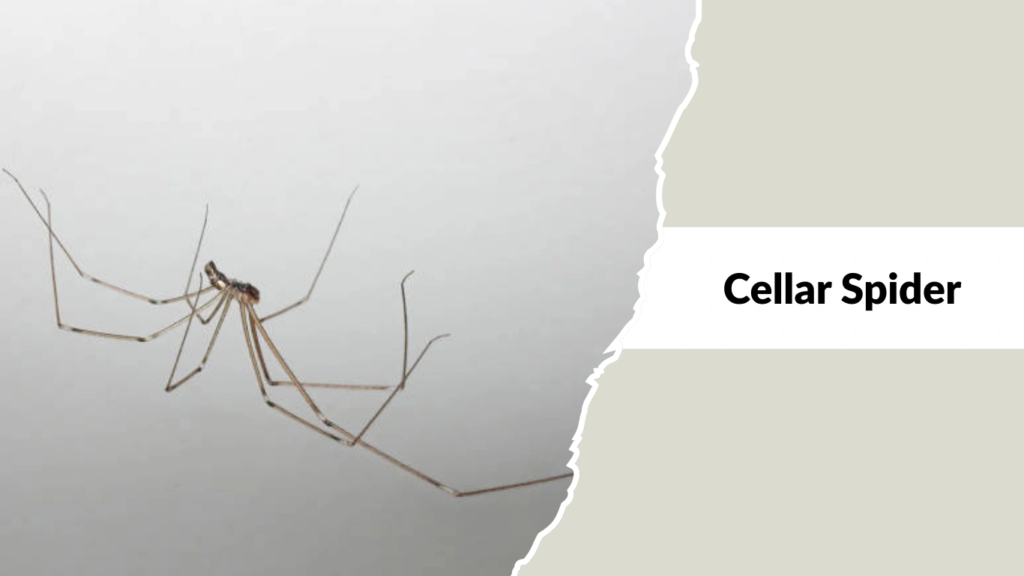
Cellar spiders are delicate-looking spiders often found around homes and garden structures. They are easily recognized by their extremely long legs and slow, drifting movements.
Identification
- Small body with very long, thin legs
- Pale tan or light brown coloration
- Rounded or elongated abdomen
- Fragile, spindly appearance
Habitat
Cellar spiders are commonly found in sheds, garages, basements, greenhouses, and garden walls. They prefer dark, damp, and undisturbed areas. Outdoors, they may inhabit rock piles, tree hollows, and under eaves.
Diet
Their diet consists of flies, mosquitoes, moths, ants, and even other spiders. Cellar spiders are effective predators and may invade the webs of other spiders to steal prey or hunt them directly.
Web and Nesting Behavior
Cellar spiders build irregular, messy cobwebs in corners and sheltered spaces. When disturbed, they often vibrate rapidly in their web, making themselves appear blurred and harder to see. Females carry their egg clusters in their mouthparts until the eggs hatch, rather than enclosing them in a silk sac, providing direct protection to the developing spiderlings.
14. Cobweb Spider
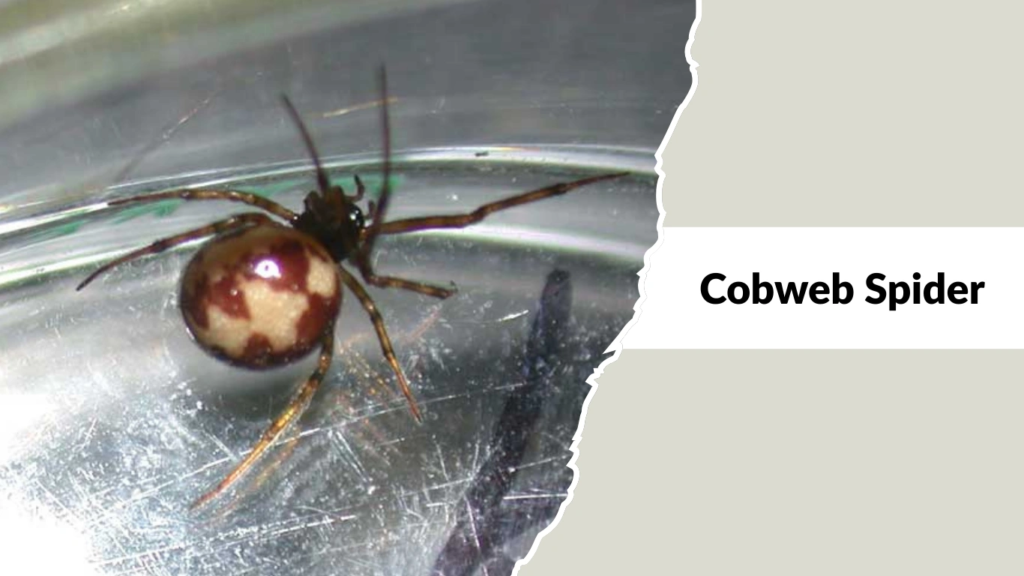
Cobweb spiders are small, common spiders found in gardens and around buildings. They are known for their tangled webs and play an important role in controlling household and garden pests.
Identification
- Small to medium-sized spider
- Rounded or bulbous abdomen
- Brown, gray, or black coloration
- Thin legs with fine hairs
Habitat
Cobweb spiders are commonly found in garden sheds, fences, plant corners, woodpiles, and outdoor structures. They prefer quiet, sheltered locations where their webs can remain undisturbed for long periods.
Diet
Their diet includes flies, ants, mosquitoes, aphids, and other small insects. Some species may also capture larger insects that become entangled in their strong, sticky silk threads.
Web and Nesting Behavior
Cobweb spiders create irregular, three-dimensional webs rather than neat circular ones. These sticky webs trap insects as they walk or fly into them. The spider usually waits upside down in the web for vibrations that signal prey. Egg sacs are often attached within the web or hidden nearby, allowing the spider to protect its young while continuing to hunt.
15. House Spider
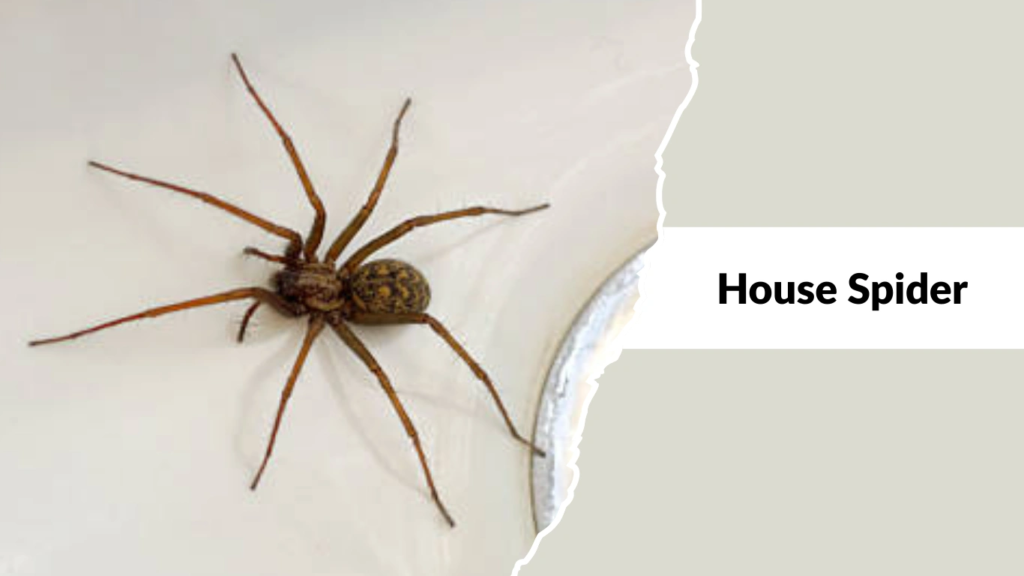
House spiders are common, adaptable spiders frequently encountered in gardens and around homes. They are generally shy, non-aggressive, and help control insect populations indoors and outdoors.
Identification
- Medium-sized spider
- Brown or gray body with subtle markings
- Oval abdomen and long, slender legs
- Females larger than males
Habitat
House spiders are often found in corners of rooms, sheds, garages, basements, garden walls, and outdoor structures. In gardens, they may live under pots, stones, woodpiles, or along fences. They prefer quiet, undisturbed areas where insects are likely to pass through.
Diet
Their diet consists mainly of flies, mosquitoes, moths, ants, and other small crawling or flying insects. House spiders rely on prey becoming trapped rather than active hunting, making them effective passive pest controllers.
Web and Nesting Behavior
House spiders build messy, irregular webs in corners, cracks, and sheltered spaces. These webs are designed to trap wandering insects rather than flying prey. The spider typically waits near the edge of the web and rushes in when vibrations are felt. Egg sacs are produced throughout the warmer months and are usually hidden within the web or nearby crevices, providing protection until the spiderlings emerge.
16. Daddy Longlegs Spider
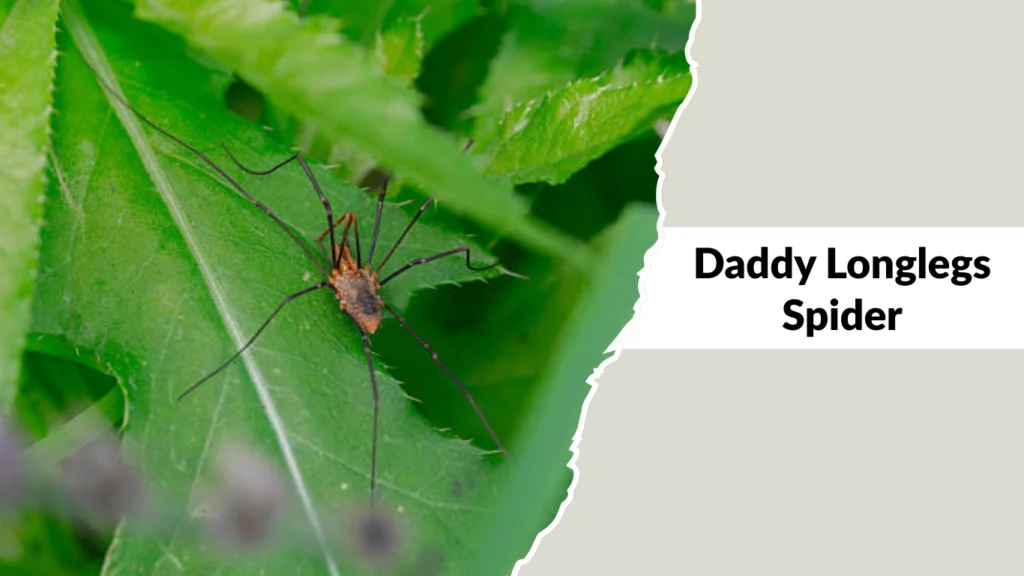
Daddy longlegs spiders are often confused with harvestmen, but true spider species exist under this common name. They are gentle, harmless spiders frequently seen in gardens and around homes.
Identification
- Very small body with extremely long, thin legs
- Pale brown, gray, or tan coloration
- Rounded or slightly elongated body
- Delicate, fragile appearance
Habitat
Daddy longlegs spiders are commonly found in gardens, sheds, basements, garages, and under outdoor structures. They prefer damp, shaded, and undisturbed areas such as leaf litter, rock piles, and wall corners.
Diet
Their diet includes flies, mosquitoes, ants, aphids, and other small insects. Some species may also feed on dead insects or organic debris, contributing to natural cleanup in garden environments.
Web and Nesting Behavior
These spiders build loose, irregular webs in corners, under eaves, or among dense vegetation. The web is mainly used for capturing small insects rather than for structural strength. Females carry or guard their eggs closely, often holding egg clusters together with silk until they hatch, ensuring higher survival of the spiderlings.
17. Spotted Orb-Weaver
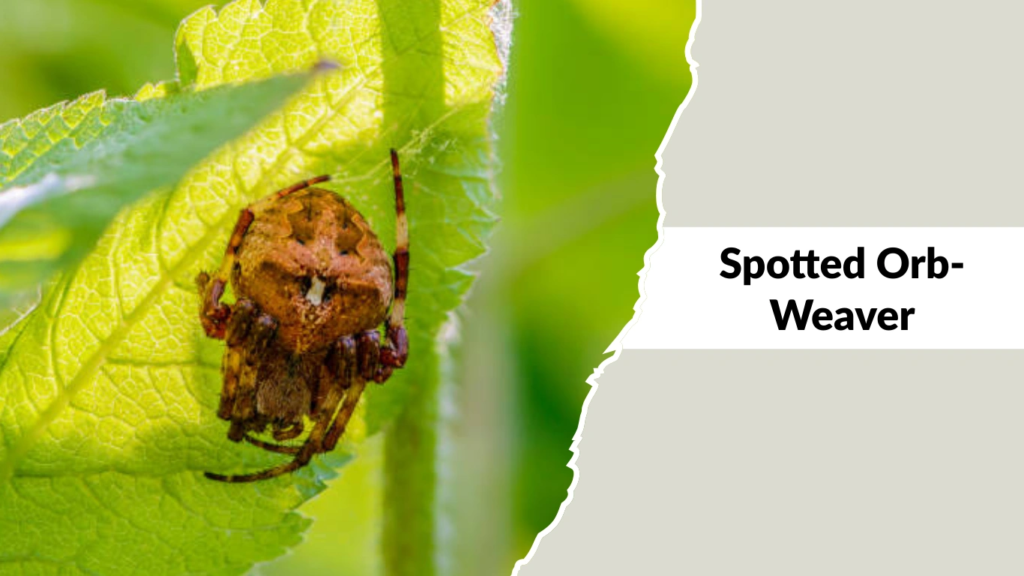
The spotted orb-weaver is a colorful garden spider known for the distinct spots on its abdomen and its large, decorative web. It is commonly seen during warmer months and is harmless to people.
Identification
- Medium to large-sized spider
- Abdomen marked with noticeable white or pale spots
- Body colors range from yellow and orange to brown
- Long legs, sometimes banded
Habitat
Spotted orb-weavers are found in gardens, parks, forests, and around outdoor structures. They prefer open areas with shrubs or tall plants that provide good anchor points for webs. These spiders are most active from late summer into fall.
Diet
Their diet consists mainly of flying insects such as flies, mosquitoes, moths, beetles, and wasps. Once prey is caught in the web, the spider quickly wraps it in silk before feeding.
Web and Nesting Behavior
This species builds a classic circular orb web, usually positioned vertically between plants or structures. The web may be rebuilt daily, especially after damage. The spider often sits at the center of the web or hides nearby during the day. Females lay egg sacs in protected locations such as leaves, bark, or crevices, where the eggs overwinter safely until hatching.
18. Banded Garden Spider
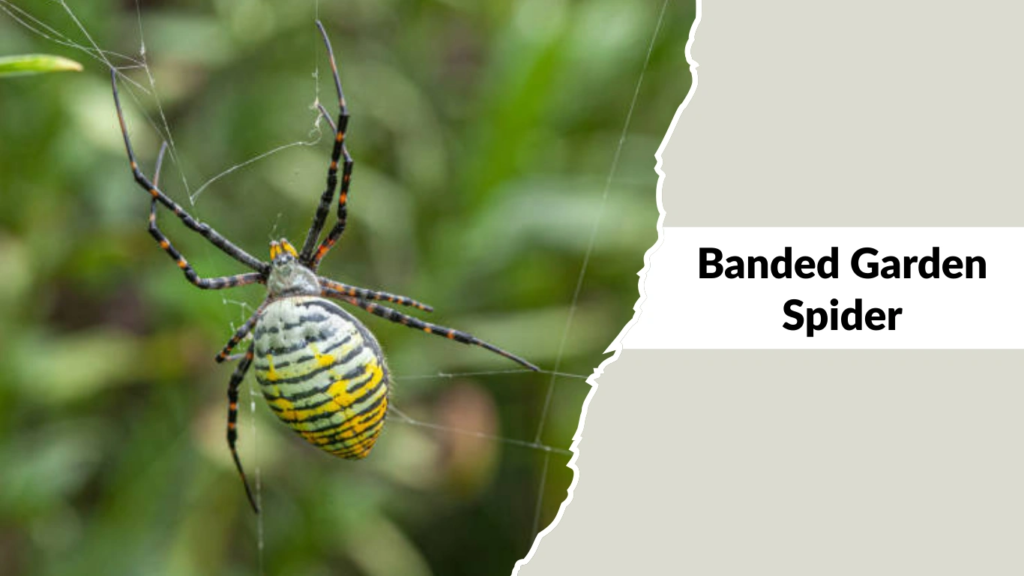
The banded garden spider is a striking and beneficial garden species, closely related to other orb-weavers. Its bold coloring and large web make it easy to spot in gardens and open landscapes.
Identification
- Large spider, females much larger than males
- Abdomen with bold black, yellow, and white bands
- Long legs with alternating dark and light bands
- Silvery hairs on the body
Habitat
Banded garden spiders are commonly found in gardens, meadows, fields, roadsides, and agricultural areas. They prefer sunny, open spaces with tall plants or grasses where they can anchor their webs securely. These spiders are most visible in late summer and early autumn.
Diet
Their diet includes a variety of flying and jumping insects such as grasshoppers, flies, bees, wasps, moths, and beetles. By feeding on many pest species, they play an important role in maintaining garden health.
Web and Nesting Behavior
This spider builds a large, circular orb web, often with a noticeable zigzag silk pattern in the center. The web is usually positioned vertically between plants and is used to trap passing insects. Females produce egg sacs toward the end of the season, attaching them to nearby vegetation. The eggs overwinter inside the sac and hatch when temperatures rise in spring.
19. Long-Jawed Orb-Weaver
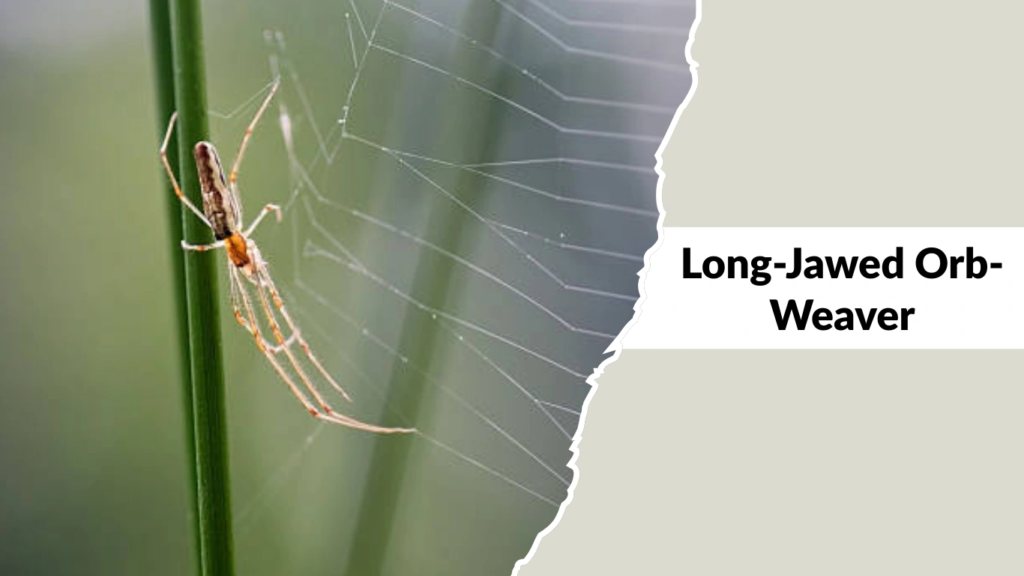
The long-jawed orb-weaver is a slender, delicate-looking spider known for its elongated jaws and elegant web. It is commonly found near water and vegetation and is harmless to humans.
Identification
- Slender body with an elongated abdomen
- Very long, forward-projecting jaws (chelicerae)
- Colors range from green and yellow to brown
- Long, thin legs giving a stretched appearance
Habitat
Long-jawed orb-weavers are typically found in gardens, tall grasses, wetlands, ponds, streamsides, and areas with dense vegetation. They prefer humid environments and are often seen near water sources where insect activity is high. These spiders usually rest stretched along plant stems, making them difficult to spot.
Diet
Their diet consists mainly of small flying insects such as mosquitoes, flies, midges, and gnats. By feeding heavily on mosquitoes, they are especially beneficial in garden and wetland ecosystems.
Web and Nesting Behavior
This species builds a circular orb web that is often oriented horizontally rather than vertically. The web is usually constructed low among grasses or shrubs and is rebuilt regularly. During the day, the spider may leave the web and hide along nearby vegetation, relying on camouflage. Females lay egg sacs on plant stems or leaves close to the web, where the eggs develop safely until hatching.
20. Green Lynx Spider
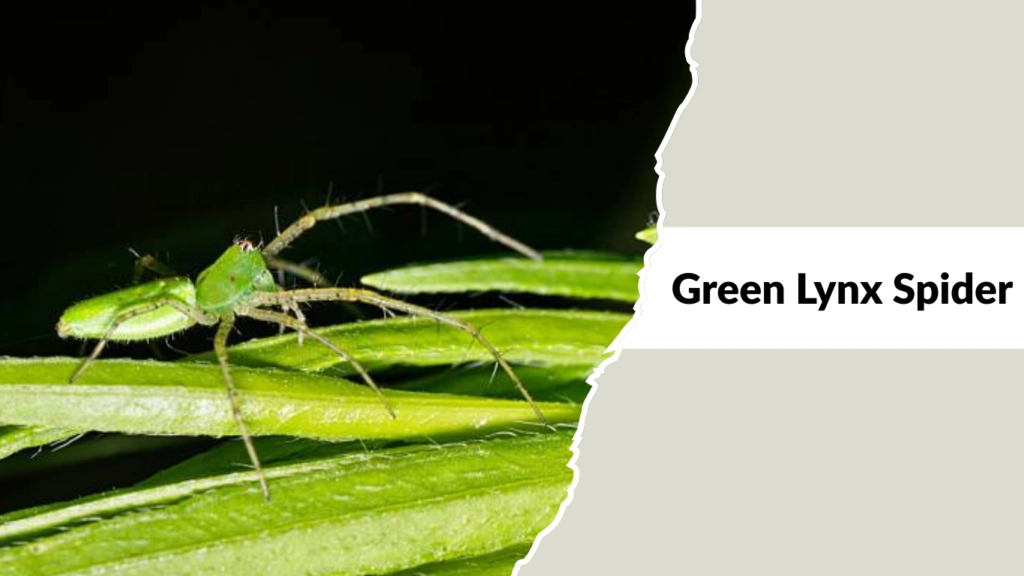
The green lynx spider is a vivid, active garden spider known for its bright coloration and aggressive hunting style. It is commonly found on flowering plants and is highly effective at controlling pest insects.
Identification
- Medium to large-sized spider
- Bright green body with small red or black spots
- Long, spiny legs
- Slender, pointed abdomen
Habitat
Green lynx spiders are commonly found in gardens, shrubs, flowering plants, orchards, and fields. They prefer sunny areas with dense vegetation and are often seen perched on leaves or flowers, especially during warm months.
Diet
Their diet includes flies, bees, moths, butterflies, grasshoppers, and other insects. Unlike web-building spiders, green lynx spiders actively hunt and may leap or sprint to capture prey. They are particularly valuable in gardens for reducing pest populations.
Web and Nesting Behavior
Green lynx spiders do not build webs for catching prey. Silk is mainly used for egg sacs and safety lines. Females attach their egg sacs to plant stems or leaves and fiercely guard them until hatching. During this period, the female may display defensive behavior toward predators, including humans, though bites are rare and mild.
21. Nursery Web Spider
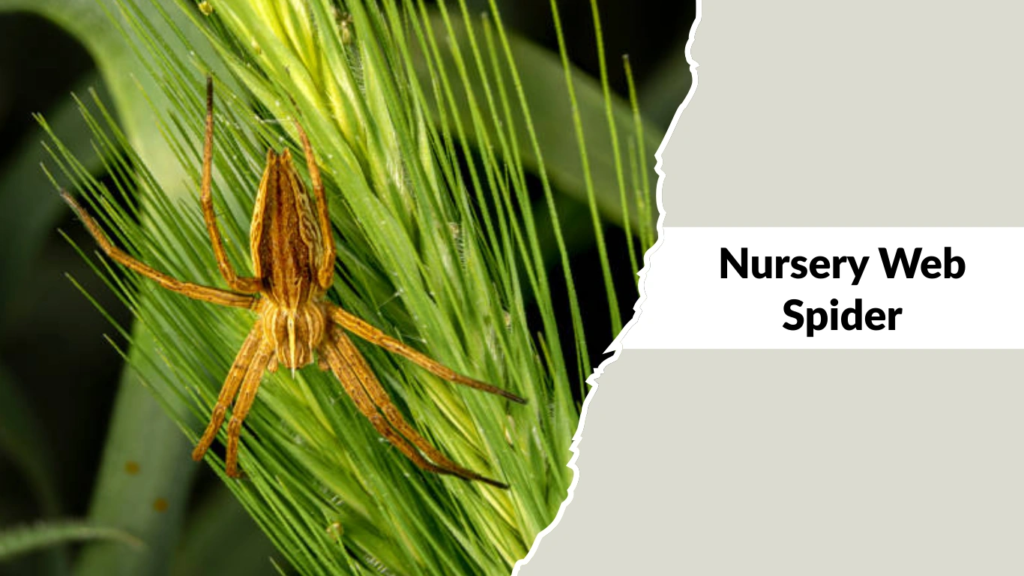
The nursery web spider is a large, agile spider often seen near water or dense garden vegetation. It gets its name from the unique way females protect their young, making it one of the more attentive garden spiders.
Identification
- Medium to large-sized spider
- Brown, gray, or tan body with darker markings
- Long legs and slender build
- Similar in appearance to wolf spiders but more elongated
Habitat
Nursery web spiders are commonly found in gardens, tall grasses, shrubs, meadows, and near ponds or streams. They prefer moist environments with plenty of cover. Unlike web-bound spiders, they are often seen wandering through vegetation, especially at dusk or night.
Diet
Their diet includes flies, mosquitoes, beetles, grasshoppers, caterpillars, and other small insects. Nursery web spiders hunt actively, using speed and ambush rather than webs to capture prey.
Web and Nesting Behavior
Nursery web spiders do not use webs to catch food. Instead, silk is used primarily for reproduction. Females carry their egg sac in their mouthparts until the eggs are ready to hatch. At that point, the spider builds a special silk structure called a “nursery web” among plants, where the spiderlings are protected. The female guards this nursery until the young disperse, showing notable parental care uncommon among most spider species.
22. Fishing Spider
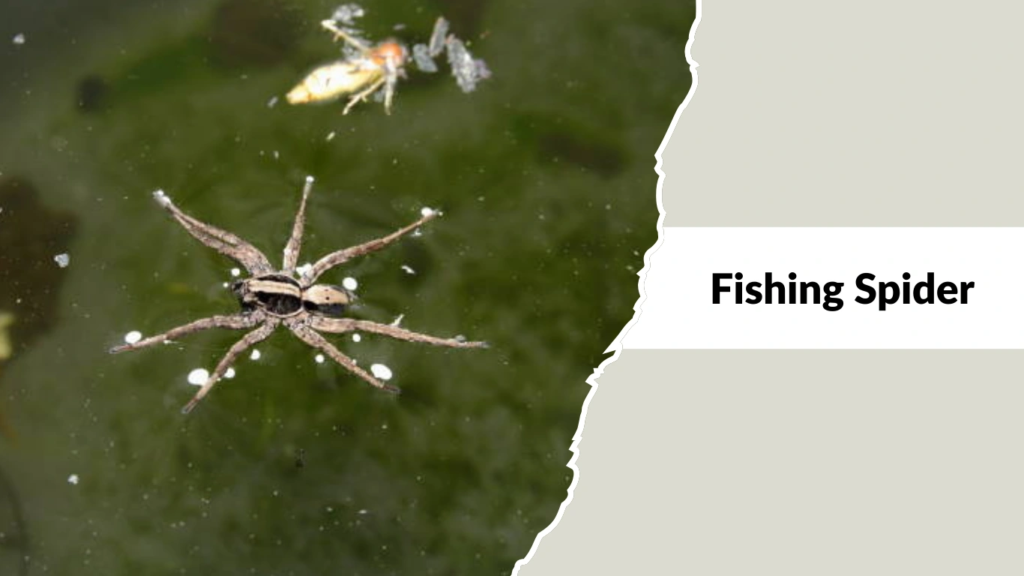
Fishing spiders are large, semi-aquatic spiders commonly found near water. They are skilled hunters capable of capturing prey both on land and on the water’s surface.
Identification
- Large spider with long, strong legs
- Brown, gray, or tan body with lighter stripes or spots
- Flattened body adapted for movement on water
- Prominent eyes and powerful front legs
Habitat
Fishing spiders are typically found near ponds, streams, lakes, wetlands, and damp garden areas. They prefer environments close to water where vegetation and insects are abundant. These spiders often rest on rocks, logs, or plants along the water’s edge.
Diet
Their diet includes insects, tadpoles, small fish, aquatic insects, and even tiny frogs. Fishing spiders detect vibrations on the water’s surface and quickly rush to seize prey. They may also hunt insects on land when aquatic prey is scarce.
Web and Nesting Behavior
Fishing spiders do not build webs to catch prey. Instead, they rely on active hunting and excellent sensory perception. Silk is mainly used for creating egg sacs and shelter. Females attach egg sacs to vegetation or carry them until hatching time. When the eggs are ready to hatch, the female builds a protective nursery web nearby and guards it until the spiderlings disperse.
23. Parson Spider
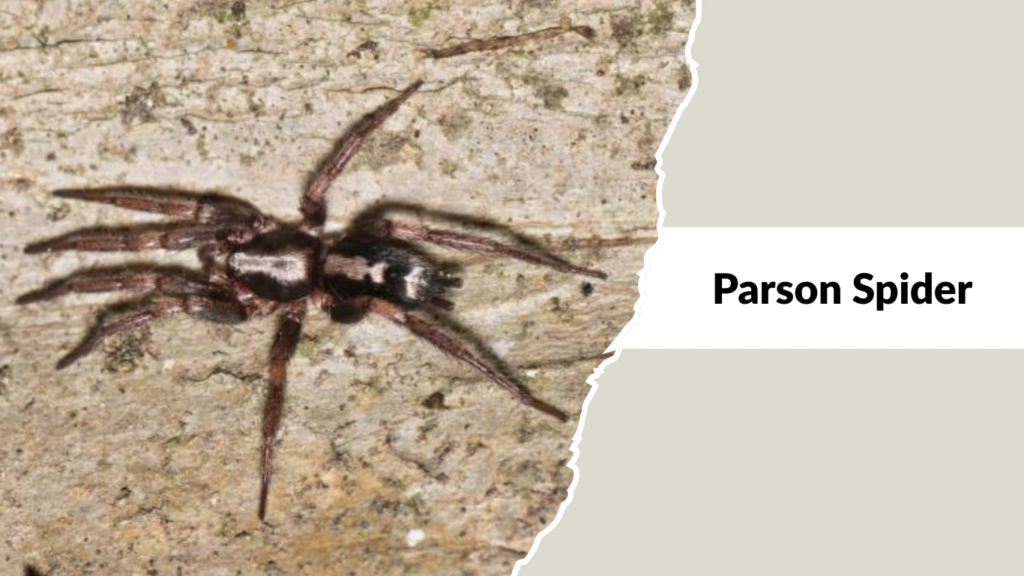
The parson spider is a fast-moving, ground-dwelling spider often seen in gardens and around homes. It is named for the distinctive marking on its back that resembles a clerical necktie.
Identification
- Medium-sized spider
- Dark brown or black body
- White or pale stripe running down the abdomen
- Long legs built for speed
Habitat
Parson spiders are commonly found in gardens, leaf litter, lawns, under stones, and inside homes. They prefer dry, sheltered areas and are often active at night. During the day, they hide in cracks, under bark, or beneath garden debris.
Diet
Their diet includes flies, ants, beetles, roaches, and other small insects. Parson spiders hunt actively rather than using webs, chasing down prey with quick bursts of speed.
Web and Nesting Behavior
Parson spiders do not build webs for trapping prey. Silk is used mainly for hiding places, molting shelters, and egg sacs. Females deposit egg sacs in protected crevices or under stones and guard them until the eggs hatch. Their quick movements and nocturnal habits help them avoid predators while remaining effective insect hunters.
24. Sac Spider
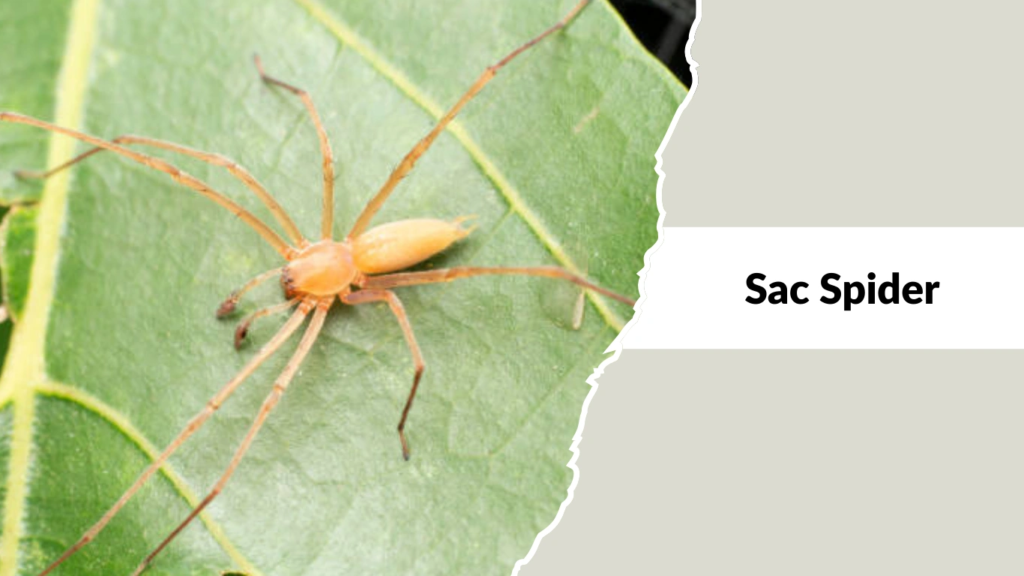
Sac spiders are small, pale-colored spiders commonly found in gardens and homes. They are known for their wandering behavior and for building small silk retreats rather than capture webs.
Identification
- Small to medium-sized spider
- Pale yellow, cream, or light green body
- Slender abdomen and long legs
- Dark mouthparts often visible
Habitat
Sac spiders are found on garden plants, shrubs, leaf litter, under bark, and inside homes. Outdoors, they prefer foliage and low vegetation. Indoors, they may be seen on walls or ceilings, especially at night.
Diet
Their diet consists of flies, mosquitoes, aphids, mites, and other small insects. Sac spiders actively hunt prey instead of waiting in webs, making them useful for pest control in gardens and homes.
Web and Nesting Behavior
Sac spiders do not build webs to catch prey. Instead, they create small silk “sacs” that serve as resting or molting shelters, often tucked under leaves, bark, or corners of walls. Females lay eggs inside these silk sacs and guard them until hatching. The spiders leave the sac at night to hunt and return during the day to rest.
25. Dwarf Spider
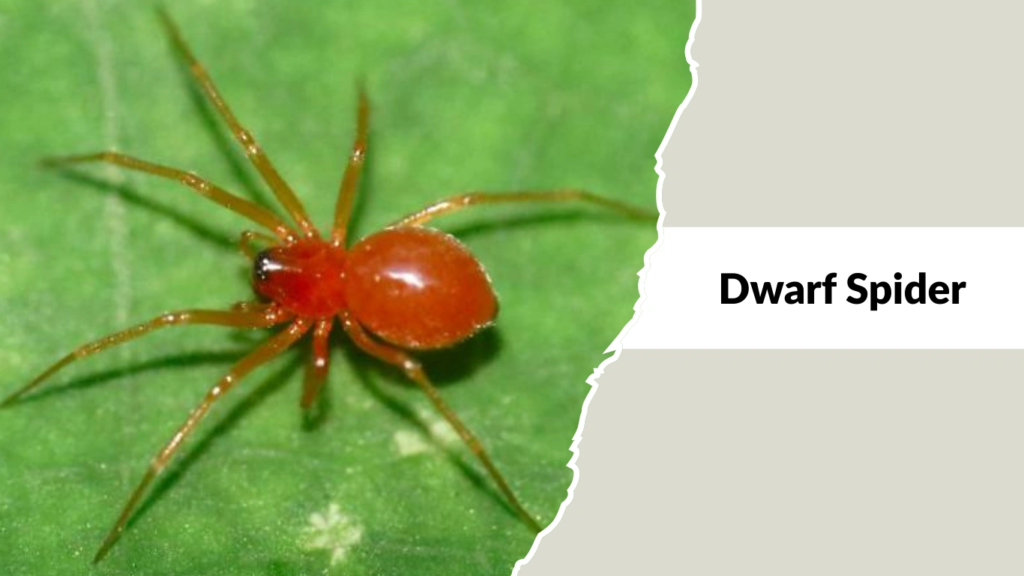
Dwarf spiders are tiny, often overlooked garden spiders that play an important role in controlling very small insect populations. Due to their size, they are rarely noticed despite being widespread.
Identification
- Very small spider, often only a few millimeters long
- Compact body with short legs
- Brown, black, or dark gray coloration
- Fine body hairs visible under close inspection
Habitat
Dwarf spiders are commonly found in gardens, grass, leaf litter, soil surfaces, moss, and low vegetation. They prefer moist environments and are especially abundant in lawns, fields, and garden beds. Many species live close to the ground and are active year-round in mild climates.
Diet
Their diet consists mainly of tiny insects and arthropods such as springtails, mites, aphids, and small flies. By feeding on these organisms, dwarf spiders help maintain soil and plant health.
Web and Nesting Behavior
Dwarf spiders build very small sheet or irregular webs close to the ground or among vegetation. Some species may also hunt actively rather than relying entirely on webs. Silk is used to create egg sacs and protective retreats in soil or plant debris. Despite their small size, they reproduce quickly and can be very numerous in suitable habitats, making them ecologically significant.
