
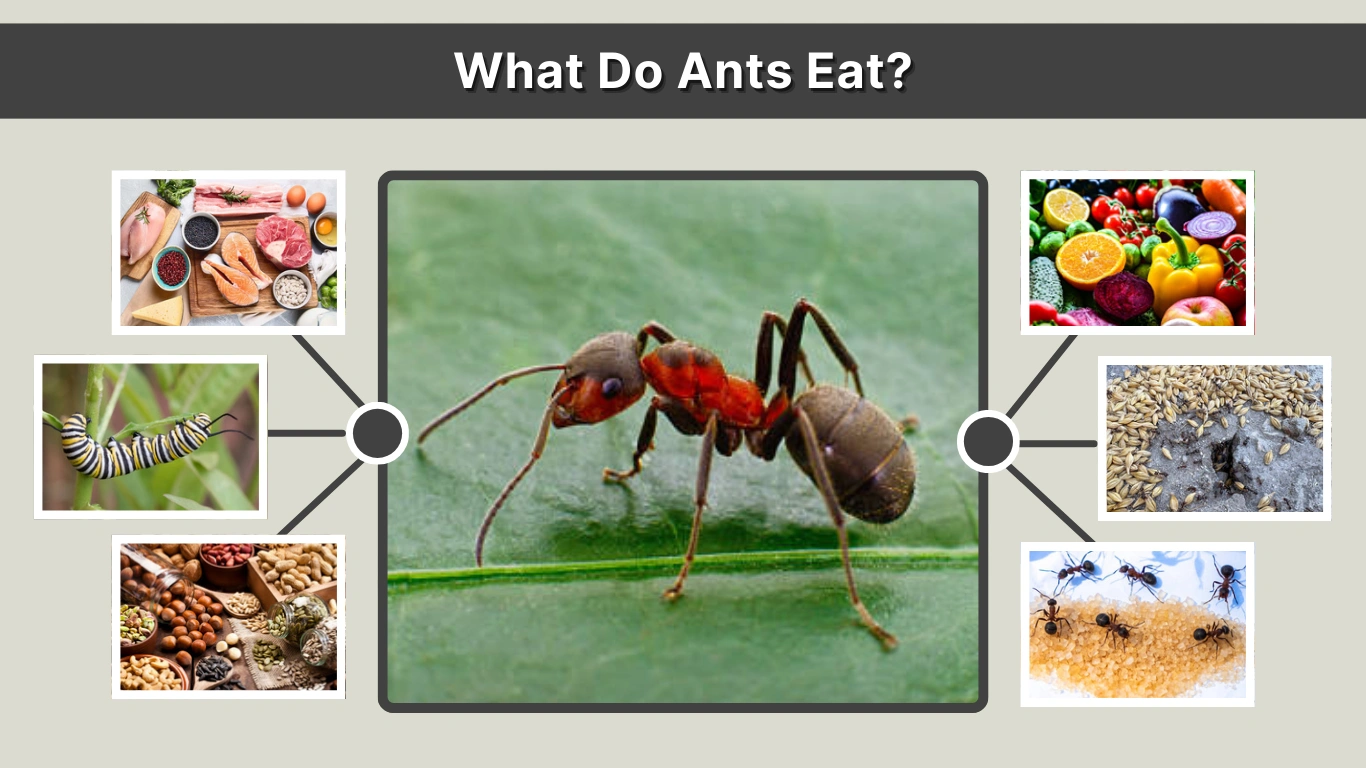
Ants are among the most adaptable insects on Earth, living in almost every environment except extreme polar regions. Their success largely depends on their flexible diet. While many people assume ants only eat sugar, their food sources are far more diverse and change depending on species, habitat, and colony needs. From insects and seeds to nectar and fungi, ants consume a wide range of foods to survive. Understanding what ants eat helps explain their behavior in nature and why they often invade homes.
Ant Diet Basics
Ants are omnivores, meaning they eat both plant-based and animal-based foods. However, not all ants eat the same things. Diet varies greatly depending on species, environment, and the role an ant plays inside the colony.
Why Ant Diets Vary
Several factors influence what ants eat:
- Species type (carpenter ants, fire ants, harvester ants)
- Habitat such as forests, deserts, or homes
- Seasonal food availability
- Colony needs, especially feeding larvae and queens
Worker ants usually gather food, larvae consume most of the protein, and queens rely on stored nutrients or food delivered by workers.
What Nutrients Ants Need
Ants require a balanced intake of:
- Carbohydrates for energy and daily activity
- Protein to support larvae growth and colony expansion
- Fats for long-term energy storage
- Water for hydration and survival
A lack of any one of these can weaken the colony.
What Do Ants Eat in General
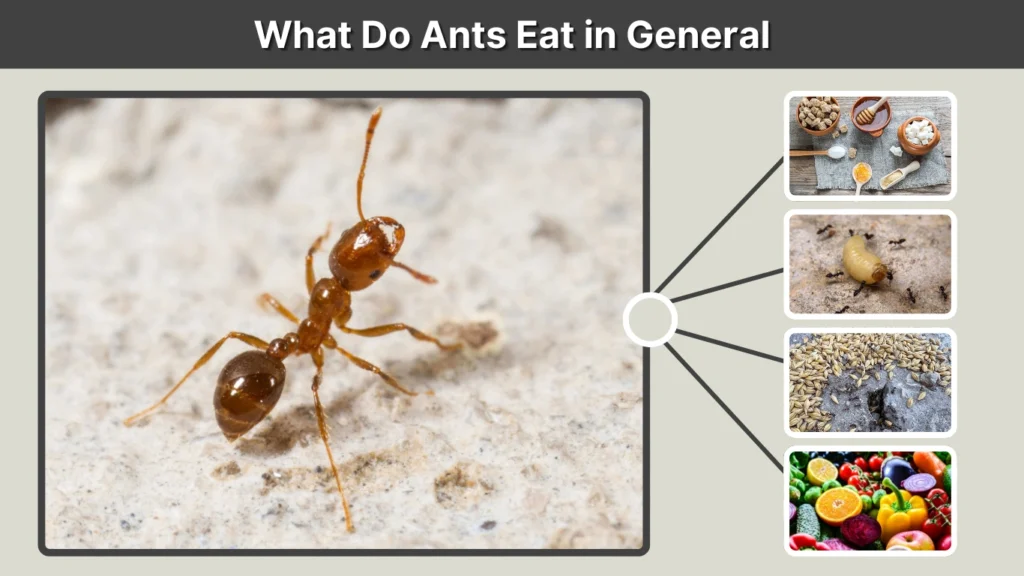
Ants are opportunistic feeders and will eat whatever is readily available in their environment.
Common Foods Ants Consume
In general, ants eat:
- Sugary substances such as nectar, honey, syrup, and fruit juice
- Insects and insect larvae
- Seeds and grains
- Fruits and plant sap
- Dead animals and organic waste
This flexibility allows ants to thrive in both natural and human-made environments.
What Do Ants Like to Eat the Most
Although ants eat many foods, they show strong preferences:
- Sugar-rich liquids are the most attractive
- Honeydew produced by aphids is a major natural food source
- Soft-bodied insects provide essential protein
- Greasy and oily foods are especially attractive indoors
These preferences explain why ants are commonly found near sweets, kitchens, and trash areas.
What Do Ants Eat and Drink
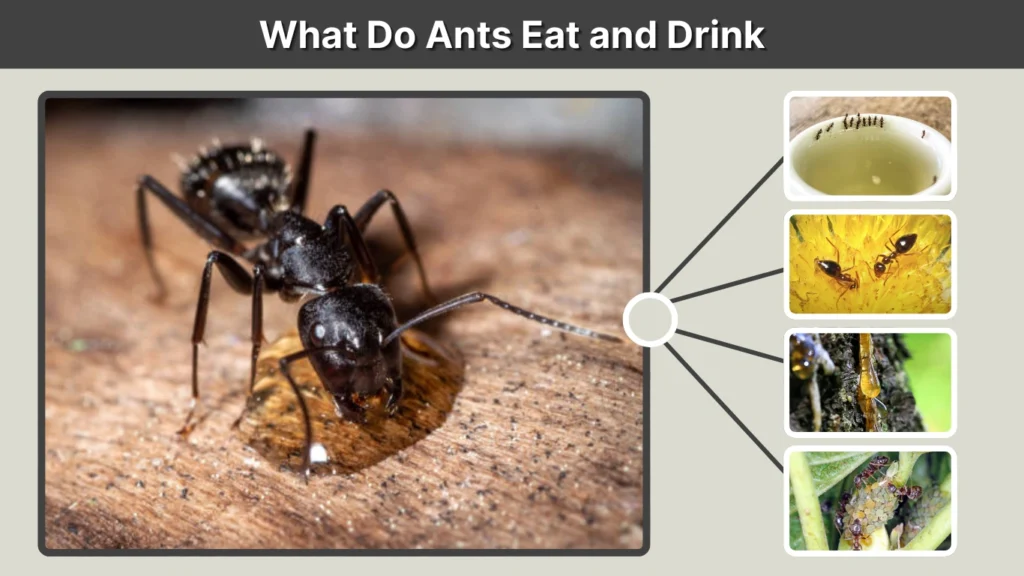
Ants do not only search for solid food. Liquids are equally important for their survival.
Liquid Foods Ants Rely On
Ants regularly consume:
- Water from soil, dew, or household sources
- Nectar from flowers
- Plant sap
- Honeydew secreted by aphids and other insects
Liquid carbohydrates are quickly shared within the colony through a process called trophallaxis, where ants exchange food mouth-to-mouth.
How Ants Find Food
Ants use efficient methods to locate food:
- Scent trails created by pheromones
- Group foraging strategies
- Rapid communication within the colony
Once a food source is found, hundreds of ants may follow the same trail.
What Insects and Animals Do Ants Eat
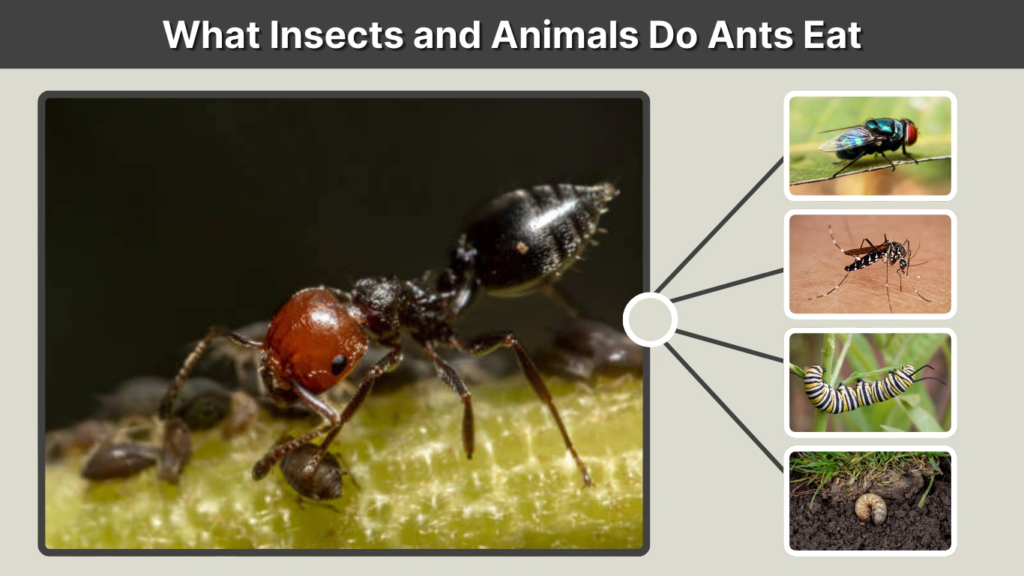
Protein is vital for ant colonies, especially for developing larvae.
What Insects Do Ants Eat
Ants commonly hunt or scavenge:
- Flies
- Mosquitoes
- Caterpillars
- Beetle larvae
- Termites
By eating insects, ants help control pest populations in nature.
What Animals Do Ants Eat
Some ants also consume:
- Small invertebrates
- Insect eggs
- Dead or injured animals
- Small reptiles or amphibians in rare cases (especially army ants)
Most ants are scavengers rather than active predators of large animals.
What Plants Do Ants Eat
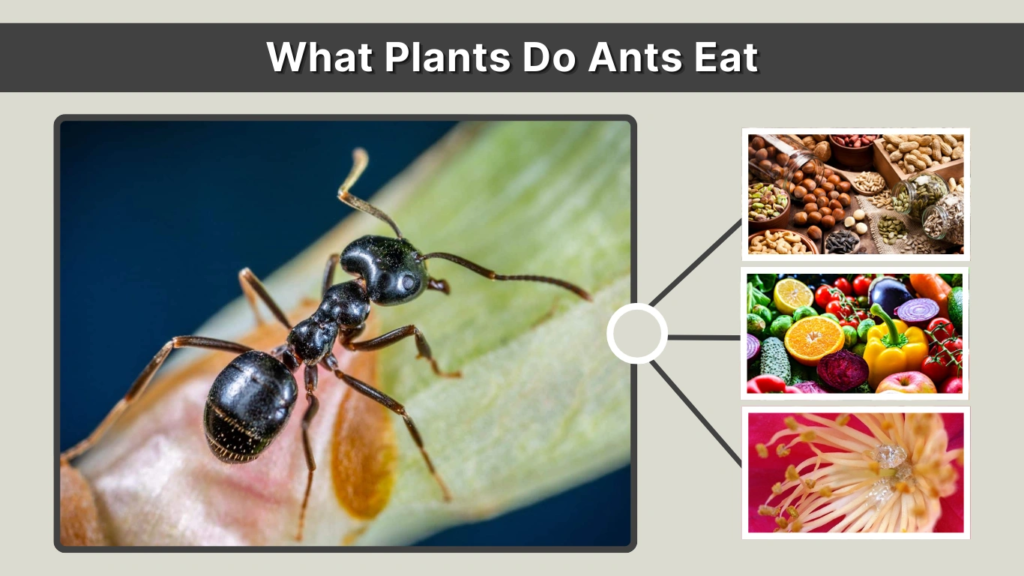
Although ants are not strict herbivores, plant-based foods are an important part of their diet.
Plant-Based Foods
Ants eat:
- Seeds
- Fruits
- Nectar
- Sap from plants
Harvester ants rely heavily on seeds, while many other species depend on nectar and honeydew.
Do Ants Damage Plants?
In most cases, ants do not directly damage plants. However:
- They may protect aphids that harm plants
- Large populations can disturb soil around roots
- Seed-harvesting ants may affect plant distribution
Overall, ants are more beneficial than harmful to plant ecosystems.
What Do Carpenter Ants Eat
Carpenter ants are often misunderstood because they nest in wood.
Carpenter ants eat:
- Insects
- Sugary foods like honeydew
- Protein-rich food scraps
Despite common belief, carpenter ants do not eat wood. They chew wood only to create nests, not for nutrition.
What Do Fire Ants Eat

Fire ants are aggressive and have a broad diet.
They commonly eat:
- Insects
- Small animals
- Seeds
- Greasy and protein-rich foods
- Human food waste
Their ability to consume almost anything makes them highly invasive.
What Do Red and Black Ants Eat
Red ants and black ants are common in both outdoor and indoor environments. Their diet is simple but highly adaptable.
Red and black ants eat:
- Sugary foods such as honey, syrup, and fruit juice
- Protein from insects and larvae
- Dead insects and organic matter
- Crumbs and food scraps found indoors
Because they consume both sugar and protein, these ants often switch food sources depending on colony needs.
What Do Harvester Ants Eat
Harvester ants are easily identified by their seed-collecting behavior.
Their primary diet includes:
- Seeds from grasses and plants
- Grains
- Occasionally dead insects
Harvester ants store seeds inside their nests, allowing them to survive in dry and desert environments where food is scarce.
What Do Leafcutter Ants Eat
Leafcutter ants have one of the most unique diets in the insect world.
Leafcutter ants do not eat leaves directly. Instead, they:
- Cut and carry leaves back to the nest
- Use leaves to grow fungus
- Eat the cultivated fungus as their main food source
This farming system allows leafcutter ants to sustain massive colonies in tropical regions.
What Do Army Ants Eat
Army ants are highly aggressive and constantly on the move.
Their diet includes:
- Insects
- Arthropods
- Eggs and larvae
- Small animals such as frogs, lizards, and rodents in rare cases
Army ants rely on group hunting and overwhelm prey with sheer numbers.
What Do Ants Eat in Different Environments
Ant diets change significantly depending on where they live.
What Do Ants Eat in the Wild
In natural habitats, ants feed on:
- Insects and larvae
- Nectar and honeydew
- Seeds and plant material
- Dead animals and organic matter
Wild ants play an important role in recycling nutrients.
What Do Ants Eat in the House
Inside homes, ants are attracted to:
- Sugar
- Bread crumbs
- Grease and oils
- Pet food
- Spilled drinks
Even small food traces can attract large numbers of ants.
What Do Ants Eat in the Desert
Desert ants survive on:
- Seeds
- Dead insects
- Rare nectar sources
Their ability to store food and conserve water helps them survive extreme heat.
What Do Ants Eat in the Rainforest
Rainforest ants consume:
- Insects
- Fruits
- Nectar
- Fungus (leafcutter ants)
Food abundance allows rainforest ants to form very large colonies.
What Do Ants Eat in Winter
During winter:
- Ants rely on stored food
- Activity levels drop significantly
- Some species enter a dormant state
This reduces their need for constant feeding.
What Do Ants Eat in an Ant Farm
Ant farms require a controlled and balanced diet.
Best Foods for Ant Farms
- Sugar water or honey
- Small insects such as fruit flies
- Protein gel
- Clean water source
Foods to Avoid
- Spicy foods
- Salty foods
- Processed human food
- Toxic substances
Proper feeding keeps ant colonies healthy and active.
Special Ant Roles and Diet
What Do Queen Ants Eat
Queen ants primarily rely on:
- Stored fat reserves
- Food provided by worker ants
During early colony formation, queens may survive without external food for long periods.
What Do Ant Larvae Eat
Ant larvae consume:
- High-protein foods
- Pre-digested insects fed by workers
Larvae are the main consumers of protein within the colony.
What Do Soldier Ants Eat
Soldier ants eat:
- Protein-heavy foods
- Larger prey items
Their diet supports strength and defense capabilities.
Safety and Common Concerns
What to Do After Accidentally Eating Ants
Accidentally eating ants is usually harmless.
- Rinse your mouth
- Drink water
- Seek medical help if allergic reactions occur
What to Do If a Dog Eats Ant Poison
If a dog eats ant poison:
- Contact a veterinarian immediately
- Do not induce vomiting unless advised
- Monitor for symptoms such as vomiting or seizures
Related Animals
What Do Anteaters Eat
Anteaters primarily eat:
- Ants
- Termites
What Do Anteaters Eat Besides Ants
In addition to ants, they consume:
- Termites
- Insect larvae
- Other small insects
FAQs
Do ants eat meat?
Yes, many ant species eat meat, especially insects and dead animals. Protein is essential for feeding larvae and supporting colony growth.
Do ants drink water?
Ants need water to survive. They drink from dew, moist soil, plant sap, and household water sources.
Do ants eat plants?
Some ants eat seeds, nectar, and sap. Leafcutter ants use plants to grow fungus rather than eating them directly.
What food attracts ants the most?
Sugary foods such as honey, syrup, fruit juice, and soda attract ants the most. Greasy foods are also highly attractive.
What do ants not like to eat?
Ants usually avoid strong-smelling substances like vinegar, citrus, peppermint, and spicy foods.
