
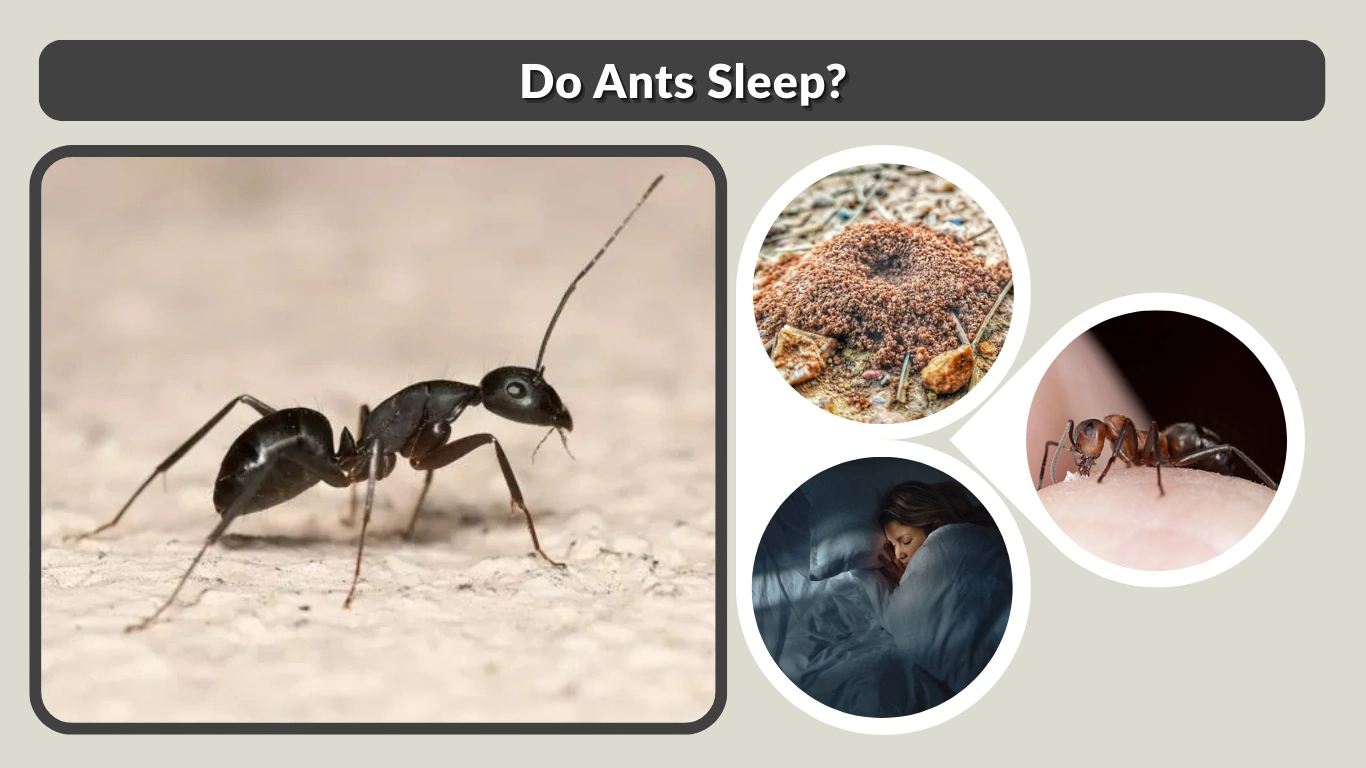
Many people wonder whether ants ever sleep because they seem active at all hours of the day and night. You may see ants crawling in the kitchen late at night or moving in long lines during the daytime, which raises a simple question: do ants sleep at all? The short answer is yes, ants do rest, but not in the same way humans do. Instead of long periods of deep sleep, ants follow short rest cycles that allow their colonies to stay active almost constantly.
Do Ants Sleep at All?
Ants do not sleep like humans or other mammals. They do not lie down, close their eyes, and remain inactive for hours. Instead, ants experience short periods of rest that are sometimes called “micro-naps.” These rest periods last only a few minutes at a time and happen many times throughout the day and night.
Scientists classify this behavior as a form of sleep because resting ants show reduced movement and slower responses to stimuli. However, because these rest periods are so short, ants appear almost always awake. This unique sleep pattern allows ant colonies to function continuously without completely shutting down.
How Do Ants Sleep or Rest?
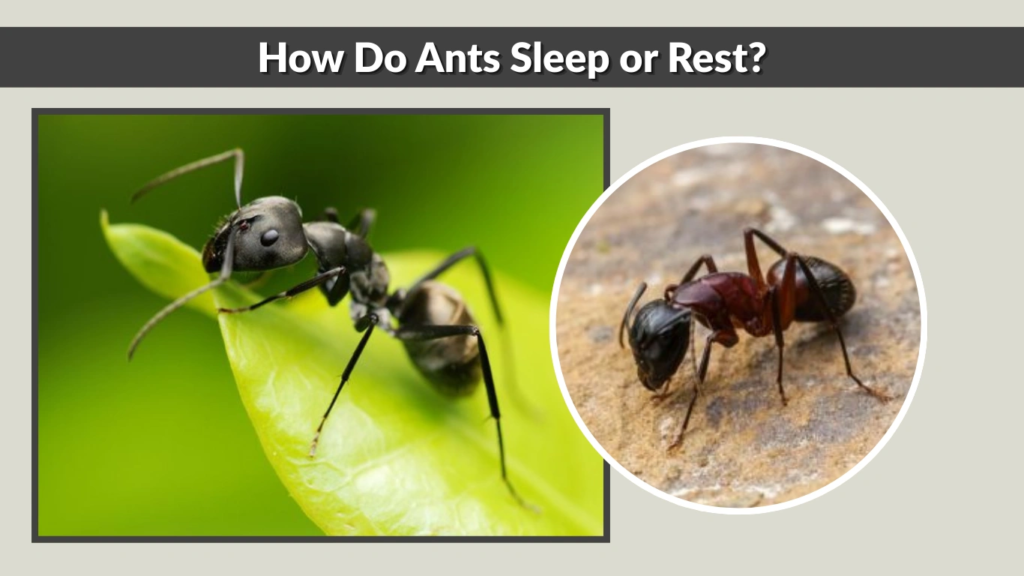
Ant rest looks very different from human sleep. Ants do not need beds, darkness, or long uninterrupted hours of rest to recover energy.
What Ant Rest Looks Like
When ants rest, they usually remain standing and completely still. Their antennae stop moving, and their reactions slow down. Ants do not close their eyes because they do not have eyelids. Some ants may slightly lower their bodies, but most simply pause where they are.
These short rest periods help ants conserve energy while still allowing them to react quickly if danger appears. Because ants rely heavily on chemical signals rather than vision, they can resume activity almost instantly.
How Long Do Ants Sleep?
The amount of rest an ant gets depends on its role in the colony. Worker ants typically rest in very short bursts that last from a few seconds to a few minutes. Over a full day, a worker ant may accumulate several hours of rest, but never all at once.
Instead of sleeping once per night, ants rest dozens or even hundreds of times a day. This frequent rest pattern keeps them alert and ready to work at any time. Ants do not need long sleep cycles because their bodies are adapted for constant activity and quick recovery.
When Do Ants Sleep – Day or Night?
Ants do not follow a strict day-and-night sleep schedule like humans. They rest whenever their bodies need it, regardless of whether it is light or dark. This is why ants can be seen moving both during the day and late at night.
Some ant species are more active during cooler nighttime hours, especially indoors, while others prefer daytime activity. Temperature, food availability, and the ant’s role in the colony all influence when an ant chooses to rest. Because rest happens in short bursts, ants never fully disappear at any time of day.
Do Ant Colonies Ever Sleep?
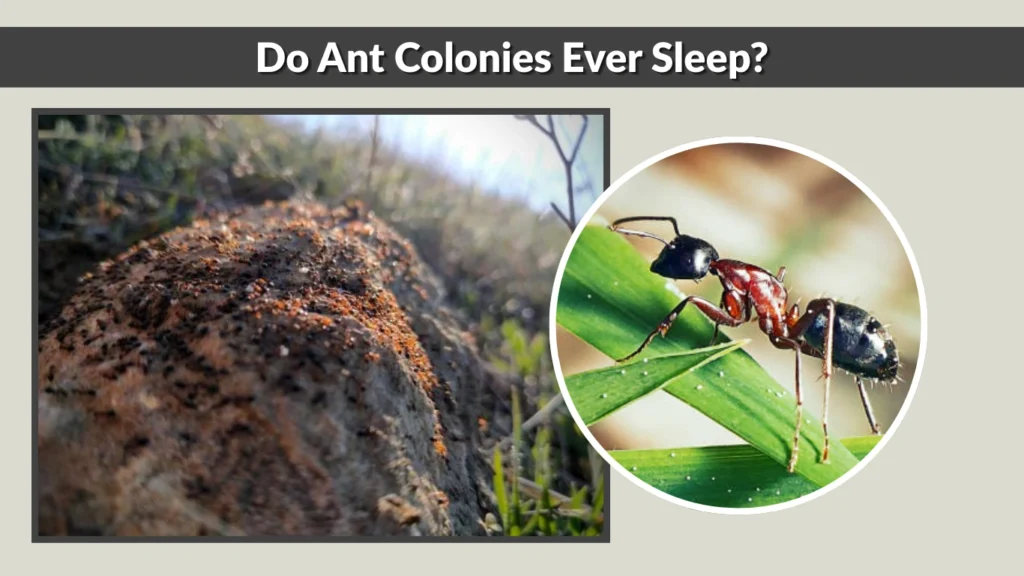
An entire ant colony never sleeps at the same time. While individual ants rest, others remain active. This system ensures that the nest is always protected, food collection continues, and communication between ants never stops.
Different groups of ants rest at different times, creating a constant cycle of activity. This is why ant colonies appear to operate non-stop. Even when activity slows down, some ants are always awake and working.
Where Do Ants Sleep?
Most ants rest inside their nest, usually in tunnels or chambers where they feel safe. Resting inside the nest protects them from predators and harsh environmental conditions. Scout ants may briefly rest outside the nest, but this is less common.
The nest provides a stable environment where ants can rest without fully shutting down. This is another reason ants can respond so quickly to threats or food opportunities.
Do Ants Sleep in Winter?
During winter, ants do not sleep in the traditional sense, but their activity slows down significantly. Outdoor ants enter a state similar to dormancy, where movement and foraging are reduced to conserve energy. This is often mistaken for sleep, but it is actually a survival response to cold temperatures and limited food.
Ants that live indoors may remain active throughout winter because indoor temperatures stay warm. These ants continue their normal rest cycles, which is why people sometimes notice ants inside homes even during cold months.
Do Ants Bite You in Your Sleep?
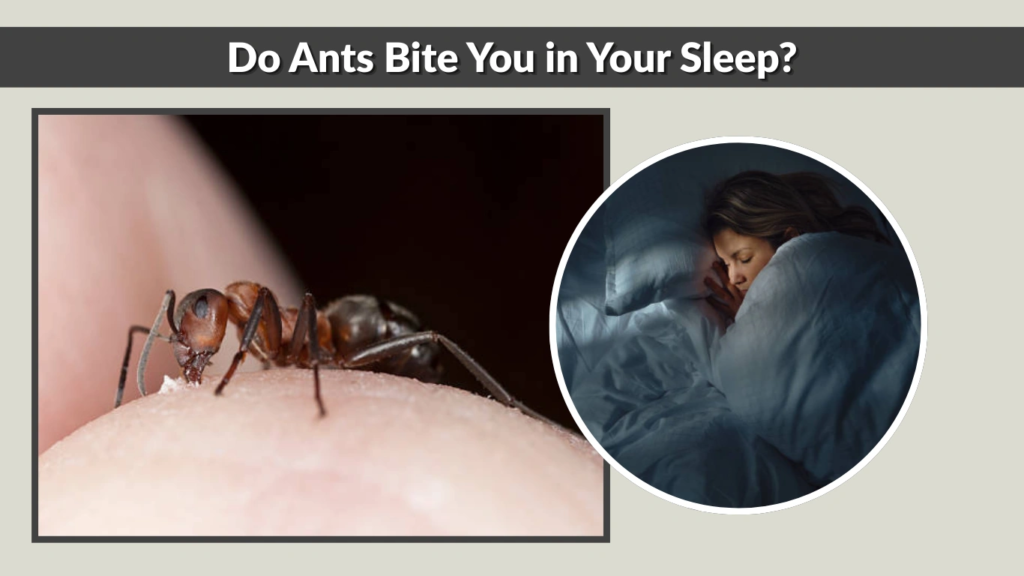
Ants do not bite people because they are asleep. Bites usually happen when ants are disturbed or when they detect food, sweat, or moisture on the skin. If you eat in bed or have sugary residue on sheets, ants may crawl onto the bed while searching for food.
In some cases, ant nests inside walls or near bedrooms can lead to ants wandering onto beds at night. Preventing bites involves keeping food out of sleeping areas, washing bedding regularly, and eliminating ant infestations at the source.
Do Different Ants Sleep Differently?
Not all ants rest in the same way. Rest patterns vary based on an ant’s role and species.
Do Worker Ants Sleep?
Worker ants take many short rest periods throughout the day and night. These brief pauses allow them to stay productive without needing long sleep.
Do Queen Ants Sleep?
Queen ants rest for longer periods than workers. Because their main role is reproduction, they remain protected inside the nest and can afford longer rest cycles.
Do Carpenter Ants, Fire Ants, and Sugar Ants Sleep?
Most ant species follow similar rest patterns, but activity levels differ. Carpenter ants are often more active at night, while fire ants may be active both day and night depending on temperature and environment.
Common Myths About Ant Sleep
There are many misconceptions about whether ants sleep.
- Ants never sleep: False. Ants do rest, but in short cycles.
- Ants sleep all night: False. Ants rest throughout the day and night.
- Ants sleep like humans: False. Ant rest is very different from human sleep.
Understanding these myths helps explain why ants seem constantly active.
FAQs
Do ants sleep at night?
Ants do not sleep only at night like humans. Instead, they take short rest periods throughout the day and night. Because different ants rest at different times, colonies remain active 24/7, which is why ants are often seen moving around at night.
How long do ants sleep?
Ants do not sleep for long hours at once. Worker ants rest in short bursts that last only seconds or minutes. Over a full day, these small rest periods can add up to several hours, but ants never sleep continuously.
Do ants ever fully stop moving?
No, ant colonies never fully stop moving. While individual ants rest, others remain active. This system ensures the colony is always functioning, protected, and able to gather food or respond to threats.
Do ants bite people in their sleep?
Ants do not bite people because they are asleep. Bites usually occur when ants are searching for food, salt, or moisture on the skin or when they feel disturbed. Food crumbs or sweat can attract ants to beds at night.
Do different ant species sleep differently?
Most ant species rest in similar short cycles, but activity levels vary. For example, carpenter ants are often more active at night, while other ants may be active during the day. The ant’s role in the colony also affects how often it rests.
