
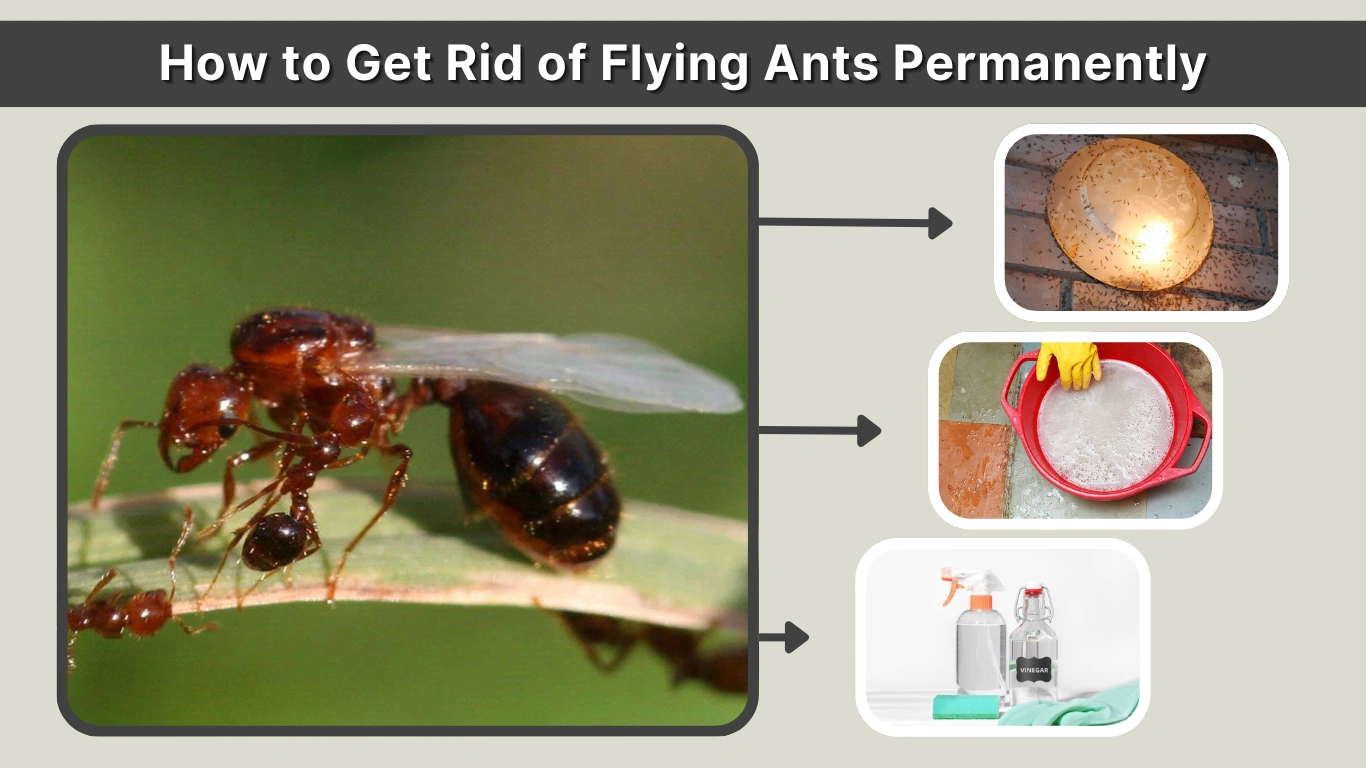
Flying ants can be alarming when they suddenly appear inside your home, especially in kitchens, bathrooms, or near windows. These winged ants are not a separate species but reproductive ants searching for a place to start new colonies. While a flying ant invasion often lasts only a short time, ignoring it can lead to long-term ant problems. Understanding what flying ants are, why they appear, and how to remove them quickly is the first step to effective control.
What Are Flying Ants?
Flying ants, also called alates, are mature ants that develop wings for reproduction. They emerge during specific seasons, usually in warm and humid weather, to participate in mating flights. After mating, female flying ants shed their wings and attempt to establish new nests.
Not all ants can fly. Only reproductive males and females develop wings, while worker ants remain wingless. Seeing flying ants indoors often indicates a nearby nest or ants entering from outside during a swarm.
Flying Ants vs Termites: How to Tell the Difference
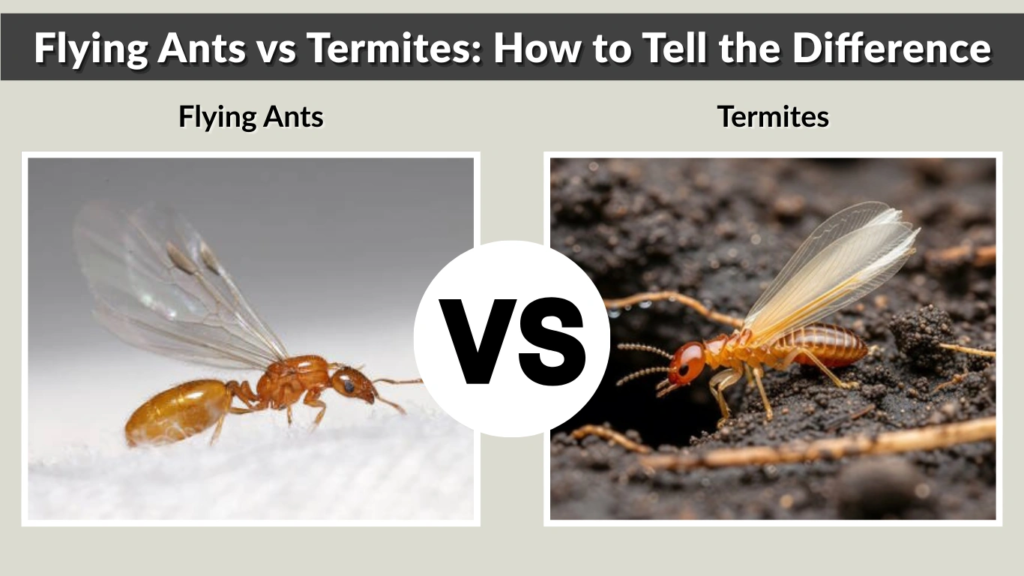
Flying ants are frequently confused with termites, but there are clear differences:
- Flying ants have pinched waists, while termites have straight bodies
- Ant wings are unequal in size, termite wings are equal
- Ants have bent antennae, termites have straight ones
- Flying ants usually swarm for a short time, termites may persist longer
Correct identification matters because termites require very different treatment methods.
Why Do Flying Ants Invade Homes?
Flying ants enter homes for several reasons. The most common cause is a mating swarm, which occurs after rain when humidity and temperature are ideal. Indoor lighting attracts flying ants at night, pulling them toward windows and lamps.
Homes also provide moisture, warmth, and food sources. Cracks in walls, open windows, vents, and poorly sealed doors make easy entry points. In some cases, flying ants may already be nesting inside wall cavities or foundations.
Where Flying Ants Are Commonly Found Indoors
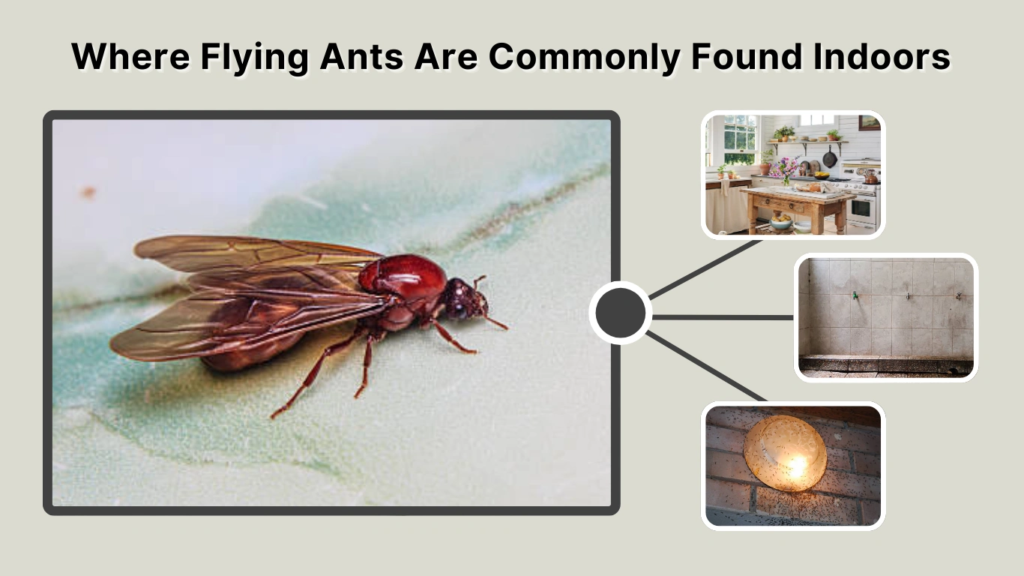
Flying ants are often spotted in specific areas of the home, including:
- Kitchens with exposed food
- Bathrooms with high humidity
- Near windows and light fixtures
- Wall cavities and ceilings
- Basements and crawl spaces
Outdoors, they commonly gather around pools, garden pots, lawns, and patios.
How to Get Rid of Flying Ants Fast
If you’re dealing with a sudden swarm, quick action is essential. Start by eliminating visible flying ants immediately:
Vacuuming is one of the fastest and safest ways to remove flying ants indoors. Dispose of the vacuum bag immediately to prevent escape. A spray made from dish soap and water can also kill flying ants on contact by breaking down their protective coating.
Turning off lights at night and closing curtains can reduce attraction. Opening windows on the opposite side of the house may help guide ants back outside during a swarm.
What Kills Flying Ants Instantly?
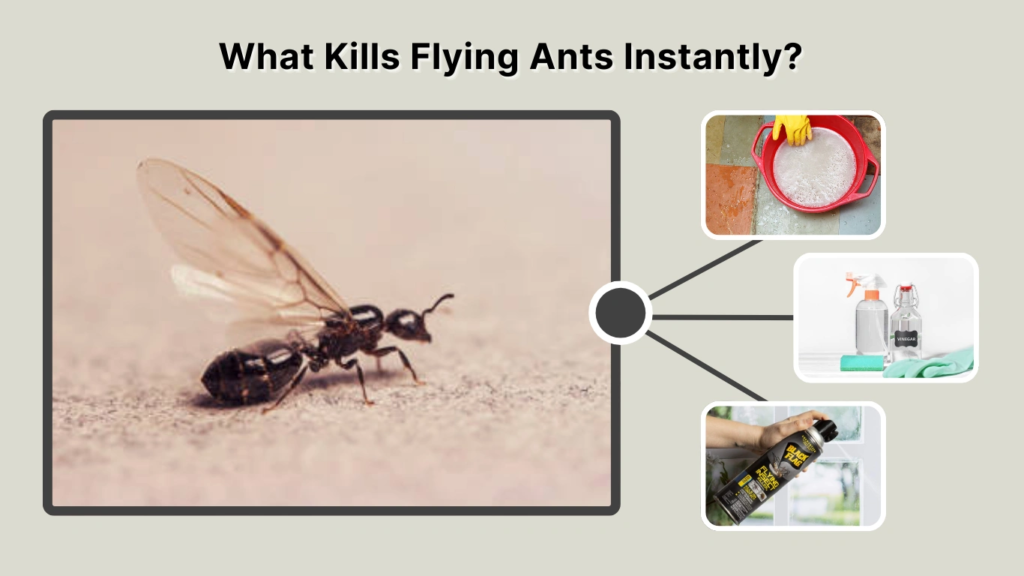
Several household and commercial products can kill flying ants quickly:
- Soapy water – effective and safe indoors
- Vinegar sprays – kills on contact but not nests
- Commercial ant sprays – quick results but temporary
- Aerosol insecticides – effective for heavy swarms
While these methods kill visible ants, they do not eliminate the source of the infestation.
How to Get Rid of Flying Ants Naturally
Natural remedies are popular for homeowners who want safe solutions. Vinegar and water sprays can kill ants and remove scent trails. Essential oils such as peppermint, tea tree, and lemon can repel flying ants when applied near entry points.
Citrus peels placed near windows and doors may also deter ants. Diatomaceous earth can be used in dry areas to kill ants that crawl through it, though it is less effective for flying individuals.
How to Get Rid of Flying Ants in the House
Indoor control requires more than killing visible ants. Kitchens should be kept free of crumbs and spills, with food sealed tightly. Bathrooms should be well-ventilated to reduce moisture.
If flying ants are coming from wall cavities, surface sprays will not solve the problem. In these cases, ant bait products that workers carry back to the nest are far more effective.
How to Get Rid of Flying Ants Outdoors
Outdoor treatment is essential if you want to stop flying ants from returning indoors. Start by inspecting your yard for ant nests, which often appear as small soil mounds or disturbed ground. Lawns, garden beds, patios, and fence lines are common nesting areas.
Applying ant bait around the perimeter of your home is one of the most effective outdoor solutions. Worker ants carry the bait back to the nest, poisoning the queen and eliminating the colony from within. For heavy infestations, granular ant treatments or liquid soil drenches can reduce population quickly.
Flying ants in garden pots can be controlled by repotting plants, replacing soil, and rinsing roots. Maintaining dry soil and removing decaying organic matter helps prevent reinfestation.
How to Get Rid of Flying Ants Permanently
Permanent control depends on destroying the nest and eliminating the queen. Killing visible flying ants only provides temporary relief. Ant baits are the best long-term solution because they target the colony at its source.
Seal cracks around windows, doors, and foundations to block entry points. Fix leaks and reduce moisture, as flying ants are attracted to damp environments. Regular cleaning removes scent trails that guide ants back inside.
Consistency is key. Baits may take several days or weeks to fully eliminate a colony, but they prevent future swarms.
How to Get Rid of Specific Types of Flying Ants
Different flying ant species may require slightly different approaches:
Flying carpenter ants often indicate damp or damaged wood. Repair moisture problems and treat wooden structures with appropriate insecticides.
Crazy ants are fast-moving and difficult to control. Baiting combined with perimeter treatments works best.
Field ants usually nest outdoors and enter homes during swarms. Outdoor nest treatment is essential.
Black, red, or tiny flying ants can typically be controlled using standard ant bait and sealing entry points.
Correct identification helps ensure effective treatment.
How Do Exterminators Get Rid of Flying Ants?
Professional exterminators begin with a thorough inspection to locate nests and entry points. They use specialized tools to identify colonies hidden in walls, attics, or underground.
Exterminators apply commercial-grade baits and insecticides that are not always available to homeowners. In severe cases, they may use dust treatments inside wall cavities or soil injections outdoors.
Professional treatment is recommended if flying ants persist despite repeated DIY efforts or if nests are located in structural areas.
How to Deter and Repel Flying Ants
Preventing flying ants is easier than dealing with an infestation. Reduce outdoor lighting near doors and windows at night, as lights attract flying ants during mating season.
Keep your home dry by using dehumidifiers and repairing leaks. Store food in airtight containers and clean spills immediately. Applying natural repellents like peppermint oil around entry points can discourage ants from entering.
Seasonal inspections in spring and summer help detect nests early before swarming occurs.
Common Mistakes When Dealing With Flying Ants
Many homeowners focus only on killing visible ants, ignoring the nest. Overusing sprays can scatter ants and make the problem worse. Confusing flying ants with termites can also lead to ineffective treatment.
Skipping prevention steps allows ants to return year after year. Long-term success requires a combination of elimination and prevention.
FAQs
How do you get rid of flying ants indoors?
The fastest way is to vacuum visible ants and use soapy water sprays. For long-term control, ant baits are necessary to eliminate the nest and queen.
What is the best way to get rid of flying ants?
Using ant bait combined with sealing entry points is the most effective method. This approach targets both visible ants and the colony source.
Are flying ants dangerous?
Flying ants are not dangerous to humans. However, they can indicate an underlying ant infestation that may worsen if untreated.
Why do flying ants suddenly appear?
Flying ants appear during mating season, usually after rain and warm weather. Indoor swarms often come from nearby nests.
Can flying ants come back after treatment?
Yes, if the nest or queen is not eliminated. Proper baiting and prevention are essential for permanent removal.
