
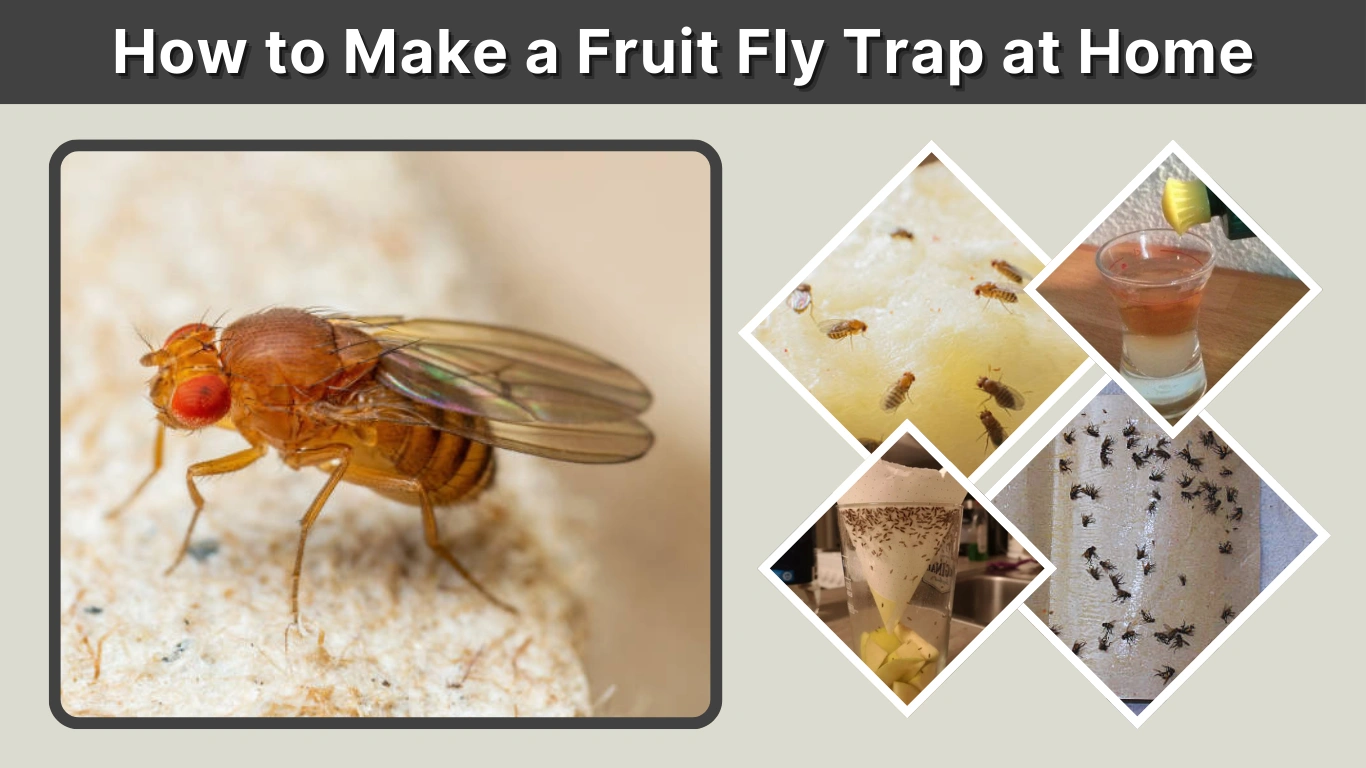
Fruit flies are small, fast, and incredibly frustrating. One day your kitchen is fine, and the next it’s filled with tiny flies hovering around fruit, sinks, and trash cans. While store-bought traps exist, they’re often expensive and slow to work. The good news is that you can make a highly effective fruit fly trap at home using simple household items. This guide explains why fruit flies appear, how homemade traps work, and exactly how to make the best ones step by step.
Why Fruit Flies Appear in Your Home
Fruit flies are attracted to fermenting sugars and moisture. Even clean homes can suddenly have infestations if there’s a food source nearby. Once inside, fruit flies reproduce quickly, laying eggs that hatch within days.
Common attractants include:
- Overripe fruit or vegetables
- Open trash or compost bins
- Sticky spills on counters or floors
- Dirty drains and garbage disposals
- Empty wine bottles or cans
Kitchens are the most common location, but bathrooms and laundry areas can also attract fruit flies due to moisture and organic residue.
How Homemade Fruit Fly Traps Work
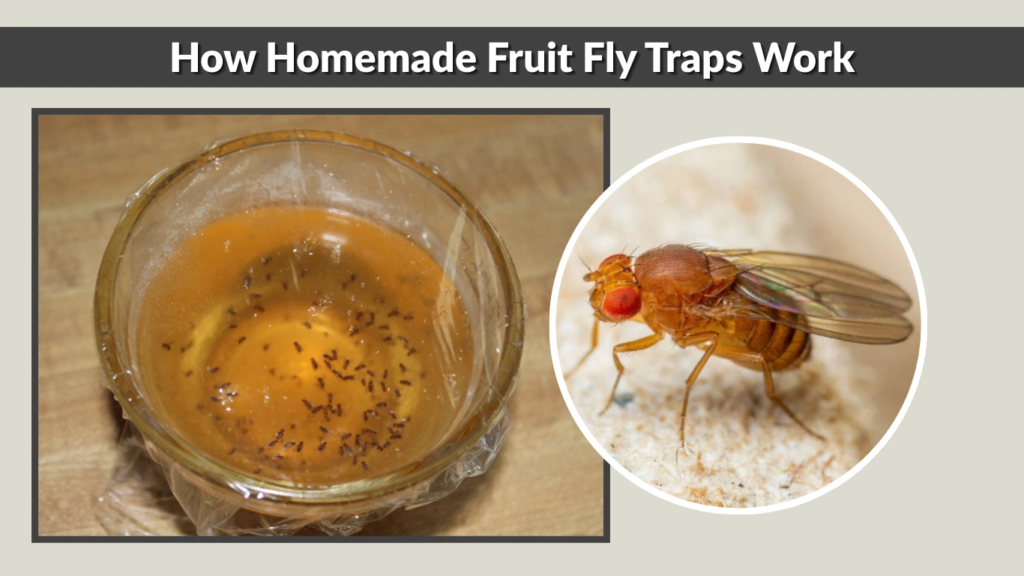
Homemade fruit fly traps work by mimicking the smells fruit flies naturally seek. Most traps use fermentation scents to attract flies and a physical or liquid barrier to prevent escape.
Effective traps rely on:
- Fermented odors (vinegar, wine, fruit)
- Reduced surface tension (soap causes flies to sink)
- Funnels or covers that trap flies inside
When placed correctly, homemade traps can eliminate fruit flies just as effectively as commercial products.
The Most Effective Fruit Fly Trap You Can Make at Home
Apple Cider Vinegar and Dish Soap Trap (Best Overall)
This is the most reliable and widely recommended homemade fruit fly trap. Apple cider vinegar smells like fermented fruit, which fruit flies find irresistible. Dish soap breaks the surface tension, preventing flies from escaping.
What You Need
- A small bowl, jar, or cup
- Apple cider vinegar
- Liquid dish soap
Step-by-Step Instructions
- Pour about ½ cup of apple cider vinegar into the container.
- Add 2–3 drops of dish soap.
- Gently swirl to mix (do not create bubbles).
- Place the trap near fruit flies or breeding areas.
Within hours, fruit flies will begin falling into the trap. Significant reduction usually occurs within 1–3 days.
Alternative Homemade Fruit Fly Traps
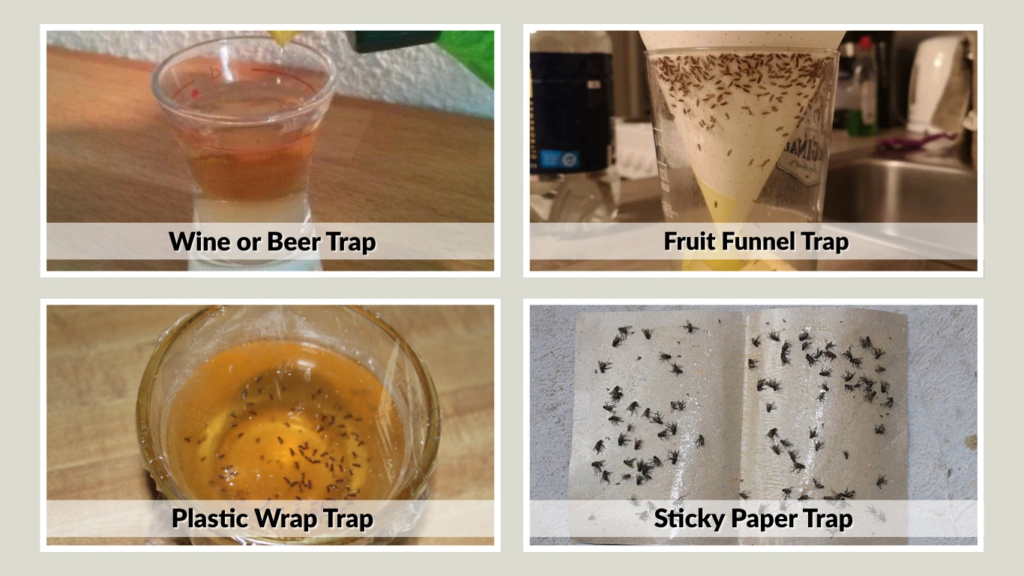
Wine or Beer Trap
Fermented alcohol works similarly to vinegar and is especially effective if the smell is strong.
How to make it:
- Pour a small amount of leftover wine or beer into a glass
- Add a drop of dish soap
- Leave uncovered near fruit flies
This method works well but may be slightly slower than apple cider vinegar.
Fruit Funnel Trap
This trap uses real fruit as bait and a funnel shape to trap flies inside.
What you need:
- A jar or plastic bottle
- Ripe fruit or banana peel
- Paper (to make a funnel)
Steps:
- Place fruit at the bottom of the container
- Roll paper into a funnel with a small opening
- Insert funnel narrow-end down
- Tape edges to seal gaps
Fruit flies enter easily but struggle to escape.
Plastic Wrap Trap
This is a variation of liquid traps and works well for mild infestations.
How to make it:
- Fill a bowl with apple cider vinegar or wine
- Cover tightly with plastic wrap
- Poke very small holes using a toothpick
Flies enter through the holes and become trapped inside.
Sticky Paper Trap (Chemical-Free)
Sticky traps are useful where liquids might spill.
How to make it:
- Coat strips of paper with honey or sugar syrup
- Hang near fruit fly activity
This method works best as a supplemental trap.
Where to Place Fruit Fly Traps for Best Results
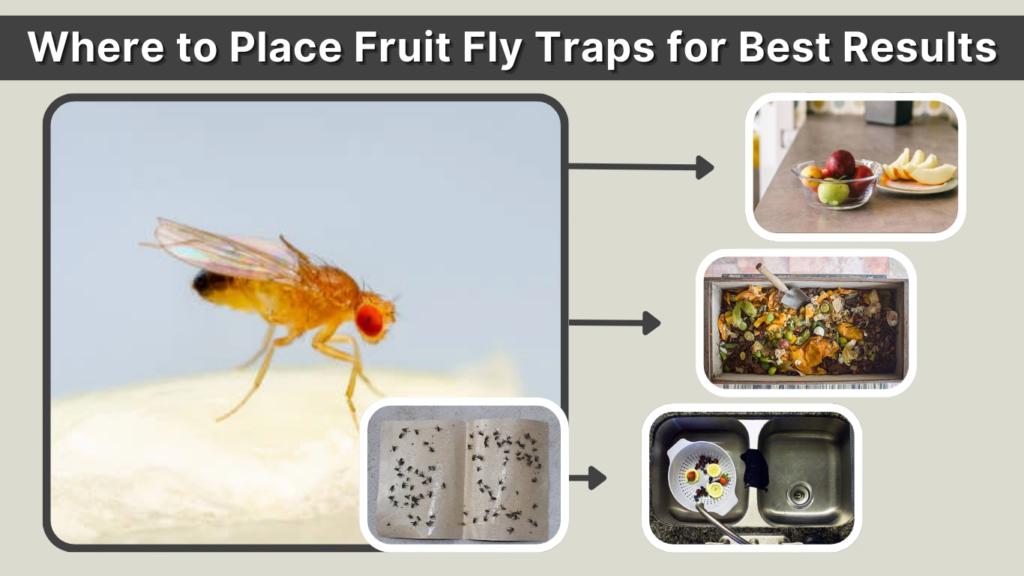
Placement can determine success or failure. Always place traps close to the source.
Best locations include:
- Next to fruit bowls
- Near trash cans or compost
- Beside kitchen sinks and drains
- Near recycling bins or bottles
If flies are present in multiple rooms, use multiple traps.
Common Mistakes That Reduce Trap Effectiveness
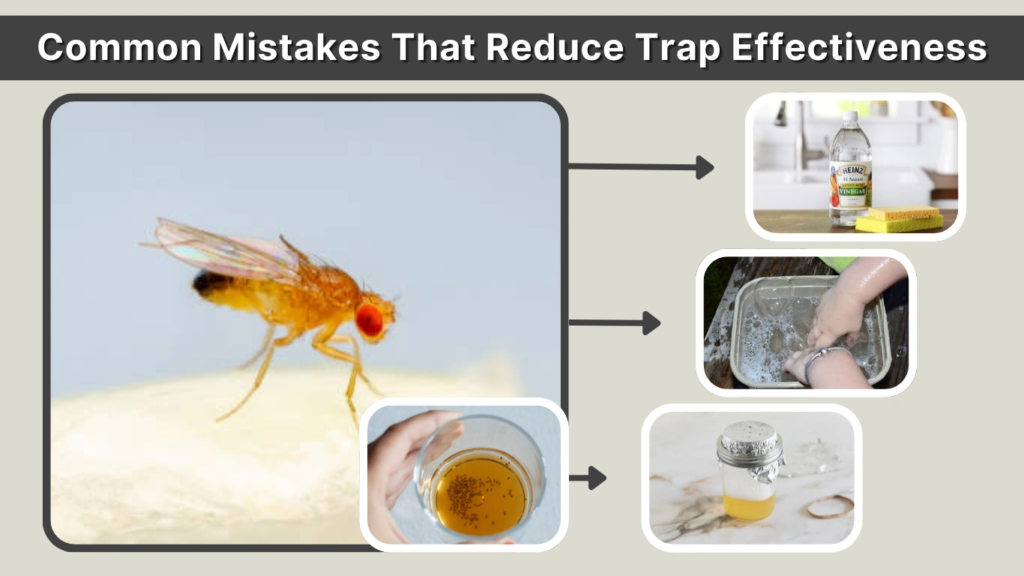
Avoid these common errors:
- Using white vinegar instead of apple cider vinegar
- Adding too much soap, which masks the scent
- Placing traps too far from breeding sources
- Leaving ripe fruit uncovered nearby
- Ignoring dirty drains
Removing competing food sources makes traps work much faster.
How Long It Takes to Get Rid of Fruit Flies
Most homemade traps work quickly when paired with basic cleaning.
Typical timeline:
- Within 24 hours: Flies begin collecting
- 2–3 days: Noticeable reduction
- 5–7 days: Most infestations eliminated
Large infestations may require multiple traps and repeated drain cleaning.
How to Prevent Fruit Flies From Coming Back
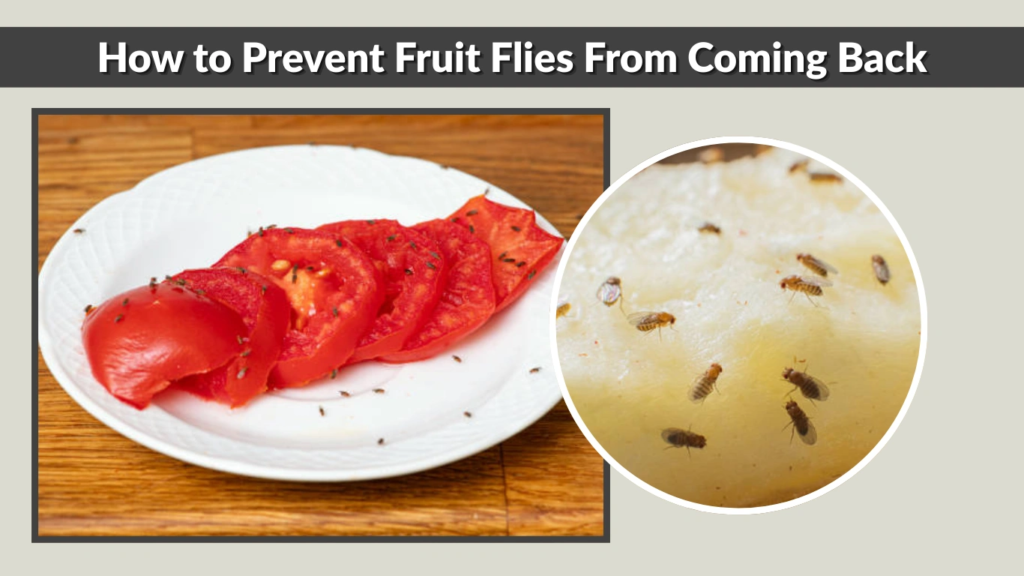
Prevention is essential to long-term control.
Helpful tips:
- Store fruit in the refrigerator
- Rinse produce immediately after buying
- Empty trash and compost daily
- Clean drains weekly with hot water
- Wipe counters every night
Consistent habits prevent repeat infestations.
Homemade vs Store-Bought Fruit Fly Traps
| Feature | Homemade Traps | Store-Bought Traps |
| Cost | Very low | Moderate to high |
| Effectiveness | High when placed well | Varies |
| Safety | Pet-friendly | Some contain chemicals |
| Availability | Immediate | Requires purchase |
For most homes, homemade traps offer better value and faster results.
Frequently Asked Questions
Does white vinegar kill fruit flies?
Yes, but it doesn’t attract them well. Apple cider vinegar is much more effective as a trap.
Can sugar replace vinegar?
Sugar alone is less effective unless it ferments. Fruit or vinegar works better.
Are homemade traps safe for pets?
Yes, if placed out of reach. Avoid essential oils or toxic additives.
Why do fruit flies keep returning?
Hidden breeding sites like drains or trash bins are usually the cause.
What is the fastest solution?
Apple cider vinegar with dish soap combined with cleaning drains and removing exposed food.
