
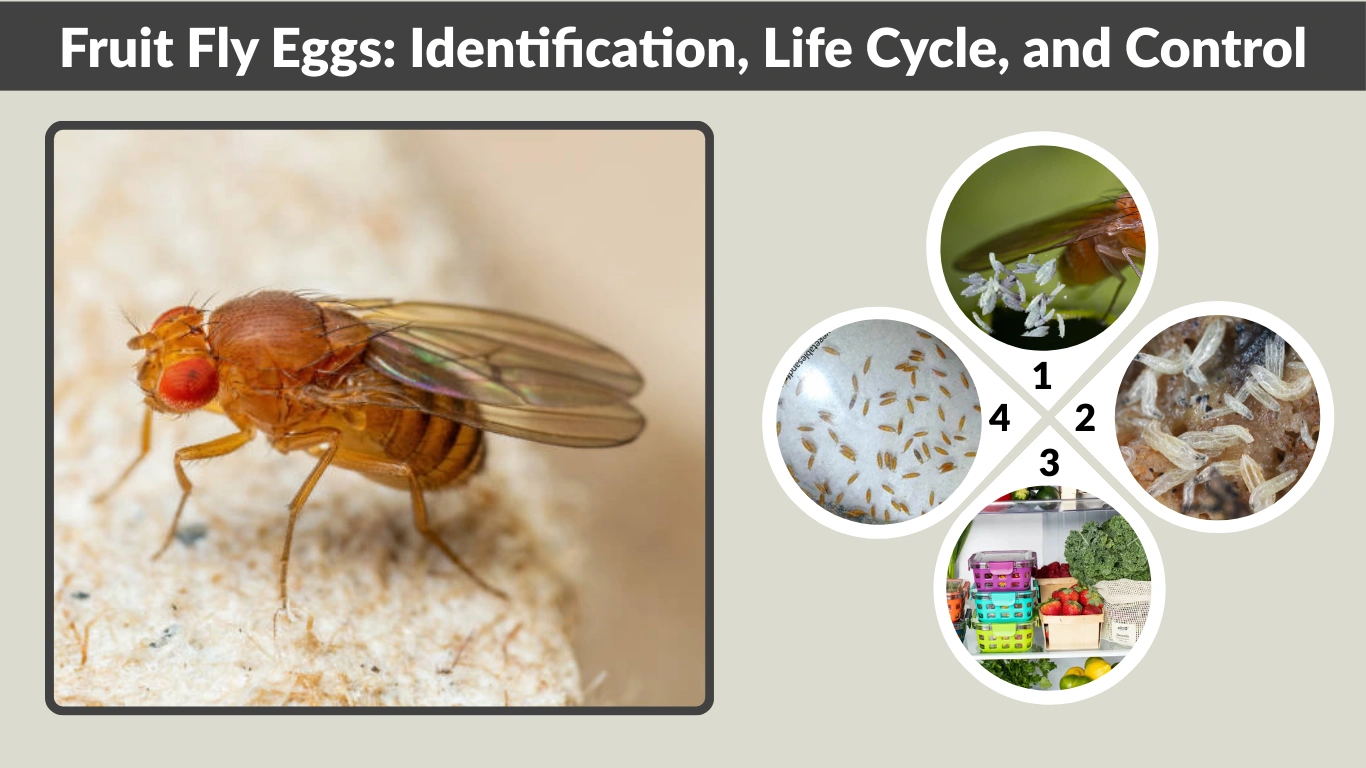
Fruit fly eggs are the earliest and most overlooked stage of a fruit fly infestation. Though extremely small and nearly invisible, these eggs develop rapidly and can lead to a full outbreak within days. Many infestations begin without anyone noticing because the eggs are hidden in moist, fermenting organic matter. Understanding what fruit fly eggs look like, where they are laid, and how quickly they hatch is essential for early detection and effective control before the population explodes.
What Are Fruit Fly Eggs?
Fruit fly eggs are the reproductive starting point of common fruit fly species such as Drosophila melanogaster. These eggs are laid by adult females near food sources that will support larval growth. Unlike adult flies, the eggs do not move and are rarely seen without magnification. Their main biological purpose is rapid reproduction, allowing fruit flies to multiply quickly in favorable environments. Because eggs hatch so fast, eliminating them early is critical to stopping infestations.
Identification of Fruit Fly Eggs

- Translucent white to pale yellow in color
- Elongated and slightly curved shape
- About 0.5 millimeters in length
- Smooth, moist surface
- Usually invisible to the naked eye
Due to their size and color, fruit fly eggs often blend into the surface of fruit, organic residue, or drain buildup, making detection difficult until larvae appear.
Where Fruit Flies Lay Their Eggs
Fruit flies seek out environments rich in moisture and fermentation when laying eggs. Common locations include overripe or damaged fruits, decaying vegetables, compost bins, trash cans, and recycling containers. Eggs are also frequently deposited inside sink drains, garbage disposals, and damp mops or sponges. Any place where organic material breaks down can serve as an egg-laying site, even if it appears clean on the surface.
Fruit Fly Egg-Laying Process

Female fruit flies use scent and chemical cues to locate ideal egg-laying environments. Once a suitable spot is found, a female can deposit dozens of eggs at a time, often embedding them just beneath the surface of food or residue. A single female may lay hundreds of eggs over her lifetime. Warm temperatures, high humidity, and fermenting sugars significantly increase egg-laying activity, which is why infestations worsen in kitchens during warmer months.
Life Cycle After the Egg Stage
After being laid, fruit fly eggs enter a short incubation period. Once hatched, the eggs release larvae (maggots) that immediately begin feeding on nearby organic matter. This feeding stage fuels rapid growth before the larvae move on to pupation. Because the egg stage is so brief, infestations can escalate quickly if eggs are not eliminated early.
How Long Do Fruit Fly Eggs Take to Hatch?
Fruit fly eggs typically hatch within 24 to 30 hours under ideal conditions. Warm indoor temperatures can shorten this time even further. Cooler environments slow development but do not always kill the eggs. High humidity and abundant food sources dramatically increase hatching success, allowing larvae to emerge rapidly and remain hidden until they grow larger.
Fruit Fly Eggs vs Larvae

| Feature | Eggs | Larvae |
| Size | Extremely tiny (≈0.5 mm) | Larger and visible |
| Movement | None | Active wriggling |
| Visibility | Hard to detect | Easy to see |
| Development Stage | Earliest | Feeding stage |
This distinction is important because most people only notice infestations once larvae appear, long after eggs have already hatched.
Why Fruit Fly Eggs Are Hard to Eliminate
Fruit fly eggs are difficult to remove because of their microscopic size and protected placement. Eggs are often hidden beneath fruit skins, inside drain biofilm, or within organic debris where surface cleaning cannot reach. Their rapid hatching cycle leaves a narrow window for effective intervention, and many cleaning products kill adults without affecting eggs.
How to Kill Fruit Fly Eggs Effectively
Boiling water is one of the most effective ways to destroy eggs in drains, as it penetrates residue and kills hidden eggs instantly. Enzyme-based cleaners work well by breaking down organic matter that eggs rely on. Vinegar and baking soda can help loosen buildup but may not kill all eggs alone. Bleach can be effective when used safely and correctly, especially in drains and garbage areas.
Natural Prevention Methods
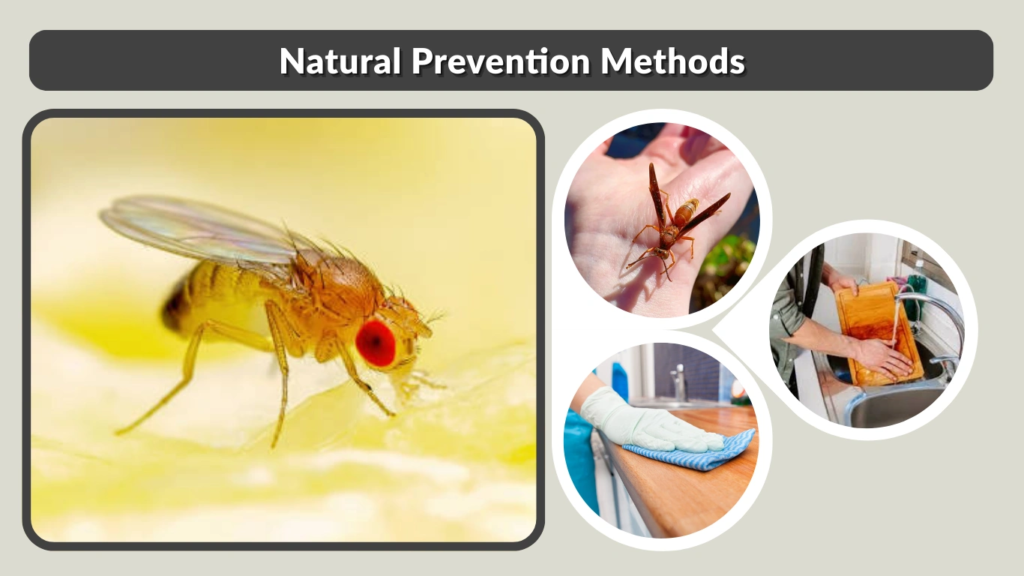
Preventing fruit fly eggs is far easier than eliminating an established infestation. The most effective strategy is removing all potential egg-laying sites. Fresh fruits should be stored in the refrigerator or sealed containers, especially during warm weather. Countertops, cutting boards, and sink areas should be wiped daily to remove sugar residue and moisture. Drains benefit from regular flushing with hot water or enzyme cleaners to break down organic buildup where eggs are commonly deposited.
Trash management also plays a major role. Garbage bins should be emptied frequently, cleaned with soap or bleach, and kept dry. Compost containers must be tightly sealed and maintained properly. Even damp sponges and mops can become egg-laying targets if left uncleaned.
Chemical Control Options
Chemical treatments are generally less effective against fruit fly eggs than against adult flies. Most insect sprays kill on contact and do not penetrate the organic material protecting eggs. However, residual insecticides may reduce adult populations and limit future egg-laying. In severe infestations, professional pest control services may use targeted treatments combined with sanitation strategies. Chemical control should always be considered a secondary measure, used alongside proper cleaning and moisture control.
Common Myths About Fruit Fly Eggs
A common myth is that fruit fly eggs only exist on visible fruit surfaces. In reality, eggs are often hidden inside fruit skin or organic residue. Another misconception is that cold temperatures instantly kill eggs. Refrigeration slows development but does not always destroy them. Many people also believe that if no adult flies are visible, eggs are not present. Eggs can remain unnoticed until larvae hatch, making early sanitation critical.
FAQ
Can fruit fly eggs survive refrigeration?
Fruit fly eggs can survive short periods in refrigeration, although cold temperatures significantly slow their development. Refrigerating fruits reduces the chance of eggs hatching but should be combined with washing produce and removing overripe items for best results.
Are fruit fly eggs harmful to humans?
Fruit fly eggs are not directly harmful if accidentally consumed. However, their presence indicates food spoilage and unsanitary conditions that may involve bacteria or mold, which can affect food safety and hygiene.
Can fruit fly eggs live in drains?
Yes, drains are one of the most common places fruit fly eggs survive. Organic buildup and moisture inside pipes create ideal conditions for eggs to hatch and larvae to develop, often unnoticed.
How many eggs does a fruit fly lay?
A single female fruit fly can lay between 200 and 500 eggs during her lifetime. Eggs are often laid in clusters, allowing infestations to grow rapidly if conditions are favorable.
Do cleaning sprays kill fruit fly eggs?
Most standard cleaning sprays do not effectively kill fruit fly eggs. Enzyme cleaners, boiling water, and properly diluted bleach solutions are far more effective at breaking down organic matter where eggs are hidden.
