

The northern paper wasp is a common wasp species found across much of North America, especially around homes and buildings. Many people encounter them near roofs, decks, or sheds and immediately worry about stings, aggression, and nest removal. While northern paper wasps can sting, they are not naturally hostile and usually act defensively rather than aggressively. Understanding how to identify them, where they live, and how they behave helps reduce unnecessary fear and makes safe coexistence or removal easier.
Northern Paper Wasp Identification
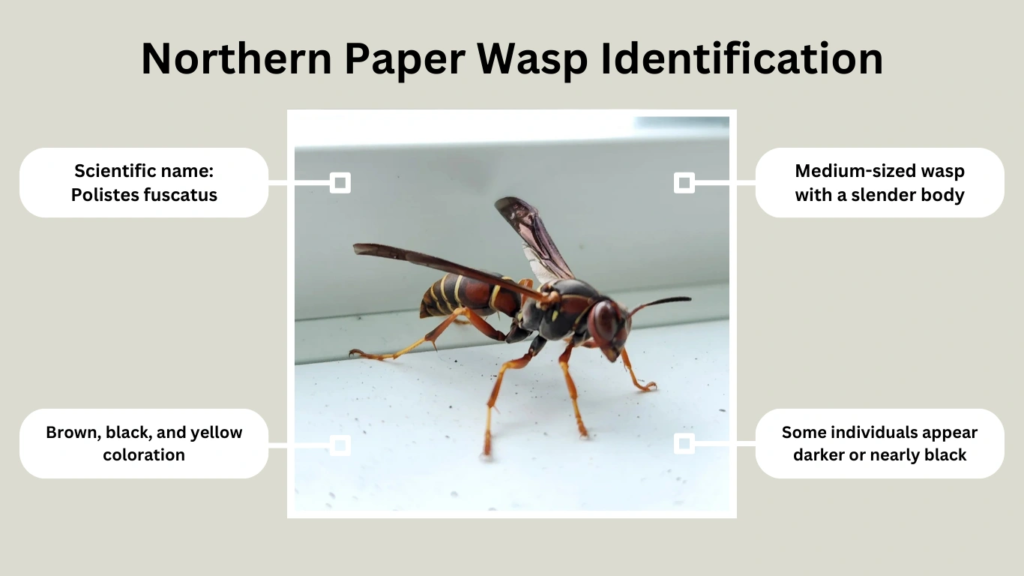
- Scientific name: Polistes fuscatus
- Medium-sized wasp with a slender body
- Brown, black, and yellow coloration
- Some individuals appear darker or nearly black
- Long legs that hang down during flight
- Often confused with European paper wasps
Northern paper wasps have a more elongated, delicate appearance compared to bulkier wasps like yellow jackets. Their slow, floating flight pattern and dangling legs are key identification clues.
Northern Paper Wasp Size and Appearance
Northern paper wasps typically measure about ¾ to 1 inch in length. Their bodies are narrow at the waist, giving them a sleek look. Color patterns vary widely, even within the same nest. Some individuals display pale yellow facial markings, while others appear darker brown or black depending on age and lighting.
Their wings are translucent brown and fold lengthwise when at rest. Because of these variations, northern paper wasps are frequently misidentified as other paper wasp species or even small hornets.
Northern Paper Wasp Scientific Classification
The northern paper wasp belongs to the family Vespidae, which includes wasps, hornets, and yellow jackets. Within this family, it falls under the genus Polistes, known for open-comb paper nests and relatively mild temperaments compared to ground-nesting wasps.
The species name fuscatus refers to its darker coloration compared to other paper wasps.
Northern Paper Wasp Habitat and Range
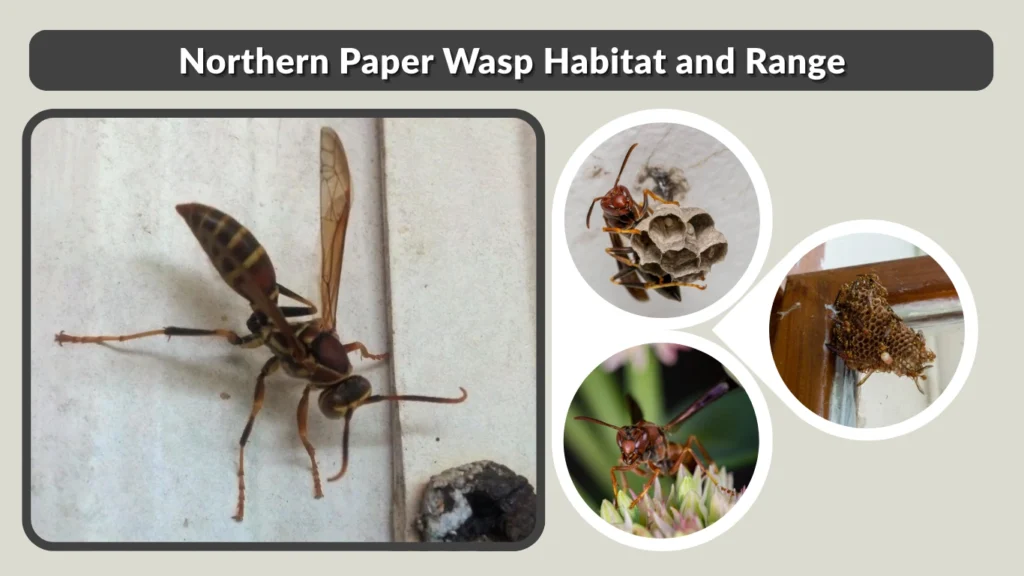
Where Do Northern Paper Wasps Live?
Northern paper wasps are widely distributed across the eastern and central United States. They are commonly found in states such as New Jersey, Massachusetts, Ohio, Alabama, and parts of northern California. They prefer temperate climates with access to sheltered nesting areas.
Northern Paper Wasps Around Homes
These wasps are highly adaptable and frequently nest near human structures. Common nesting sites include roof eaves, porch ceilings, attic vents, fences, and sheds. In some cases, they may enter wall voids or accidentally find their way indoors through open windows or vents.
Although finding a northern paper wasp in the house can be alarming, it is usually accidental and not a sign of an indoor infestation.
Northern Paper Wasp Nest
Northern paper wasp nests are made from chewed wood fibers mixed with saliva, creating a grayish, paper-like material. The nest consists of open hexagonal cells arranged in a single exposed comb, usually facing downward.
Nests start small in early spring and can grow to house dozens of workers by mid to late summer. Unlike yellow jackets, northern paper wasps do not enclose their nests in a protective shell.
Early Northern Paper Wasp Nests
In early spring, a single queen emerges from overwintering and begins building a small starter nest. At this stage, nests are about the size of a golf ball and contain only a few cells. Early nests are easier and safer to remove before workers emerge.
Northern Paper Wasp Life Cycle
The life cycle of the northern paper wasp begins in early spring when fertilized queens emerge from sheltered overwintering sites. The queen selects a nesting location and builds the initial cells, laying eggs that develop into worker wasps.
Once workers emerge, they take over nest construction, foraging, and defense while the queen focuses on reproduction. The colony grows throughout summer, reaching peak population in late summer.
As temperatures drop in fall, the colony declines. Workers die off, males and new queens mate, and fertilized queens seek protected places to overwinter, restarting the cycle the following year.
Northern Paper Wasp Male vs Female
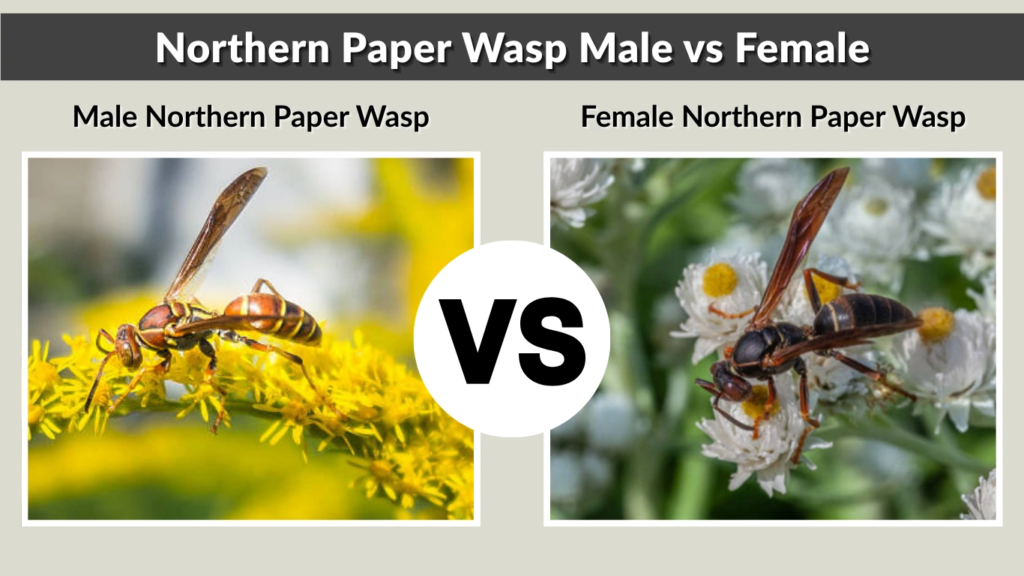
Male Northern Paper Wasp
Male northern paper wasps are slightly slimmer and lack a stinger entirely. They are incapable of stinging and pose no direct threat to humans. Males are primarily involved in reproduction and are most noticeable later in the season.
Female Northern Paper Wasp
Female wasps include both workers and the queen. All females have stingers and are capable of stinging if threatened. Workers are responsible for nest defense, which is when most human stings occur.
Northern Paper Wasp Behavior and Temperament
Northern paper wasps are generally calm away from their nest. They spend much of their time hunting insects, gathering nectar, or tending larvae. However, they become defensive when their nest is approached too closely.
Are Northern Paper Wasps Aggressive?
Northern paper wasps are not aggressive by nature, but they will sting to protect their colony. Sudden movements, vibrations, or attempts to remove a nest without protection can trigger defensive behavior. Most stings occur when people unknowingly get too close to an active nest.
Do Northern Paper Wasps Sting?

Northern paper wasps are capable of stinging, but they do so primarily in defense of their nest. They are not aggressive hunters and do not seek out people to sting. Most stings occur when someone accidentally brushes against a nest or works too close to one.
Like other paper wasps, northern paper wasps have smooth stingers. This allows them to sting more than once without injuring themselves, making nest encounters potentially more serious if multiple wasps are involved.
Northern Paper Wasp Sting Pain
A northern paper wasp sting causes immediate sharp pain, often described as a burning or stabbing sensation. The intensity of pain varies from person to person but is usually moderate to high. Pain typically peaks within the first few minutes and then gradually subsides.
Stings on sensitive areas such as the face, neck, or hands tend to hurt more and may swell significantly. Compared to yellow jackets, northern paper wasp stings are generally considered less aggressive but similarly painful.
Are Northern Paper Wasp Stings Dangerous?
For most people, northern paper wasp stings are not dangerous. Symptoms are usually limited to localized pain, redness, and swelling. However, people who are allergic to insect venom can experience severe reactions that require immediate medical attention.
Multiple stings can also be dangerous, especially for children or older adults. Large amounts of venom can lead to systemic symptoms such as nausea, dizziness, or weakness.
Northern Paper Wasp Sting Treatment
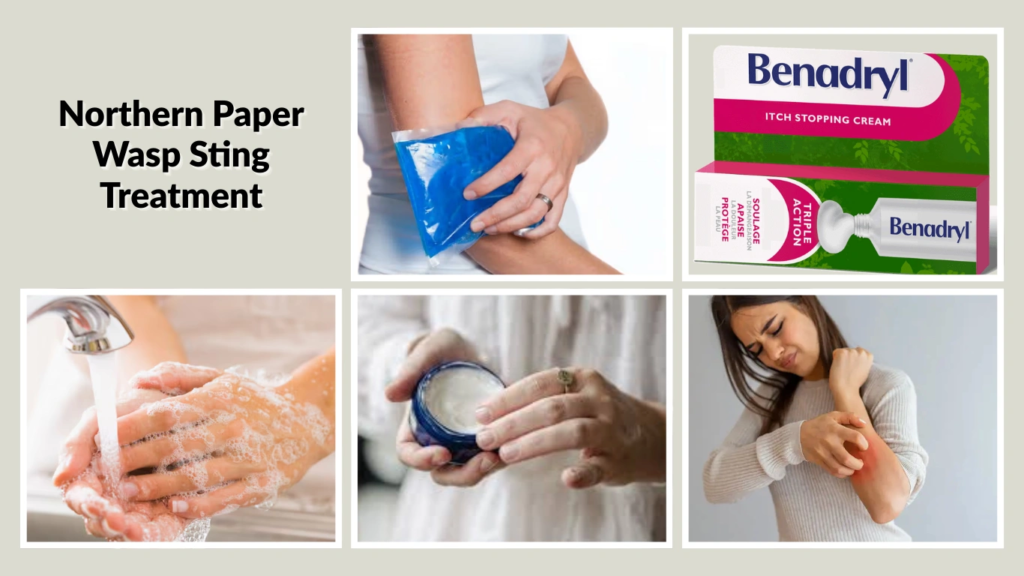
Treating a northern paper wasp sting promptly can help reduce pain and swelling.
- Wash the sting site with soap and water
- Apply a cold compress for 10–15 minutes
- Take an antihistamine to reduce itching
- Apply hydrocortisone cream or calamine lotion
- Avoid scratching to prevent infection
Seek emergency care if symptoms such as difficulty breathing, swelling of the throat, or rapid heartbeat occur.
What Do Northern Paper Wasps Eat?
Northern paper wasps are beneficial predators. They primarily feed on insects such as caterpillars, flies, and beetle larvae, which they capture and feed to their young. Adults also consume nectar, tree sap, and sugary substances for energy.
Because of their diet, northern paper wasps help control pest populations in gardens and landscapes.
Northern Paper Wasp Predators
Despite their stingers, northern paper wasps have natural predators. Birds, spiders, praying mantises, and small mammals may prey on adult wasps. Their nests are sometimes attacked by raccoons or parasitic insects that target larvae.
These predators help keep northern paper wasp populations in balance.
Northern Paper Wasp vs European Paper Wasp
Northern paper wasps are often confused with European paper wasps due to their similar size and nesting habits. However, European paper wasps tend to be brighter yellow and more adaptable to urban environments.
Northern paper wasps are usually darker and less aggressive overall. Both species can sting, but neither is as aggressive as yellow jackets when away from the nest.
Northern Paper Wasp vs Yellow Jacket
Yellow jackets are significantly more aggressive than northern paper wasps. They build enclosed nests, often underground, and are quick to attack in large numbers. Northern paper wasps build open, visible nests and usually sting only when their nest is threatened.
While sting pain is comparable, yellow jacket encounters are more likely to result in multiple stings.
How to Get Rid of Northern Paper Wasps
Removing northern paper wasps should be done cautiously.
Northern Paper Wasp Removal
The safest time to remove a nest is early spring or late evening when wasps are less active. Protective clothing should always be worn. For large or hard-to-reach nests, professional pest control is recommended.
Northern Paper Wasp Traps
Traps may reduce adult numbers but are not effective for eliminating nests. Traps work best as a supplemental measure rather than a complete solution.
Northern Paper Wasp Facts
- Northern paper wasps can recognize individual human faces
- They are beneficial insect predators
- They rarely sting unless defending a nest
- Colonies die off each winter
FAQs
Are northern paper wasps aggressive?
Northern paper wasps are defensive rather than aggressive. They usually sting only when their nest is threatened.
Do northern paper wasps sting humans?
Yes, but stings typically occur only after accidental contact or nest disturbance.
Can northern paper wasps live inside walls?
They may nest in wall voids if access points exist, though this is less common.
Are northern paper wasps dangerous to pets?
Most pets experience mild pain, but multiple stings can be dangerous.
When is the best time to remove a northern paper wasp nest?
Early spring or late evening is the safest time for nest removal.
