

Cluster flies are slow-moving insects known for gathering in large groups inside homes and buildings during cooler months. Unlike houseflies, they do not breed indoors but instead seek sheltered spaces to overwinter. This guide outlines 27 common cluster fly species, highlighting their identifying traits and behaviors. Understanding these insects helps homeowners recognize seasonal infestations and take steps to prevent their entry and reduce indoor clustering.
1. Pollenia rudis
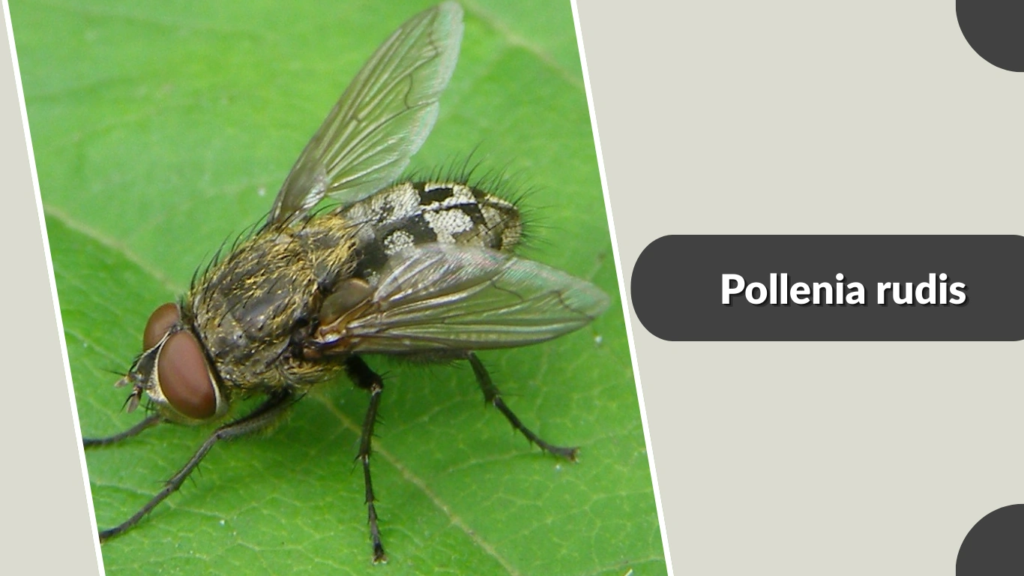
Pollenia rudis, commonly known as the cluster fly, is the most widespread and frequently encountered species in homes. These flies are known for gathering in large numbers inside buildings during cooler months, especially in attics, wall voids, and upper floors.
Identification
- Larger than houseflies (6–10 mm)
- Dark gray body with golden, fuzzy hairs
- Checkered light-and-dark abdominal pattern
- Sluggish flight and slow movement
- Wings overlap slightly when at rest
Habitat
Pollenia rudis primarily lives outdoors during warm months, inhabiting fields, gardens, and wooded areas. In autumn, they seek warm overwintering sites and enter homes through rooflines, vents, siding gaps, and window frames. Indoors, they gather in attics, wall voids, and upper rooms where sunlight provides warmth.
Behaviors
Cluster flies are slow-moving, non-aggressive, and often gather in groups. They are attracted to warmth and light, especially in late fall and early spring. Unlike houseflies, they do not breed indoors. Their habit of forming large clusters on walls, ceilings, or windows makes them noticeable during seasonal transitions.
Diet and Lifecycle
Larvae of Pollenia rudis are parasitoids of earthworms, living inside them during development. Adults feed on flower nectar, plant juices, and occasionally liquids found indoors. The lifecycle includes egg-laying in soil, larval parasitism of earthworms, pupation in the ground, and adult emergence. Several generations may occur each year, with adults overwintering inside structures.
2. Pollenia vagabunda
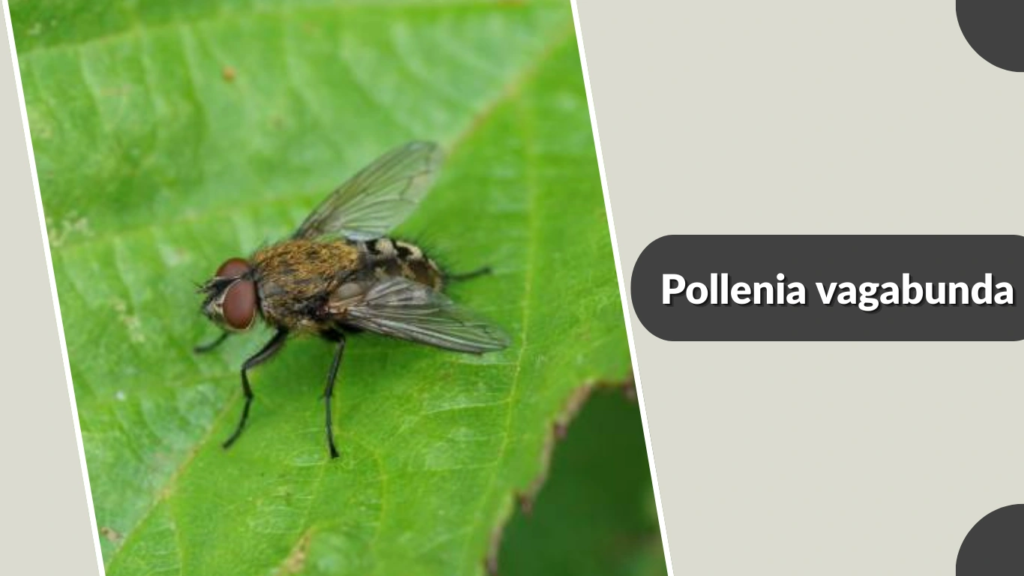
Pollenia vagabunda is a widely distributed cluster fly species that exhibits similar overwintering behavior to the common cluster fly. It frequently gathers around warm building exteriors and may enter structures during cooler seasons.
Identification
- Medium-sized (6–9 mm)
- Gray to dark gray body with fine golden hairs
- Slightly patterned abdomen
- Slow, deliberate flight typical of cluster flies
- Wings overlap at rest
Habitat
This species inhabits meadows, grasslands, and forest edges during warm months. As temperatures drop, Pollenia vagabunda seeks sheltered overwintering areas such as cracks in siding, attics, roof gaps, and wall voids. Outdoors, they rest on sunlit walls or tree trunks to absorb warmth.
Behaviors
Pollenia vagabunda forms loose groups and moves sluggishly, especially in cool temperatures. It prefers warm, quiet spaces and is often seen clustering on walls or windows. Like other cluster flies, it does not breed indoors but uses buildings as overwintering shelters.
Diet and Lifecycle
Larvae parasitize earthworms, developing inside them before pupating in soil. Adults feed on nectar, sap, and plant fluids. The lifecycle begins with eggs laid in soil, larval feeding on earthworms, pupation underground, and emergence of adults. Several generations occur annually, with adults overwintering in sheltered structures.
3. Pollenia pediculata
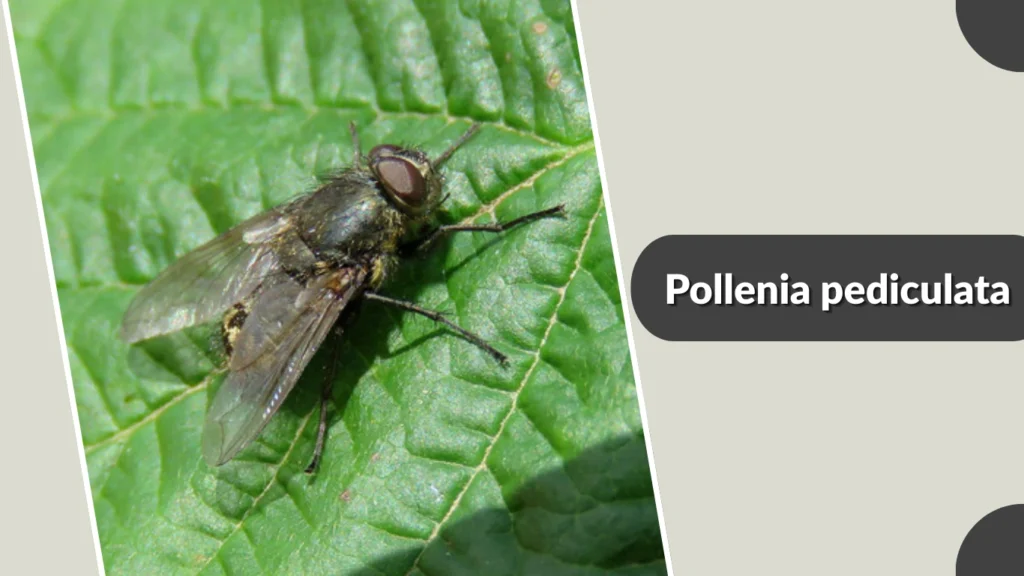
Pollenia pediculata is a common cluster fly species frequently found near human structures during cooler seasons. It closely resembles the typical cluster fly and is known for grouping in warm, sheltered areas as temperatures drop.
Identification
- Medium-sized (6–9 mm) with a sturdy body
- Dark gray thorax covered with golden, fuzzy hairs
- Lightly checkered abdomen
- Slow, heavy flight pattern
- Wings overlap slightly when resting
Habitat
During warm months, Pollenia pediculata lives outdoors in fields, meadows, gardens, and woodland edges. As autumn approaches, it seeks overwintering sites inside attics, wall voids, roof eaves, and building cracks. It prefers high, warm, quiet indoor spaces where it can cluster with other flies.
Behaviors
This species gathers in groups and becomes sluggish in cooler temperatures. It is attracted to sunlight and warmth, often appearing on windows during mild winter days. Pollenia pediculata does not reproduce indoors; instead, it uses human structures solely for overwintering and protection.
Diet and Lifecycle
Larvae of Pollenia pediculata parasitize earthworms, developing within them until pupation. Adults feed on nectar, sap, and plant juices. The lifecycle includes egg-laying in soil, larval parasitism of earthworms, pupation underground, and adult emergence. Multiple generations occur annually, with adults overwintering in sheltered spaces.
4. Pollenia labialis
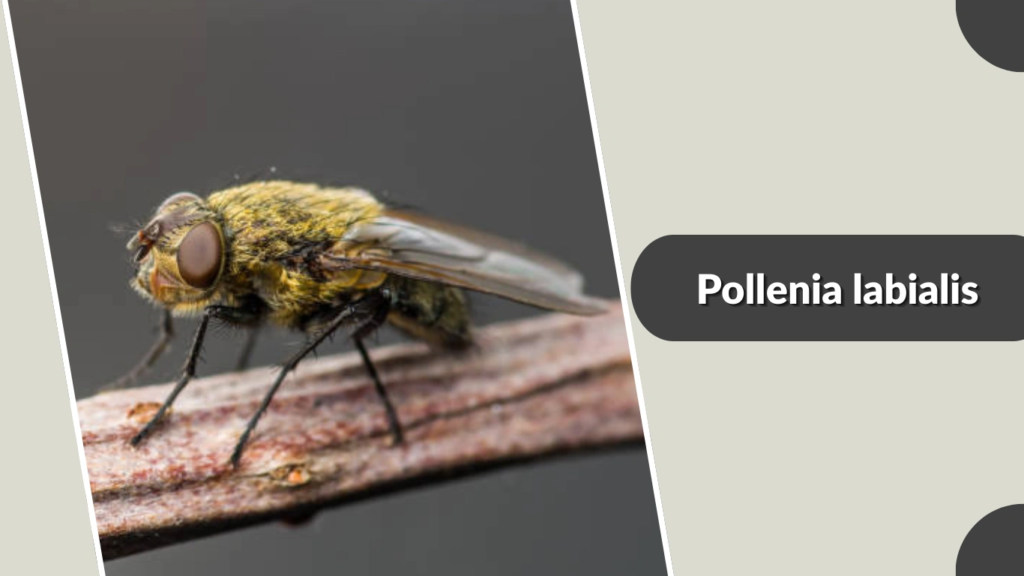
Pollenia labialis is a well-known cluster fly species found throughout temperate regions. It often appears near buildings in autumn and early spring, seeking warm overwintering sites similar to other members of the cluster fly group.
Identification
- Medium-sized (6–9 mm) with the typical cluster fly build
- Thorax covered in golden-brown, fuzzy hairs
- Abdomen with faint checkered pattern
- Sluggish, heavy flight
- Wings overlap when at rest
Habitat
Pollenia labialis inhabits open fields, gardens, and grassy landscapes during warmer months. As temperatures cool, it migrates toward buildings, entering through gaps in siding, vents, window frames, and roofing. Once inside, it clusters in attics, wall cavities, or upper-level rooms that remain warm.
Behaviors
This species forms groups, particularly in sunny or warm areas. It tends to move slowly, gathering on windows, attic beams, or warm walls. Like all cluster flies, Pollenia labialis does not breed indoors but simply uses structures as overwintering shelters until outdoor temperatures rise.
Diet and Lifecycle
Larvae parasitize earthworms, developing inside them before pupating in surrounding soil. Adults feed on nectar, plant sap, and various natural fluids. The lifecycle includes egg deposition in soil, larval development within earthworms, soil pupation, and emergence as adults. Several generations occur yearly, with adults overwintering in protected indoor spaces.
5. Pollenia angustigena
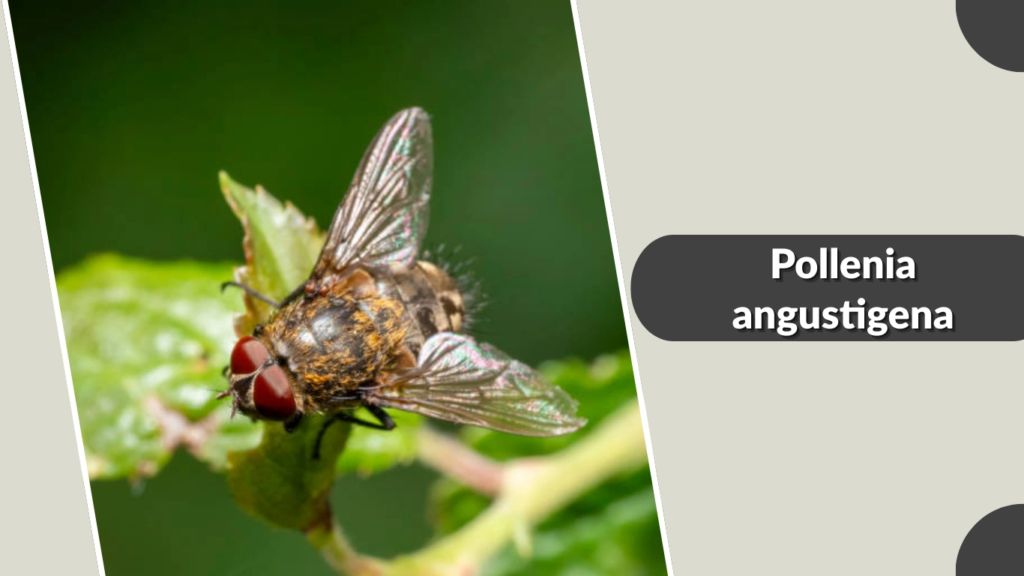
Pollenia angustigena is a cluster fly species commonly found in temperate regions, particularly in rural and semi-urban environments. Like other cluster flies, it becomes most noticeable in autumn when seeking sheltered overwintering sites inside buildings.
Identification
- Medium-sized (6–8 mm) with a stout body
- Thorax dusted with fine golden hairs
- Narrow, slightly elongated abdominal pattern (key trait)
- Slow, heavy flight typical of cluster flies
- Wings rest in an overlapping position
Habitat
This species thrives in open grassy areas, meadows, and forest edges during warm seasons. As cold weather approaches, Pollenia angustigena seeks indoor shelter, entering homes through small cracks, vents, siding gaps, and rooflines. Indoors, it prefers warm, quiet places such as attics and wall voids.
Behaviors
Pollenia angustigena is sluggish, especially in cooler temperatures. It clusters in groups, often appearing on warm walls or windows when disturbed. While it may gather inside buildings, it does not reproduce indoors. Its movements are slow, and it tends to seek light and warmth.
Diet and Lifecycle
Larvae parasitize earthworms in soil, feeding internally before pupation. Adults consume nectar, sap, and plant fluids. The lifecycle includes egg-laying in soil, larval development within earthworms, pupation, and adult emergence. Several generations occur each year, but adults overwinter in protected indoor spaces.
6. Pollenia mayeri
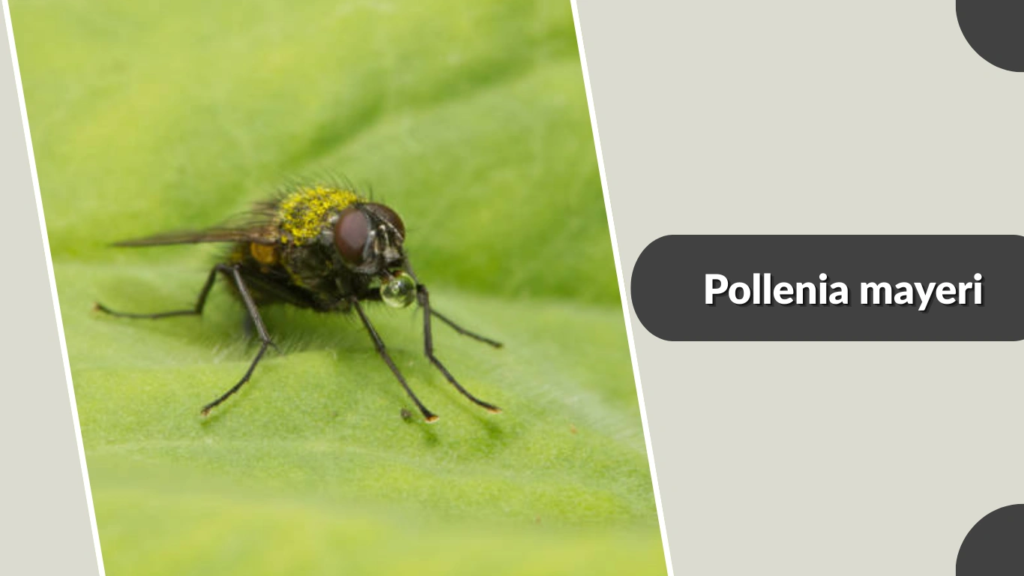
Pollenia mayeri is a species of cluster fly known for its preference for cool, temperate regions and its tendency to overwinter in buildings. Although similar to other Pollenia species, it can be identified by certain subtle physical traits.
Identification
- Medium-sized (6–9 mm) with a robust build
- Thorax covered in golden-gray hairs
- Abdomen with faint checkered pattern
- Slow, heavy, and somewhat noisy flight
- Wings overlap slightly when resting
Habitat
Pollenia mayeri inhabits grassy fields, gardens, and forest edges during the warmer months. As temperatures drop, it searches for warmer overwintering spaces such as attics, wall voids, roof gaps, and unsealed exterior cracks. Indoors, it prefers upper rooms and sunlit surfaces.
Behaviors
This species displays classic cluster fly behavior—sluggish, group-forming, and drawn to warmth and light. It frequently gathers on sunny walls or windows during mild winter days. Pollenia mayeri does not breed indoors but uses human structures as seasonal shelter.
Diet and Lifecycle
Larvae parasitize earthworms, developing inside them before pupating in the soil. Adults feed on nectar, sap, and plant juices. The lifecycle includes egg-laying in soil, larval development in earthworms, pupation, and emergence of adults. Multiple generations occur yearly, and adults overwinter in buildings to survive cold temperatures.
7. Pollenia varia
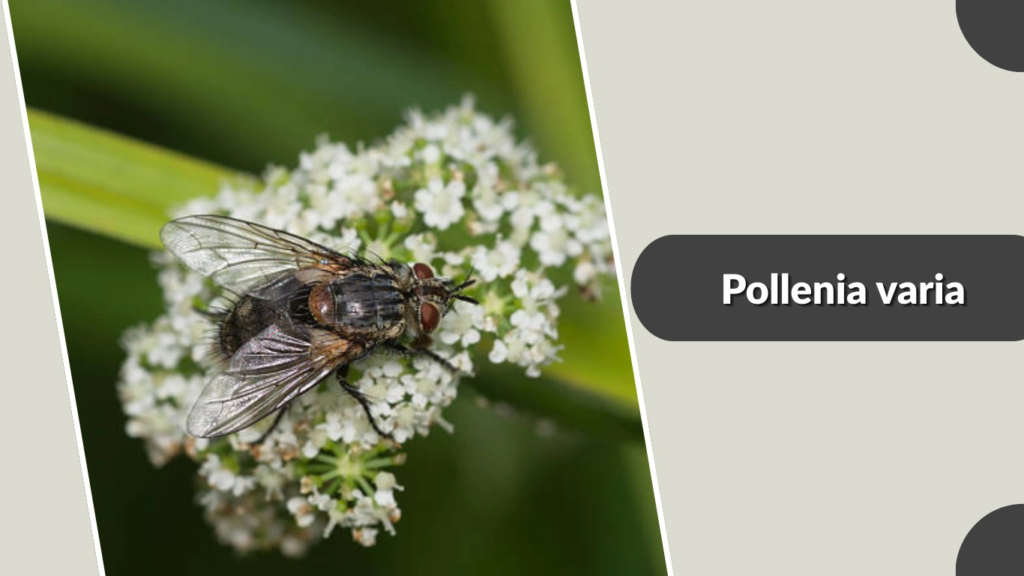
Pollenia varia is a widespread cluster fly species found throughout many temperate regions. It closely resembles the common cluster fly and is known for gathering in buildings during cooler seasons to overwinter in large groups.
Identification
- Medium-sized (6–9 mm) with a sturdy body
- Thorax covered in golden, fuzzy hairs
- Abdomen with a lighter checkered pattern
- Slow, heavy, and slightly noisy flight
- Wings overlap when at rest
Habitat
During warmer months, Pollenia varia inhabits fields, meadows, gardens, and forest edges. When temperatures drop, it searches for overwintering sites inside buildings—typically attics, wall voids, roof gaps, and sunny upper rooms. It prefers warm, quiet indoor spaces protected from the cold.
Behaviors
Pollenia varia demonstrates classic cluster fly behavior: slow, sluggish movement, strong attraction to warmth, and clustering in groups. It gathers on sunlit surfaces and may appear on windows on mild winter days. Like other cluster flies, it does not reproduce indoors.
Diet and Lifecycle
Larvae parasitize earthworms by developing inside them before pupation in the soil. Adults feed on nectar, plant sap, and various natural fluids. The lifecycle includes soil egg-laying, larval parasitism of earthworms, soil pupation, and adult emergence. Multiple generations occur annually, with adults overwintering in sheltered indoor spaces.
8. Pollenia amentaria
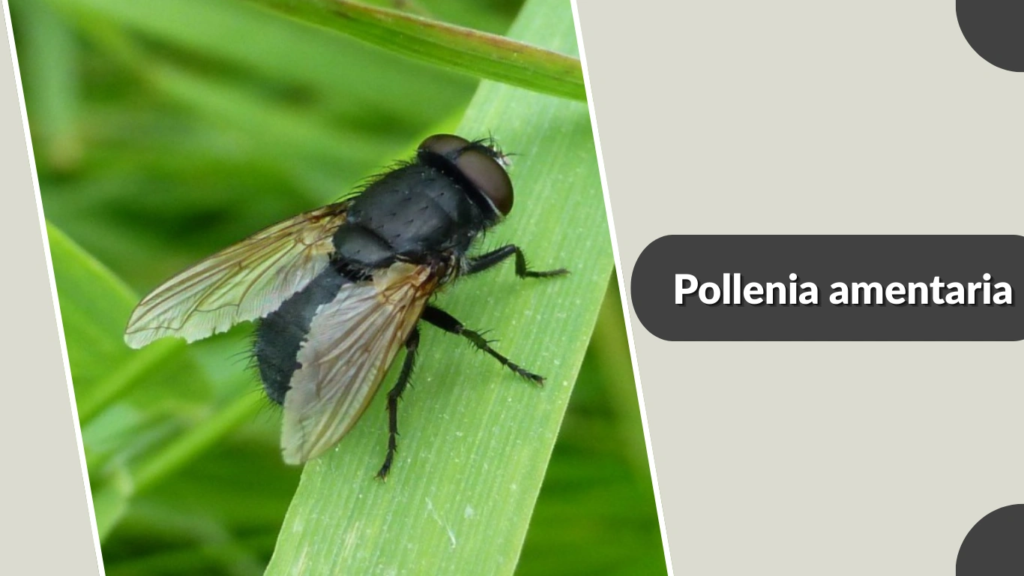
Pollenia amentaria is a cluster fly species commonly found across temperate climates. It exhibits the typical overwintering behavior of cluster flies, gathering in warm indoor spaces as temperatures fall.
Identification
- Medium-sized (6–9 mm) with a robust, rounded body
- Thorax dusted with golden-gray hairs
- Abdomen with a faint checkered or mottled pattern
- Slow, heavy, somewhat buzzing flight
- Wings held overlapped when resting
Habitat
Pollenia amentaria thrives in grassy fields, agricultural areas, forest margins, and gardens during warmer seasons. As autumn approaches, it seeks protected overwintering sites such as attics, wall voids, roof eaves, and cracks in building exteriors. Indoors, it prefers quiet upper rooms and sunlit resting spots.
Behaviors
Like most cluster flies, Pollenia amentaria is sluggish in movement and often gathers in groups. It is strongly drawn to warmth and light, frequently appearing on windows during mild winter days. It does not reproduce indoors, using buildings solely as overwintering refuges.
Diet and Lifecycle
Larvae parasitize earthworms and develop inside them before pupating in soil. Adults feed on nectar, sap, and plant juices. The lifecycle consists of soil-based egg laying, larval parasitism of earthworms, pupation underground, and emergence as adults. Several generations may occur annually, with adults overwintering inside structures.
9. Pollenia griseotomentosa
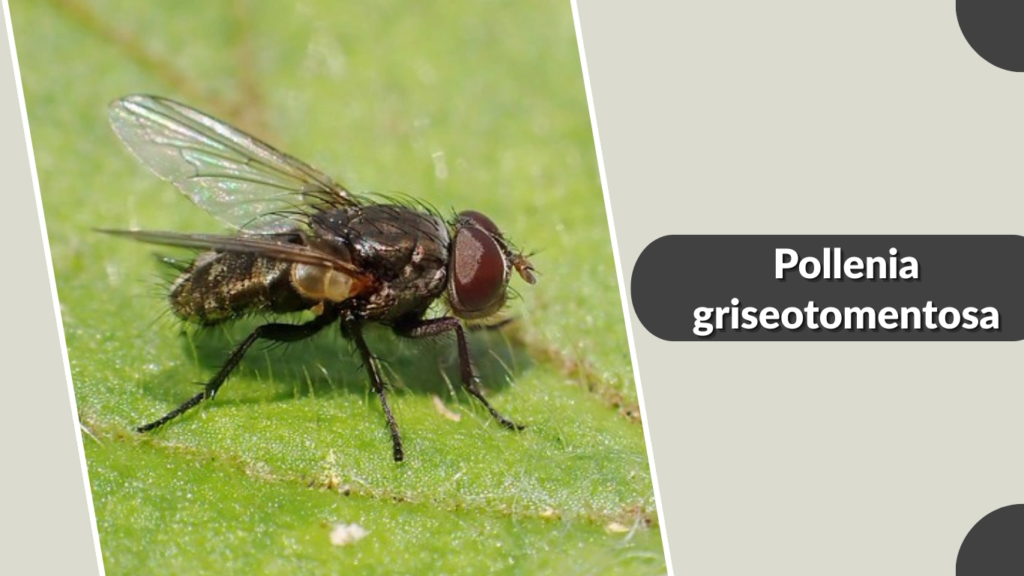
Pollenia griseotomentosa is a well-known cluster fly species distinguished by its dense, grayish hair covering the thorax. Like other cluster flies, it frequently enters buildings as temperatures cool, seeking warm overwintering sites.
Identification
- Medium-sized (6–9 mm) with a stout, rounded body
- Thorax covered in thick, gray tomentum (matted hairs)
- Abdomen with subtle checkered markings
- Slow, heavy flight typical of cluster flies
- Wings overlap when at rest
Habitat
During warm seasons, this species inhabits fields, meadows, and wooded edges where earthworms are abundant. As autumn begins, Pollenia griseotomentosa moves toward buildings, entering through small exterior gaps, vents, siding openings, or roof edges. Indoors, it clusters in attics, wall voids, and upper rooms.
Behaviors
Pollenia griseotomentosa groups together in warm spaces and becomes sluggish in cool temperatures. It is strongly drawn to light and warmth, often appearing on windows during sunny winter days. Like other Pollenia species, it does not breed inside homes.
Diet and Lifecycle
Larvae parasitize earthworms, feeding internally before pupating in surrounding soil. Adults consume nectar, plant juices, and other natural fluids. The lifecycle includes egg-laying in soil, larval development within worms, soil pupation, and adult emergence. Adults overwinter in clusters inside buildings, repeating the cycle each year.
10. Pollenia townsendi
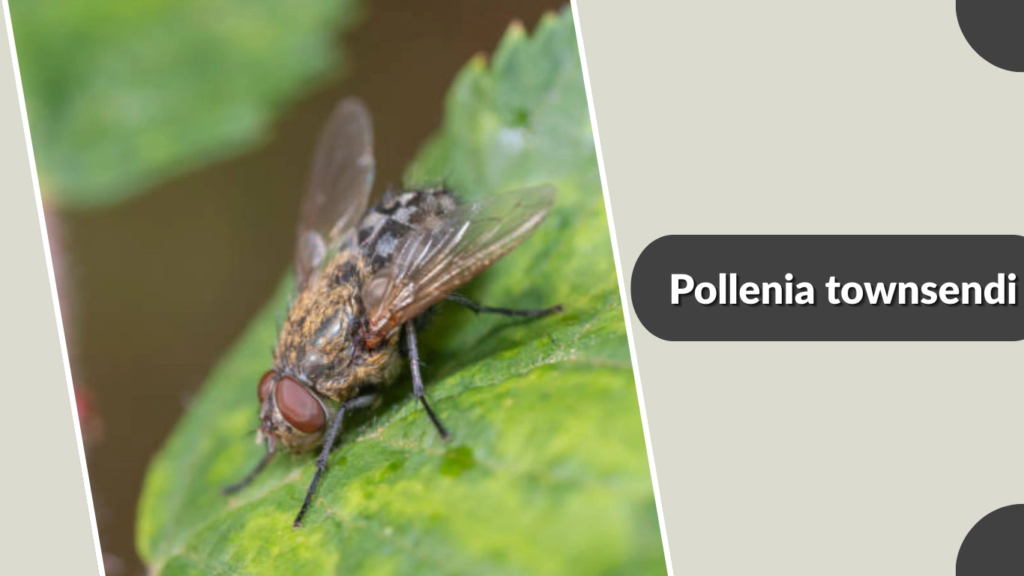
Pollenia townsendi is a cluster fly species commonly found in temperate regions. It resembles other Pollenia flies and is known for entering buildings in autumn to overwinter in warm, sheltered spaces.
Identification
- Medium-sized (6–9 mm) with a sturdy, rounded body
- Thorax covered in fine golden or grayish hairs
- Abdomen with a faint checkered pattern
- Slow and heavy flight typical of cluster flies
- Wings overlap when at rest
Habitat
During warmer months, Pollenia townsendi inhabits open grassy areas, meadows, farmland, and forest edges. In cooler seasons, it seeks overwintering shelter by entering attics, wall voids, roof gaps, siding cracks, and other protected indoor spaces. Indoors, it prefers warm, upper-level rooms.
Behaviors
This species tends to gather in loose clusters, especially in sunlit or warm spots. It becomes sluggish at low temperatures and often appears on windows during mild winter days. Like other cluster flies, Pollenia townsendi does not reproduce indoors but simply overwinters there.
Diet and Lifecycle
Larvae parasitize earthworms, developing inside them before pupating in surrounding soil. Adults feed on nectar, sap, and natural plant fluids. The lifecycle includes eggs laid in soil, larval parasitism of earthworms, soil-based pupation, and adult emergence. Adults overwinter inside buildings, returning outdoors when temperatures rise.
11. Pollenia similis
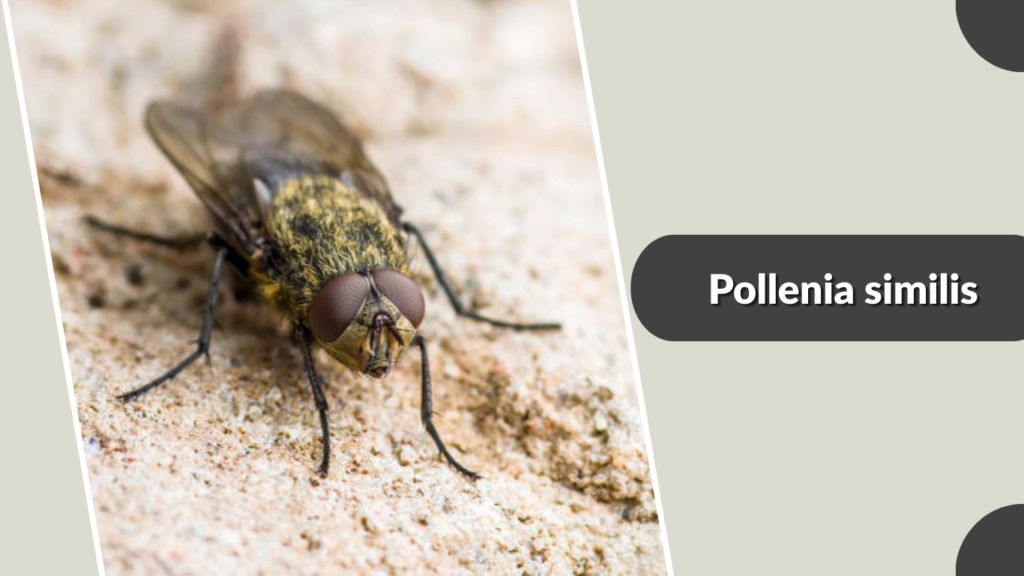
Pollenia similis is a cluster fly species frequently found across temperate regions. It is similar in appearance and behavior to other Pollenia species, especially in its seasonal movement into buildings during cooler months.
Identification
- Medium-sized (6–9 mm) with a thick, rounded body
- Thorax dusted with golden-gray hairs
- Abdomen with faint checkered or mottled patterns
- Slow, heavy flight typical of cluster flies
- Wings overlapping when at rest
Habitat
Pollenia similis inhabits grassy fields, suburban landscapes, meadows, and woodland edges during warm seasons. As temperatures drop, it migrates toward buildings, entering through small gaps, vents, siding cracks, or roofing edges. Indoors, it prefers attics, wall cavities, and upper, sunlit rooms.
Behaviors
This species demonstrates classic cluster fly traits, forming loose or dense groups in warm indoor spaces. It is drawn to sunlight and warmth, often resting on windows during mild winter days. Pollenia similis does not breed indoors but uses structures as overwintering shelters.
Diet and Lifecycle
Larvae parasitize earthworms, feeding internally until pupation in nearby soil. Adults feed on nectar, plant juices, and other natural fluids. The lifecycle includes egg-laying in soil, larval development within earthworms, pupation underground, and emergence of adults. Several generations occur annually, with adults overwintering indoors.
12. Pollenia venturii
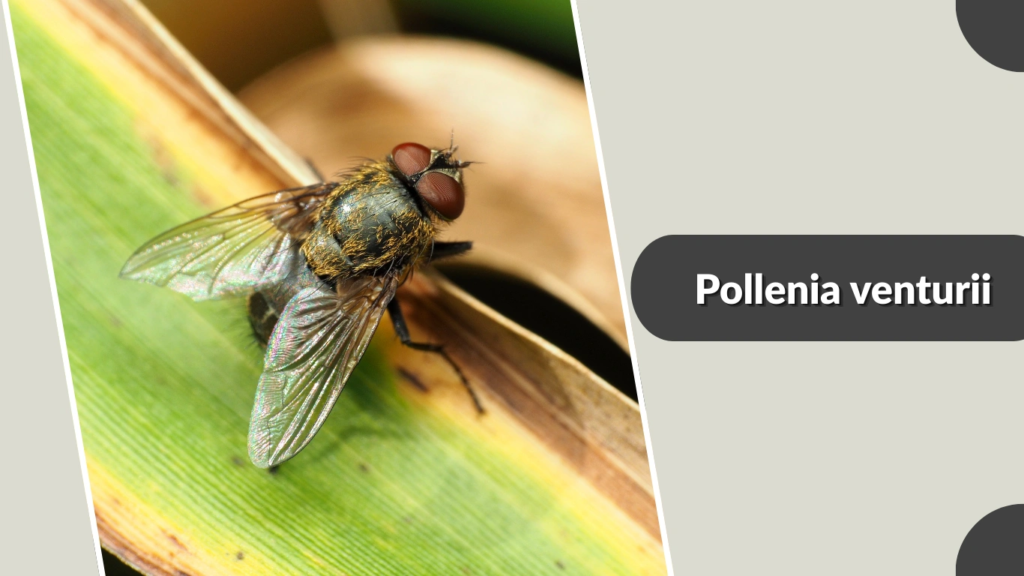
Pollenia venturii is a cluster fly species commonly found in temperate and cool regions. Like other Pollenia flies, it becomes most noticeable in autumn when it seeks shelter inside buildings to overwinter in warm, protected spaces.
Identification
- Medium-sized (6–9 mm) with a thick, rounded body
- Thorax covered in golden-gray, velvety hairs
- Abdomen with a subtle checkered or mottled pattern
- Slow, heavy, somewhat buzzing flight
- Wings overlap when resting
Habitat
During warmer seasons, Pollenia venturii inhabits meadows, gardens, agricultural land, and forest edges. As temperatures drop, it moves toward structures and enters through gaps in siding, rooflines, vents, or window frames. Indoors, it clusters in attics, wall voids, and upper-level warm spaces.
Behaviors
This species displays classic cluster fly behavior—sluggish, group-forming, and strongly attracted to warmth and sunlight. It often appears on windows during sunny winter days. Pollenia venturii does not breed indoors, using buildings only as seasonal overwintering locations.
Diet and Lifecycle
Larvae parasitize earthworms, feeding internally until ready to pupate in the soil. Adults feed on nectar, plant sap, and other natural fluids. The lifecycle includes egg deposition in soil, larval parasitism of earthworms, soil pupation, and adult emergence. Adults overwinter indoors, re-emerging in spring.
13. Pollenia beringensis
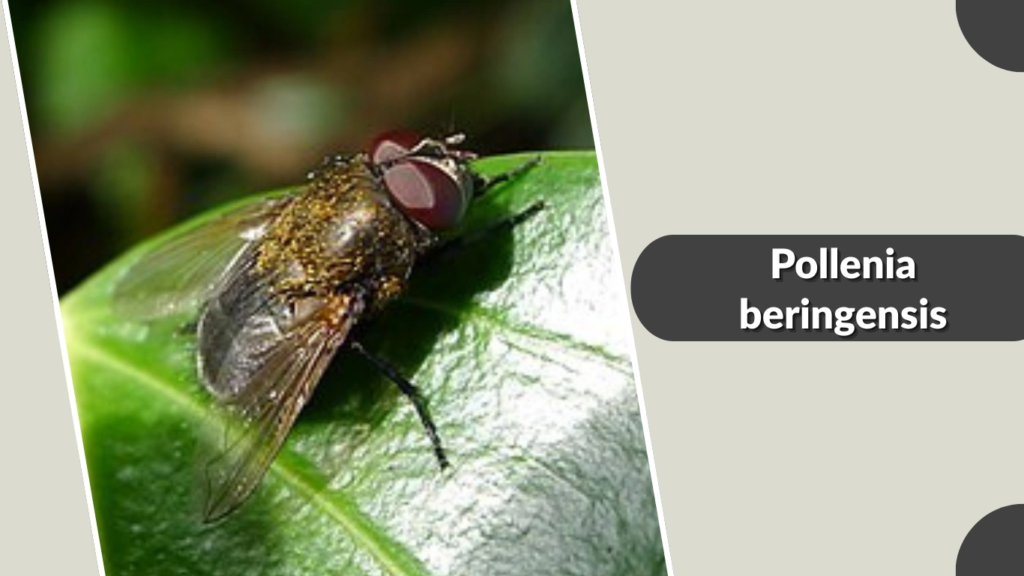
Pollenia beringensis is a cluster fly species typically found in cooler, northern regions. It shares many traits with other Pollenia flies, particularly its tendency to overwinter inside buildings during cold seasons.
Identification
- Medium-sized (6–9 mm) with a robust, rounded body
- Thorax covered in grayish or golden hairs
- Abdomen faintly checkered or mottled
- Slow, heavy, and somewhat buzzing flight
- Wings overlap neatly when resting
Habitat
Pollenia beringensis inhabits grassy fields, tundra edges, boreal regions, and forest margins during warmer months. As temperatures fall, it seeks protected overwintering sites inside homes, cabins, sheds, and roof spaces. Indoors, it prefers attics, wall voids, and warm upper rooms.
Behaviors
This species forms clusters in warm, sunlit areas and becomes sluggish in cool temperatures. It often gathers on windows or ceilings during mild winter days. Like all cluster flies, Pollenia beringensis does not breed indoors but stays in structures until outdoor conditions improve.
Diet and Lifecycle
Larvae parasitize earthworms, developing within them before pupating in the soil. Adults feed on nectar, plant juices, and environmental fluids. The lifecycle includes egg-laying in soil, larval development within earthworms, soil pupation, and adult emergence. Adults overwinter indoors and resume activity in spring.
14. Pollenia solitaria
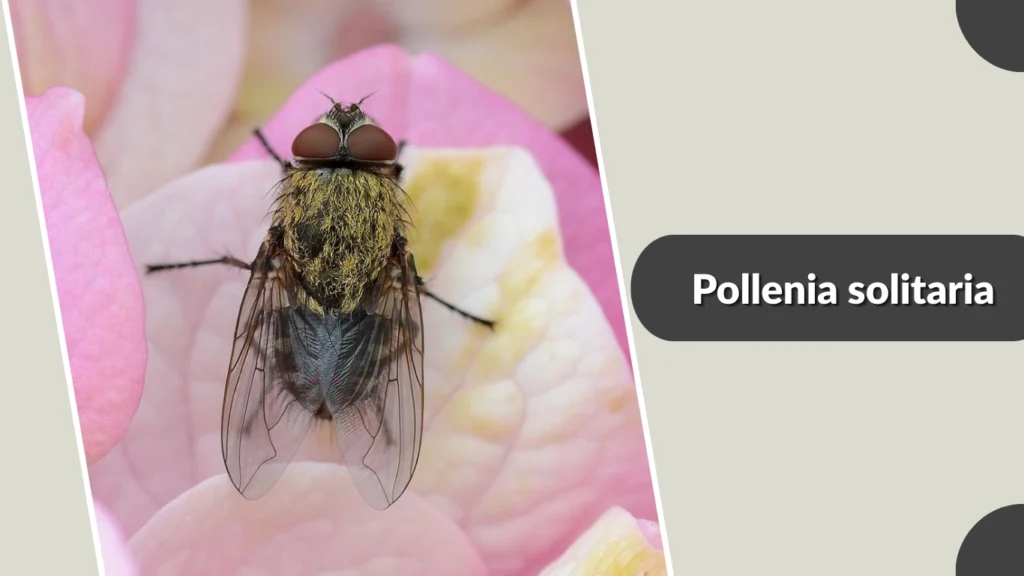
Pollenia solitaria is a less commonly observed cluster fly species but follows the same overwintering patterns as other Pollenia flies. It is found mostly in temperate regions and often appears near buildings during seasonal temperature changes.
Identification
- Medium-sized (6–9 mm) with a robust, rounded build
- Thorax dusted with fine golden or grayish hairs
- Abdomen with faint mottled or checkered patterns
- Slow, heavy, cluster-fly style flight
- Wings overlap slightly at rest
Habitat
During warm seasons, Pollenia solitaria inhabits grassy meadows, garden landscapes, and woodland edges. As autumn approaches, it seeks shelter inside structures such as attics, roof gaps, siding cracks, and wall voids. Indoors, it tends to settle in upper rooms or sunlit areas.
Behaviors
Pollenia solitaria shows typical cluster fly habits—slow movement, attraction to warmth, and clustering in groups. It often appears on windows or ceilings on sunny winter days. The species does not reproduce indoors; it uses buildings only for overwintering.
Diet and Lifecycle
Larvae parasitize earthworms, developing within them before pupating in surrounding soil. Adults feed on nectar, sap, and plant juices. The lifecycle includes soil-based egg laying, larval development within earthworms, soil pupation, and adult emergence. Adults overwinter inside buildings and become active again in spring.
15. Pollenia timida
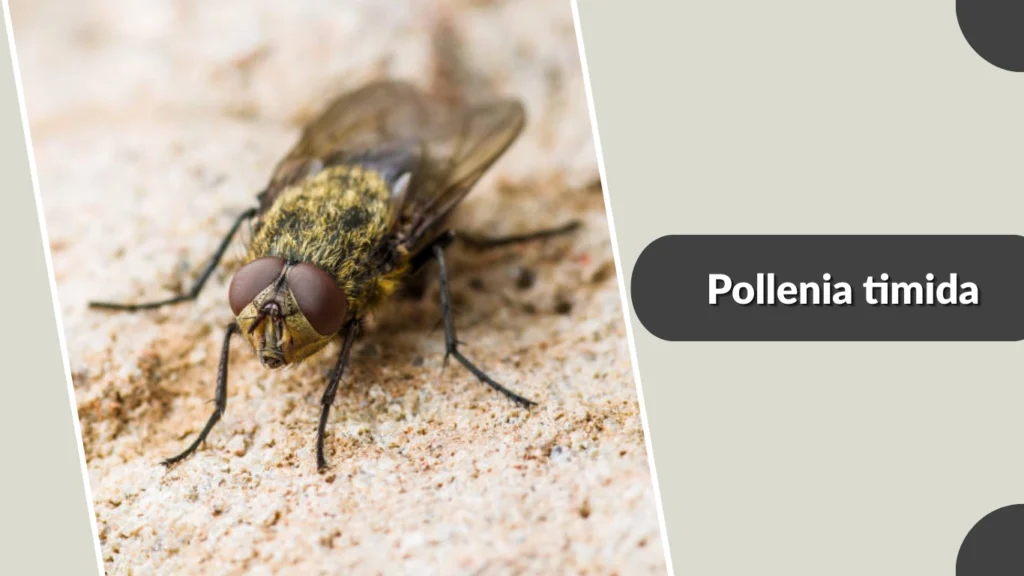
Pollenia timida is a cluster fly species known for its discreet behavior and tendency to gather in small groups during overwintering. Though similar to other Pollenia flies, it is often less noticeable until temperatures drop.
Identification
- Medium-sized (6–8 mm) with a compact, rounded body
- Thorax covered in fine golden-gray hairs
- Abdomen lightly mottled or checkered
- Sluggish, heavy flight typical of cluster flies
- Wings slightly overlapped when resting
Habitat
During warmer months, Pollenia timida occupies grassy fields, gardens, forest margins, and rural landscapes. As autumn temperatures decline, it seeks shelter inside structures such as attics, roof spaces, siding gaps, and wall voids. It prefers quiet, warm indoor locations for overwintering.
Behaviors
This species is less active and more secretive than some other cluster flies. It clusters in small or moderate groups and prefers dim or warm areas. Pollenia timida may appear around windows during sunny winter days but does not reproduce indoors.
Diet and Lifecycle
Larvae parasitize earthworms, feeding within them before pupating in soil. Adults feed on nectar, plant sap, and other natural fluids. The lifecycle includes egg-laying in soil, larval parasitism of earthworms, soil pupation, and adult emergence. Adults overwinter indoors and resume normal activity in spring.
16. Pollenia atramentaria
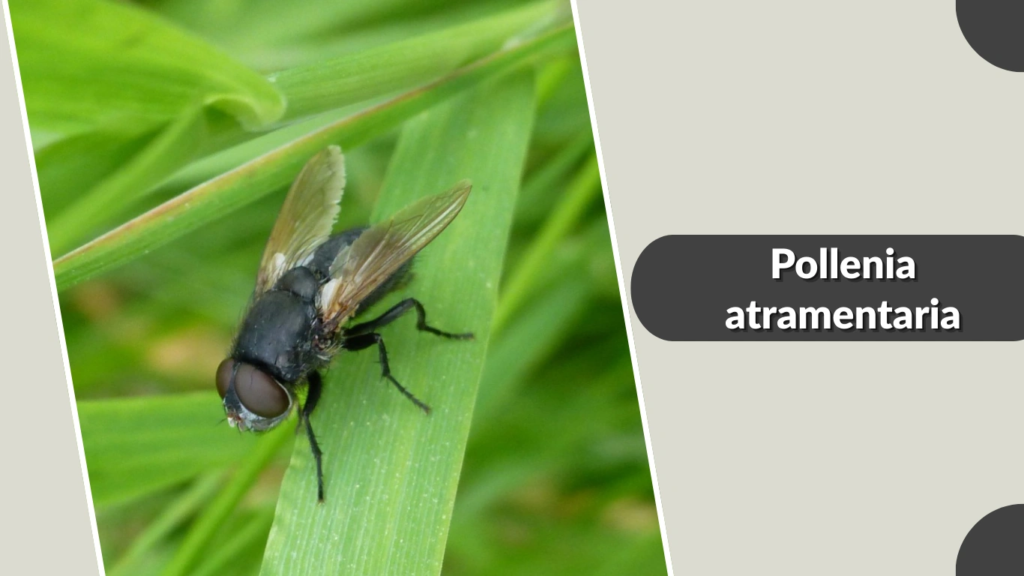
Pollenia atramentaria is a cluster fly species found in temperate regions, known for its tendency to enter buildings during colder weather. It resembles other Pollenia species in appearance and overwintering behavior.
Identification
- Medium-sized (6–9 mm) with a thick, rounded body
- Thorax dusted with gray or golden hairs
- Abdomen with subtle mottled or checkered patterning
- Slow, heavy flight typical of cluster flies
- Wings overlap slightly when at rest
Habitat
In warm seasons, Pollenia atramentaria inhabits meadows, gardens, forest edges, and open grassy landscapes. As temperatures cool, it seeks refuge inside human structures through vents, gaps in siding, roofline crevices, and window frames. Indoors, it clusters in attics, wall voids, and upper, warm rooms.
Behaviors
This species forms clusters in sheltered indoor locations, becoming sluggish and quiet in cooler temperatures. It is drawn to warmth and sunlight, often appearing on windows or ceilings on mild winter days. Like all cluster flies, it does not breed inside buildings.
Diet and Lifecycle
Larvae parasitize earthworms, living inside them until ready to pupate in surrounding soil. Adults feed on nectar, plant sap, and other environmental fluids. The lifecycle includes egg laying in soil, larval parasitism, pupation, and emergence of adults. Fully developed adults overwinter inside structures and resume activity in spring.
17. Pollenia japonica
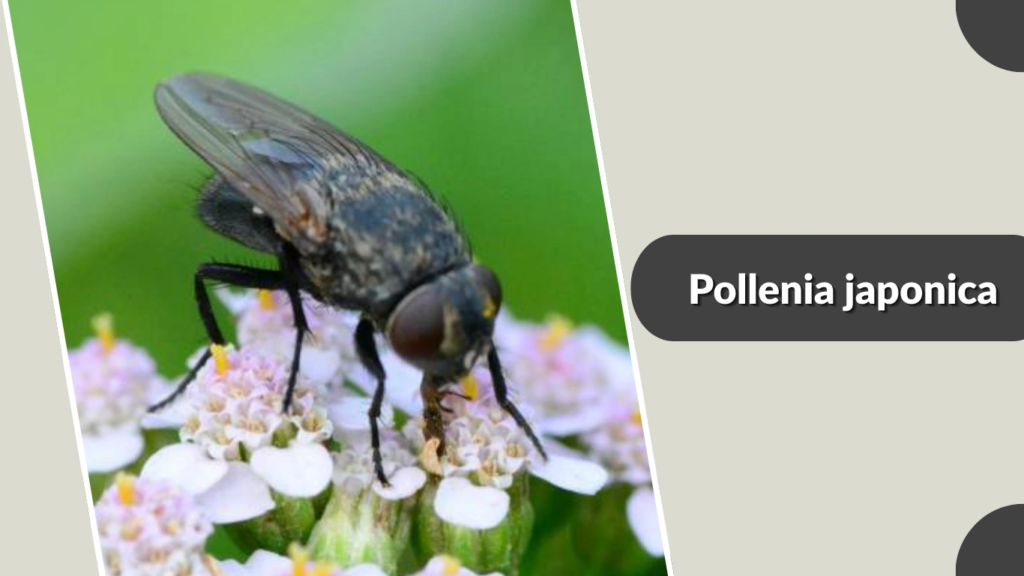
Pollenia japonica is a cluster fly species primarily found in East Asia but also reported in other temperate regions. Like other Pollenia flies, it seeks sheltered overwintering locations inside buildings as temperatures drop.
Identification
- Medium-sized (6–9 mm) with a rounded, sturdy body
- Thorax covered in golden or grayish hairs
- Abdomen with faint checkered or mottled markings
- Slow, heavy flight typical of cluster flies
- Wings overlap slightly when resting
Habitat
In warmer months, Pollenia japonica inhabits grassy fields, forest edges, farmlands, and gardens. As autumn approaches, it migrates toward structures, entering through small gaps, vents, roofing cracks, or window frames. Indoors, it prefers attics, wall voids, and quiet upper-level rooms.
Behaviors
Pollenia japonica is sluggish in cool temperatures and often forms loose clusters in warm, sheltered spaces. It frequently gathers on sunlit walls or windows during mild winter days. The species does not reproduce indoors; it only uses buildings to overwinter.
Diet and Lifecycle
Larvae parasitize earthworms, developing internally before pupating in the soil. Adults feed on nectar, sap, and other plant fluids. The lifecycle includes soil-based egg laying, larval parasitism, pupation, and adult emergence. Adults overwinter inside buildings and become active again as temperatures rise in spring.
18. Pollenia hazarae
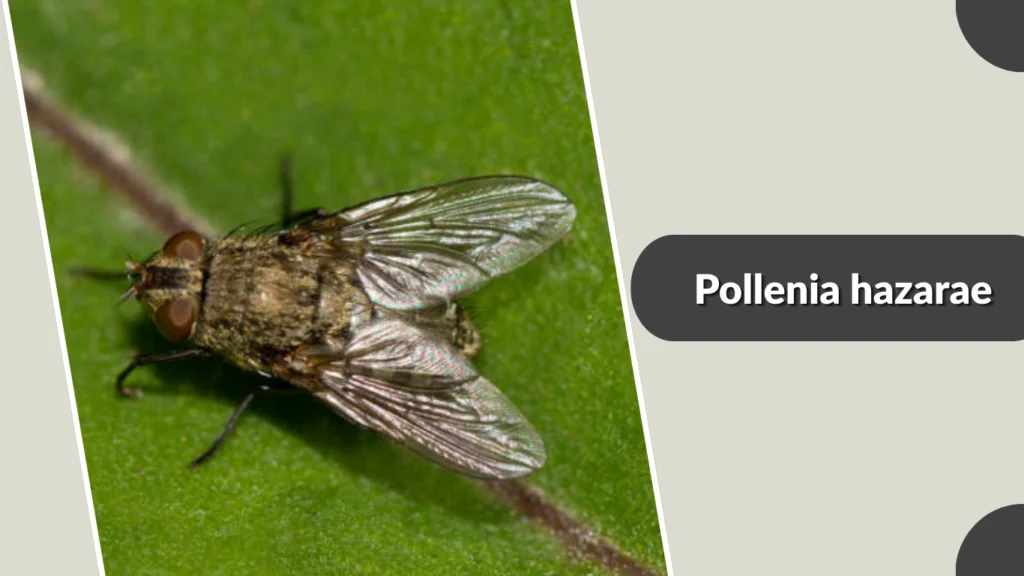
Pollenia hazarae is a lesser-known cluster fly species found mainly in cooler or mountainous regions. Like other cluster flies, it often enters buildings seeking warmth during the colder months.
Identification
- Medium-sized (6–9 mm) with a thick, rounded body
- Thorax covered with fine golden or gray hairs
- Abdomen mottled or faintly checkered
- Slow, heavy flight typical of cluster flies
- Wings overlap when resting
Habitat
Pollenia hazarae inhabits grassy slopes, agricultural fields, and forest margins during warm seasons. With falling temperatures, it seeks overwintering shelter inside attics, roof eaves, siding gaps, wall voids, and other protected indoor spaces. It tends to remain in elevated, warm locations.
Behaviors
This species forms small to moderate groups indoors, clustering in warm or sunlit areas. Pollenia hazarae is sluggish in cool temperatures and may appear around windows during sunny winter days. It does not reproduce indoors, using structures solely for seasonal overwintering.
Diet and Lifecycle
Larvae parasitize earthworms, feeding inside them before pupation in soil. Adults consume nectar, sap, and plant juices. The lifecycle includes egg deposition in soil, larval development within earthworms, soil pupation, and adult emergence. Adults overwinter inside buildings and become active again in spring.
19. Pollenia ernesti
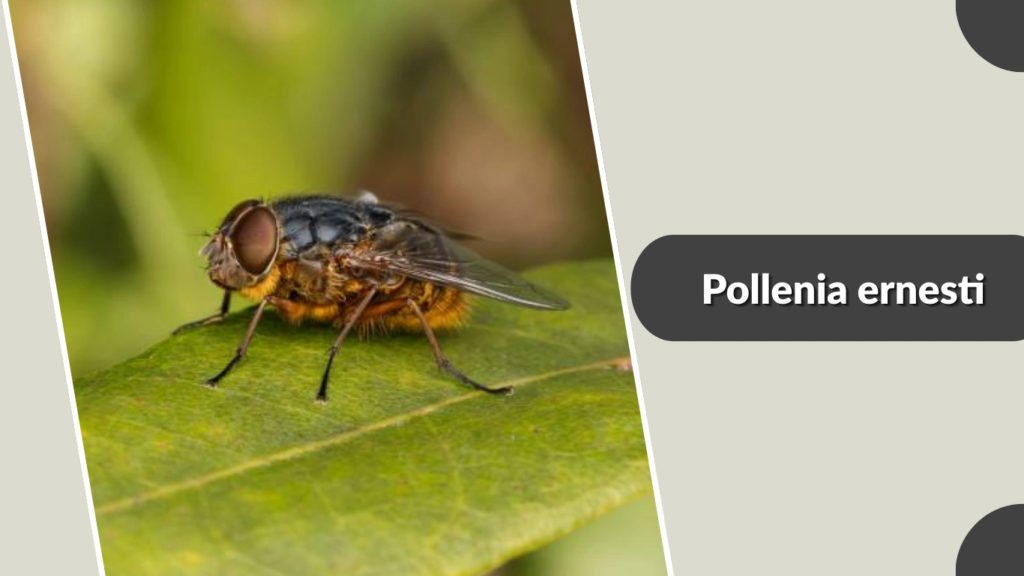
Pollenia ernesti is a widespread cluster fly species known for its seasonal movement into buildings. It resembles many other Pollenia species in appearance and behavior, especially during overwintering months.
Identification
- Medium-sized (6–9 mm) with a sturdy, rounded body
- Thorax covered in golden-gray, velvety hairs
- Abdomen lightly checkered or mottled
- Slow, heavy flight typical of cluster flies
- Overlapping wings when at rest
Habitat
During warm seasons, Pollenia ernesti inhabits grassy meadows, farmland, gardens, and wooded margins. In autumn, it seeks overwintering shelter by entering structures through siding gaps, vents, window frames, roof edges, and other small openings. Indoors, it clusters in attics and warm upper rooms.
Behaviors
This species gathers in groups, often appearing on windows or ceilings on warmer winter days. It moves slowly and prefers warm, quiet areas. Like all true cluster flies, Pollenia ernesti does not breed indoors; it only uses buildings to overwinter and remain protected from cold temperatures.
Diet and Lifecycle
Larvae parasitize earthworms, feeding internally until ready to pupate in soil. Adults feed on nectar, plant juices, and other natural fluids. The lifecycle includes egg-laying in soil, larval development inside earthworms, soil pupation, and adult emergence. Adults overwinter indoors and resume activity when temperatures rise.
20. Pollenia obsoleta
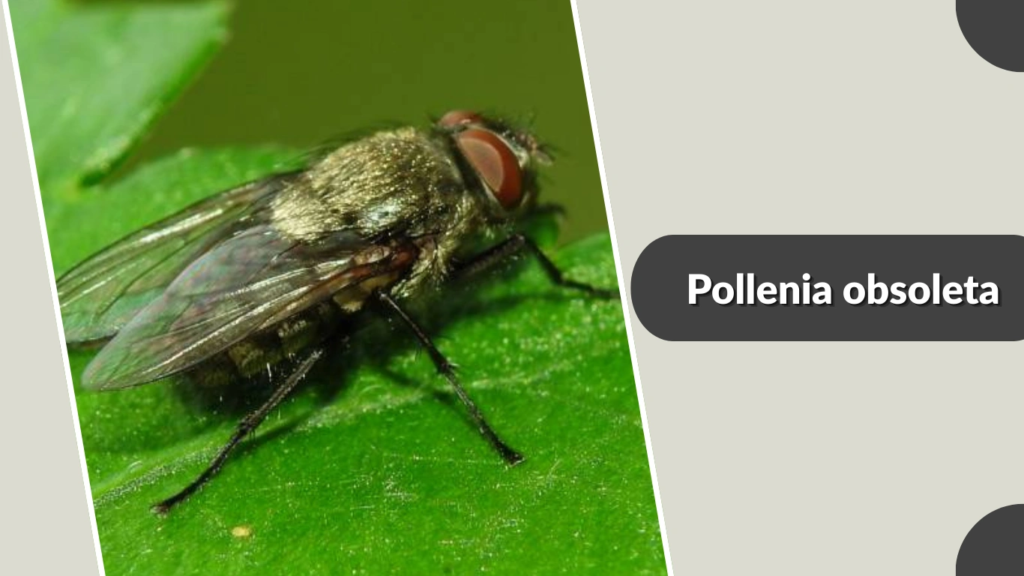
Pollenia obsoleta is a cluster fly species frequently found in temperate regions. Like other cluster flies, it becomes most noticeable in autumn when it enters buildings to overwinter in warm, sheltered spaces.
Identification
- Medium-sized (6–9 mm) with a thick, rounded body
- Thorax covered in grayish or golden hairs
- Abdomen faintly mottled or lightly checkered
- Slow, heavy, buzzing flight
- Wings overlap neatly when resting
Habitat
During warmer seasons, Pollenia obsoleta lives in grassy fields, meadows, farmland, and woodland edges. As temperatures drop, it seeks entry into homes, sheds, and attics through cracks in siding, rooflines, window frames, and vents. Indoors, it clusters in warm, upper-level areas.
Behaviors
This species forms loose to moderate-sized clusters, especially in sunny or warm spots. It is attracted to light and warmth and may gather on windows or ceilings during mild winter days. Pollenia obsoleta does not reproduce indoors but remains inactive until spring temperatures rise.
Diet and Lifecycle
Larvae parasitize earthworms, feeding internally before pupating underground. Adults feed on nectar, plant sap, and other natural fluids. The lifecycle involves egg-laying in soil, larval parasitism of earthworms, soil pupation, and adult emergence. Fully developed adults overwinter in buildings and reappear in spring.
21. Pollenia nigripalpis
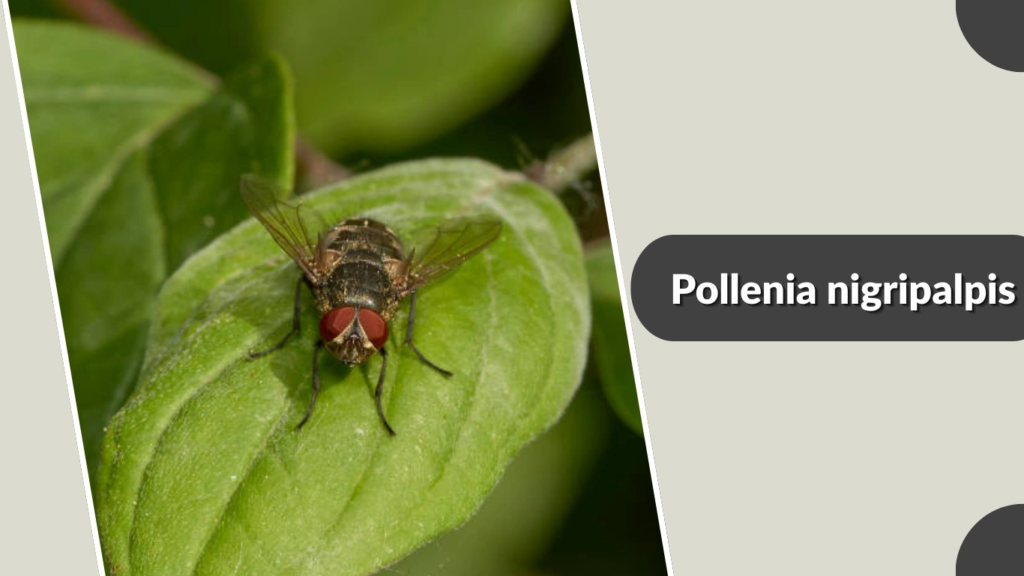
Pollenia nigripalpis is a cluster fly species known for its dark-colored mouthparts, which help distinguish it from closely related species. Like other cluster flies, it enters buildings in autumn to overwinter in warm, protected areas.
Identification
- Medium-sized (6–9 mm) with a rounded, robust body
- Thorax with grayish or golden hairs
- Abdomen faintly mottled or checkered
- Distinct dark (blackish) palps — key identifying feature
- Wings overlap when resting
Habitat
During warm months, Pollenia nigripalpis inhabits meadows, gardens, agricultural fields, and forest edges. When temperatures drop, it seeks shelter inside structures such as attics, roof gaps, vents, siding cracks, and wall voids. Indoors, it prefers upper levels and sun-warmed surfaces.
Behaviors
This species forms clusters in warm indoor locations and moves sluggishly in cooler temperatures. It often gathers on windows or ceilings during sunny winter days. Like most cluster flies, Pollenia nigripalpis does not reproduce indoors but simply overwinters until spring.
Diet and Lifecycle
Larvae parasitize earthworms, feeding internally before pupating underground. Adults feed on nectar, sap, and plant juices. The lifecycle includes egg-laying in soil, larval development within earthworms, soil pupation, and adult emergence. Adults overwinter in buildings and resume outdoor activity when temperatures rise.
22. Pollenia hungarica
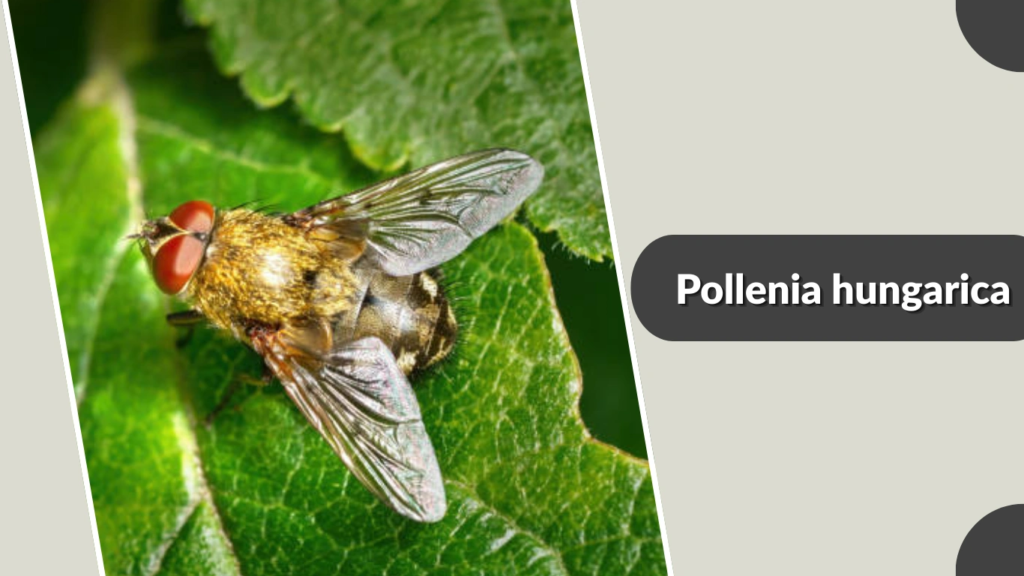
Pollenia hungarica is a cluster fly species found across various temperate regions. Like other Pollenia flies, it is known for entering homes and buildings during autumn to overwinter in sheltered, warm environments.
Identification
- Medium-sized (6–9 mm) with a rounded, sturdy body
- Thorax covered in golden or grayish hairs
- Abdomen faintly mottled or checkered
- Slow, heavy flight typical of cluster flies
- Wings overlap slightly when at rest
Habitat
In warm months, Pollenia hungarica occupies meadows, gardens, agricultural fields, and woodland edges. As temperatures drop, it seeks access into structures through gaps in siding, window frames, vents, or rooflines. Indoors, it prefers attics, wall voids, and upper-level heated rooms.
Behaviors
This species forms clusters in warm indoor locations, often appearing on windows or ceilings on sunny winter days. It is sluggish in cooler temperatures and strongly attracted to light and warmth. Like all cluster flies, it does not reproduce inside buildings.
Diet and Lifecycle
Larvae parasitize earthworms, feeding inside them until they pupate in surrounding soil. Adults consume nectar, plant sap, and natural fluids. The lifecycle includes egg deposition in soil, larval parasitism within earthworms, soil pupation, and adult emergence. Adults overwinter indoors and resume activity in spring.
23. Pollenia paupercula
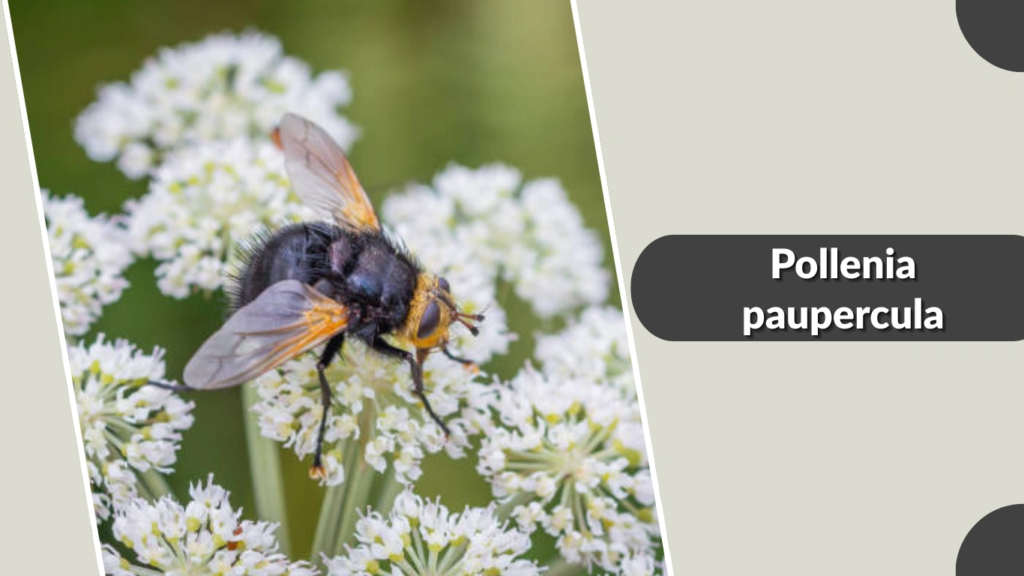
Pollenia paupercula is a cluster fly species found throughout temperate and cooler regions. It behaves similarly to other Pollenia flies, entering buildings in autumn to overwinter in warm, sheltered areas.
Identification
- Medium-sized (6–9 mm) with a rounded cluster fly shape
- Thorax dusted with golden or grayish hairs
- Abdomen lightly mottled or faintly checkered
- Slow, heavy flight typical of Pollenia species
- Wings overlap when resting
Habitat
Pollenia paupercula inhabits grassy meadows, gardens, farmland, and forest edges during warm seasons. As temperatures drop, it moves toward human structures and enters through vents, siding gaps, roofline cracks, and window frames. Indoors, it prefers attics, wall voids, and warm upper floors.
Behaviors
This species tends to gather in small to moderate clusters, especially in warm or sunlit indoor areas. It becomes sluggish in cooler temperatures and may appear around windows on bright winter days. Like other cluster flies, it does not breed indoors.
Diet and Lifecycle
Larvae parasitize earthworms, feeding inside them until pupation in soil. Adult flies feed on nectar, plant sap, and natural organic fluids. The lifecycle includes egg-laying in soil, larval development within earthworms, soil pupation, and emergence of adults. Adults overwinter in buildings and emerge in spring.
24. Pollenia pseudorudis
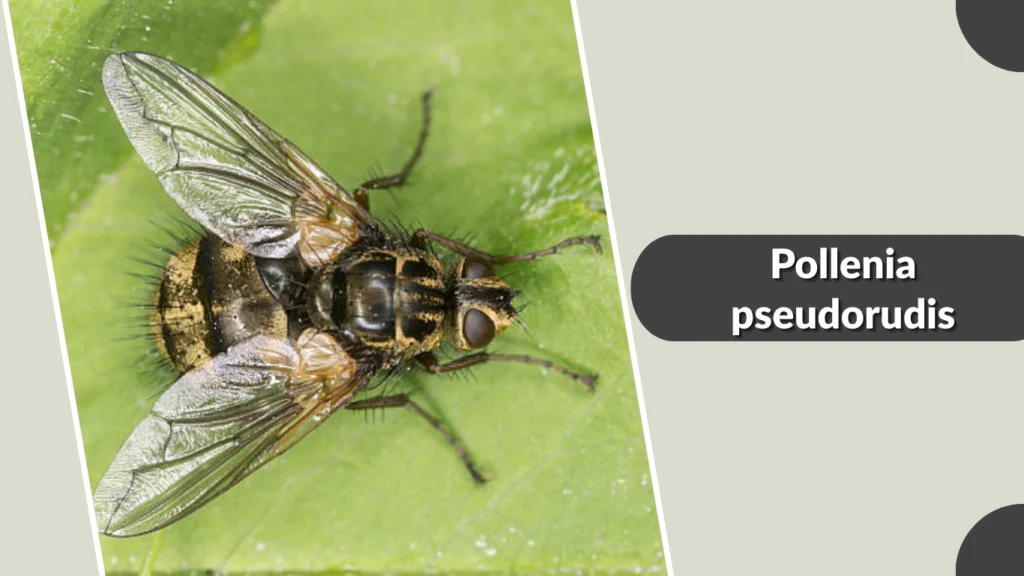
Pollenia pseudorudis is a cluster fly species closely resembling the common cluster fly, Pollenia rudis, hence the name. It shows the same seasonal habit of entering buildings during autumn to overwinter in protected indoor areas.
Identification
- Medium-sized (6–9 mm) with a robust, rounded body
- Thorax covered in golden-gray, velvety hairs
- Abdomen with subtle mottled or checkered markings
- Slow, heavy flight typical of cluster flies
- Overlapping wings when resting
Habitat
In warm months, Pollenia pseudorudis lives in meadows, gardens, fields, and woodland margins. As colder weather approaches, it searches for overwintering sites inside attics, vents, siding gaps, roof crevices, and wall voids. Indoors, it settles in upper, warm, and undisturbed areas.
Behaviors
This species forms loose clusters in warm indoor spaces and becomes sluggish in low temperatures. It may appear on windows or ceilings on sunny winter days. Though common indoors during winter, it does not reproduce inside buildings.
Diet and Lifecycle
Larvae parasitize earthworms, developing internally before pupating underground. Adults feed on nectar, plant sap, and other natural fluids. The lifecycle includes soil egg-laying, larval parasitism within earthworms, soil pupation, and adult emergence. Adults overwinter in structures and become active again in spring.
25. Pollenia shauensis
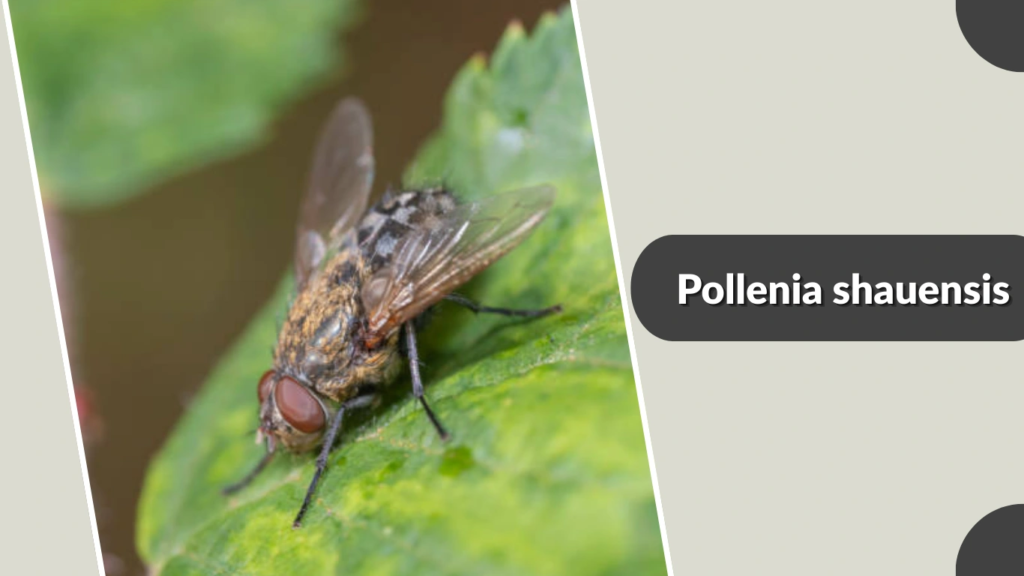
Pollenia shauensis is a cluster fly species found in various temperate regions and is known for its seasonal movement into buildings as temperatures cool. It closely resembles other Pollenia species in both appearance and overwintering behavior.
Identification
- Medium-sized (6–9 mm) with a stout, rounded body
- Thorax dusted with golden or grayish hairs
- Abdomen with faint mottling or checkered patterns
- Slow, heavy, buzzing flight
- Wings overlap when resting
Habitat
During warmer months, Pollenia shauensis inhabits grassy landscapes, meadows, agricultural areas, and forest edges. In autumn, it seeks indoor shelter by entering through siding gaps, vents, window frames, roof edges, and other small openings. Indoors, it prefers attics, wall voids, and upper-level warm rooms.
Behaviors
This species tends to cluster in groups within warm, undisturbed indoor locations. It becomes sluggish in cool conditions and may gather near windows during sunny winter days. Like all cluster flies, Pollenia shauensis does not reproduce indoors.
Diet and Lifecycle
Larvae parasitize earthworms, feeding inside them before pupation in soil. Adults feed on nectar, plant sap, and natural fluids. The lifecycle includes egg-laying in soil, larval parasitism within earthworms, soil pupation, and emergence of adults. Adults overwinter inside structures and become active again in spring.
26. Pollenia perplexa
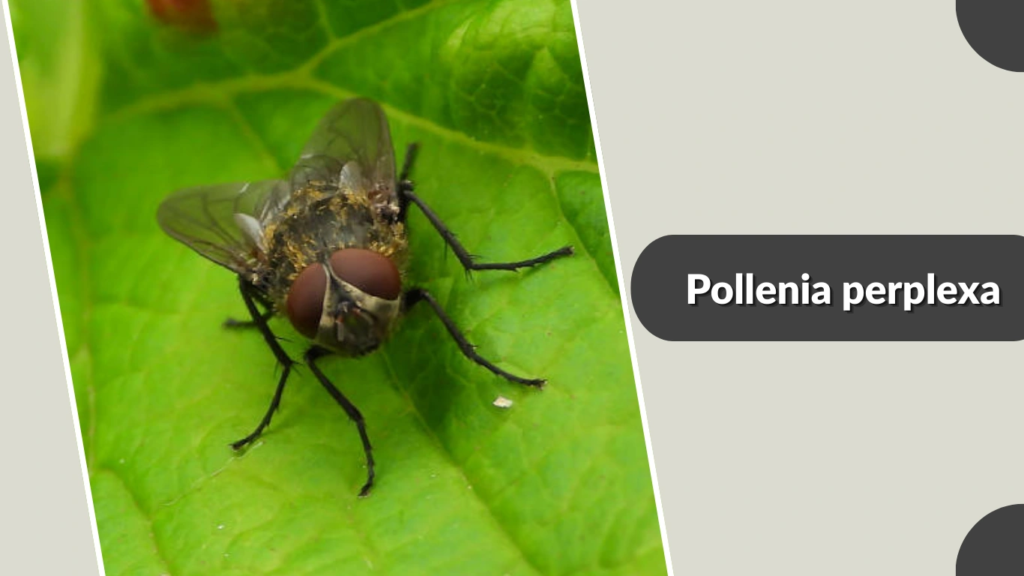
Pollenia perplexa is a cluster fly species recognized for its similarity to several related Pollenia species, making it somewhat difficult to distinguish. Like other cluster flies, it seeks sheltered indoor spaces to overwinter during colder months.
Identification
- Medium-sized (6–9 mm) with a rounded, sturdy body
- Thorax dusted with gray or golden hairs
- Abdomen faintly mottled or checkered
- Slow, heavy flight typical of cluster flies
- Wings overlap neatly at rest
Habitat
Pollenia perplexa lives in grassy fields, meadows, forest margins, and agricultural areas during warm seasons. As temperatures drop, it enters buildings through tiny gaps in siding, vents, roof edges, and window frames. Indoors, it gathers in attics, wall voids, and warm upper rooms.
Behaviors
This species forms clusters in warm, undisturbed indoor areas. It moves sluggishly in cool weather and is often seen on windows or sunny surfaces in winter. Pollenia perplexa does not reproduce indoors; it remains inactive until temperatures rise in spring.
Diet and Lifecycle
Larvae parasitize earthworms, feeding inside them until pupation in soil. Adults feed on nectar, plant juices, and other natural fluids. The lifecycle includes soil-based egg laying, larval parasitism of earthworms, pupation, and adult emergence. Adults overwinter inside human structures.
27. Pollenia mongolica
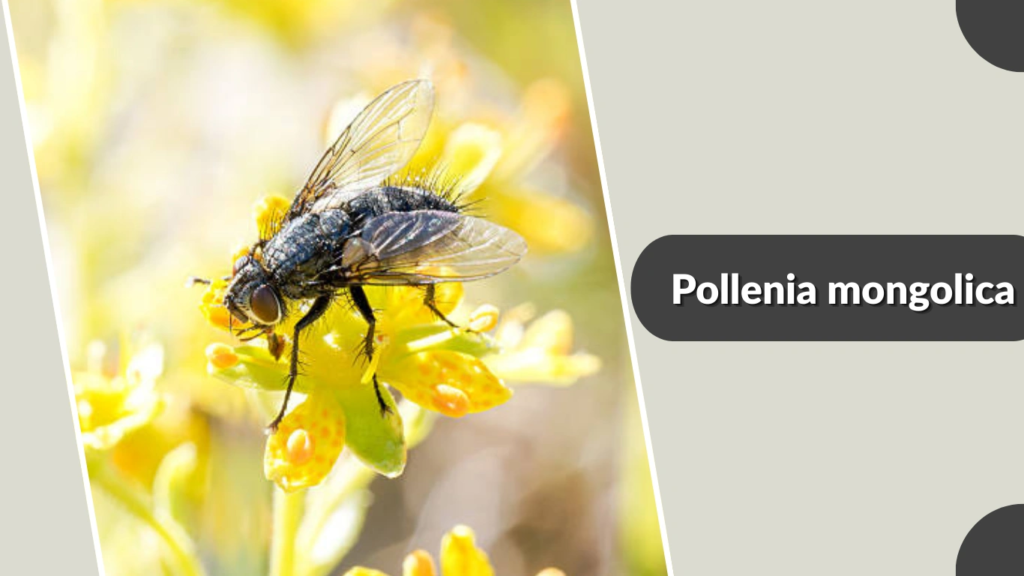
Pollenia mongolica is a cluster fly species primarily found in colder and temperate regions, especially in areas with abundant grassland and open landscapes. Like other cluster flies, it becomes most noticeable when it enters buildings to overwinter.
Identification
- Medium-sized (6–9 mm) with a robust, rounded body
- Thorax covered in grayish or golden fuzzy hairs
- Abdomen faintly mottled or checkered
- Slow, heavy, buzzing flight typical of cluster flies
- Wings overlap slightly when resting
Habitat
During warmer seasons, Pollenia mongolica inhabits grasslands, meadows, agricultural zones, and forest-edge environments. As cold weather approaches, it seeks shelter inside human structures, entering through vents, cracks in siding, roof gaps, or window frames. Indoors, it clusters in attics, wall voids, and warm upper rooms.
Behaviors
This species forms small to large clusters in warm, protected areas. It becomes sluggish in low temperatures and often gathers near windows or sunny surfaces during mild winter days. Like all cluster flies, Pollenia mongolica does not reproduce indoors, using buildings only for overwintering.
Diet and Lifecycle
Larvae parasitize earthworms, feeding inside them until ready to pupate underground. Adults feed on nectar, plant sap, and other natural fluids. The lifecycle includes egg laying in soil, larval development within earthworms, soil pupation, and adult emergence. Adults overwinter indoors and resume activity in spring.
FAQs
1. Why do cluster flies gather inside homes?
Cluster flies enter homes in autumn seeking warm, protected places to overwinter. They gather in attics, wall voids, and upper rooms because these areas stay warm and undisturbed. Unlike houseflies, they do not breed indoors—they simply shelter until spring.
2. Are cluster flies harmful to humans or pets?
Cluster flies are not dangerous. They do not bite, sting, or spread diseases in the same way houseflies might. Their main issue is nuisance—they gather in groups, buzz loudly, and leave small spots of waste on surfaces when present in large numbers.
3. How can I prevent cluster flies from entering my home?
Sealing cracks, gaps, and openings around windows, siding, rooflines, and vents is key. Installing tight screens, sealing attic entry points, and insulating gaps help keep them out. Exterior insecticide treatments in early fall may also reduce entry.
4. Why do cluster flies appear on windows in winter?
Cluster flies are attracted to warmth and light. On sunny winter days, they become active inside walls or attics and migrate toward windows. This makes them visible even though they are not trying to escape—they are simply responding to the warm sunlight.
5. What is the lifecycle of a cluster fly?
Cluster fly larvae are earthworm parasites. Eggs are laid in soil, and larvae burrow into earthworms to develop. After feeding, they pupate in soil and emerge as adults. Several generations occur each year, but adults overwinter in buildings until temperatures rise.
