

Yellow jacket bee nests are one of the most feared structures in backyards, gardens, and even homes. Unlike honeybees, which are generally non-aggressive unless provoked, yellow jackets aggressively defend their colonies. Their ability to sting repeatedly makes nest encounters especially dangerous.
These insects are often searched for as yellow jacket bee nest or yellow jacket bee hive because people confuse their papery nests with bee hives. Knowing how to identify, handle, and safely remove them is essential for avoiding painful stings and potential infestations.
What Does a Yellow Jacket Bee Hive Look Like?
Appearance and Material
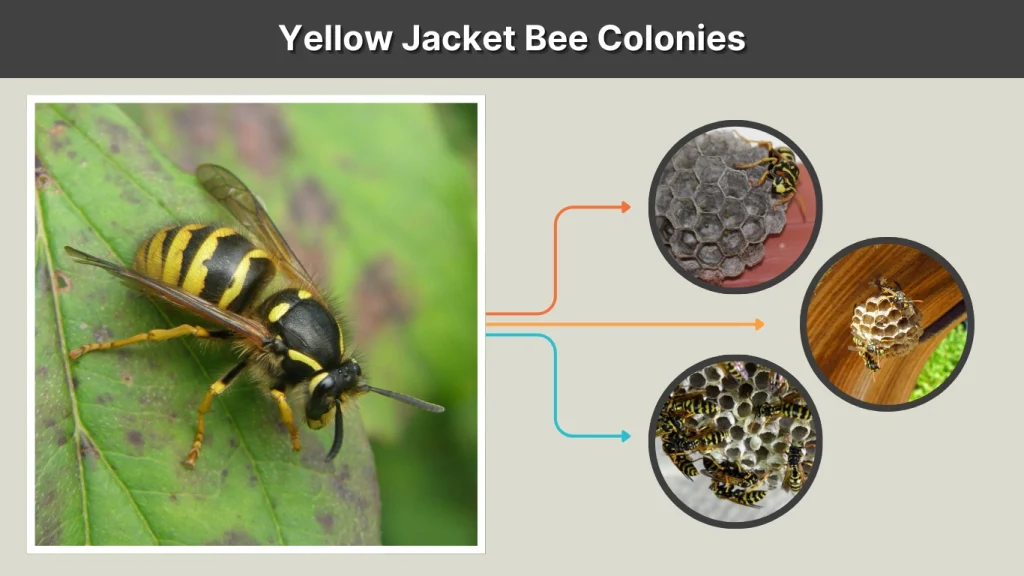
A yellow jacket bee hive is not a hive in the traditional sense but rather a papery nest. Workers chew wood fibers mixed with saliva, creating layers of a grey, papery substance. Inside, the structure has hexagonal cells, where larvae develop.
Unlike the wax combs of honeybees, yellow jacket nests appear rough and layered. They can grow from the size of a golf ball in spring to the size of a basketball or larger by late summer.
Pictures and Identification
To the untrained eye, their nests resemble hornet nests. Photos of these nests often show a rounded or oval shape with a single entrance hole. Underground nests may not be visible until disturbed, while wall nests can remain hidden for months.
Types of Yellow Jacket Nests

Underground Nests
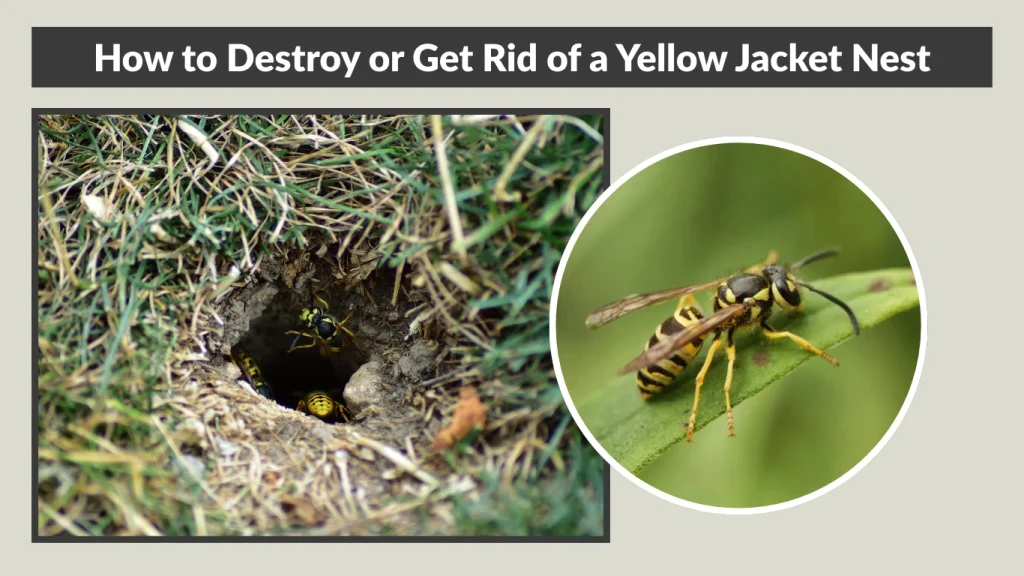
The most common type is built in abandoned rodent burrows or soil cavities. These underground nests can be hard to detect until mowing lawns, gardening, or walking near them disturbs the colony. Once disturbed, yellow jackets pour out aggressively, stinging multiple times.
Wall and Structural Nests
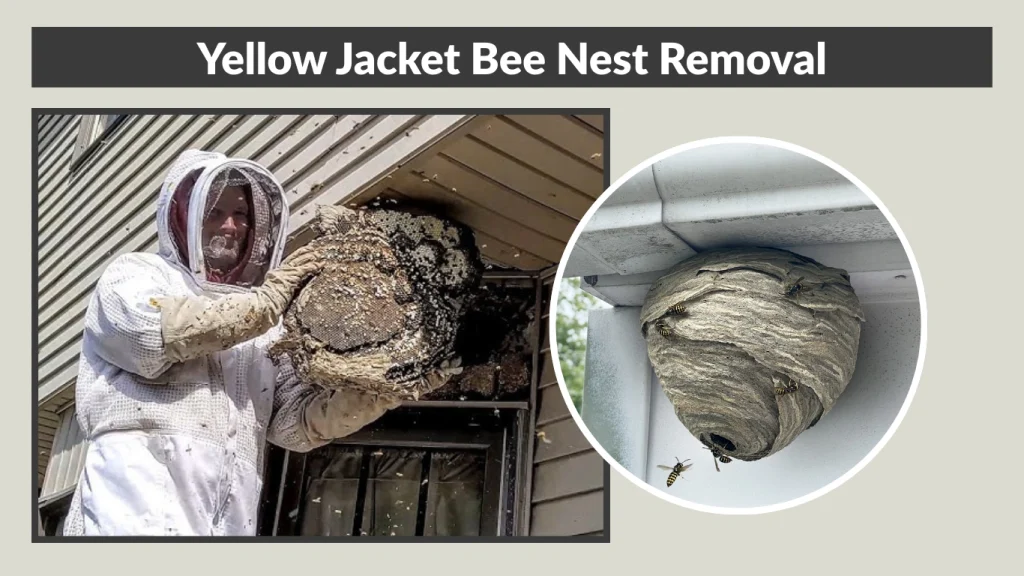
Yellow jackets frequently use voids in walls, attics, and sheds to build their nests. These are more difficult to spot and often detected only when buzzing sounds are heard or insects appear indoors. Wall nests pose double risks: property damage and indoor infestations.
Aerial and Tree Nests
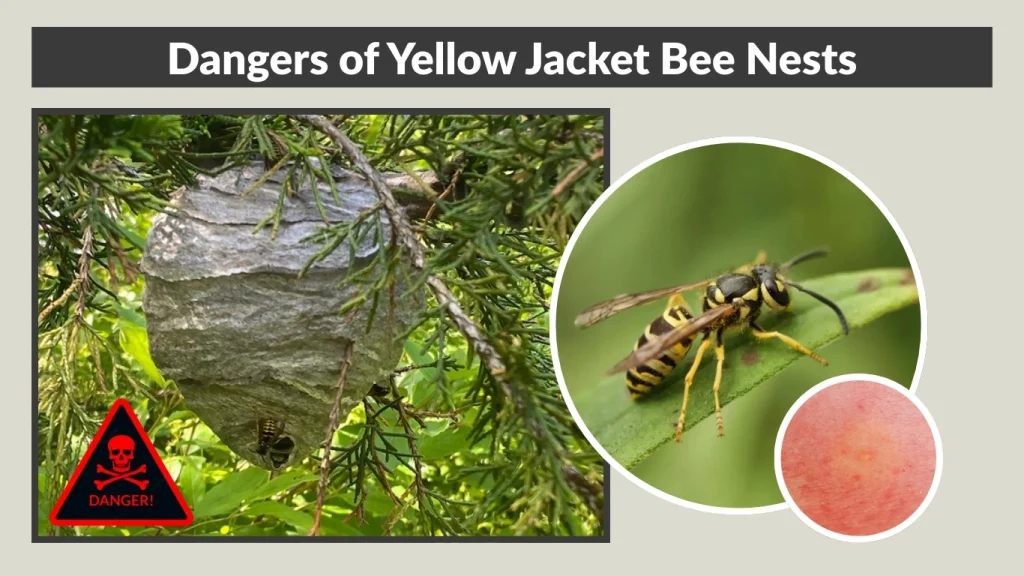
Though less common, some species build above-ground nests in trees, bushes, or under eaves. These resemble hornet nests and are equally dangerous if disturbed. Aerial nests are usually discovered when they grow large enough to be noticed.
Yellow Jacket Bee Colonies
Colony Size and Growth
Colonies start small in spring when the queen lays her first batch of eggs. By summer, the nest expands rapidly, housing hundreds of workers, and at peak season, populations may reach 2,000–4,000 yellow jackets.
This rapid growth makes nests particularly threatening in late summer and early fall when food sources dwindle and yellow jackets become more aggressive.
Queen’s Role
The queen yellow jacket bee is the foundation of the colony. She begins the nest alone, laying eggs and caring for the first workers. Once workers mature, they take over nest expansion and foraging.
By fall, the queen dies, but new queens leave the nest to mate and hibernate until the next spring, ensuring survival of the species.
Dangers of Yellow Jacket Bee Nests
Aggression and Defense
Yellow jackets are extremely territorial. When their nest is disturbed, they release alarm pheromones that trigger workers to attack in swarms. Unlike honeybees, yellow jackets can sting repeatedly, injecting venom that causes pain, swelling, and, in some cases, life-threatening allergic reactions.
This aggressive defense mechanism makes them one of the most dangerous insects to encounter in residential areas.
Risk to Humans and Pets
Humans often stumble upon nests while mowing lawns, gardening, or walking barefoot outdoors. Children playing outside and pets digging in the yard are especially vulnerable.
- Pets may receive multiple stings to the face, paws, or body if they disturb a ground nest.
- For people with allergies to venom, even a single sting can be life-threatening.
The danger increases dramatically if nests are built in walls or attics, as yellow jackets may gain access inside the home.
Yellow Jacket Bee Hive vs Honeybee Hive

Structural Differences
- Yellow jacket hive/nest: Made of paper-like fibers, often hidden underground or in cavities.
- Honeybee hive: Built from wax, usually in hollow trees or managed in beekeeper boxes.
Yellow jacket hives appear grey and layered, while honeybee hives are golden and waxy.
Behavioral Differences
Honeybees sting once and die, but yellow jackets sting repeatedly. Honeybees are pollinators and generally less aggressive, while yellow jackets are predators and scavengers.
This distinction is crucial: many people attempting DIY removal mistakenly treat yellow jacket nests as harmless bee hives, leading to dangerous encounters.
Yellow Jacket Bee Nest Removal
DIY Precautions
If you find a small nest early in the season, DIY removal may be possible. However, safety is critical because yellow jackets are highly aggressive.
- Always wear a yellow jacket bee suit or thick protective clothing.
- Work at night, when yellow jackets are less active.
- Approach quietly and keep a clear escape route.
Even with precautions, DIY removal carries risks. For larger colonies, calling professionals is always safer.
Sprays and Traps
Several products are designed to target yellow jackets:
- Aerosol sprays: Can be applied directly into nest openings at night, killing most workers.
- Dust insecticides: Work well for underground nests by coating the tunnel entrance.
- Baited traps: Useful for population control around patios and gardens.
Traps are best used as a preventive measure but may not fully eliminate a large colony.
Professional Extermination
For large nests or nests in walls, professional exterminators are the safest option. They use stronger insecticides and specialized equipment. Removal costs vary depending on nest size and location, but the risk reduction is worth it.
How to Destroy or Get Rid of a Yellow Jacket Nest
Ground Nest Removal
- Locate the nest entrance during the day but only treat it at night.
- Apply insecticidal dust or spray directly into the opening.
- Cover with soil the next morning to block survivors.
Ground nests are especially dangerous because they are often hidden until disturbed.
Wall Nest Removal
Wall nests are far more complex. Spraying the entrance may not kill the entire colony, and sealing it prematurely can force yellow jackets into the house.
Professional removal is recommended because improper handling can damage walls or wiring and make infestations worse.
Safety Tips During Removal
- Never attempt removal during the day when workers are most active.
- Wear protective clothing from head to toe.
- Keep pets and children indoors during the process.
- Do not use gasoline or fire—these methods are dangerous and ineffective.
- Always confirm the colony is fully dead before removing the physical nest.
Prevention of Future Nests
Yard and Home Maintenance
- Seal cracks, crevices, and wall voids to prevent nesting.
- Fill abandoned rodent burrows in the yard.
- Keep garbage bins sealed tightly to reduce attractants.
- Remove fallen fruits and uncovered food outdoors.
Using Traps and Repellents
- Set up yellow jacket traps in early spring to catch queens before they establish nests.
- Use natural repellents such as peppermint oil sprays near windows, doors, and outdoor eating areas.
- Maintain regular yard inspections during warm months to catch small nests before they expand.
Final Thoughts on Yellow Jacket Bee Nests
Yellow jacket bee nests are not only a nuisance but also a serious safety hazard. Their aggressive defense and ability to sting repeatedly make them dangerous to humans and pets alike.
Key reminders:
- Learn to identify nests early by appearance and location.
- Small nests may be managed with sprays or traps, but large or hidden nests require professional extermination.
- Preventive measures—yard maintenance, sealing entry points, and using traps—help reduce future infestations.
By respecting their role in nature while prioritizing safety, you can effectively manage yellow jacket bee nests and avoid painful encounters.
FAQs
How do I know if I have a yellow jacket nest nearby?
If you notice frequent yellow jacket activity in one area, especially near the ground or walls, there may be a nest. Watch for insects flying in and out of a single entry point. Underground nests often have a small hole surrounded by loose soil or increased insect traffic.
Can I remove a yellow jacket nest by myself?
Yes, but only if the nest is small and detected early in the season. Wear protective gear, treat at night, and use insecticide sprays or dust. However, large nests or nests in walls are too dangerous and should be handled by a professional exterminator for safety.
What’s the best spray to kill yellow jacket bees?
Aerosol sprays designed for wasps and hornets are the most effective. These sprays shoot several feet, allowing you to treat the nest entrance at a safe distance. Insecticidal dust is better for underground nests because it coats workers as they move in and out.
Do yellow jackets reuse the same hive every year?
No, yellow jacket colonies die off each winter, and old nests are abandoned. New queens build fresh nests every spring. However, they may reuse the same location, such as wall voids or burrows, so preventive sealing and maintenance are important to stop future infestations.
How much does professional yellow jacket nest removal cost?
The cost varies depending on nest size and location. On average, professional removal ranges from $100 to $500. Nests inside walls or attics often cost more due to the complexity of removal. While expensive, it ensures complete elimination and safety from dangerous stings.
