
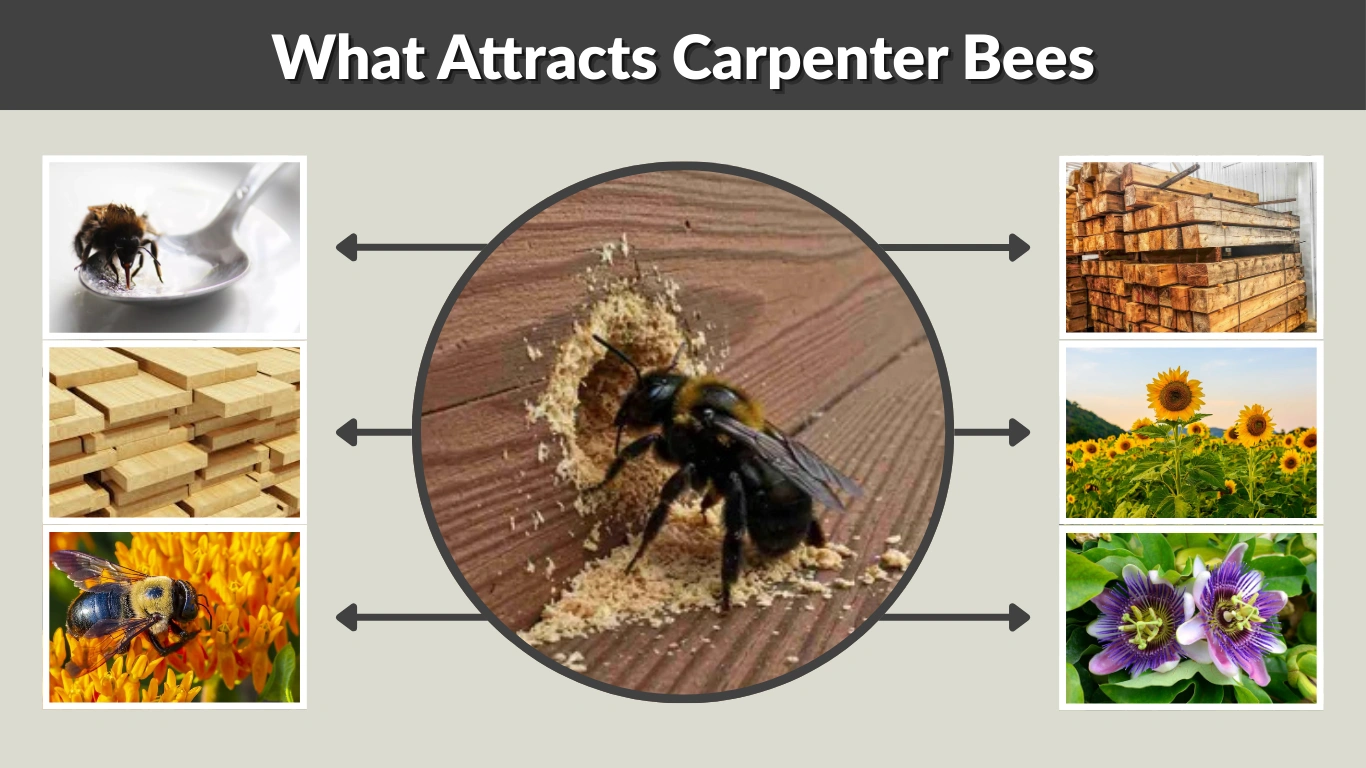
Carpenter bees are solitary pollinators that often cause frustration for homeowners. Instead of living in hives, female carpenter bees bore tunnels into untreated or weathered wood to create nests. While they play an important role in ecosystems, their nesting behavior can damage homes, decks, and fences.
Understanding what attracts carpenter bees is the first step to preventing infestations. From the type of wood they prefer to the scents and flowers that lure them, several factors influence their activity. This article explores their natural preferences, common attractants, and practical ways traps use these tendencies to control populations.
General Attraction Factors
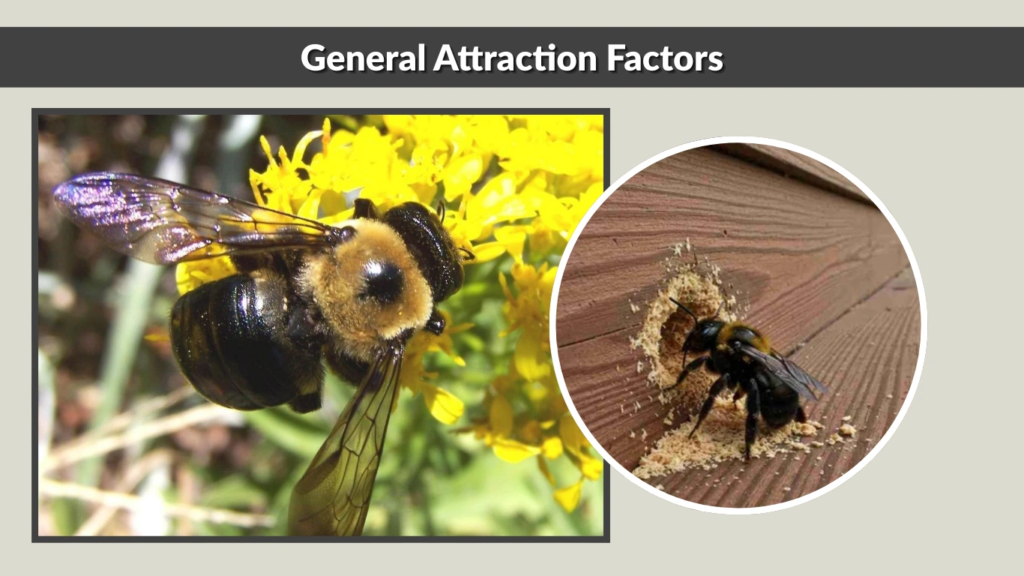
Carpenter bees are guided by their natural instincts when selecting nesting sites and foraging areas.
Wood Preference
The strongest attractant is untreated, softwood. Carpenter bees drill into wood to build galleries for their larvae. They do not eat the wood; instead, they excavate tunnels for laying eggs. Untreated pine, cedar, redwood, and cypress are especially vulnerable. Weathered or unpainted surfaces provide the easiest entry points.
Environmental Conditions
- Sunlight: Carpenter bees prefer warm, sunny spots for nesting. South-facing eaves, siding, and decks are frequent targets.
- Shelter: Overhangs, porches, and soffits provide protected areas where tunnels can be built without exposure to rain.
- Temperature: Activity peaks in spring and summer, when females are seeking nesting sites and males patrol nearby.
Why They Target Houses
Carpenter bees are often attracted to residential structures because homes provide abundant untreated or exposed wood. Painted or stained wood is less appealing, but once a female establishes a tunnel, others often return in subsequent years, enlarging or reusing it.
Carpenter Bee Attractants (Products & DIY)
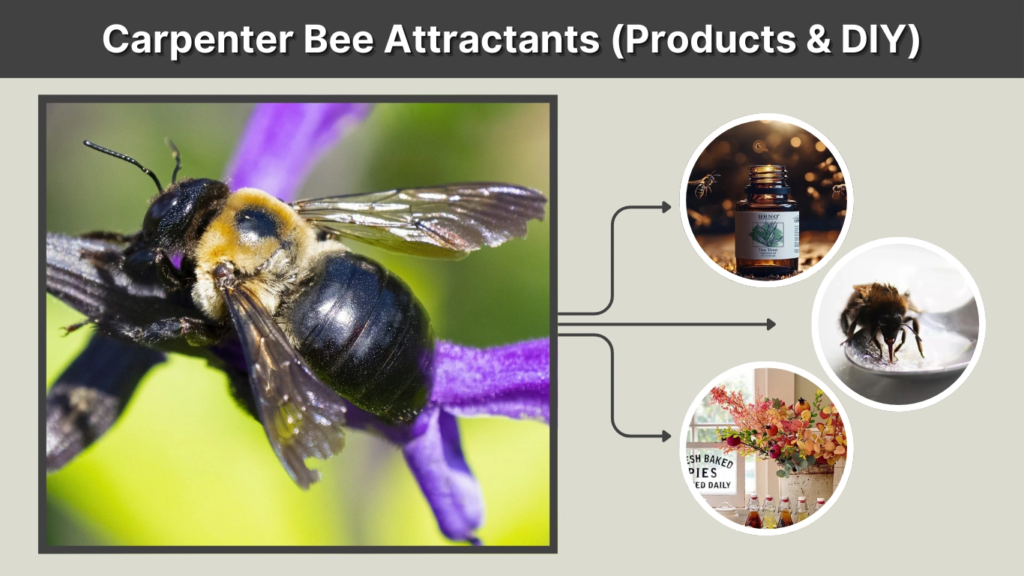
Because carpenter bees naturally target certain woods, commercial and DIY attractants are sometimes used to manage or trap them.
Commercial Attractants
Several products on the market claim to lure carpenter bees into traps more effectively. These may contain natural scents, pheromones, or chemical lures. While some improve trap performance, results vary depending on placement and design.
DIY Attractants
Homeowners often experiment with DIY carpenter bee attractants, such as:
- Citrus or almond oil: Although these are more effective as repellents, some use them to manipulate bee movement.
- Sugar water or honey: Commonly believed to attract bees, though carpenter bees are less interested in these than in pollen or untreated wood.
- Homemade baits: Mixtures of floral scents or fruit extracts.
Pros and Cons
Pros
- Pros: Attractants can increase trap efficiency when combined with the right setup.
Cons
- Cons: Misconceptions can lead to ineffective methods. For example, honey may attract ants or wasps more than carpenter bees.
Safe Use
When handling attractants, it’s important to apply them carefully, as strong odors or chemical agents may affect other beneficial insects. Always consider eco-friendly options to minimize environmental harm.
Carpenter Bee Traps and Attractants
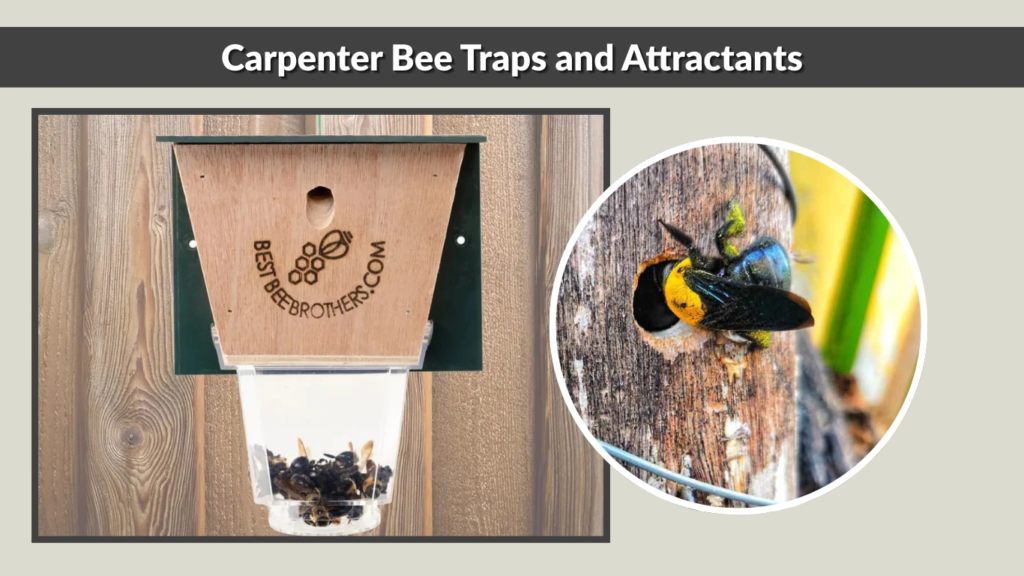
Carpenter bee traps are designed to exploit the bees’ nesting instincts.
How Traps Work
A typical trap uses a wooden box with angled holes leading into a plastic jar or container. Bees enter, believing they are finding a nesting tunnel, but cannot escape once inside. Over time, this reduces populations near structures.
Attractants in Traps
To improve effectiveness, traps may include:
- Wooden scent cues: Untreated wood naturally draws carpenter bees.
- Chemical lures: Added attractants mimic nesting odors.
- Placement strategies: Hanging traps near eaves, decks, or known activity zones increases success.
How to Lure Carpenter Bees Into Traps
- Place traps early in spring before bees begin nesting.
- Use untreated wood in or around traps.
- Position them in sunny, sheltered areas where bees typically hover.
Best Practices
- Maintain traps by emptying them regularly.
- Combine traps with preventive measures, such as painting exposed wood, to ensure long-term control.
- Avoid over-reliance on attractants alone—location and timing are often more important.
Scents and Smells That Attract Carpenter Bees
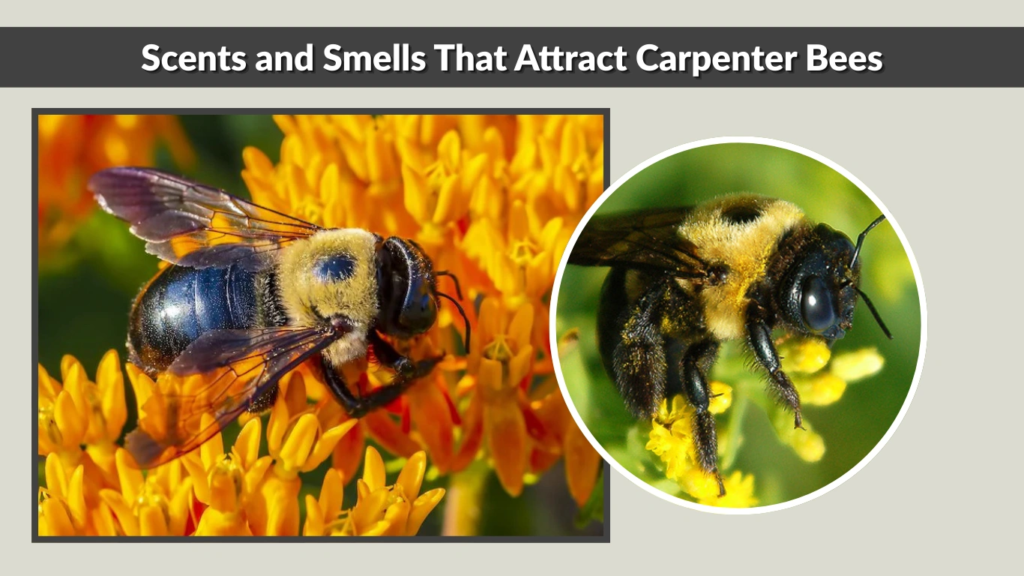
Carpenter bees respond strongly to natural odors, especially those associated with pollen and untreated wood.
Natural Odors
- Pollen and nectar scents: As pollinators, carpenter bees are naturally drawn to floral aromas.
- Wood odors: Freshly cut or weathered wood emits subtle smells that attract females seeking nesting sites.
- Plant resins: Sticky resins can signal a potential area for nest building.
Myths About Smells
Many homeowners wonder whether household items attract carpenter bees. Common myths include:
- Honey: While carpenter bees feed on nectar, honey is not a natural attractant for them.
- Sugar water or soda: These sweet liquids attract wasps or ants more effectively than carpenter bees.
- Pine-Sol or cedar oils: These are more likely to repel than attract bees.
Fact check: Carpenter bees are primarily attracted to untreated wood and flowers, not sugary liquids or cleaning products.
Wood and Building Materials
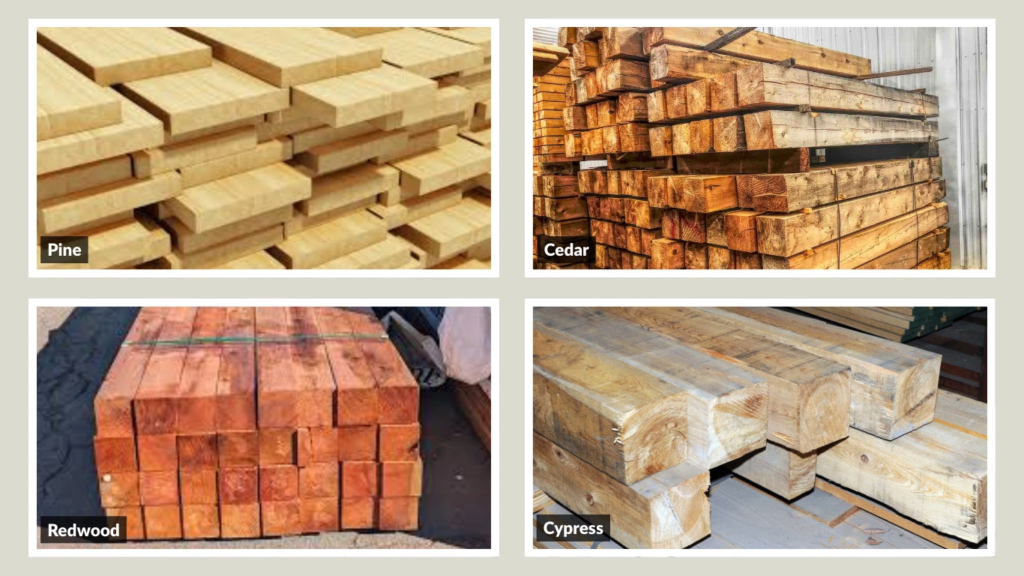
The type of wood around a property greatly influences carpenter bee activity.
Preferred Woods
Carpenter bees prefer softwoods because they are easier to bore into. These include:
- Pine
- Cedar
- Redwood
- Cypress
Untreated, weathered wood is most vulnerable, while freshly painted or stained wood offers protection.
Painted vs. Untreated Surfaces
- Untreated wood: High risk for infestation.
- Painted or stained wood: Significantly reduces attraction, as bees avoid slick, sealed surfaces.
- Treated lumber: Less likely to be drilled, though not entirely immune.
Preventive Measures
- Seal all exposed wood: Apply paint, varnish, or stain.
- Replace softwoods: Use hardwoods like oak or maple in outdoor projects.
- Regular inspection: Fill and seal old holes to prevent reuse.
Plants and Flowers That Attract Carpenter Bees
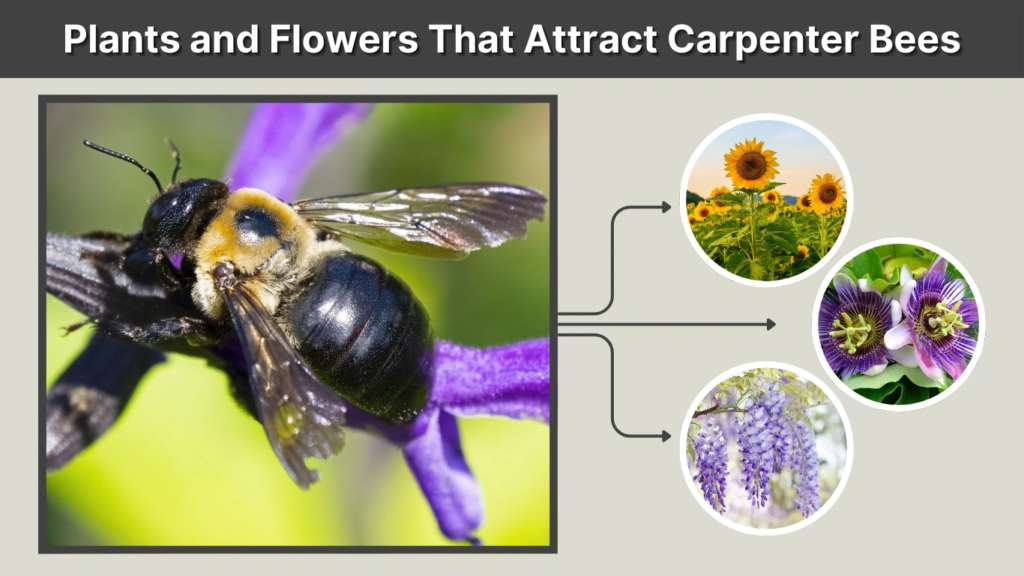
Carpenter bees are effective pollinators, and their foraging behavior naturally draws them to flowering plants.
Plants That Attract Them
They are especially attracted to plants with open-faced blooms, such as:
- Sunflowers
- Passionflowers
- Wisteria
- Salvia
- Purple coneflowers
Why Flowers Matter
Carpenter bees collect nectar and pollen from flowers, storing them as food for their larvae. A garden filled with blooming plants can increase carpenter bee activity, particularly near wooden structures.
Balancing Benefits and Risks
- Benefit: Carpenter bees play a valuable role in pollinating native plants and gardens.
- Risk: Having too many flowers close to untreated wood may encourage nesting nearby.
- Tip: Grow pollinator-friendly plants a little farther from vulnerable wooden structures to strike a balance.
FAQs
What attracts carpenter bees the most?
Carpenter bees are most strongly attracted to untreated, weathered softwoods such as pine, cedar, and redwood. These woods are easy to bore into for nesting tunnels. They are also drawn to sunny, sheltered spots and flowering plants that provide nectar and pollen.
Are carpenter bees attracted to honey?
No. Carpenter bees are not naturally attracted to honey. They feed on nectar and pollen from flowers, not stored honey. Using honey to lure them is ineffective and often attracts ants, wasps, or other insects instead. Their focus remains on untreated wood and blooming plants.
What smell attracts carpenter bees?
Carpenter bees respond to natural floral scents and the odor of untreated wood. While some myths suggest honey, sugar water, or Pine-Sol, these do not actually attract them. True attractants are wood resins, flower aromas, and natural nesting cues that signal safe spots for reproduction.
What type of wood do carpenter bees prefer?
Carpenter bees prefer soft, untreated woods such as pine, cedar, cypress, and redwood. These materials are easier to excavate compared to hardwoods. Painted or stained wood is much less attractive because the surface is sealed, which discourages the bees from boring holes.
What flowers attract carpenter bees?
Carpenter bees are strong pollinators and are drawn to open-faced flowers like sunflowers, wisteria, passionflowers, coneflowers, and salvia. These blooms provide easy access to nectar and pollen. While flowers attract bees for foraging, nesting is still primarily influenced by nearby untreated wood structures.
