

Discovering water bugs in your swimming pool can be both unpleasant and alarming. These tiny invaders, often seen gliding across the surface or swimming underwater, are common in poorly maintained pools or during warmer months. Understanding what causes their presence, identifying the species, and learning safe removal methods are essential steps toward maintaining a clean, bug-free pool.
Identification
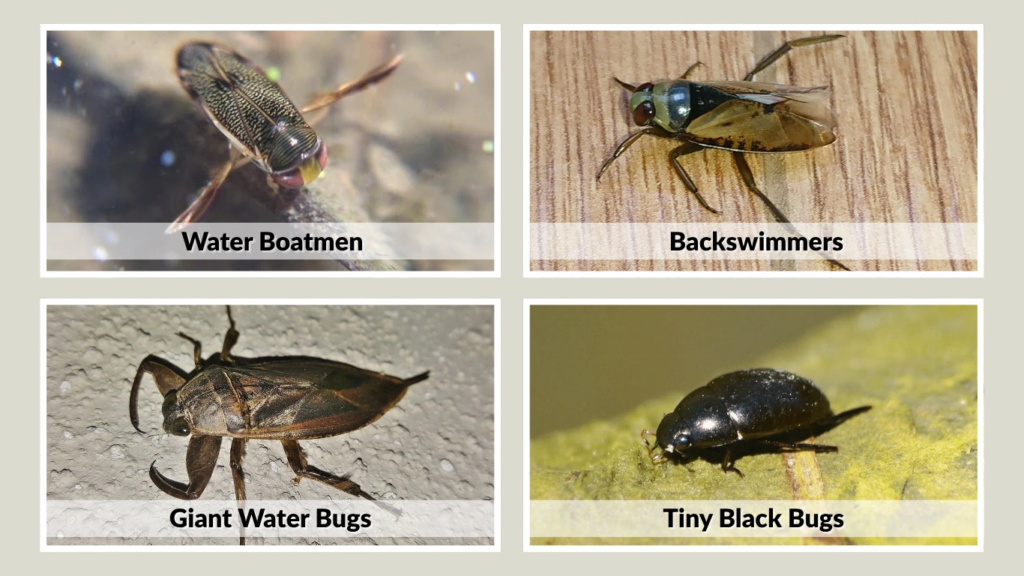
Common Pool Water Bugs
The most frequent culprits found in swimming pools include two main types of aquatic insects:
- Water Boatmen: Small, oval, and light brown insects that use their oar-like legs to swim. They primarily feed on algae and microorganisms and are not harmful to humans.
- Backswimmers: Slightly larger and often pale-colored insects that swim upside down. Unlike water boatmen, they are predators and feed on other insects. They can bite when threatened, causing a painful but harmless sting.
- Giant Water Bugs: Occasionally, large insects known as toe biters may fall into pools, especially at night. These belong to the family Belostomatidae and can deliver a painful defensive bite.
- Tiny Black Bugs: These are usually harmless midges or gnats that fall into the pool from surrounding vegetation. While they don’t bite, they can quickly multiply if the pool isn’t maintained.
Appearance and Behavior
Water bugs vary in color from brown to black, depending on the species. Most range between ⅛ inch and 2 inches in length. They swim using back legs adapted like paddles and breathe air through spiracles, allowing them to stay submerged for long periods. You may notice them clinging to pool walls or floating near lights at night.
Why Water Bugs Appear in Pools
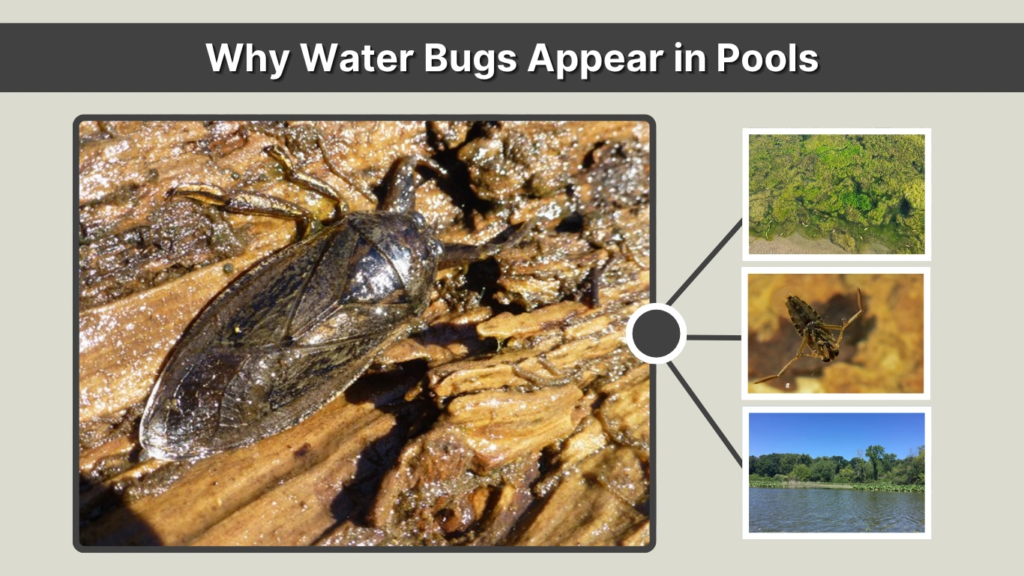
Algae and Organic Matter
Algae are the primary attractant for water bugs, especially water boatmen. Pools with green or cloudy water create an ideal feeding environment. The more algae present, the more likely these insects will appear.
Backswimmers are drawn to pools that already contain water boatmen since they feed on them. Thus, eliminating algae is the first step in stopping both types of insects from invading.
Stagnant or Unfiltered Water
Pools with poor circulation or clogged filters quickly accumulate organic debris. Stagnant water provides breeding grounds for microorganisms and aquatic insects. Running the pool pump regularly helps deter bug infestations by keeping the water moving and oxygenated.
Light Attraction at Night
Many flying insects, including water bugs, are attracted to artificial light. At night, outdoor lighting or illuminated pools can draw these bugs in from nearby ponds or lawns. Once they fall into the pool, many can’t escape and either drown or stay hidden beneath the surface.
Warm Weather and Seasonal Activity
Water bugs thrive in warm, humid environments. During summer months, especially in Florida, Texas, and other southern states, infestations become more common. The combination of heat, light, and still water encourages breeding and migration.
Types of Pool Water Bugs
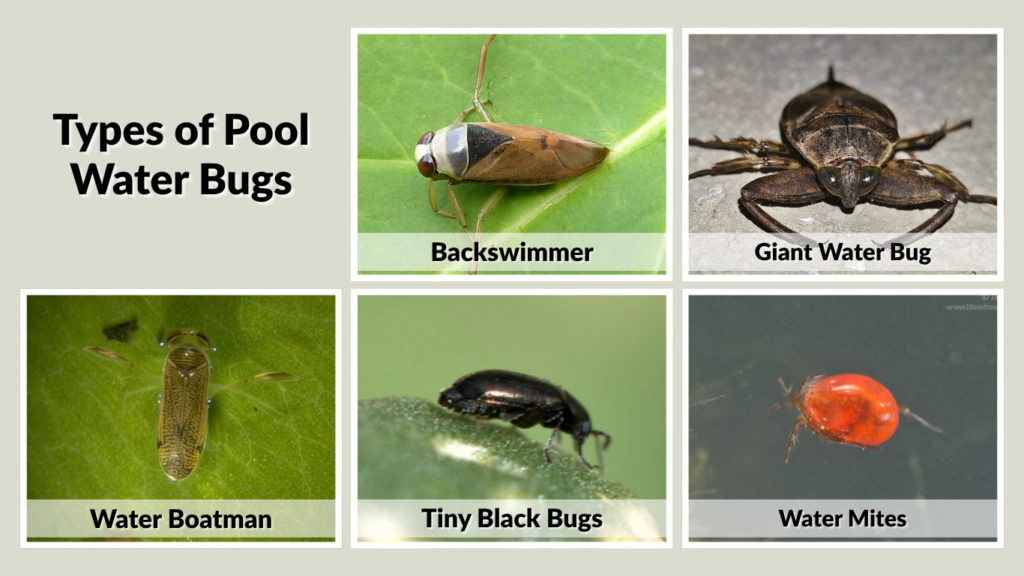
| Type | Appearance | Behavior | Harm to Humans |
| Water Boatman | Small, brownish, oval | Feeds on algae; swims smoothly | Harmless |
| Backswimmer | Slender, pale, swims upside down | Feeds on insects | Painful bite |
| Giant Water Bug | Large, flat, dark | Attracted to lights | Painful bite but rare |
| Tiny Black Bugs | Speck-sized, black | Float or crawl near surface | Harmless |
| Water Mites | Red or orange, minute | Parasitic on insects | Harmless to humans |
Each type indicates a different cause of infestation. For instance, algae usually bring in boatmen, while lights attract flying species like giant water bugs.
Are Water Bugs in Pools Dangerous?
While their sudden appearance can be startling, most water bugs are not dangerous.
- Water Boatmen: Completely harmless and do not bite humans.
- Backswimmers: Can bite when handled or trapped against the skin; their sting is painful, comparable to a bee sting, but not venomous.
- Giant Water Bugs: Larger species occasionally fall into pools at night and may deliver a painful bite, causing redness and mild swelling.
Despite their fearsome look, none of these insects carry diseases or pose a lasting health risk. However, their presence signals poor water quality or algae buildup, both of which should be corrected to prevent further infestations.
How Do Water Bugs Get Into Pools?
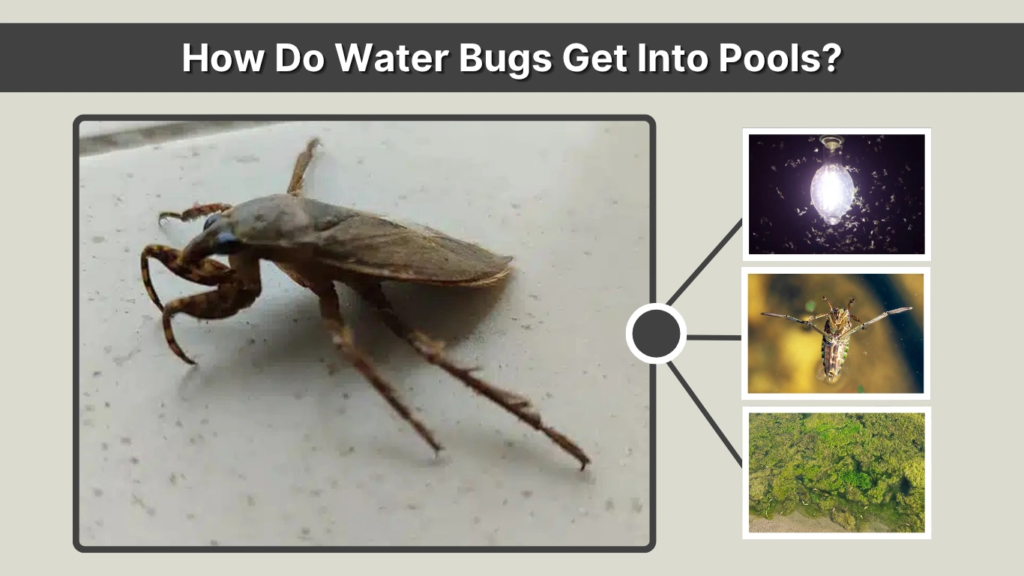
Water bugs typically enter pools by flying or crawling from nearby ponds, gardens, or marshy areas. They are naturally drawn to reflective surfaces like water and artificial lights. Once they land, they often stay due to algae or microorganisms that provide food.
Here are common entry causes:
- Outdoor Lighting: Attracts flying water bugs during nighttime.
- Nearby Water Sources: Ponds, lakes, or birdbaths can harbor bugs that migrate to your pool.
- Algae Growth: Provides food for water boatmen, which then draw predators like backswimmers.
- Dirty Pool Covers: Collect stagnant water and debris, allowing bugs to breed and re-enter the pool when opened.
Maintaining pool hygiene and reducing light exposure are the most effective ways to prevent water bugs from entering.
How to Get Rid of Water Bugs in Pools
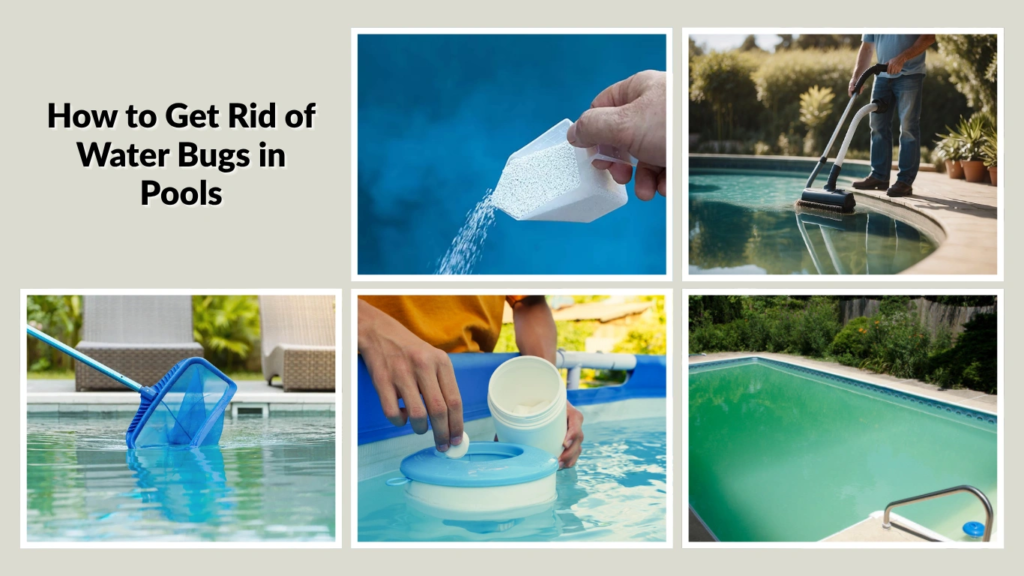
Step 1: Manual Removal
Start by skimming the surface with a fine mesh net to remove visible bugs. Empty the skimmer basket frequently to prevent them from floating back in. For stubborn cases, use a pool vacuum to collect any remaining debris or insect eggs on the bottom.
Step 2: Shock the Pool
Perform a chlorine shock treatment to kill algae and bacteria—the primary attractants. Follow product instructions carefully, typically using one pound of shock per 10,000 gallons of water. Run the pump for 24 hours to circulate the treatment evenly.
Step 3: Clean the Pool Thoroughly
Brush pool walls, steps, and ladders to remove algae films. Focus on shaded areas and corners, as these are ideal hiding spots. Clean the filter system to eliminate microscopic eggs or organic matter that might encourage bugs to return.
Step 4: Balance Pool Chemistry
Once the pool has been cleaned and shocked, it’s essential to maintain proper chemical balance. Correct water chemistry not only keeps your pool safe for swimmers but also deters insects and algae from returning.
- pH level: Maintain between 7.2 and 7.6
- Chlorine level: Keep between 1–3 ppm
- Alkalinity: Maintain between 80–120 ppm
Balanced water prevents algae growth, ensuring there’s no food source for water boatmen or breeding environment for backswimmers.
Step 5: Use Algaecide
Even after shocking, residual algae can persist in pool corners or on ladders. Using a non-foaming algaecide once a week helps prevent regrowth. This step is crucial because as long as algae exist, water boatmen will continue to return.
Apply algaecide after the chlorine levels stabilize post-shock treatment. This creates a long-term barrier against future infestations.
Step 6: Adjust Lighting and Surroundings
Outdoor lighting plays a major role in attracting water bugs. These insects are nocturnal and drawn to bright white or blue lights. You can discourage their presence by:
- Replacing white bulbs with yellow or amber LED lights.
- Turning off pool and patio lights at night.
- Installing motion-activated lights to minimize constant illumination.
Additionally, trim nearby plants and trees, as overhanging branches and leaves can provide shelter and entry paths for flying bugs.
Step 7: Prevent Reinfestation
Prevention is the key to keeping your pool consistently bug-free. Incorporate the following habits into your maintenance routine:
- Run the pool pump for at least 8–12 hours daily during hot months to ensure circulation.
- Skim and brush the pool weekly to remove organic debris.
- Cover the pool when not in use, especially overnight.
- Empty skimmer baskets and filters regularly to eliminate trapped insects or eggs.
- Apply a monthly enzyme treatment to break down organic matter that attracts bugs.
By staying consistent with these habits, you’ll make your pool an environment where water bugs can’t thrive.
Regional and Seasonal Considerations
Florida and Southern States
In Florida, Texas, and other humid regions, warm temperatures and abundant vegetation make pools highly susceptible to water bug infestations. Frequent rainfall combined with heat accelerates algae growth, so weekly pool shocking is recommended.
Saltwater Pools
A common misconception is that saltwater pools don’t get water bugs. While salt can deter some pests, these pools can still host algae if the salt cell or generator isn’t functioning properly. Regular brushing, circulation, and algaecide application are still necessary to keep bugs away.
Cold Climates
In cooler regions, bugs tend to enter pools during early summer when they’re seeking breeding spots. Keeping your pool covered during spring and ensuring early-season cleaning can prevent initial infestations before swimming season begins.
Are Water Bugs Harmful to Swimmers?
Water bugs are more of a nuisance than a threat. Water boatmen are harmless, while backswimmers may deliver a sharp sting if trapped against the skin. The bite feels similar to a bee sting but subsides quickly.
There’s no evidence that water bugs transmit diseases. However, their presence often indicates unsanitary pool conditions, which can encourage bacteria or algae growth that irritates skin or eyes. Keeping your water clean protects both swimmers and the pool itself.
Natural Remedies for Water Bugs
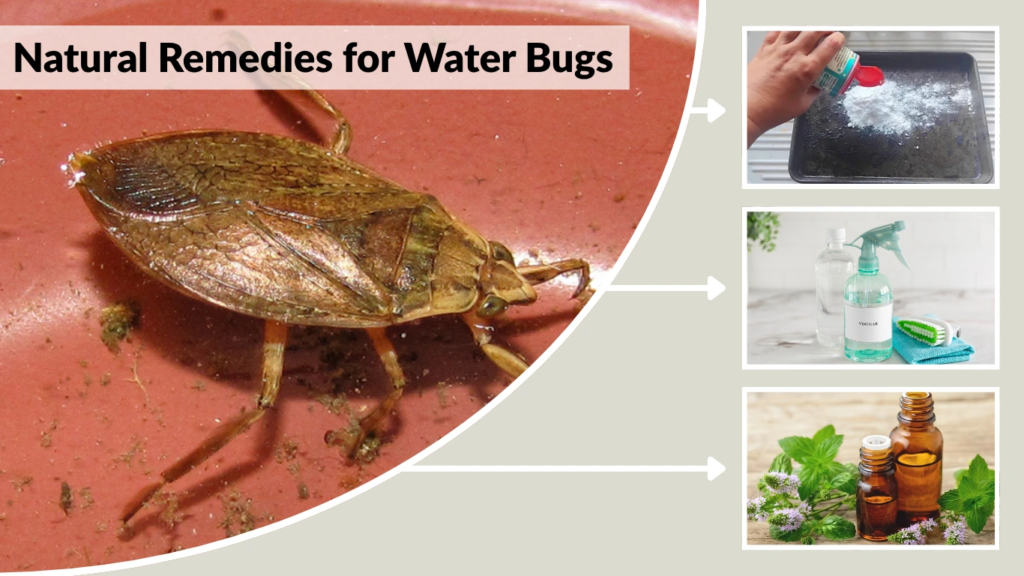
For those who prefer chemical-free maintenance, several natural approaches can help reduce bugs:
- Baking Soda: Helps maintain pH balance and inhibits algae.
- Vinegar Spray: Useful for cleaning pool edges and ladders without harsh chemicals.
- Essential Oils (Citrus, Peppermint): Natural insect deterrents that can be applied to nearby plants.
- Diatomaceous Earth (DE): Applying DE around the pool deck creates a dry barrier that deters crawling insects.
While these solutions support maintenance, they should complement—not replace—regular chemical treatments and cleaning schedules.
Why Proper Maintenance Matters
A sparkling pool isn’t just about aesthetics—it’s about creating an environment hostile to pests. Algae, debris, and standing water provide the foundation for insect populations. Regular cleaning and water balance stop problems before they begin. Remember:
Healthy water = bug-free pool.
Once you eliminate their food and shelter, water bugs have no reason to return.
FAQs
Why do I have water bugs in my pool?
Water bugs are drawn to pools with algae, still water, or bright night lighting. They often arrive seeking food or breeding sites. Water boatmen feed on algae, while backswimmers prey on other insects, creating a chain reaction when maintenance is neglected.
Are water bugs in pools harmful?
Most are harmless, though some—like backswimmers and giant water bugs—can deliver a painful bite if disturbed. Their presence usually signals unbalanced water chemistry or algae buildup, which should be corrected for both hygiene and comfort.
How do I get rid of water bugs in my pool quickly?
Shock your pool with chlorine, scrub all surfaces, clean filters, and vacuum thoroughly. Reduce lighting at night and add algaecide to stop algae growth, which removes the bugs’ primary food source.
What kills water bugs naturally?
Maintaining balanced pH and chlorine levels is the most natural long-term solution. Additionally, enzyme treatments and regular cleaning prevent the buildup of organic matter that attracts insects, removing the need for harsh chemicals.
How can I prevent water bugs from returning?
Keep the water circulating, maintain chemical balance, and clean debris weekly. Use pool covers, avoid leaving lights on overnight, and trim vegetation nearby. Consistent upkeep is the surest way to ensure your pool stays clear and bug-free.
