

Giant water bugs are among the largest aquatic insects on Earth, recognized for their powerful forelegs and painful bite. Belonging to the Belostomatidae family, these insects are commonly called “toe biters” due to their tendency to deliver sharp defensive bites. They play a vital role in freshwater ecosystems, acting as top predators that control fish, tadpole, and insect populations. Despite their intimidating appearance, giant water bugs are fascinating creatures that exhibit complex behaviors and surprising parental care.
Identification

Scientific Classification
Giant water bugs belong to the order Hemiptera and family Belostomatidae. The most common North American species is Lethocerus americanus, often called the American Giant Water Bug. Other notable species include the Lethocerus indicus found in Asia and Lethocerus deyrollei from Australia. Despite regional differences, they share similar body structures and predatory habits.
Physical Characteristics
These insects are impressively large, typically measuring between 1.5 to 4 inches in length. They have flat, oval-shaped bodies, brown or dark tan coloration, and strong forelegs used for grasping prey. Their short, piercing mouthpart, called a rostrum, injects digestive enzymes into prey, turning tissue into liquid. This mechanism makes them efficient underwater predators. A distinctive feature is their retractable breathing tube, allowing them to draw air from the surface while submerged.
Habitat and Range

Geographic Distribution
Giant water bugs inhabit regions across North America, Asia, Australia, and parts of Africa. In the United States, they are particularly common in Florida, Texas, Minnesota, and Michigan, where warm freshwater environments abound. They are also found in man-made ponds, marshes, and even swimming pools during summer months.
Environmental Preferences
These insects prefer calm, shallow freshwater with abundant vegetation. They often cling to submerged plants or stay hidden under rocks and debris. During warmer months, they remain highly active, while in colder regions, they bury themselves in mud or leaf litter to survive winter. Because they are attracted to light, they frequently appear near streetlights or homes, especially at night during the mating season.
Behavior and Lifestyle

Flight and Activity
One of the most surprising traits of giant water bugs is their ability to fly. Although primarily aquatic, adults can take flight to find new bodies of water when their habitat dries out. They are strong fliers, but their attraction to artificial lights often causes confusion with large flying cockroaches. This behavior explains why they are sometimes found far from water sources.
Feeding Habits
Giant water bugs are ambush predators that feed on a variety of aquatic organisms. Their diet includes:
- Tadpoles and small frogs
- Fish and fish fry
- Crustaceans such as shrimp
- Insect larvae and other small aquatic creatures
Using their raptorial front legs, they seize prey and inject enzymes that dissolve internal tissues. They then suck out the liquefied meal through their rostrum, a process similar to that of other true bugs like assassin bugs.
Life Cycle and Reproduction
The reproductive process of giant water bugs is remarkable. Females lay eggs either on submerged vegetation or directly on the backs of males, depending on the species. In species where males carry the eggs, they ensure oxygen flow by surfacing frequently. After hatching, nymphs emerge, resembling miniature adults. They undergo several molts before reaching maturity.
Bite and Human Interaction
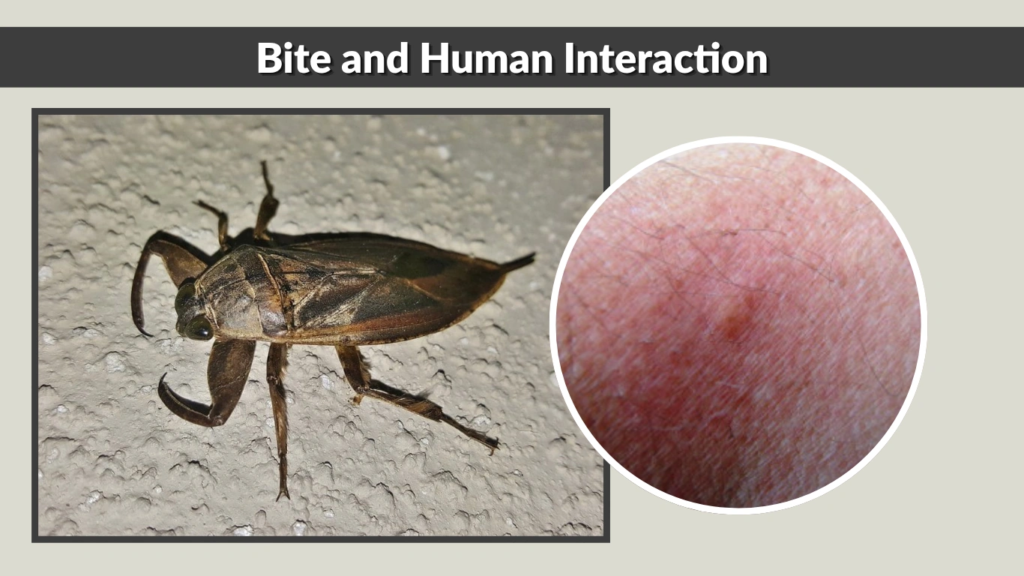
Are Giant Water Bugs Dangerous?
Giant water bugs are not venomous or poisonous, but they can deliver one of the most painful bites in the insect world. The pain ranks high on insect sting pain scales, second only to some wasps and ants. Symptoms include swelling, redness, and numbness lasting several hours. However, bites are rare and usually occur when a bug is handled carelessly or stepped on in shallow water.
Encounters in Florida and Texas
In warm regions such as Florida and Texas, encounters with giant water bugs are frequent, especially near residential ponds or illuminated porches. These insects are drawn to artificial lights and may land on patios or enter pools. While alarming, they are harmless when left alone and return to the water once disturbed.
Ecological Importance
Giant water bugs play an essential role in maintaining the balance of freshwater ecosystems. As apex invertebrate predators, they regulate the populations of smaller aquatic creatures such as tadpoles, fish fry, and mosquito larvae. This natural predation helps keep water environments clean and stable. They also serve as a food source for larger animals like fish, turtles, and wading birds, forming a crucial link in the aquatic food chain. Their presence is often an indicator of healthy freshwater systems.
Giant Water Bugs and Humans
Cultural Significance
In several Asian countries, especially Thailand and Vietnam, giant water bugs are consumed as delicacies. Known locally as mangda, they are roasted or fried and sometimes used to flavor sauces. Their essence, extracted from scent glands, is said to impart a rich, nutty aroma. Despite their intimidating appearance, these insects are valued for both taste and traditional symbolism in some cultures.
Scientific and Media Attention
Giant water bugs have gained global attention through media and educational programs. Wildlife expert Coyote Peterson famously featured them in his Brave Wilderness series, demonstrating their bite and behavior. Their unusual parenting habits, particularly in male-carrying species, are often studied by entomologists as examples of complex insect care. Their presence in the media has turned them from obscure insects into fascinating educational subjects.
In Popular Media and Games
The Animal Crossing: New Horizons (ACNH) video game features the giant water bug as a collectible insect. Players can sell it for in-game currency, helping introduce younger audiences to entomology in an engaging way. The virtual representation accurately depicts their large size and aquatic nature, increasing public interest in real-world biodiversity.
Giant Water Bug vs Cockroach

Because of their appearance and occasional presence near lights or in homes, giant water bugs are often mistaken for cockroaches. However, they belong to entirely different families and lifestyles.
| Feature | Giant Water Bug | Cockroach |
| Habitat | Freshwater ponds and marshes | Indoors and dark, dry places |
| Diet | Carnivorous; feeds on live prey | Omnivorous scavenger |
| Flight Ability | Strong, long-distance flyer | Weak or short-distance flight |
| Bite | Painful defensive bite | Rarely bites humans |
| Ecological Role | Predator in aquatic ecosystems | Decomposer and recycler |
While cockroaches thrive in human habitats, giant water bugs prefer water and rarely invade homes intentionally. Misidentifying them often leads to unnecessary fear, but they are completely different in both behavior and ecology.
Prevention and Control
Although giant water bugs are harmless when left alone, they can become a nuisance when attracted to lights or swimming pools. Here are a few simple measures to reduce encounters:
- Use yellow outdoor lighting: These are less attractive to nocturnal insects.
- Keep pools covered at night: Prevents them from falling in or being trapped.
- Maintain nearby ponds: Clean vegetation and debris to minimize egg-laying sites.
- Avoid handling them: If one enters your home, gently remove it with a container and release it near water.
These methods help limit unwanted contact without harming these ecologically important insects.
FAQs
What is the scientific name of the giant water bug?
The most common species in North America is Lethocerus americanus, part of the Belostomatidae family. Other species exist worldwide, such as Lethocerus indicus in Asia and Lethocerus deyrollei in Australia, all sharing similar appearances and predatory behaviors.
Are giant water bugs dangerous to humans?
No, they are not venomous or deadly to humans. Their bite, however, is extremely painful and may cause temporary swelling or numbness. These insects only bite when threatened or handled roughly, so they should be admired from a distance.
Do giant water bugs fly?
Yes. Adult giant water bugs are strong fliers capable of covering long distances. They often take flight at night in search of new water sources or mates. Their attraction to bright lights frequently leads them to porches and swimming pools.
Where do giant water bugs live?
They inhabit freshwater habitats like ponds, marshes, lakes, and slow-moving streams. They prefer calm, plant-rich environments and are found throughout North America, Asia, and Australia. In colder climates, they burrow into mud to overwinter.
What do giant water bugs eat?
Giant water bugs are carnivorous predators feeding on tadpoles, fish, and other aquatic insects. They inject digestive enzymes into prey through their rostrum, turning internal tissues into liquid form. This unique feeding process makes them highly efficient hunters.
