

Water bugs and roaches are often confused for each other because they share a similar brown color and flat, oval-shaped bodies. However, they are entirely different insects with distinct habitats, behaviors, and diets. Knowing the difference between them is important for pest control—mistaking one for the other could lead to using the wrong treatment. Let’s explore how to identify and tell them apart accurately.
Identification
Overview of Both Insects
Water Bug:
A true aquatic insect from the family Belostomatidae, the water bug is also called a giant water bug or toe-biter. It lives in freshwater environments like ponds, lakes, and streams. These insects are predators that feed on small fish, tadpoles, and insects, using their piercing mouthparts to inject digestive saliva into prey.
Roach (Cockroach):
Cockroaches are terrestrial insects from the order Blattodea. They thrive in warm, moist environments and are notorious for infesting homes, restaurants, and sewers. Roaches are scavengers that feed on food scraps, grease, and waste, spreading bacteria and allergens.
Physical Characteristics

Though they look alike at first glance, a closer inspection reveals clear differences:
| Feature | Water Bug | Roach |
| Size | 2–4 inches (large and broad) | 0.5–2 inches depending on species |
| Color | Brown to dark tan | Reddish-brown or black |
| Shape | Flat, oval, pointed rear end | Slimmer oval with long antennae |
| Legs | Rear legs are flattened like paddles for swimming | Long spiny legs designed for running |
| Habitat | Ponds, lakes, marshes | Indoors – kitchens, drains, basements |
| Behavior | Solitary, aquatic hunter | Social scavenger, lives in colonies |
A water bug’s larger, thicker body and swimming legs make it a powerful swimmer, whereas roaches are built for quick land movement.
Behavior and Habits

Water Bug Behavior
Water bugs are aquatic predators. They hide under rocks and vegetation in shallow water, waiting to ambush prey. Their strong front legs grab small fish, tadpoles, or insects, and they inject saliva to liquefy the insides of their prey before sucking it out.
They are typically active at night, and although they prefer water, they can fly short distances toward light sources. When handled or stepped on, a water bug can bite humans—a painful but non-venomous defensive reaction that earned them the nickname “toe-biter.”
Roach Behavior
Roaches are land-dwelling scavengers. They infest homes and buildings, hiding in dark, humid areas such as under sinks, behind stoves, and inside drains. They feed on crumbs, garbage, and organic material.
Unlike water bugs, roaches rarely bite but are far more troublesome because they carry bacteria and allergens. They reproduce quickly, creating large infestations if not controlled. Most are nocturnal and scatter when exposed to light.
Major Differences
1. Habitat Preference
- Water Bugs: Live in or near freshwater sources—ponds, streams, or swimming pools. They only enter homes accidentally.
- Roaches: Thrive indoors, particularly in warm, moist, and food-rich environments like kitchens or bathrooms.
2. Diet and Feeding Habits
- Water Bugs: Carnivorous—they hunt and feed on live prey such as fish and insects.
- Roaches: Omnivorous scavengers—they eat almost anything, including food crumbs, grease, and decaying materials.
3. Aggression and Bites
- Water Bugs: Can bite humans when provoked or handled; their bite is sharp and painful but not venomous.
- Roaches: Rarely bite humans and typically flee from contact.
4. Appearance and Movement
Water bugs are larger, with broader bodies and strong swimming legs, whereas roaches are slimmer with long antennae and fast, erratic movement across floors and walls.
5. Indoor Infestation Risk
Water bugs don’t infest homes; they may accidentally enter through open windows or doors. Cockroaches, however, breed indoors rapidly and can form colonies in walls, kitchens, or drains, posing serious hygiene concerns.
Species Comparison
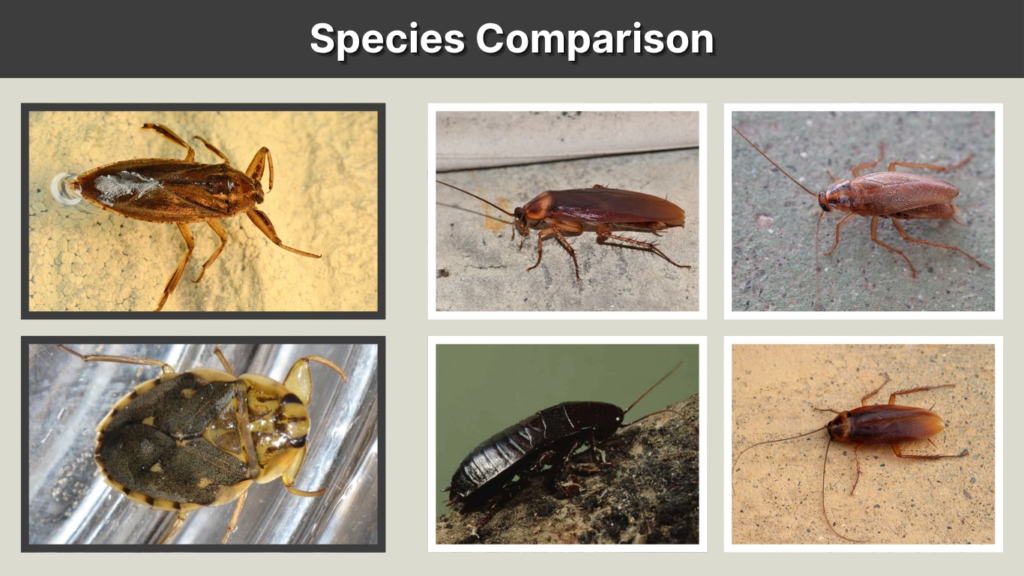
Although both insects are commonly called “water bugs,” true water bugs belong to a completely different group than roaches. Understanding their key species helps clarify why confusion happens so often.
Common Water Bug Species:
- Giant Water Bug (Lethocerus americanus): The largest species, often reaching up to 4 inches. Found in ponds and lakes, these bugs are aquatic predators known as “toe-biters.”
- Creeping Water Bug: Smaller and slimmer than the giant type, typically found under aquatic vegetation or along shallow water edges.
Common Cockroach Species:
- American Cockroach: Large reddish-brown roach that prefers warm, damp basements or kitchens. Commonly mistaken for a water bug because of its size and color.
- German Cockroach: Small, light-brown roach found in kitchens and bathrooms. The most common household species worldwide.
- Oriental Cockroach (Black Water Bug): Dark, glossy roach that thrives in moist outdoor or basement areas. Its nickname causes confusion with true aquatic water bugs.
Signs of Infestation

Water Bug Presence
Water bugs are solitary creatures, not pests in the traditional sense. You might notice them:
- Flying toward lights near lakes or patios at night.
- Swimming or floating in pools, ponds, or birdbaths.
- Occasionally wandering indoors after heavy rain.
They don’t reproduce inside homes and usually appear alone.
Roach Infestation
Cockroaches, however, reproduce rapidly and prefer human environments. Signs include:
- Droppings: Small, pepper-like black specks.
- Egg capsules: Brown, oval casings found in corners or behind appliances.
- Odor: A strong, musty smell from roach secretions.
- Night activity: Roaches scatter when lights are turned on.
If you see multiple roaches during the day, it usually means a large infestation already exists.
How to Get Rid of Each
Water Bug Removal
Water bugs don’t require extensive pest control since they live outdoors, but you can minimize encounters by:
- Turning off outdoor lights that attract them at night.
- Removing standing water around your property.
- Sealing gaps in windows and doors to prevent accidental entry.
- Using a pool skimmer or net to remove them from swimming areas.
If you find one indoors, capture it in a container and release it outside—it won’t survive long indoors.
Roach Control
Roaches, on the other hand, demand immediate action.
- Clean thoroughly: Wipe surfaces, fix leaks, and remove crumbs or grease.
- Use bait traps or gel bait: These attract and poison roaches over time.
- Apply boric acid or diatomaceous earth in cracks and under appliances.
- Seal entry points: Caulk around plumbing and vents.
- Call professional pest control if infestation signs persist.
A consistent cleaning routine is key—cockroaches can live weeks without food but need moisture daily.
FAQs
What’s the difference between a water bug and a roach?
A water bug is an aquatic insect that lives in freshwater, while a roach is a land-dwelling pest that invades homes. Water bugs hunt other insects, while roaches scavenge for food scraps.
Do water bugs live in houses?
No, they don’t. Water bugs may accidentally fly indoors but cannot survive long outside their aquatic environment.
Which one bites—water bug or roach?
Water bugs can bite if handled or provoked, causing a sharp pain. Roaches rarely bite and are more likely to contaminate surfaces with bacteria.
Why do people call roaches water bugs?
The term “water bug” is commonly used to describe large roaches (like the American cockroach) because they’re often found near moist areas, though they’re not true water bugs.
How can I tell them apart visually?
Water bugs are larger, thicker, and have paddle-like legs for swimming, while roaches are smaller, with long antennae and quick running movements.
