
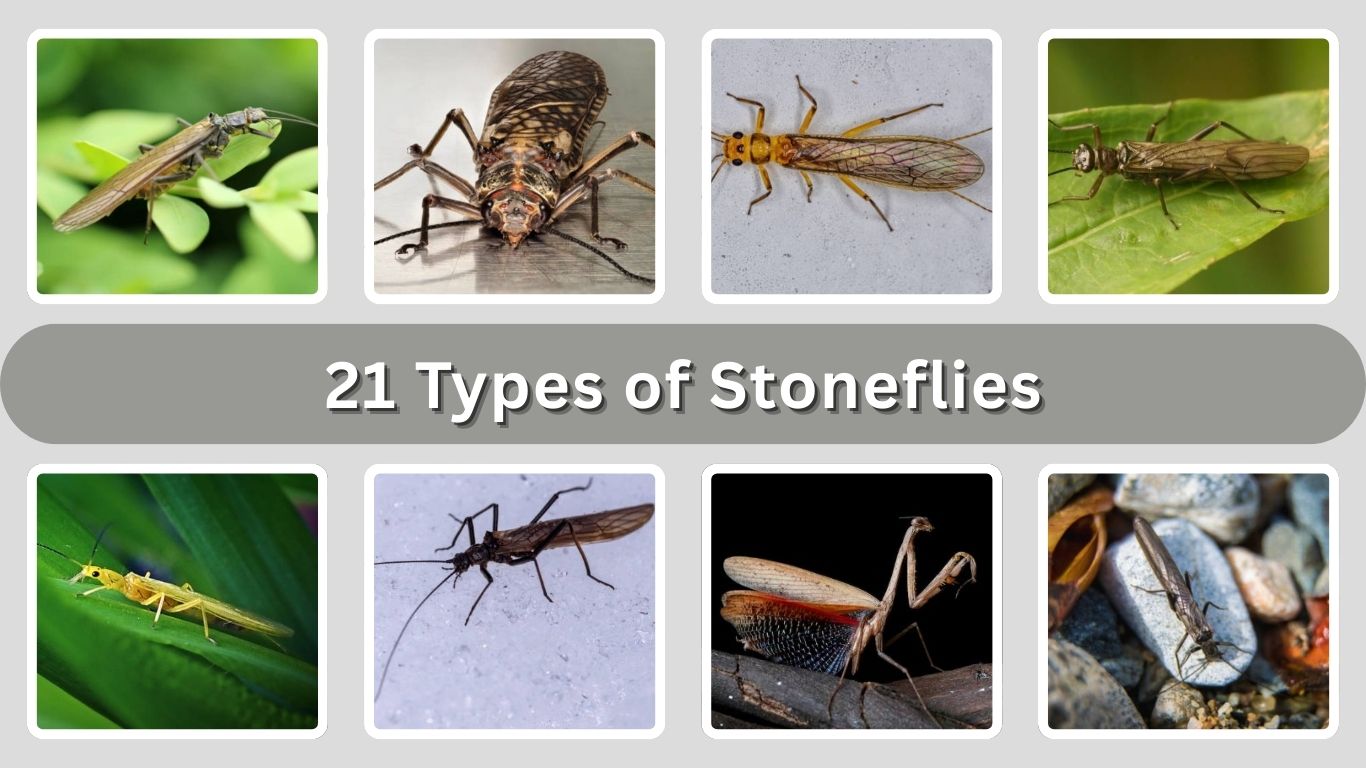
Stoneflies are ancient freshwater insects best known for living in clean, cold, oxygen-rich streams and rivers. They are highly sensitive to pollution, which makes them powerful natural indicators of healthy aquatic ecosystems. With more than 3,500 species worldwide, stoneflies vary widely in size, color, and seasonal activity—from giant river species to tiny winter-emerging forms. Below, you’ll explore 21 common types of stoneflies, with simple identification features, habitats, diets, and life cycle details.
1. Common Stonefly
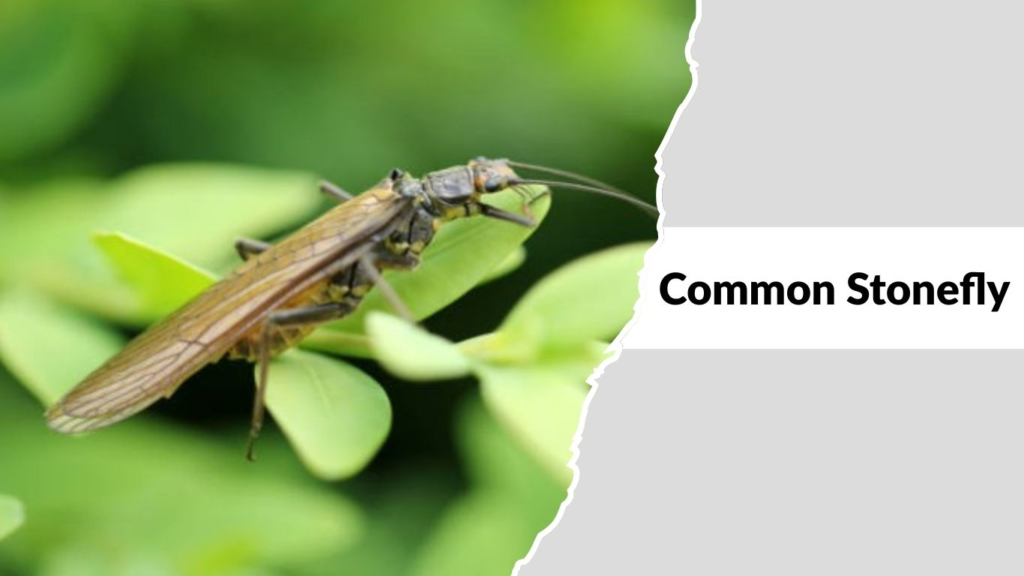
The common stonefly is a freshwater insect belonging to the order Plecoptera. It is widely found near clean, cold streams, rivers, and mountain creeks. Stoneflies are important ecological indicators because their presence usually means the water is unpolluted and rich in oxygen. Both adults and nymphs play a key role in aquatic food chains.
Identification
- Slender, soft-bodied insect with two long tail filaments (cerci)
- Two pairs of transparent, heavily veined wings folded flat over the body
- Long antennae, often as long as the body
- Colors range from brown and black to yellowish or olive
- Nymphs are flattened, with strong legs adapted for clinging to rocks
Habitat
Common stoneflies live close to fresh, fast-flowing water sources. Their nymphs spend most of their life under stones, gravel, and submerged wood in streams and rivers. They prefer cold, oxygen-rich environments such as forest creeks, spring-fed rivers, and mountain streams where pollution levels are low.
Diet
Stonefly nymphs have a varied diet depending on species. Many feed on algae, decaying leaves, and aquatic plants, helping break down organic matter. Some larger species are predators, eating mayfly larvae, midge larvae, and other small aquatic insects. Adult stoneflies usually feed very little, sometimes taking in plant material or not feeding at all.
Life Cycle
The life cycle of a common stonefly includes egg, nymph, and adult stages. Females lay eggs directly into water. Nymphs may live from several months to up to three years underwater, molting many times. When mature, they crawl out, emerge as winged adults, mate, and die shortly after reproduction.
2. Giant Stonefly
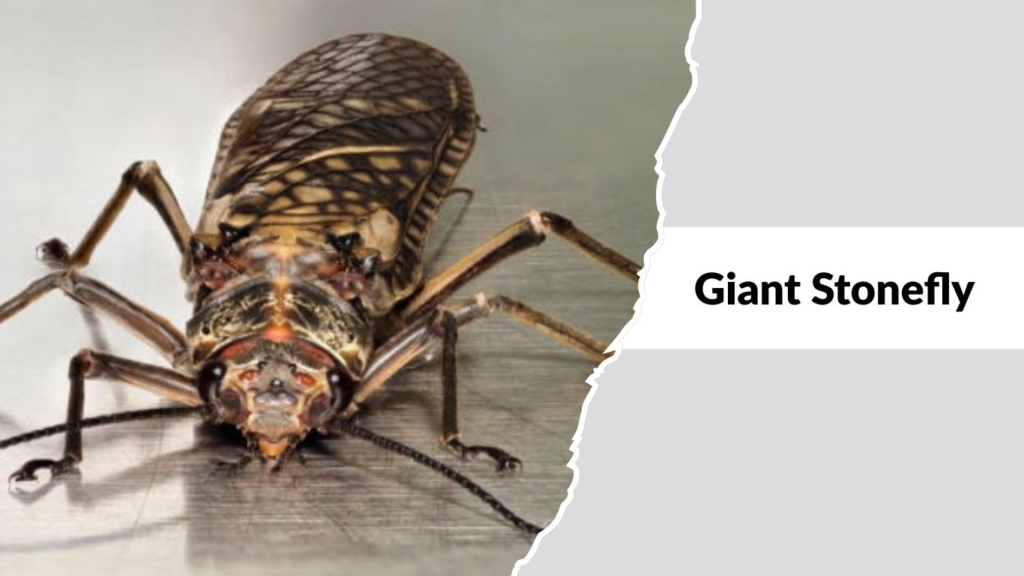
The giant stonefly is one of the largest members of the stonefly order (Plecoptera). It is well known for its impressive size and strong presence near cold, fast-moving rivers. Because it requires highly oxygenated and unpolluted water, it is often used as a biological indicator of excellent freshwater quality.
Identification
- Very large body size compared to most stoneflies
- Long, dark brown to black body with a flattened shape
- Two long tail filaments (cerci)
- Broad, heavily veined wings folded flat over the back
- Strong legs with visible claws for gripping rocks
Habitat
Giant stoneflies inhabit cold, clear streams and rivers, especially in mountainous or forested regions. Their nymphs hide beneath large stones, logs, and debris where water flow is strong. These environments provide both high oxygen levels and protection from predators.
Diet
The nymphs are mostly predatory, feeding on mayfly larvae, caddisfly larvae, and other small aquatic insects. Some also consume organic debris. Adult giant stoneflies eat very little and may only sip moisture or feed lightly on plant material before reproduction.
Life Cycle
Giant stoneflies have a long aquatic stage, often lasting two to three years. Eggs are laid in water, where nymphs hatch and go through many molts. When fully developed, they crawl out of the water, emerge as adults, mate near streams, and complete their life cycle within a short adult lifespan.
3. Golden Stonefly
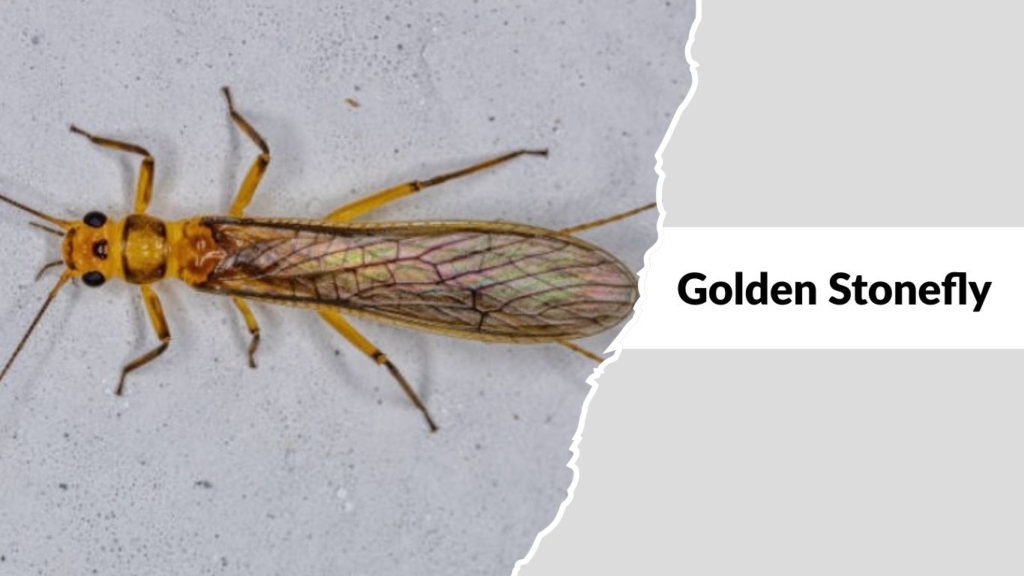
The golden stonefly is a medium-to-large stonefly known for its yellow, amber, or golden-brown coloring. It is commonly found around clean rivers and is especially familiar to anglers because its emergence often coincides with active fish feeding periods.
Identification
- Golden, yellowish, or light brown body coloration
- Two long tail filaments at the abdomen tip
- Transparent wings with strong venation
- Long antennae, often extending past the head
- Nymphs are flattened and well camouflaged against stones
Habitat
Golden stoneflies prefer cool, well-oxygenated streams and rivers with rocky bottoms. Their nymphs live under stones and gravel where current flow is steady. They are most abundant in unpolluted waters bordered by forests or natural vegetation.
Diet
Golden stonefly nymphs are usually omnivorous. They feed on algae, decaying leaves, and small aquatic organisms. Larger individuals may prey on insect larvae. Adults rarely feed, focusing mainly on mating and egg-laying.
Life Cycle
The life cycle includes egg, aquatic nymph, and adult stages. Nymphs may live one to three years underwater, molting repeatedly. Adults emerge mainly in late spring or early summer, live for a short time, reproduce near streams, and then die.
4. Green Stonefly
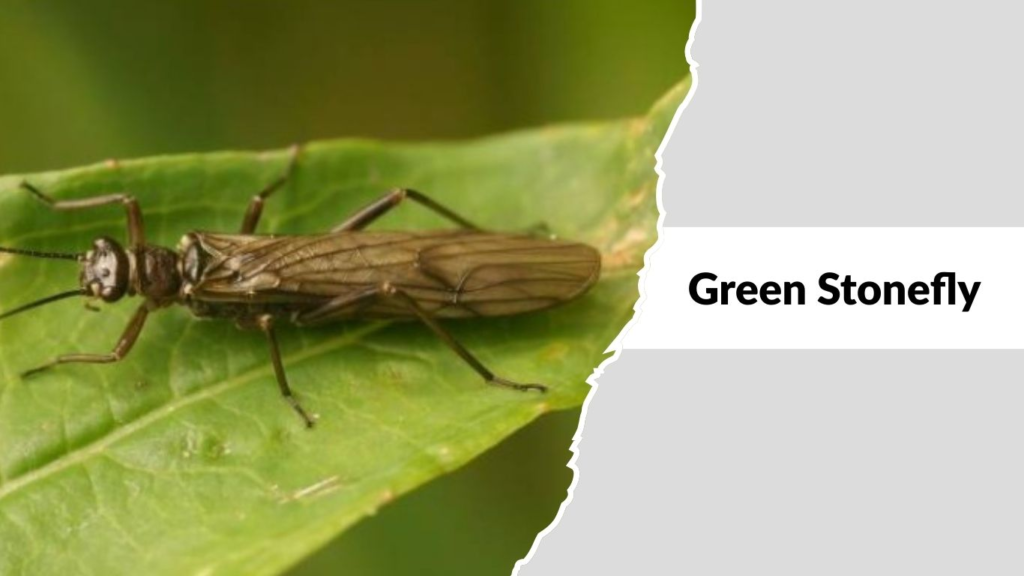
The green stonefly is a brightly colored member of the stonefly group, easily recognized by its greenish or olive tones. It is commonly seen resting on streamside vegetation and rocks near clean, flowing freshwater. Like other stoneflies, its presence signals a healthy aquatic ecosystem.
Identification
- Green to olive-colored body
- Two long tail filaments (cerci)
- Clear wings with strong, visible veins
- Long antennae extending forward
- Flattened nymph body adapted for clinging to stones
Habitat
Green stoneflies are closely associated with cold, fast-flowing streams and rivers. Their nymphs live beneath rocks, leaves, and woody debris in areas with steady current and high oxygen levels. Forested streams and mountain waterways are their preferred environments.
Diet
Nymphs are generally omnivorous. They feed on algae, biofilm, decaying plant matter, and occasionally smaller aquatic insects. Adults eat very little and may consume only moisture or trace plant material before mating.
Life Cycle
Green stoneflies follow a simple incomplete metamorphosis: egg, nymph, and adult. The nymph stage lasts many months to several years. Adults emerge seasonally, mate near water, lay eggs, and usually die within a few weeks.
5. Yellow Stonefly
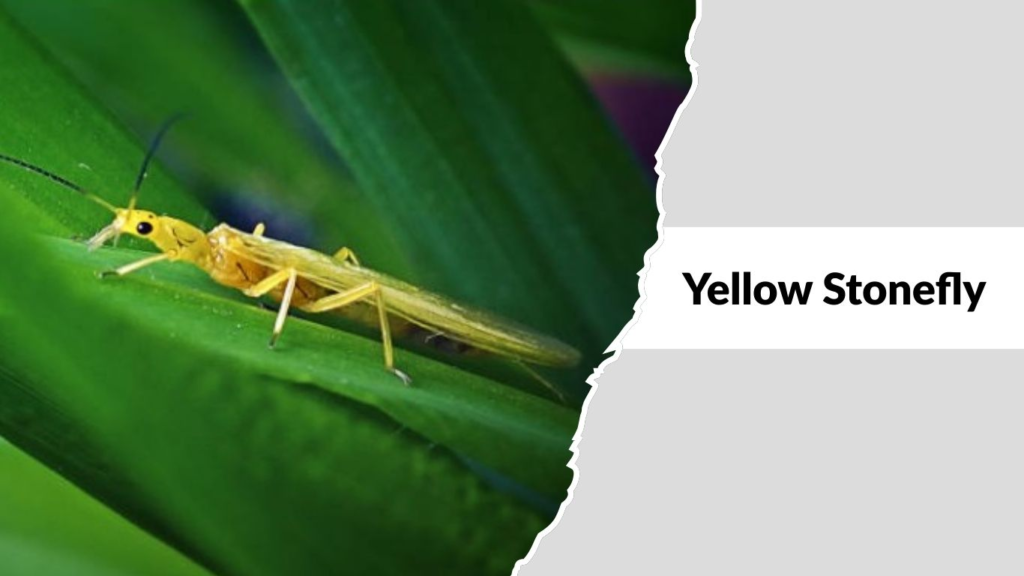
The yellow stonefly is a small to medium-sized stonefly known for its pale yellow to light amber coloration. It is frequently found along riverbanks and stream edges, especially during warmer months, and is a familiar sight in healthy freshwater habitats.
Identification
- Pale yellow to light brown body color
- Slender body with two long cerci
- Transparent wings folded flat over the back
- Long, thin antennae
- Nymphs are light brown and flattened
Habitat
Yellow stoneflies inhabit clear, well-oxygenated streams, creeks, and rivers. Their nymphs hide under pebbles and stones in moderate to fast currents. They are often abundant in low-pollution waters with stable flow and natural vegetation.
Diet
The nymphs mainly feed on algae, detritus, and decomposing leaves, contributing to nutrient recycling in streams. Some may occasionally consume tiny aquatic organisms. Adults typically do not feed or only take minimal nourishment.
Life Cycle
Their life cycle includes aquatic nymph development lasting one to two years. After emerging as adults, yellow stoneflies live briefly, focusing on mating and egg-laying near freshwater sources before completing their life cycle.
6. Winter Stonefly
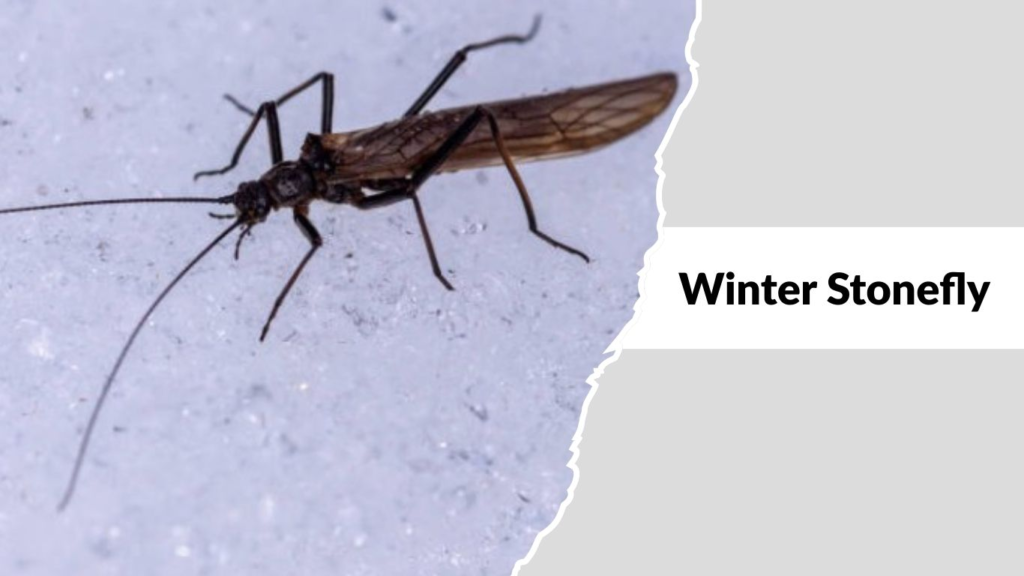
The winter stonefly is a cold-tolerant stonefly that emerges during late winter and early spring, often when snow is still present. It is famous for crawling on snowbanks and icy rocks near streams. Its unusual emergence time helps reduce competition and predators.
Identification
- Small to medium body size
- Dark brown to black coloration
- Two long tail filaments
- Smoky or darkened wings folded flat
- Nymphs are compact, flattened, and strong-legged
Habitat
Winter stoneflies live in cold, fast-moving streams and spring-fed creeks. Their nymphs develop under stones and submerged debris where water temperatures remain low and oxygen levels are high. They are especially common in forested and mountainous regions.
Diet
Nymphs mainly feed on decaying leaves, algae, and biofilm, helping break down organic matter. Some species may occasionally prey on tiny aquatic invertebrates. Adults rarely feed and mostly rely on stored energy.
Life Cycle
The life cycle includes a long aquatic nymph stage, often lasting one year or more. Adults emerge in winter or early spring, mate on snow or streamside rocks, lay eggs into the water, and die shortly afterward.
7. Spring Stonefly
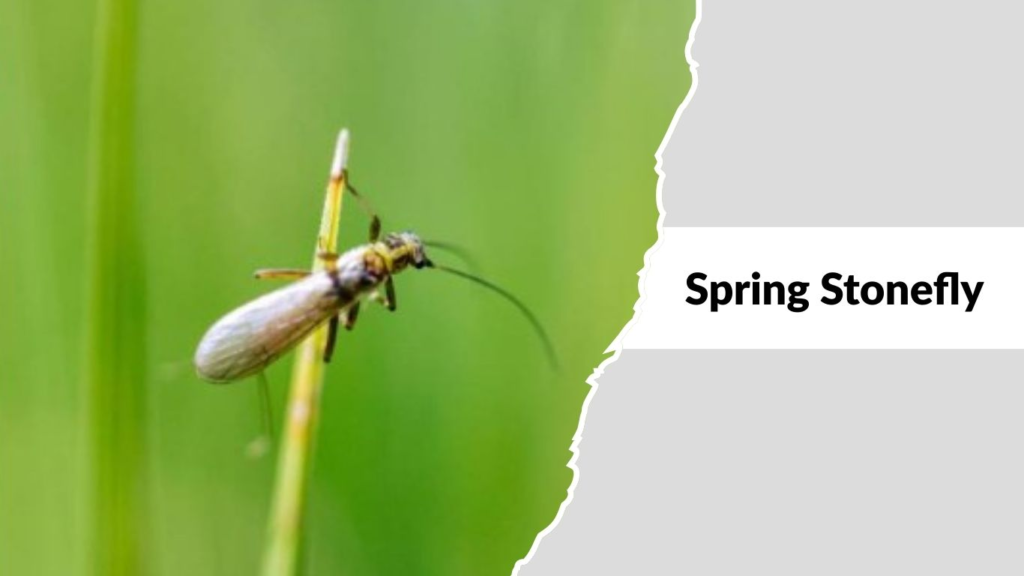
The spring stonefly emerges in early to mid-spring and is one of the first noticeable insects of the new season near rivers and creeks. It is commonly seen resting on streamside plants and rocks.
Identification
- Medium-sized, slender body
- Brown, gray, or olive coloration
- Two long cerci at the abdomen tip
- Clear to slightly smoky wings
- Flattened aquatic nymph form
Habitat
Spring stoneflies are found in cool, clean streams and rivers with rocky bottoms. Their nymphs live beneath stones and leaf litter in flowing water. They prefer unpolluted environments with steady current.
Diet
Nymphs are usually detritivores and herbivores, feeding on decomposing plant matter, algae, and microorganisms. Some species may occasionally feed on small insect larvae. Adults feed very little or not at all.
Life Cycle
Eggs hatch into aquatic nymphs that develop over several months to two years. In spring, mature nymphs crawl out of the water to emerge as adults, reproduce, and complete their life cycle within a short adult lifespan.
8. Willowfly
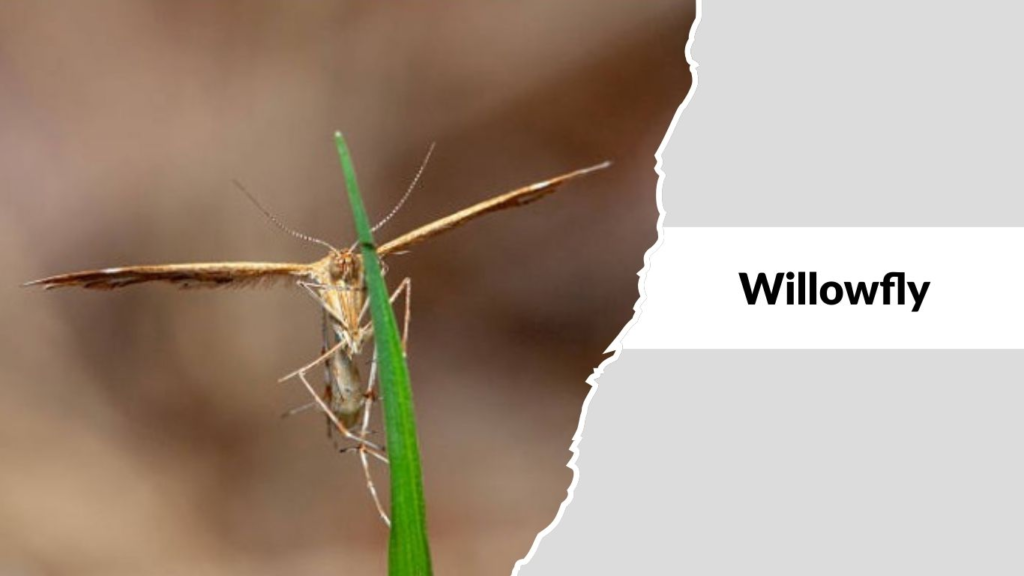
The willowfly is a distinctive type of stonefly, closely related to large river-dwelling species. It is often seen resting on tree trunks, bridges, and vegetation near water, especially willows, which inspired its common name.
Identification
- Large, robust body
- Dark brown to black coloration
- Long antennae and two long cerci
- Broad, heavily veined wings
- Nymphs are thick-bodied and flattened
Habitat
Willowflies prefer large, clean rivers and fast-flowing streams with rocky or gravel bottoms. Their nymphs hide beneath stones, logs, and debris where strong current provides oxygen and food. They are strongly tied to undisturbed freshwater habitats.
Diet
The nymphs are mainly predators, feeding on other aquatic insects such as mayfly and caddisfly larvae. They may also scavenge organic matter. Adults feed very little and focus almost entirely on reproduction.
Life Cycle
Willowflies spend two to three years as aquatic nymphs. When mature, they crawl onto rocks or tree trunks to emerge. Adults live a short time, mate near rivers, lay eggs into the water, and then die.
9. Salmonfly
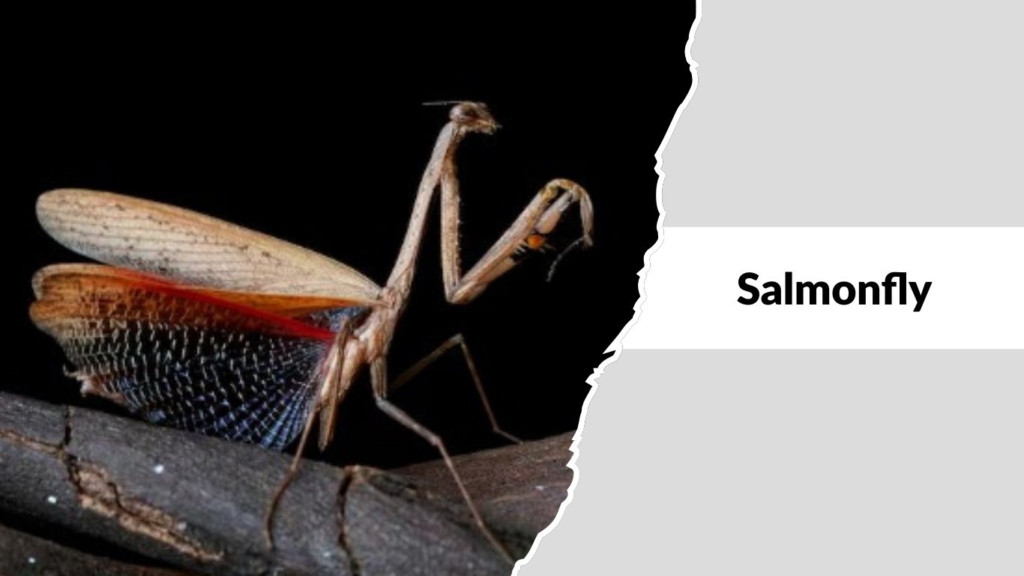
The salmonfly is one of the most famous stoneflies, especially among anglers. It is a very large species known for its orange-yellow body and massive seasonal emergences along major rivers.
Identification
- Very large size, often up to 5 cm
- Bright orange, yellow, or golden body
- Two long black cerci
- Dark, strongly veined wings
- Thick, armored-looking nymphs
Habitat
Salmonflies live in large, cold, fast-flowing rivers. Their nymphs occupy spaces under large rocks where water is highly oxygenated. They are common in mountainous regions and undammed rivers with natural flow.
Diet
Nymphs are strongly predatory, feeding on mayfly larvae, caddisflies, and other aquatic invertebrates. Adults may nibble on plant matter but usually do not feed much during their short lifespan.
Life Cycle
The salmonfly life cycle typically lasts two to four years underwater. After synchronized emergence in late spring or early summer, adults mate, females lay eggs over water, and the adults die soon after.
10. Skwala Stonefly
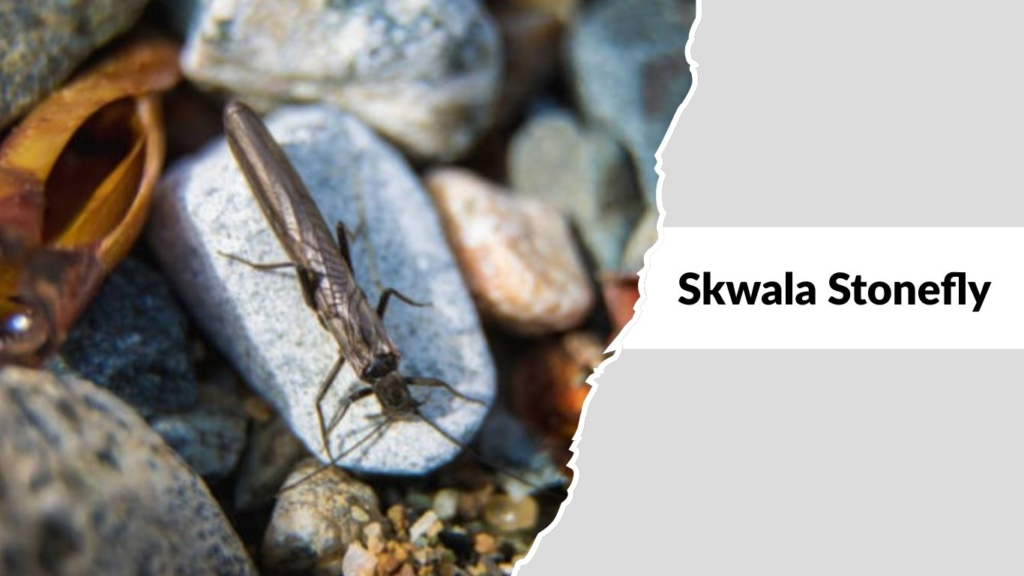
The Skwala stonefly is a medium-sized stonefly best known for its early-spring emergence and importance in river ecosystems. It is commonly seen crawling on rocks and streamside vegetation before many other aquatic insects appear.
Identification
- Medium body size, usually olive to dark brown
- Two long tail filaments
- Clear to lightly smoky wings folded flat
- Long antennae
- Flattened, dark nymphs with strong legs
Habitat
Skwala stoneflies inhabit cold, clear rivers and streams, especially in mountainous or foothill regions. Their nymphs live beneath rocks in moderate to fast currents, where oxygen levels are high and pollution is low.
Diet
Nymphs are mostly predatory, feeding on small aquatic insects, mayfly larvae, and midge larvae. They may also scavenge organic material. Adults rarely feed and survive mainly to reproduce.
Life Cycle
The life cycle includes a one- to two-year aquatic nymph stage. Adults emerge in late winter or early spring, mate near water, and females drop egg masses into streams before dying.
11. Little Yellow Stonefly
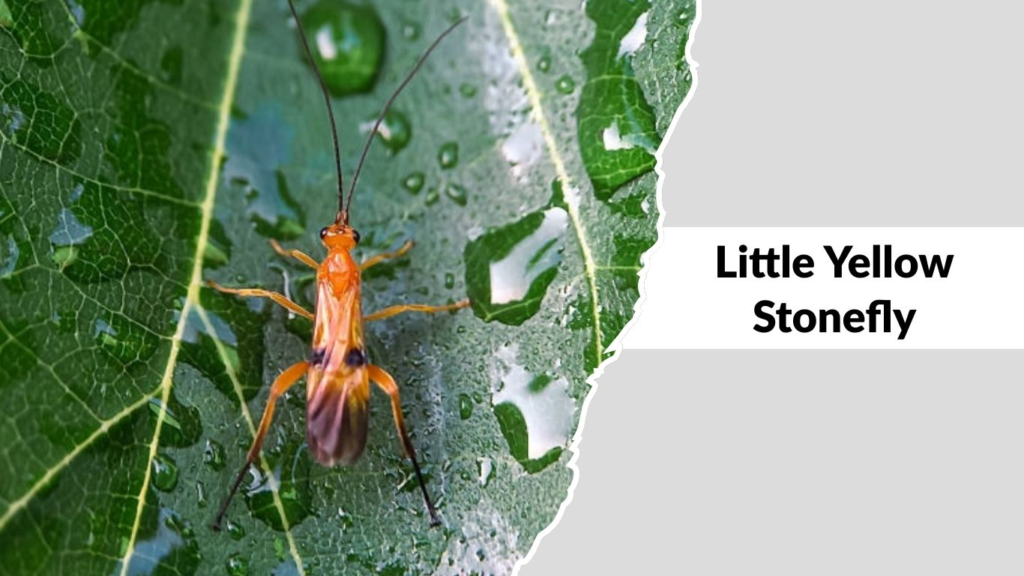
The little yellow stonefly is a small, delicate stonefly recognized for its pale yellow color and summer emergence. It is often abundant along stream edges and is a familiar insect in healthy freshwater environments.
Identification
- Small, slender yellow or light-gold body
- Two fine tail filaments
- Clear wings with light venation
- Long, thin antennae
- Light-colored, flattened nymphs
Habitat
Little yellow stoneflies are found in clean, cool streams and creeks with gravel or rocky beds. Their nymphs hide beneath small stones and leaf litter in flowing water.
Diet
Nymphs mainly consume algae, biofilm, and decomposing plant material. Some species may take tiny invertebrates. Adults generally do not feed.
Life Cycle
Their life cycle usually lasts one year, with nymphs developing through multiple molts. Adults emerge in summer, live briefly, reproduce near streams, and complete the cycle.
12. Needle Stonefly
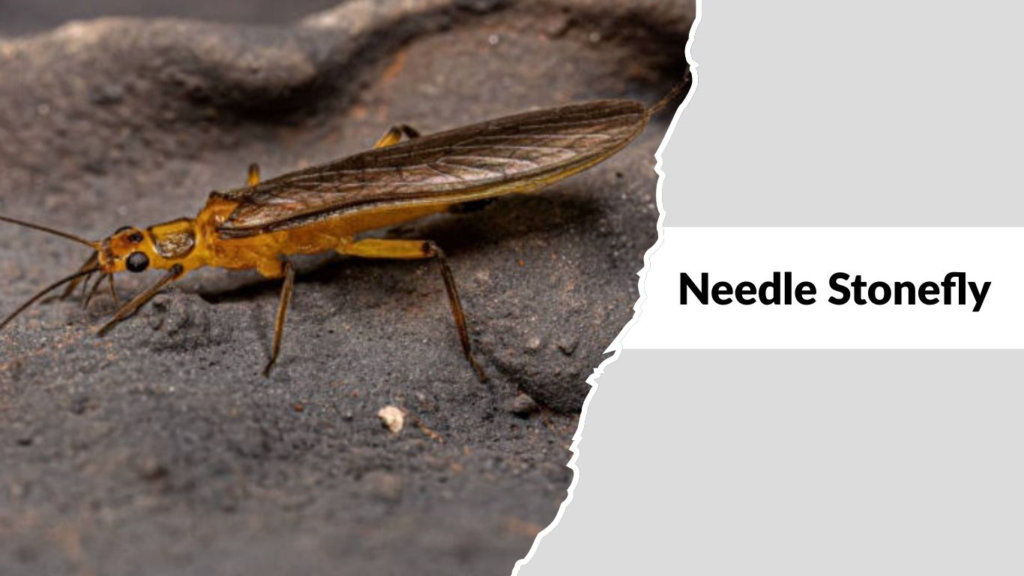
The needle stonefly is a slender, delicate stonefly named for its thin, needle-like body shape. It is often found near shaded forest streams and is less noticeable than larger stoneflies, but just as important ecologically.
Identification
- Very slender, elongated body
- Brown to dark gray coloration
- Two long, fine cerci
- Narrow wings folded flat over the body
- Thin, streamlined aquatic nymph
Habitat
Needle stoneflies prefer cool, narrow streams and forest creeks with clean, well-oxygenated water. Their nymphs live among leaf packs, submerged roots, and small stones where water flow is steady but not extreme.
Diet
Nymphs are primarily detritivores, feeding on decaying leaves, algae, and microorganisms. This makes them important in breaking down organic matter and recycling nutrients in freshwater ecosystems.
Life Cycle
Needle stoneflies usually have a one-year life cycle. Nymphs develop underwater, then emerge as adults in spring or early summer. Adults mate near streams, lay eggs, and die shortly after.
13. Forestfly
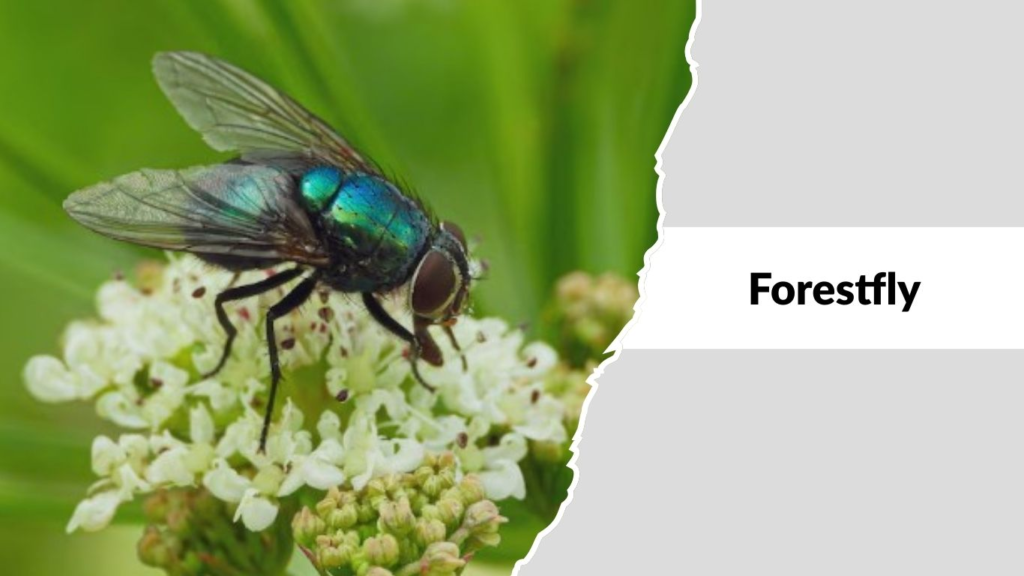
The forestfly is a stonefly closely associated with wooded streams and shaded riverbanks. It is commonly seen resting on tree trunks, rocks, and vegetation close to clean freshwater.
Identification
- Medium-sized, dark brown or black body
- Two long cerci
- Clear to smoky wings with strong veins
- Long antennae
- Flattened, well-camouflaged nymph
Habitat
Forestflies inhabit forested streams, mountain creeks, and rivers with abundant leaf litter and fallen wood. Their nymphs hide under stones, bark, and debris where oxygen levels are high.
Diet
Nymphs mainly feed on decaying plant material and algae, though some species may prey on small aquatic insects. Adults usually feed very little or not at all.
Life Cycle
Their life cycle includes a long aquatic nymph stage lasting one to two years. Adults emerge seasonally, reproduce near water, and complete their short adult phase quickly.
14. Snowfly
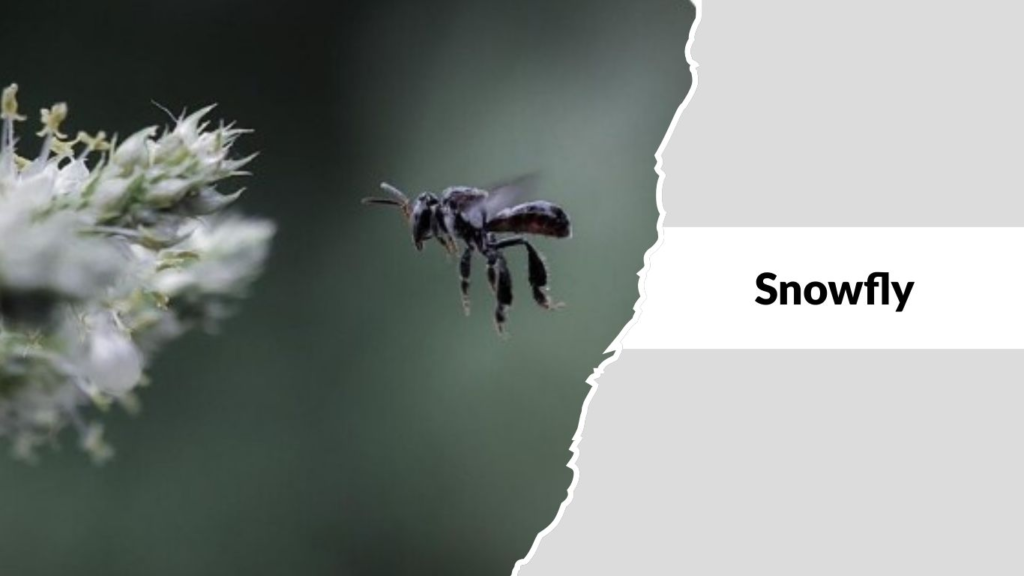
The snowfly is a cold-season stonefly famous for appearing on snow and ice near streams. It is closely related to winter stoneflies and is adapted to survive and remain active in very low temperatures.
Identification
- Small to medium size with a dark body
- Two long tail filaments
- Dark, smoky wings held flat over the back
- Long antennae
- Compact, flattened nymph with strong legs
Habitat
Snowflies live in cold mountain streams, spring creeks, and forested rivers. Their nymphs develop under stones in fast-flowing, highly oxygenated water. They are especially common in regions with long, cold winters.
Diet
Nymphs mainly feed on decaying leaves, algae, and microbial films. By breaking down organic matter, they help recycle nutrients in cold freshwater ecosystems. Adults generally do not feed.
Life Cycle
Snowflies spend most of their lives as aquatic nymphs, often for over a year. Adults emerge in winter, crawl on snow and rocks to mate, lay eggs into streams, and die shortly after.
15. Rolled-wing Stonefly
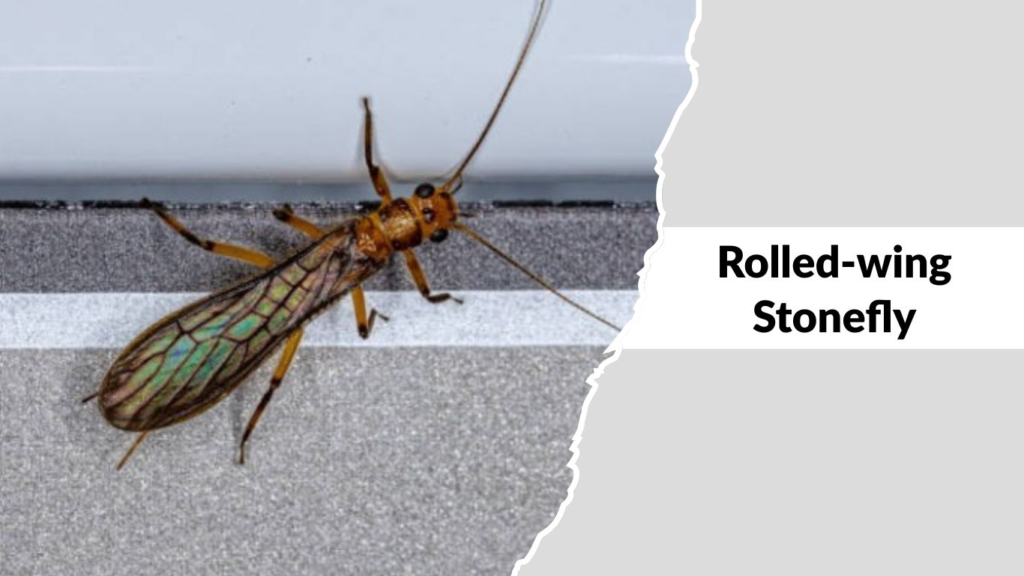
The rolled-wing stonefly gets its name from the way its wings appear tightly wrapped around the body when at rest. It is a less conspicuous stonefly but widespread in clean freshwater systems.
Identification
- Slender body with wings tightly folded and “rolled”
- Brown, gray, or olive coloration
- Two long cerci
- Narrow wings with fine veins
- Flattened nymph adapted for clinging to stones
Habitat
Rolled-wing stoneflies inhabit cool, flowing streams and rivers with rocky bottoms. Their nymphs are found under stones and gravel in moderate to fast currents, where oxygen levels remain high.
Diet
Nymphs are mostly herbivores and detritivores, feeding on algae, biofilm, and decomposing leaves. Some may occasionally take tiny invertebrates. Adults rarely feed.
Life Cycle
Their life cycle includes a prolonged aquatic nymph stage lasting one to two years. Adults emerge in late spring or summer, reproduce near streams, and complete their life cycle within a short time.
16. Flat Stonefly
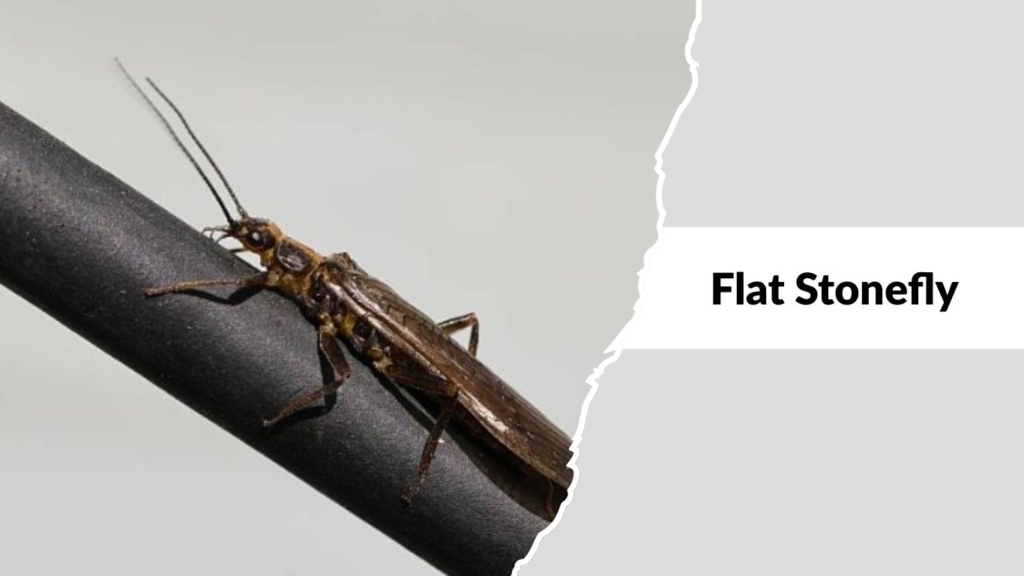
The flat stonefly is named for its extremely flattened body shape, which helps it cling tightly to rocks in fast-moving water. This adaptation allows it to survive in strong currents where many other insects cannot.
Identification
- Very flat, wide body profile
- Dark brown to black coloration
- Two long tail filaments
- Broad, clear wings with heavy venation
- Strong legs adapted for gripping stones
Habitat
Flat stoneflies live in swift rivers, rocky streams, and mountain creeks. Their nymphs stay pressed against the undersides of stones where water is cool, fast, and highly oxygenated.
Diet
Nymphs are mainly predators, feeding on other aquatic insect larvae, including mayflies and midges. Some may also scavenge organic matter. Adults feed little or not at all.
Life Cycle
Their life cycle includes a long aquatic development period that can last one to three years. Adults emerge seasonally, mate near water, lay eggs into the stream, and die shortly afterward.
17. Dark Stonefly
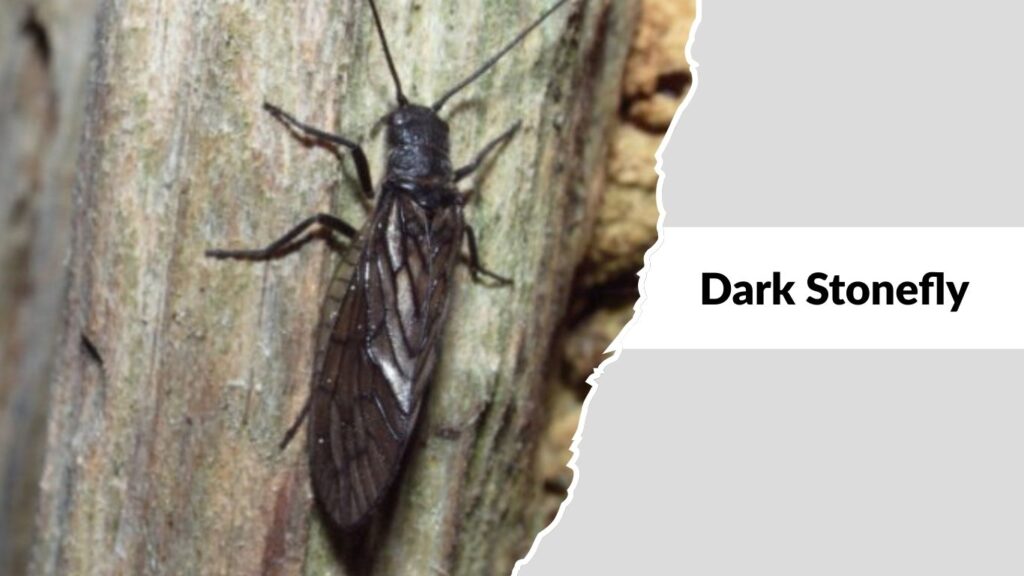
The dark stonefly refers to several closely related stoneflies known for their deep brown to black coloration. They are often active during cooler seasons and are well adapted to shaded freshwater environments.
Identification
- Dark brown or black body
- Two long cerci
- Smoky, strongly veined wings
- Long antennae
- Flattened, armored-looking nymph
Habitat
Dark stoneflies inhabit cool, forested streams and clear rivers. Their nymphs hide under stones, submerged wood, and leaf packs in flowing water with high oxygen content.
Diet
Nymphs feed on decaying plant matter, algae, and small aquatic organisms. Some species are predators, while others are detritivores. Adults generally do not feed.
Life Cycle
Dark stoneflies spend one to two years as aquatic nymphs. Adults emerge from late fall through spring, reproduce near water, and complete their life cycle in a short adult stage.
18. Alpine Stonefly
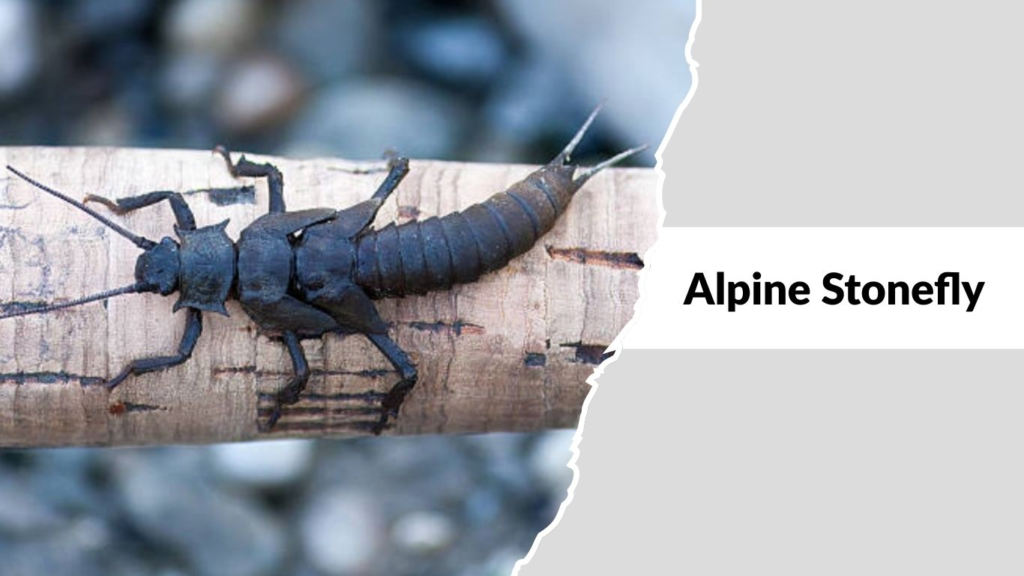
The alpine stonefly is adapted to life in high-elevation environments where water is extremely cold and clear. It is commonly found near glacier-fed streams and mountain rivers, making it an important indicator of pristine freshwater conditions.
Identification
- Medium-sized, sturdy body
- Dark brown to black coloration
- Two long tail filaments
- Clear to smoky wings with strong veins
- Thick, flattened nymph adapted for cold water
Habitat
Alpine stoneflies inhabit high-altitude mountain streams, glacial rivers, and cold spring creeks. Their nymphs live under rocks where water temperatures remain low year-round and oxygen levels are very high.
Diet
Nymphs mostly feed on algae, biofilm, and decaying organic material. Some species may prey on small aquatic invertebrates. Their feeding helps recycle nutrients in nutrient-poor alpine waters.
Life Cycle
Because of cold conditions, alpine stoneflies often have a slow life cycle lasting two to three years. Adults emerge briefly during short summer seasons, mate, lay eggs, and die soon after.
19. Spiny Stonefly
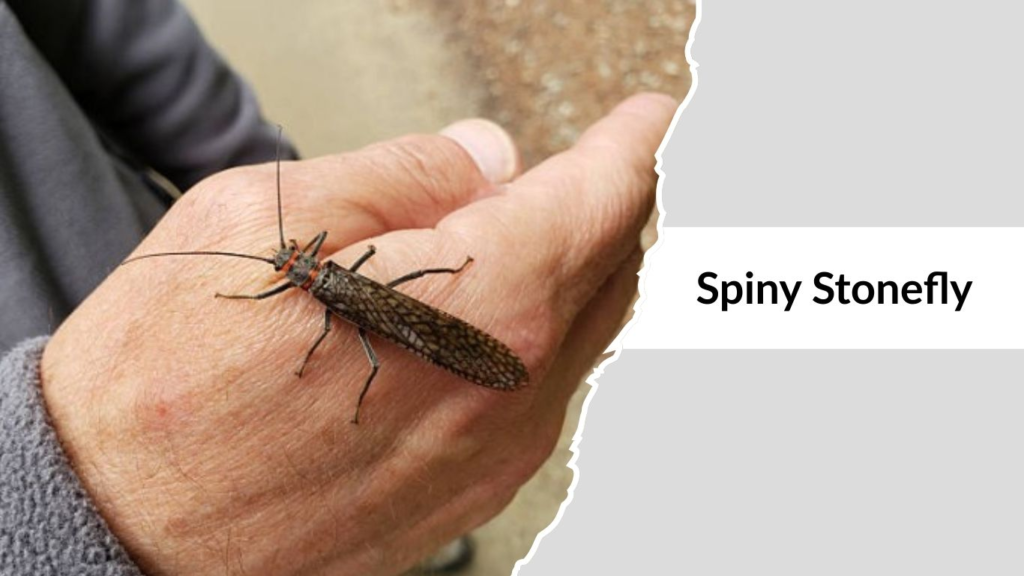
The spiny stonefly gets its name from the small spines and rough textures found on its nymph stage. These features provide protection and help the insect anchor itself in flowing water.
Identification
- Medium-sized body with rough, spiny appearance
- Brown to dark gray coloration
- Two long cerci
- Clear, heavily veined wings
- Nymphs with visible spines or bristles
Habitat
Spiny stoneflies live in clean, fast-flowing streams and rivers with rocky substrates. Their nymphs hide beneath stones and among gravel where current is strong and oxygen is abundant.
Diet
Nymphs are mainly omnivorous, feeding on algae, decaying plant material, and small aquatic organisms. Some species may also prey on insect larvae.
Life Cycle
Their life cycle includes a long aquatic nymph phase lasting one to two years. Adults emerge seasonally, reproduce near water, lay eggs, and die shortly afterward.
20. Alpine Stonefly
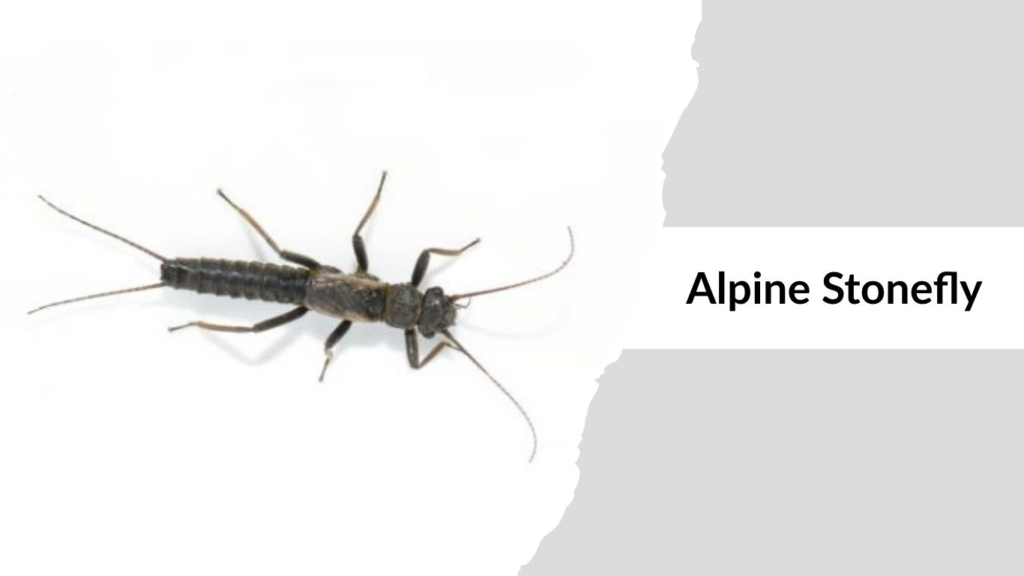
The alpine stonefly is adapted to life in high-elevation environments where water is extremely cold and clear. It is commonly found near glacier-fed streams and mountain rivers, making it an important indicator of pristine freshwater conditions.
Identification
- Medium-sized, sturdy body
- Dark brown to black coloration
- Two long tail filaments
- Clear to smoky wings with strong veins
- Thick, flattened nymph adapted for cold water
Habitat
Alpine stoneflies inhabit high-altitude mountain streams, glacial rivers, and cold spring creeks. Their nymphs live under rocks where water temperatures remain low year-round and oxygen levels are very high.
Diet
Nymphs mostly feed on algae, biofilm, and decaying organic material. Some species may prey on small aquatic invertebrates. Their feeding helps recycle nutrients in nutrient-poor alpine waters.
Life Cycle
Because of cold conditions, alpine stoneflies often have a slow life cycle lasting two to three years. Adults emerge briefly during short summer seasons, mate, lay eggs, and die soon after.
21. Spiny Stonefly
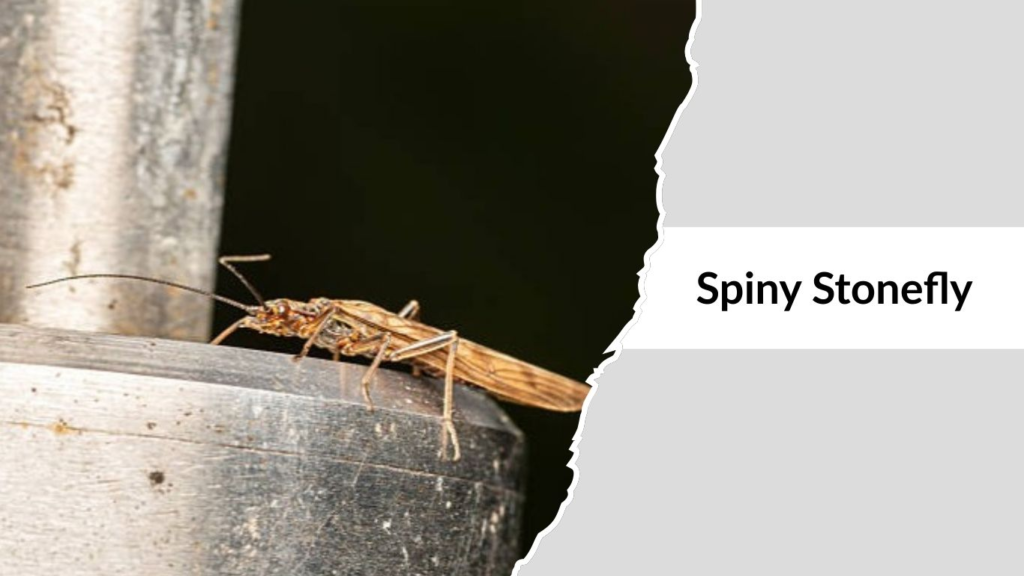
The spiny stonefly gets its name from the small spines and rough textures found on its nymph stage. These features provide protection and help the insect anchor itself in flowing water.
Identification
- Medium-sized body with rough, spiny appearance
- Brown to dark gray coloration
- Two long cerci
- Clear, heavily veined wings
- Nymphs with visible spines or bristles
Habitat
Spiny stoneflies live in clean, fast-flowing streams and rivers with rocky substrates. Their nymphs hide beneath stones and among gravel where current is strong and oxygen is abundant.
Diet
Nymphs are mainly omnivorous, feeding on algae, decaying plant material, and small aquatic organisms. Some species may also prey on insect larvae.
Life Cycle
Their life cycle includes a long aquatic nymph phase lasting one to two years. Adults emerge seasonally, reproduce near water, lay eggs, and die shortly afterward.
