
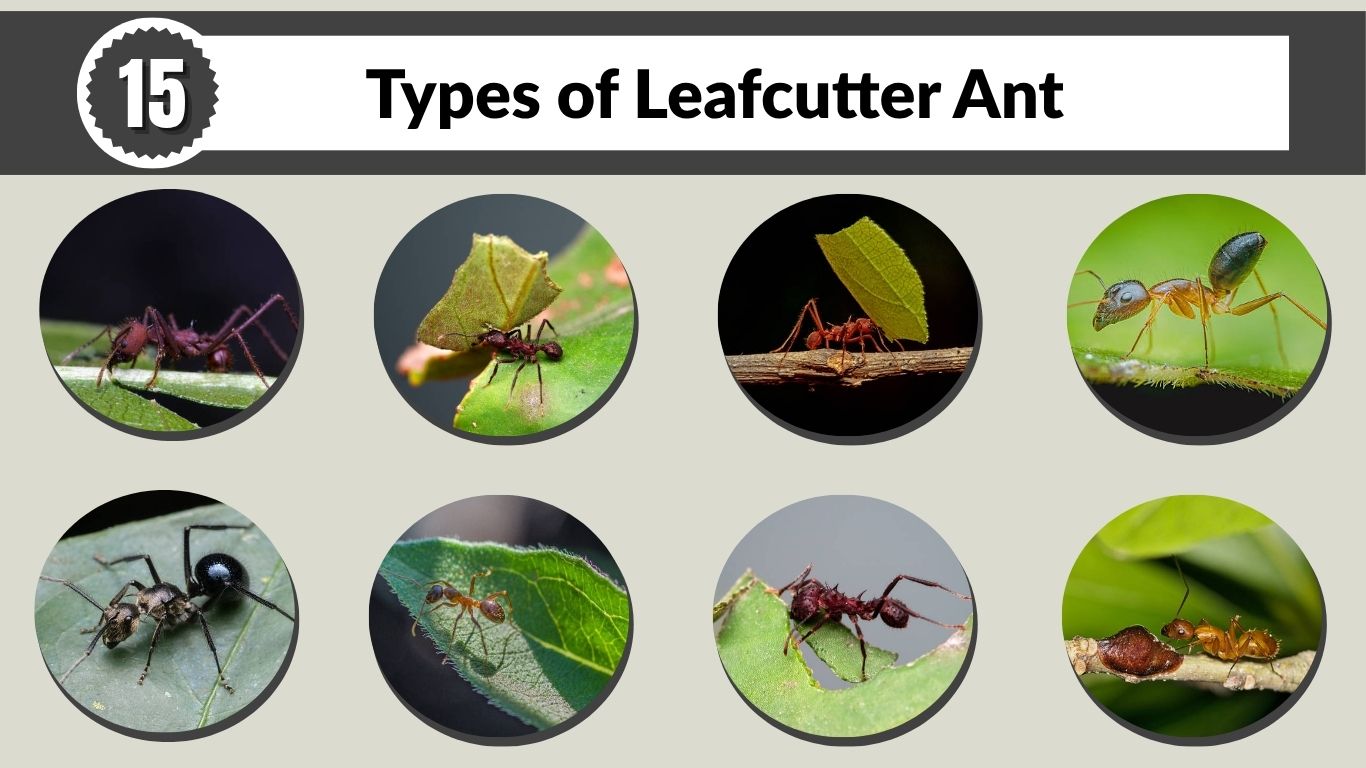
Leafcutter ants are fascinating insects known for their ability to cut and transport leaves to underground colonies. Found mainly in Central and South America, these ants use plant material to grow fungus, which serves as their primary food source. Different species vary in size, color, habitat, and behavior, making them unique in the insect world. From the Giant Leafcutter Ant to the Subterranean Leafcutter Ant, each species plays an important role in maintaining healthy ecosystems through soil aeration and vegetation recycling.
1. Giant Leafcutter Ant
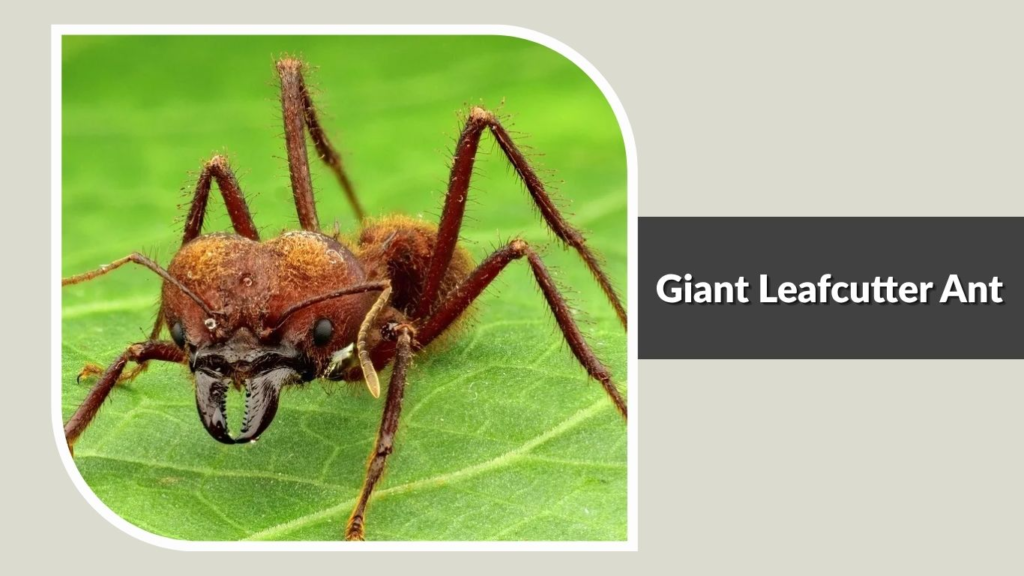
The Giant Leafcutter Ant is one of the largest and most recognizable leafcutter ant species found in Central and South America. These ants are famous for cutting pieces of leaves and carrying them back to their underground colonies to grow fungus, which serves as their primary food source.
Identification
- Large reddish-brown to dark brown body
- Workers can grow up to 16 mm long
- Strong mandibles designed for cutting leaves
- Long legs with a spiny appearance
- Distinct three-part body with a large head
Habitat
Giant Leafcutter Ants mainly live in tropical rainforests, woodlands, and humid grasslands. Their colonies are usually built underground and can contain millions of ants. Large soil mounds near the nest entrance are a common sign of their presence in the wild.
Behavior
These ants are highly social insects that work together in organized groups. Worker ants travel long distances to collect fresh vegetation. Instead of eating the leaves directly, they use the plant material to cultivate fungus gardens inside the nest, which provide food for the colony.
Diet
The Giant Leafcutter Ant depends on fungus as its main food source. Fresh leaves, flowers, and grass are collected and processed to feed the fungus. Different worker ants have specialized roles, including cutting vegetation, transporting leaf fragments, and caring for the fungal gardens underground.
2. Colombian Leafcutter Ant
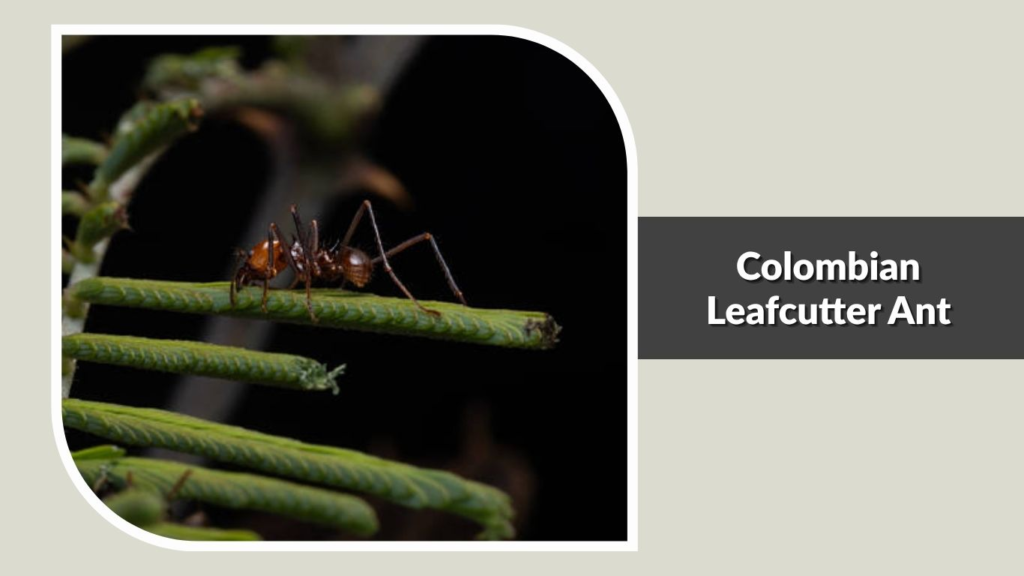
The Colombian Leafcutter Ant is a well-known species native to the tropical forests of northern South America. These ants are highly active foragers and are often seen carrying large pieces of leaves in long organized trails across the forest floor.
Identification
- Medium to large reddish-brown body
- Powerful curved mandibles
- Spiny thorax and legs
- Workers vary greatly in size
- Large head with strong jaw muscles
Habitat
Colombian Leafcutter Ants prefer humid tropical forests and agricultural regions. Their nests are usually massive underground systems with many chambers used for fungus farming, food storage, and raising larvae. Colonies can survive for many years in stable environments.
Behavior
These ants are extremely organized and live in complex social colonies. Different worker groups handle separate duties such as cutting leaves, defending the nest, and caring for young ants. Long foraging trails are often active both day and night.
Diet
The Colombian Leafcutter Ant feeds indirectly on fungus grown inside the colony. Workers gather leaves, flowers, and plant material to maintain the fungus gardens. The fungus breaks down the vegetation and becomes the colony’s primary source of nutrition.
3. Tropical Leafcutter Ant
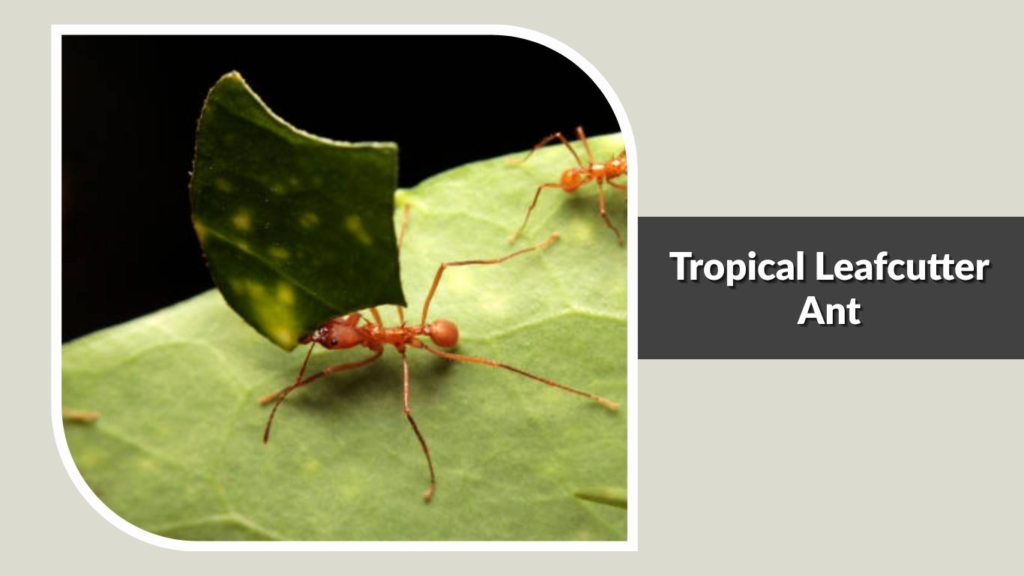
The Tropical Leafcutter Ant is widely distributed throughout warm tropical regions of South America. It is considered an important ecosystem engineer because its leaf-cutting and soil-moving activities influence plant growth and forest health.
Identification
- Dark brown to reddish body color
- Large workers with broad heads
- Strong cutting mandibles
- Spiny body texture
- Long antennae and legs
Habitat
Tropical Leafcutter Ants commonly inhabit rainforests, savannas, and open grasslands. Their underground nests can cover large areas and include numerous tunnels and chambers. Colonies are often found in places with abundant vegetation and moist soil.
Behavior
These ants are famous for their teamwork and communication. Workers follow scent trails to food sources and transport leaf fragments back to the nest in organized lines. Soldier ants protect the colony from predators and invading insects.
Diet
The Tropical Leafcutter Ant relies on cultivated fungus for survival. Workers collect fresh plant material that serves as fertilizer for fungus gardens. The fungus produces nutrients that feed larvae, workers, and the queen inside the colony.
4. Smooth Leafcutter Ant
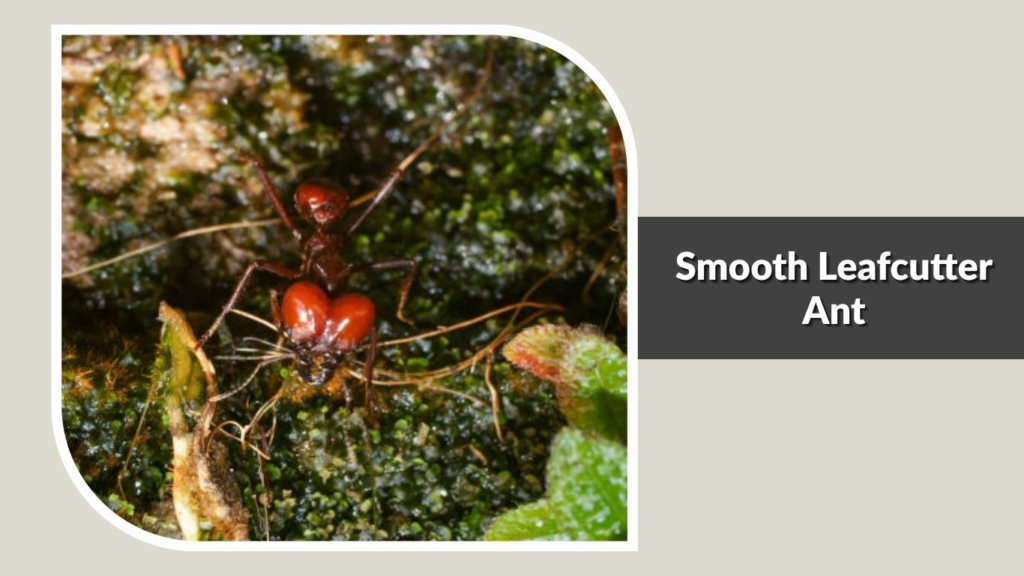
The Smooth Leafcutter Ant is recognized for its relatively smoother body surface compared to many other leafcutter ant species. It is commonly found in South American grasslands and forests, where it plays an important role in vegetation recycling and soil aeration.
Identification
- Smooth and shiny dark brown body
- Large head with powerful jaws
- Less spiny appearance than related species
- Strong legs adapted for carrying leaves
- Workers vary in size within the colony
Habitat
Smooth Leafcutter Ants are commonly found in tropical forests, open fields, and agricultural areas. Their underground nests can become very large and contain many chambers used for fungus cultivation and colony maintenance. They prefer warm climates with loose soil.
Behavior
These ants form highly organized colonies with specialized worker groups. Some workers cut vegetation, while others transport leaves or protect the nest. Long trails of ants carrying green leaf fragments are often visible during active foraging periods.
Diet
The Smooth Leafcutter Ant does not directly consume the leaves it collects. Instead, the plant material is used to grow fungus inside underground chambers. The cultivated fungus serves as the primary food source for the entire colony.
5. Mexican Leafcutter Ant
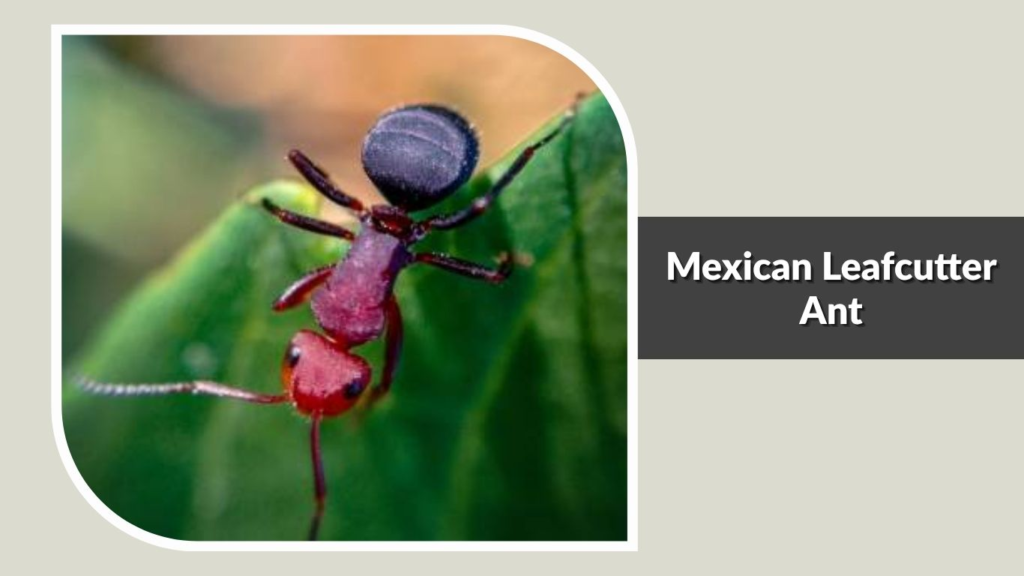
The Mexican Leafcutter Ant is native to Mexico and nearby parts of Central America. This species is known for building extensive underground colonies and for its ability to harvest large amounts of vegetation from surrounding areas.
Identification
- Reddish-brown body coloration
- Strong and sharp cutting mandibles
- Spiny thorax and long legs
- Large workers with oversized heads
- Distinct segmented body structure
Habitat
Mexican Leafcutter Ants usually inhabit forests, shrublands, and farmland regions with warm temperatures. Their nests are built underground and may include several entrances surrounded by loose soil. Colonies thrive in areas with abundant plant life.
Behavior
These ants are active and cooperative insects that work together in large groups. Workers travel in organized lines to collect leaves and plant fragments. Soldier ants guard the colony against predators, while smaller workers care for the fungus gardens.
Diet
The Mexican Leafcutter Ant depends on cultivated fungus for nourishment. Workers gather fresh leaves, flowers, and grasses to feed the fungus inside the nest. The fungus breaks down plant material and provides nutrients for the colony members.
6. Texas Leafcutter Ant
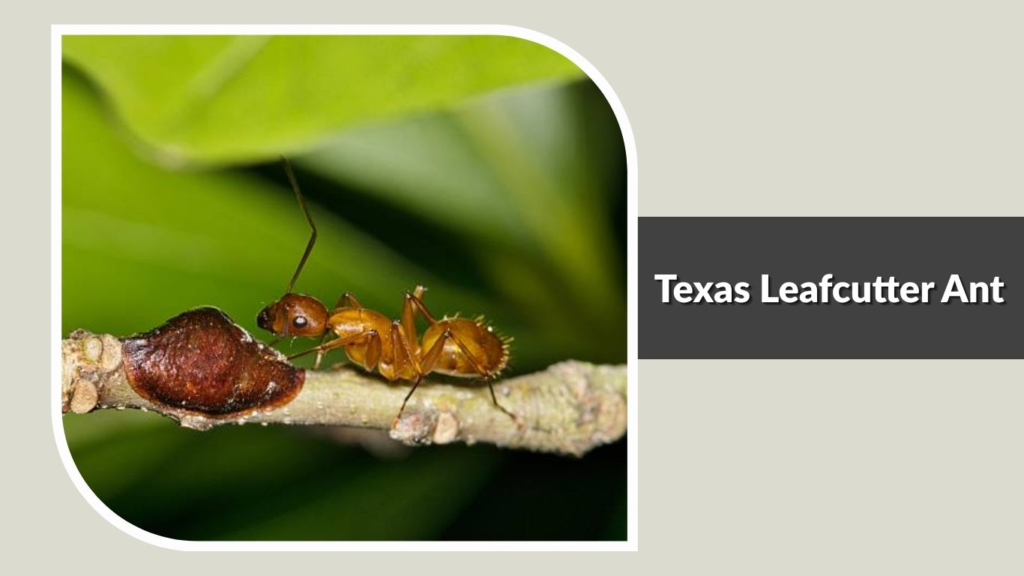
The Texas Leafcutter Ant is the only native leafcutter ant species commonly found in the United States. It mainly lives in Texas and nearby regions, where it builds large underground colonies and actively gathers vegetation for fungus cultivation.
Identification
- Reddish-brown to dark brown body
- Large workers with strong mandibles
- Spiny thorax and long legs
- Broad head with powerful jaw muscles
- Workers differ greatly in size
Habitat
Texas Leafcutter Ants are commonly found in dry grasslands, woodlands, and scrub habitats. Their nests are underground and often marked by large soil mounds. Colonies prefer warm climates and areas with access to fresh vegetation throughout the year.
Behavior
These ants are highly social and organized insects. Worker ants form long trails while carrying leaf fragments back to the nest. Different groups within the colony perform specialized tasks such as foraging, nest defense, and caring for the queen and larvae.
Diet
The Texas Leafcutter Ant survives by cultivating fungus inside underground chambers. Leaves and grasses collected by workers are processed to feed the fungus. The colony then consumes the fungus as its main source of nutrition.
7. Grass-Cutting Leafcutter Ant
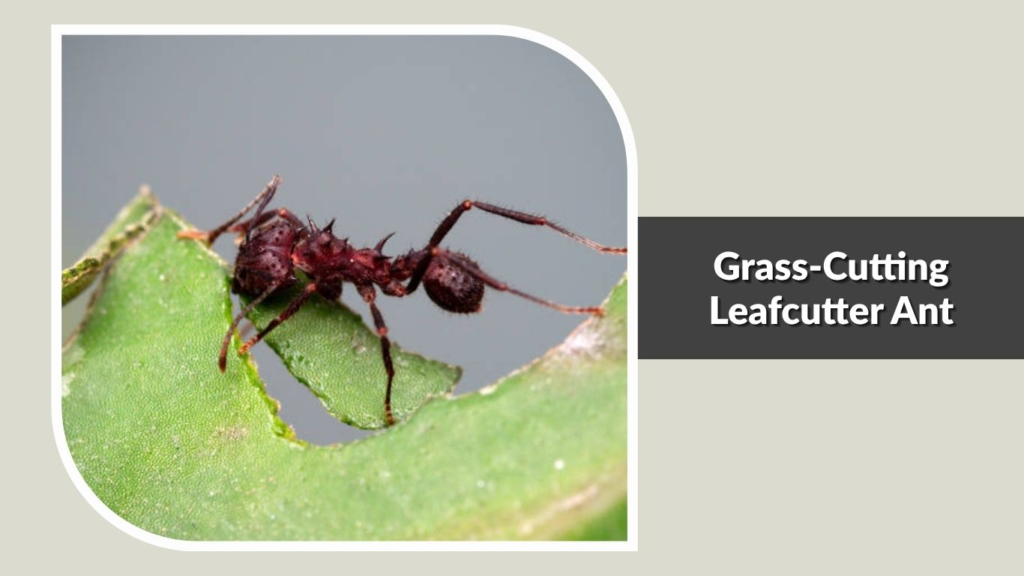
The Grass-Cutting Leafcutter Ant is known for its preference for harvesting grasses instead of broad leaves. This species is commonly found in South American savannas and grasslands, where it can significantly influence local vegetation patterns.
Identification
- Dark brown body with a rough texture
- Strong mandibles for cutting grass
- Medium to large worker size
- Spiny body and long legs
- Large head with noticeable jaw muscles
Habitat
Grass-Cutting Leafcutter Ants mainly inhabit grasslands, savannas, and open tropical regions. Their nests are large underground systems with multiple chambers used for fungus farming and colony development. They thrive in warm environments with abundant grasses.
Behavior
These ants work together in organized colonies with clear divisions of labor. Workers cut and transport grass blades in long trails, while soldier ants protect the colony. Their foraging activity is often most active during cooler parts of the day.
Diet
The Grass-Cutting Leafcutter Ant depends on fungus grown inside the nest for food. Grass fragments collected by workers are used as fertilizer for the fungus gardens. The fungus produces nutrients that sustain the queen, larvae, and worker ants.
8. Cerrado Leafcutter Ant
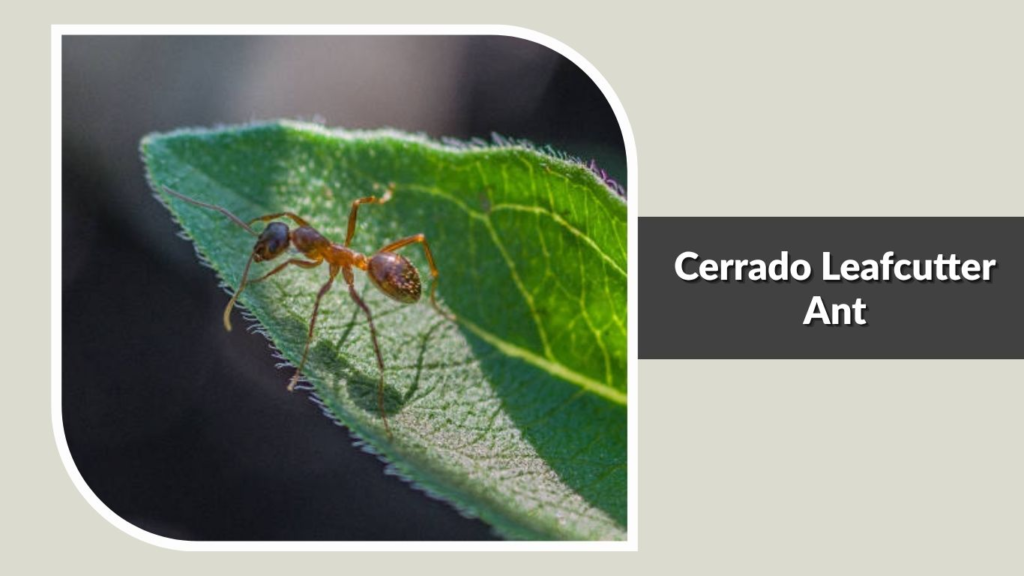
The Cerrado Leafcutter Ant is native to the Brazilian Cerrado, a vast tropical savanna region known for its dry climate and diverse plant life. This species is highly adapted to warm environments and plays an important role in soil turnover and nutrient recycling.
Identification
- Dark reddish-brown body
- Large worker ants with strong jaws
- Spiny thorax and rough body texture
- Long legs adapted for carrying plant material
- Broad head with powerful mandibles
Habitat
Cerrado Leafcutter Ants are mainly found in tropical savannas, grasslands, and dry forests. Their underground nests can be extensive and include multiple chambers for fungus cultivation and brood care. Colonies prefer areas with loose soil and abundant vegetation.
Behavior
These ants are highly organized and live in complex social colonies. Workers travel in long trails to gather leaves and grasses, while soldier ants defend the nest from predators. Their foraging activity often increases during cooler hours of the day.
Diet
The Cerrado Leafcutter Ant feeds on cultivated fungus rather than directly consuming leaves. Workers collect plant material and use it to grow fungus inside underground chambers. The fungus provides essential nutrients for the entire colony.
9. Robust Leafcutter Ant
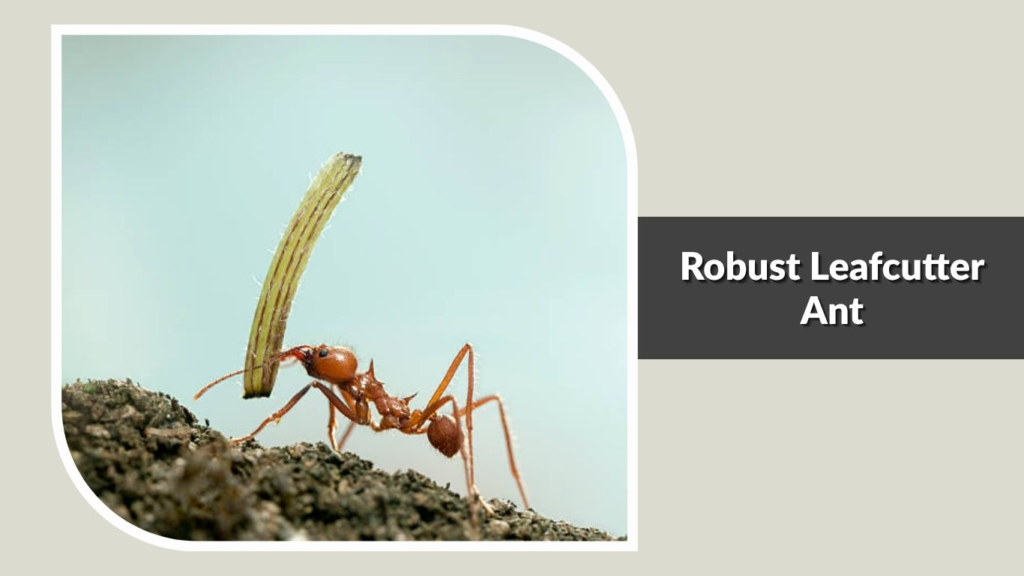
The Robust Leafcutter Ant is a large and powerful species known for its strong body structure and aggressive defense behavior. It is primarily found in South American forests and grasslands where vegetation is plentiful.
Identification
- Large and sturdy dark brown body
- Powerful mandibles for cutting vegetation
- Thick legs with a spiny appearance
- Broad head with strong jaw muscles
- Workers range from small to very large sizes
Habitat
Robust Leafcutter Ants commonly inhabit tropical forests, open woodlands, and grassy regions. Their nests are built underground and may contain many interconnected chambers used for fungus farming and colony expansion. They prefer warm and humid environments.
Behavior
These ants are cooperative insects with a strict division of labor. Worker ants gather leaves, transport food, and maintain the nest, while soldiers protect the colony. Their organized leaf-carrying trails can stretch long distances from the nest.
Diet
The Robust Leafcutter Ant depends entirely on fungus cultivated inside its nest. Workers gather fresh leaves and plant material to nourish the fungus gardens. The fungus then becomes the main food source for larvae, workers, and the queen.
10. Eight-Spined Leafcutter Ant
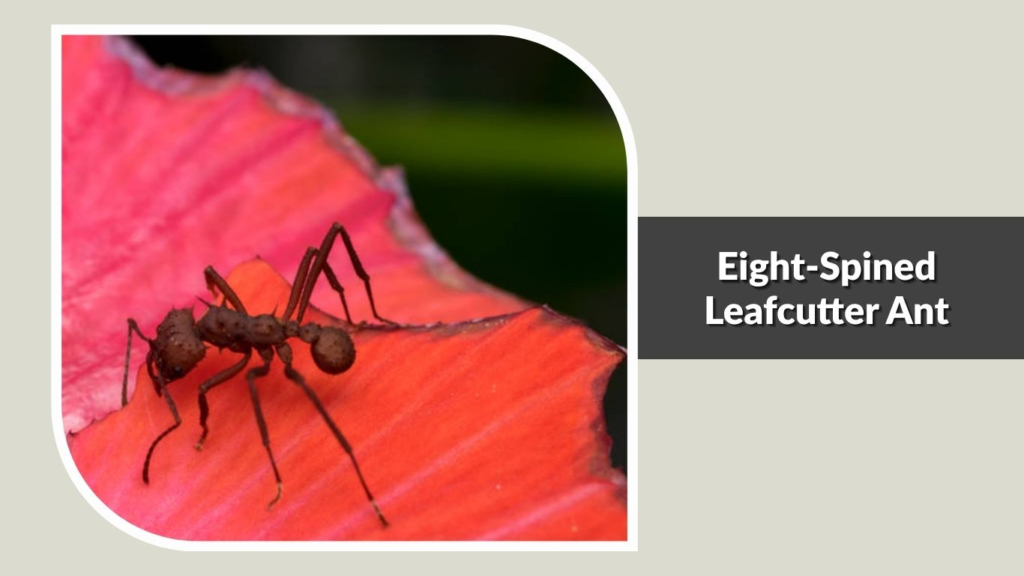
The Eight-Spined Leafcutter Ant is a tropical species recognized for the sharp spines along its body and its highly organized colony structure. It is commonly found in humid forests where it actively harvests leaves to support underground fungus gardens.
Identification
- Brown to reddish-brown body color
- Eight noticeable spines on the thorax
- Strong curved mandibles
- Long legs and segmented antennae
- Workers vary in size and body shape
Habitat
Eight-Spined Leafcutter Ants usually inhabit tropical rainforests and moist woodland regions. Their nests are constructed underground with numerous chambers for fungus cultivation, brood care, and waste storage. Colonies often thrive in areas with dense vegetation.
Behavior
These ants are social insects that rely on teamwork and communication. Workers create long foraging trails to collect fresh plant material, while soldier ants defend the colony. Different worker castes perform specialized duties that help maintain colony efficiency.
Diet
The Eight-Spined Leafcutter Ant feeds on fungus grown inside underground gardens. Workers gather leaves and plant fragments to nourish the fungus. The cultivated fungus provides essential nutrients for the queen, larvae, and worker ants.
11. Spiny Leafcutter Ant
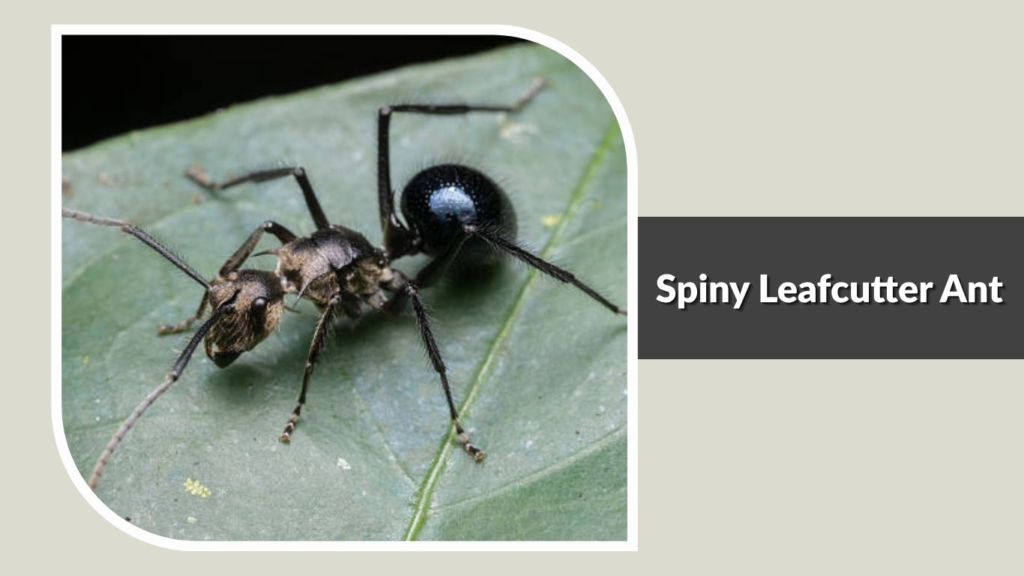
The Spiny Leafcutter Ant is named for the sharp spines covering parts of its body. This species is commonly found in Central and South America and is known for its active foraging behavior and large underground colonies.
Identification
- Dark brown body with visible spines
- Large mandibles for cutting vegetation
- Rough body texture
- Long legs adapted for carrying leaves
- Workers range from small to large sizes
Habitat
Spiny Leafcutter Ants live in tropical forests, grasslands, and humid environments with abundant plant life. Their underground nests contain multiple chambers used for fungus farming and colony growth. Large soil mounds may appear around nest entrances.
Behavior
These ants operate in organized colonies with a clear division of labor. Worker ants collect vegetation, maintain the fungus gardens, and care for larvae, while soldiers guard the nest. Foraging trails can extend far from the colony in search of fresh leaves.
Diet
The Spiny Leafcutter Ant depends on cultivated fungus as its primary food source. Plant material gathered by workers is processed inside the nest to support fungus growth. The fungus supplies nutrients needed for the survival of the colony.
12. Lundi Leafcutter Ant
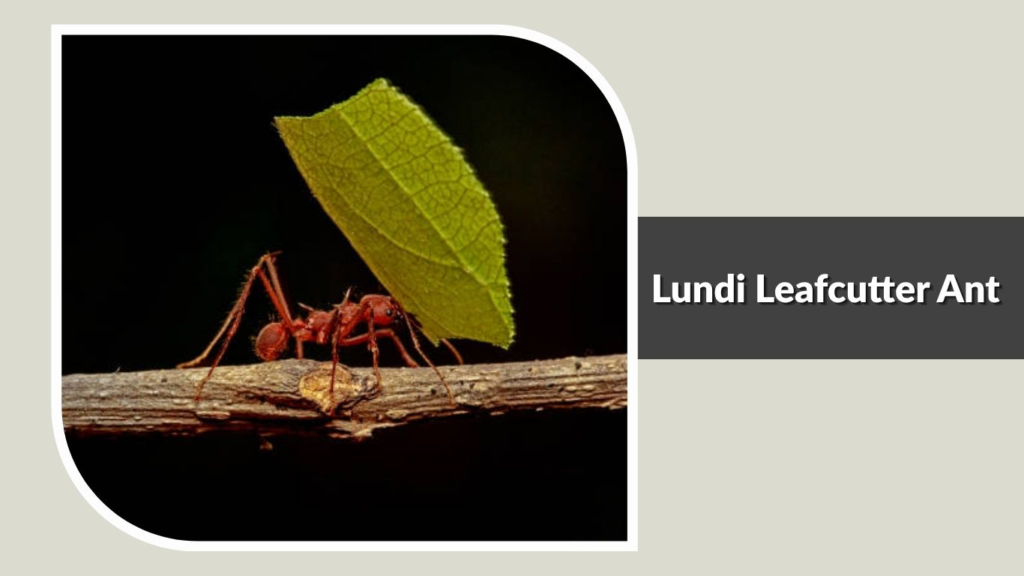
The Lundi Leafcutter Ant is a smaller but highly efficient species found in parts of South America. It is known for its organized foraging behavior and its ability to thrive in grasslands, forests, and agricultural environments.
Identification
- Medium-sized reddish-brown body
- Spiny thorax with rough texture
- Strong mandibles for cutting leaves
- Long legs and segmented antennae
- Workers vary in size within the colony
Habitat
Lundi Leafcutter Ants commonly inhabit tropical grasslands, forests, and farming regions. Their nests are built underground and contain chambers for fungus cultivation, brood care, and waste disposal. Colonies prefer warm climates with easy access to vegetation.
Behavior
These ants are highly social insects that work together in coordinated groups. Workers create organized trails to collect plant material, while soldier ants help protect the colony. Smaller workers often remain inside the nest to maintain the fungus gardens.
Diet
The Lundi Leafcutter Ant relies on cultivated fungus for nutrition. Workers gather leaves, flowers, and grasses to feed the fungus inside underground chambers. The fungus breaks down the plant material and becomes the colony’s main food source.
13. Hairy Leafcutter Ant
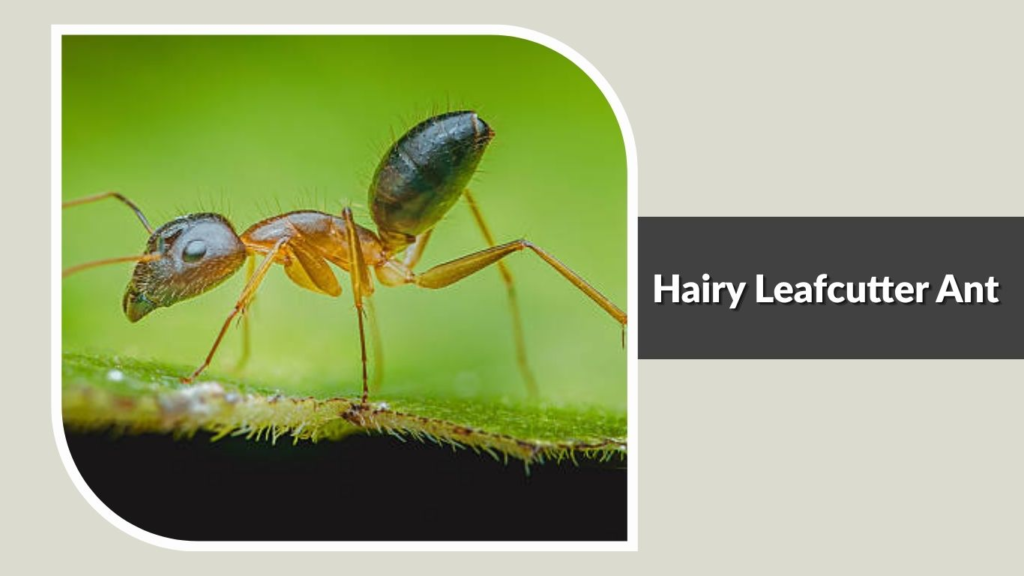
The Hairy Leafcutter Ant is recognized for the fine hair-like structures covering parts of its body. This species is commonly found in South American habitats where it contributes to soil aeration and plant recycling through its active foraging behavior.
Identification
- Dark brown body with fine hairs
- Strong cutting mandibles
- Spiny thorax and long legs
- Medium to large worker size
- Broad head with powerful jaw muscles
Habitat
Hairy Leafcutter Ants live in tropical forests, savannas, and open woodland areas. Their underground nests may contain many interconnected chambers used for fungus farming and colony development. They prefer warm environments with abundant plant growth.
Behavior
These ants live in highly organized colonies with specialized worker groups. Foraging workers gather leaves and plant fragments, while soldiers defend the nest from predators. Their long leaf-carrying trails are commonly seen near active colonies.
Diet
The Hairy Leafcutter Ant depends on fungus cultivated within the nest for survival. Workers collect fresh vegetation to support fungus growth inside underground chambers. The fungus provides essential nutrients for larvae, workers, and the queen.
14. Rugose Leafcutter Ant
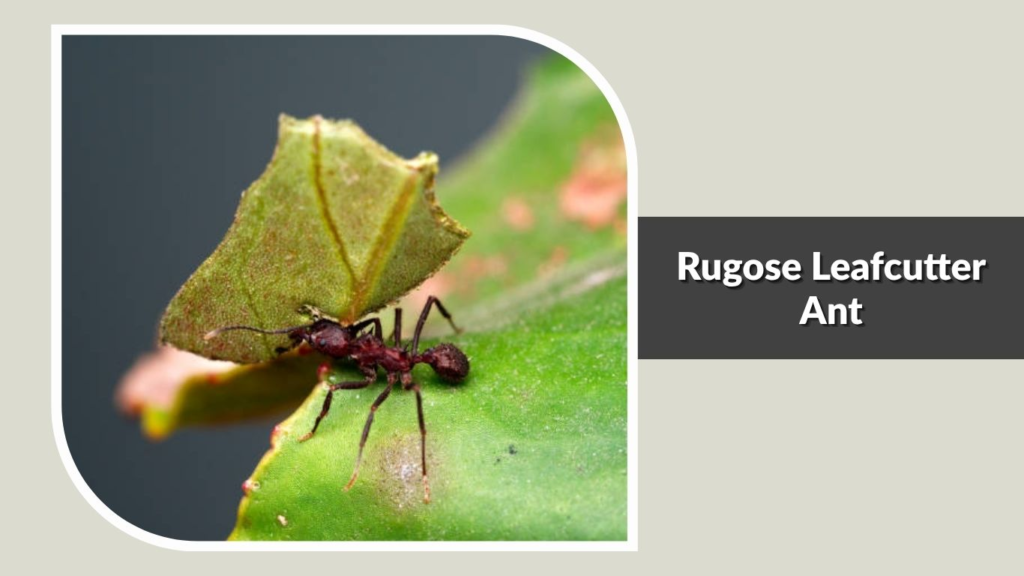
The Rugose Leafcutter Ant is known for its rough and textured body surface. This species is widely distributed in South America and is highly effective at collecting vegetation for fungus cultivation within its underground colonies.
Identification
- Rough-textured dark brown body
- Strong mandibles for cutting leaves
- Spiny thorax and sturdy legs
- Medium to large worker ants
- Broad head with powerful jaw muscles
Habitat
Rugose Leafcutter Ants commonly inhabit tropical forests, grasslands, and humid woodland regions. Their nests are underground and contain chambers dedicated to fungus farming, brood care, and waste management. Colonies often develop in areas with rich vegetation.
Behavior
These ants are social insects with a well-organized colony system. Worker ants gather leaves and transport them back to the nest in long trails, while soldiers defend the colony from threats. Different worker sizes allow the colony to perform specialized tasks efficiently.
Diet
The Rugose Leafcutter Ant survives by cultivating fungus inside underground chambers. Workers collect fresh plant material that serves as food for the fungus. The colony then feeds on the nutrient-rich fungus rather than directly eating the leaves.
15. Subterranean Leafcutter Ant
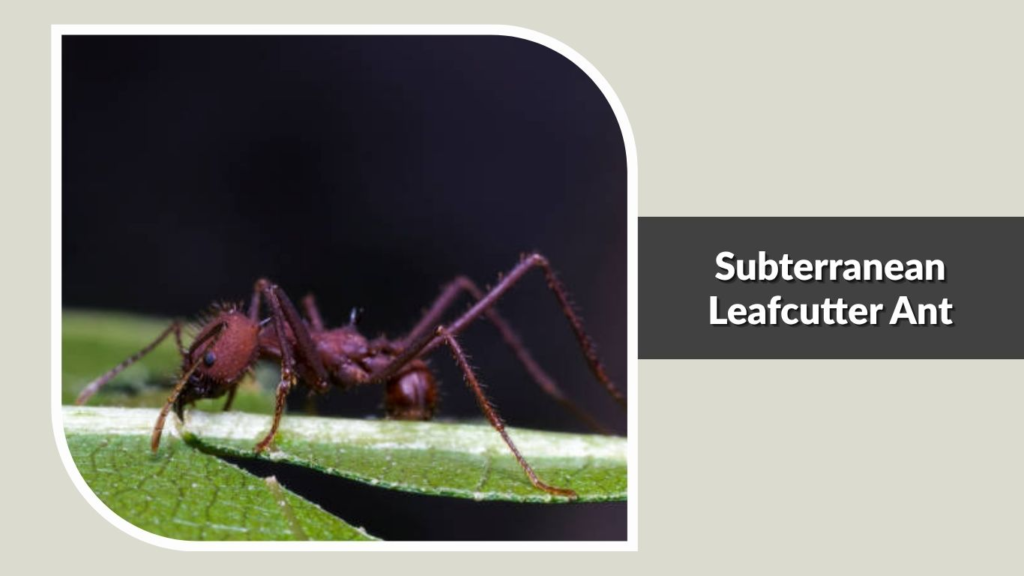
The Subterranean Leafcutter Ant is a species recognized for its deep underground nesting behavior and highly developed fungus-growing system. It is commonly found in tropical and subtropical parts of South America.
Identification
- Dark reddish-brown body coloration
- Strong cutting mandibles
- Spiny body with long legs
- Large head with powerful jaw muscles
- Workers vary greatly in size
Habitat
Subterranean Leafcutter Ants mainly inhabit forests, grasslands, and tropical regions with loose soil. Their nests can extend deep underground and contain multiple chambers for fungus cultivation and colony development. Large colonies may occupy extensive underground networks.
Behavior
These ants are highly cooperative and live in complex social colonies. Workers form organized foraging trails to gather leaves and grasses, while soldiers protect the nest. Inside the colony, smaller workers maintain fungus gardens and care for larvae.
Diet
The Subterranean Leafcutter Ant depends entirely on cultivated fungus for nutrition. Plant material collected by workers is processed and used to feed the fungus inside the nest. The fungus provides essential nutrients for the queen, larvae, and worker ants.
FAQs
What do leafcutter ants eat?
Leafcutter ants mainly feed on fungus grown inside their underground nests. Workers collect leaves, grass, and flowers to nourish the fungus, which then becomes the primary food source for the colony instead of the plant material itself.
Where are leafcutter ants commonly found?
Leafcutter ants are mostly found in Central and South America. They usually live in tropical rainforests, grasslands, savannas, and humid woodland areas where fresh vegetation is widely available for fungus cultivation.
Why do leafcutter ants carry leaves?
Leafcutter ants carry leaves back to their nests to grow fungus gardens. The leaves are not eaten directly. Instead, the plant material acts as fertilizer for the fungus that provides nutrition for workers, larvae, and the queen.
Are leafcutter ants harmful to plants?
Leafcutter ants can damage crops, gardens, and trees because they remove large amounts of vegetation. However, they also benefit ecosystems by improving soil quality, recycling nutrients, and helping with natural plant decomposition processes.
How large can leafcutter ant colonies become?
Leafcutter ant colonies can become extremely large and may contain millions of ants. Their underground nests often include many chambers used for fungus farming, brood care, food storage, and waste management.
