

Spotting tiny red flying bugs around your home or garden can be irritating and confusing. These small insects—ranging from fruit flies to biting midges—are attracted to moisture, food residues, or organic matter. While most are harmless, some may bite or spread bacteria. Identifying the type of bug and eliminating its source is essential to keeping your environment clean and pest-free.
Identification

Common Types of Tiny Red Flying Bugs
Fruit Flies:
These are among the most common indoor flying pests. Fruit flies are tiny, reddish-brown insects attracted to ripe or decaying fruit, vinegar, and fermented liquids. They hover near fruit bowls, trash cans, or open beverages. Though harmless, they multiply rapidly and become a persistent nuisance.
Drain Flies:
Also called “moth flies,” these tiny fuzzy bugs have a reddish or brownish tint and breed in drains, pipes, and moist bathroom surfaces. They often appear in kitchens and bathrooms, especially when organic matter builds up inside sink drains.
Fungus Gnats:
These small red or brownish flies commonly infest indoor plants. They are drawn to damp soil, decaying roots, and mold. While adult gnats are mostly harmless, their larvae can damage plant roots, leading to yellowing leaves and stunted growth.
Biting Midges (No-see-ums):
These are tiny flying red or orange insects found outdoors near water. They are blood-feeding pests that leave itchy, painful bites on exposed skin. They’re especially active during dusk or early morning.
Clover Mites (Mistaken Identity):
Although bright red and often seen near windows, clover mites cannot fly. They may, however, be mistaken for tiny flying insects when blown by the wind or disturbed near window sills.
Physical Characteristics
Tiny red flying bugs are often 1–3 millimeters long, making them difficult to identify without close inspection. Most species share these traits:
- Color: Red, orange-red, or reddish-brown.
- Shape: Oval or elongated with translucent wings.
- Movement: Fly in short, erratic patterns near lights, food, or moisture sources.
- Habitat preference: Warm, humid areas such as kitchens, bathrooms, and gardens.
Using a magnifying glass or sticky trap can help confirm the specific type you’re dealing with.
Where They Come From

Indoor Sources
Tiny red flying bugs are usually drawn indoors by food, moisture, or organic matter. Common sources include:
- Kitchen waste: Overripe fruit, open drink containers, or unwashed dishes attract fruit flies.
- Drains and pipes: Organic buildup in sink drains provides a perfect breeding ground for drain flies.
- Potted plants: Damp soil and decaying roots attract fungus gnats.
- Garbage bins: Decomposing food and moisture create ideal conditions for egg-laying.
These pests can appear suddenly because they reproduce quickly—fruit flies, for instance, can lay hundreds of eggs that hatch within a day or two.
Outdoor Sources
Outdoors, tiny red flying bugs gather around standing water, pools, and damp gardens. Biting midges and gnats breed in moist soil, mulch, and compost piles. They’re most active during warm, humid evenings. Light sources also attract them, especially porch lights or outdoor lamps.
If they begin swarming near doors or windows, they can easily find their way inside homes through small gaps or screens.
Behavior and Habits

Activity Patterns
These bugs are most active in warm, moist environments. Indoors, they tend to hover near food sources or light fixtures. Outdoors, they congregate around vegetation, pools, and compost areas. Their activity peaks during the evening when humidity is highest.
Feeding Preferences
- Fruit flies: Feed on fermenting fruit, vinegar, and sugary liquids.
- Drain flies: Consume decaying organic matter in plumbing.
- Biting midges: Feed on human or animal blood, leaving itchy welts.
- Fungus gnats: Feed on fungus and decaying plant roots.
While many of these insects are more of a nuisance than a threat, their presence often indicates excess moisture or poor sanitation, which should be addressed to prevent recurrence.
Are They Harmful?
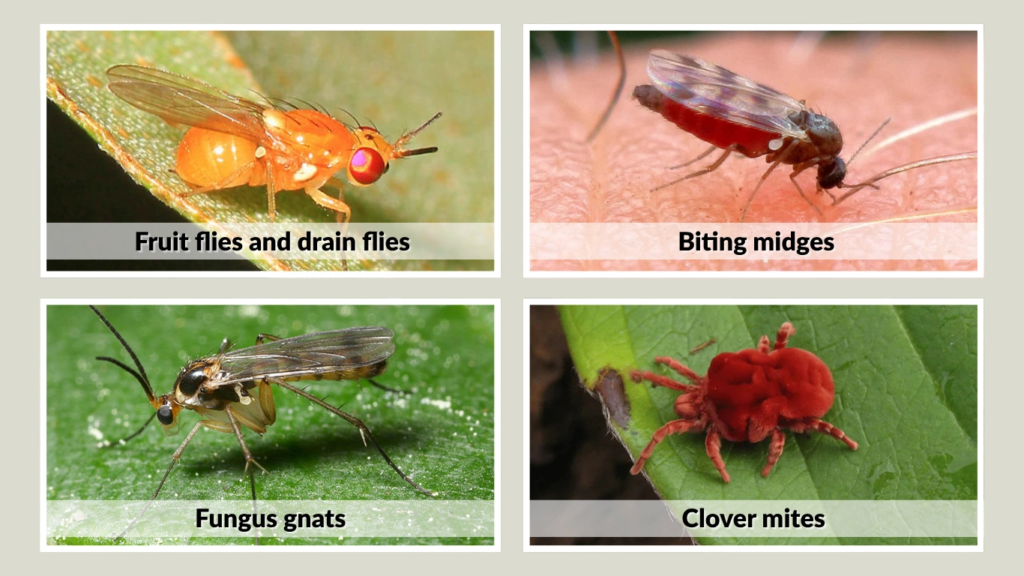
Most tiny red flying bugs are not dangerous to humans, but their behavior can cause annoyance or mild health concerns.
- Fruit flies and drain flies: Do not bite, but can spread bacteria by landing on food and surfaces.
- Biting midges: Cause painful bites and itching, similar to mosquito bites.
- Fungus gnats: Harmful to plants when larvae feed on roots.
- Clover mites: Do not bite but can stain walls or fabrics if crushed.
Even harmless species can become unhygienic in large numbers, so timely removal is important for both comfort and cleanliness.
How to Get Rid of Tiny Red Flying Bugs

Getting rid of tiny red flying bugs requires addressing both the visible adults and their hidden breeding sources. Eliminating what attracts them—moisture, food waste, or organic buildup—is key to preventing them from coming back.
Natural Remedies
1. Apple Cider Vinegar Trap:
Fill a small bowl with apple cider vinegar and a few drops of dish soap. The vinegar attracts fruit flies, while the soap breaks surface tension, trapping them in the liquid. Place the trap near sinks, fruits, or plants.
2. Clean and Dry Drains:
Pour a mixture of baking soda and vinegar, followed by hot water, down your drains. This kills organic matter where drain flies lay eggs. Repeat weekly to prevent regrowth.
3. Dry Out Plant Soil:
If fungus gnats are the issue, allow the top inch of soil to dry before watering again. You can also add a thin layer of sand to block larvae from emerging.
4. Essential Oil Spray:
Mix peppermint, eucalyptus, or tea tree oil with water in a spray bottle and apply it to areas where bugs are active. These oils repel flying insects naturally.
5. Remove Outdoor Attractants:
Keep compost bins covered, empty standing water, and clean around pools or patios. Outdoor moisture and decaying organic matter are prime breeding grounds for gnats and midges.
Chemical and Professional Solutions
If natural methods fail, consider targeted insecticidal treatments:
- Use plant-safe insecticidal sprays for fungus gnats or outdoor biting midges.
- Apply residual insecticides containing pyrethrins or bifenthrin around doors, windows, and drains.
- For stubborn infestations, hire a pest control service to identify and treat the exact species.
Always follow label instructions carefully and ventilate the treated area afterward. Avoid spraying directly on food surfaces or plants unless the product is labeled safe for that use.
Prevention Tips
Preventing tiny red flying bugs is easier than managing infestations. Regular cleaning and proper maintenance keep them away permanently.
- Store fruits and vegetables properly: Refrigerate or cover them to prevent fruit flies.
- Empty trash regularly: Keep lids sealed to block access to decomposing material.
- Fix leaks and dry wet areas: Standing water attracts drain flies and midges.
- Inspect potted plants: Avoid overwatering and clean plant trays often.
- Use window and door screens: Fine mesh screens help stop flying pests from entering.
- Maintain outdoor areas: Trim vegetation, clean gutters, and keep compost covered.
By reducing moisture and organic buildup, you’ll make your space far less inviting to these pests.
FAQs
What are the tiny red flying bugs in my house?
They’re most often fruit flies, drain flies, or fungus gnats. These bugs are attracted to moisture, fermenting fruits, and organic matter in drains or plant soil. Identifying where they breed helps eliminate them quickly.
Do tiny red flying bugs bite?
Most do not bite. However, biting midges (also called no-see-ums) and some red gnats can bite humans, leaving itchy red welts. They’re typically found outdoors near water or gardens during warm evenings.
Why are tiny red bugs flying around my bathroom or kitchen?
These are likely drain flies or fruit flies attracted to moist organic buildup. Regularly cleaning sink drains with vinegar and baking soda helps kill larvae and eliminate breeding sites.
How can I get rid of tiny red flying bugs naturally?
Use apple cider vinegar traps, keep drains clean, dry plant soil, and spray peppermint or eucalyptus oil to repel them. Maintaining cleanliness and controlling humidity are the most effective natural methods.
Are tiny red flying bugs harmful to humans or pets?
Most are harmless but unhygienic. They can contaminate surfaces and food with bacteria. Biting midges can cause skin irritation but don’t transmit diseases. Regular cleaning and pest prevention practices protect both humans and pets.
