
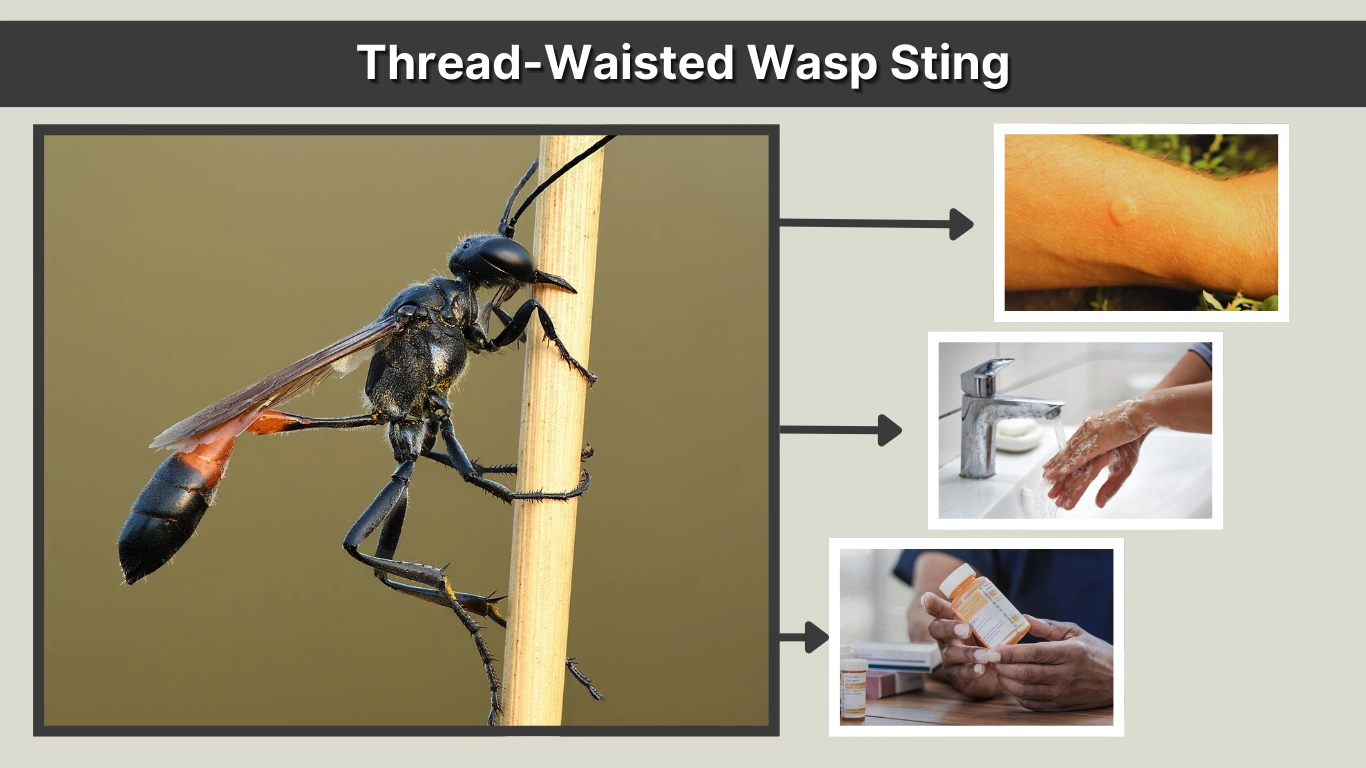
Thread-waisted wasps, known for their slender bodies and thin, elongated “thread-like” waist, are often spotted in gardens, meadows, and sandy areas. Belonging to the family Sphecidae, they are solitary hunters that play a vital role in controlling caterpillars and other insect pests. Despite their beneficial presence, many people become concerned when they see one, fearing its sting. But how dangerous are these wasps, and what should you do if stung? Let’s break down the facts.
Do Thread-Waisted Wasps Sting?
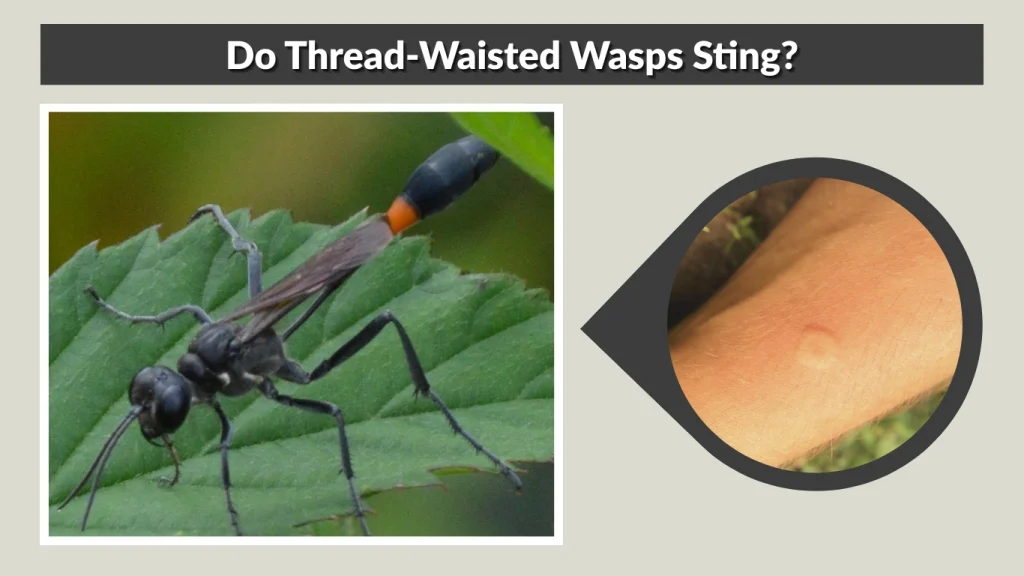
Yes, thread-waisted wasps are capable of stinging, but their stings are not as common as those from social wasps like yellowjackets or hornets. The primary purpose of their sting is to paralyze insect prey, particularly caterpillars, which they carry to their underground nests for their larvae. Unlike aggressive wasps that defend their colonies, thread-waisted wasps are solitary and non-aggressive, meaning they only sting in self-defense if directly threatened or handled.
In most cases, a human encounter with a thread-waisted wasp does not result in a sting, making them less of a threat than their social relatives.
How Painful is a Thread-Waisted Wasp Sting?
The pain level of a thread-waisted wasp sting is generally mild to moderate. On the Schmidt Sting Pain Index, which ranks insect stings from 1 to 4, thread-waisted wasps fall into the lower range, around 1 to 2. This makes their sting less painful than that of a hornet or yellowjacket but slightly more noticeable than a bee sting in some cases.
People usually describe the pain as sharp and burning, but it fades quickly, typically within an hour or two. For those who are not allergic, the reaction is temporary and minor.
Symptoms of a Thread-Waisted Wasp Sting
Immediate Symptoms
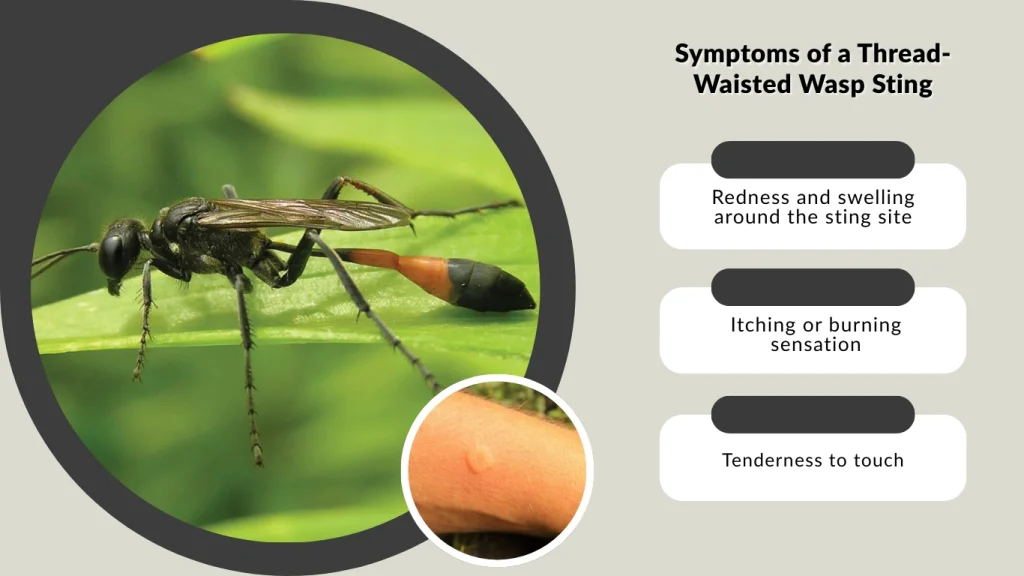
When stung by a thread-waisted wasp, the first reaction is usually sharp, localized pain at the site of the sting. This may be followed by:
- Redness and swelling around the sting site
- Itching or burning sensation
- Tenderness to touch
These symptoms are the body’s natural response to venom being injected into the skin.
Delayed Symptoms
For some people, symptoms can continue for a few hours to a day. These may include:
- Mild soreness or swelling that lingers beyond the initial sting
- A raised bump or welt, similar to a mosquito bite but more painful
- Itching as the area begins to heal
In rare cases, delayed symptoms may involve an allergic reaction, but this is uncommon with thread-waisted wasps.
Human Reactions to the Sting
Normal Reactions
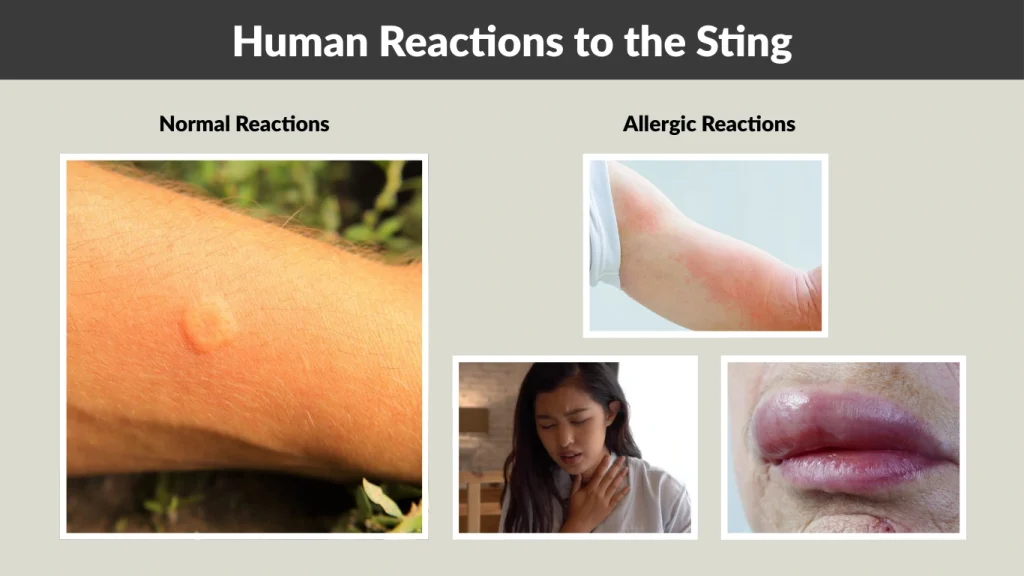
For most people, a thread-waisted wasp sting results in temporary discomfort. Pain, redness, and mild swelling usually peak within the first few hours and fade within 24–48 hours. The majority of stings are comparable to a bee sting in severity.
Allergic Reactions
Although rare, some individuals may experience allergic responses to wasp venom. Symptoms of an allergic reaction include:
- Widespread hives or severe itching
- Swelling of lips, eyelids, or throat
- Difficulty breathing or dizziness
This type of severe reaction, known as anaphylaxis, requires immediate medical attention. Carrying an epinephrine injector (EpiPen) is recommended for those with known wasp allergies.
Thread-Waisted Wasp Bite vs. Sting
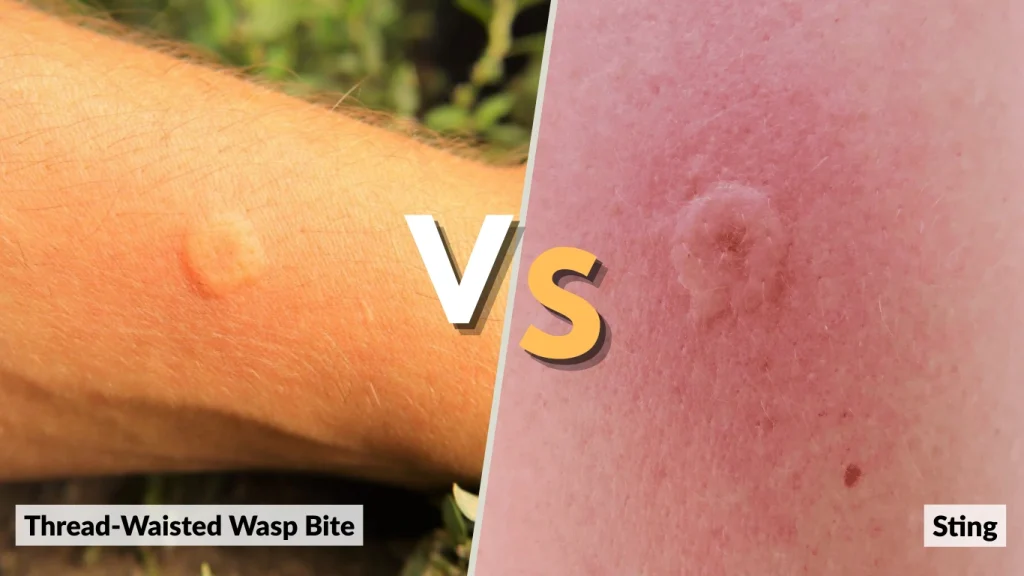
Many people mistakenly refer to wasp stings as “bites.” In reality, thread-waisted wasps do not bite humans in a harmful way. Their mandibles (jaws) are used for handling prey or nest-building, not for defense. When it comes to humans, the only real threat is their sting, which is designed for paralyzing insects rather than attacking mammals.
Understanding this distinction helps reduce unnecessary fear. If you see one hovering nearby, it is likely hunting or pollinating, not preparing to sting.
Treatment of a Thread-Waisted Wasp Sting
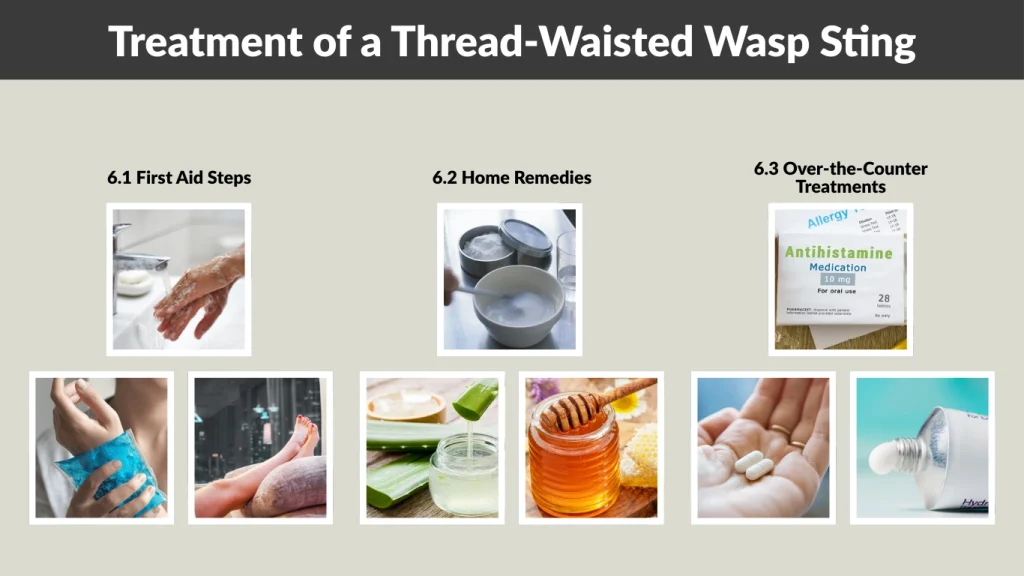
6.1 First Aid Steps
If stung by a thread-waisted wasp, immediate care can help minimize discomfort and reduce swelling:
- Clean the sting site with soap and water to remove venom and lower infection risk.
- Apply a cold compress or ice pack wrapped in a cloth for 10–15 minutes to numb pain and reduce swelling.
- Elevate the affected area if stung on a limb, as this helps reduce swelling.
6.2 Home Remedies
Several natural remedies may ease pain and itching:
- Baking soda paste: Neutralizes venom and reduces itchiness.
- Aloe vera gel: Soothes burning and promotes healing.
- Apple cider vinegar or honey: Helps reduce swelling and disinfects the sting site.
6.3 Over-the-Counter Treatments
For stronger relief, some common medications can be used:
- Antihistamines (diphenhydramine or loratadine) to reduce itching and allergic reactions.
- Hydrocortisone cream for inflammation and redness.
- Pain relievers such as ibuprofen or acetaminophen for pain and swelling.
When to Seek Medical Help
While most stings resolve on their own, medical help should be sought if any of the following occur:
- Severe allergic reactions (difficulty breathing, swelling of face or throat, dizziness).
- Persistent pain or swelling lasting beyond 48 hours.
- Multiple stings or stings in sensitive areas such as the mouth, eyes, or throat.
Prompt medical treatment is crucial in these cases to avoid complications.
Preventing Stings
Though thread-waisted wasps are not aggressive, prevention is always helpful:
- Avoid disturbing them while they are hunting or visiting flowers.
- Wear protective clothing such as gloves and long sleeves when gardening in areas where they nest.
- Seal entry points in your home to prevent accidental indoor encounters.
- Stay calm if one flies nearby, as sudden swatting movements can trigger defensive behavior.
Are Thread-Waisted Wasps Dangerous?
Thread-waisted wasps may look intimidating because of their slender bodies and stingers, but they are generally harmless to humans. Their venom is adapted to paralyze insect prey, not to attack people. They only sting when provoked or handled roughly. For gardeners and farmers, these wasps are actually allies, keeping caterpillar populations under control and pollinating flowers.
Conclusion
A thread-waisted wasp sting may cause pain, redness, and mild swelling, but for most people, the reaction is temporary and not severe. They are far less aggressive than social wasps and rarely pose a serious health risk. By understanding their behavior and knowing simple first aid treatments, you can stay safe while appreciating the important role these wasps play in nature.
FAQs
What does a thread-waisted wasp sting feel like?
The sting feels like a sharp, burning pain, similar to a bee sting but usually milder. Most discomfort fades within a few hours, leaving only slight redness or swelling.
Can a thread-waisted wasp sting kill you?
No, a single sting is not fatal to humans. The venom is designed to paralyze insects, not harm people. Only in rare cases of severe allergic reaction (anaphylaxis) could the sting become life-threatening.
Do thread-waisted wasps sting humans often?
No, they rarely sting humans. Being solitary and non-aggressive, they sting only when provoked, handled, or trapped against the skin.
What is the best treatment for a thread-waisted wasp sting?
Clean the sting site with soap and water, apply a cold compress, and use antihistamines or hydrocortisone cream to reduce itching and swelling. Home remedies like baking soda paste or aloe vera also help.
Are thread-waisted wasps aggressive compared to other wasps?
Not at all. Unlike hornets or yellowjackets, which defend their colonies aggressively, thread-waisted wasps are solitary. They focus on hunting prey and building nests, making them far less aggressive toward humans.
