
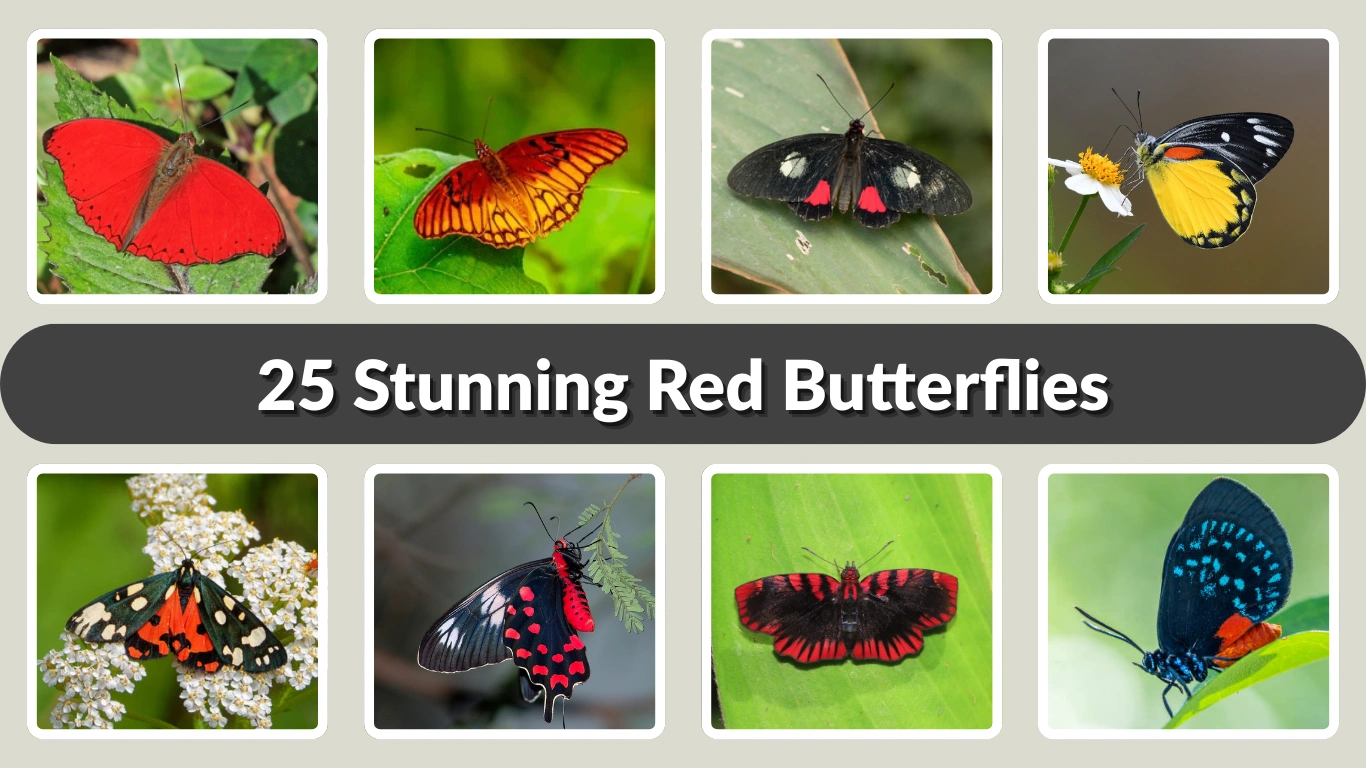
Red butterflies are among the most captivating insects in the world, admired for their fiery colors, symbolic meanings, and striking wing patterns. From deep crimson swallowtails to glowing red gliders and boldly patterned longwings, these species stand out in forests, gardens, and tropical landscapes worldwide. Below is a complete guide to 25 remarkable red butterflies, each described with identification, habitat, color patterns, and lifecycle details.
1. Red Admiral Butterfly
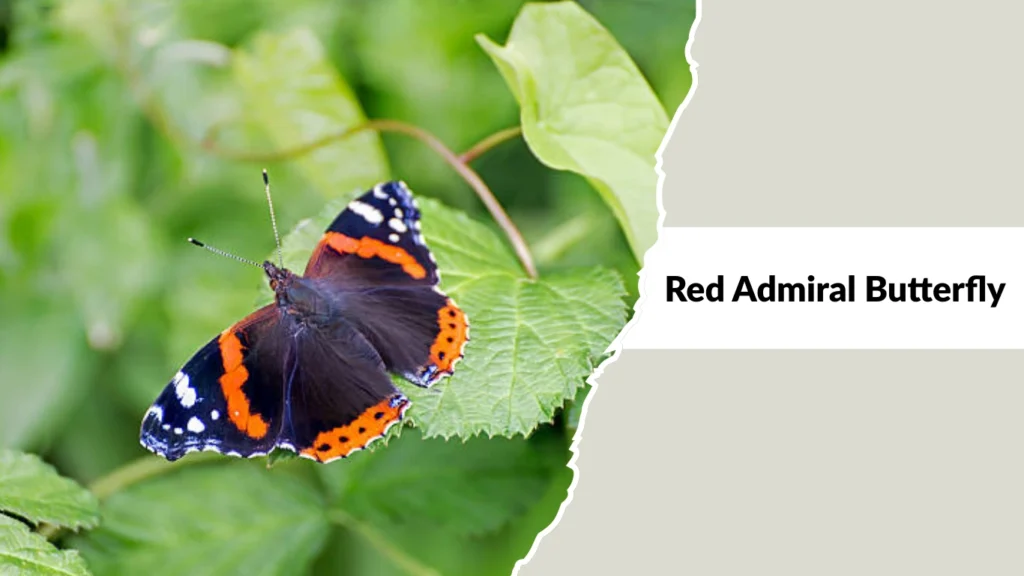
A widespread and easily recognized butterfly, the Red Admiral (Vanessa atalanta) is known for its bold black wings crossed by vivid red-orange bands. Fast-flying and adaptable, it appears in gardens, woodlands, parks, and coastal areas across North America, Europe, and Asia.
Identification
- Black forewings with a bright red-orange diagonal band
- Hindwings with red marginal band and white spots near the forewing tips
- Underside mottled brown, providing camouflage
- Wingspan: 2–3 inches (5–7.6 cm)
- Strong, rapid flight and often territorial
Habitat
Red Admirals thrive in gardens, forest edges, parks, meadows, and hedgerows. They prefer sunny locations with plenty of nectar but also cooler, shaded resting spots. Because they migrate, they can be found from spring through fall, depending on region. They are especially common where stinging nettle grows—its primary host plant.
Color Pattern
The color pattern of the Red Admiral is striking and unmistakable:
The upper wings are velvety black with bold red-orange bars, creating a powerful contrast that makes the butterfly visible even in flight. White dots near the forewing tips add an additional highlight. The wing undersides are marbled brown, allowing the butterfly to disappear into tree bark or leaves when wings are closed.
Lifecycle
The lifecycle follows a classic four-stage pattern:
The female lays eggs on nettles, which hatch into spiny black-and-yellow caterpillars living inside folded leaves. After feeding, the caterpillar forms a chrysalis, often suspended from stems or twigs. The adult emerges with fully developed wings, ready to feed on nectar, sap, and overripe fruit. In warmer climates they produce multiple broods per year; in cooler areas, adults may migrate long distances to survive.
2. Scarlet Mormon Butterfly (Female)
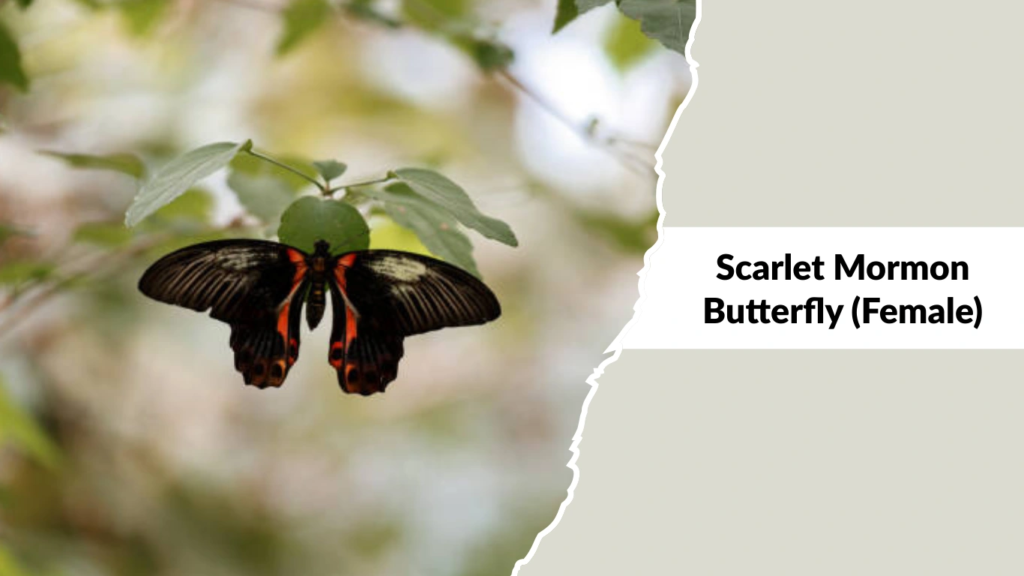
The Scarlet Mormon (Papilio rumanzovia) female is one of the most eye-catching swallowtails, known for its dramatic black wings contrasted with bold red markings. Native to Southeast Asia, this butterfly is admired for its strong flight and vivid coloration.
Identification
- Females display large red patches on the hindwings
- Forewings are mostly velvety black with subtle patterning
- Males are fully black, but females show the distinctive red
- Wingspan: 4–5.5 inches (10–14 cm)
- Slow, graceful flight typical of swallowtails
Habitat
The Scarlet Mormon thrives in tropical forests, gardens, plantations, and humid lowland areas. It prefers warm climates with abundant flowering plants. It is commonly found near citrus groves and other host plants, and often visits nectar-rich gardens where food sources are plentiful.
Color Pattern
The female Scarlet Mormon displays a luxurious contrast: deep black wings with rich scarlet-red patches spreading across the hindwings. Fine black veining enhances the red areas, making the butterfly appear almost painted. The male lacks these red accents, making the female the more visually striking form.
Lifecycle
The female lays her eggs on citrus plants and related species. The caterpillars resemble bird droppings when young—an effective camouflage—before turning green with eye-like spots. After feeding, the larva attaches itself to a branch and forms a pale, angular chrysalis. The adult emerges with fully developed wings and begins its nectar-feeding and mating cycle. Multiple broods occur year-round in warm climates.
3. Red Lacewing Butterfly
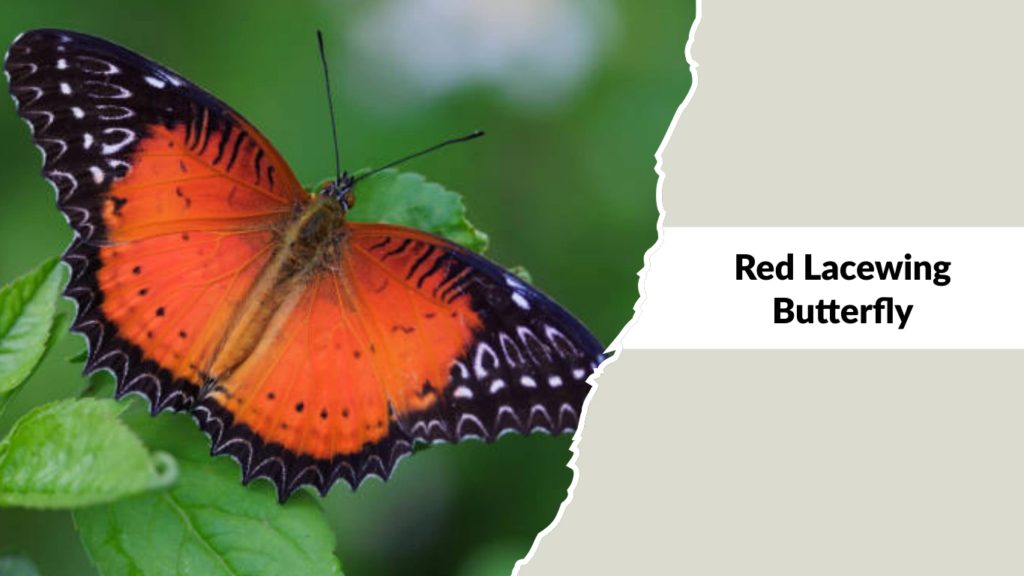
The Red Lacewing (Cethosia biblis) is a brilliantly colored species known for its fiery red upperwings bordered by black and white lace-like patterns. Common in Southeast Asia, it is one of the most visually striking butterflies in tropical forests and gardens.
Identification
- Upperwings are bright red-orange with bold black edges
- Distinct white scalloped spots along wing margins
- Underside shows detailed, lace-like patterns in orange, brown, and cream
- Wingspan: 3–3.5 inches (7.5–9 cm)
- Fluttering flight typical of lacewing butterflies
Habitat
This species inhabits tropical and subtropical forests, forest edges, clearings, and gardens. It prefers warm, humid environments and is often seen feeding on flowering plants. It thrives in disturbed habitats, making it common near villages and pathways.
Color Pattern
The Red Lacewing is recognized for its vivid red upper surface, contrasted by thick black borders and scattered white spots. The underside is highly ornate, resembling intricate lacework, with swirling orange-brown designs that provide camouflage when wings are closed.
Lifecycle
Eggs are laid singly on Passiflora (passion vine) species. Caterpillars are black with red bands and long spines, warning predators of their toxicity. Pupation occurs in a uniquely shaped, golden-brown chrysalis. Adults emerge with strong colors and reproduce throughout the year in tropical climates.
4. Atala Butterfly
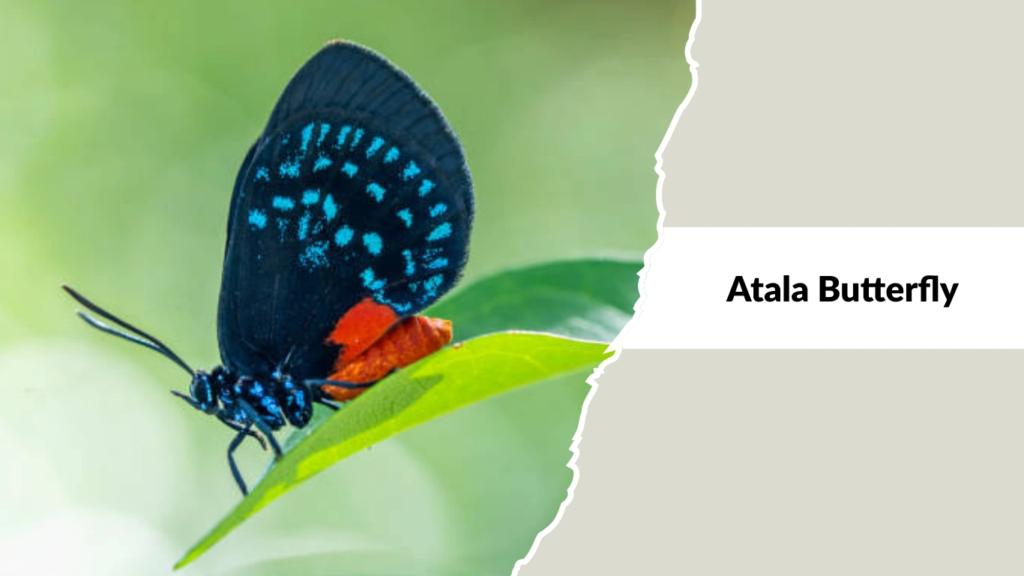
The Atala (Eumaeus atala) is a small but striking butterfly known for its velvety black wings, bright red abdomen, and iridescent blue spots. Native to South Florida and the Caribbean, it was once rare but has rebounded due to cultivation of its host plant.
Identification
- Wings are black with blue-green iridescent spots
- Abdomen is a vivid crimson red
- Small size: wingspan 1.25–1.5 inches (3–4 cm)
- Slow, hovering flight
- Caterpillars are orange-red with yellow spots
Habitat
Atalas inhabit pine rocklands, hardwood hammocks, gardens, and coastal scrublands. Their survival is closely tied to the coontie plant, the only host plant for their larvae. They are frequently found wherever coontie is cultivated or grows naturally.
Color Pattern
The butterfly’s deep black wings contrast with bright turquoise-blue spots and a glowing red abdomen. When resting, the red body and blue markings are especially visible, creating a jewel-like appearance. The caterpillars also show strong red and orange coloration.
Lifecycle
Eggs are laid in clusters on coontie leaves. Caterpillars feed on the plant’s toxic compounds, becoming poisonous to predators. After feeding, they form a short, stubby chrysalis attached to leaves or stems. Adults emerge with striking coloration and often produce multiple broods yearly in warm climates.
5. Red Cracker Butterfly
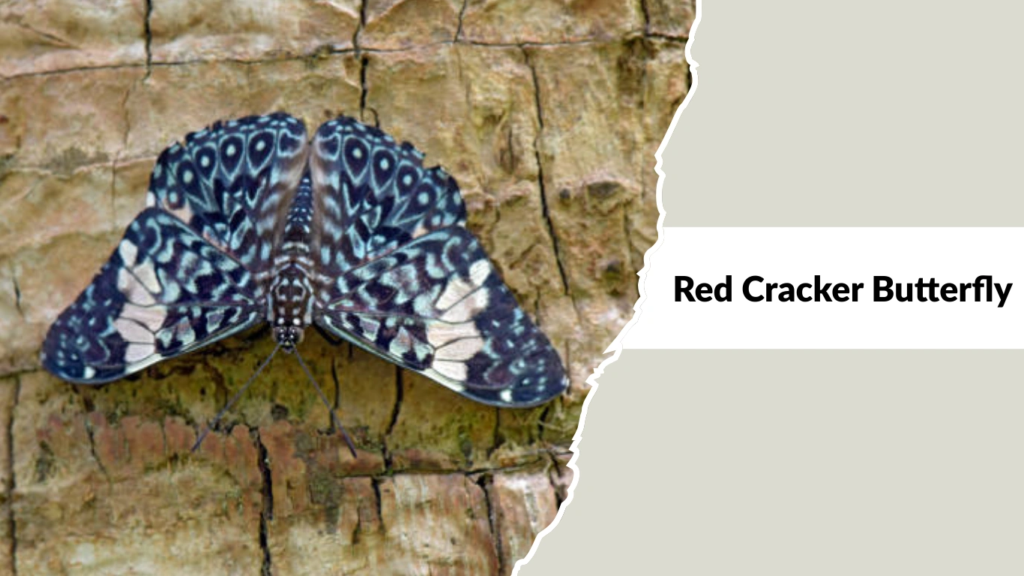
The Red Cracker (Hamadryas amphinome) is known for its mottled camouflage pattern and the surprising red flash on its hindwings. Males also produce a cracking sound during flight, making this species unique among butterflies.
Identification
- Upperwings mottled in gray, black, and white
- Hindwings show a red patch visible during flight
- Underside cryptic, bark-like pattern
- Wingspan: 2.5–3 inches (6.5–7.5 cm)
- Males make a characteristic cracking sound
Habitat
Found in tropical forests, wooded riverbanks, and dry forests from Mexico to South America. Red Crackers prefer areas with ample tree trunks, which they use for camouflage and resting. They are often seen perching vertically on bark.
Color Pattern
The upper surface looks muted and patterned for camouflage, but when the butterfly opens its wings, the hidden red patch becomes visible. The cryptic underside helps the butterfly blend into tree bark, while the red is used in territorial displays.
Lifecycle
Eggs are laid on host plants from the Euphorbiaceae family. Caterpillars are spiny and feed on young leaves. Pupation occurs in a smooth, angular chrysalis attached to branches. Adults emerge ready for territorial defense and mating throughout much of the year.
6. Red Postman Butterfly

The Red Postman (Heliconius melpomene) is a longwing butterfly famous for its bold red stripe across black wings. It is a mimicry model for several other species and thrives in tropical regions of Central and South America.
Identification
- Black wings with a single bright red forewing band
- Some forms include an additional red spot on hindwings
- Narrow, elongated wings typical of longwings
- Wingspan: 2.5–3.5 inches (6.5–9 cm)
- Slow, gliding flight behavior
Habitat
Red Postmans live in tropical rainforests, edges, riverbanks, and gardens. They prefer warm, humid conditions and areas rich in passionflower vines—their primary host plants. Often seen sipping nectar from lantana, verbena, and heliconia.
Color Pattern
The butterfly’s deep black wings are crossed by a striking red diagonal band, creating a bold and clean contrast. Some regional color forms also show white patches, but the red bar remains the defining feature.
Lifecycle
Females lay eggs on Passiflora vines, selecting specific species that contain toxins. Caterpillars absorb mild toxins, making adults distasteful to predators. Pupation occurs in a long, slender chrysalis. Longwing butterflies have extended lifespans, and adults may live several months while continuously reproducing.
7. Red Helen Butterfly (Female)
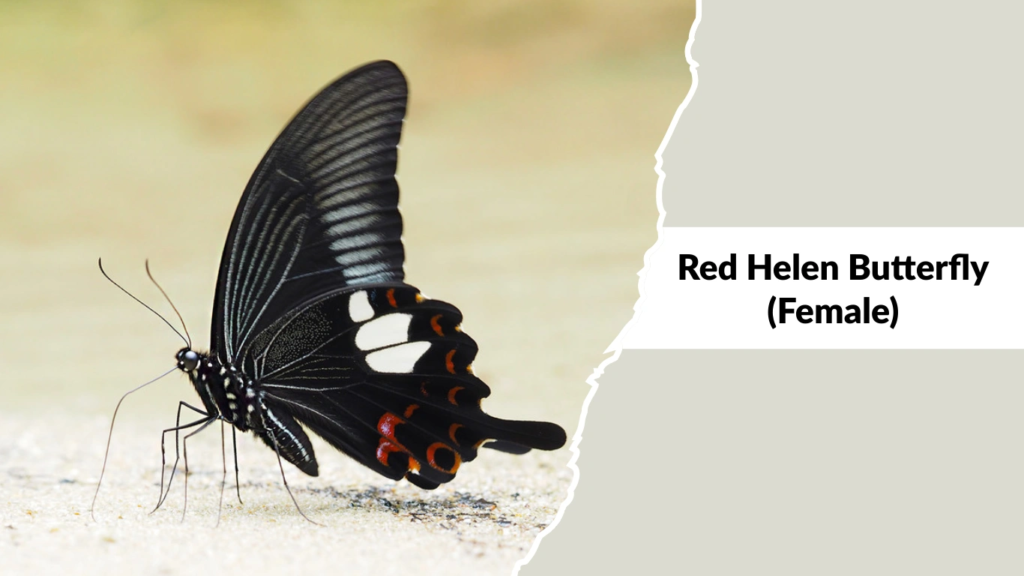
The Red Helen (Papilio helenus) is a large swallowtail found in South and Southeast Asia. While males are mostly black, the female displays striking red on the hindwings, making her highly distinctive and often mimicked by other species.
Identification
- Females show bold red patches on hindwings
- Forewings long and mostly velvety black
- Tail-like hindwing extensions typical of swallowtails
- Wingspan: 4–5 inches (10–13 cm)
- Sexual dimorphism: males lack red markings
Habitat
This species inhabits moist forests, hillsides, river valleys, and shaded gardens. They prefer areas with dense vegetation and consistent moisture. Females often stay near host plants, while males patrol sunny forest edges.
Color Pattern
The female’s wings are predominantly deep black, highlighted by bright red patches on the lower hindwings. The tails add elegance, and subtle white scaling enhances the pattern. Males remain uniformly black, making the female the more visually dramatic sex.
Lifecycle
Eggs are laid singly on citrus family plants (Rutaceae). Caterpillars resemble bird droppings when young, later turning green with defensive eye spots. Pupation occurs in a curved, leaf-like chrysalis. Adults emerge ready to mate, producing several broods per year in warm regions.
8. Red-bodied Swallowtail
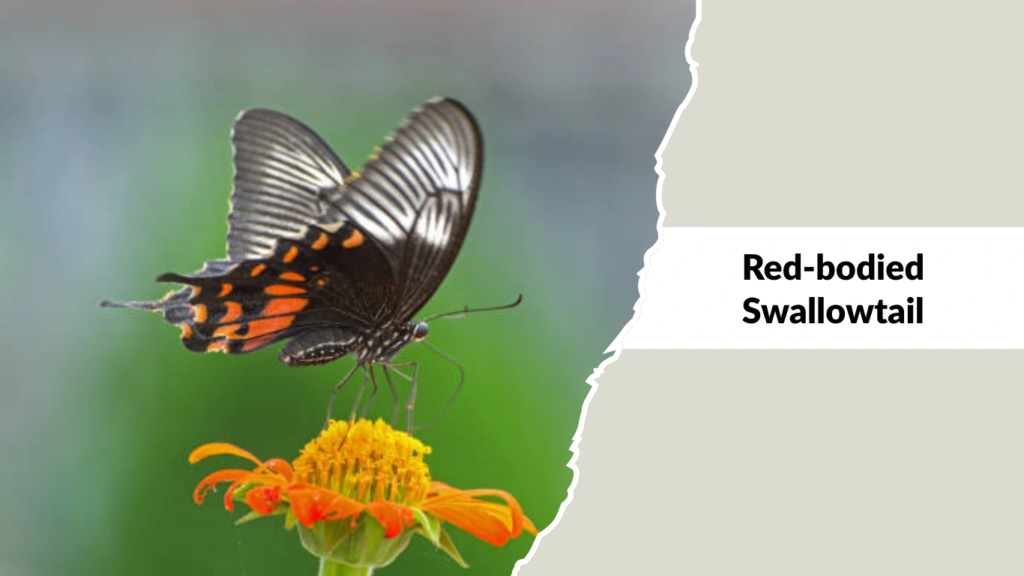
The Red-bodied Swallowtail (Atrophaneura semperi) is a striking butterfly from the Philippines, known for its dark wings and vivid red body. Its coloration signals toxicity, making it one of the region’s most iconic swallowtails.
Identification
- Wings are black with soft sheen
- Body is bright crimson red
- Hindwings may show small red or white markings
- Wingspan: 4–5.5 inches (10–14 cm)
- Slow, floating flight typical of toxic swallowtails
Habitat
Found in tropical forests, river corridors, and mountain slopes of the Philippines. It prefers humid, shaded environments and is often seen gliding above forest understory plants and nectar-rich shrubs.
Color Pattern
The butterfly’s body glows intense red, contrasting with large, velvety black wings. Some individuals show red streaks or white patches near the hindwing veins. The combination creates a bold warning signal to predators.
Lifecycle
Eggs are deposited on Aristolochia vines, which contain toxins that the caterpillars absorb for defense. Larvae are dark with bright markings and feed heavily before forming a sturdy angular chrysalis. Adults emerge toxic and long-lived, reproducing multiple times each season.
9. Blood-red Glider
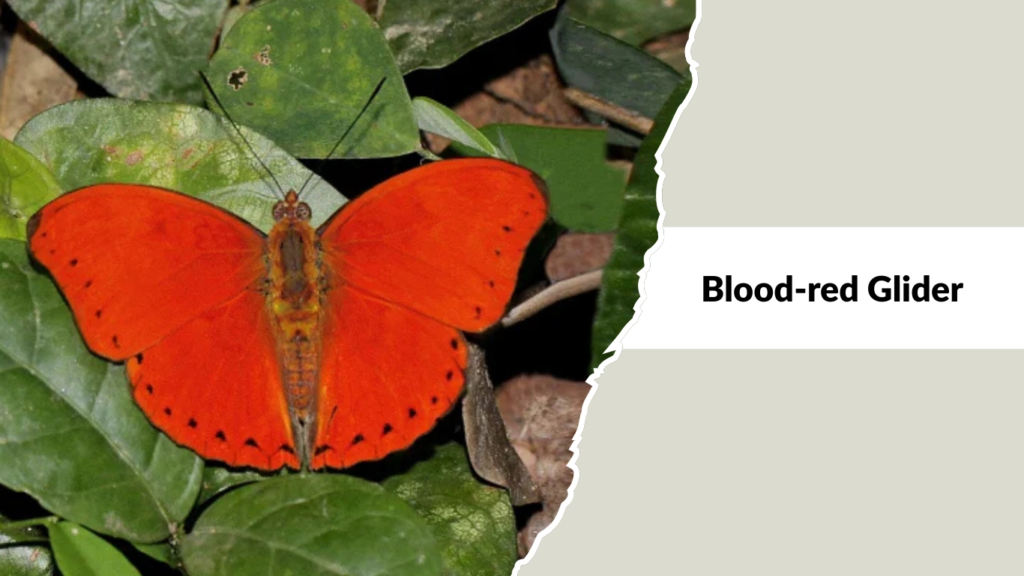
The Blood-red Glider (Cymothoe sangaris) is one of the few butterflies that appear almost entirely red. Native to Central Africa, it is highly admired for its rich, uniform coloration and smooth gliding flight.
Identification
- Wings are solid, vivid red with minimal pattern
- Males are brighter; females slightly duller with faint markings
- Underside mirrors the red tone with subtle texture
- Wingspan: 2.5–3 inches (6–7.5 cm)
- Smooth, gliding flight typical of gliders
Habitat
This species inhabits dense rainforests, moist woodlands, and shaded understory zones. It prefers areas with abundant host plants and high humidity. Often seen near forest clearings and river paths where light penetrates.
Color Pattern
The Blood-red Glider is famous for its uniform, intense red coloration, giving it a glowing, flame-like appearance in sunlight. The nearly patternless wings make it one of the most distinctive butterflies in the world.
Lifecycle
Eggs are laid on specific host plants within the Flacourtiaceae family. Caterpillars are green with small horns and feed on young leaves. Pupation occurs in a leaf-attached chrysalis with green mottling. Adults emerge with bold red wings and live several weeks.
10. Large Red Forester
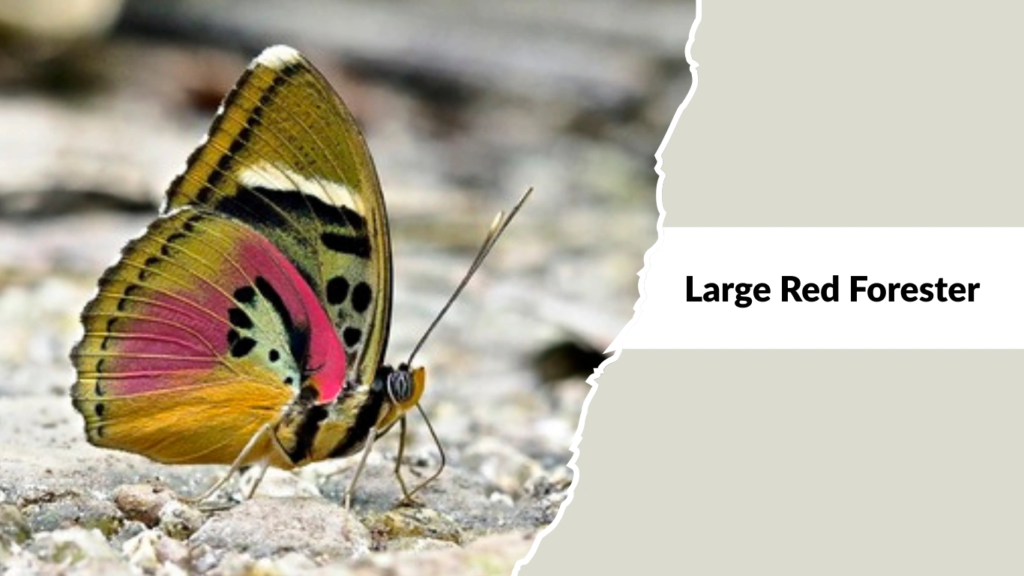
The Large Red Forester (Lethe baladeva) is a woodland butterfly found in the Himalayan regions. Its warm red-brown tones and eye spots give it a distinctive forest-floor appearance.
Identification
- Wings show red-brown shading with visible eye spots
- Underside patterned with bands and eye markings
- Medium-sized with rounded wings
- Wingspan: 2.5–3 inches (6–7.5 cm)
- Slow, bouncing forest-floor flight
Habitat
Common in montane forests, shady valleys, bamboo thickets, and moist woodland paths. Prefers cooler, higher elevations where grasses—its larval food—are abundant.
Color Pattern
The wings display rich reddish-brown hues, brighter on the upper surface. Eye spots on both wings help deter predators. The underside features intricate patterns of reds, browns, and creams, aiding camouflage among leaf litter.
Lifecycle
Females lay eggs on various forest grasses. Caterpillars are green and slender, blending into blades. They pupate in a grass-attached chrysalis. Adults emerge during warmer months and often appear in multiple small broods depending on altitude.
11. Red Commodore Butterfly
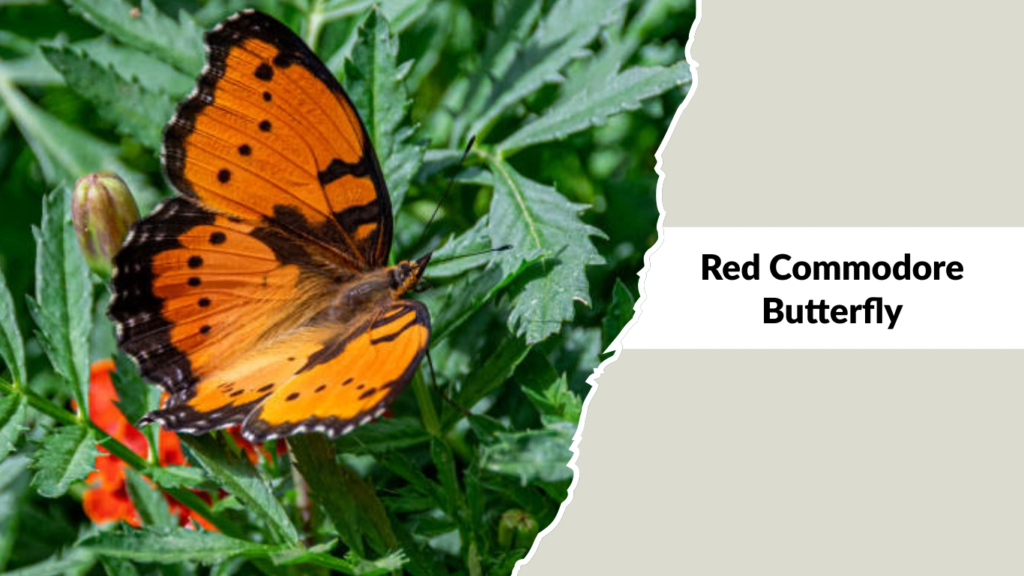
The Red Commodore (Precis octavia sesamus) is a seasonal form of the Commodore butterfly, displaying intense red coloration during the wet season. Native to Africa, it is well known for its bold colors and energetic flight.
Identification
- Wet-season form shows bright red upperwings
- Black borders with bold black markings
- Dry-season form appears brown but still reddish underneath
- Wingspan: 2–2.5 inches (5–6.5 cm)
- Fast, darting flight across open areas
Habitat
Found in savannas, open woodlands, grasslands, and forest edges throughout Sub-Saharan Africa. It prefers sunny spaces for basking and often rests on the ground or rocks where its coloration stands out.
Color Pattern
The wet-season Red Commodore is vibrant, with intense red wings bordered in black. Large black patches and fine markings accent the forewings. Underside colors vary seasonally and serve as camouflage, ranging from reddish to brown.
Lifecycle
Eggs are laid on Acanthaceae family plants. Caterpillars are spiky and dark, feeding heavily before pupation. The chrysalis is rough and angular, often resembling dry plant matter. Adults emerge seasonally; the red form appears with increased humidity.
12. Red Pierrot Butterfly
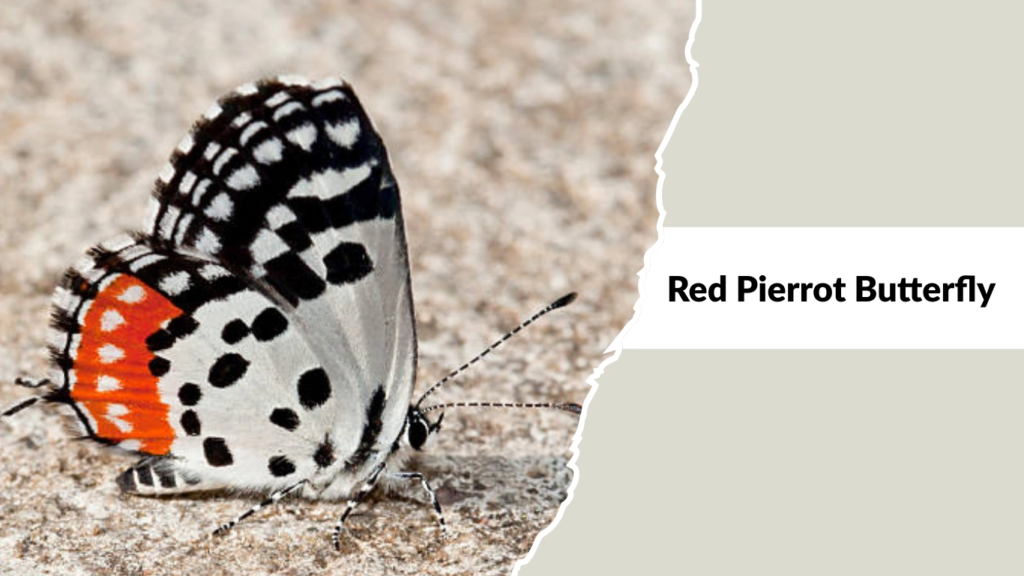
The Red Pierrot (Talicada nyseus) is a small yet striking butterfly found across India and Southeast Asia. Its dramatic red-and-black hindwings make it instantly recognizable even at rest.
Identification
- Forewings white with black edges
- Hindwings black with bright red-orange patch
- Underside patterned with orange, black, and white
- Wingspan: 1–1.25 inches (2.5–3.2 cm)
- Weak fluttering flight near host plants
Habitat
Common in gardens, scrublands, rocky slopes, and dry open areas. It thrives near Kalanchoe plants, its preferred host, and is often found sunning on low vegetation.
Color Pattern
The Red Pierrot features a striking hindwing design: bold red-orange patch against jet-black, contrasted by clean white forewings. When wings are closed, the underside shows fine orange, black, and white patterns.
Lifecycle
Females lay eggs on Kalanchoe succulents, usually on leaf margins. Caterpillars bore into the leaves and feed internally. Pupation occurs inside or near the host plant. Adults emerge quickly and breed year-round in warm climates.
13. Red Banded Hairstreak
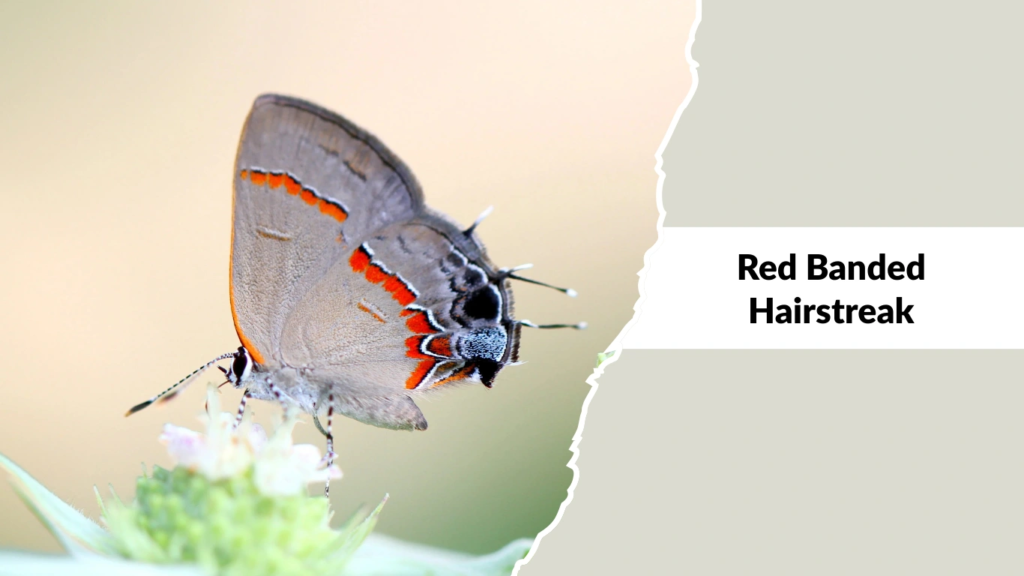
The Red Banded Hairstreak (Calycopis cecrops) is a delicate, small butterfly native to the southeastern United States. Its thin red stripe and tail-like extensions make it a subtle but beautiful species.
Identification
- Gray-brown wings with a thin red-orange band across hindwings
- Small tails resembling antennae for predator distraction
- Underside pale with bright red line
- Wingspan: 0.75–1.25 inches (2–3.2 cm)
- Low, erratic flight close to the ground
Habitat
Common in pinewoods, scrub habitats, coastal plains, gardens, and forest edges. It prefers areas with decaying vegetation, where its host plants—fallen sumac, wax myrtle, and oak detritus—are abundant.
Color Pattern
The defining feature is the red band slashing across the gray wings. Small tails paired with false eye spots mislead predators. The underside shows a sharper, more vivid red-orange line that stands out against pale gray.
Lifecycle
Eggs are laid on fallen leaves rather than living plants. Caterpillars feed on decaying vegetation, giving them a unique ecological role. Pupation occurs in leaf litter, and adults emerge in multiple broods throughout warm months.
14. Red Skipper (Representative Red-patterned Skipper Species)
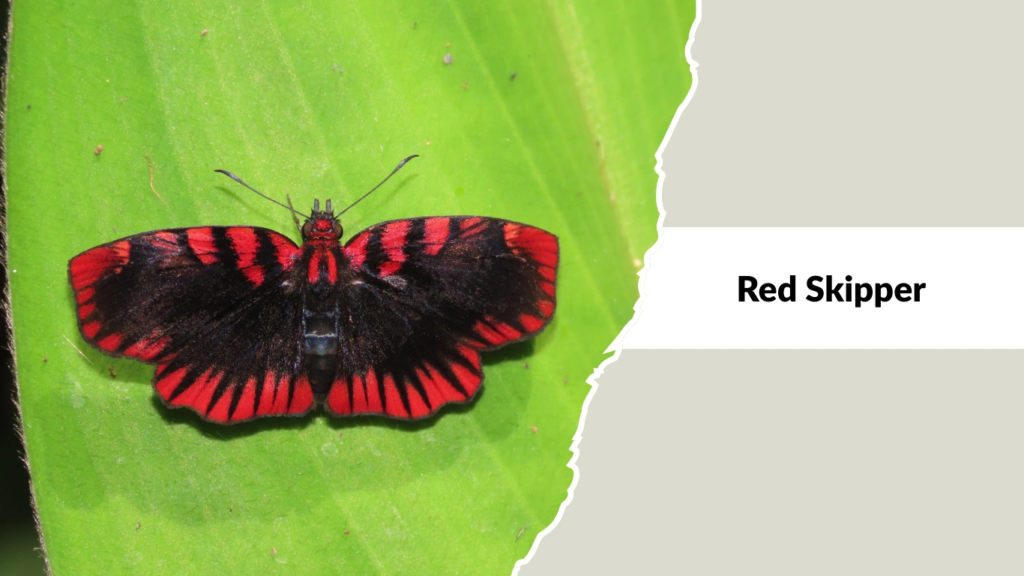
Red-toned skippers appear in several genera, such as Pyrrhopyge and Mimoides-like skippers, known for their dark wings highlighted by red markings. These butterflies are fast fliers and common in Central and South America.
Identification
- Dark brown or black wings with red patches or streaks
- Compact, triangular wings typical of skippers
- Stout body with rapid, darting flight
- Wingspan: 1.5–2 inches (3.8–5 cm)
- Often rest with wings partly open
Habitat
Found in tropical forests, wooded trails, moist lowlands, and mountainous regions. They prefer sunny breaks in forest cover and frequently land on leaves, rocks, or flowers while feeding.
Color Pattern
Red skippers display bright crimson or orange-red spots along the hindwings and sometimes on the forewings. Their dark wing background intensifies the contrast, making the red pattern more prominent during flight flashes.
Lifecycle
Females lay eggs on various grasses and broadleaf plants, depending on species. Caterpillars create shelters by folding leaves with silk. Pupation occurs within these rolled leaves. Adults fly swiftly and produce several generations per year in warm regions.
15. Red Tiger Butterfly
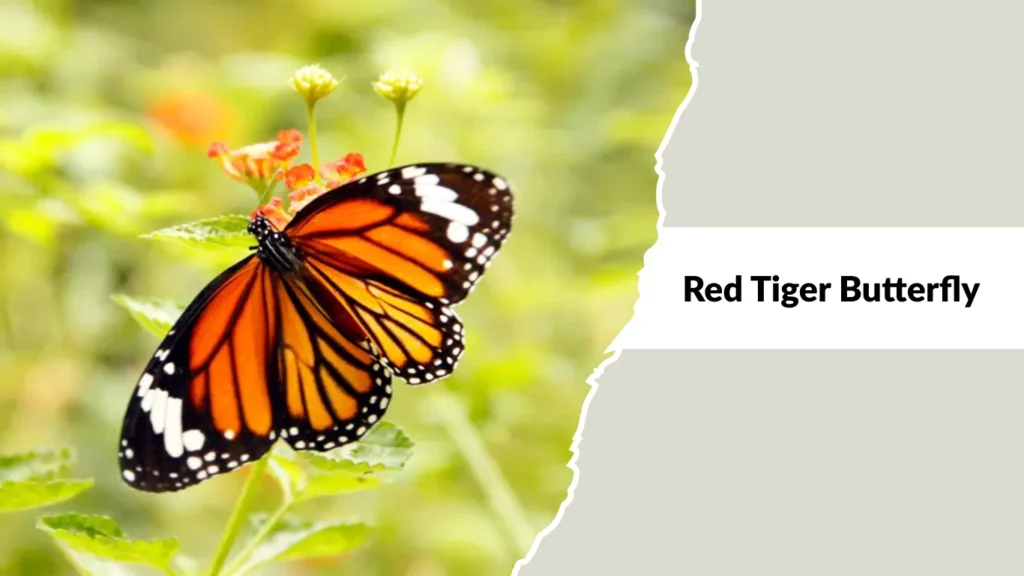
The Red Tiger Butterfly (Danaus genutia dravida, reddish regional form) is a vibrant variant of the common tiger butterfly, displaying deeper red-orange tones than typical individuals. Found throughout South and Southeast Asia, it is admired for its graceful flight and bold patterning.
Identification
- Wings show reddish-orange background with black vein patterns
- White spots decorate the wing margins
- Larger and more elongated than similar species
- Wingspan: 3–3.5 inches (7.5–9 cm)
- Slow, gliding flight typical of milkweed butterflies
Habitat
Common in open fields, gardens, forest edges, wetlands, and roadsides. Prefers sunny areas rich in nectar plants and is frequently seen near milkweed, its primary larval host.
Color Pattern
The defining feature is its richer red-orange coloration, contrasting with deep black veins and white-tipped margins. Under sunlight, the wings may appear almost fiery red, distinguishing it from lighter orange forms.
Lifecycle
Females lay eggs on milkweed (Asclepias species). Caterpillars feed on toxic leaves, absorbing cardenolides that make them distasteful to predators. After the final instar, they pupate in a smooth, jade-green chrysalis with gold accents before emerging as adults.
16. Red Peacock Butterfly (Reddish Form)
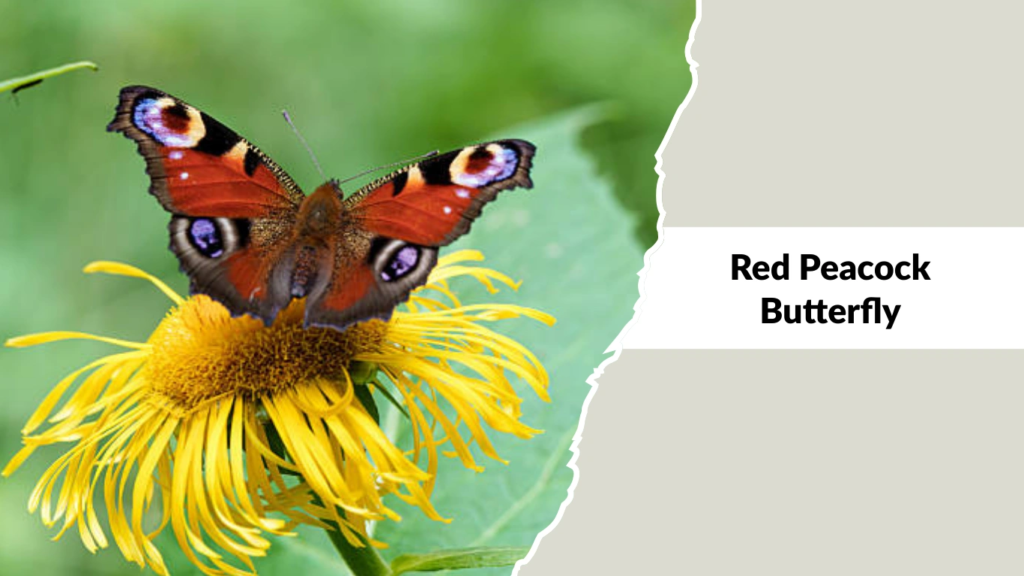
The Red Peacock (Aglais io), known for its dramatic eye spots, sometimes appears in forms where the wings have a richer red hue, especially in warm climates. This butterfly is widespread across Europe and parts of Asia.
Identification
- Deep red to reddish-orange wings with large eye spots
- Forewings and hindwings each feature bold blue-centered eyes
- Underside dark and leaf-like
- Wingspan: 2–2.5 inches (5–6.5 cm)
- Strong flight with frequent basking on warm surfaces
Habitat
Red Peacock butterflies inhabit woodlands, gardens, hedgerows, meadows, and clearings. They prefer sunny but sheltered environments and overwinter as adults in sheds, tree hollows, or wood piles.
Color Pattern
The wings show luxurious red tones, decorated with dramatic eye spots designed to frighten predators. The underside is dark and cryptic, providing excellent camouflage when the butterfly rests with wings closed.
Lifecycle
Females lay clusters of eggs on nettles, the host plant. Caterpillars are black and spiny with fine white spots. Pupation occurs in a brown or green chrysalis suspended from stems. Adults emerge vivid and strong-flying, often producing one generation per year.
17. Red Tip / Painted Lady (Reddish Morph)
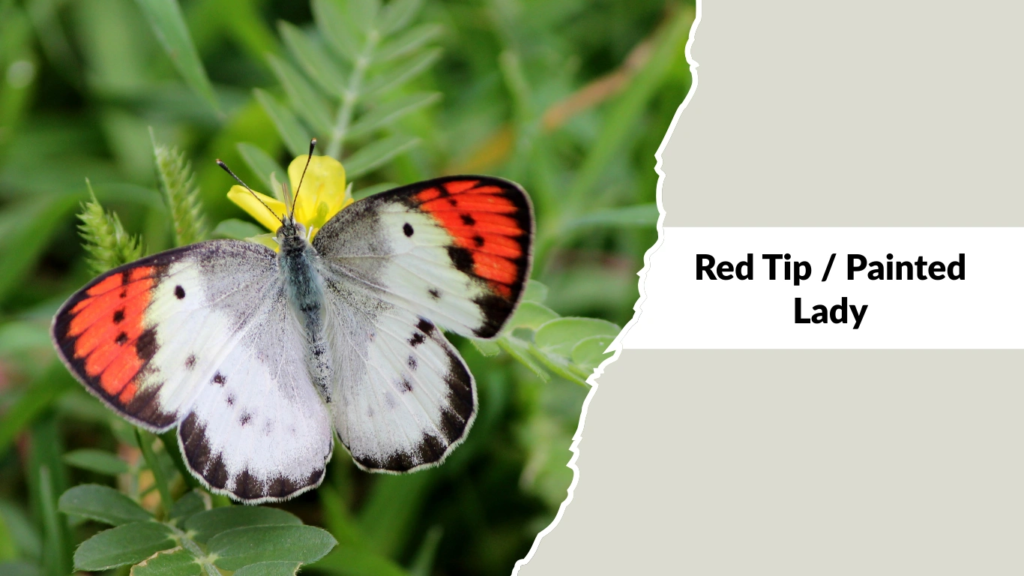
The Painted Lady (Vanessa cardui) sometimes appears in darker, more red-toned morphs, especially in warm or arid regions. This butterfly is one of the most widespread species on Earth, known for its long migrations and adaptive coloration.
Identification
- Forewings show reddish-orange patches with black tips
- Hindwings patterned with black spots
- Underside cryptic with browns and creams
- Wingspan: 2–2.9 inches (5–7.5 cm)
- Fast, directional flight with strong migratory ability
Habitat
Occurs in meadows, gardens, deserts, grasslands, forest openings, and urban parks. It thrives in nearly every climate except extreme cold and is often seen during migration seasons when populations surge.
Color Pattern
Red-toned morphs display deeper red-orange wing panels, especially near the forewing centers. Black and white patterning frames the red regions. The underside resembles dried leaves, offering excellent camouflage when resting.
Lifecycle
Females lay eggs on a wide range of host plants, especially thistles and mallows. Caterpillars build silk shelters and feed until ready to pupate in a loosely hanging chrysalis. Adults emerge and join long-range migrations, sometimes traveling thousands of miles.
18. Crimson Rose Butterfly
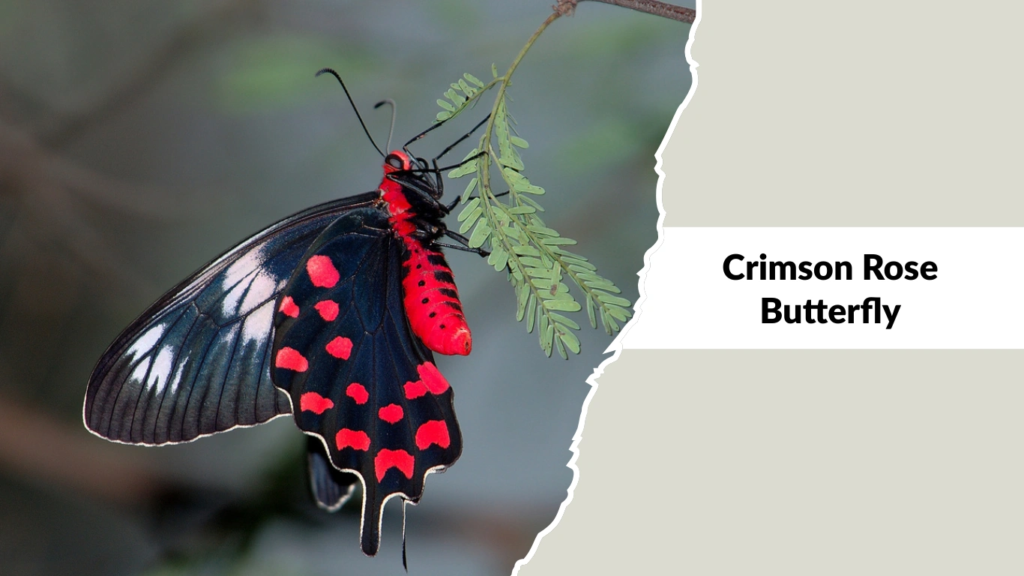
The Crimson Rose (Pachliopta hector) is a striking swallowtail found across India and Sri Lanka. Known for its toxic defense and vivid red markings, it glides gracefully through gardens and coastal areas.
Identification
- Black wings with bright red spots
- Body is crimson red with black stripes
- Elongated forewings and long tails
- Wingspan: 3.5–4 inches (9–10 cm)
- Slow, floating flight with wide glides
Habitat
Common in coastal plains, gardens, forest edges, open fields, and mangroves. Attracted to lantana, hibiscus, and other nectar sources. Often flies high and wide over sunny areas, making it easy to spot.
Color Pattern
The wings are primarily velvety black, highlighted by bright crimson-red spots arranged along the hindwings. The red body adds a dramatic element, making the butterfly unmistakably eye-catching.
Lifecycle
Eggs are laid on Aristolochia vines, which contain poisonous compounds. Caterpillars absorb these toxins, becoming distasteful to predators. Pupation occurs in a leaf-attached, rough-textured chrysalis. Adults emerge already toxic and long-lived, often participating in group migrations.
19. Scarlet Tiger Moth (Often Mistaken for Butterfly)
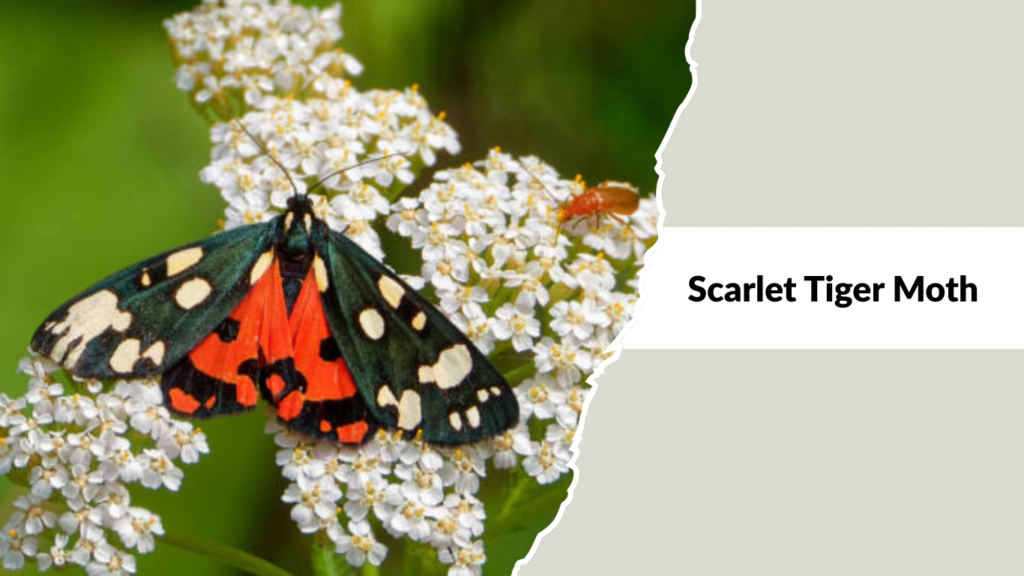
Although technically a moth, the Scarlet Tiger (Callimorpha dominula) is frequently mistaken for a butterfly due to its bright coloration and daytime activity. Its bold red hindwings make it relevant among red-patterned Lepidoptera.
Identification
- Forewings black with white or cream spots
- Hindwings bright red or orange-red with black markings
- Antennae slender, unlike typical moths
- Wingspan: 1.8–2.2 inches (4.5–5.5 cm)
- Active during the day, resembling butterfly behavior
Habitat
Found in wet meadows, riverbanks, marshes, gardens, and woodland edges across Europe. Prefers areas with lush vegetation and moisture, especially near streams.
Color Pattern
The most striking feature is the scarlet-red hindwings, revealed during flight. When resting, the black-and-white forewings provide camouflage. The contrast between hidden red and exposed red creates a sudden flash effect that startles predators.
Lifecycle
Eggs are laid on comfrey, nettles, and other soft plants. Caterpillars are black with yellow stripes and feed until spring. Pupation occurs in loose cocoons among ground debris. Adults emerge in early summer and fly during daylight hours.
20. Red Satyr Butterfly
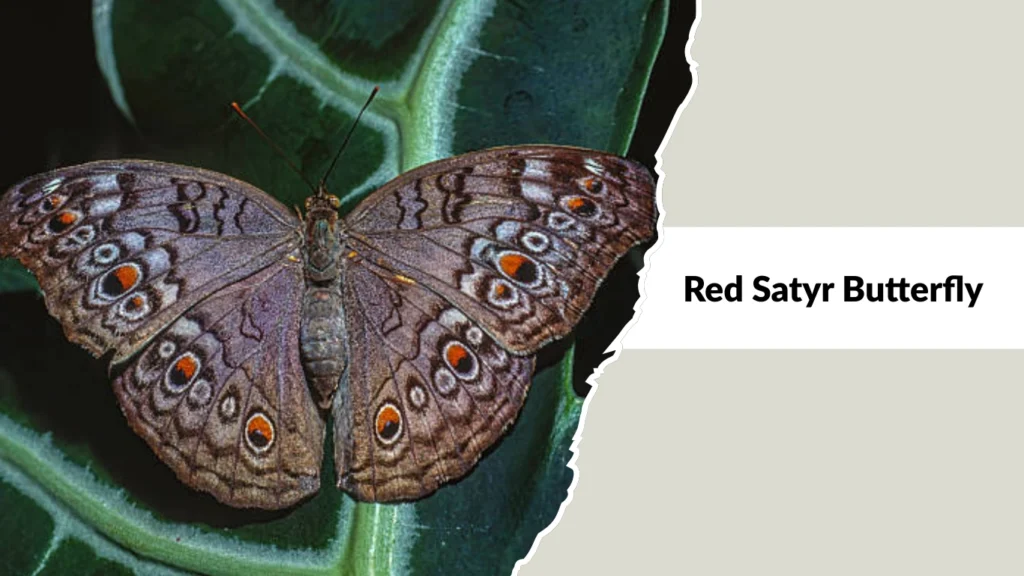
The Red Satyr (Yphthima species, red-flushed forms) is a forest-floor butterfly found in parts of South Asia. Its gentle reddish tones and eye spots help it blend into leaf litter environments.
Identification
- Wings show reddish-brown wash
- Prominent eye spots on hindwings
- Underside highly patterned with red and brown bands
- Wingspan: 1.5–2 inches (4–5 cm)
- Low, bouncing flight near the ground
Habitat
Inhabits forest floors, bamboo thickets, shaded trails, and moist valleys. Prefers cool, dim environments and often rests on fallen leaves.
Color Pattern
The wings carry a subtle red flush, especially on the upper hindwings. Eye spots stand out in dark circles, serving as defense mechanisms. The underside has intricate reddish and earthy patterns that mimic forest litter.
Lifecycle
Eggs are laid on forest grasses. Caterpillars are camouflaged green and feed quietly among understory vegetation. Pupation occurs in a delicate, leaf-attached chrysalis. Adults emerge during warmer months and may appear in multiple broods depending on habitat conditions.
21. Red Spot Jezebel
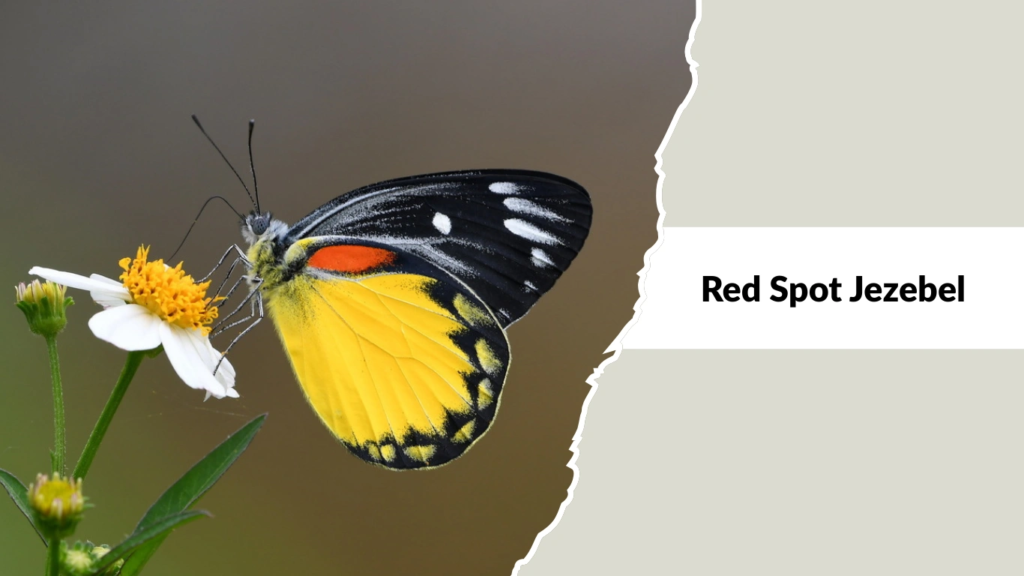
The Red Spot Jezebel (Delias descombesi) is a striking butterfly from Southeast Asia, known for its bold red spot contrasting with black and white wings. It often flies high in forest canopies but comes lower to feed on flowering plants.
Identification
- Forewings black with white bands
- Hindwings white with a large red patch
- Underside shows stronger contrast with yellow and red accents
- Wingspan: 2.2–2.8 inches (5.5–7 cm)
- Slow, fluttery flight with frequent gliding
Habitat
Found in mountain forests, foothills, forest edges, and highland villages of Southeast Asia. Prefers cooler elevations and is often seen near flowering shrubs and high forest trails.
Color Pattern
The hindwing’s brilliant red spot is the defining trait, framed by white and black. The underside includes yellow, red, black, and white patches, forming a vivid mosaic. This bold coloration acts as a warning to predators.
Lifecycle
Females lay eggs on mistletoe (Loranthus and related plants). Caterpillars feed on host leaves and form smooth, pale chrysalides attached to twigs. Adults emerge with strong colors and frequently appear in seasonal broods.
22. Red Glider (Cymothoe egesta)
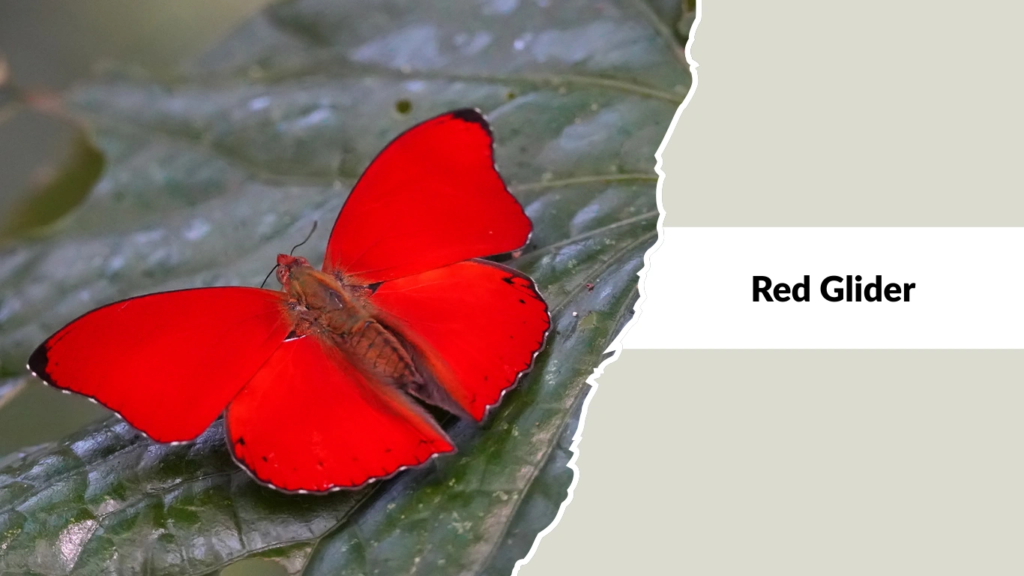
The Red Glider (Cymothoe egesta) is a beautiful African forest butterfly known for its warm reddish-orange wings and graceful flight. It is closely related to the Blood-red Glider but features lighter, more orange-toned coloration.
Identification
- Upperwings orange-red with darker borders
- Underside patterned with warm browns and reds
- Males brighter; females duller with additional markings
- Wingspan: 2.5–3 inches (6–7.5 cm)
- Smooth, gliding flight through forest understory
Habitat
Inhabits tropical African rainforests, forest edges, shady paths, and moist lowlands. It prefers dense, humid environments and is frequently seen near streams or sunlit breaks in the canopy.
Color Pattern
The wings are soft red-orange, transitioning to darker brown or black around the edges. The underside features marbled reddish-brown patterns that help the butterfly blend into the forest environment when resting.
Lifecycle
Eggs are laid on host plants from the Flacourtiaceae family, especially young leaves. Caterpillars are green with small projections and feed carefully along leaf edges. Pupation occurs in a green or brown chrysalis on stems or leaves. Adults emerge and glide elegantly through the understory.
23. Red-striped Cattleheart
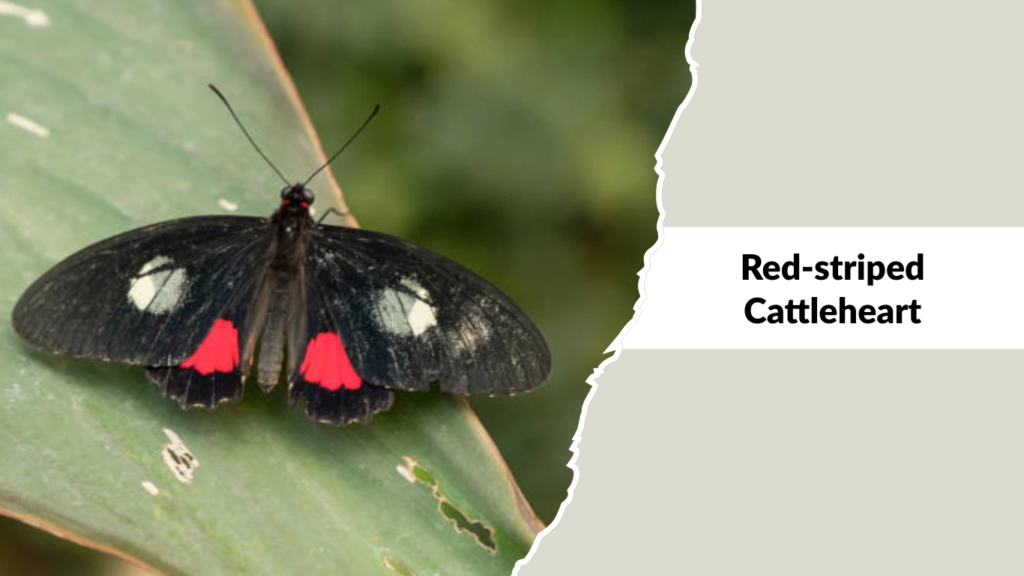
The Red-striped Cattleheart (Parides photinus) is a bold swallowtail native to Central and South America. Its black wings decorated with red stripes make it a classic example of aposematic (warning) coloration in butterflies.
Identification
- Black forewings with a red diagonal stripe
- Hindwings with red spots near the inner edge
- Body dark with slight red accents
- Wingspan: 3–4 inches (7.5–10 cm)
- Strong, gliding flight common among swallowtails
Habitat
Found in tropical rainforests, riverbanks, cloud forests, and humid lowland areas. Often seen visiting flowering plants along sunny forest trails and edges.
Color Pattern
The butterfly’s red elements appear as a clear stripe on the forewings and multiple crimson spots on the hindwings. This creates a powerful contrast against the velvety black background, warning predators of its toxicity.
Lifecycle
Eggs are laid on Aristolochia vines, which supply chemical defenses. Caterpillars absorb toxins and develop bold markings. Pupation occurs in a curved, brown or green chrysalis. Adults emerge long-lived and reproduce across extended seasons.
24. Mexican Redring
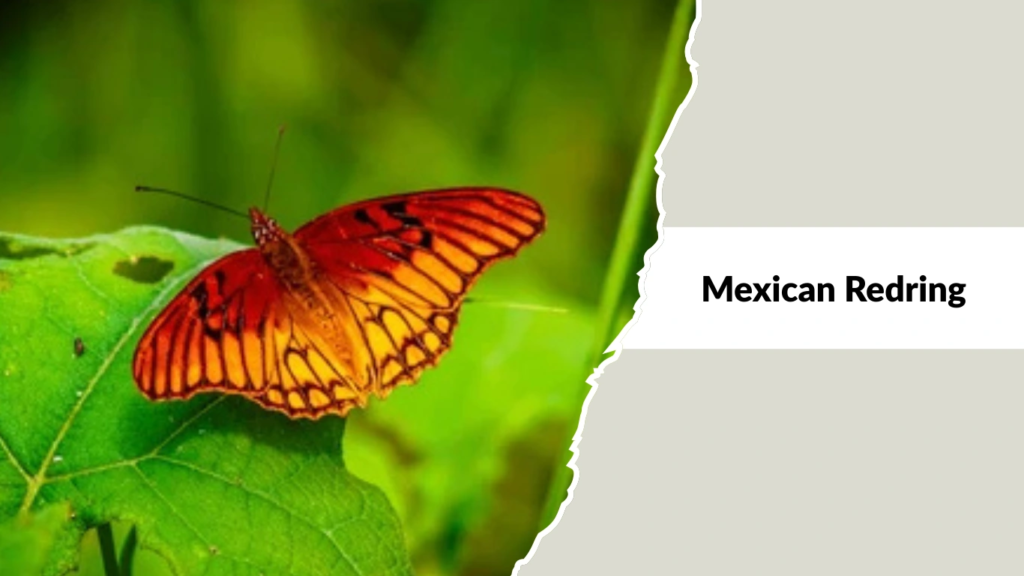
The Mexican Redring (Pyrrhogyra crameri) is a distinctive Neotropical butterfly named for the bright red ring that circles the hindwing. It is commonly seen throughout Central America in forested regions.
Identification
- Upperwings mostly dark brown to black
- Hindwings marked with a bright red ring
- Underside shows red and cream circular patterns
- Wingspan: 2.5–3 inches (6–7.5 cm)
- Slow, fluttery flight among understory shrubs
Habitat
Lives in tropical forests, wooded river valleys, shaded trails, and mid-elevation mountain forests. Often seen perching quietly on foliage or feeding on fermenting fruit.
Color Pattern
The signature feature is the vivid crimson ring encircling the hindwing. The underside amplifies this with multiple cream, brown, and red circular bands, creating a striking ornamental look.
Lifecycle
Eggs are laid singly on specific forest host plants. Caterpillars typically have cryptic colors that blend into leaves. Pupation occurs in a smooth green or brown chrysalis. Adults emerge with fresh red rings and live several weeks.
25. Red Glider (Alternate Species – Cymothoe egesta Group Variants)
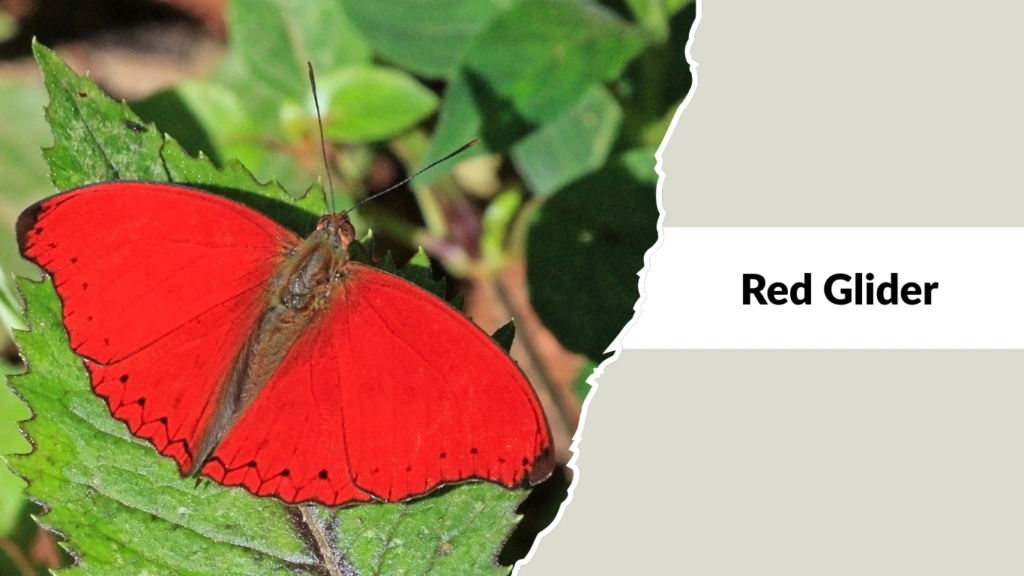
A related member of the Cymothoe glider group, this alternate red form is known for its warm red-orange tones. These variants appear throughout West and Central Africa, often differing subtly by region.
Identification
- Wings reddish-orange with darker margins
- Underside marbled with earthy red and brown patterns
- Females often show more markings than males
- Wingspan: 2.5–3 inches (6–7.5 cm)
- Gentle, gliding flight low through forests
Habitat
Common in humid forests, understory pathways, clearings, and riparian zones. Prefers moist shade and often flies close to the ground.
Color Pattern
Features a soft red glow on the wings, edged by darker borders. Underside patterns mimic dead leaves, allowing effective camouflage while resting.
Lifecycle
Eggs are placed on Sapindales or Flacourtiaceae host plants, depending on local species. Caterpillars feed on young leaves and later pupate in a leaf-attached chrysalis. Adults emerge bright and glide smoothly through forest habitats.
