

Sawfly larvae are common garden pests that closely resemble caterpillars but actually belong to the wasp family, Symphyta. These small, worm-like insects feed voraciously on plant leaves and can quickly strip shrubs and trees bare. Found on roses, pines, and many other plants, sawfly larvae infestations can cause severe defoliation if left untreated. Understanding their identification, behavior, and control methods is essential for maintaining healthy gardens and landscapes.
What Are Sawfly Larvae?

Characteristics and Appearance
Sawfly larvae are soft-bodied insects that look like caterpillars but are quite different biologically. They usually measure between 1–2 centimeters long, with smooth bodies that can be green, yellow, white, or black. Some species, like the redheaded pine sawfly, feature distinctive red or orange heads. Unlike caterpillars, sawfly larvae possess six or more pairs of prolegs, which helps in distinguishing them. They move in a looping motion and often feed in large groups, skeletonizing leaves rapidly.
Sawfly Larvae vs. Caterpillars
Although they appear similar, there are several key differences:
| Feature | Sawfly Larvae | Caterpillar |
| Legs | 6+ pairs of prolegs | Max 5 pairs |
| Movement | Smooth, no “inchworm” arch | Arches body while crawling |
| Family | Wasp (Symphyta) | Moth/Butterfly (Lepidoptera) |
| Diet | Chews leaves in clusters | Feeds individually |
| Bt Effectiveness | Ineffective | Effective |
Correct identification is important because common caterpillar insecticides, like Bt (Bacillus thuringiensis), do not kill sawfly larvae.
Common Sawfly Larvae Species

Rose Sawfly Larvae
Rose sawfly larvae, often called rose slugs, are among the most destructive to ornamental plants. They are small, green, and translucent, usually feeding on the undersides of rose leaves. They skeletonize the leaves, leaving only a thin, papery layer. Heavily infested rose bushes may lose all their foliage. Control methods include handpicking, neem oil, and insecticidal soaps. Rose slug sawfly and curled rose sawfly species are particularly common in spring and early summer.
Pine Sawfly Larvae
Pine sawfly larvae, including redheaded pine sawfly and European pine sawfly, target pine and spruce trees. These larvae have yellow-green bodies with black spots and red or dark heads. They feed in large colonies on old pine needles, causing thinning and dieback. Effective control includes pruning infested branches, manual removal, and early-season spraying with horticultural oil or insecticidal soap. Severe infestations may require selective insecticides labeled for sawflies.
Other Notable Species
Sawfly larvae infest a wide range of plants:
- Elm sawfly larvae: Large, gray-green larvae that can defoliate elm trees.
- Birch and alder sawfly larvae: Cause skeletonized leaves on birch and alder.
- Hibiscus sawfly larvae: Chew holes in hibiscus leaves, giving them a lace-like appearance.
- Dogwood and columbine sawfly larvae: Common in ornamentals and perennials.
- Gooseberry, pear, and apple sawfly larvae: Damage fruiting plants, affecting yield.
- Spitfire sawfly larvae (Australia): Bright yellow larvae that exude a defensive fluid resembling spit.
Each species prefers specific host plants, making identification key for applying the correct control measures.
Life Cycle and Behavior
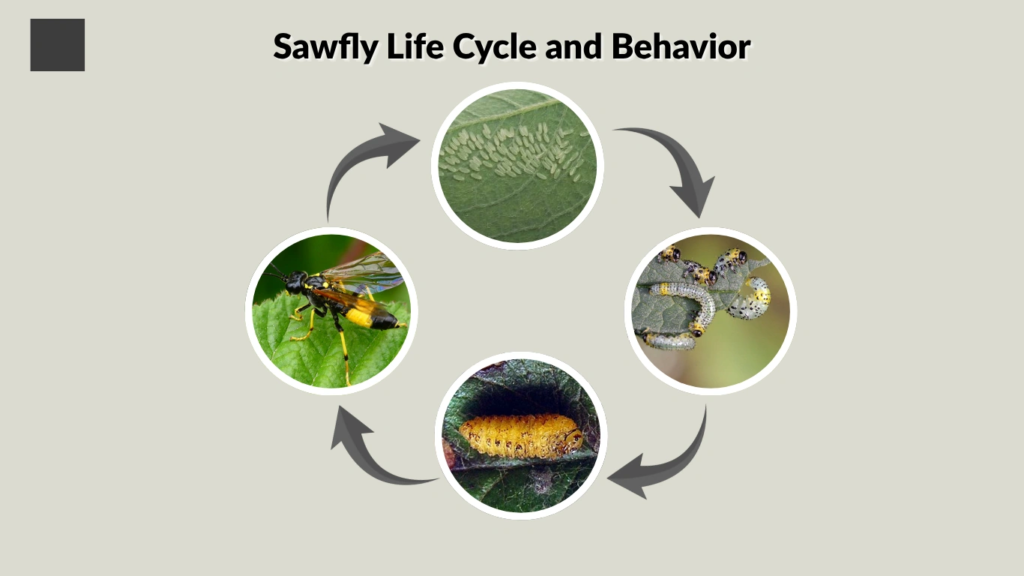
Egg and Larval Stages
Female sawflies use a saw-like ovipositor to insert eggs into plant tissues, typically along leaf edges. After a few days, larvae emerge and begin feeding immediately. The larval stage lasts two to four weeks, depending on the species and weather conditions. Once mature, they drop to the soil to pupate. Some species produce several generations per year, while others overwinter in cocoons as pupae.
Seasonal Activity
Sawfly larvae are most active from late spring through early summer. Rose and hibiscus sawflies emerge in May and June, while pine sawflies often appear slightly earlier. The signs of infestation include chewed leaves, thinning foliage, and visible clusters of larvae on stems or leaf undersides. Early detection allows for simpler and more natural control measures.
Sawfly Larvae Damage
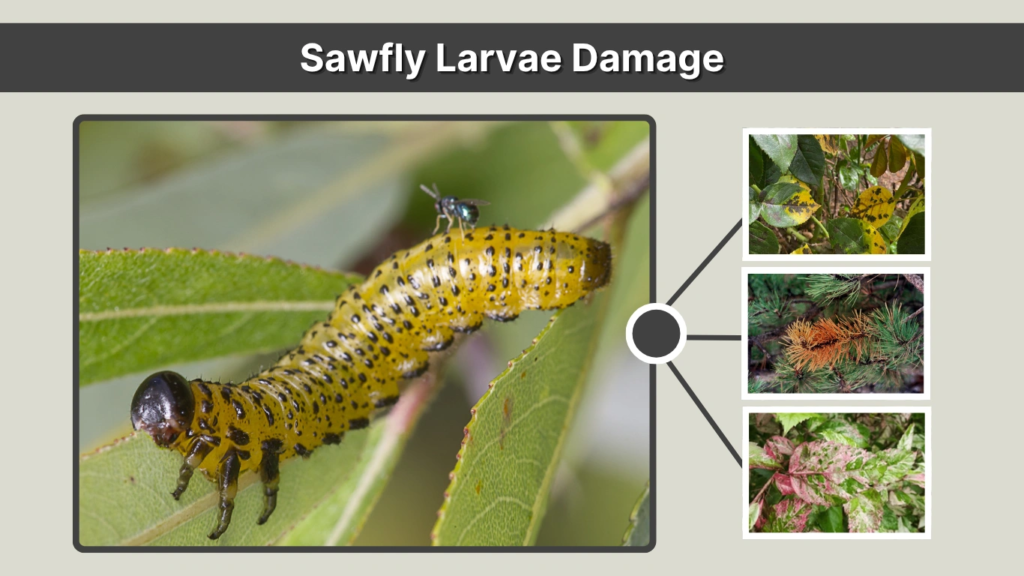
Types of Damage
Sawfly larvae feed on leaves, leaving behind transparent or skeletonized patches. In severe infestations, they consume entire leaves, resulting in complete defoliation. Continuous damage over multiple seasons weakens plants, reducing photosynthesis and making them susceptible to diseases and secondary pests.
Sawfly Damage on Specific Plants
- Roses: Skeletonized leaves that turn brown and drop prematurely.
- Pines: Thinning needle clusters and stunted growth.
- Birch and alder: Leaves stripped along the veins.
- Hibiscus and columbine: Fine lacing patterns on foliage.
Photographs or field identification guides can help differentiate sawfly damage from that caused by caterpillars or beetles.
How to Get Rid of Sawfly Larvae
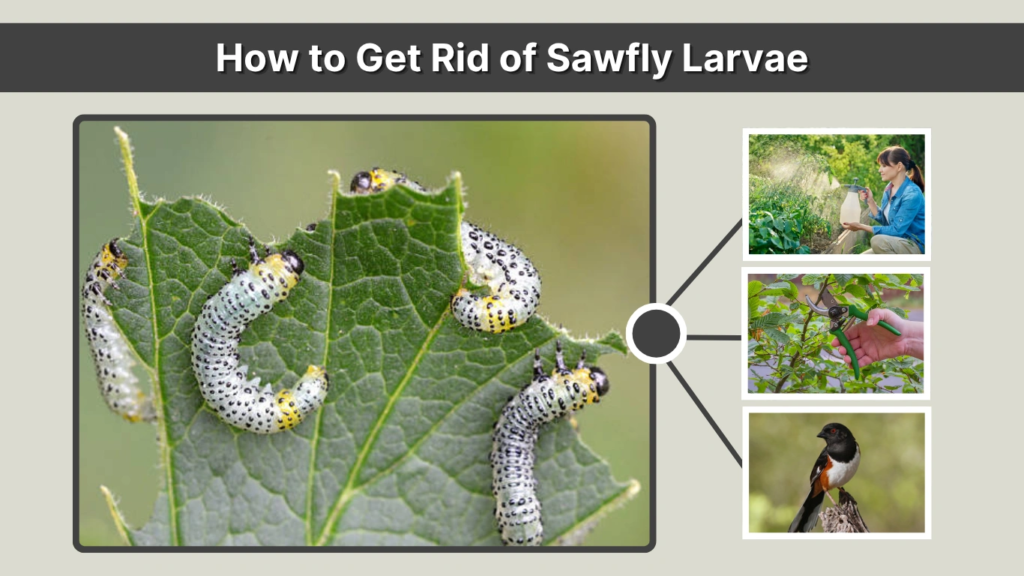
Manual and Physical Control
The simplest and most eco-friendly method is handpicking larvae from affected plants and disposing of them in soapy water. For trees or larger shrubs, a strong jet of water from a hose can dislodge larvae effectively. Prune and destroy infested leaves to reduce population numbers. Attracting natural predators such as birds and ladybugs can also provide long-term population control.
Natural Remedies and Organic Treatments
For gardeners seeking eco-friendly solutions, several natural remedies can effectively manage sawfly infestations. Neem oil is one of the most reliable organic controls—it works by disrupting the larvae’s feeding and growth cycle. Spray directly on affected foliage during early morning or evening hours to avoid harming beneficial insects.
Insecticidal soap is another safe option for roses, hibiscus, and other ornamentals. When applied thoroughly to leaf undersides, it suffocates soft-bodied larvae. Diatomaceous earth, a natural abrasive powder, can also be dusted on leaves to deter sawflies from feeding. Regular reapplication after rain ensures continuous protection.
It’s important to note that Bacillus thuringiensis (Bt), a biological pesticide commonly used against caterpillars, does not affect sawfly larvae because they belong to a different order. Choosing the right treatment based on accurate identification is essential for success.
Chemical Control and Insecticides
When natural methods fail or infestations are severe, chemical control may be necessary. Choose insecticides labeled specifically for sawflies—these often include pyrethroids, spinosad, or carbaryl-based formulations. Always read and follow label instructions carefully to prevent harm to pollinators and beneficial insects.
For best results, apply insecticides when larvae are small and actively feeding. Target the leaf undersides and surrounding soil where pupation may occur. Avoid broad-spectrum insecticides unless absolutely necessary, as these can disrupt the garden’s ecological balance.
Systemic insecticides can also be used for trees and shrubs like pines, elms, or birches, where direct spraying is difficult. These are absorbed by the plant and kill larvae as they feed on treated foliage. Use sparingly and according to product guidance.
Preventing Future Infestations
Regular Monitoring and Maintenance
Preventing sawfly larvae begins with regular plant inspection. Check the undersides of leaves weekly, especially during spring and early summer. Look for eggs—small, blister-like dots on leaf edges—and remove them promptly. Early intervention stops larvae before they multiply.
Keep your garden tidy by removing fallen leaves and debris where larvae may overwinter. Dispose of pruned materials immediately instead of composting them, as pupae can survive winter in soil or plant waste.
Garden Hygiene and Companion Planting
Practicing good garden hygiene reduces the chance of recurring infestations. Cultivate healthy soil, water appropriately, and prune plants to improve airflow—strong plants are naturally more pest-resistant.
Encourage beneficial insects like ladybugs, lacewings, and parasitic wasps, which prey on sawfly eggs and larvae. Planting companion flowers such as dill, yarrow, and marigold attracts these natural defenders. In large gardens or tree plantations, consider rotating plant species or introducing predator-friendly habitats like birdhouses and native shrubs.
Regularly applying light neem sprays as a preventive measure during growing seasons can also keep potential infestations at bay.
FAQs
What do sawfly larvae look like?
Sawfly larvae look similar to caterpillars but have six or more pairs of prolegs. Their smooth bodies may be green, white, black, or yellow, depending on species. They often appear in clusters on leaf undersides, feeding in groups and leaving behind skeletonized foliage.
Are sawfly larvae dangerous?
Sawfly larvae are harmless to humans and pets. They don’t bite or sting but can severely damage plants if uncontrolled. Heavy infestations can strip entire shrubs or trees, reducing growth and flowering. The danger lies only in their destructive feeding habits.
Does neem oil kill sawfly larvae?
Yes. Neem oil works effectively by disrupting larvae’s hormonal balance, halting feeding and reproduction. Spray directly on infested leaves every few days until the population declines. It’s safe for most ornamental plants and poses minimal risk to pollinators when used properly.
What kills sawfly larvae naturally?
Predators such as birds, parasitic wasps, and ladybugs naturally control sawfly populations. You can also use insecticidal soap, neem oil, or diatomaceous earth for organic control. Regular monitoring and handpicking remain the most sustainable natural defenses.
How to get rid of sawfly larvae on roses?
To eliminate sawfly larvae on roses, remove affected leaves and manually collect visible larvae. Apply neem oil or insecticidal soap directly to leaf undersides once or twice weekly. Maintain clean soil and encourage predatory insects for long-term prevention.
