

The red wasp is one of the most striking and easily recognizable wasps in North America. Known for its bold reddish-brown color and slender body, this insect often sparks fear due to its painful sting. However, red wasps play a crucial role in the ecosystem by controlling pest populations and pollinating plants. Understanding their behavior, nesting habits, and how to respond safely to encounters helps reduce conflict between humans and these fascinating insects.
Understanding the Red Wasp
What Is a Red Wasp?
The red wasp belongs to the Polistes genus — a group of paper wasps known for constructing open, umbrella-shaped nests. The two most common species in North America are the Carolina Red Wasp (Polistes carolina) and the Mahogany Wasp (Polistes rubiginosus).
These wasps are social insects that live in small colonies. While they are capable of delivering painful stings, they are not typically aggressive unless they feel their nest is threatened. Their reddish coloration and graceful flight distinguish them from more aggressive species like hornets and yellow jackets.
Scientific Classification
- Kingdom: Animalia
- Phylum: Arthropoda
- Class: Insecta
- Order: Hymenoptera
- Family: Vespidae
- Genus: Polistes
- Common Species: P. carolina, P. rubiginosus, P. perplexus
These wasps are part of a large family that includes hornets, yellow jackets, and other paper wasps — all known for their intricate nests and social organization.
Identification and Appearance

Physical Characteristics
The red wasp’s appearance sets it apart from most other stinging insects. Its reddish-brown to dark mahogany body gives it a glossy finish, often with darker black accents on the abdomen or wings. Adults typically measure between 1 to 1.5 inches long, with females being slightly larger and equipped with a stinger.
Key identification features:
- Color: Reddish-brown or dark red, sometimes with black-tinted wings
- Body Shape: Slender waist, elongated legs
- Flight: Slow and graceful with legs dangling below
- Size: Larger than most paper wasps but smaller than hornets
These physical traits make them easy to distinguish from the smaller, rounder yellow jackets and the thicker-bodied hornets.
Red Wasp vs Other Wasps

| Feature | Red Wasp | Yellow Jacket | Hornet |
| Color | Reddish-brown | Bright yellow and black | Black and white or brown |
| Body Type | Long and slender | Short and stocky | Thick and round |
| Nest Type | Open, umbrella-like | Enclosed, underground | Enclosed, papery ball |
| Aggression Level | Moderate | High | High |
| Habitat | Above ground, in open structures | Underground or wall cavities | Trees or high eaves |
Red vs Yellow: Red wasps are calmer and build visible nests, while yellow jackets are more aggressive and nest in hidden places.
Red vs Hornet: Hornets are bulkier and produce larger colonies, while red wasps maintain smaller, open nests.
Distribution and Habitat

Where Are Red Wasps Found?
Red wasps are most common in the southern United States, thriving in warm, humid environments. They are frequently seen in:
- Texas
- Alabama
- Georgia
- Florida
- Tennessee
- Oklahoma
- Missouri
These regions provide ideal nesting conditions — mild winters, abundant vegetation, and sheltered areas for building nests. Red wasps are also found throughout Central America and occasionally in the Caribbean.
Typical Nesting Locations
Red wasps prefer quiet, undisturbed spaces to build their nests. Common nesting sites include:
- Roof eaves, porch ceilings, and decks
- Barns, sheds, and garages
- Tree branches and shrub canopies
- Fences and window frames
- Occasionally attics and wall corners
The queen starts constructing a nest in early spring using chewed wood fibers mixed with saliva, forming thin paper-like layers. As the colony grows, worker wasps expand the structure and maintain it throughout the summer.
Life Cycle and Nesting Behavior
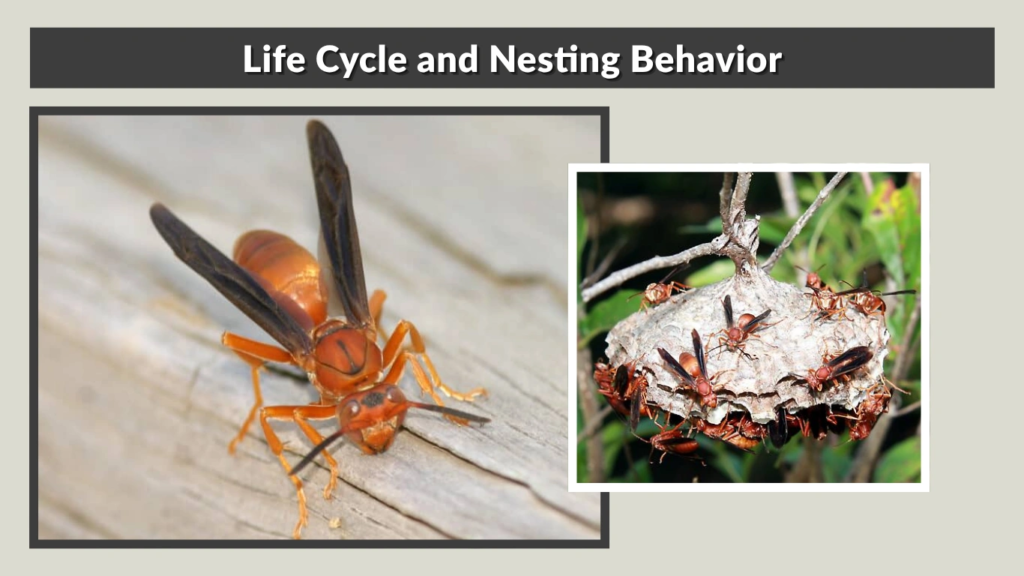
How Red Wasps Build Their Nests
The nest-building process begins when the overwintered queen emerges in spring. She selects a secure location and begins constructing a small stalk that anchors the nest. From there, she adds hexagonal cells, each serving as a chamber for her eggs. As larvae hatch, they are fed and cared for by the queen until the first workers emerge.
Once worker wasps mature, they take over foraging, construction, and defense duties, allowing the queen to focus solely on reproduction. The nest grows throughout the summer and can reach the size of a grapefruit by late season.
Life Cycle Stages
- Spring: The queen builds the nest and lays her first eggs.
- Early Summer: Workers emerge to assist in feeding larvae and expanding the nest.
- Late Summer: New reproductive males and queens are produced.
- Autumn: The colony declines as temperatures drop.
- Winter: Only fertilized queens survive by hibernating in sheltered places.
Each year, the process begins anew, with the previous year’s nests usually abandoned and not reused.
Diet and Ecological Role

What Do Red Wasps Eat?
Red wasps are omnivorous and play a valuable ecological role.
- Adults: Feed on nectar, tree sap, and sweet fruit juices.
- Larvae: Fed chewed-up insects, especially caterpillars and flies.
This diet makes red wasps natural pest controllers, helping farmers and gardeners reduce crop-damaging insects.
Predators and Threats
While red wasps are skilled defenders, they have natural enemies such as:
- Birds (like sparrows and flycatchers)
- Frogs and lizards
- Spiders that trap them in webs
- Praying mantises that ambush them near flowers
They are also vulnerable to cold weather and human pest control sprays.
Behavior and Temperament
Are Red Wasps Aggressive?
Despite their intimidating color and size, red wasps are not overly aggressive. They prefer to be left alone and usually sting only when provoked or when someone disturbs their nest. Their colonies are smaller, which limits the number of defenders compared to hornets or yellow jackets.
Defensive Behavior
Red wasps use pheromones to communicate threats. If one wasp is harmed, it releases a scent that triggers others to attack. They can sting multiple times and will pursue threats for a short distance before retreating to the nest.
Females are the primary defenders — males do not have stingers.
Red Wasp Sting and Treatment

Symptoms of a Red Wasp Sting
A red wasp sting is painful and immediate. The venom contains toxins that trigger burning pain, redness, and swelling around the sting site. Most people experience localized discomfort that lasts for a few hours, but sensitive individuals can react more severely.
Typical symptoms include:
- Sharp, burning pain at the sting site
- Redness and mild swelling
- Itching or warmth around the affected area
- Small raised welt or puncture mark
For people with insect sting allergies, reactions can escalate quickly to anaphylaxis, a life-threatening emergency. Symptoms include difficulty breathing, throat swelling, hives, dizziness, or rapid heartbeat.
First Aid and Home Remedies
Treating a red wasp sting promptly helps relieve pain and reduce inflammation. Follow these simple steps:
- Clean the area with soap and water to remove venom residue.
- Apply ice or a cold compress for 10–15 minutes to ease swelling.
- Use over-the-counter creams like hydrocortisone or antihistamines to reduce itching.
- Take a pain reliever such as ibuprofen if needed.
- Avoid scratching, as it can cause infection.
If swelling spreads beyond the sting site or you develop allergic symptoms, seek medical attention immediately. Doctors may administer epinephrine or steroids in severe reactions.
When to Seek Medical Help
You should contact a doctor or emergency services if you experience:
- Difficulty breathing or swallowing
- Swelling of the face, lips, or throat
- Nausea or vomiting
- Rapid heartbeat or dizziness
- Multiple stings from several wasps
People with known allergies should always carry an epinephrine auto-injector (EpiPen) when outdoors during wasp season.
Pain Level and Duration
On the Schmidt Pain Index, which ranks insect stings from 1 to 4, the red wasp sting scores around 2.0. The pain is described as sharp and burning, but it subsides within 30–60 minutes. Swelling and redness can linger for up to 24 hours, depending on sensitivity.
Prevention and Nest Management
How to Get Rid of Red Wasps
If red wasps have built a nest near your home, removal should be done with caution. Here’s how to handle it safely:
- Time it right: Remove nests at night when wasps are inactive.
- Wear protective clothing: Cover all skin with thick clothing and gloves.
- Use wasp spray: Apply directly to the nest from a safe distance (10–15 feet).
- Wait before disposal: Allow 24 hours to ensure the colony is inactive.
- Dispose carefully: Knock down the nest with a long pole and seal it in a plastic bag.
If the nest is large or difficult to reach, call a pest control professional. They have protective suits and special insecticides designed for wasp removal.
Preventing Red Wasps from Returning
Once a nest is gone, it’s important to discourage new colonies from forming. Preventive steps include:
- Sealing cracks, gaps, and entry points around windows, roofs, and attics.
- Removing old, abandoned nests in winter.
- Keeping trash cans tightly sealed.
- Avoiding open food and sweet drinks outdoors.
- Regularly inspecting your property, especially in spring.
Homeowners can also hang fake wasp nests or deterrent decoys — red wasps are territorial and usually avoid nesting near another colony.
Similar and Related Species
Red and Black Mason Wasp
This solitary species is often mistaken for red paper wasps but is non-aggressive. Mason wasps use mud or hollow stems to build nests and play an important role in pollination.
Red Velvet Ant (Cow Killer Wasp)
Despite the name, the red velvet ant is actually a wingless female wasp known for having one of the most painful stings in the insect world. Males have wings but don’t sting. These insects are solitary and not a threat unless handled.
Mahogany and Yellow-Red Wasps
Mahogany wasps have darker reddish-brown coloration and prefer wooded areas. Some tropical varieties display red and yellow markings, adding to their visual distinction from true red wasps.
Interesting Facts About Red Wasps
- Red wasps can recognize human faces, helping them identify repeated threats near their nests.
- A single colony can produce hundreds of new queens by the end of summer.
- They help control caterpillar populations, protecting crops and garden plants.
- Only female wasps can sting — males lack stingers entirely.
- Red wasps rarely reuse old nests; instead, new queens build nearby in spring.
Although feared, these insects are vital in maintaining the ecological balance of gardens and agricultural areas.
FAQs
Are red wasps dangerous to humans?
Red wasps are not inherently dangerous but will sting if their nest is disturbed. Their venom causes pain and swelling, but they generally avoid confrontation.
How long does a red wasp live?
Worker wasps live about 4–6 weeks, while queens can survive for up to a year, overwintering in protected spaces.
What should I do if I find a red wasp nest near my home?
If the nest is small and accessible, you can remove it carefully at night using wasp spray. For larger nests, it’s safest to hire a professional exterminator.
Do red wasps serve a purpose?
Yes. They help control pest insects and pollinate flowers, making them beneficial for gardens and ecosystems.
How can I avoid being stung by a red wasp?
Move calmly around them, avoid swatting, and don’t approach their nest. Keep outdoor food covered, and wear light-colored clothing that doesn’t attract them.
