
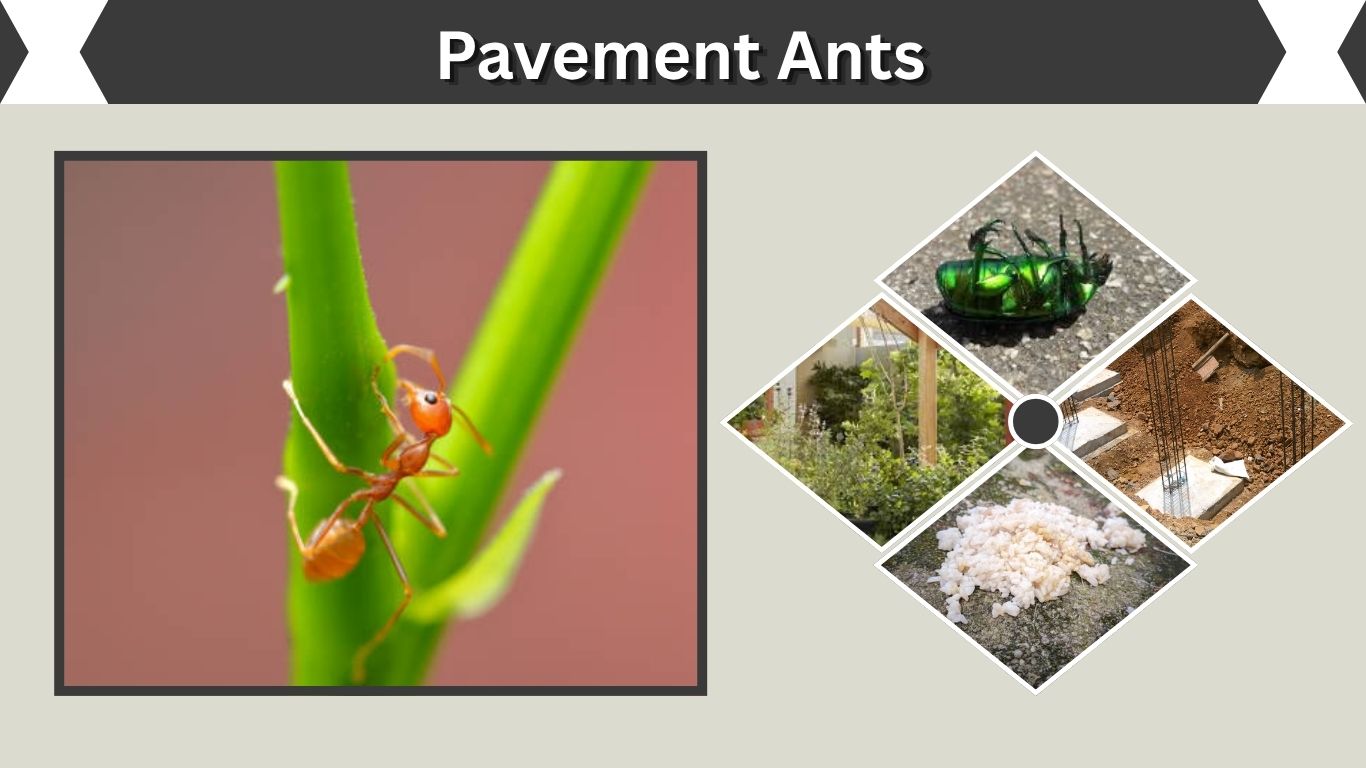
Pavement ants are among the most common household and outdoor ants in North America. They often build nests under sidewalks, driveways, patios, foundations, and slabs, which is how they earned their name. While they are not usually dangerous, pavement ants can become a major nuisance when they enter homes in search of food. Understanding their size, color, habitat, diet, lifecycle, and behavior can help homeowners identify and manage them more effectively.
What Are Pavement Ants?
Pavement ants are small ants commonly found nesting beneath paved surfaces. They are known for pushing small piles of soil, sand, or debris through cracks in sidewalks, driveways, and concrete slabs. These ants often live in large colonies and may enter homes when outdoor food sources become limited.
The most common pavement ant species in many areas is Tetramorium immigrans, formerly grouped with Tetramorium caespitum. These ants are highly adaptable and can survive in urban, suburban, and commercial environments. They are especially common around homes, restaurants, office buildings, schools, and warehouses.
Pavement ants are not considered highly destructive, but their ability to nest near structures and forage indoors makes them a frequent pest problem. Once they find a food source, they leave scent trails that guide other ants to the same location.
Pavement Ant Size and Appearance
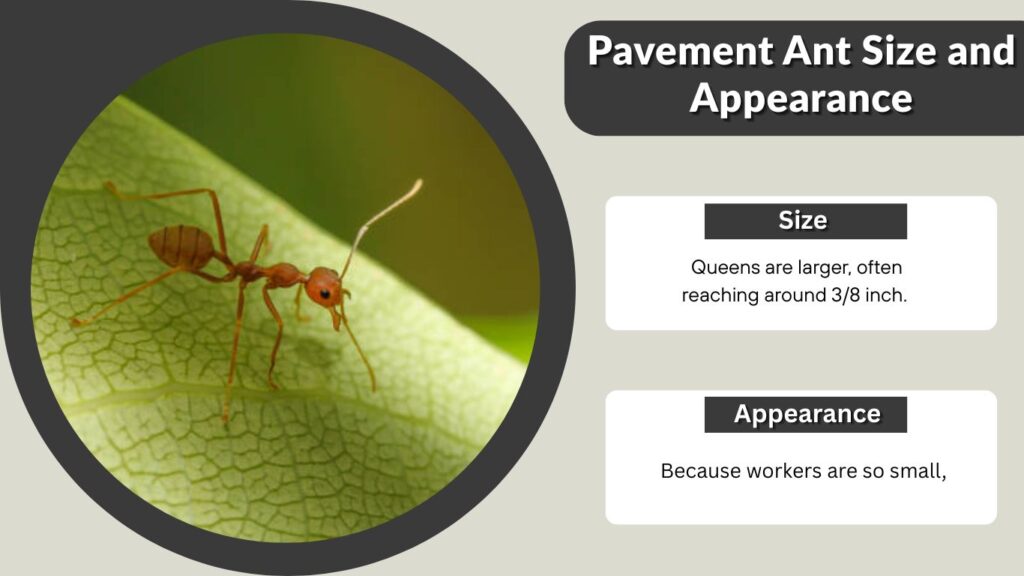
Pavement ants are small, but they have several identifying features that help distinguish them from other ants. Their compact bodies, dark coloring, and visible trails make them easier to identify when they appear in large numbers.
Adult worker pavement ants usually measure about 1/8 inch long. Queens are larger, often reaching around 3/8 inch. Because workers are so small, they can enter homes through tiny cracks, gaps, and openings around windows, doors, utility lines, and foundations.
| Feature | Pavement Ant Description |
|---|---|
| Worker size | About 1/8 inch long |
| Queen size | Around 3/8 inch long |
| Color | Dark brown to black |
| Body shape | Segmented body with two nodes |
| Legs and antennae | Usually lighter than the body |
| Common signs | Soil piles near pavement cracks |
Pavement Ant Color and Body Features
Pavement ants are typically dark brown to black. Their legs and antennae may appear slightly lighter than the rest of the body. Under magnification, pavement ants have fine grooves or ridges on the head and thorax, which can help professionals identify them more accurately.
One of their most important body features is the presence of two small nodes between the thorax and abdomen. This two-node structure separates them from some other common household ants. They also have a pair of small spines on the back part of the thorax, though these may be difficult to see without magnification.
Because pavement ants are small and dark, they are sometimes confused with odorous house ants, little black ants, or pharaoh ants. However, pavement ants are more commonly associated with outdoor nests near concrete, stone, and pavement.
Where Do Pavement Ants Live?
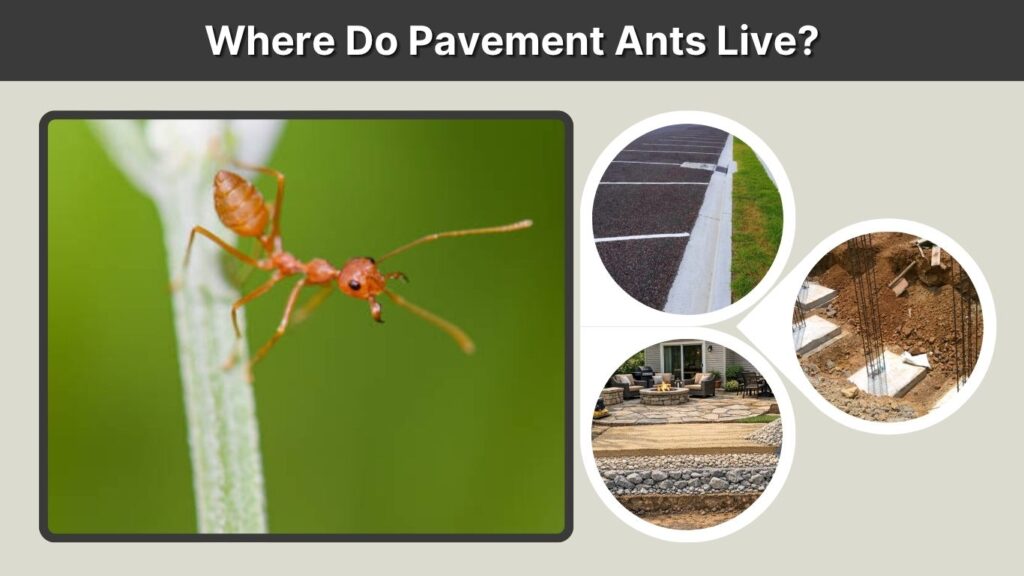
Pavement ants prefer nesting in soil under or beside hard surfaces. They are especially common in areas where pavement, concrete, stone, or bricks provide protection from weather and predators.
Common Outdoor Nesting Sites
Pavement ants often build nests in protected outdoor spaces. Their colonies may be hidden, but they usually leave visible signs around cracks and edges.
Common outdoor nesting areas include:
- Under sidewalks and driveways
- Beneath patios and paving stones
- Along building foundations
- Under concrete slabs
- Near curbs and parking lots
- In soil beside garage floors
- Around landscape stones and edging
Their nesting activity may create small mounds of soil or sand. These piles often appear near cracks in pavement or along concrete edges. While the mounds are usually small, repeated activity can make walkways and patios look messy.
Indoor Nesting Areas
Although pavement ants usually nest outdoors, they can move indoors when conditions are favorable. Indoor nests are more likely when moisture, warmth, and food are available.
Inside homes, pavement ants may nest:
- Behind walls
- Under floors
- Near water pipes
- Inside insulation
- Beneath basement slabs
- Around heated concrete floors
- Near kitchens or bathrooms
Indoor infestations can be harder to control because the colony may be hidden deep inside structural voids. In these cases, simply killing visible ants may not solve the problem.
Why Pavement Ants Enter Homes
Pavement ants enter homes mainly to search for food and water. They are active foragers and can detect tiny crumbs, spills, grease, and sugary residues. Once a worker finds food, it creates a chemical trail that other ants follow.
These ants are more likely to come indoors during certain conditions. Heavy rain can flood outdoor nests, while dry weather may push ants indoors in search of moisture. They may also invade during spring and summer when colonies are actively growing.
Common indoor entry points include gaps under doors, cracks in foundations, torn screens, openings around pipes, and spaces around window frames. Because pavement ants are so small, even minor structural gaps can allow them inside.
What Do Pavement Ants Eat?
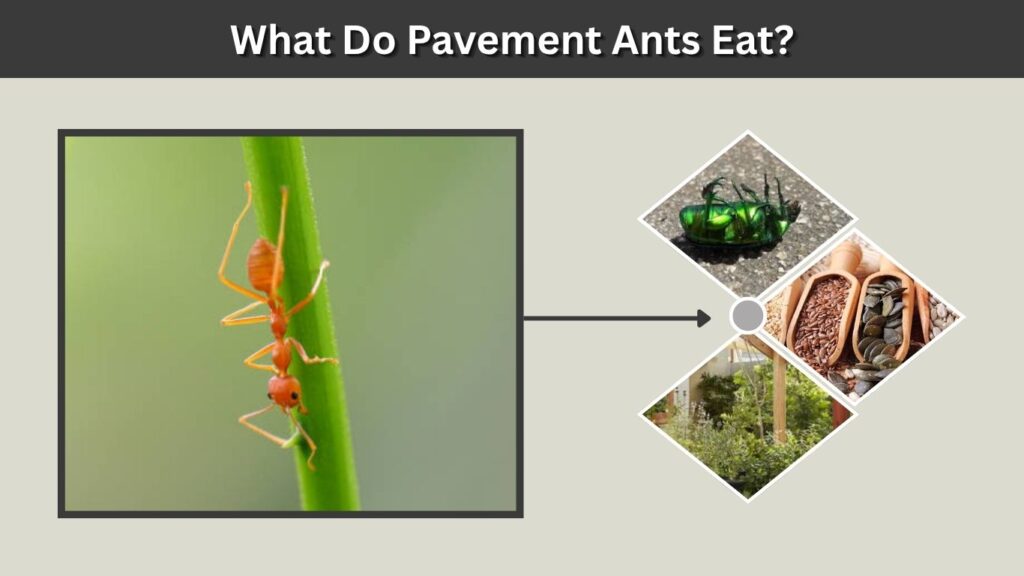
Pavement ants have a broad diet, which is one reason they thrive in human environments. They are opportunistic feeders and will eat many types of food found indoors and outdoors.
Outdoor Diet
Outside, pavement ants feed on natural and human-related food sources. Their diet can include:
- Dead insects
- Seeds
- Honeydew from aphids
- Plant material
- Grease and oils
- Pet food
- Food scraps near trash areas
They often tend aphids and other honeydew-producing insects. Honeydew is a sweet liquid produced by certain plant-feeding pests, and pavement ants may protect these insects to keep access to the sugary substance.
Indoor Diet
Inside homes, pavement ants are attracted to both sweet and greasy foods. This makes kitchens, pantries, dining areas, and trash bins common problem areas.
They may feed on:
- Sugar
- Syrup
- Honey
- Bread crumbs
- Meat
- Cheese
- Grease
- Nuts
- Cookies and baked goods
- Pet food
Unlike some ants that strongly prefer either sweets or proteins, pavement ants may switch food preferences depending on the colony’s needs. For example, they may seek more protein when larvae are developing and more sugar when workers need quick energy.
Pavement Ant Lifecycle
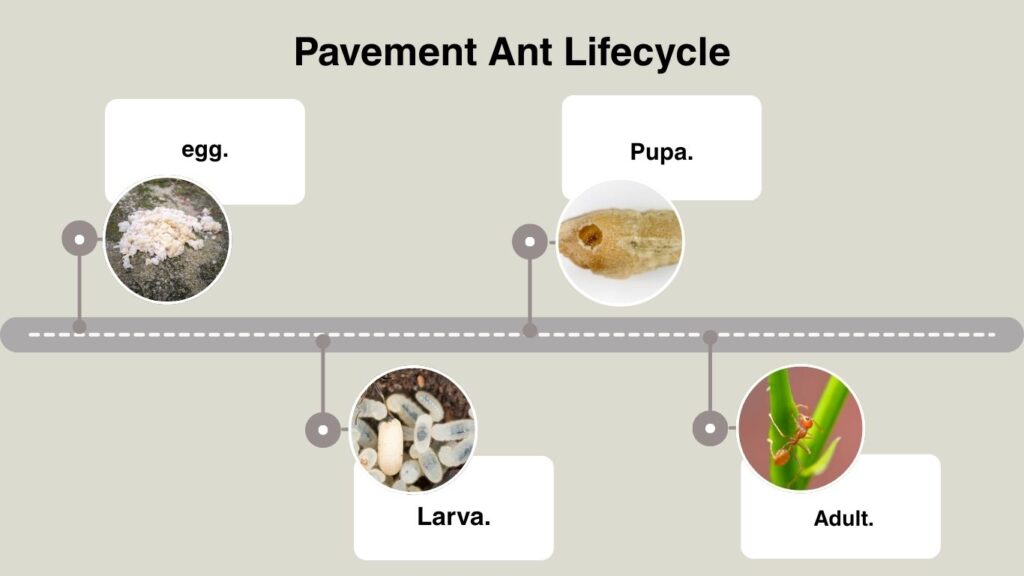
Pavement ants develop through complete metamorphosis. Their lifecycle includes egg, larva, pupa, and adult stages. The speed of development depends on temperature, food availability, moisture, and colony health.
Egg Stage
The queen lays tiny eggs inside the nest. These eggs are soft, white, and difficult to see without close inspection. Worker ants protect the eggs and move them to suitable areas of the nest depending on temperature and moisture.
Larva Stage
After hatching, larvae emerge from the eggs. Larvae are legless, pale, and dependent on workers for food. During this stage, workers feed them proteins and other nutrients needed for growth.
The larval stage is important because the colony’s future worker population depends on successful larval development. Food availability strongly affects how quickly larvae grow.
Pupa Stage
Once larvae mature, they enter the pupal stage. During this stage, they transform into adult ants. Pavement ant pupae may look like pale adult ants with folded legs and antennae.
Workers continue protecting the pupae until they fully develop. Stable nest conditions help increase survival during this stage.
Adult Stage
After emerging as adults, pavement ants take on colony roles. Most visible ants are sterile female workers. These workers forage, care for young, maintain the nest, defend the colony, and support the queen.
The queen’s main role is reproduction. Mature colonies may produce winged reproductive ants, also called swarmers. These winged ants leave the colony during mating flights to start new colonies.
Pavement Ant Colonies and Behavior
Pavement ant colonies can contain thousands of workers. Some colonies may have one queen, while others may have multiple queens. Larger colonies are usually harder to eliminate because they have more workers and nesting areas.
One noticeable behavior is territorial fighting. Pavement ants from neighboring colonies may battle on sidewalks, driveways, or patios. These fights can look like dark clusters of ants gathered in one area. While alarming, this behavior usually happens outdoors and is part of colony competition.
Pavement ants are also strong trail followers. When they locate food, they form long, organized trails between the food source and nest. These trails are often seen along baseboards, counters, foundations, walls, or pavement cracks.
Are Pavement Ants Dangerous?
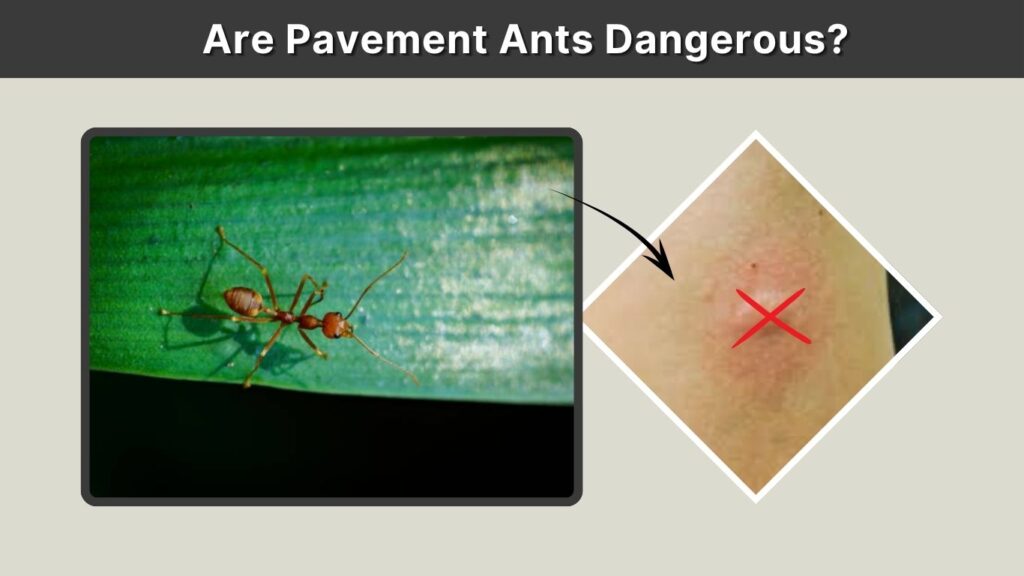
Pavement ants are not considered highly dangerous to people. They can bite or sting, but their sting is usually too weak to cause serious harm. Most people experience little to no reaction.
However, pavement ants can still create problems. They may contaminate food by crawling through trash, soil, drains, or dirty surfaces before reaching kitchens and pantries. Their presence can also be frustrating because colonies may continue sending workers indoors until the nest is addressed.
They do not usually damage wood like carpenter ants. They also do not spread disease as aggressively as some pests. Still, a persistent infestation should not be ignored, especially in food preparation areas.
Signs of a Pavement Ant Infestation
Pavement ants are often easier to notice than some hidden pests because they leave visible trails and soil piles. Early identification can help prevent the colony from becoming a larger indoor problem.
Common signs include:
- Trails of small dark ants indoors
- Ants near kitchen counters or sinks
- Small soil piles near pavement cracks
- Ant activity along foundations
- Ants entering through doors or windows
- Winged ants appearing indoors
- Repeated activity around pet food or trash
Winged pavement ants indoors may indicate a mature colony nearby or inside the structure. Swarmers are sometimes confused with termites, but ants have narrow waists, bent antennae, and uneven wing pairs.
How to Prevent Pavement Ants
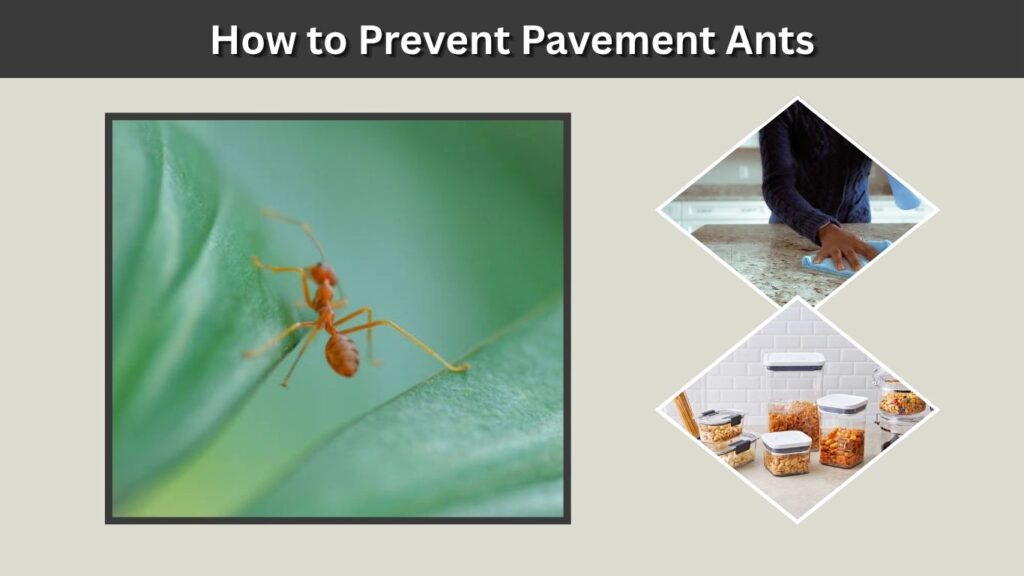
Prevention focuses on reducing food access, blocking entry points, and making nesting areas less attractive. Since pavement ants are small and persistent, regular maintenance is important.
Food and Sanitation Tips
Good sanitation can reduce indoor ant activity. Pavement ants are less likely to forage inside when they cannot find reliable food.
Helpful steps include:
- Wipe counters after cooking
- Store food in sealed containers
- Clean grease from stovetops
- Rinse bottles and cans before recycling
- Sweep crumbs from floors
- Empty trash regularly
- Keep pet food bowls clean
- Fix sticky spills quickly
Even small crumbs or grease spots can attract pavement ants, so consistent cleaning is often more effective than occasional deep cleaning.
Entry Point Control
Sealing access points helps reduce the number of ants entering your home. This is especially useful when combined with outdoor nest management.
Focus on sealing:
- Foundation cracks
- Gaps under doors
- Spaces around pipes
- Window frame openings
- Utility line gaps
- Cracks in basement walls
- Gaps around garage doors
Door sweeps, caulk, weatherstripping, and exterior sealants can help limit ant movement. While sealing alone may not eliminate a colony, it can reduce indoor activity.
How to Get Rid of Pavement Ants
The best control method depends on where the colony is located. Killing visible ants may provide short-term relief, but it usually does not eliminate the nest.
Baiting is often more effective than spraying. Ant baits allow workers to carry food-like poison back to the colony, where it can affect queens, larvae, and other workers. Different baits may target sweet, protein, or grease-feeding preferences.
Avoid spraying directly on ant trails when using bait. Sprays can kill workers before they return to the nest, which prevents bait from spreading through the colony. In some cases, spraying may also cause ants to scatter and create new nesting sites.
For outdoor nests, treatment may involve placing bait near trails, cracks, or nesting areas. Indoor infestations may require careful bait placement near activity zones, but away from children and pets.
If pavement ants keep returning, the colony may be hidden under a slab, inside a wall, or near the foundation. A pest control professional can inspect the property, identify nest locations, and choose the right treatment method.
Pavement Ants vs Other Common Ants
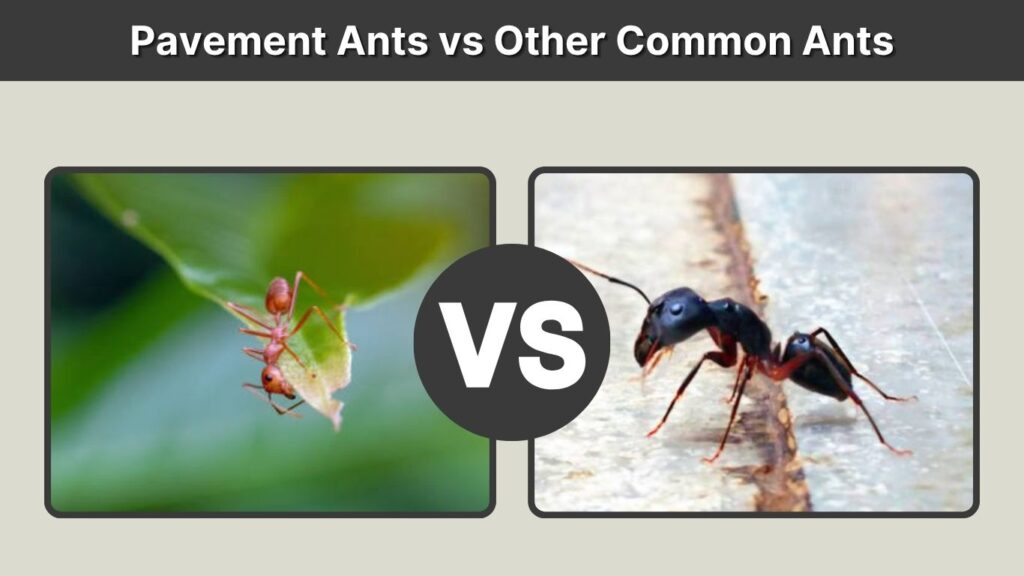
Pavement ants are often mistaken for other small household ants. Knowing the differences can help you choose the right control approach.
Odorous house ants are also small and dark, but they release a rotten coconut-like smell when crushed. Pharaoh ants are very small and yellowish to light brown. Carpenter ants are much larger and may damage wood by excavating galleries.
Pavement ants are most strongly associated with soil piles near cracks in concrete, sidewalks, foundations, and driveways. Their attraction to both sweets and greasy foods also helps separate them from ants with narrower food preferences.
FAQs
What do pavement ants look like?
Pavement ants are small, dark brown to black ants that are usually about 1/8 inch long. They have lighter legs and antennae, two small nodes between the thorax and abdomen, and fine grooves on the head and thorax. Queens are larger and may have wings during mating periods.
Why are pavement ants in my house?
Pavement ants usually enter homes to find food, water, or shelter. They are attracted to crumbs, grease, sugar, pet food, and moisture. They may also move indoors after heavy rain, dry weather, or changes around their outdoor nest.
Do pavement ants cause damage?
Pavement ants do not usually damage wood or structures the way carpenter ants can. However, they may create small soil piles near pavement cracks and become a nuisance indoors. They can also contaminate food surfaces by crawling through unsanitary areas before entering kitchens.
What is the best way to get rid of pavement ants?
Ant bait is often the best option because workers carry it back to the colony. Spraying visible ants may only kill foragers and leave the nest active. For long-term control, remove food sources, seal entry points, and target the colony directly.
Are pavement ants harmful to humans?
Pavement ants are not considered seriously harmful. They can bite or sting, but reactions are usually mild. The bigger concern is food contamination and nuisance activity. Persistent infestations should be managed, especially when ants are found in kitchens, pantries, or food storage areas.
