
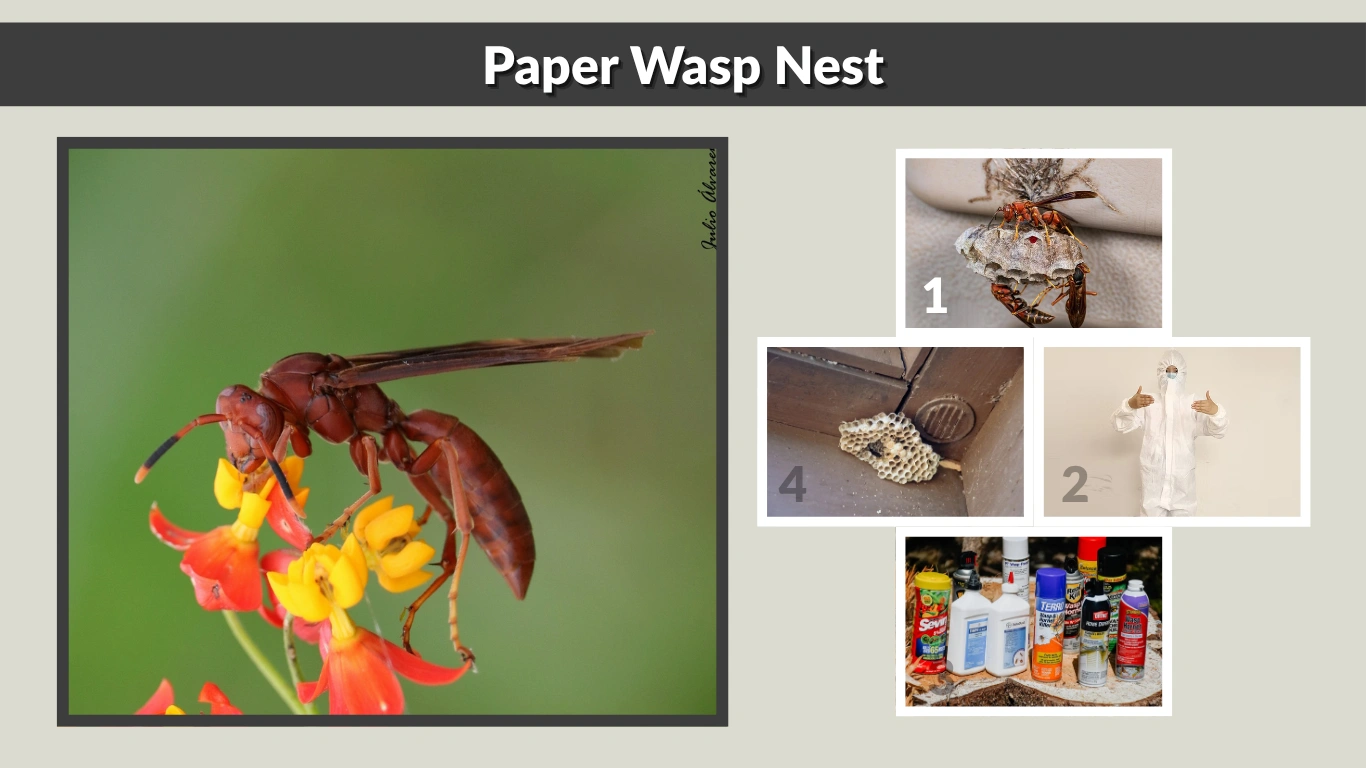
Paper wasps are fascinating yet feared insects known for their papery umbrella-shaped nests. These social wasps play an important role in nature by controlling pests, but their nests can become a nuisance or even dangerous when built near human homes. Understanding how to identify, handle, and prevent paper wasp nests ensures safety while respecting their ecological value.
Understanding Paper Wasp Nests

Paper wasp nests are engineering marvels made from a blend of wood fibers and saliva, forming a thin, paper-like texture. These nests provide protection and a breeding ground for the colony, which usually consists of a queen and her workers. While beneficial in gardens, their proximity to living spaces can be risky due to defensive behavior when threatened.
What Is a Paper Wasp Nest?
A paper wasp nest is typically gray or tan, resembling a delicate paper umbrella. Unlike hornet nests, paper wasp nests are open at the bottom, with hexagonal cells visible. Each cell serves as a chamber where eggs are laid and larvae develop. The structure is lightweight yet surprisingly durable, designed to resist wind and rain.
How Do Paper Wasps Build Their Nests?
The nest-building process begins in early spring. The queen chews weathered wood, mixing it with saliva to create a paste that dries into thin layers of paper. She starts with a small stalk and a few cells, then expands the nest as the colony grows. Worker wasps take over construction duties, adding new layers and enlarging the structure throughout the summer.
Identification and Appearance
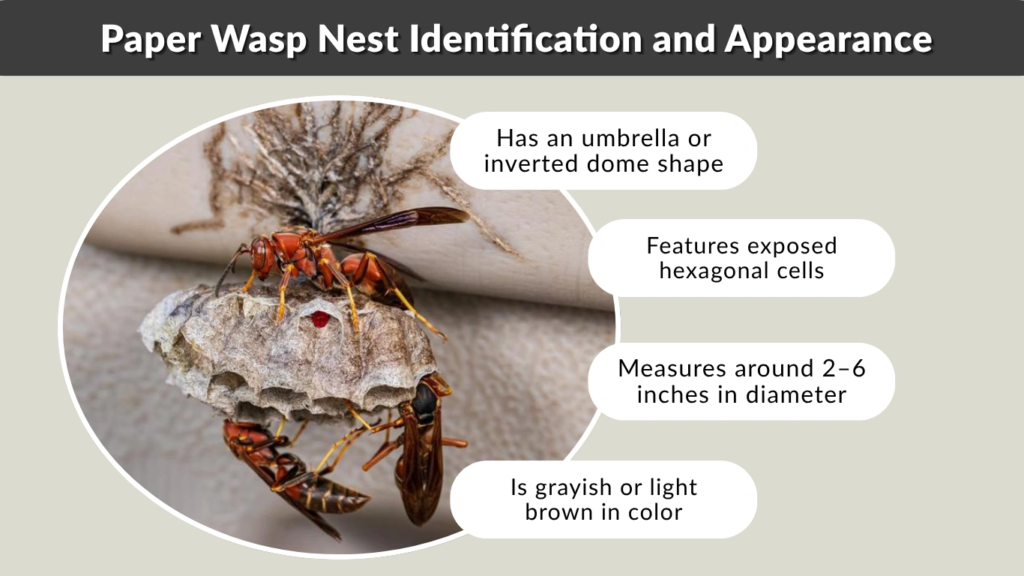
Recognizing a paper wasp nest is key to distinguishing it from other wasp or hornet species. They have a distinct look and are often easy to identify once you know what to look for.
Visual Features
A typical paper wasp nest:
- Has an umbrella or inverted dome shape
- Features exposed hexagonal cells
- Measures around 2–6 inches in diameter
- Is grayish or light brown in color
Because the nest hangs from a single stalk, it appears suspended and fragile, but it’s actually quite sturdy for its size.
Where Paper Wasps Build Nests
Paper wasps prefer sheltered, elevated spots that provide protection from rain and predators. Common nesting sites include:
- Under eaves, porch ceilings, and decks
- Around window frames or roof corners
- In shrubs, trees, and tall vegetation
- Occasionally inside sheds, attics, or walls
Outdoor lighting can also attract them, as it draws prey insects that wasps hunt for food.
Common Paper Wasp Species and Nests
Several paper wasp species build similar nests, but their appearance and behavior can vary:
- Red Paper Wasp: Known for reddish-brown color and large open nests.
- Northern Paper Wasp: Typically builds under rooflines or beams.
- European Paper Wasp: More aggressive and adaptable, often nests in human structures.
- Black and Golden Paper Wasps: Found in warmer regions, creating darker nests due to the type of wood pulp used.
These species differ slightly in size and coloration, but their nests share the same papery texture and open-cell design.
Paper Wasp Nest vs Other Nests
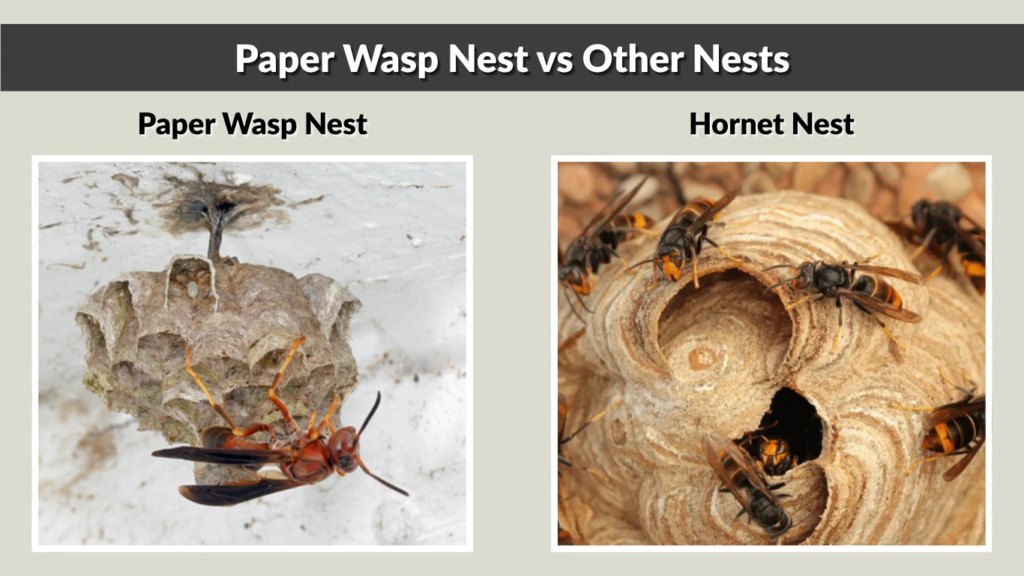
Knowing how to tell paper wasp nests apart from similar species helps avoid unnecessary panic — not every “wasp nest” poses the same threat.
Paper Wasp vs Hornet Nest
| Feature | Paper Wasp Nest | Hornet Nest |
| Structure | Open cells, visible | Fully enclosed ball-shaped |
| Size | Small to medium | Large, multilayered |
| Aggression | Moderate | Highly aggressive |
| Location | Eaves, branches | Trees, attics, high areas |
Hornet nests look more like gray footballs, while paper wasp nests are open and flat. Hornets also guard their nests more aggressively, making removal riskier.
Paper Wasp vs Yellow Jacket Nest
Yellow jacket nests are often found underground or in wall cavities. They’re fully enclosed, with no visible cells, and house hundreds of wasps. Paper wasps, on the other hand, prefer above-ground sites and smaller colonies. Yellow jackets are more aggressive, especially in late summer when food sources dwindle.
Paper Wasp vs Mud Dauber Nest
Mud daubers build nests from mud, not paper. Their nests look like small tubes or organ pipes, attached to walls or beams. Mud daubers are solitary, non-aggressive wasps, whereas paper wasps are social and defend their nests collectively.
Life Inside a Paper Wasp Nest

Understanding the life inside a paper wasp nest reveals the complex social structure and seasonal rhythm of these insects.
How Many Wasps Live in a Nest
A typical paper wasp nest houses between 20 and 100 adult wasps. The colony starts with a single queen, and as larvae mature into adults, the number of workers increases. These workers take on specific roles — building, foraging, feeding larvae, and guarding the nest.
Seasonal Life Cycle
- Spring: The queen emerges from hibernation and begins building a new nest.
- Summer: The colony grows; workers take over expansion and defense.
- Fall: The queen produces new queens and males for mating.
- Winter: The colony dies off, leaving only fertilized queens to overwinter and start anew next spring.
This cycle means most paper wasp nests are temporary, lasting only one season.
Do Paper Wasps Reuse Their Nests?
Unlike some bees, paper wasps rarely reuse old nests. Instead, they build new ones nearby. Old nests often deteriorate due to weather or parasites, making them unsuitable for reuse. However, returning queens may establish fresh nests close to the previous site, which gives the impression of reuse.
Dangers and Risks
Although paper wasps are beneficial predators that feed on garden pests, their nests can pose serious hazards when too close to human activity. Wasps are protective of their colony and will sting if they sense a threat. Unlike bees, they can sting multiple times, injecting venom that causes sharp pain, swelling, and in rare cases, allergic reactions.
Children, pets, and anyone with allergies to insect stings are especially vulnerable. Attempting to knock down a nest during the day or without protection can provoke an attack. Even small nests can harbor dozens of wasps ready to defend their territory aggressively. For safety, it’s vital to handle any removal attempts cautiously or seek professional help.
How to Get Rid of a Paper Wasp Nest
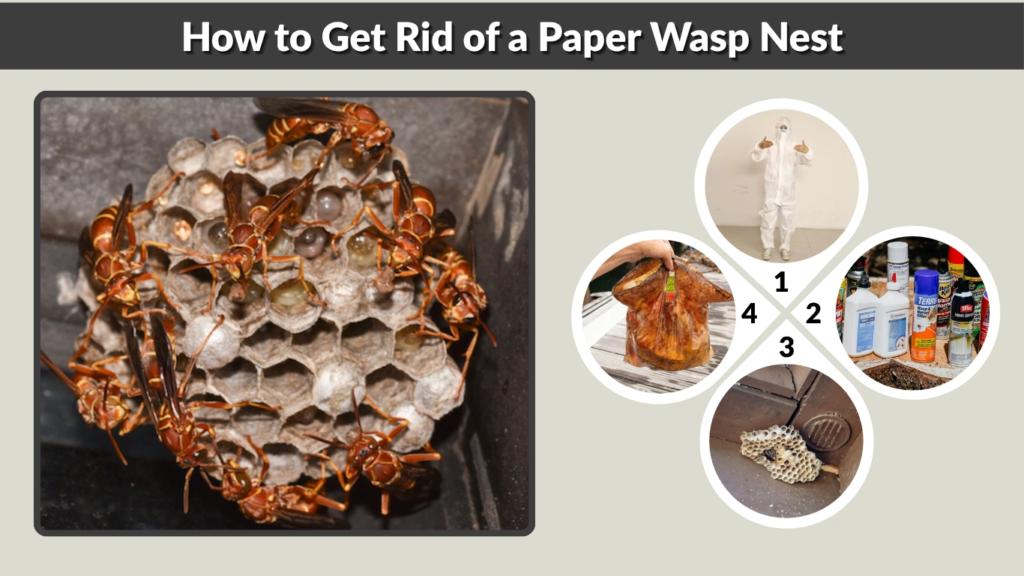
Removing a paper wasp nest requires patience, proper timing, and safety precautions. The goal is to eliminate the colony with minimal risk while preventing future infestations.
DIY Methods
If the nest is small and easily accessible, you can remove it yourself.
Follow these steps carefully:
- Choose nighttime: Wasps are less active and mostly inside the nest after dark.
- Wear protective clothing: Cover all exposed skin with thick fabric, gloves, and a hat or hood.
- Use wasp spray: Apply a long-distance wasp or hornet spray directly at the nest opening from at least 10–15 feet away.
- Wait before removing: Allow 24 hours for all wasps to die before approaching.
- Dispose of the nest: Once inactive, knock it down with a long stick and seal it in a plastic bag.
Avoid using fire or water — these methods are dangerous and often ineffective. Always ensure safety first, especially when the nest is high or difficult to reach.
When to Call Professionals
For large nests or those located in attics, wall voids, or other hard-to-reach areas, professional pest control is the safest option. Experts use specialized tools and protective suits to remove nests without damage to your property.
You should call professionals if:
- The nest is bigger than a grapefruit.
- You notice multiple colonies nearby.
- You or someone in your home is allergic to wasp stings.
Paper Wasp Nest Removal Cost
The average cost for professional paper wasp nest removal ranges between $100 and $350, depending on location, nest size, and accessibility. While this may seem costly, it’s a worthwhile investment for safety and guaranteed removal.
Prevention and Deterrence
Once a nest is removed, prevention is key to keeping wasps from returning. Paper wasps are persistent and often rebuild in the same location if the conditions are right.
How to Prevent Paper Wasps from Building Nests
- Seal entry points: Close cracks, vents, or openings around windows and roofs.
- Maintain cleanliness: Avoid leaving pet food or sugary substances outside.
- Remove old nests early: If you see an abandoned nest in spring, take it down before queens begin rebuilding nearby.
- Trim vegetation: Keep shrubs and trees away from walls and eaves.
Decoy and Deterrent Tricks
Paper wasps are territorial and rarely build nests near another colony. You can use this behavior to your advantage:
- Fake paper wasp nests: Hanging a decoy nest can deter new queens from nesting nearby.
- Brown paper bag method: Crumple a paper bag into a nest-like shape and hang it under eaves — a simple, natural deterrent.
- Natural repellents: Sprays made from peppermint oil, vinegar, or lemongrass are known to repel wasps effectively.
Seasonal Maintenance
Inspect your property in early spring before wasps start nesting. A quick monthly check of eaves, decks, and sheds can stop a colony from forming. If you spot the beginnings of a new nest, remove it while it’s still small — the earlier you act, the easier it is to control.
Unusual and Giant Nests
Some paper wasp colonies can grow exceptionally large under favorable conditions. Giant nests can measure over a foot wide and house hundreds of wasps. These massive colonies usually occur in abandoned buildings, tree hollows, or attics with little human disturbance.
Unusual nests may also appear in unexpected places, such as underground cavities or inside walls. These should never be handled without professional help, as they often contain multiple queens and highly defensive wasps. Observing or photographing them from a safe distance is the best approach.
Preserving Paper Wasp Nests
Some people choose to preserve empty nests for educational or decorative purposes. Once you confirm that the nest is completely abandoned (usually in winter), follow these steps:
- Remove carefully using gloves and avoid crushing the structure.
- Air dry for several days in a cool, dry location.
- Apply clear sealant or varnish to strengthen and preserve it.
Preserved nests can be used for classroom displays, art projects, or natural decor. Some collectors even sell them online, but it’s important to handle all nests ethically and safely.
FAQs
How long do paper wasp nests last?
Paper wasp nests last for one season. The colony dies off in winter, leaving only fertilized queens who hibernate and build new nests in spring.
When do paper wasps leave their nest?
Wasps abandon their nests in late fall as temperatures drop. The queen seeks shelter for winter, and the rest of the colony perishes.
Do paper wasps reuse their old nests?
No, paper wasps rarely reuse old nests. Instead, they build new ones nearby, often under the same eaves or trees.
How fast can paper wasps build a nest?
A small starter nest can appear in just a few days. Fully developed colonies with dozens of cells usually take several weeks to complete.
What are paper wasp nests made of?
Paper wasp nests are crafted from chewed wood fibers mixed with saliva, forming a lightweight, paper-like material that hardens as it dries.
