
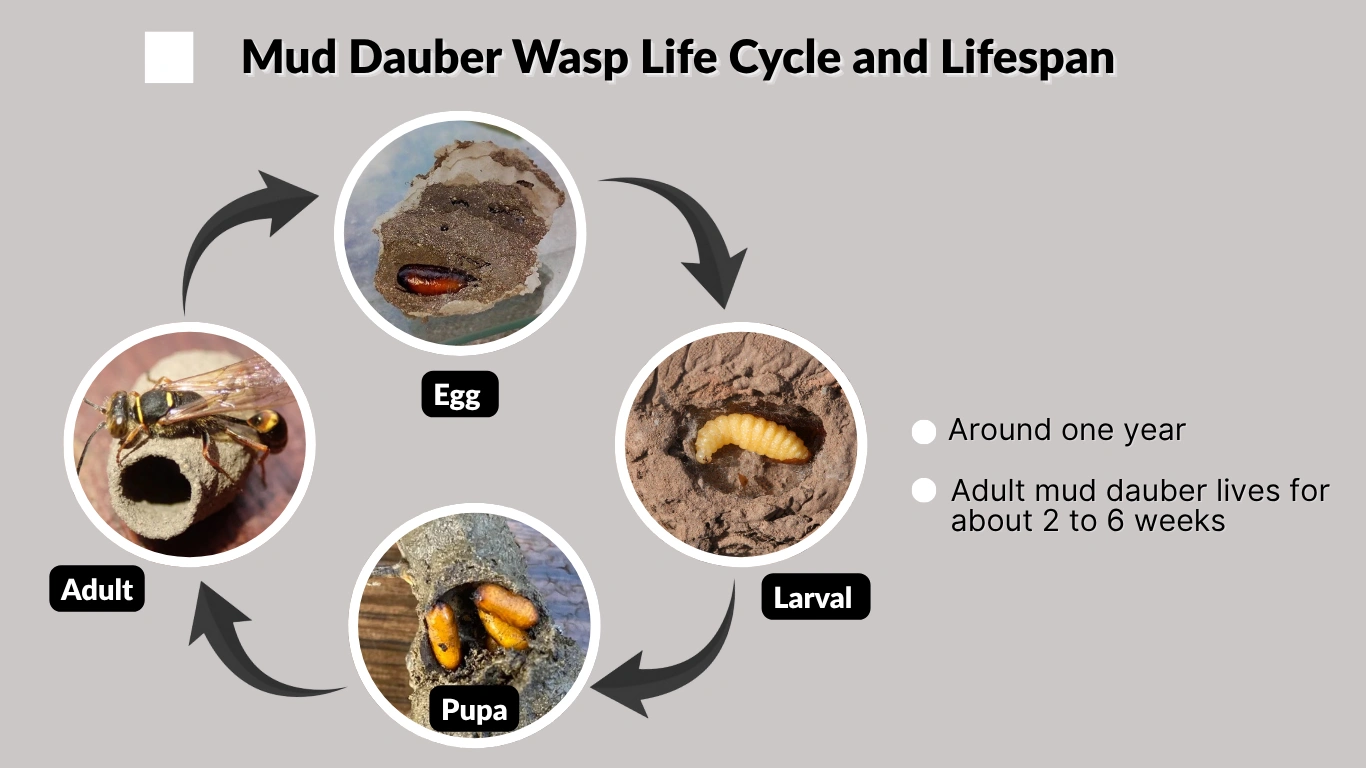
Mud dauber wasps are solitary hunters known for building nests out of mud and filling them with spiders for their young. Unlike social wasps, mud daubers don’t live in colonies, making their life cycle simpler yet fascinating. Understanding how these wasps grow—from eggs to fully developed adults—reveals their importance in nature and their surprisingly non-aggressive behavior.
In this article, we’ll explore each stage of the mud dauber’s life cycle, how long they live, and the differences between males and females. Whether you’ve seen their mud nests or are curious about their role in pest control, this guide offers everything you need to know.
What is the Average Lifespan of a Mud Dauber Wasp?
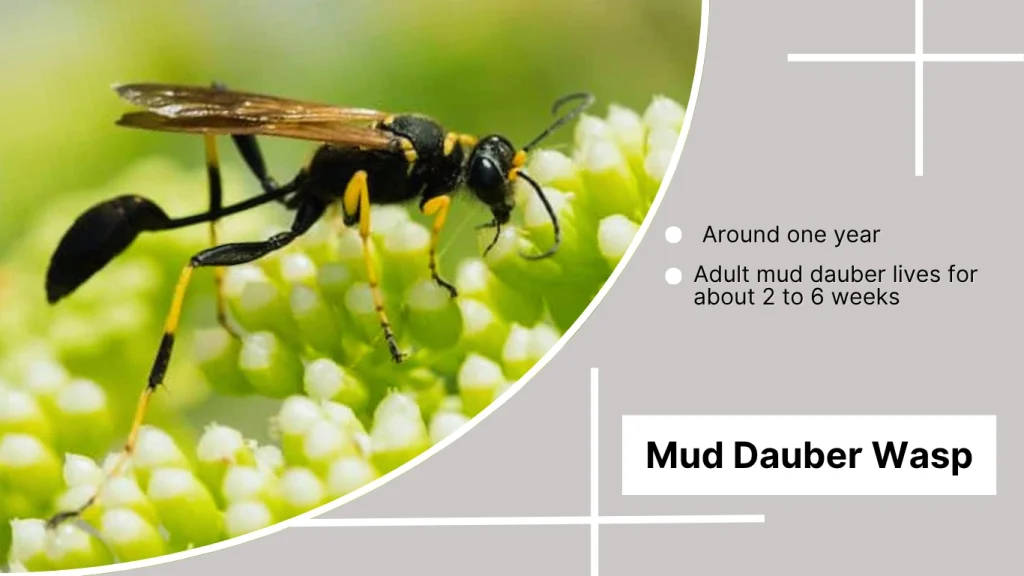
The average lifespan of a mud dauber wasp is around one year, including all developmental stages. Most of that time is spent as an egg, larva, and pupa inside the mud nest. Once emerged, the adult mud dauber lives for about 2 to 6 weeks, focusing on mating, hunting spiders, and building nests before dying naturally.
Life Cycle Overview of the Mud Dauber Wasp

Mud dauber wasps go through a complete metamorphosis with four main stages:
- Egg
- Larva
- Pupa
- Adult
Each stage is carefully timed and supported by the female wasp’s hunting and nesting efforts. From the moment she captures a spider to the emergence of a new adult, everything in the cycle is geared toward survival and independence.
Stage 1: Egg Laying and Nest Preparation

Nesting Behavior
- The female mud dauber collects moist mud and builds cylindrical tubes in a sheltered location—such as walls, attics, ceilings, or porches.
- Each nest contains multiple tubes, and each tube is a separate chamber for one egg.
Spider Collection and Egg Laying
- After building a mud cell, the female hunts and paralyzes spiders using her sting.
- She deposits 4–10 spiders in each cell to serve as live food.
- She lays a single egg on one of the spiders, then seals the cell with more mud.
Stage 2: Larval Development

Hatching and Feeding
- The egg hatches in a few days into a larva.
- The larva begins feeding on the paralyzed spiders, starting with the smaller ones.
- This stage lasts about 6 to 20 days, depending on temperature and spider availability.
Nutritional Purpose
- Paralyzed spiders remain alive but immobile, ensuring the food stays fresh.
- Once all spiders are consumed, the larva is fully grown and ready for pupation.
Stage 3: Pupation Phase
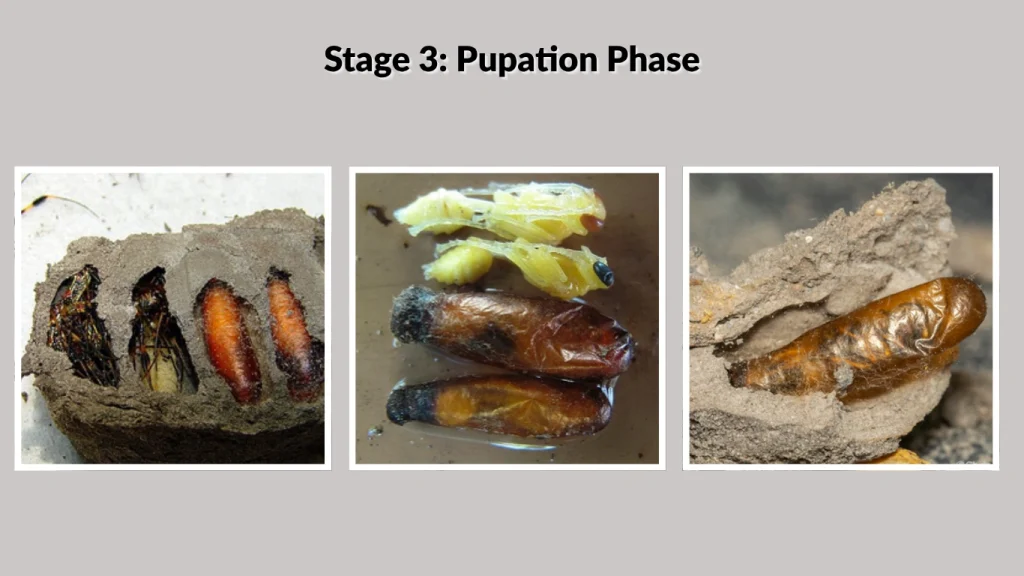
Cocoon Formation
- The larva spins a silken cocoon inside the mud cell.
- It transitions into a pupa—a stage where its body transforms into an adult wasp.
Duration and Changes
- Pupation can last 2–3 weeks, or in some cases, several months if overwintering.
- The wasp develops wings, exoskeleton, eyes, and adult organs during this time.
Stage 4: Emergence as an Adult Wasp

Breaking the Seal
- Once mature, the adult wasp chews through the mud cap and exits the nest.
- It takes its first flight and begins feeding on nectar and sugary substances.
Behavior After Emergence
- Adults do not return to their nests.
- Females focus on reproduction and nest-building.
- Males often feed and mate, then die shortly after.
Lifespan of the Mud Dauber Wasp
The total lifespan of a mud dauber can range from a few months to nearly one year, with most of their time spent developing inside the mud cell. The adult stage is the shortest part of their life.
Timeline Overview
| Stage | Duration (Approx.) | Activity |
| Egg | 2–3 days | Egg laid on spider inside the mud tube |
| Larva | 6–20 days | Feeds on spiders inside the chamber |
| Pupa | 2–3 weeks to several months | Develops into an adult, may overwinter |
| Adult | 2–6 weeks | Reproduces, hunts, and builds new nests |
Factors That Influence Lifespan
- Temperature: Warmer climates speed up development.
- Spider supply: Adequate prey supports healthy larval growth.
- Predators: Birds, ants, and parasitic wasps can reduce survival.
- Human interference: Destroyed nests lead to shortened life cycles.
Seasonal Activity and Lifecycle Timing
Mud daubers are most active during the warmer months, usually from late spring to early fall. In cooler climates, the larvae may overwinter inside the nest, emerging the following spring.
Typical Seasonal Pattern
- Spring: Adults emerge, mate, and begin building nests.
- Summer: Nesting and hunting continue; new generations begin to pupate.
- Fall: Activity slows; overwintering begins for undeveloped pupae.
- Winter: Nests remain sealed; wasps stay dormant inside.
Male vs Female Lifecycle Differences
While both male and female mud daubers hatch from the same type of nest, their behaviors and contributions to the species vary significantly.
Comparison Table: Male vs Female
| Trait | Male Mud Dauber | Female Mud Dauber |
| Nest Building | No | Yes |
| Hunting | No | Yes (hunts spiders) |
| Lifespan | Shorter (1–2 weeks) | Longer (up to 6 weeks) |
| Role in Lifecycle | Mate, feed, die | Build nests, lay eggs, feed larvae |
Ecological Role in Spider Control
Mud daubers are natural predators of spiders. Their life cycle depends entirely on capturing and paralyzing spiders to feed their larvae.
Spiders Commonly Hunted
- Black widow spiders
- House spiders
- Jumping spiders
- Orb weavers
Because they remove many nuisance spiders from gardens and homes, mud daubers are often considered beneficial insects.
FAQs
How long does it take for a mud dauber to develop?
From egg to adult, it takes about 3–7 weeks, depending on environmental conditions. In colder climates, pupae may remain dormant through winter.
Do mud daubers die after laying eggs?
No. A single female can build multiple nests and lay dozens of eggs before she dies. Her primary focus after mating is nesting and provisioning.
How many eggs does a mud dauber lay?
Each female may lay up to 20–30 eggs, usually one per mud cell.
Can mud dauber nests be reused?
Not by the original builder. However, other mud dauber species, especially blue mud daubers, may reuse abandoned nests by cleaning them out and laying their own eggs.
Conclusion
The mud dauber wasp’s life cycle is a remarkable example of efficiency and self-sufficiency. From mud-based engineering to spider hunting, every step in their lifecycle is carefully designed for survival. Though their lifespan is relatively short, their impact on the ecosystem—particularly in natural spider control—is significant.
