
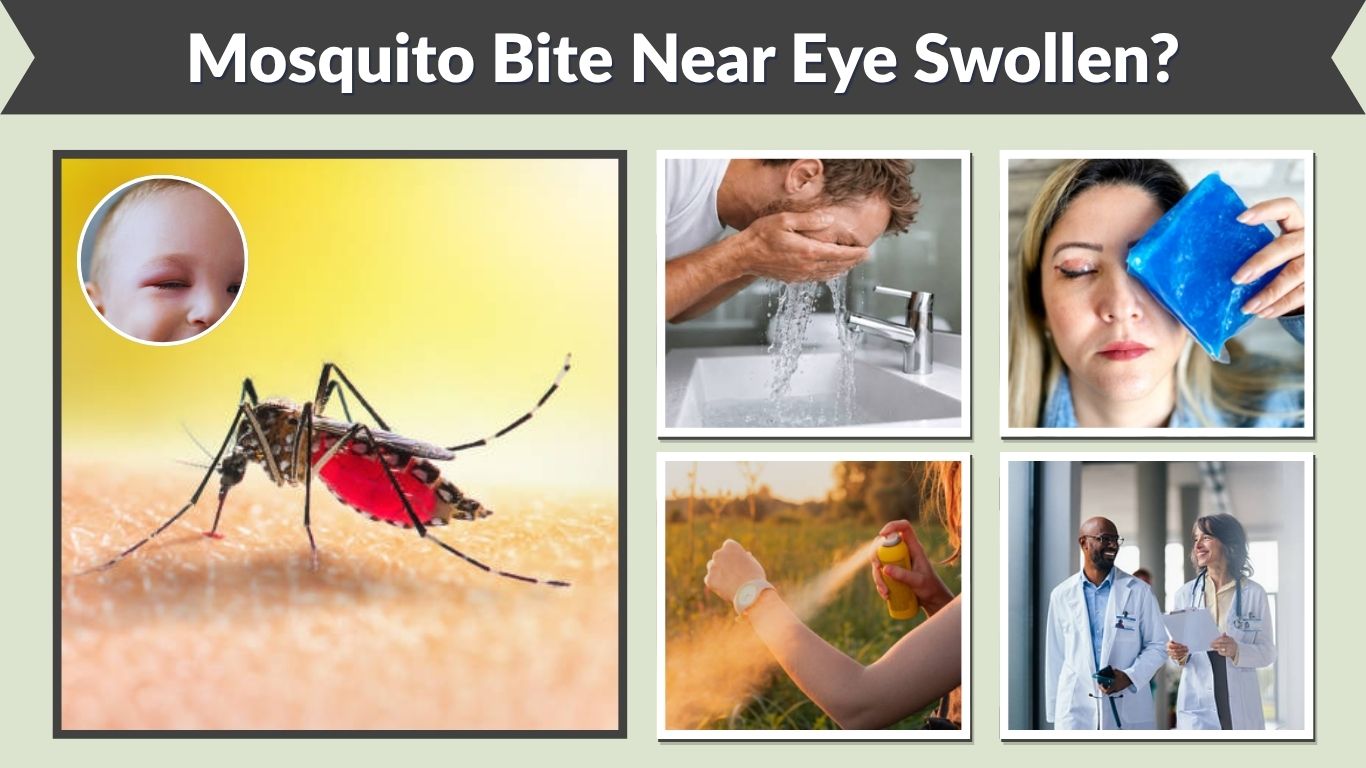
A mosquito bite near the eye can cause sudden puffiness, redness, and itching that may look worse than an ordinary bite. Because the eyelid contains loose, delicate tissue, even a small bite on the forehead or cheek can make the surrounding area swell. This is especially common in babies and toddlers, and the swelling may be more noticeable after sleep. Most cases improve with cold compresses and gentle care, but pain, fever, or vision changes can signal a problem that needs medical attention.
Why Does a Mosquito Bite Near the Eye Cause Swelling?
A mosquito bite near the eye becomes swollen because the immune system reacts to proteins in mosquito saliva. This reaction releases histamine and other inflammatory chemicals, causing fluid to accumulate in surrounding tissues. The skin around the eyes is particularly sensitive, making swelling more noticeable than in other body areas.
Why Eyelid Skin Swells Easily
Eyelid skin is thin and contains loose connective tissue. When inflammation develops, fluid can accumulate quickly, creating visible puffiness.
Even a small mosquito bite may cause substantial swelling around the upper or lower eyelid. However, significant swelling does not automatically mean the bite is infected.
Can a Forehead Mosquito Bite Cause a Swollen Eye?
Yes, a mosquito bite on the forehead can cause swelling around the eye.
Inflammatory fluid may move downward into the eyelid tissues, particularly during sleep. Consequently, someone may wake up with a swollen eye even though the original bite occurred higher on the face.
What Does a Swollen Eye From a Mosquito Bite Look Like?
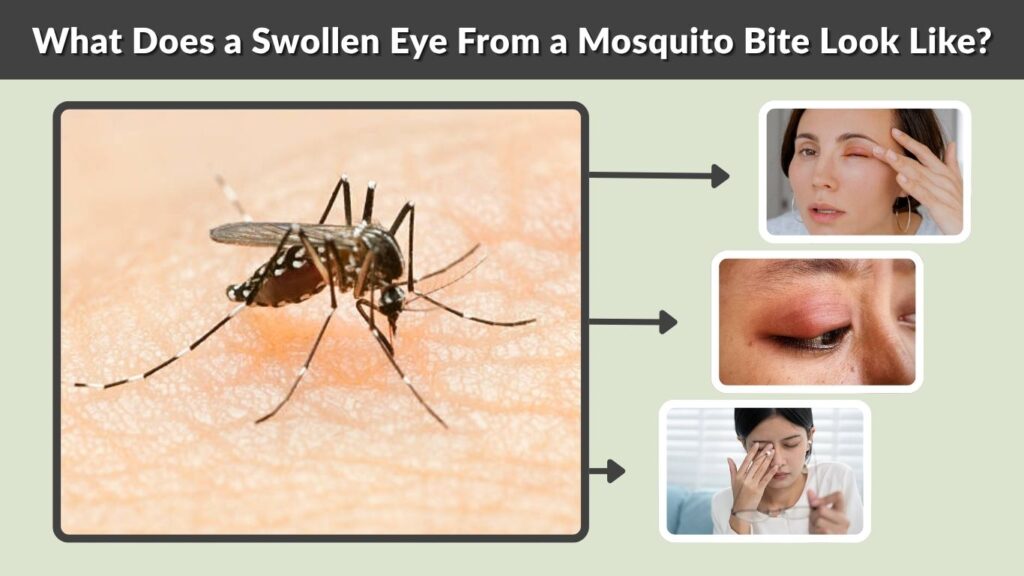
A swollen eye from a mosquito bite typically appears puffy, irritated, and slightly discolored. The swelling may affect the upper eyelid, lower eyelid, or surrounding skin. Symptoms vary depending on individual sensitivity and the location of the bite.
Common Symptoms
Typical symptoms include:
- Eyelid swelling: Puffiness around one eye.
- Redness: Pink or reddish skin surrounding the bite.
- Itching: Irritation that encourages rubbing.
- Mild warmth: The affected skin may feel slightly warm.
- Small bump: A raised mark near the swollen area.
- Temporary tightness: Discomfort when opening the eyelid.
Allergic Reaction vs. Eye Infection
A local allergic reaction usually causes itching and swelling without significant pain or fever.
An infection may produce increasing tenderness, spreading redness, warmth, or fever. Some infections involving tissues around the eye require urgent treatment.
Because these conditions can look similar, worsening or painful swelling should be evaluated by a healthcare professional.
How to Treat a Swollen Eye From a Mosquito Bite
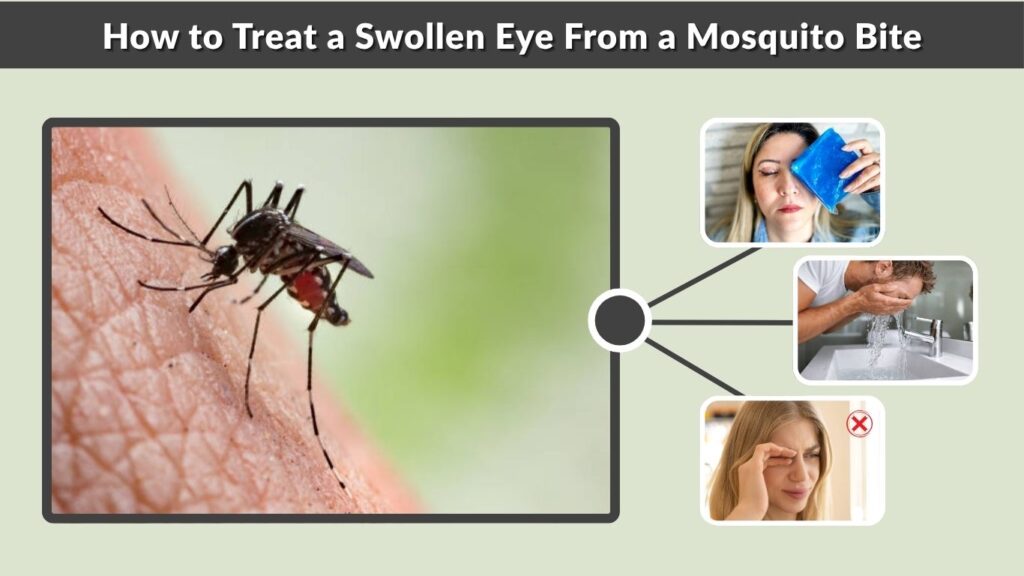
Most uncomplicated mosquito bite reactions improve with gentle home care. The primary goals are reducing inflammation, relieving itching, and preventing additional irritation. However, treatment around the eyes requires extra caution because the surrounding skin is delicate.
Home Remedies for Swollen Eyes
Follow these steps:
- Apply a cold compress: Hold a clean, cool cloth against the closed eyelid for 10–20 minutes.
- Clean the affected skin: Gently wash the bite with water and mild soap, avoiding contact with the eye.
- Avoid rubbing: Scratching or rubbing can worsen swelling.
- Keep the head elevated: Slight elevation during rest may reduce puffiness.
- Monitor symptoms: Check whether swelling and redness improve over time.
Never apply ice directly to the eyelid.
Medications for Mosquito Bite Eye Swelling
Oral antihistamines, such as cetirizine or loratadine, may help relieve itching associated with mosquito bites.
However, medication suitability and dosage depend on age and medical circumstances.
Avoid applying hydrocortisone cream directly around the eyes unless a healthcare professional recommends it. Regular eye drops are generally unnecessary for swelling confined to the eyelid.
Mosquito Bite Swollen Eye in Babies and Toddlers
Babies and toddlers often develop more noticeable swelling after mosquito bites. Their skin is delicate, and some young children experience stronger local inflammatory reactions. A bite near the eye may cause considerable puffiness, even without a dangerous allergic reaction.
Swollen Eye From a Mosquito Bite in Toddlers
A toddler’s eye may become swollen overnight following a mosquito bite on the eyelid, forehead, or cheek.
The swelling can appear particularly dramatic in the morning and gradually decrease throughout the day.
Use cool compresses and prevent scratching. Consult a healthcare professional before giving antihistamines or applying medicated creams.
What if a Child’s Eye Is Swollen Shut?
A mosquito bite can occasionally cause enough swelling to make opening the eyelid difficult.
However, an eye that is swollen completely or almost shut should not automatically be considered harmless.
Arrange prompt medical assessment, ideally the same day. Fever, significant pain, or vision problems require urgent evaluation. Infants under one year should also receive medical advice for suspected insect bites.
How Long Does Eye Swelling From a Mosquito Bite Last?
Swelling from a mosquito bite generally improves within several days. Mild redness and itching often resolve earlier, while noticeable puffiness may last up to a week.
The duration depends on the strength of the inflammatory reaction and whether the affected skin becomes irritated through scratching.
Why Is Eye Swelling Worse the Next Morning?
Eye swelling sometimes becomes more noticeable after sleeping because fluid accumulates around the eyelids while lying down.
Once someone gets up and moves around, the puffiness may gradually decrease.
However, swelling that continues worsening, becomes painful, or remains persistent should be medically evaluated.
When Is a Swollen Eye From a Mosquito Bite Dangerous?
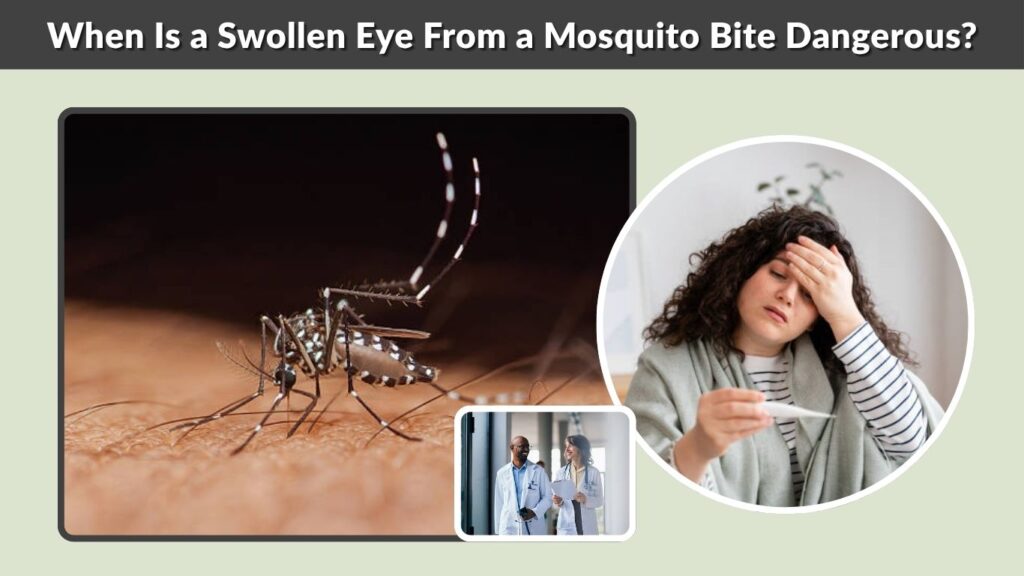
Although most mosquito bites near the eyes are harmless, certain symptoms can indicate an infection or another serious condition. Swelling around the eye deserves particular attention because infections in nearby tissues can occasionally spread and affect deeper structures.
Warning Signs That Need Medical Attention
Watch for these symptoms:
- Increasing redness or swelling.
- Significant eyelid pain or tenderness.
- Fever or unusual tiredness.
- Pus or discharge near the bite.
- Swelling that worsens rather than improves.
- Difficulty opening the eye because of inflammation.
Seek prompt medical advice if these symptoms develop.
Symptoms Requiring Emergency Care
Severe eye pain, pain when moving the eyeball, double vision, reduced vision, or an eye that appears to bulge requires emergency medical assessment.
These symptoms may indicate a serious infection affecting tissues around or behind the eye.
Breathing difficulties, throat swelling, or fainting after a bite may indicate a severe allergic reaction and also require emergency care.
How to Prevent Mosquito Bites Near the Eyes
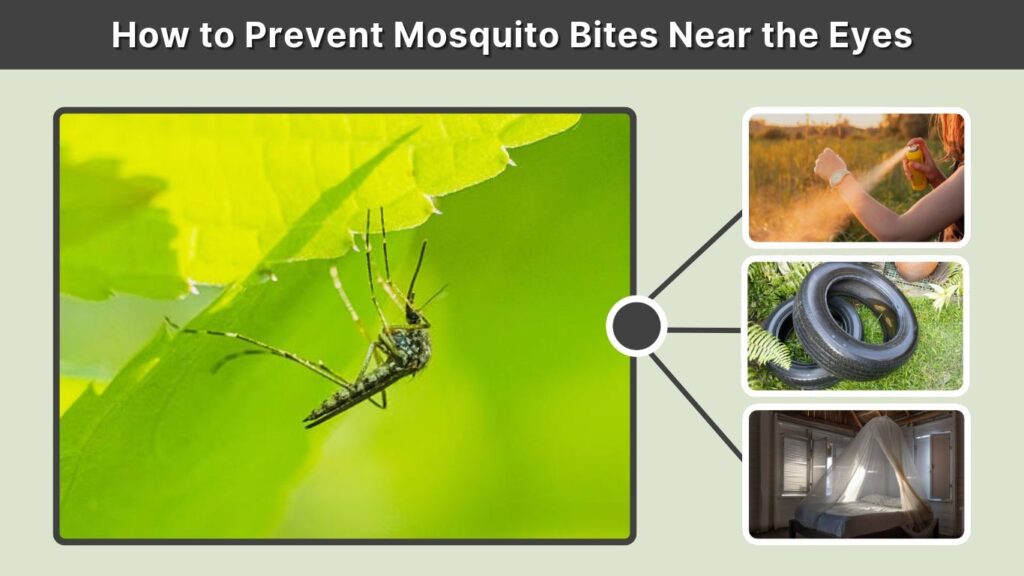
Preventing mosquito bites is particularly important for children and individuals who frequently experience strong local reactions. Reducing exposure indoors and outdoors helps prevent uncomfortable swelling around sensitive facial areas.
Effective Prevention Tips
Useful precautions include:
- Use age-appropriate mosquito repellent according to its label.
- Never spray repellent directly onto the face.
- Apply facial repellent carefully, avoiding eyes and mouth.
- Install screens on windows and doors.
- Use properly fitted mosquito nets for sleeping infants.
- Remove standing water around the home.
- Avoid rubbing the eyes after handling repellents.
FAQs
1. Can a Mosquito Bite Cause Your Entire Eye to Swell?
Yes, a mosquito bite near the eyelid or forehead can cause substantial swelling around the eye. The loose surrounding tissue allows fluid to accumulate easily. However, severe swelling that closes the eye should receive prompt medical assessment.
2. How Do You Reduce a Swollen Eye From a Mosquito Bite?
Apply a clean, cool compress for 10–20 minutes and avoid rubbing the affected area. Oral antihistamines may relieve itching when appropriate. Keep the skin clean and monitor symptoms. Avoid applying medicated creams near the eye without professional guidance.
3. Is It Normal for a Toddler’s Eye to Swell After a Mosquito Bite?
Yes, toddlers commonly develop noticeable eyelid swelling following mosquito bites. Their reactions can appear more dramatic than those of adults. However, fever, increasing pain, worsening redness, or swelling that closes the eye requires medical evaluation.
4. Why Is My Eye Swollen the Day After a Mosquito Bite?
Swelling can become more noticeable the following morning because inflammatory fluid accumulates around the eyelid during sleep. This is common after facial mosquito bites. The puffiness often decreases after being upright for several hours.
5. When Should I Worry About a Mosquito Bite Near the Eye?
Seek medical attention if swelling becomes increasingly painful, redness spreads, or fever develops. Vision changes, pain with eye movement, and an eye that appears to bulge require emergency care. Severe swelling that closes the eyelid also warrants prompt assessment.
