
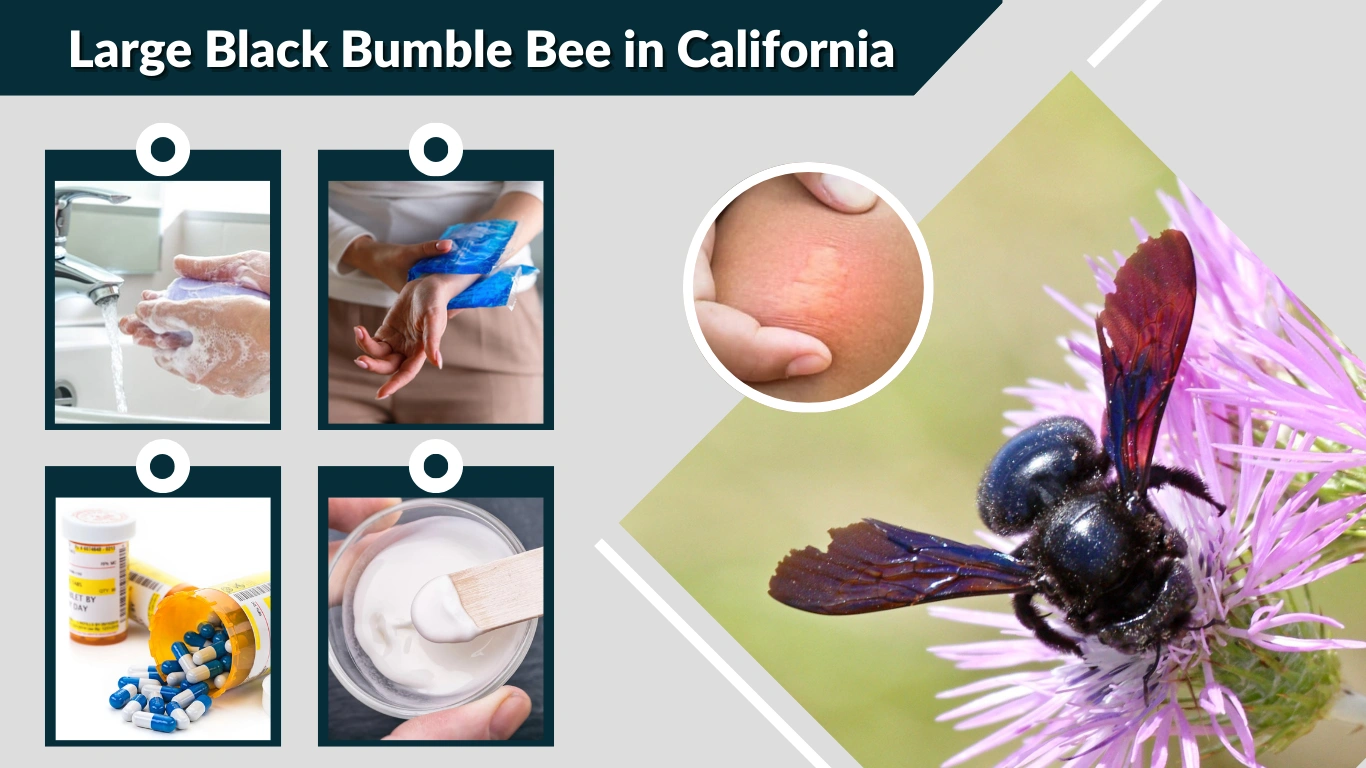
California is home to a wide variety of bees, and among them, the large black bumble bee stands out for its size and buzzing presence. These bees are often spotted in gardens, parks, and natural landscapes, where they play an important role in pollination. While their appearance may be intimidating, especially because of their dark coloration and large bodies, understanding their behavior and sting risks can help people coexist with them safely.
Identifying black bumble bees correctly is crucial since they are often mistaken for carpenter bees, wasps, or even honeybees. Each of these insects has unique characteristics and different behaviors. Knowing how to tell them apart can reduce fear, improve safety, and highlight the ecological importance of these pollinators.
Size and Physical Characteristics

Average Size of Black Bumble Bees
Large black bumble bees in California are typically 0.6 to 1 inch long, making them noticeably bigger than common honeybees. Their wingspan ranges from 1 to 1.5 inches, giving them a powerful and steady flight pattern. When compared with honeybees, which average about 0.5 inches, bumble bees appear bulkier and more robust.
The size also varies slightly depending on the species and whether the bee is a queen, worker, or male drone. Queens are the largest, often exceeding an inch in length, while workers are slightly smaller. Despite their intimidating size, most black bumble bees are not aggressive unless provoked.
Key Physical Features
- Black coloration with yellow accents – Most black bumble bees appear predominantly dark, sometimes with faint yellow stripes or bands depending on the species.
- Fuzzy body – Their bodies are covered with fine, dense hair that not only gives a fuzzy look but also helps collect pollen efficiently.
- Rounded abdomen – Unlike carpenter bees, which have shiny and hairless abdomens, bumble bees have rounded, hairy ones.
- Distinct buzzing sound – Their buzz is louder than that of smaller bees, created by strong wing muscles and sometimes acting as a natural warning.
Identification in California
Common Species Found in California
One of the most common large black bumble bee species in California is the yellow-faced bumble bee (Bombus vosnesenskii). Despite its name, this bee often looks predominantly black with yellow markings near the head or thorax. They are found across gardens, meadows, and agricultural fields, making them a frequent sight for residents.
Other species, like the Bombus melanopygus (black-tailed bumble bee), can also appear quite dark and may be mistaken for carpenter bees. These bees thrive in both urban and rural settings, especially where flowering plants are abundant.
How to Differentiate from Similar Insects

Bumble Bee vs. Honeybee
- Bumble bees are larger, rounder, and fuzzier.
- Honeybees are smaller, slender, and have a golden-brown color.
- Bumble bees produce little honey compared to honeybees, which are domesticated for large-scale honey production.
Bumble Bee vs. Carpenter Bee
- Carpenter bees are often completely black and shiny, with little to no hair on their abdomens.
- Bumble bees have hairy, fuzzy bodies with visible stripes.
- Carpenter bees are known for drilling holes into wood, while bumble bees nest in the ground or hidden cavities.
Bumble Bee vs. Wasp
- Wasps are slender with smooth bodies and narrow waists.
- Bumble bees are stout, round, and fuzzy.
- Wasps are more aggressive and capable of stinging multiple times, whereas bumble bees sting only when provoked.
Bumble Bee Sting

Do Black Bumble Bees Sting?
Yes, black bumble bees in California can sting, but not all of them. Only female bumble bees (workers and queens) have stingers. Male drones do not possess stingers, making them harmless despite their large size.
Bumble bees are generally not aggressive and will only sting when threatened or if their nest is disturbed. Unlike honeybees, bumble bees can sting multiple times, as their stingers are not barbed. This makes their sting potentially more painful, though they rarely attack unless provoked.
What a Sting Looks Like
A bumble bee sting causes immediate pain and redness at the site. The sting leaves a small puncture mark surrounded by swelling. In most cases, the discomfort fades within a few hours, but individuals who are sensitive or allergic may experience more noticeable swelling and itching.
Symptoms of a Bumble Bee Sting

Mild Symptoms
Most bumble bee stings cause localized reactions that are uncomfortable but not dangerous. The most common mild symptoms include:
- Sharp, immediate pain at the sting site.
- Redness and slight swelling within a few minutes.
- Warmth and itching that can last several hours.
These reactions usually subside within one to two days. For many people, the swelling looks like a raised welt, similar to a mosquito bite but larger and more painful.
Moderate to Severe Reactions
Some individuals may experience stronger reactions, especially if stung multiple times or if they have sensitive skin. These may include:
- Excessive swelling that spreads several inches beyond the sting site.
- Hives or rash around the sting or other parts of the body.
- Persistent pain or itching that does not fade after a day or two.
Allergic Reactions (Anaphylaxis)
In rare but serious cases, a sting can trigger an allergic reaction. Symptoms may include:
- Swelling of the lips, tongue, or throat.
- Difficulty breathing or wheezing.
- Rapid heartbeat, dizziness, or fainting.
- Nausea and stomach cramps.
Anaphylaxis is a medical emergency. Anyone experiencing these symptoms should seek immediate medical help and use an epinephrine auto-injector (EpiPen) if available.
Treatment and First Aid

Immediate Steps After a Sting
Acting quickly can reduce pain and lower the risk of complications. Here are the recommended first aid measures:
- Clean the Area – Wash the sting site with soap and water to remove any bacteria.
- Apply a Cold Compress – Use an ice pack wrapped in a cloth for 10–15 minutes to reduce swelling.
- Elevate the Affected Limb – If the sting is on your hand or leg, keeping it raised can help minimize swelling.
Over-the-Counter Remedies
Several non-prescription treatments can provide relief:
- Antihistamines (such as diphenhydramine or loratadine) help reduce itching and allergic responses.
- Topical creams with hydrocortisone or calamine lotion soothe irritation.
- Pain relievers like ibuprofen or acetaminophen can ease pain and inflammation.
Natural Home Remedies
Some household remedies are effective in easing discomfort:
- Baking soda paste – Mixing baking soda with water and applying it to the sting neutralizes some venom effects.
- Aloe vera gel – Known for its cooling properties, it reduces irritation and helps the skin heal faster.
- Honey – Surprisingly, honey itself has antibacterial qualities and can soothe stings, though it should be used carefully to avoid attracting more bees.
When to Seek Medical Attention
While most stings heal naturally, certain cases require professional care:
- If swelling continues to spread beyond 24 hours.
- If symptoms of an allergic reaction appear.
- If the sting occurs near the mouth, throat, or eyes.
- If a person has been stung multiple times, especially children or elderly individuals.
Conclusion
Large black bumble bees in California may look intimidating, but they are vital pollinators that contribute to the health of gardens and ecosystems. Recognizing their size, physical traits, and differences from other insects can help reduce confusion and unnecessary fear.
Their stings, while painful, are usually mild and manageable with basic first aid. However, being aware of the symptoms of allergic reactions is essential for safety. By understanding identification, sting risks, and proper treatment, people can better appreciate these bees while staying protected.
FAQs
1. How big are black bumble bees in California compared to honeybees?
Black bumble bees are typically 0.6 to 1 inch long, making them larger and bulkier than honeybees, which average about 0.5 inches. Bumble bees also appear rounder and fuzzier.
2. Are black bumble bees more aggressive than other bees?
No, they are not usually aggressive. Black bumble bees sting only when threatened or if their nest is disturbed. In most cases, they prefer to avoid conflict and focus on foraging.
3. Do black bumble bees die after stinging?
Unlike honeybees, bumble bees do not die after stinging. Their stingers are smooth and do not get stuck in the skin, allowing them to sting multiple times if necessary.
4. Can multiple stings be dangerous?
Yes. While one sting is usually harmless, multiple stings can deliver a larger dose of venom. This may lead to stronger reactions, especially in children, older adults, or people with allergies.
5. What’s the best way to avoid bumble bee stings in California?
The best prevention is staying calm around bees. Avoid swatting at them, wear neutral-colored clothing outdoors, and steer clear of nests. Bees usually sting only in self-defense.
