
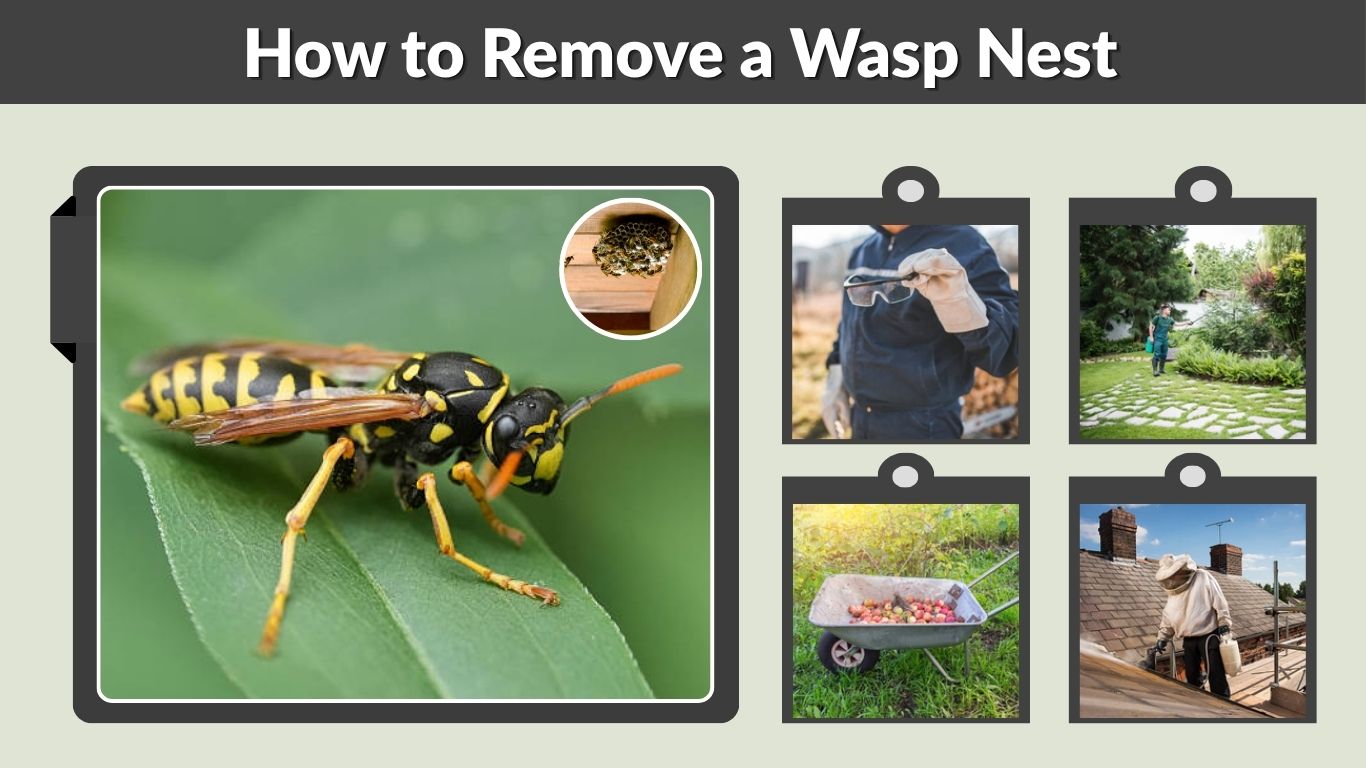
Discovering a wasp nest around your house can be concerning, especially when wasps gather near windows, porches, or outdoor living areas. Learning how to remove a wasp nest safely is important because disturbing an active colony can lead to painful stings and dangerous allergic reactions. Fortunately, several effective approaches can help you manage unwanted nests while reducing unnecessary risks. This guide explains seven essential safety tips, different nest removal situations, professional treatment costs, and simple prevention methods to keep wasps away from your home.
7 Safe and Effective Tips to Remove a Wasp Nest
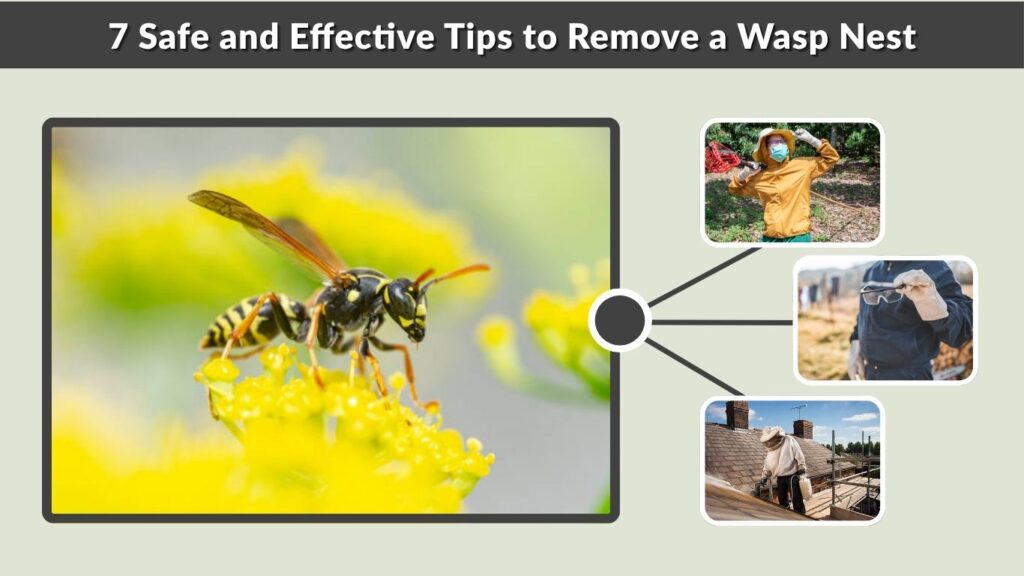
Removing a wasp nest requires careful preparation, proper identification, and a suitable treatment method. Wasps naturally defend their colonies, so approaching an active nest without understanding the risks can be dangerous. The following seven tips explain how to assess the situation, choose appropriate control methods, and determine when professional assistance is necessary to protect yourself and your family.
1. Identify the Type of Wasp Nest
Before attempting removal, identify the insects occupying the nest. Different wasps build different structures and may require different management approaches.
- Paper wasps: Build open, umbrella-shaped nests with visible hexagonal cells.
- Yellowjackets: Commonly build enclosed nests underground or inside structural cavities.
- Bald-faced hornets: Construct large, gray, enclosed paper nests, often in trees.
- Mud daubers: Create small nests from mud, usually on sheltered walls or ceilings.
Observe from a safe distance. Identifying the nest helps determine whether professional treatment is necessary.
2. Determine Whether Removal Is Necessary
Not every wasp nest needs immediate removal. Wasps are beneficial predators that help control caterpillars, flies, and other garden insects.
A nest located far from frequently used areas may be left undisturbed until the colony naturally becomes inactive. However, nests near doorways, children’s play areas, or busy walkways may require treatment.
Consider the colony’s size, location, and activity before making a decision. If people cannot avoid the nesting area, professional removal is usually the safest approach.
3. Wear Appropriate Protective Clothing
Protective clothing can reduce exposed skin, although it cannot guarantee protection against wasp stings.
If a small, accessible nest is suitable for homeowner treatment, follow the protective equipment instructions on the insecticide label.
Important precautions include:
- Wear long sleeves, long trousers, and enclosed shoes.
- Use suitable gloves and eye protection.
- Keep children and pets away from the treatment area.
- Avoid loose clothing that may trap insects.
- Maintain an unobstructed route away from the nest.
Anyone with a known severe sting allergy should avoid treating active nests.
4. Choose an Appropriate Wasp Control Product
For certain small, exposed nests, products specifically labeled for wasp control can be effective when used according to their instructions.
Some aerosol products are designed to reach nests from a distance, reducing the need to approach the colony. However, they must be suitable for the insect species and treatment location.
Avoid using household cleaners, gasoline, or improvised chemical mixtures. Never combine insecticides or apply chemicals inside electrical fixtures, ventilation systems, or other unsuitable areas.
For inaccessible or concealed nests, hire a qualified pest-control professional.
5. Consider the Best Time for Treatment
Wasps are generally less active during late evening or early morning, when temperatures are cooler and many colony members are inside the nest.
However, reduced activity does not mean the insects are harmless. Disturbing the nest can still cause defensive swarming.
Low-light conditions also introduce additional hazards, including poor visibility and accidental contact with nearby objects.
If treatment cannot be performed safely from the ground with a clear exit route, avoid attempting it yourself. Professional technicians can assess the safest treatment conditions.
6. Never Knock Down an Active Wasp Nest
Striking, shaking, burning, or flooding an active nest is dangerous because sudden disturbances may provoke defensive behavior.
Large colonies can contain hundreds or thousands of insects, depending on the species.
Never block an occupied nest entrance, particularly when wasps are entering through siding or a wall. They may search for another exit and enter indoor spaces.
Underground and elevated nests also create additional risks. Avoid digging into colonies or climbing ladders to reach nests.
7. Remove Inactive Nests and Prevent Future Nesting
After successful treatment or natural colony decline, confirm that insect activity has stopped before handling the nest.
An accessible, abandoned paper nest can generally be detached and discarded. Use gloves and appropriate tools to avoid contact with debris.
Inspect surrounding structures afterward for gaps or sheltered spaces that could attract new colonies.
Most temperate-climate social wasps do not reuse their previous year’s nests, but new queens may build nearby when suitable conditions remain.
How to Remove Wasp Nests From Different Locations
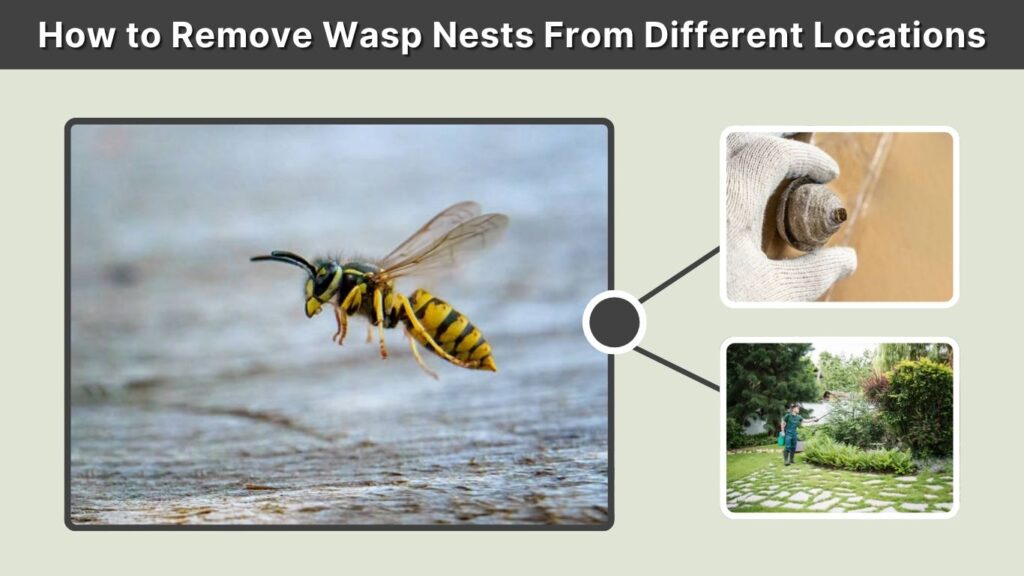
Wasp nest location determines how difficult and hazardous removal may be. Some species establish colonies beneath roof overhangs, while others occupy trees, underground cavities, or spaces inside walls. Understanding these nesting habits helps homeowners avoid unsafe approaches. Hidden and elevated colonies often require specialized equipment and professional treatment rather than ordinary household removal methods.
Removing a Wasp Nest From a House
Wasps frequently build nests around porches, window frames, roof eaves, and outdoor structures.
A small, exposed paper wasp nest may be suitable for carefully planned treatment when easily accessible. However, active colonies near doors or inside roof spaces require additional precautions.
Never attempt to remove a nest while standing on a ladder or leaning outside an upper-floor window. Hire a professional when safe access is unavailable.
Removing a Wasp Nest From a Tree
Trees provide protected nesting locations for several social wasp species, including bald-faced hornets.
Nests hanging high above normal activity areas may not require intervention. However, colonies near patios, garden paths, or children’s play spaces can create hazards.
Avoid cutting branches or shaking trees containing active nests. Large aerial colonies should be assessed by a pest-control professional.
Removing a Wasp Nest From a Wall or Ground
Yellowjackets commonly occupy underground burrows and concealed wall cavities.
Ground nests should not be flooded, burned, or excavated while occupied. Similarly, wall entrances should never be sealed before the colony is controlled.
Professional technicians can identify the entrance, select an appropriate treatment, and determine whether the remaining nest material needs removal.
How Much Does Wasp Nest Removal Cost?
Professional removal prices vary depending on colony size, nesting location, species, and accessibility. Small exposed nests are generally easier to treat than colonies hidden behind walls or beneath the ground. Understanding these factors can help homeowners compare estimates and decide when professional treatment is the safer and more practical option.
Average Professional Removal Cost
In the United States, professional wasp nest removal commonly costs approximately 300–700, based on 2026 consumer estimates.
Small, easily accessible nests may cost less. Large hornet colonies, concealed wall nests, or complicated infestations can be considerably more expensive.
Request a written estimate covering treatment, follow-up visits, and any necessary structural repairs before hiring a service.
How to Prevent Wasps From Building Nests
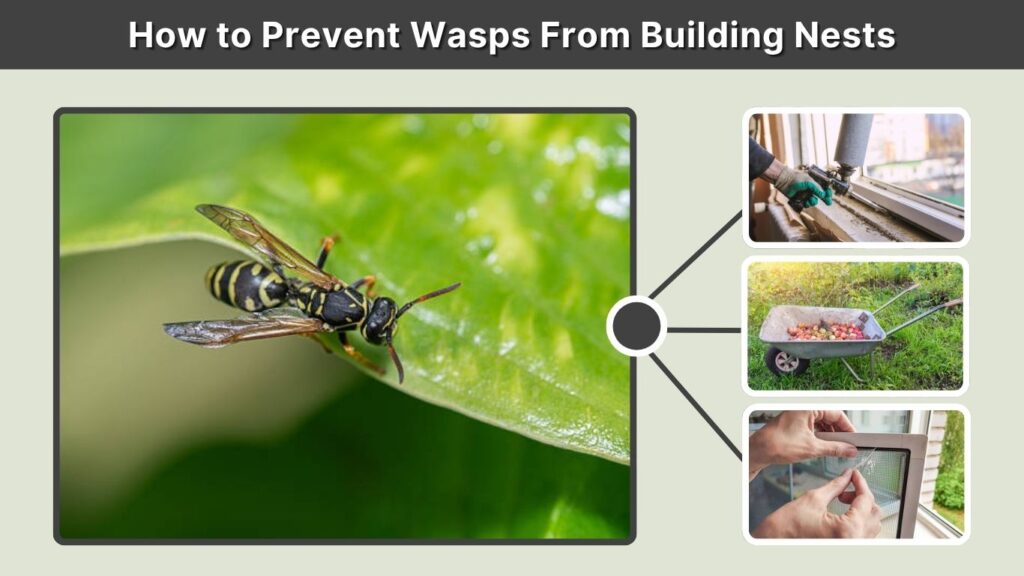
Preventing new colonies can reduce future pest problems around your home. Wasps often select protected areas with accessible food and suitable nesting surfaces. Regular property maintenance, early inspections, and simple exclusion measures can discourage nest establishment without requiring unnecessary pesticide applications or disturbing beneficial insects already living safely around your property.
Practical Wasp Prevention Methods
- Inspect roof eaves, porches, sheds, and deck structures regularly.
- Seal exterior cracks and openings after confirming they are unoccupied.
- Keep garbage containers tightly closed.
- Remove fallen fruit and uncovered food waste.
- Repair damaged window screens and exterior vents.
- Clean outdoor eating areas after meals.
- Monitor newly forming nests from a safe distance.
These measures cannot eliminate all wasp activity, but they can make residential areas less attractive for nesting.
FAQs
1. How do you remove a wasp nest without getting stung?
No removal method completely eliminates the possibility of stings. The safest approach is to avoid disturbing the colony and hire a professional for active or difficult-to-reach nests. Protective clothing, proper equipment, and products used according to their labels can reduce risks during appropriate treatments.
2. Can you remove a wasp nest without killing the wasps?
Yes, in some situations, leaving the nest undisturbed until the colony naturally declines is the best nonlethal solution. Relocating active social wasp colonies is difficult and potentially dangerous. When the nest is away from frequently used areas, waiting for seasonal inactivity may eliminate the need for treatment.
3. What is the best time to remove a wasp nest?
Late evening or early morning is generally when many social wasps are less active. However, treatments can still be dangerous, particularly with large colonies. In colder regions, abandoned nests may be easier to remove during winter after the colony has died, provided inactivity is confirmed.
4. How do you safely remove a small paper wasp nest?
First, determine whether the nest is active and whether removal is necessary. An abandoned nest can generally be detached carefully when accessible. For an active colony, use only appropriately labeled products under suitable conditions, or hire a professional if there is any significant sting risk.
5. Will wasps return after their nest is removed?
Most social wasps in temperate climates do not reuse old nests, but new queens may establish colonies in nearby sheltered areas. Sealing unoccupied entry points, managing garbage, inspecting outdoor structures, and reducing accessible food sources can help discourage future nesting around your home.
