

There’s nothing worse than sitting outside on your patio, enjoying a warm day, only to be swarmed by wasps. These buzzing pests not only disturb your peace—they can also pose a real danger to anyone allergic to their sting. While insecticides might be a quick fix, many people prefer natural, non-toxic solutions to protect both their family and the environment.
Thankfully, you can discourage wasps from nesting or hovering around your outdoor space using safe, natural methods. Below is a complete, step-by-step guide on how to keep wasps away from your patio without harsh chemicals.
Step 1: Eliminate Food and Scent Attractions

Wasps are always on the hunt for two things: protein and sugar. That makes your outdoor meals, drinks, and even trash bins incredibly tempting.
What to Do:
- Clear food immediately after meals. Don’t leave scraps, meat bones, or fruit peels on the table or grill.
- Cover sugary drinks, wine glasses, and fruit bowls outdoors. Wasps love sweet liquids.
- Wipe down surfaces like tables, chairs, and countertops with a vinegar-water mix to remove sugary residues.
- Seal garbage bins and compost containers with tight-fitting lids. The smell alone can attract wasps from a distance.
- Keep pet food indoors during the day.
By eliminating these attractions, you make your patio less appealing to any foraging wasps in the area.
Step 2: Spray Natural Wasp Repellents

Essential oils, particularly peppermint oil, have been found to repel wasps effectively.
How to Make Your Own Spray:
- Mix:
- 2 cups of water
- 1 teaspoon of dish soap
- 10–15 drops of peppermint essential oil
- 2 cups of water
- Shake well and pour into a spray bottle.
Where to Spray:
- Under the patio table and chairs
- Around patio doors and windows
- Under eaves, overhangs, or roof edges
- Fence lines or railing posts
- Patio umbrellas and canopies
Repeat every few days, especially after rain, to keep the scent strong. You can also try alternatives like clove, eucalyptus, or lemongrass oils for variety.
Step 3: Plant Wasp-Repelling Herbs and Flowers
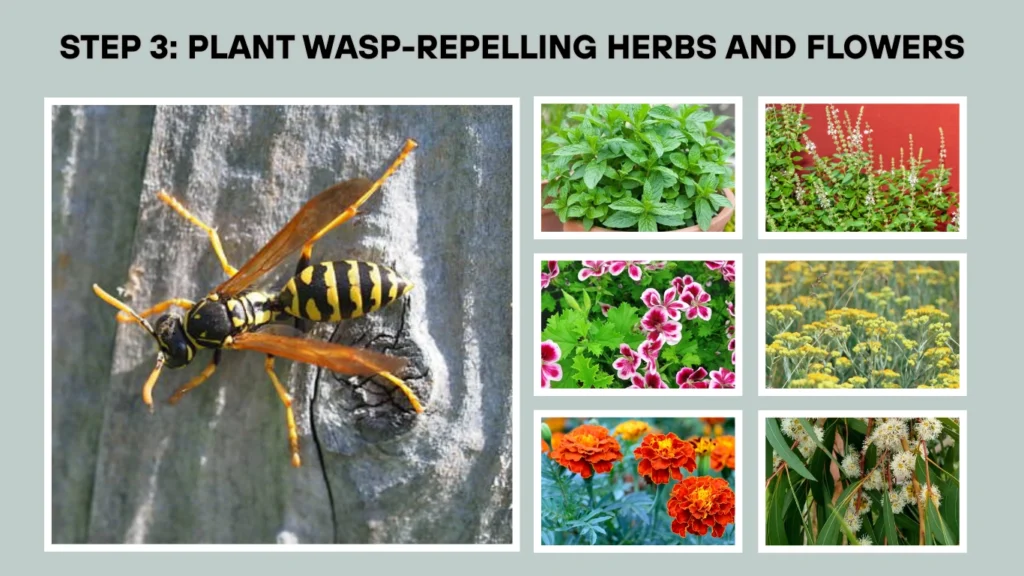
Certain plants produce scents that naturally deter wasps. By incorporating them into your patio landscape or using potted plants, you can create an invisible barrier.
Best Plants to Use:
- Peppermint
- Basil
- Citronella
- Wormwood
- Marigolds
- Eucalyptus
- Lemongrass
Position these plants near patio entrances, corners, or seating areas. Many of them also repel mosquitoes, making them doubly useful.
Step 4: Hang a Decoy Wasp Nest
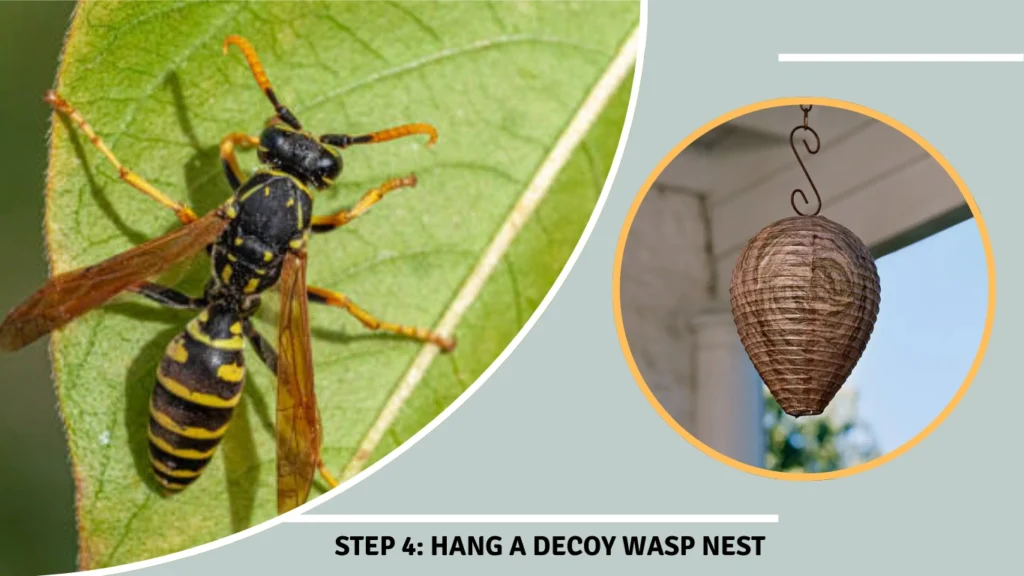
Wasps are territorial creatures. They avoid building nests near other active colonies. Hanging a fake wasp nest tricks them into thinking the area is already claimed.
What to Use:
- A store-bought decoy nest (available online or at hardware stores)
- A DIY version made by stuffing brown paper bags to resemble nests
Where to Hang:
- From eaves or tree branches near your patio
- In shaded corners
- Avoid placing two decoys too close—one is usually enough for each zone
This simple solution can be surprisingly effective, especially in spring when queen wasps are scouting for nest locations.
Step 5: Seal Entry Points and Hiding Spots
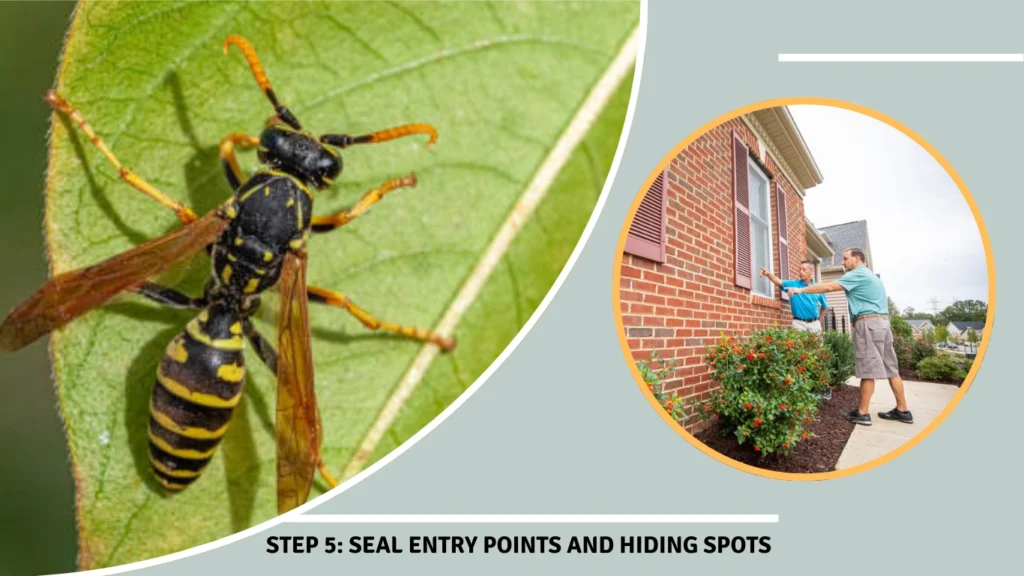
Wasps often seek out small crevices and cracks to build their nests or rest during the day. Inspect your patio and surrounding areas carefully.
Key Areas to Seal:
- Cracks in siding or decking
- Gaps around windows and doors
- Openings in patio furniture, grills, or umbrellas
- Vents or holes near the house exterior
Use silicone caulk, weather stripping, or mesh to seal off these areas. The fewer safe spaces wasps have, the less likely they’ll settle in.
Step 6: Avoid Wearing Scents or Bright Colors Outdoors
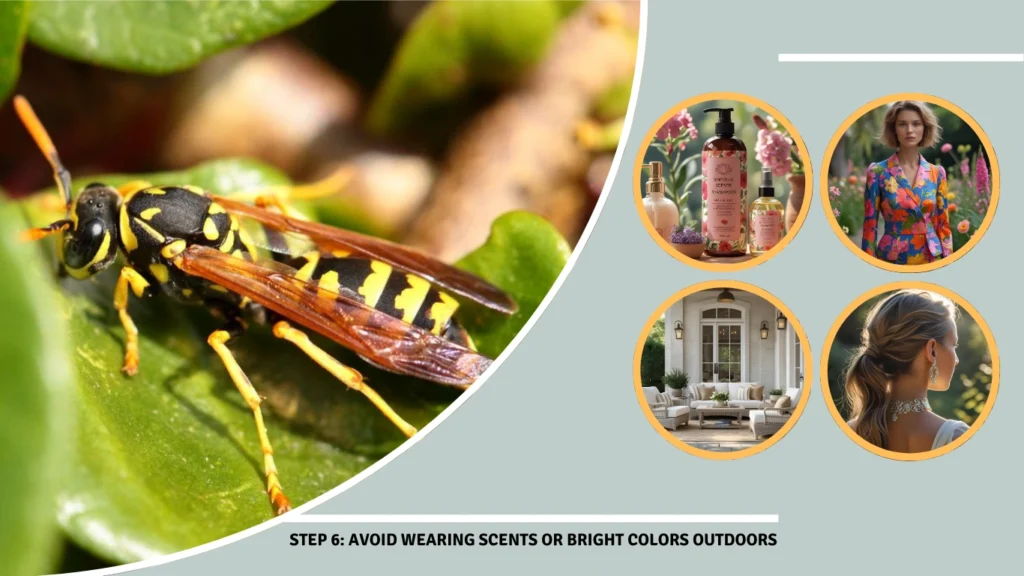
You may not realize it, but your appearance and smell can attract wasps.
Tips to Reduce Attraction:
- Avoid floral-scented lotions, shampoos, and perfumes before heading outside.
- Skip bright, floral-patterned clothing, which can be mistaken for flowers.
- Choose neutral colors like white, tan, or gray when sitting outside.
- Tie back long hair and avoid shiny jewelry that reflects sunlight.
These small changes can help you blend into the background and avoid unwanted attention from wasps.
Step 7: Set Natural Wasp Traps (If Needed)

If you’re still dealing with a few persistent wasps, a natural trap can help reduce their numbers without harming other beneficial insects like bees.
Homemade Wasp Trap Instructions:
- Cut the top off a plastic bottle and invert it inside the bottom half to form a funnel.
- Pour in a mixture of:
- 1 cup water
- 2 tablespoons sugar
- 2 tablespoons vinegar
- A drop of dish soap
- 1 cup water
- Place the trap near but not directly on your patio seating area.
The sugar attracts the wasps, the vinegar deters bees, and the soap prevents them from escaping.
Step 8: Keep Outdoor Lights Off at Night
While wasps are not active at night like moths, outdoor lights attract other insects—which are food for wasps. Reducing night lighting lowers insect activity and keeps wasps from being drawn to your patio during the day.
Use motion-sensor lights or switch to yellow bug lights, which are less attractive to insects.
Step 9: Stay Consistent With Prevention
Wasp prevention isn’t a one-time task. Consistency matters.
Create a Routine:
- Spray repellents every few days during wasp season (spring to early fall)
- Wipe surfaces after each meal or snack outdoors
- Keep an eye out for early nest formation in corners or under railings
- Replace old decoy nests each season
The more consistently you follow these steps, the less likely wasps will return.
Bonus Tip: What to Do If You Spot a New Nest
If you see wasps going in and out of a certain spot consistently, they may be building a nest.
Act Early:
- Use your peppermint or soap spray at dusk when activity is low
- Spray directly at the entrance or surface
- Repeat daily until activity stops
- Remove the nest only when you’re sure it’s inactive
Never try to knock down or burn a wasp nest—it’s dangerous and often ineffective.
Final Thoughts
Wasps don’t need to ruin your outdoor time. With a few smart, natural steps, you can reclaim your patio and enjoy it without the buzzing stress. From simple peppermint sprays to decoy nests and wasp-repelling plants, each method builds a strong defense without harming your health or the environment.
By acting early, staying consistent, and avoiding common mistakes, your patio can stay peaceful, sting-free, and perfect for relaxing all season long.
