
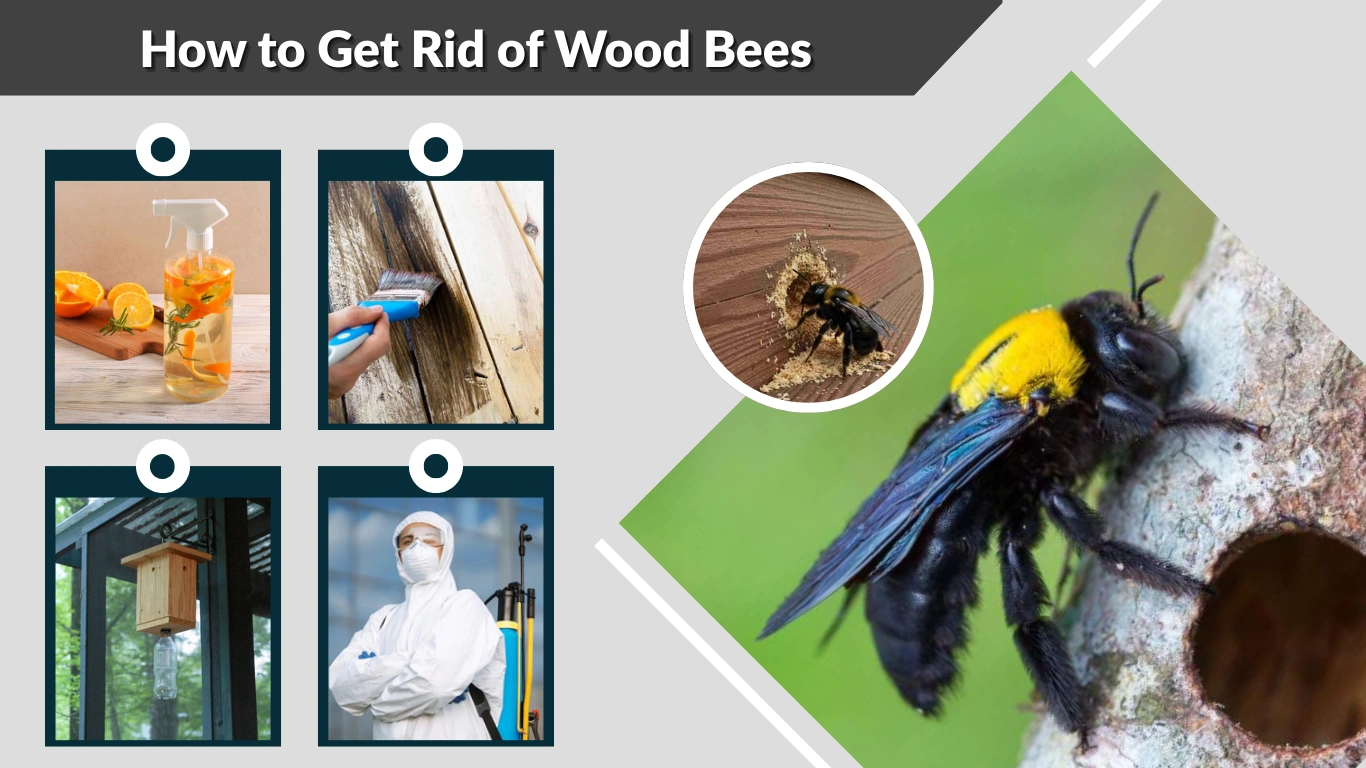
Wood bees, more commonly known as carpenter bees, are large solitary insects that resemble bumblebees but behave very differently. Instead of building hives, females bore tunnels into untreated or softwood to create nests. While they play a vital role as pollinators, their wood-drilling behavior can damage decks, fences, and even parts of homes.
Understanding Wood Bees (Carpenter Bees)
What Are Wood Bees?
Carpenter bees belong to the genus Xylocopa and are found worldwide. Unlike honeybees, they are solitary and do not produce honey. Females tunnel into wood to lay eggs, while males hover nearby defending territory.
Why They Become a Problem
Carpenter bees are not aggressive toward humans, but their nesting behavior can cause issues such as:
- Holes in decks, siding, and fences
- Sawdust piles (frass) beneath entry points
- Secondary damage from woodpeckers that peck holes to reach larvae
Over time, repeated nesting can weaken wood and create costly repairs.
Signs of Carpenter Bee Infestation
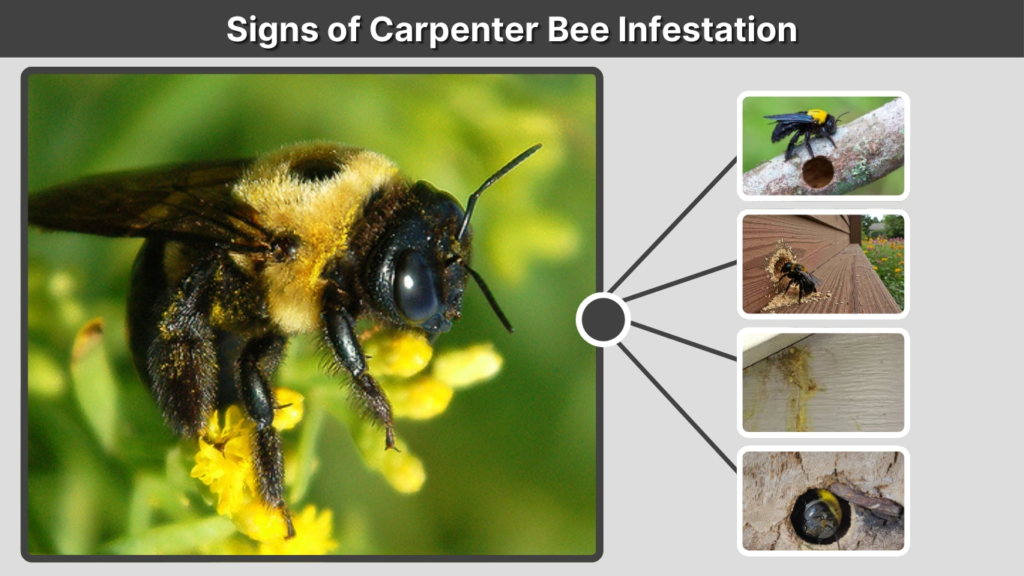
Before taking action, it’s important to identify the presence of carpenter bees. Look for:
- Round, ½-inch holes in exposed wood.
- Frass (sawdust) beneath the holes.
- Buzzing males hovering near eaves, decks, or fences.
- Yellow stains around entrances from pollen and waste.
These signs confirm that wood bees are nesting in your property.
Natural Ways to Get Rid of Wood Bees
For those who want to avoid chemicals and protect pollinators, natural remedies are a great first step.
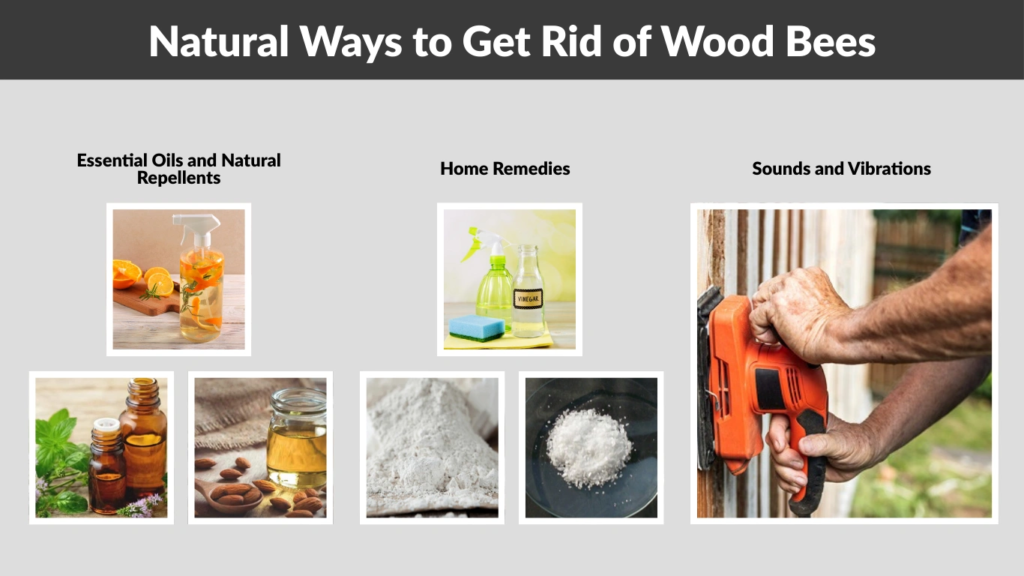
Essential Oils and Natural Repellents
Carpenter bees dislike strong scents, making essential oils effective deterrents. Common options include:
- Citrus oil – boiling citrus peels in water and spraying the solution on wood.
- Almond oil – proven to repel bees when applied near holes.
- Peppermint oil – mixed with water and sprayed as a repellent.
Home Remedies
Simple household solutions can discourage carpenter bees from returning:
- Vinegar solution – mix water and vinegar to spray near nests.
- Boric acid – lightly dusted near tunnels to deter insects.
- Diatomaceous earth – placed around entry points to make the area inhospitable.
Sounds and Vibrations
Carpenter bees prefer quiet nesting sites. Playing loud music or using vibration devices near infested areas can disturb them and encourage relocation.
Mechanical and DIY Control Methods
If natural repellents don’t work, you can try practical DIY methods to physically control carpenter bees.
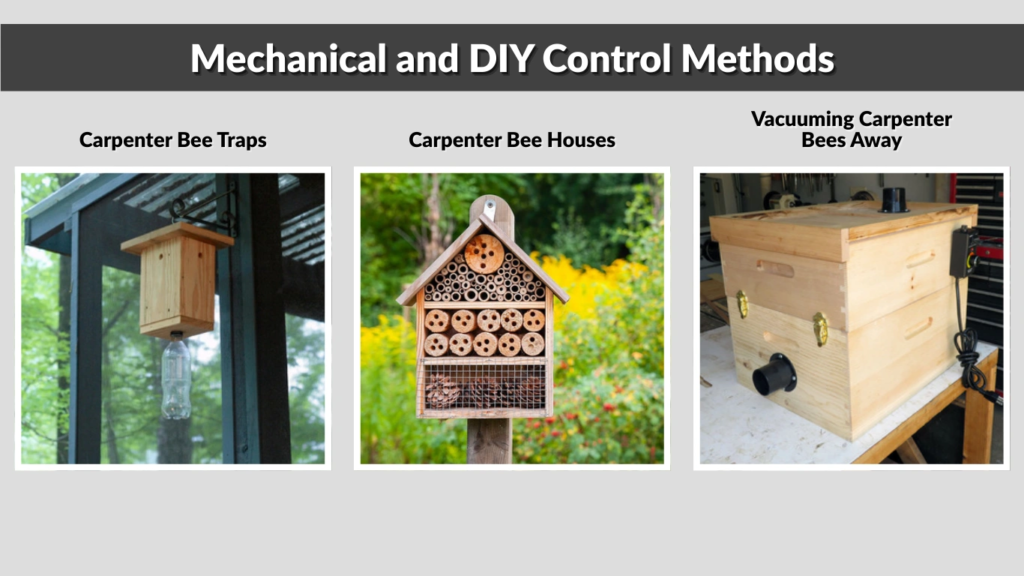
Carpenter Bee Traps
These traps mimic nesting tunnels. Bees enter but cannot escape, eventually dying inside. While effective, traps are best used sparingly to avoid unnecessary harm.
Carpenter Bee Houses
Providing an alternative nesting site can divert bees from your home. Carpenter bee houses, filled with pre-drilled tunnels, give them a safe place to live without damaging your property. Place them away from decks and fences to lure bees in.
Vacuuming Carpenter Bees Away
A shop vacuum fitted with a small nozzle can remove carpenter bees from tunnels. This method should be used carefully and ideally at night when bees are less active.
Chemical Treatments (Use With Caution)
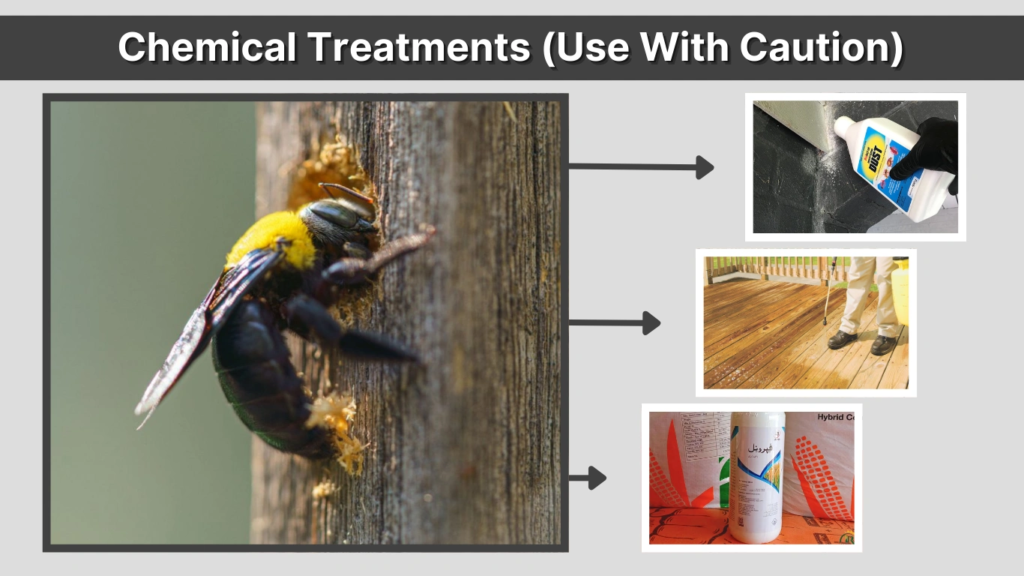
For severe infestations, chemical solutions may be necessary. However, they should be used with caution to protect beneficial insects.
Insecticides and Dust Treatments
- Dust insecticides can be applied directly into tunnels.
- Aerosol foam sprays expand inside holes, killing larvae and preventing reuse.
These treatments are most effective at night when adult bees are inside the tunnels.
Borate Wood Treatments
Borate-based solutions can be applied to untreated wood. Once absorbed, the wood becomes unappealing for nesting and prevents future infestations.
Fipronil-Based Products
Some products contain fipronil, a powerful insecticide. These should be handled with extreme care, following label instructions, and preferably by professionals to minimize environmental risks.
Preventing Carpenter Bees from Returning
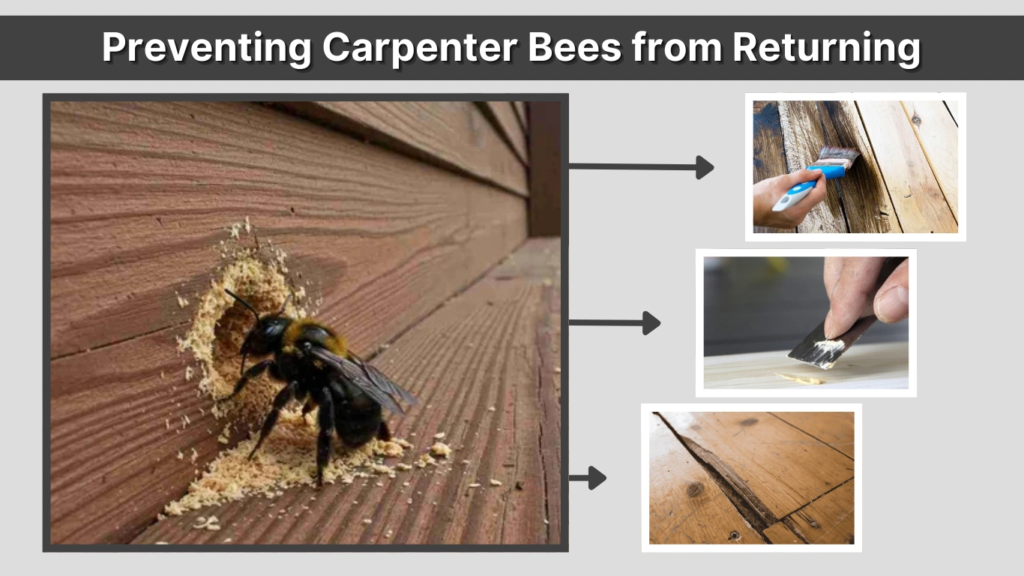
Once bees are removed, preventing reinfestation is critical.
Protecting Wood Surfaces
Carpenter bees prefer untreated wood. To protect your property:
- Paint or stain exposed wood – smooth, treated surfaces discourage nesting.
- Seal holes with wood putty or caulk – prevents reuse of old tunnels.
- Replace damaged boards – ensure no hollowed-out wood remains.
Obstructing Access
Cover vulnerable areas such as eaves or siding with metal mesh or vinyl cladding to block access.
Long-Term Preventive Measures
- Perform seasonal inspections of decks, fences, and wooden structures.
- Choose hardwoods or pressure-treated lumber for new construction.
- Use bee houses to provide alternative nesting areas.
Professional Pest Control Options
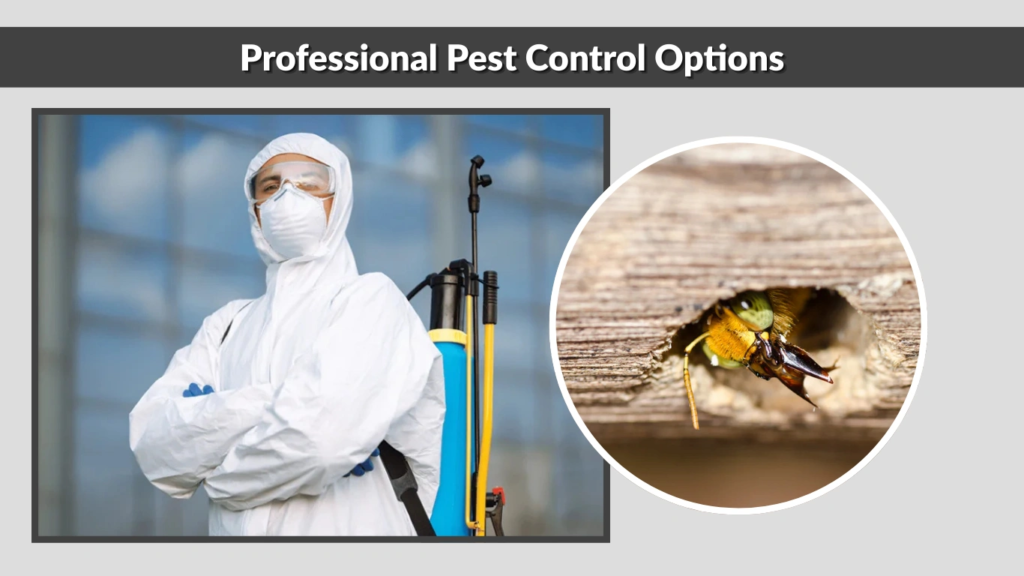
Sometimes, DIY methods are not enough—especially if carpenter bees have returned year after year. In such cases, hiring professional pest control may be the most effective solution.
- Inspection: Professionals identify active nests and assess structural risk.
- Targeted treatments: They apply specialized insecticides or foams safely and efficiently.
- Sealing and repair: Some services include plugging holes and reinforcing wood.
- Preventive plans: Ongoing maintenance programs ensure carpenter bees don’t return.
While this option costs more than DIY, it provides peace of mind and long-term results, especially for large homes or persistent infestations.
Balancing Control and Conservation
Why Not Kill Carpenter Bees?
Although carpenter bees can be a nuisance, they are also important pollinators. They help fertilize flowers, crops, and garden plants, increasing biodiversity and crop yield. Killing them indiscriminately can disrupt local ecosystems.
Humane Alternatives
If you prefer not to kill carpenter bees, consider:
- Relocation traps – capture bees and release them away from your home.
- Bee houses – encourage them to nest in safe, designated spots.
- Natural deterrents – citrus oil, almond oil, and vinegar sprays keep them away without harm.
By choosing humane methods, you protect your property while supporting pollinator populations.
Quick Tips Recap – How to Get Rid of Wood Bees
For a fast reference, here are the most effective ways to handle carpenter bees:
- Identify early signs – look for round holes, sawdust, and buzzing males.
- Spray natural repellents – citrus oil, almond oil, or vinegar.
- Install traps or bee houses – redirect bees from your home.
- Seal holes with wood putty – prevent reuse of tunnels.
- Paint or stain wood – bees prefer untreated surfaces.
- Use insecticide dust or foams – only when infestations are severe.
- Hire professionals – if damage is extensive or DIY fails.
FAQs
What smells do carpenter bees hate the most?
Carpenter bees dislike strong scents such as citrus, almond oil, and peppermint. Spraying these near infested areas can deter them effectively.
Can vinegar really get rid of wood bees?
Yes. A vinegar-and-water solution sprayed near tunnels creates an unpleasant environment, discouraging carpenter bees from returning.
Do carpenter bee traps work effectively?
Traps can be effective, especially in high-infestation areas. However, they kill bees, so they are best used only when other methods fail.
How do I stop carpenter bees without harming them?
Use humane strategies such as bee houses, citrus sprays, and sealing old holes. These methods redirect carpenter bees without causing harm.
Can carpenter bees cause serious structural damage?
Over time, yes. A single bee may not create major issues, but repeated nesting in the same wood can weaken decks, beams, and siding—especially when woodpeckers enlarge the holes.
