
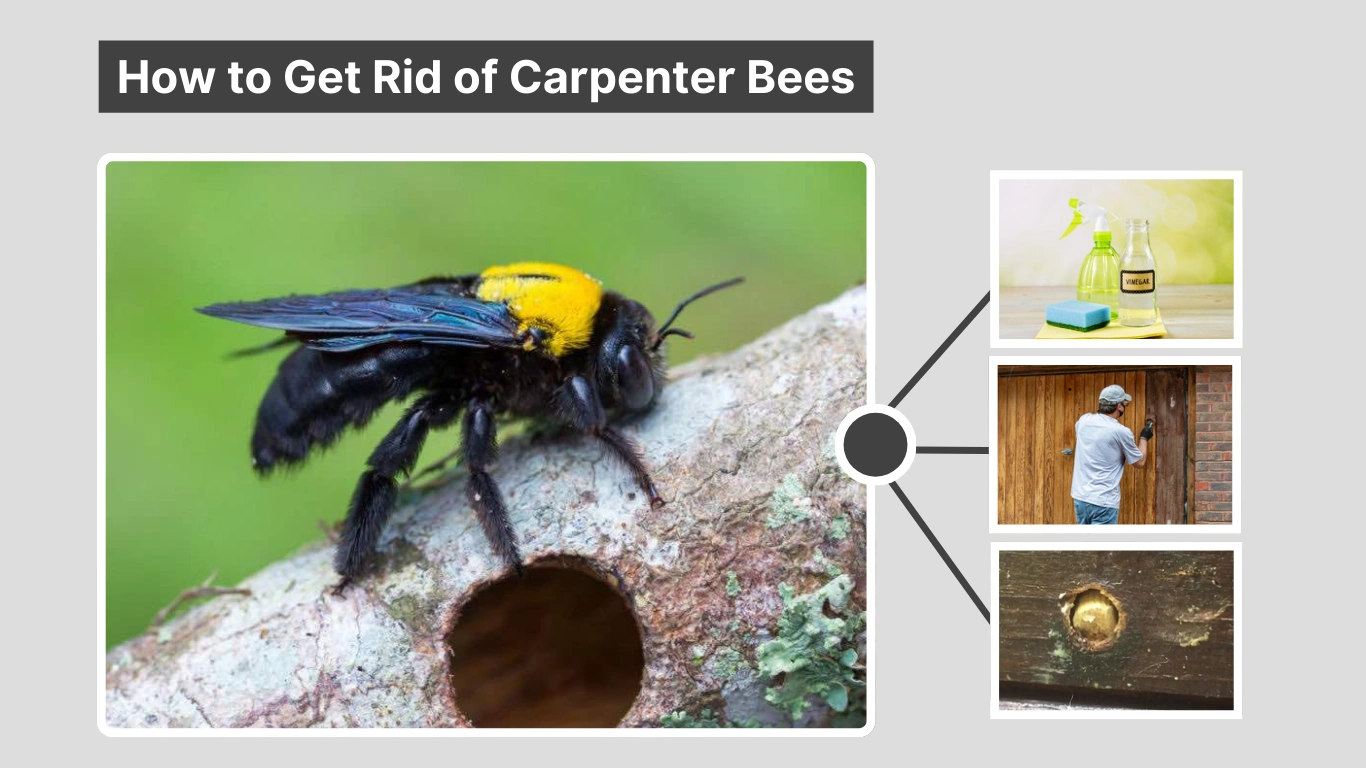
Carpenter bees are large, buzzing insects that often show up around homes in spring and summer. Unlike honeybees, they don’t live in hives but prefer to drill into untreated wood, leaving perfectly round holes behind. While they play a role in pollination, their nesting behavior can cause serious damage to decks, fences, siding, and outdoor furniture.
Understanding Carpenter Bees
What Are Carpenter Bees?
Carpenter bees belong to the genus Xylocopa. They are often mistaken for bumble bees because of their size and buzzing sound. However, there’s one major difference: carpenter bees have a shiny, hairless black abdomen, while bumble bees are fuzzy all over.
Unlike termites, carpenter bees don’t eat wood. Instead, they bore holes and tunnels into it to create nests. These tunnels can weaken structures over time, especially if multiple bees return year after year.
Why Are Carpenter Bees a Problem?
- Structural damage: Tunnels in decks, siding, and wooden beams can reduce durability.
- Cosmetic damage: Perfectly round holes (about ½ inch wide) are unsightly.
- Attracting predators: Woodpeckers often peck at infested wood to reach larvae, causing even more destruction.
- Seasonal return: Carpenter bees often return to the same wood each year, expanding their tunnels.
In short, ignoring them allows the problem to grow worse.
Signs of a Carpenter Bee Infestation

Recognizing carpenter bees early helps in treating the issue before major damage occurs.
Key Indicators
- Perfectly round holes: About the size of a dime, usually in decks, railings, or siding.
- Sawdust piles: Tiny shavings beneath holes indicate fresh tunneling.
- Buzzing activity: Large bees hovering near wooden structures.
- Yellow stains: Droppings near the entry holes may appear as streaks.
Carpenter Bee vs. Wasp or Termite Damage
- Wasps don’t drill into wood—they build papery nests.
- Termites eat wood from the inside, leaving hollow sections and mud tubes.
- Carpenter bees leave clean, round entry holes but don’t consume the wood.
Knowing these differences ensures the right treatment is applied.
How to Get Rid of Carpenter Bees Naturally
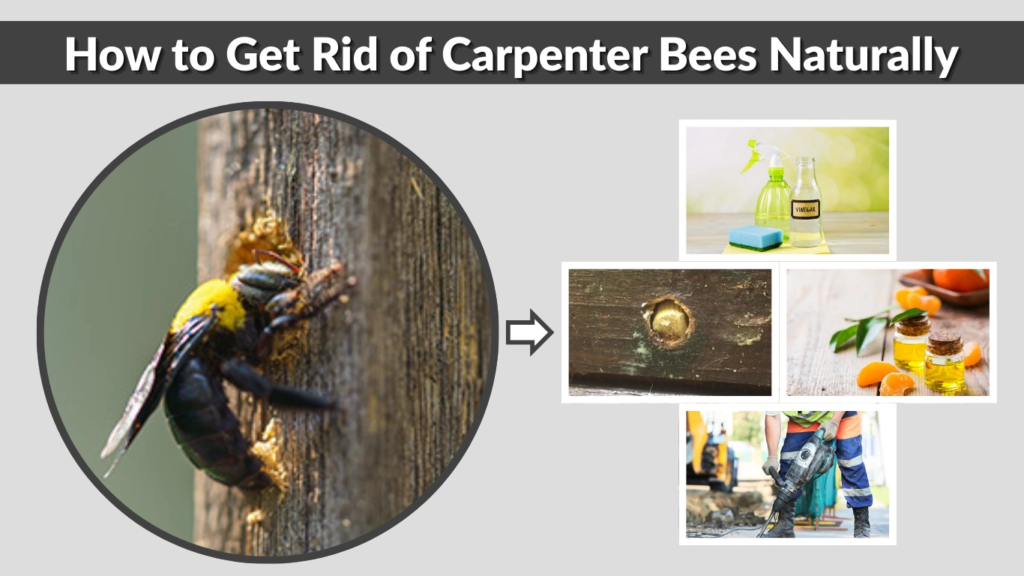
Natural methods are a popular choice for homeowners searching “how to get rid of carpenter bees without killing them” or “how to get rid of carpenter bees naturally.” These solutions are eco-friendly, non-toxic, and safe for kids, pets, and gardens.
Vinegar Spray Solution
One of the simplest remedies is a vinegar spray. Mixing equal parts white vinegar and water in a spray bottle creates a strong-smelling deterrent. Spray it directly into carpenter bee holes and around areas where bees are active. The acidic smell and taste repel them quickly.
Citrus Oil Repellent
Carpenter bees dislike citrus scents. Boiling citrus peels (lemon, lime, or orange) in water and spraying the solution into holes can drive them away. Essential oils like tea tree, peppermint, or eucalyptus also work well when diluted and sprayed on wood surfaces.
Noise and Vibration
Carpenter bees prefer quiet nesting areas. Placing a radio, speaker, or even wind chimes near infested areas creates constant disturbance, encouraging them to leave.
Sealing Holes After Bees Leave
It’s important not to seal holes while bees are inside, as they may bore new tunnels to escape. Instead:
- Spray a natural repellent into the hole.
- Wait until activity ceases.
- Fill holes with wood putty, caulk, or dowels.
- Repaint or stain the area to deter future nesting.
Advantages of Natural Methods
- Non-toxic: Safe for families, pets, and gardens.
- Eco-friendly: Protects pollinators while addressing property damage.
- Cost-effective: Uses common household ingredients like vinegar or citrus.
Natural solutions may require multiple applications but are ideal for those who want to protect both their home and the environment.
Chemical and Household Solutions
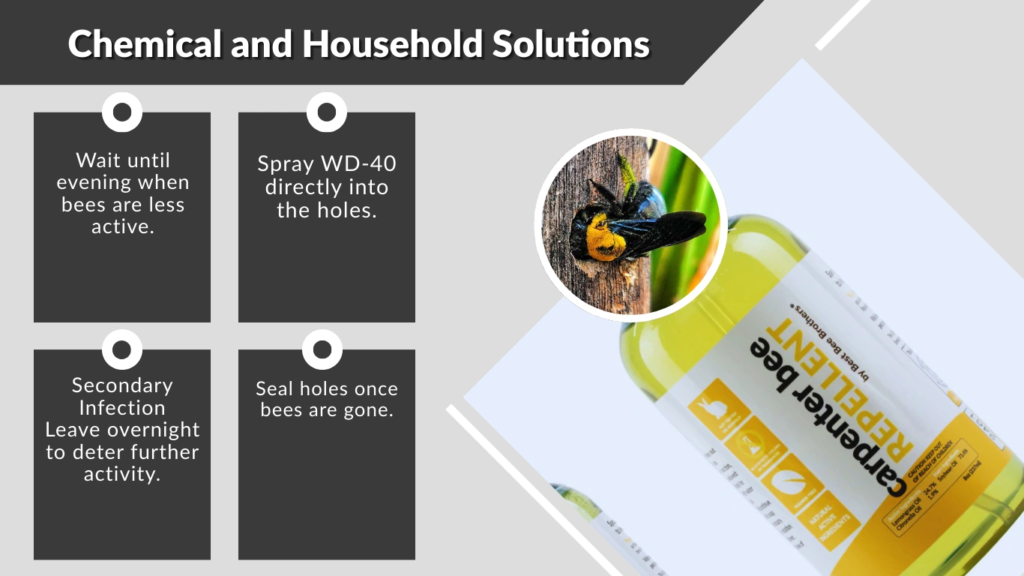
While natural remedies work for many, some homeowners prefer stronger methods to handle stubborn infestations. Searches like “how to get rid of carpenter bees WD-40” or “carpenter bees how to get rid of them permanently” often point toward chemical options.
Using WD-40 Against Carpenter Bees
WD-40 is a surprisingly common DIY tool for carpenter bee control. Its strong smell and oily base suffocate bees when sprayed into their tunnels.
How to use it safely:
- Wait until evening when bees are less active.
- Spray WD-40 directly into the holes.
- Leave overnight to deter further activity.
- Seal holes once bees are gone.
Pros: Inexpensive, readily available, effective.
Cons: Not eco-friendly and should be used cautiously around pets and plants.
Insecticidal Sprays and Dusts
Commercial sprays specifically labeled for carpenter bees can kill adults and larvae inside tunnels. Powdered insecticides (boric acid or carbaryl dust) work well when puffed into holes, as they coat tunnel surfaces.
Safety Note: Always wear protective gear and follow instructions. Sprays and dusts should be a last resort if natural or humane methods fail.
Humane Ways: How to Get Rid of Carpenter Bees Without Killing Them

Carpenter bees are pollinators, which means they benefit the environment. Many people search “how to get rid of carpenter bees without killing them” because they want to protect their property without harming the ecosystem.
Carpenter Bee Traps
Wooden bee traps mimic nesting holes but lead bees into a container where they can’t escape. These can be relocated far from the home, keeping bees alive while preventing property damage.
Relocating Nests
If you notice a nest in a vulnerable area, you can call a local beekeeper or pest professional who specializes in humane relocation.
Natural Repellents
- Essential oils (peppermint, eucalyptus).
- Almond oil, which has natural toxicity to bees when applied around holes.
- Painted or stained wood, since bees prefer untreated wood.
By combining these approaches, you can deter bees without eliminating them.
Location-Specific Strategies
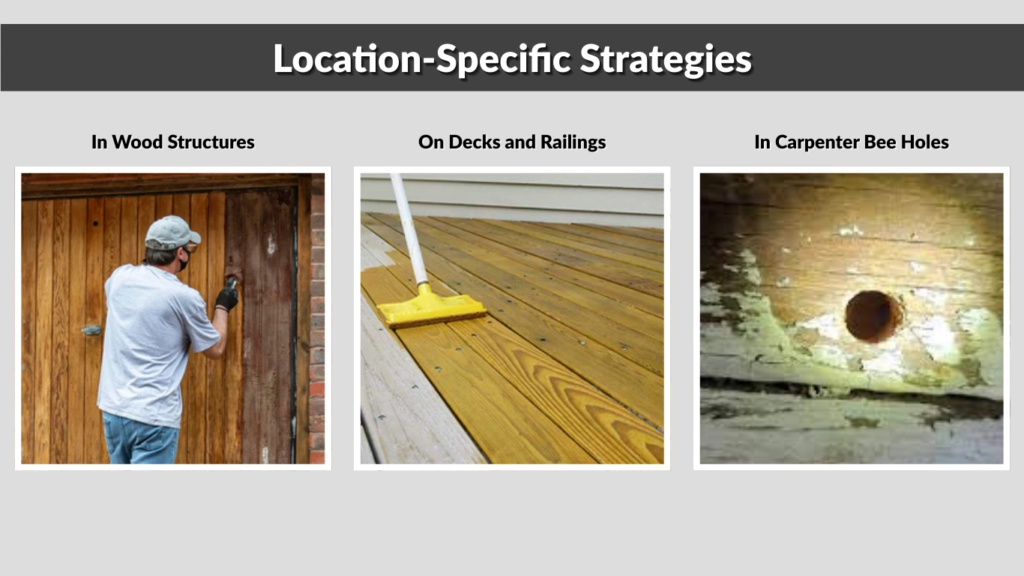
Searches like “how to get rid of carpenter bees on deck,” “in wood,” or “holes in siding” reflect that infestations vary. Here’s how to handle different situations.
In Wood Structures
- Spray repellents into holes.
- Seal with caulk or wood filler.
- Sand and repaint to protect.
On Decks and Railings
- Apply outdoor wood sealant or paint annually.
- Hang carpenter bee traps near the deck.
- Use citrus or vinegar sprays regularly.
In Carpenter Bee Holes
- Clean out debris using a thin stick or pipe cleaner.
- Apply repellent or dust into the hole.
- Seal tightly with wood putty and paint over.
In Carpenter Bee Nests
- Observe for activity; never seal an active nest.
- Once bees leave, fill tunnels and treat the surrounding area.
- Prevent re-entry with repellent sprays or painted surfaces.
Outside Around the Yard
- Limit exposed untreated wood.
- Cover furniture when not in use.
- Place decoy nests—bees avoid competing colonies.
Long-Term and Permanent Solutions
If you’re searching “how to permanently get rid of carpenter bees” or “how to get rid of carpenter bees for good,” prevention is key.
Preventative Measures
- Paint or Stain Wood: Bees rarely bore into painted surfaces.
- Use Hardwood or Treated Lumber: Softer woods attract more tunneling.
- Cover Surfaces: Install vinyl, aluminum, or composite siding.
Ensuring They Don’t Return
- Inspect annually for new holes.
- Reseal any cracks or exposed wood.
- Reapply repellent oils or sprays before nesting season.
A combination of deterrents, maintenance, and sealing provides the most permanent solution.
Carpenter Bees vs. Other Pests
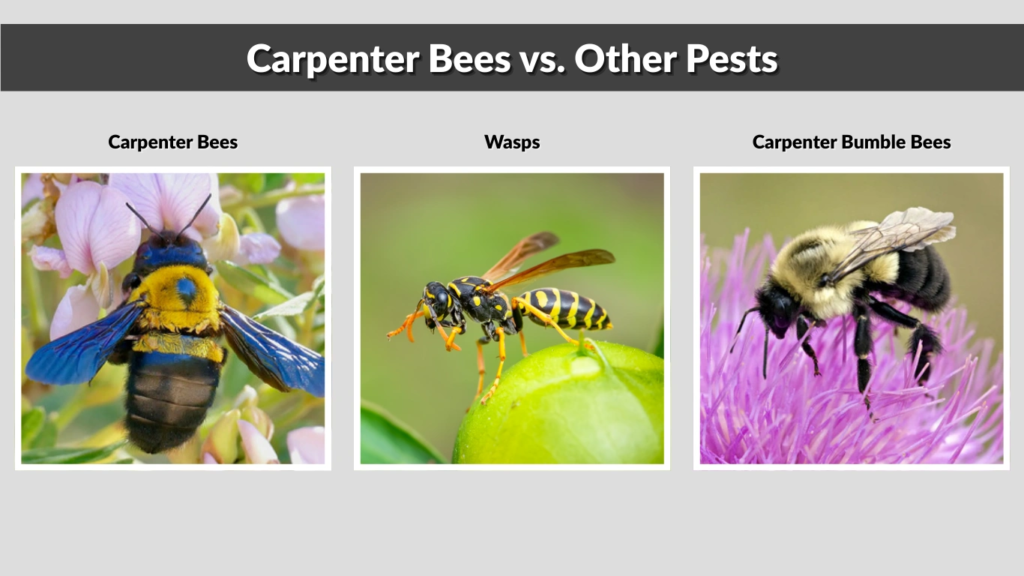
Carpenter Bees vs. Wasps
- Wasps are aggressive and sting multiple times.
- Carpenter bees are mostly solitary and sting only if provoked.
- Wasp nests are papery, while carpenter bee nests are tunnels in wood.
Carpenter Bees vs. Carpenter Bumble Bees
The term “carpenter bumble bees” is often used mistakenly. Bumble bees don’t bore into wood; carpenter bees do. Bumble bees nest in the ground or old rodent burrows instead.
Community Insights and DIY Tips
Online forums like Reddit are filled with homeowners sharing DIY methods. Popular tips include:
- Filling holes with steel wool before sealing to discourage return.
- Using aluminum foil tape over holes temporarily.
- Blasting holes with loud noise or vibrations.
While some methods are unconventional, they highlight the importance of persistence. Carpenter bees often require a mix of techniques rather than one quick fix.
Conclusion
Carpenter bees may look intimidating, but they’re valuable pollinators that deserve thoughtful management. Whether you prefer natural remedies like vinegar and citrus, household fixes like WD-40, or humane traps, there’s a method that fits your needs.
To truly protect your property, remember that prevention is just as important as removal. Painted and sealed wood, regular inspections, and natural deterrents can keep carpenter bees away for good. By balancing effective strategies with ecological awareness, you can enjoy your home without unwanted buzzing tenants.
FAQs
1. What’s the fastest way to get rid of carpenter bees?
Using WD-40 or commercial sprays works quickly, but sealing holes afterward is essential for long-term success.
2. Can vinegar really repel carpenter bees?
Yes. Vinegar’s strong smell irritates carpenter bees, making it an effective natural repellent when sprayed into holes.
3. Is WD-40 safe and effective for carpenter bee removal?
It is effective but not eco-friendly. Use with caution and only as a last resort, especially if you want to protect pollinators.
4. How do I get rid of carpenter bees without harming them?
Use traps, natural repellents like citrus oil, and seal wood surfaces. Relocating nests with professional help is another humane option.
5. What’s the best long-term prevention method for decks and wood structures?
Painting or staining exposed wood, sealing holes quickly, and installing decoy nests are the most effective permanent strategies.
