
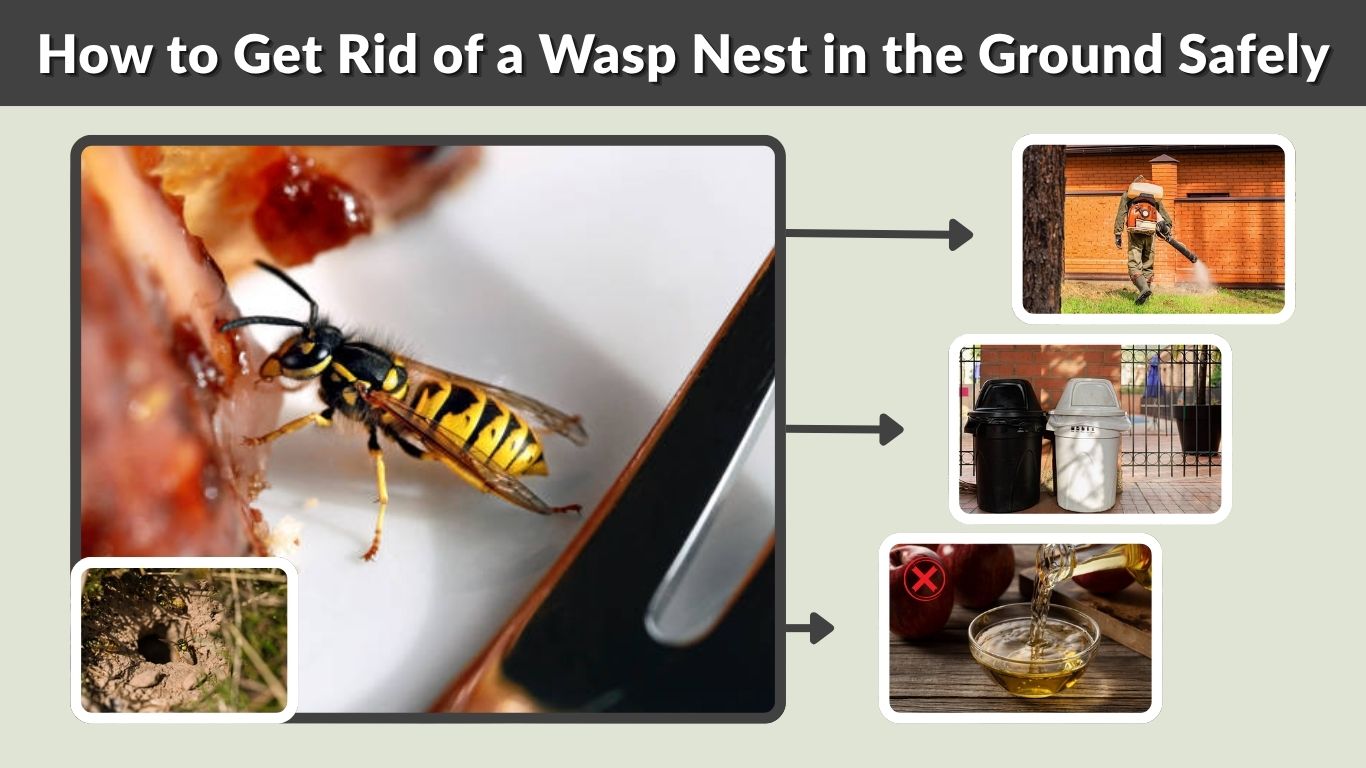
Discovering wasps flying in and out of a small hole in your lawn can be worrying, especially when children or pets frequently use the area. Ground-nesting wasps often establish hidden colonies beneath grass, gardens, and outdoor structures, making them difficult to control. Understanding how to get rid of a wasp nest in the ground safely can help prevent painful stings and protect your property. This guide explains identification, effective removal methods, natural alternatives, and prevention strategies.
How to Identify a Wasp Nest in the Ground
Ground wasp nests are often difficult to recognize because most of the structure remains hidden beneath the soil. Some species use abandoned rodent burrows, while others dig their own tunnels. Identifying the nesting species and monitoring activity from a safe distance can help determine whether the nest requires treatment or can remain undisturbed.
Common Signs of Ground Wasp Nests
Look for these signs around your lawn or garden:
- Small holes: Round openings in soil, grass, or garden beds.
- Frequent wasp activity: Multiple wasps repeatedly entering and leaving the same opening.
- Loose soil: Small piles of excavated dirt around certain nesting entrances.
- Buzzing sounds: Audible activity around some heavily occupied nests.
- Defensive behavior: Wasps flying aggressively toward people who approach a colony.
Not every hole indicates a dangerous wasp nest. Observing the insects without approaching them is important.
Types of Ground-Nesting Wasps
Yellowjackets are among the most concerning ground-nesting wasps because they form social colonies that aggressively defend their nests. Established colonies may contain hundreds or thousands of workers.
Cicada killer wasps are larger solitary insects that create burrows in sunny, well-drained soil. Although their appearance can be intimidating, they rarely attack people unless physically handled.
Other digger wasps, including sand wasps, generally pose little danger and help control populations of other insects.
How to Get Rid of a Ground Wasp Nest Safely
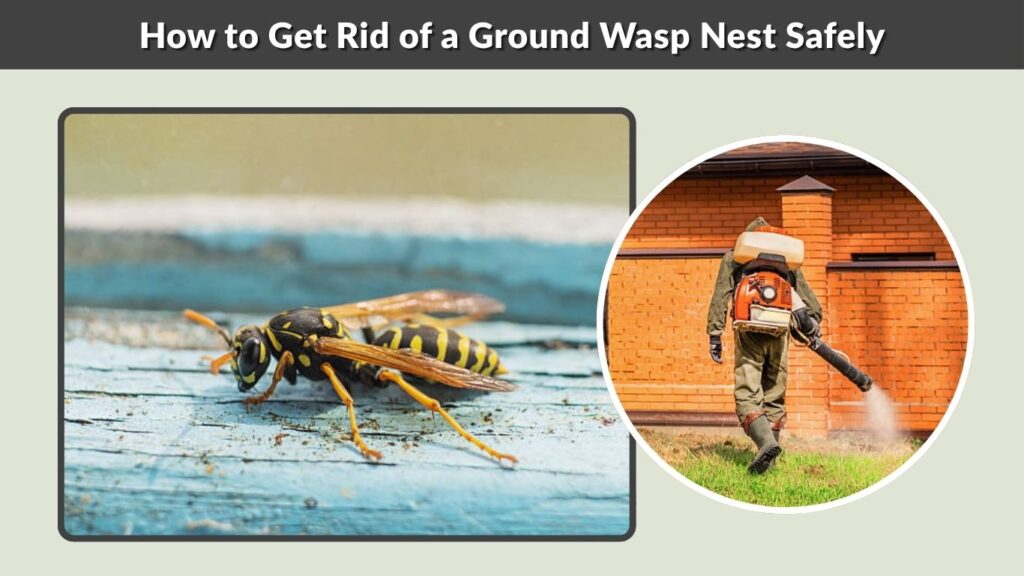
Removing an underground wasp nest requires careful planning because the colony may extend well beyond the visible entrance. Disturbing the soil or blocking the opening can provoke defensive behavior. The safest approach is usually professional treatment, particularly for active yellowjacket colonies. Smaller problems may sometimes be managed without insecticides or direct nest disturbance.
Step 1: Locate the Nest Without Disturbing It
Watch the suspected entrance from a safe distance during daylight.
Repeated activity through one opening may indicate a yellowjacket colony. Avoid walking over the area, digging into the soil, or mowing near the entrance.
Keep children and pets away. If the wasps are defensive or multiple entrances are visible, do not approach further.
Step 2: Determine Whether Removal Is Necessary
Not every ground wasp nest needs elimination.
If the nest is far from walkways, playgrounds, or frequently used garden areas, leaving it undisturbed may be the safest choice.
However, nests near entrances, patios, children’s play areas, or regularly maintained lawns can present considerable risks.
Professional removal is strongly recommended when household members have severe insect-sting allergies.
Step 3: Choose an Appropriate Wasp Control Treatment
For active underground yellowjacket nests, pest control professionals commonly use insecticidal dusts or foams specifically labeled for ground-nesting wasps.
Dust treatments can be effective because workers may carry particles into the colony.
If considering do-it-yourself treatment, use only a registered product specifically labeled for underground wasp nests and follow its directions precisely. Treatment is commonly recommended during late evening or nighttime, when workers are less active.
Wear the protective equipment specified on the label, maintain a clear escape route, and avoid treatment if the nest is large, difficult to access, or close to people.
Never assume ordinary aerosol sprays will reach a deeply hidden colony.
Step 4: Check for Remaining Activity
After professional or appropriate labeled treatment, allow the recommended time for the product to work.
Some workers may continue entering or leaving the nest for a short period. Observe from a safe distance rather than opening the ground to investigate.
If substantial activity continues after the product’s expected treatment period, contact a pest control professional.
Do not fill or excavate the entrance until the colony is confirmed inactive.
How to Get Rid of Ground Wasp Nests Naturally
Homeowners often search for ways to eliminate ground wasp nests without chemical pesticides. Unfortunately, many popular homemade remedies cannot reliably reach underground colonies and may expose people to defensive insects. Natural management works best through habitat modification, seasonal patience, and avoiding unnecessary contact rather than directly attacking an active nest.
Wait for the Colony to Become Inactive
In regions with freezing winters, most yellowjacket colonies naturally die after sustained cold weather.
New queens survive separately in protected overwintering locations, while the original colony generally does not return the following spring.
If the nest is away from people and pets, waiting for seasonal inactivity may eliminate the need for treatment.
However, this approach is less reliable in warmer climates where some colonies may remain active for longer periods.
Make the Area Less Attractive to Digger Wasps
Solitary ground-nesting wasps often prefer exposed, dry, sandy soil.
You can discourage future nesting by improving lawn coverage, planting groundcover, and covering exposed garden soil with suitable mulch.
These changes are particularly useful for cicada killer wasps and other solitary diggers.
Avoid disturbing occupied nesting areas during habitat improvements.
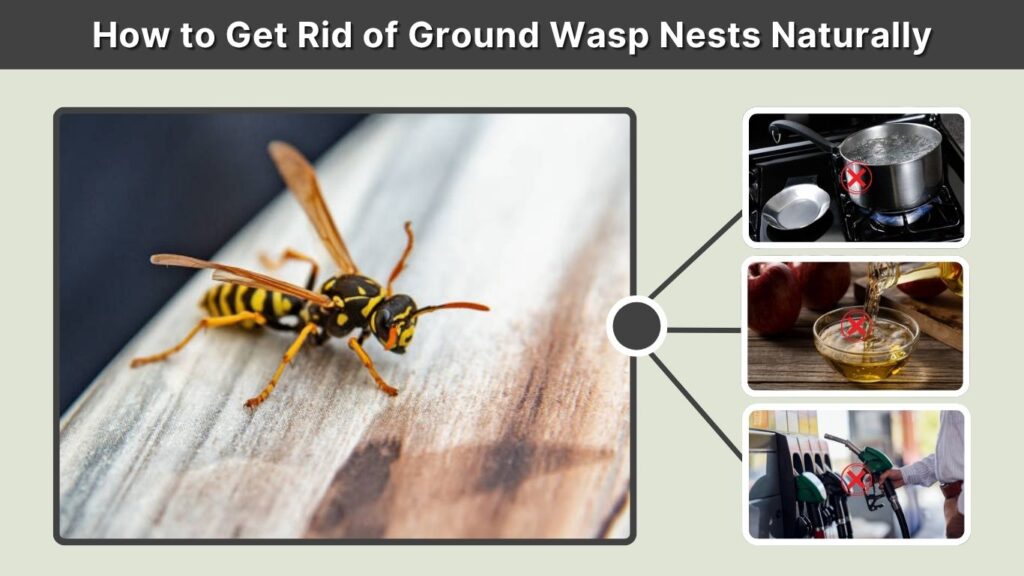
Natural Remedies You Should Avoid
Several commonly suggested treatments create more danger than benefit:
- Boiling water: Can cause serious burns and may not reach the underground colony.
- Gasoline or kerosene: Creates fire hazards and contaminates soil.
- Vinegar: Does not reliably eliminate established ground colonies.
- Flooding the nest: Often fails to reach the colony and may provoke defensive behavior.
- Blocking the entrance: Can encourage surviving wasps to create another exit.
Natural remedies should never replace appropriate treatment when an active colony presents a significant danger.
How to Remove Ground Wasp Nests in Different Locations
The location of a ground wasp nest influences how it should be managed. Nests beneath lawns are easier to locate than those hidden under foundations or outdoor structures. Garden beds and children’s play areas require additional care because pesticide use may be restricted and people can accidentally disturb concealed colonies.
Ground Wasp Nests in Lawns
Yellowjackets commonly establish nests in existing underground cavities beneath grass.
Avoid mowing, trimming, or using heavy equipment near an active entrance. Vibrations from lawn equipment can trigger defensive attacks.
Mark the general danger area from a safe distance and arrange treatment if the nest interferes with routine lawn maintenance.
Ground Wasp Nests Under Decks or Patios
Nests beneath decks, patios, and outdoor stairs can be difficult to access.
Avoid crawling underneath structures or attempting to dismantle them while a colony is active.
Professional pest control providers can inspect concealed nesting areas and select a suitable treatment without unnecessary structural disturbance.
Ground Wasp Nests in Vegetable Gardens
Underground colonies sometimes develop near raised beds, compost areas, and vegetable plants.
Do not apply pesticides unless the product label specifically permits the intended use around edible crops.
Because treatment restrictions vary, professional advice is particularly useful when a nest develops close to vegetables, herbs, or fruit-bearing plants.
How to Prevent Ground-Nesting Wasps
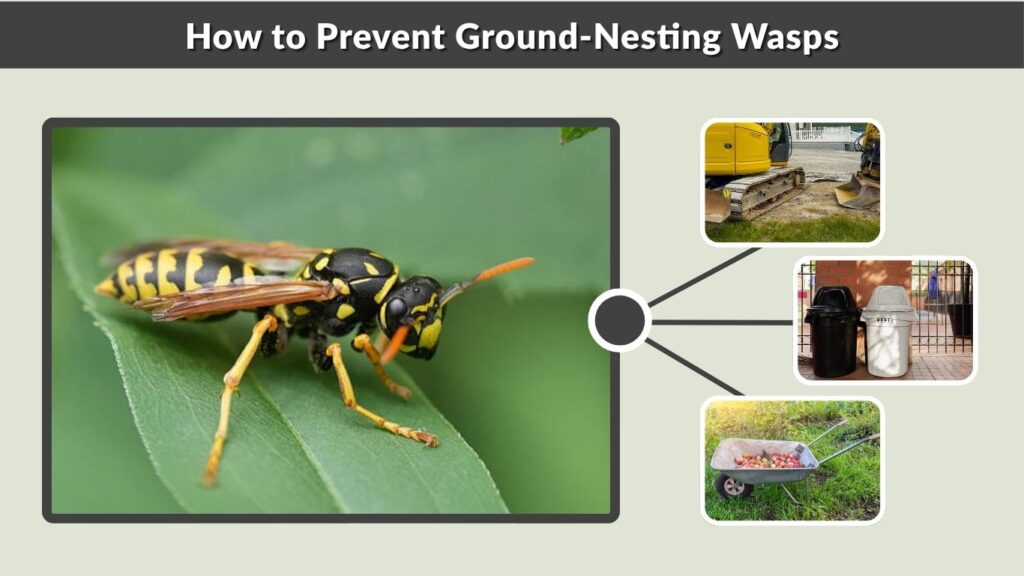
Preventing future nesting activity is generally easier than eliminating an established colony. Wasps select nesting sites based on shelter, available soil, and suitable underground cavities. Maintaining healthy landscaping and reducing attractive nesting spaces can discourage some species, although no prevention method guarantees a completely wasp-free yard.
Maintain Your Lawn and Garden
Use these preventive measures:
- Maintain thick, healthy grass to discourage solitary digger wasps.
- Cover exposed soil with mulch or suitable vegetation.
- Repair landscape damage and unnecessary ground openings after confirming they are unoccupied.
- Keep outdoor trash containers tightly closed.
- Remove fallen fruit and leftover food promptly.
- Inspect gardens and lawn edges regularly during warmer months.
- Monitor previous nesting locations for new activity.
These practices help reduce nesting opportunities while supporting a safer outdoor environment.
What to Do If Ground Wasps Sting You
If you disturb an active nest, move quickly away from the area and seek shelter indoors or inside a vehicle.
For an ordinary sting, gently wash the affected area with soap and water and apply a cold compress to reduce swelling.
Seek emergency medical assistance immediately if symptoms include breathing difficulty, throat swelling, faintness, or a widespread allergic reaction. Use prescribed epinephrine if available and indicated.
FAQs
1. What Is the Fastest Way to Get Rid of a Ground Wasp Nest?
Professional treatment using an appropriate registered insecticide is generally the most dependable method. The colony may take additional time to become completely inactive, depending on the treatment and nest size.
2. Can You Get Rid of Ground Wasps Naturally?
Yes, in some situations. Waiting for seasonal colony decline and modifying nesting habitats can reduce wasp problems without pesticides. However, natural prevention methods do not reliably destroy active yellowjacket colonies.
3. Will Ground Wasps Return to the Same Nest?
Most social wasps do not reuse their old annual nests. However, new queens may establish separate colonies in nearby suitable locations during subsequent seasons.
4. Should You Cover a Ground Wasp Nest With Dirt?
No. Covering an active entrance may provoke defensive behavior and does not guarantee colony elimination. Wait until the nest is completely inactive before filling any remaining ground opening.
5. How Deep Are Ground Wasp Nests?
Ground wasp nests vary considerably in depth. Some solitary wasps construct relatively shallow burrows, while yellowjackets may occupy deeper underground cavities with entrances located away from the main nesting chamber.
