
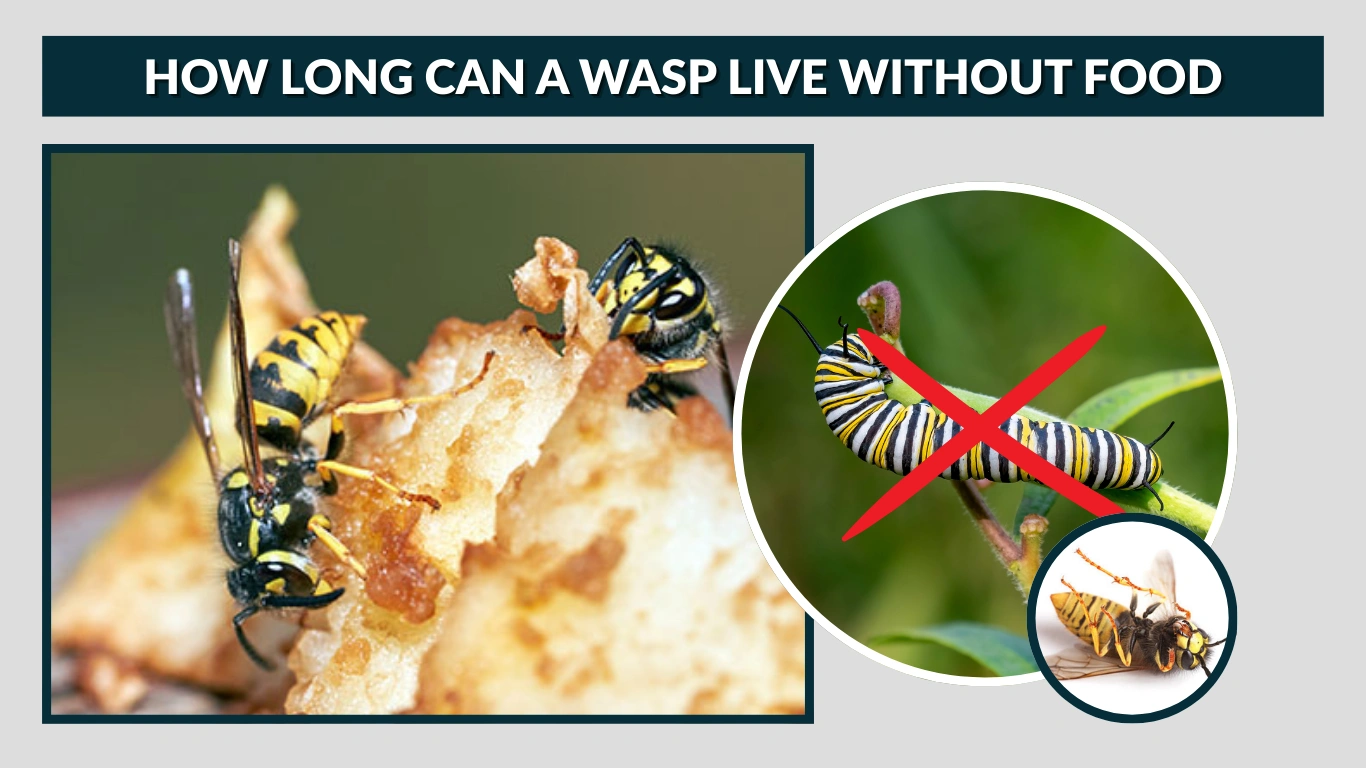
Wasps are among the most common insects people encounter, often buzzing around picnics, gardens, or even finding their way indoors. While they play an important role in ecosystems by controlling pest populations and pollinating plants, their presence near humans can cause anxiety. One of the most frequent questions people ask is: how long can a wasp live without food?
This question arises especially when a wasp becomes trapped indoors or in a window, where food sources are limited. Understanding how long wasps can survive without food not only satisfies curiosity but also helps in dealing with them safely.
In this article, we’ll explore the diet of wasps, their natural lifespan, factors that affect their survival without food or water, and what happens when they are trapped indoors.
Understanding the Wasp Diet
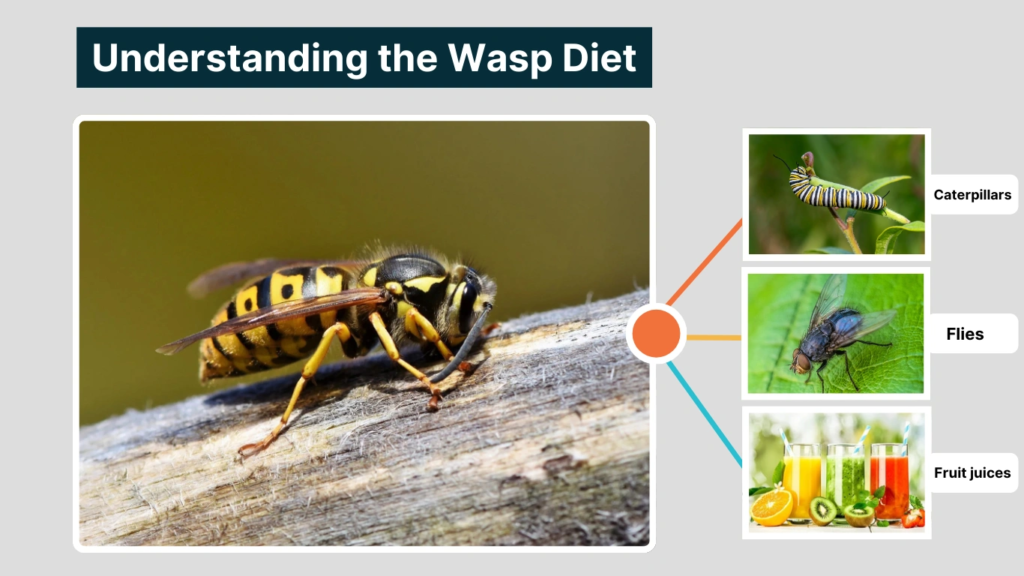
To understand how long a wasp can survive without food, it’s important to know what they eat. Wasps are omnivores, and their diet changes depending on the season and their role within the colony.
- In early spring, adult wasps feed on protein-rich foods like caterpillars, flies, and other insects. They chew these prey items and feed them to developing larvae inside the nest. In return, the larvae secrete a sugary substance that the adults consume.
- In summer and autumn, adult wasps prefer sugary foods such as nectar, fruit juices, and even human foods like soda or candy. This sugar provides quick energy for their high activity levels.
Unlike bees, wasps do not produce or store honey, so they rely on a constant supply of food. This makes them much more vulnerable to starvation if they are cut off from resources.
General Lifespan of Wasps

The natural lifespan of a wasp depends on its caste and species.
- Worker wasps (the sterile females that forage and defend the nest) live around 12 to 22 days during the active summer season.
- Male wasps (drones) usually live only a few weeks. They exist primarily to mate with queens and then die shortly afterward.
- Queen wasps can survive much longer, living up to a year in some species. After mating in autumn, queens hibernate through the winter and emerge in spring to start new colonies.
In the wild, their lifespan is cut short by predators, harsh weather, and natural colony decline. But without access to food, survival times drop dramatically.
How Long Can a Wasp Live Without Food?
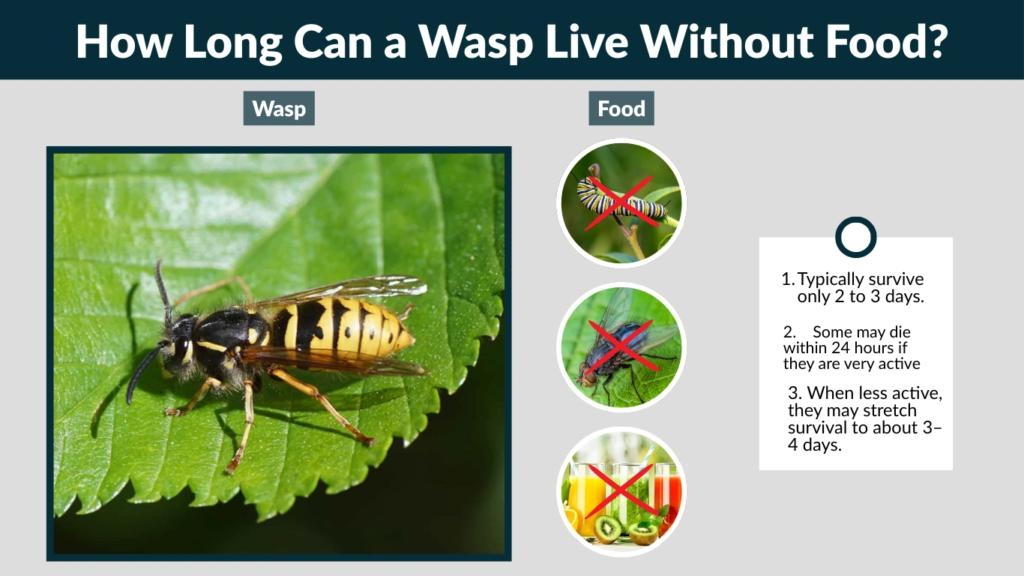
When deprived of food, wasps typically survive only 2 to 3 days. Some may die within 24 hours if they are very active and expend energy quickly. However, in cooler temperatures or when less active, they may stretch survival to about 3–4 days.
The exact time depends on several factors:
- Species: Larger species like hornets may deplete energy faster than smaller paper wasps.
- Activity level: A wasp trapped indoors and constantly flying against a window will burn through energy faster.
- Temperature: Warm conditions increase activity, leading to quicker energy use. Cooler conditions may prolong survival.
- Hydration: Access to water or sugary liquids can extend their life slightly, even without solid food.
Overall, a wasp without food cannot last long because it has no energy reserves. Unlike bees, they don’t store honey to sustain themselves during hard times.
Can Wasps Survive Without Water?
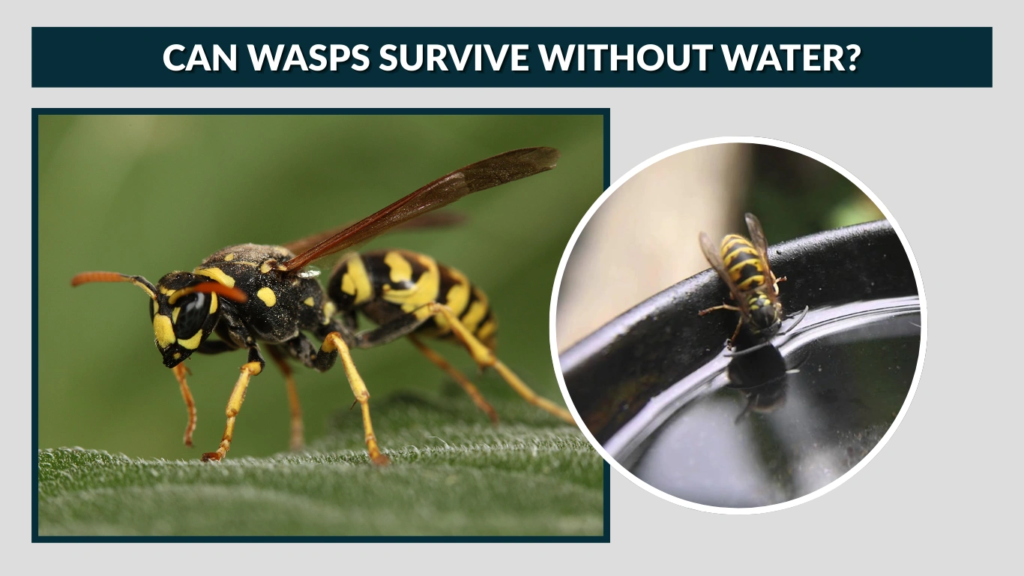
Water is just as important as food for wasps. They use it for digestion, regulating body temperature, and building nests. Without water, a wasp’s survival drops even further.
A wasp without water may only live a day or two, depending on the heat and humidity of its environment. If a trapped wasp finds condensation on a window or droplets from a sink, it may survive a little longer.
Wasps Trapped Indoors or in Windows
One of the most common scenarios people face is finding a wasp buzzing against a window. In this situation, the insect is often cut off from food and water entirely.
- Survival time: A trapped wasp indoors usually dies within 48 hours, although some may last up to 3 days.
- Exhaustion: Constantly flying into glass drains their limited energy stores much faster than if they were resting.
- Signs before death: Slowed movement, crawling instead of flying, and eventually becoming motionless.
If you find a wasp indoors, the most humane way to handle it is to trap it gently in a glass and release it outside.
Special Cases

Queen Wasps
Queen wasps are more resilient than workers or drones. They can survive longer without food, especially in cooler conditions, because their bodies are adapted for overwintering. A queen trapped indoors might survive several days without food, though she still eventually weakens.
Hornets vs Paper Wasps
- Hornets are larger and more active predators, meaning they often burn through energy more quickly. Without food, they may last about 1–2 days.
- Paper wasps, being smaller and less aggressive, may survive slightly longer—closer to 2–3 days—if inactive.
Comparison: Wasps vs Bees
It’s interesting to compare wasps with bees in terms of survival.
- Bees have a huge advantage because they store honey. This allows them to survive for weeks or months even when foraging is impossible.
- Wasps, on the other hand, rely entirely on fresh sources of nectar, insects, or sugary foods. Once cut off, they cannot survive for long.
This difference explains why bee colonies can last through winter, while wasp colonies die out, leaving only the queen to hibernate.
Factors Affecting Wasp Survival Indoors
Several conditions can affect how long a wasp survives inside your home:
- Temperature: Warmer rooms speed up metabolism, while cooler conditions slow it down.
- Light: Wasps are attracted to light and may exhaust themselves trying to escape through windows.
- Access to moisture: A wasp that finds water or sugary liquids may survive longer.
- Stress: Being trapped indoors increases stress and energy expenditure, shortening survival time.
Human Interaction and Safety
When dealing with a wasp indoors, safety should come first. A starving or stressed wasp may become aggressive and sting in defense.
Tips for safe handling:
- Don’t swat aggressively; it increases the risk of stings.
- Use a glass or jar to trap the wasp, then slide paper underneath and release it outdoors.
- If allergic to stings, avoid direct contact and use pest control services if needed.
If you frequently find wasps indoors, check for open vents, cracks, or nests near your home.
FAQs
How long can a wasp survive indoors without food?
A wasp trapped indoors without food usually survives between one and three days. Its survival depends on factors like temperature, activity, and hydration. If it is constantly flying against a window, it will use energy faster and die sooner, often within 24–48 hours.
Can a wasp survive longer without food or without water?
Both food and water are essential, but water deprivation usually kills a wasp faster. Without water, survival may be limited to just one or two days. Without food but with some access to moisture, a wasp may live up to three days before energy reserves are completely depleted.
How long does it take for a wasp to die when trapped in a window?
A wasp stuck at a window often exhausts itself by repeatedly flying against the glass. Most die within 48 hours, though some may last slightly longer in cooler conditions. Exhaustion, dehydration, and lack of sugar sources accelerate their decline, making death inevitable within two to three days.
Do queen wasps survive longer without food?
Yes, queen wasps are more resilient and can last longer without food compared to workers or drones. Their bodies are adapted for overwintering, allowing them to conserve energy. A queen trapped indoors may survive several days, especially if conditions are cool and she remains inactive, but starvation eventually weakens her.
How long can hornets or paper wasps survive indoors?
Hornets are larger and require more energy, so they often die within one or two days without food. Paper wasps are slightly smaller and may last up to three days. Both species decline quickly when trapped inside, especially if they remain active without access to water or sugar.
What should I do if a wasp is stuck in my house?
The safest way to deal with a trapped wasp is to gently capture it in a container and release it outdoors. Avoid swatting, as this increases the chance of stings. If you are allergic, keep a safe distance and contact pest control for assistance rather than handling it yourself.
